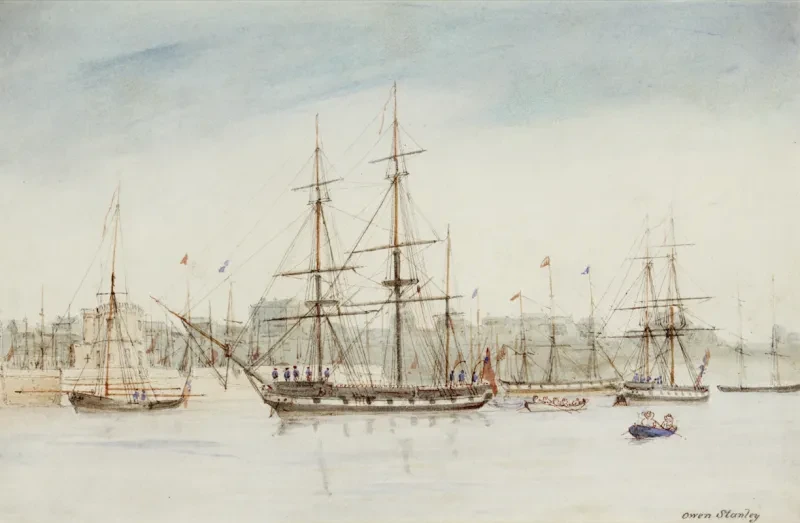
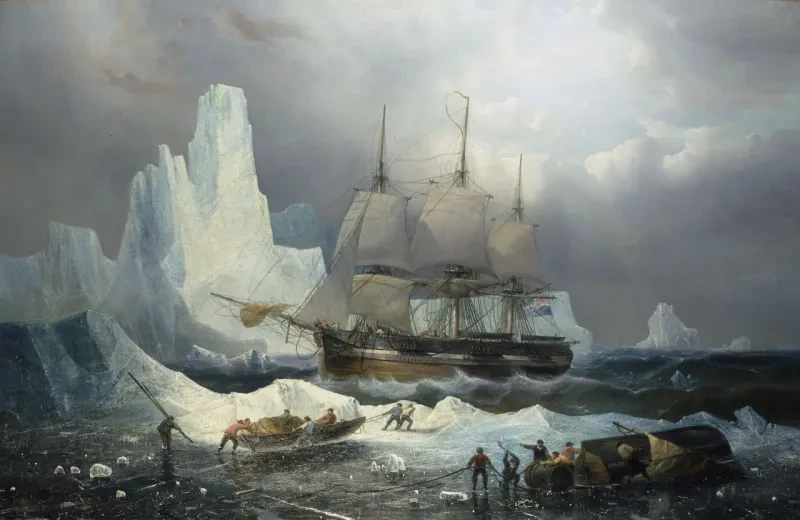
On 11 May 1820 the ship that would later carry Charles Darwin to the Galapagos Islands was launched. Find out more about the remarkable legacy of HMS Beagle.
Beagle was not a remarkable ship, being one of more than 115 10-gun warships ordered to the same design between 1807 and 1830. However, this class of ship was very versatile, with ships fitted out for anti-slavery patrols, as mail ships, surveying ships and tenders to flagships in British and foreign ports.
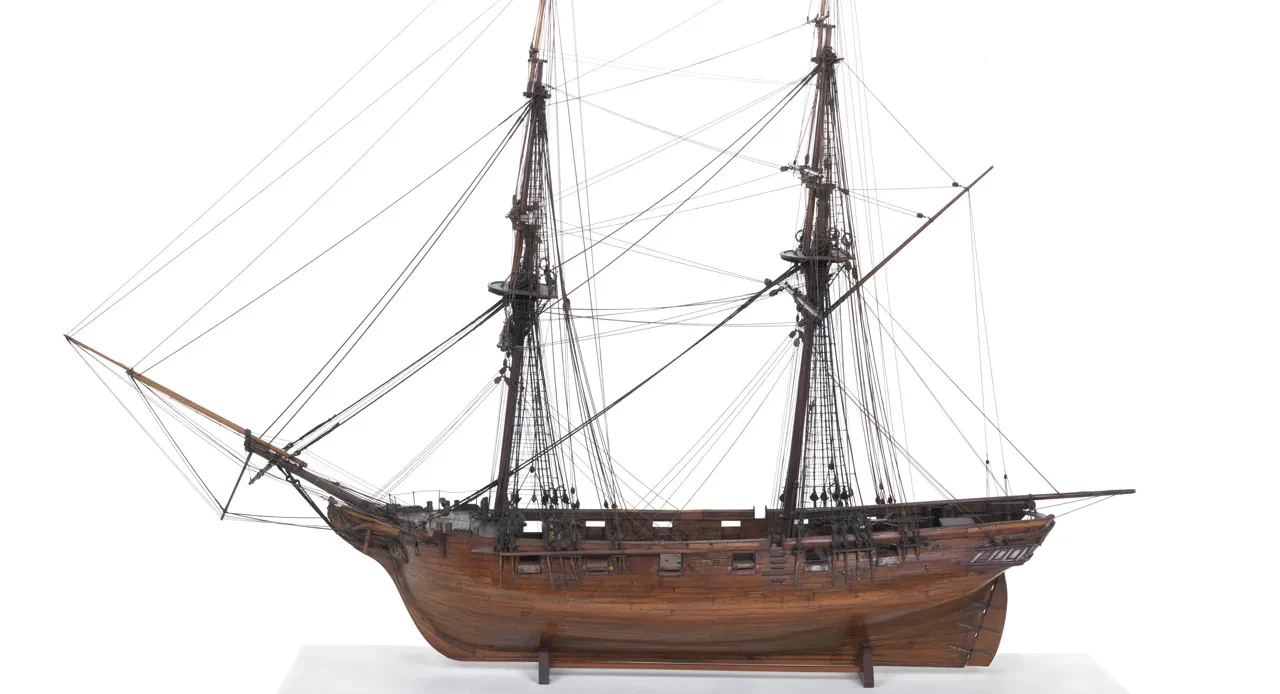
Beagle was completed as a survey ship between September 1825 and March 1826 ‘to survey Magellan’s Streights’.
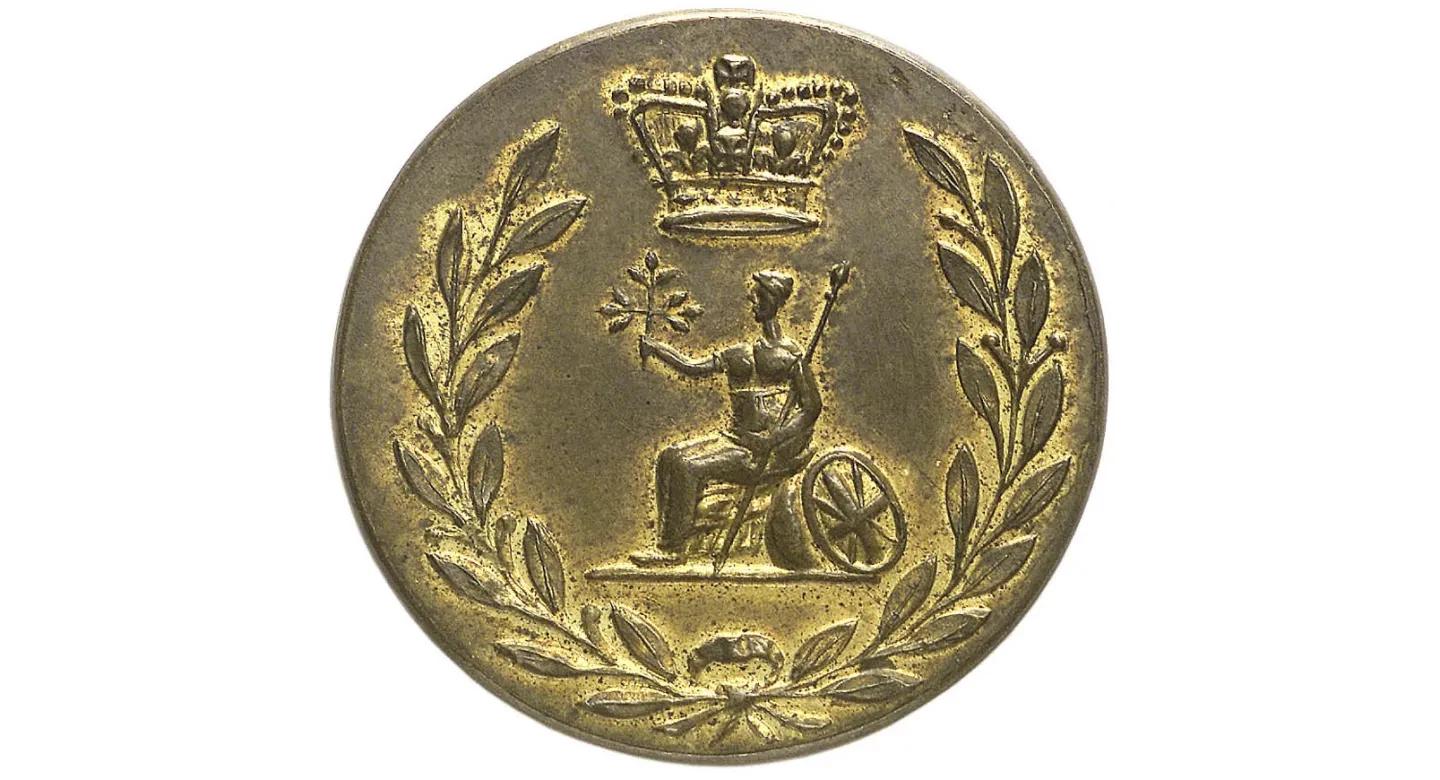
Having left in May 1826 the commission did not end until October 1830, when Beagle returned home under the command of Commander Robert FitzRoy – his predecessor had died by suicide in 1828. Despite this devastating event during the voyage, the survey was deemed a success and a commemorative token struck.
Charles Darwin and the Beagle
In 1831 the ship was refitted for what is now its most famous voyage to survey the South American coast and the Galapagos Islands, before returning to England via the Pacific. The expedition lasted five years.
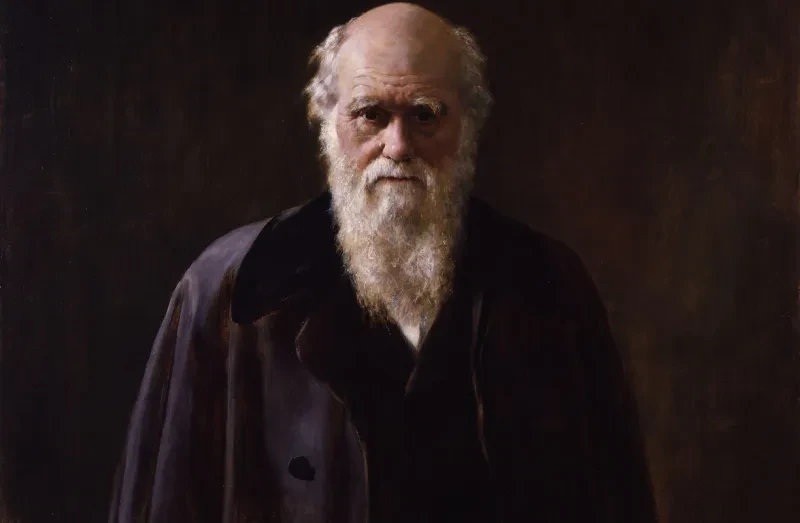
The Beagle was once again under FitzRoy’s command, but this time the 22-year old Charles Darwin was on board as naturalist.
Darwin was allowed to explore inland while the ship continued to survey the coasts, assisting in his understanding of the geological changes that had happened over millennia. The results of Darwin’s collecting, analysis, and recording led him to develop his theories of evolution by natural selection – finally published in 1859 as On the Origin of Species.
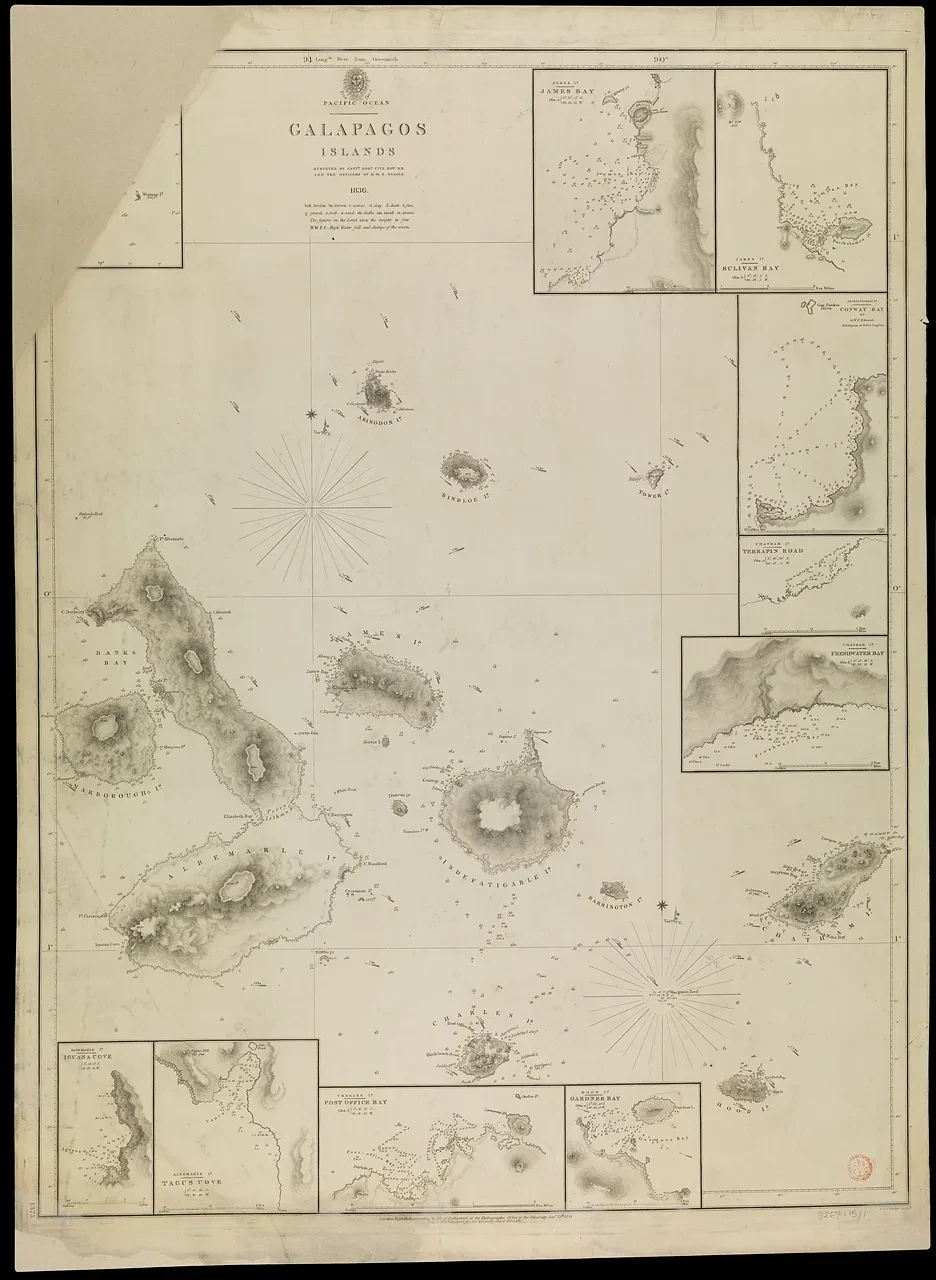
The voyage’s legacy not only includes Darwin’s published works, but also the charts (like the one above) from surveying by FitzRoy.
In fact, FitzRoy is an important character. He suggested that a naturalist come on the expedition to take advantage of ‘visiting distant countries yet little known'. He was a competent surveyor with an inquiring mind and later, as the first head of a department to collect weather data at sea, pioneered weather forecasts that became the basis of our current system.
As a result, he is commemorated with his own area in the Shipping Forecast (it used to be called Finisterre until 2002). Sadly, ill-health and depression led FitzRoy to take his own life in 1865, but his legacy from the Beagle voyage and his later meteorological work is a significant and long-lasting one.
From the Galapagos Island to Mars – the naming of Beagle 2
In 2003 Beagle 2 was launched into space as part of a programme to explore Mars.
Beagle 2’s role was to answer the question of whether there had been or is life on Mars.
Unfortunately, the probe did not deploy correctly – a fact only discovered in 2015 when the MARS Reconnaissance Orbiter located it. However, the name 'Beagle' was a conscious choice of name, as Professor Colin Pillinger, the mastermind behind the Beagle 2 project, stated:
HMS Beagle was the ship that took Darwin on his voyage around the world in the 1830s and led to our knowledge about life on Earth making a real quantum leap. We hope Beagle 2 will do the same thing for life on Mars.
Beagle's remains: new research
It was believed that Beagle's remains were in the marshland alongside the River Roach in Essex. However, new research by Mike Salter has indicated that the vessel was sold to Messrs Murray and Trainer in 1870.
The hull was then towed from Paglesham up the Thames to their shipbreaking yard at Crowley's Wharf, East Greenwich, where the vessel was broken up. The research has not currently found any evidence of what happened to the copper and timbers of HMS Beagle, but some may have survived as oak ornaments and furniture, in addition to an inscribed oak box made for Admiral John Lort Stokes (which forms part of the Museum’s collections). These remain as reminders of the extraordinary voyage that led to Darwin's great scientific breakthrough.
In recognition of the importance of Beagle's scientific voyages, the Royal Navy continued to use the name for another six ships.
While many were warships, the last Beagle was a purpose-built coastal survey vessel, launched in 1967, which undertook expeditions around the world. The ship was sold in 2002 and converted to a luxury yacht.
Read more about HMS Beagle