
Who was John Harrison?
John Harrison was a carpenter by trade who was self-taught in clock making. During the mid-1720s he designed a series of remarkable precision longcase clocks. These clocks achieved an accuracy of one second in a month, far better than any clocks of the time.
In order to solve the problem of longitude, Harrison aimed to devise a portable clock which kept time to within three seconds a day. This would make it far more accurate than even the best watches of the time.
John Harrison arrived in London, looking for both support and the rewards promised by the 1714 Longitude Act.
What was the Longitude Act?
The Longitude Act was an act of parliament that offered money in return for the solution to the problem of finding a ship's precise longitude at sea.
Find out more about longitude
Harrison began his time working in London with Edmond Halley, second Astronomer Royal and a Commissioner of Longitude. He was received warmly at Greenwich, but Halley felt unable to judge his work. Instead, he sent him to clockmaker George Graham.
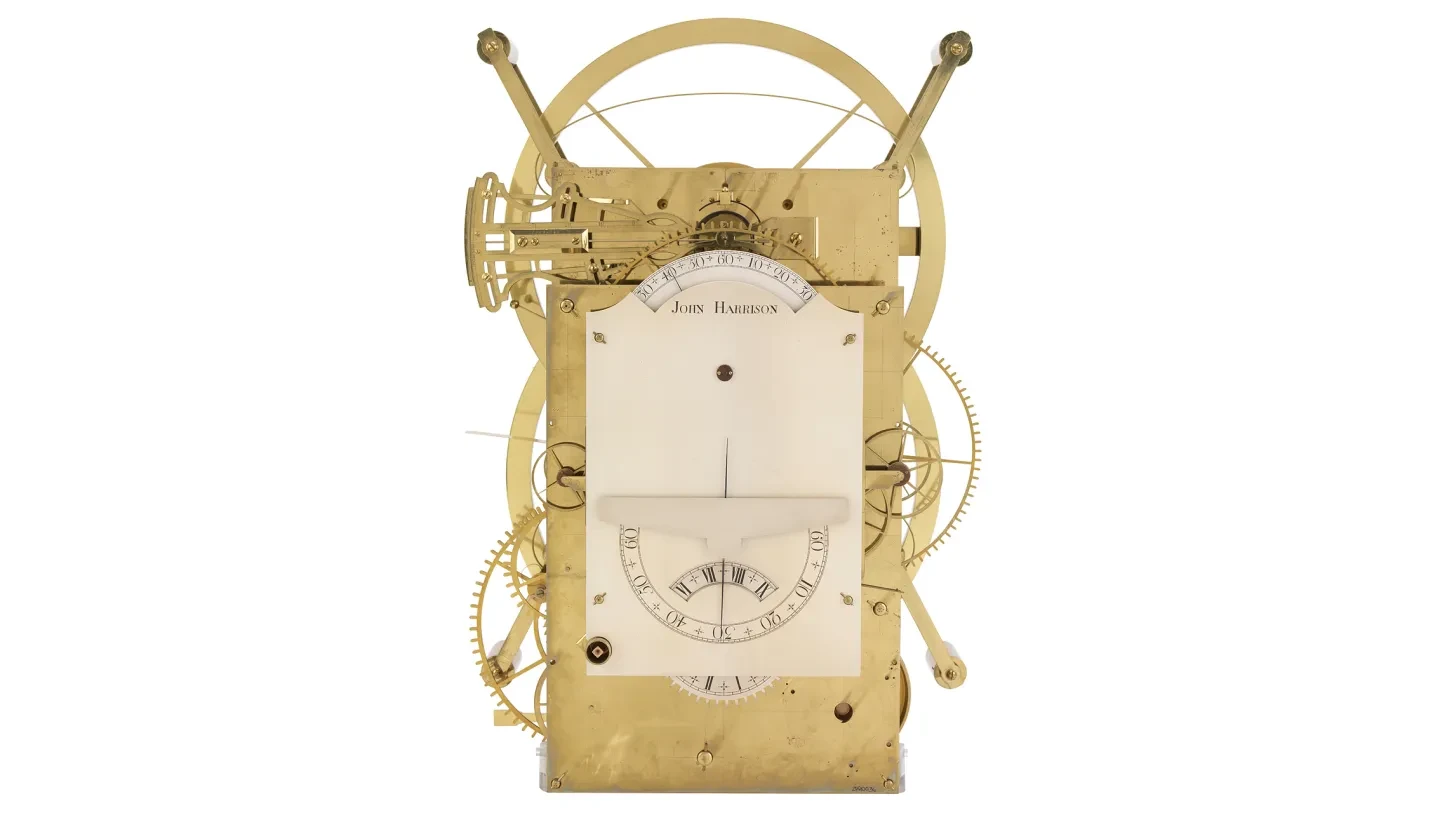
John Harrison's first attempt – H1
For the next few years Harrison worked in Barrow upon Humber on a marine timekeeper, now known as H1. He was most likely helped by his brother, James.
After testing the clock on the River Humber, Harrison proudly brought it to London in 1735. It was installed in Graham’s workshop, to be shown to London’s scientific community.
At last, it seemed, here was a timekeeper that might be used to determine longitude at sea. Because of the clock's two interconnected swinging balances, it is unaffected by the motion of a ship - it is essentially a portable version of Harrison's precision wooden clocks.
It seemed that it would be successful in measuring longitude. A trial was called for.

A trial at sea
In May 1736, Harrison and H1 were taken aboard HM ship Centurion, which was about to set sail for Lisbon. The aim was to put H1 to the test in a live setting.
The voyage out to Lisbon began poorly for both Harrison and his clock. By the time they reached Lisbon however, the machine was going much more reliably. It was transferred to the Orford for the return, and this journey led to much better results.
As they neared England, Harrison announced that a headland the officers had thought was the Start was in fact the Lizard. He was correct. This meant they were 60 miles off course and in danger. It also meant that the H1 was working correctly.
The results of the trial
Back in London, the results of the Lisbon trial suggested that Harrison might qualify for a reward under the Longitude Act. The Admiralty requested a formal meeting of the Commissioners of Longitude.
Accordingly, eight of them assembled on 30 June 1737 to discuss Harrison’s ‘curious instrument’. The Commissioners agreed on a payment of £500. £250 was to be paid up front, to allow Harrison to build an improved clock. He promised to do this within two years.
More experiments – H2 and H3
Harrison moved to London soon after the Lisbon trial and, within the two years promised, he finished his second marine timekeeper. However, H2 never went to trial, because Harrison had discovered a fundamental flaw.
Harrison began work on his third attempt, H3, in 1740, and would continue to work on it for 19 years. While it was running and being tested, it became clear that the clock would struggle to keep time to the desired accuracy. Harrison was forced to make many changes and adjustments.
Harrison marine timekeeper – H4
Around 1751–52 Harrison commissioned John Jefferys to make a watch with a radically new type of balance. It worked well, so Harrison incorporated it into his fourth longitude timekeeper, H4.
No one in the 1750s thought of the pocket watch as a serious precision timekeeper. While H4 initially looked like a large pocket watch, the instrument was in fact quite different.

The secret can be heard in its rapid ticking. H4 ticks five times a second, since its large balance beats more quickly and with larger oscillations than a typical watch.
In 1761 the Commissioners gave permission for Harrison's son, William, to prepare for a voyage to Jamaica to trial the H4 timekeeper. The trial seemed to go well. On the way out, William used it to predict an earlier landfall at Madeira than the crew were expecting. This impressed the captain so much that he asked to buy their next timekeeper.
The Harrisons and the Board of Longitude fall out
Back in England however, trouble began. The Commissioners decided that the test had not been sufficient. This was the point when relations between the Harrisons and the Commissioners deteriorated. Harrison’s friends and supporters began a propaganda campaign of newspaper articles, broadsheets and pamphlets.
Putting the theories to the test
In the meantime, however, other methods had been coming to fruition. John Harrison had enjoyed 20 years as the only serious contender, but by the 1760s two rival schemes had emerged that might challenge his claim.
These were the use of lunar distances, and Jupiter’s satellites. Both would soon be put to the test alongside H4.
Find out more about the lunar method
The destination for the new trial was to be Barbados, with Nevil Maskelyne appointed as the astronomer in charge.
Once in Barbados, they were to determine the island’s longitude by observations of Jupiter’s satellites. This would allow them to assess the two astronomical methods, alongside the performance of H4.
Maskelyne departed England on the Princess Louisa in September 1763, arriving in Bridgetown in early November. Harrison sailed with H4 in March 1764, arriving in May.
The Harrison timekeepers win
There was much to discuss when the Board met to consider the result of the trial in February 1765.
It was confirmed that John Harrison’s timekeeper had kept time within the most stringent limits of the 1714 Act. The Board's recommendation was that parliament should award Harrison £10,000, when he demonstrated the principles of H4.
The remaining £10,000 (less payments already made) was to be awarded once it was shown that other makers could produce similar timekeepers. They needed to ensure Harrison's wasn't a one-off before paying out.
The Harrisons felt that the full reward was already due under the terms of the 1714 Act, and the Commissioners had unfairly changed the rules. The recommendations became law in the new Longitude Act of 10 May 1765.
Testing continues at the Royal Observatory
The testing of H4 did not end with the Barbados trial.
On 5 May 1766, Astronomer Royal Nevil Maskelyne received Harrison’s timekeeper from the Board of Longitude so it could be further tested at the Royal Observatory, Greenwich.
In his personal diary, Maskelyne writes: ‘Monday May 5, 1766: I received it from the hands of Philip Stephens, Secretary of the Admiralty, locked up in a box sealed with three seals’. Maskelyne travelled ‘without delay’ to begin testing at the Royal Observatory.
Testing lasted 10 months, but H4 did not perform well. Maskelyne published the results, Harrison challenged them and the dispute rekindled.
Image
Harrison rewarded (but not by the Board of Longitude)
Relations did not improve between the Board and the Harrisons. The commissioners wanted to share and publish the information. Harrison wanted to protect his methods.
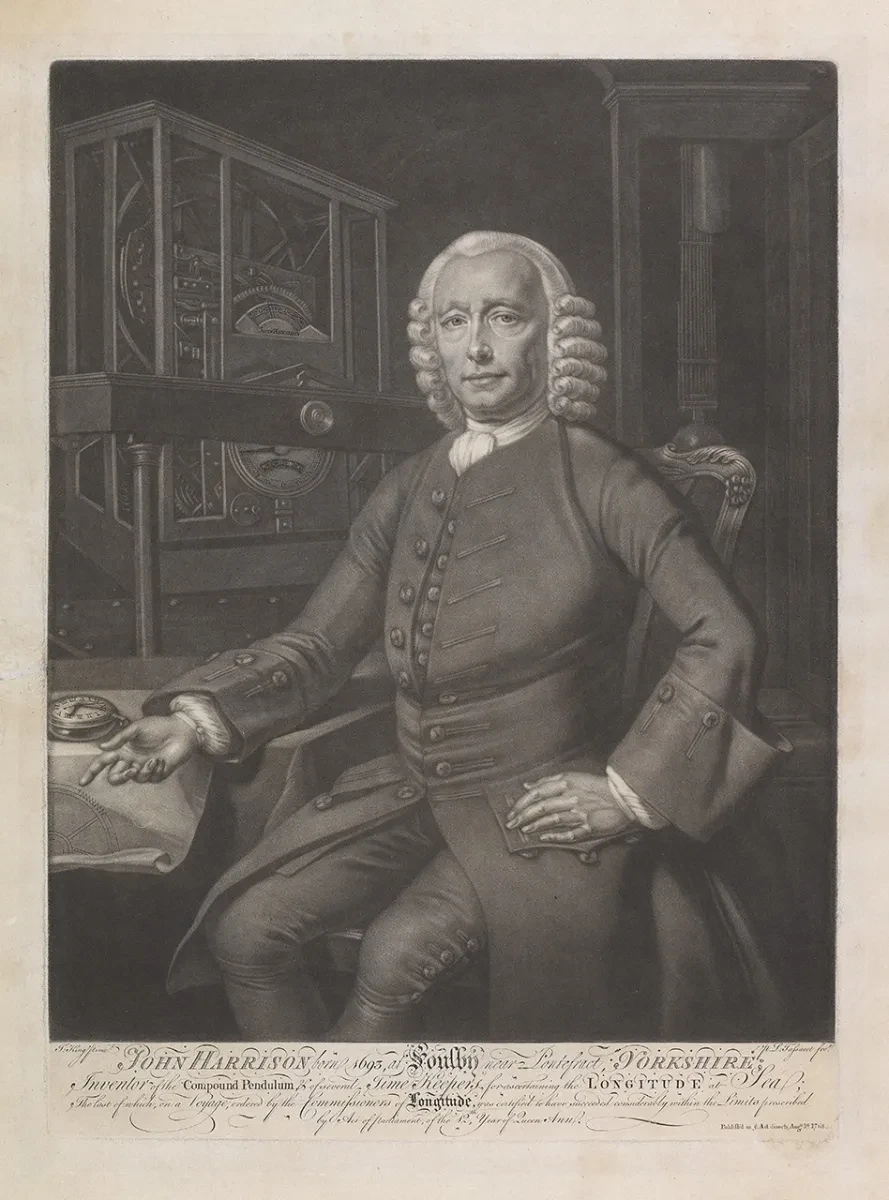
Harrison eventually received generous compensation, but not all that he felt he was owed. Parliament ruled that Harrison should be rewarded for his services to the nation, no doubt with the King’s encouragement.
Harrison is remembered in history as solving the problem of longitude.
What made the search for a way to determine longitude so important?
What happened next?
While Harrison is remembered for having 'solved' the longitude problem, initially marine chronometers were very expensive, so roll out was slow. Future clockmakers simplified designs and made them cheaper and easier to produce, allowing for a wider take-up at the start of the 1800s.
See Harrison's timekeepers on display
You can come and see a replica of H1, and the original H2, H3 and H4 on display at the Royal Observatory Greenwich.
The original H1 is undergoing conservation at our state-of-the-art conservation studios, the Prince Philip Maritime Collections Centre.
Learn more on how Harrison solved the Longitude problem


