

Essential information
| Type |
Events and festivals
|
|---|---|
| Location |
Online
|
| Date and times | Wednesday 18 February 2026 | 5.30-6.15pm |
| Prices | Free |
On Wednesday 18 February the Royal Observatory Greenwich and the New Crescent Society broadcast a special live astronomy show, searching for the new crescent Moon.
The sighting of a new crescent moon – when the Moon appears as a slim sliver of light in the sky – marks the beginning of a new month in the Islamic calendar.
Director of the New Crescent Society Imad Ahmed and Royal Observatory astronomer Jake Foster presented the stream live from Greenwich.
Members of the New Crescent Society dialled in from all around the UK, as they watched the skies and waited for a confirmed sighting. While widespread cloud across the country prevented us from seeing the Moon during the stream, the New Crescent Society confirmed a sighting of the Moon in Jersey, UK, shortly afterwards.
Watch back the stream on YouTube below.
Why were we looking for the new crescent Moon?
The Islamic calendar is a 'lunar visibility' calendar. The beginning of each month is based on the sighting of the new crescent Moon.
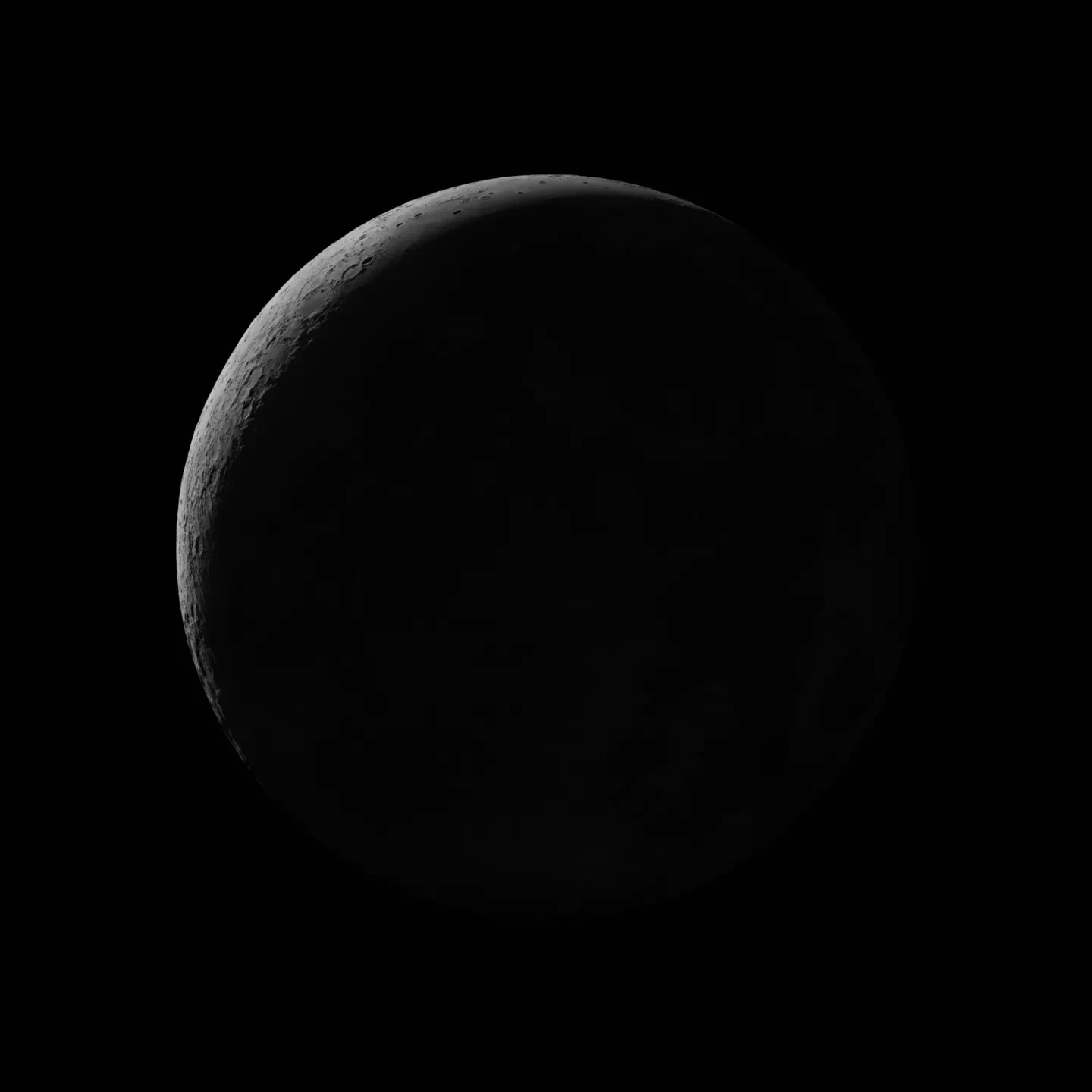
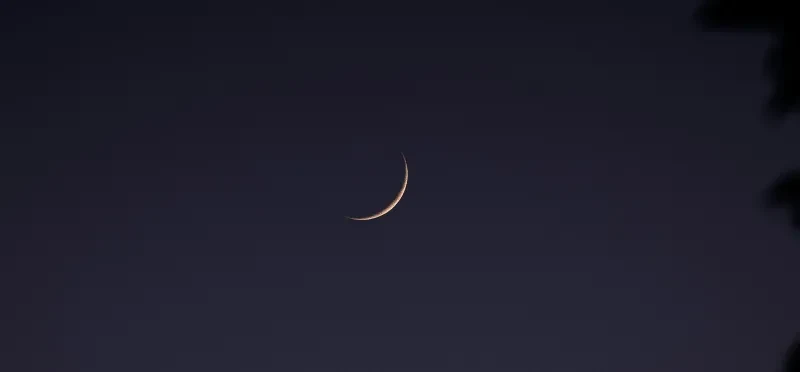
A new crescent moon is the first time the Moon can be seen following a new moon (when the Moon is entirely invisible from the Earth). A new crescent moon appears as a slim curve in the sky, with just a fraction of its surface illuminated with light from the Sun.
Although it takes 29.5 days for the Moon to go through a full lunar cycle, it isn't possible for a month to have half a day. A month in the Islamic calendar therefore either has 29 or 30 days depending on when the new crescent Moon is first seen.
"On the 29th of each Islamic calendar month, Muslims go out after sunset looking for the Moon," explains Imad Ahmed.
"If you can see the crescent Moon on the 29th, that month has 29 days. If you cannot, it means that month has 30 days. That’s why, for example, in some years Ramadan has 29 days and in other years it has 30."
Why are the dates of Ramadan different around the world?
The timing of the new crescent Moon's appearance varies depending on where you are in the world – just like sunset and sunrise times. This means that not everyone will be able to see the Moon at the same time or even on the same day. This variation across the world can lead to some countries marking religious holidays on different dates.
“One of the issues faced by Muslims in the UK is that we tend to differ amongst ourselves on which dates we celebrate Ramadan and Eid,” explains Imad.
"This is because some Muslim communities in the UK follow the Islamic calendar of other countries. When Muslims in the UK follow the calendars of different countries around the world, it’s natural we will have some differences.
"Different countries might see the Moon on different dates, and different countries might have alternative methods of determining the Islamic calendar, which might not correspond to the visibility of the Moon."
Astronomy at Royal Museums Greenwich is supported by


Learn more with the Royal Observatory

Your support makes this happen
Donate today and help maintain the Royal Observatory's telescopes and support our astronomers' work
Main image by Büşra Taşkın from Pexels