
Learn more about one of the world's leading airship pilots, Squadron Leader Thomas Philip York-Moore.
In this blog we take a look at the archive collection of Squadron Leader Thomas Philip York-Moore (1895-1985), whose personal papers illustrate his lifelong interest in airships (RMG ID: YKM).
York-Moore piloted airships during the First World War. By 1929 he had achieved the rank of Squadron Leader. However, York-Moore retired from military service for medical reasons in 1931.
Nonetheless, he continued to be actively involved in airship production and piloting and was a passionate advocate for their continued use.
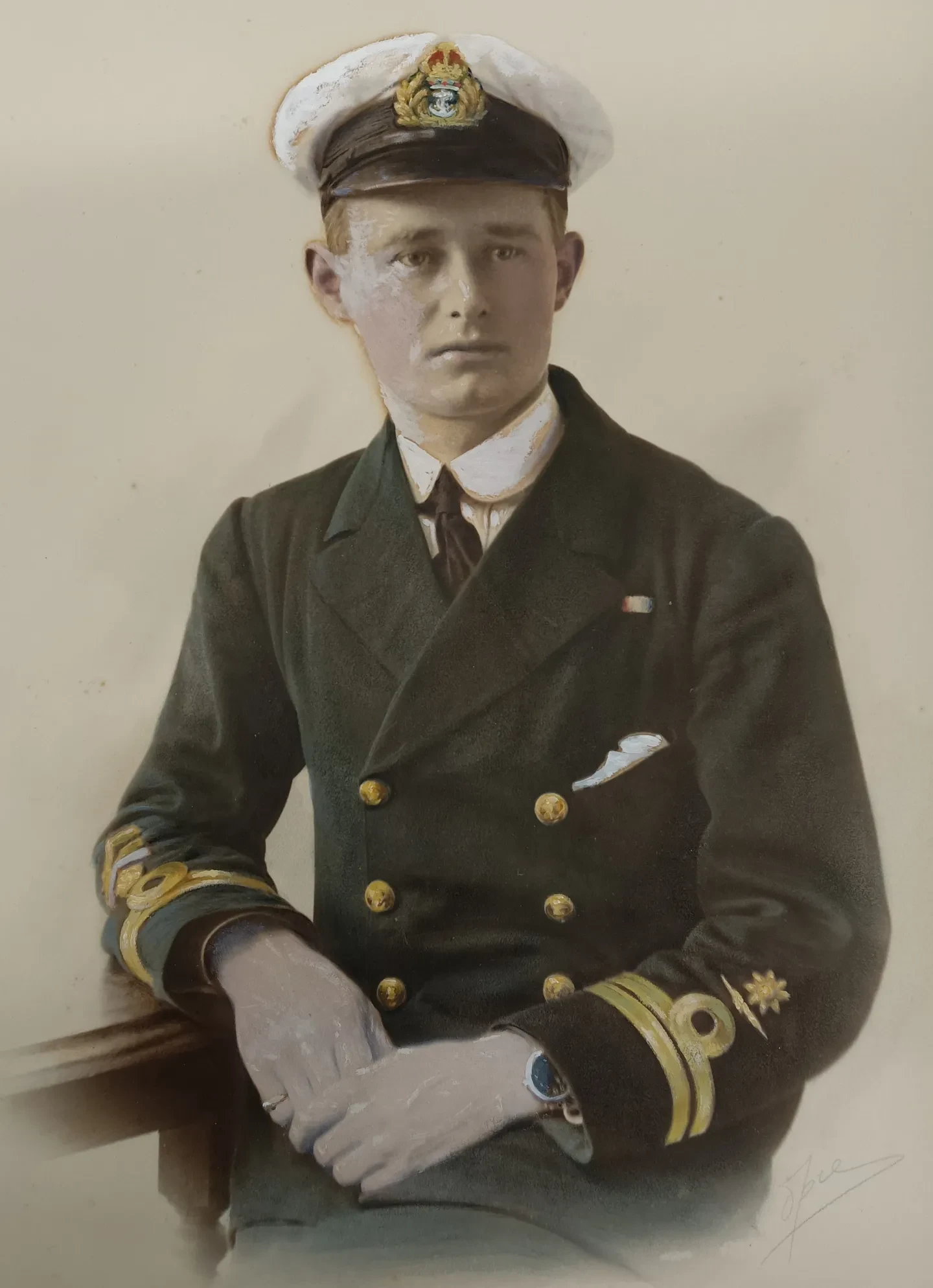
York-Moore was interested in all types of aerostat (a vessel that uses lighter-than-air gases to take to the skies), including air balloons and dirigibles, or steerable airships.
Included in his archive collection are mementoes of key moments in the history of lighter-than-air flight.
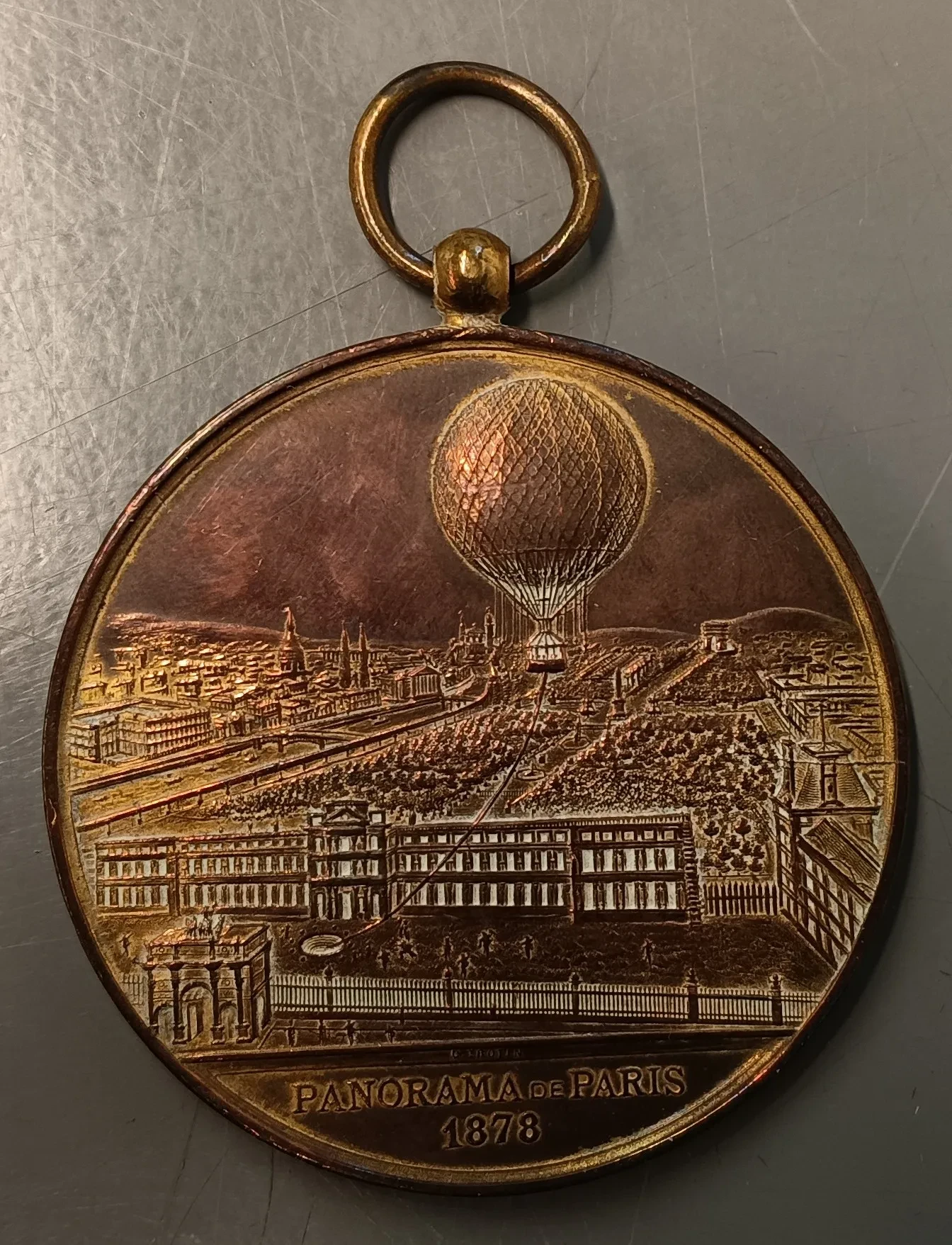
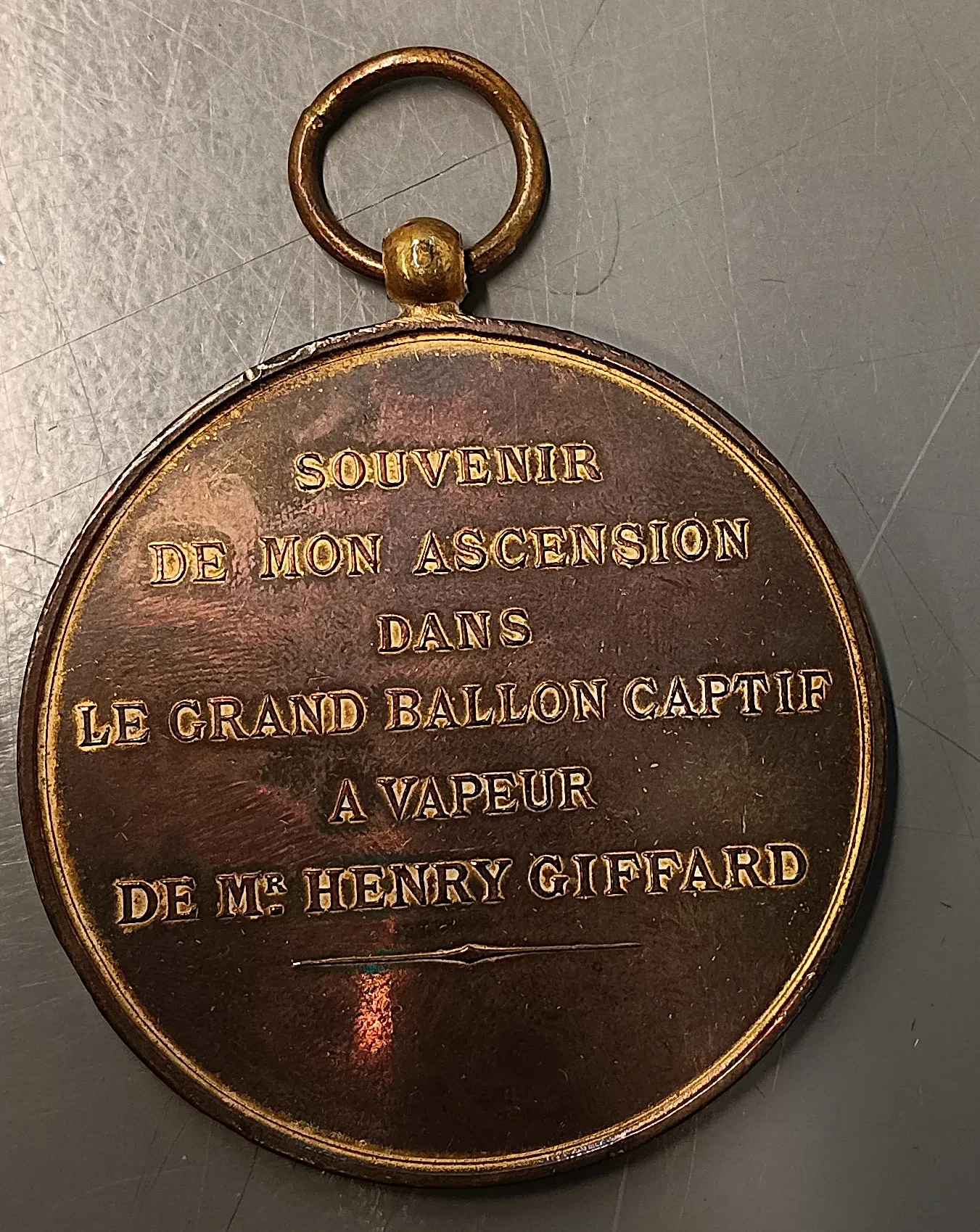
One such keepsake is a small medal commemorating Frenchman Henri Giffard's tethered hot air balloon which gave passengers a panoramic view of Paris during the 1878 World Fair.
Giffard also invented and flew the first powered aircraft, a steam-powered airship, in 1852.
1 / 2
Obverse
Obverse of the commemorative medal for the ascent of Mr Henri Giffard's tethered hot air balloon in Paris in 1878.
2 / 2
Reverse
Reverse of the commemorative medal for the ascent of Mr Henri Giffard's tethered hot air balloon in Paris in 1878.
Airship development...
York-Moore's papers reveal a dedication to airships from the start of his career. In 1916 he received a letter from the Royal Navy Air Department confirming his selection to the Airship Expeditionary Force in the Eastern Mediterranean (RMG ID: YKM/2/7).
York-Moore was then promoted to Flight Lieutenant in 1917 and received several more letters from the Air Department during 1918, congratulating him for the number of hours he had flown.
Airships were ideal for escorting naval convoys for two reasons: they can cruise slowly to patrol the ocean below, and can stay airborne for long periods of time without needing to refuel.
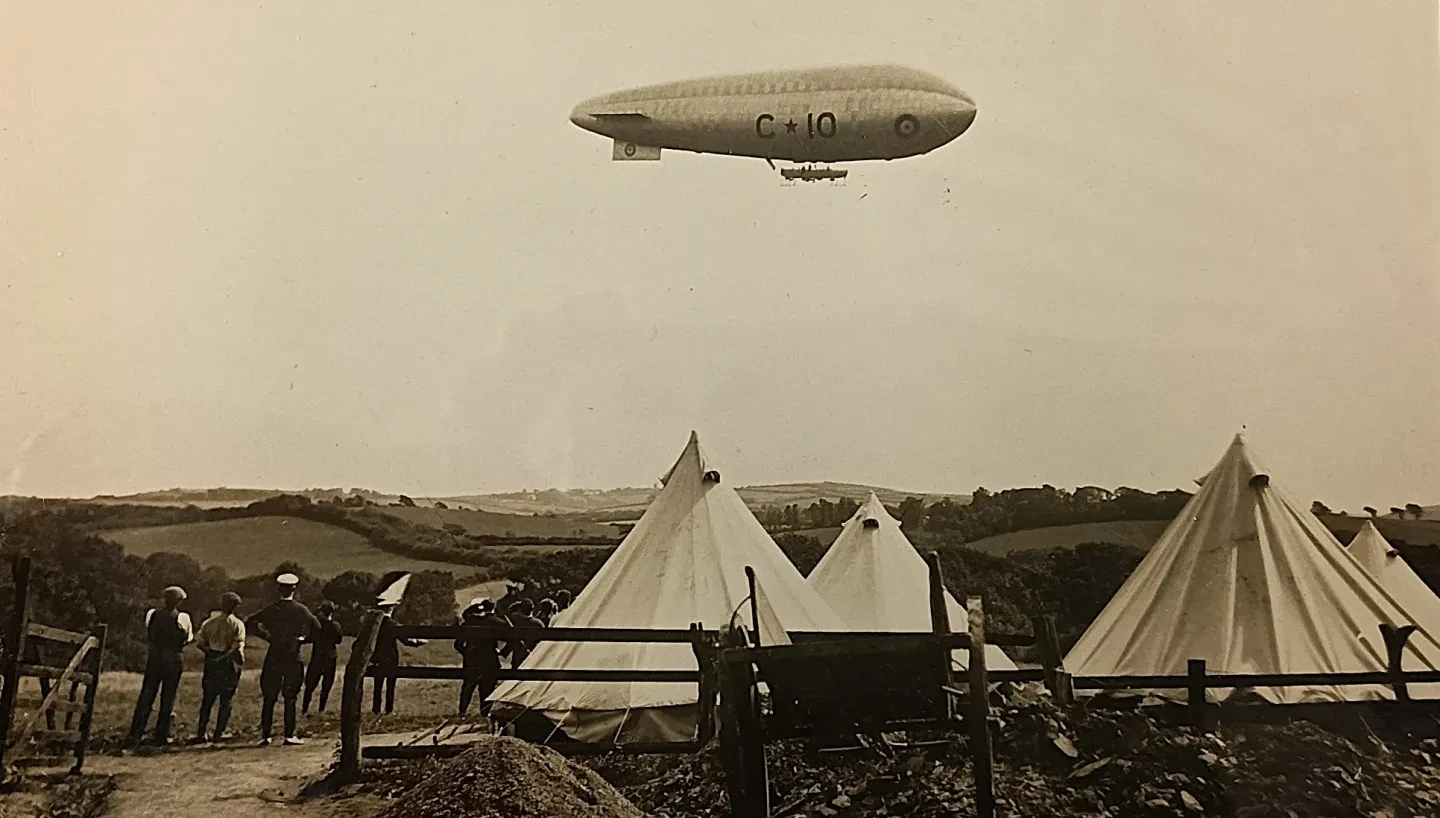
It was the rigid airship design of Count Ferdinand von Zeppelin (1838-1917), with its metal framework, that provided the template for future airships of this type. The terms 'zeppelin' and 'airship' are often used interchangeably, but 'zeppelin' originally referred to an airship built by the company founded by Count Zeppelin, Luftschiffbau Zeppelin (Zeppelin Airship Construction Company).
The British endeavoured to develop an airship programme to rival that of the Germans, but this was not plain sailing.
British airship development was mainly based at an airfield in Cardington, Bedfordshire, which was nationalised in 1919 and renamed the Royal Airship Works.
... and disaster
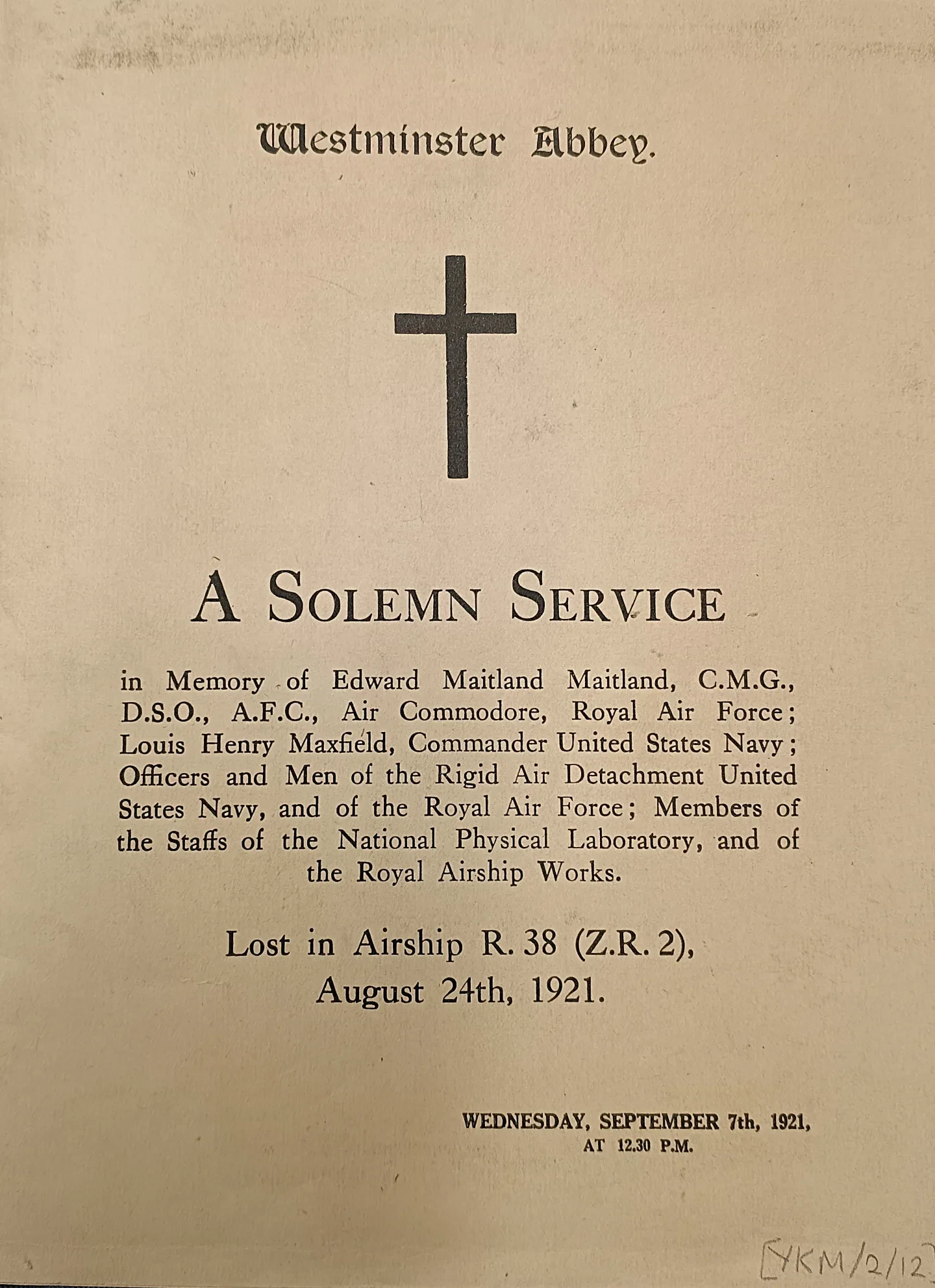
York-Moore's papers include a programme for a memorial service held at Westminster Abbey for the men lost in Airship R38, although it is not clear if he attended.
The R38 was constructed for the Royal Navy, and the US Navy also expressed interest in acquiring the airship. However, it tore apart and exploded on 24 August 1921, due to flawed design and inadequate testing. Most of the crew died, including several American airshipmen and the superintendent of the Royal Airship Works.
In addition to military use, airships also had potential as commercial passenger liners. Possibly the most well-known British airships are the R100 and R101, built in an attempt to develop a commercial transport service between the countries of the British Empire.
The R101 was the world's largest flying craft at its launch in 1929. The R100 flew to Canada successfully in 1930, but later that year the R101 crashed in France during its maiden voyage to India, killing most of the 54 people on board, including VIPs and many of the designers from the Royal Airship Works.
Following this disaster, the British airship programme was discontinued.
The first commercial transatlantic flight
The LZ-127 Graf Zeppelin was the first airship, and in fact the first aircraft of any type, to make a commercial transatlantic flight, completing a journey from Germany to New Jersey on the east coast of the USA in 1928 .
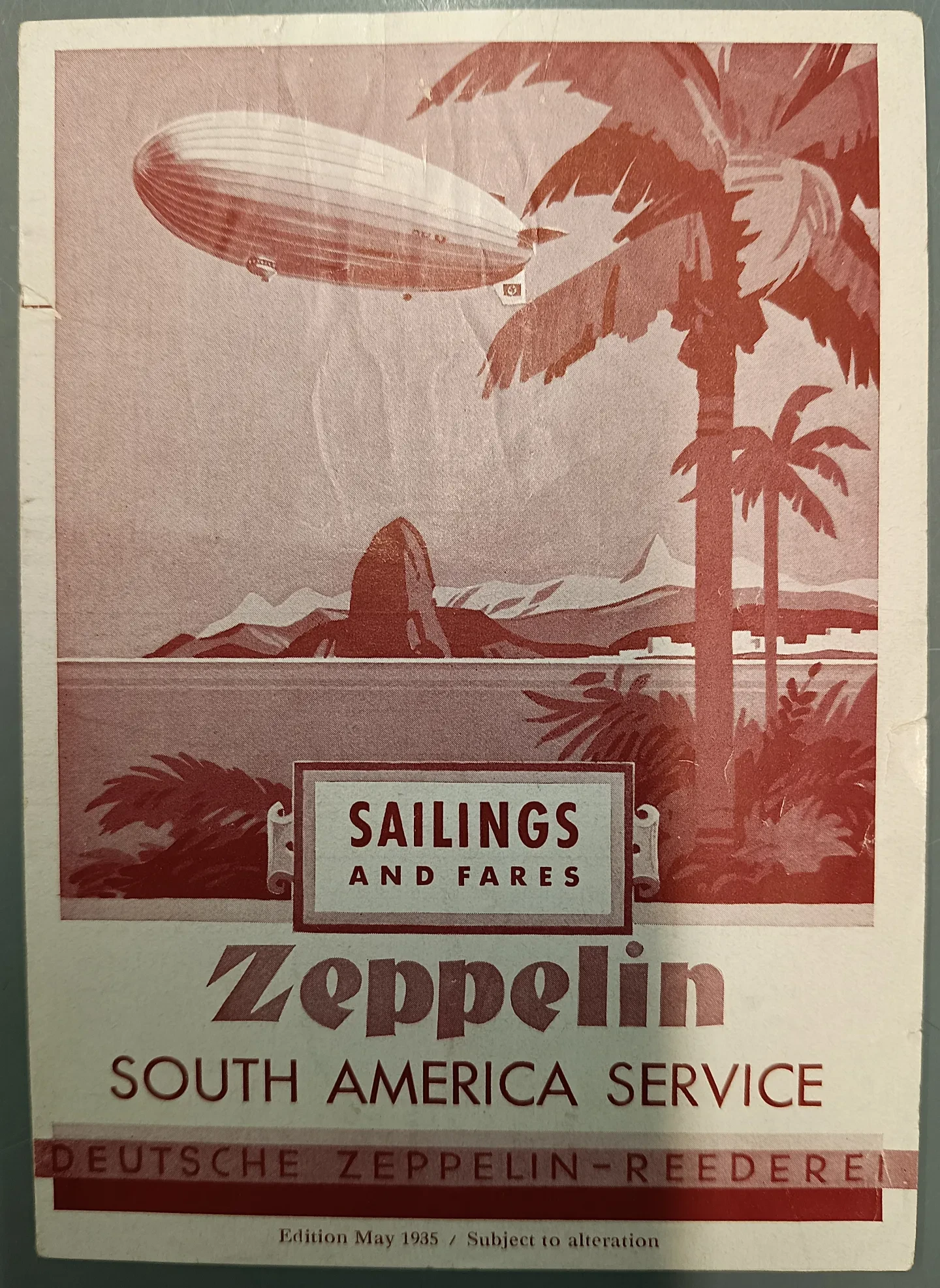
In 1931, it began a regularly scheduled passenger service between Germany and South America and made hundreds of flights with a perfect safety record. Its operations came to a halt however when the Hindenburg, probably the most famous zeppelin, crashed in 1937.
What happened to the Hindenburg?
At its launch the Hindenburg overtook the R101 as the world's largest ever airship, similar in length to the Titanic, and a real luxury liner of the skies.
It exploded on 6 May 1937, at the end of a journey from Germany to New Jersey, killing about a third of the people on board.
The Hindenburg was mired in controversy, as it was used by the German regime for Nazi propaganda (against the wishes of Hugo Eckener, the Zeppelin Company chairman). Although it was fuelled by hydrogen, it had in fact been designed for the slightly heavier but inert helium.
There were rumours of sabotage, but the hydrogen undoubtedly contributed to the explosion. The loss of the renowned airship marked the beginning of the end of lighter-than-air commercial passenger travel.
Decline of the airship
In the early 1950s York-Moore himself was involved in the construction and design of an airship, the Bournemouth.
He collaborated with Lord Ventry, a fellow airship pilot and enthusiast, along with a few others. This was the first airship built in Britain since the ill-fated R101.
The Bournemouth made several short flights in 1951 and 1952, but the project had to be abandoned due to lack of funding.
When York-Moore started his airship career in the early years of the 20th century, aviation was in its infancy.
It is difficult to imagine now as aeroplanes have achieved clear dominance in commercial air travel, but at the time it was far from certain which aircraft would prove to be more successful.
However, York-Moore continued to go into battle for airships long after aeroplanes had won the aviation war.
In his essay Up the Battle Bags, included in Lord Ventry’s 1982 book Airship Saga, York-Moore detailed his war service as an airship pilot and argued airships had been unfairly cast aside following the Hindenburg disaster.
He believed that while much slower, airships were more comfortable and safer than aeroplanes. He wrote:
Neither in peace or war has the airship failed. They have never been given the same chances as the more favoured aeroplanes.
Are airships making a comeback?
Were he alive today York-Moore would be encouraged by the renewed interest in airships. For example, tech billionaire and Google co-founder, Sergey Brin's company LTA Research recently launched its Pathfinder-1 airship, the first giant rigid airship built since the 1930s.
York-Moore died in 1985 and his papers were donated to the Museum in 1995.
For a much deeper dive into this topic, the Caird Library has several books detailing the history and development of airships, including:
Explore more from the Caird Library



Journey to the Caird Library and Archive
Discover the largest maritime collection in the world