Many fine actors have taken on the role of Elizabeth I on both the small and large screen, from Glenda Jackson to Margot Robbie. But how exactly do these films represent her?
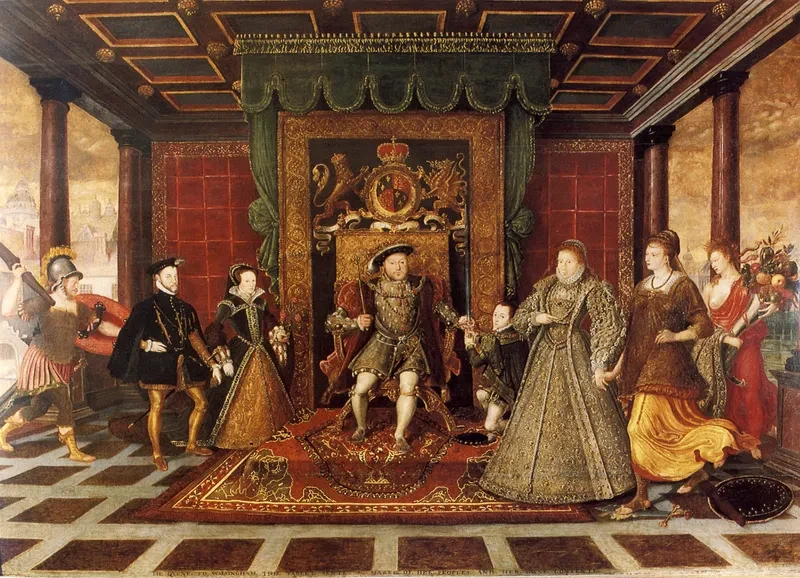
As public performance grew in popularity in Elizabethan times, the image of a queen became all the more important. This was also true in huge public arenas; the silhouette defined her power much more than the detail, which few would have been allowed to see.
As time has passed, the image of Queen Elizabeth I continues to be a striking one, as well as a familiar one.
Elizabeth I in film
Les Amours de la reine Elisabeth (1912)
The first cinematic depiction of Elizabeth I, this 4-reel silent French film is based on the love affair between Elizabeth I and the Earl of Essex. Based on the play of the same name, the film had one of the earliest dedicated film scores. Treatment fit for a royal, we think!
Mary, Queen of Scots (1971)
Before Glenda Jackson’s own career in politics, this film fictionalises the relationship between the two queens. They never actually met in real life. The original Mary, Queen of Scots film, this is the defining depiction of Elizabeth I for many film and TV fans.
Glenda Jackson also played Elizabeth in a series of plays made for the BBC. Elizabeth R won the actor two Emmys and was a follow up to Six Wives of Henry VIII.
Fire Over England (1937)
Starring Flora Robson as the Virgin Queen and focusing on Elizabeth's victory at the Spanish Armada, the film is perhaps more famous for being the first pairing of Vivien Leigh and Laurence Olivier. It was Leigh's performance in this film that convinced David O. Selznick to cast her in Gone with the Wind.
Jubilee (1978)
Punk film Jubilee sees Elizabeth I transported forward in time to the 1970s by an occultist. In an imaginary universe where Queen Elizabeth II has been killed and the country is in tatters, Elizabeth I follows around a group of nihilists and their destructive activities.
Orlando (1992)
Quentin Crisp plays Elizabeth I in this loose adaptation of Orlando: A Biography by Virginia Woolf. Elizabeth I bequeaths lands and riches to a young Orlando on her deathbed, if only he promises to not wither, or age. Orlando succeeds fairly well at this until one day wakes up and has become a woman. This gender crossing film explores the role of sex and power, particularly when it comes to royalty.
Shakespeare in Love (1998)
It won Judi Dench an Oscar for Best Supporting Actress, despite her screen time coming in at under eight minutes. The film is a tongue in cheek tale of a young William Shakespeare falling in love with Viola de Lesseps as he writes Romeo and Juliet. Queen Elizabeth I secretly watches Shakespeare’s performances. When she sees it is Viola who is acting she remarks, 'I know something of a woman in a man’s profession.' Elizabeth is shown to have wit, and heart, but also a short temper.
Elizabeth the Golden Age (2007)
Earning Cate Blanchett an Oscar nomination for her portrayal, the film is a return to the story of Elizabeth. Following on from the 1998 film, the Golden Age focuses on her life during the latter part of her reign.
Mary, Queen of Scots (2019)
A more recent film about Queen Elizabeth I sees Margot Robbie in the title role. The contrast between Elizabeth’s white face and Mary’s more natural look highlights the differences between the pair. Films since the 1960s have depicted Elizabeth with a white face, or her ‘mask of youth’. Recent research suggests this to actually be more of a 19th-century style, but the thick layer of make-up dramatises her regal nature.
Elizabeth I in TV
Blackadder Series 2 (1986)
Miranda Richardson charmed audiences with her portrayal of Elizabeth. Lovingly referred to as Queenie, she's a spoilt child given too much power. Quick to change her mind and always wanting to cut someone's head off, she has a soft spot for poor Lord Blackadder who works hard to keep her on side. While not historically accurate, the series captured the need to stay on the right side of the queen.
Elizabeth I in theatre
Henry VIII
Going back to Shakespeare, his less-often performed play Henry VIII sees the birth of Elizabeth. Huge crowds line the street for her christening, and predictions are made of how successful her reign will be. They weren’t wrong.
- Have you heard the myth about Elizabeth I writing many of Shakespeare's plays? Find out more Elizabeth I facts and myths
Elizabeth I in art
The Dinner Party (1979)
This immersive piece is considered to be the first epic feminist artwork. A triangular table is set with 39 place settings for mythical and important women from history. Elizabeth I was one of them. She is ‘seated’ between political figure Isabella d’Este and artist Artemisia Gentileschi.
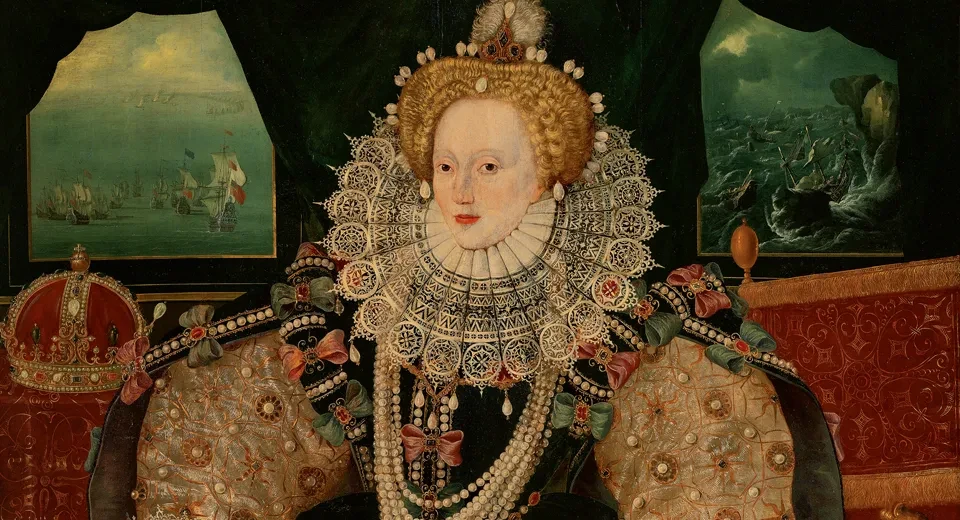
Armada Portrait
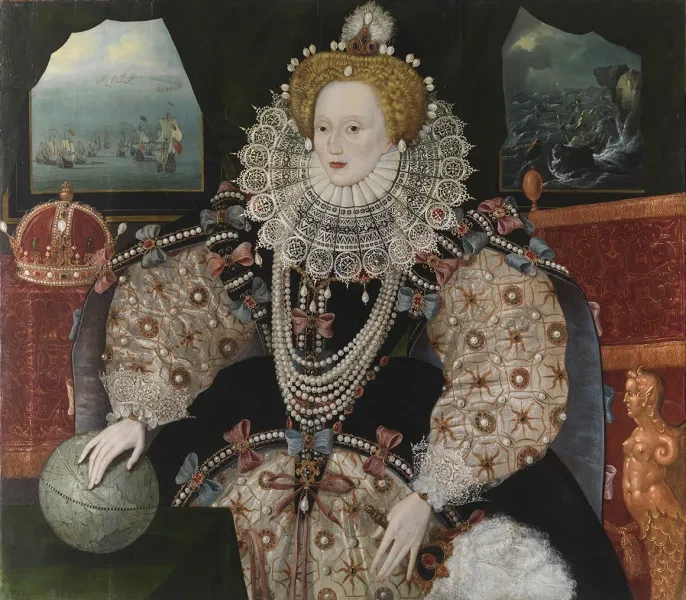
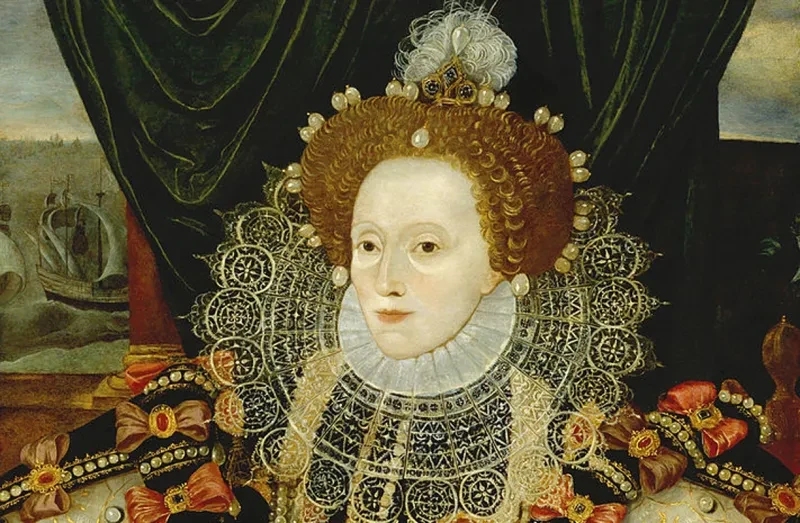
Portraiture was often a mechanism to define the way you would be seen by future generations. Within this portrait Elizabeth uses symbolism to tell the viewer things about herself as a leader. This image of Elizabeth as strong is particularly striking when she existed in a time when women’s role was to get married and have children. Elizabeth I defied this and in a way she becomes genderless by doing so.
In 2016 Royal Museums Greenwich acquired the Armada Portrait, and conserved it for future generations. It is an image that remains relevant to how we define power today.
More about Elizabeth I