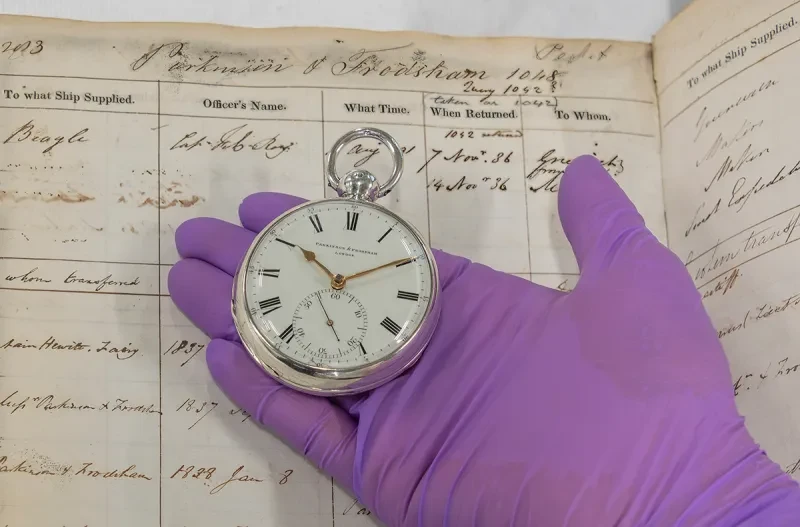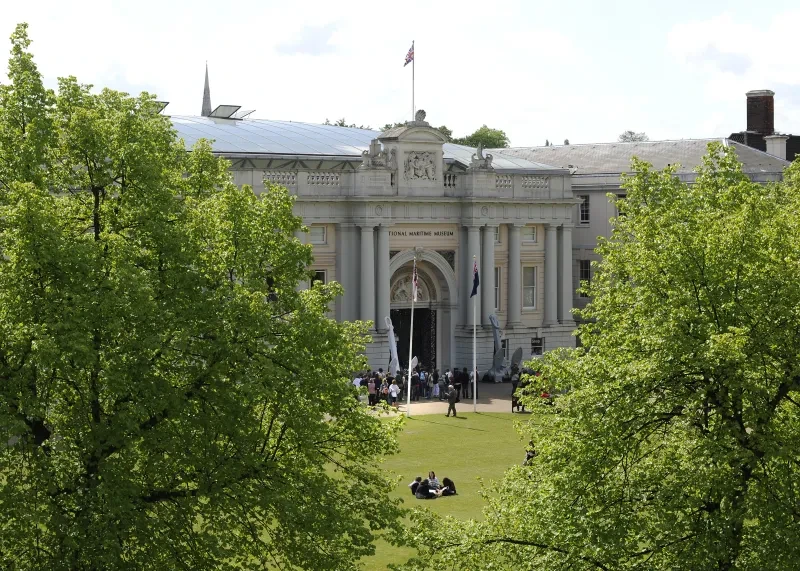
The acquisition of No 1042, a rare pocket chronometer used on board HMS Beagle, is an exciting new addition to the National Maritime Museum’s collection.
And it turns out 1042 is in pretty distinguished company. The Museum holds a fascinating array of Beagle material, from working charts and logbooks to surveying instruments and evocative artwork.
So, what else is hiding in the collection? We’ve picked seven treasures that reveal the people, places and painstaking practical work behind one of the most famous surveying voyages in maritime history.
Image
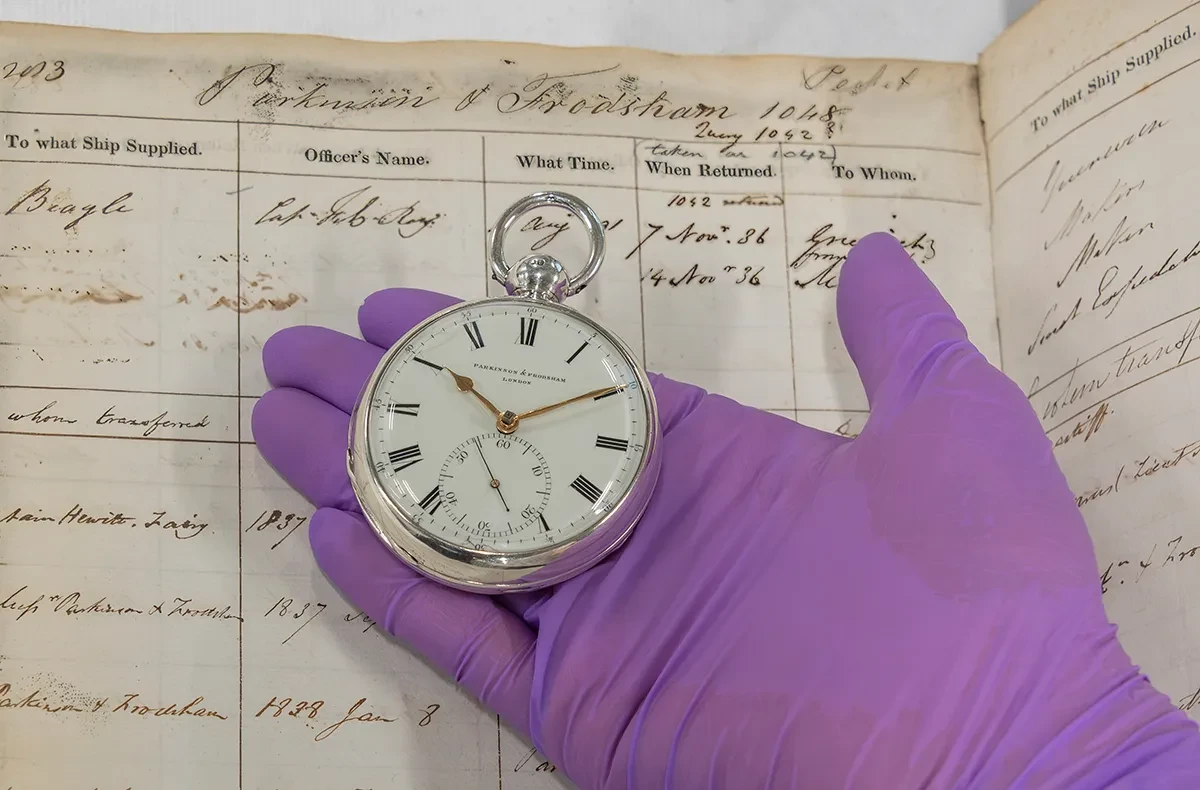
1. No 1042 – Beagle pocket chronometer
This rare pocket chronometer – a precision timekeeper used to determine longitude at sea – is known as No 1042 and travelled on the Beagle's second voyage along with Charles Darwin. This little device was one of 22 chronometers taken on the voyage; only two pocket chronometers survive today.
Captain Robert FitzRoy selected 1042 as the observation chronometer and referred to it affectionately as the 'journeyman watch'. While most of the chronometers remained in the captain's cabin, FitzRoy took this pocket watch on shore to aid the celestial observations essential to his timekeeping measurements.
FitzRoy described it as 'a very good pocket chronometer, carried by hand, in a box, [...] always used for taking time' on shore.
'There is a most important error in the longitude of S America, to settle which this second trip has been undertaken. Our Chronometers at least 16 of them, are going superbly: none on record ever have gone at all like them.'
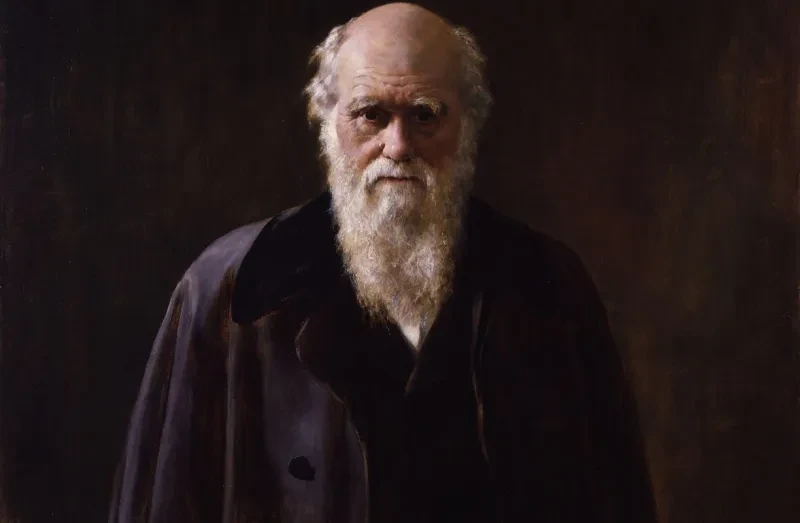
Charles Darwin
Image
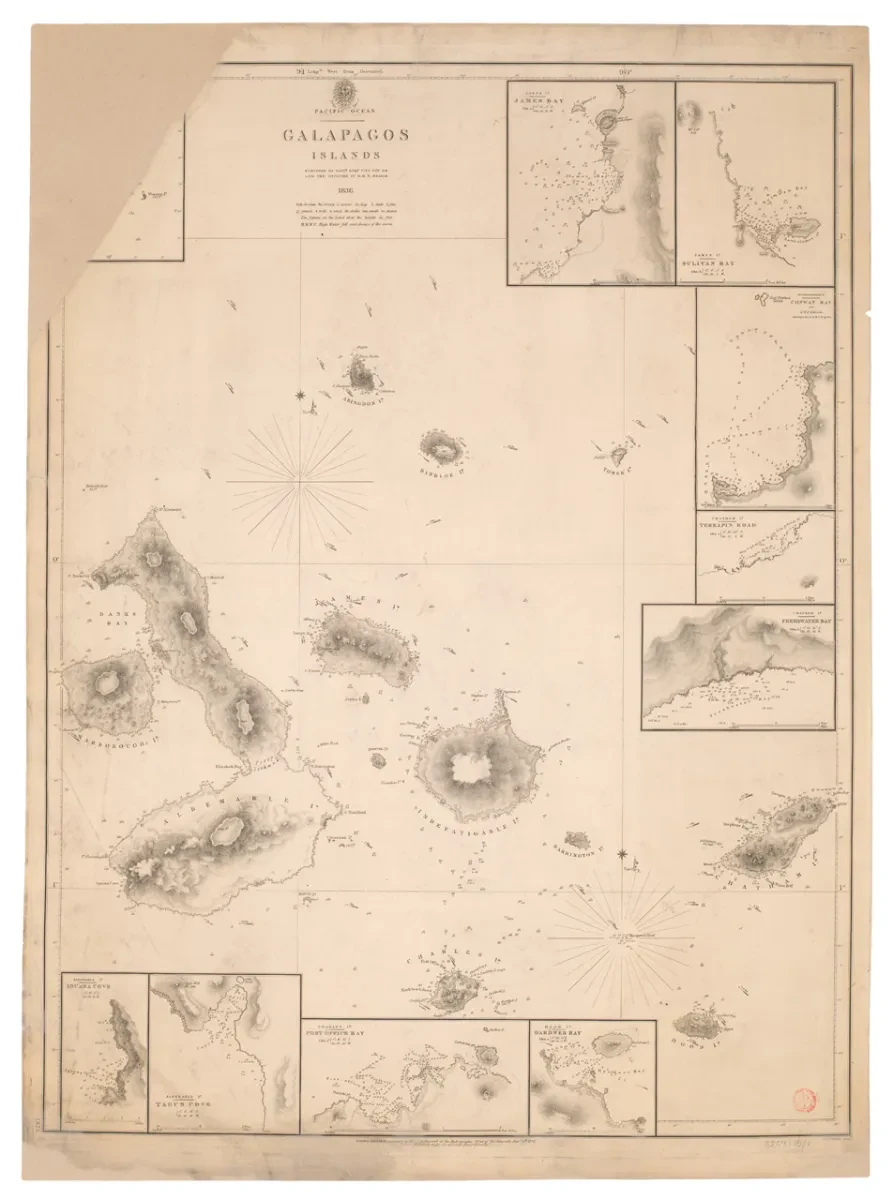
2. Galápagos survey chart
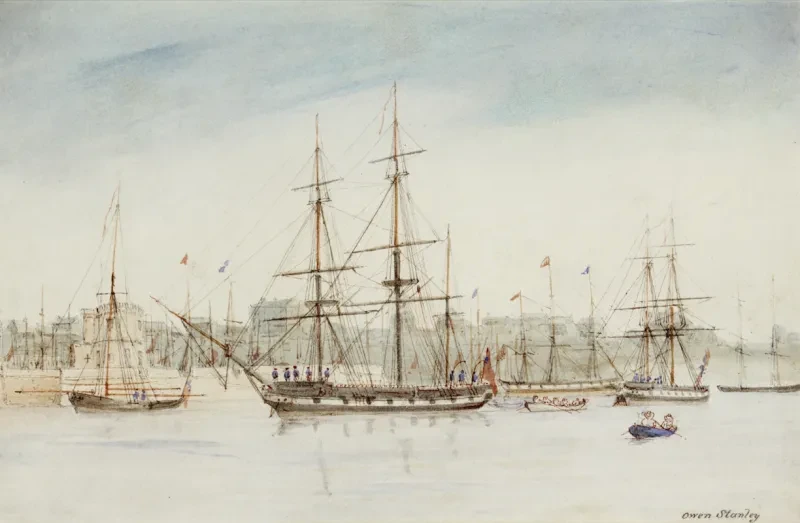
Today, the Beagle's second voyage is famous for Darwin's research that led to his groundbreaking theory of evolution. But at the time, HMS Beagle's mission was to survey the coasts of South America and the Galápagos.
This fragile, torn single sheet of paper gives a glimpse into what the rest of the team was doing while Darwin studied his specimens. The Galápagos Islands were surveyed between September and October 1835, precisely when Darwin was making observations about the different forms of species on different islands contributing to his theory of evolution.
- Find out more about survey chart (G267:15/1) here.
Image
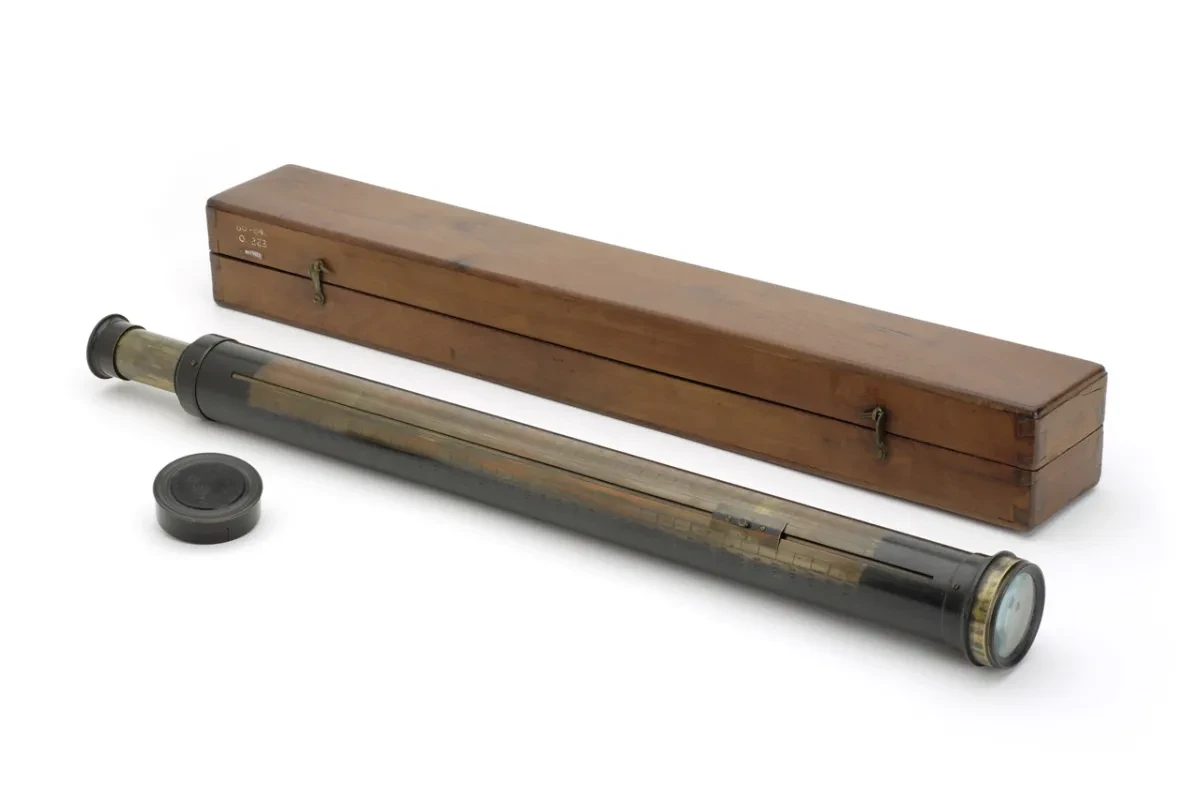
3. Stokes's rangefinder telescope
This brass rangefinder telescope belonged to John Lort Stokes, who served as Assistant Surveyor on board Beagle during the Darwin voyage. Later, Stokes commanded the ship during its Australian survey.
The telescope has a sliding lens and scales that allowed its user to measure the distance to objects. The original wooden box and waterproof canvas carrying case survive too.
- Find out more about the rangefinder telescope (NAV1668) here
Image
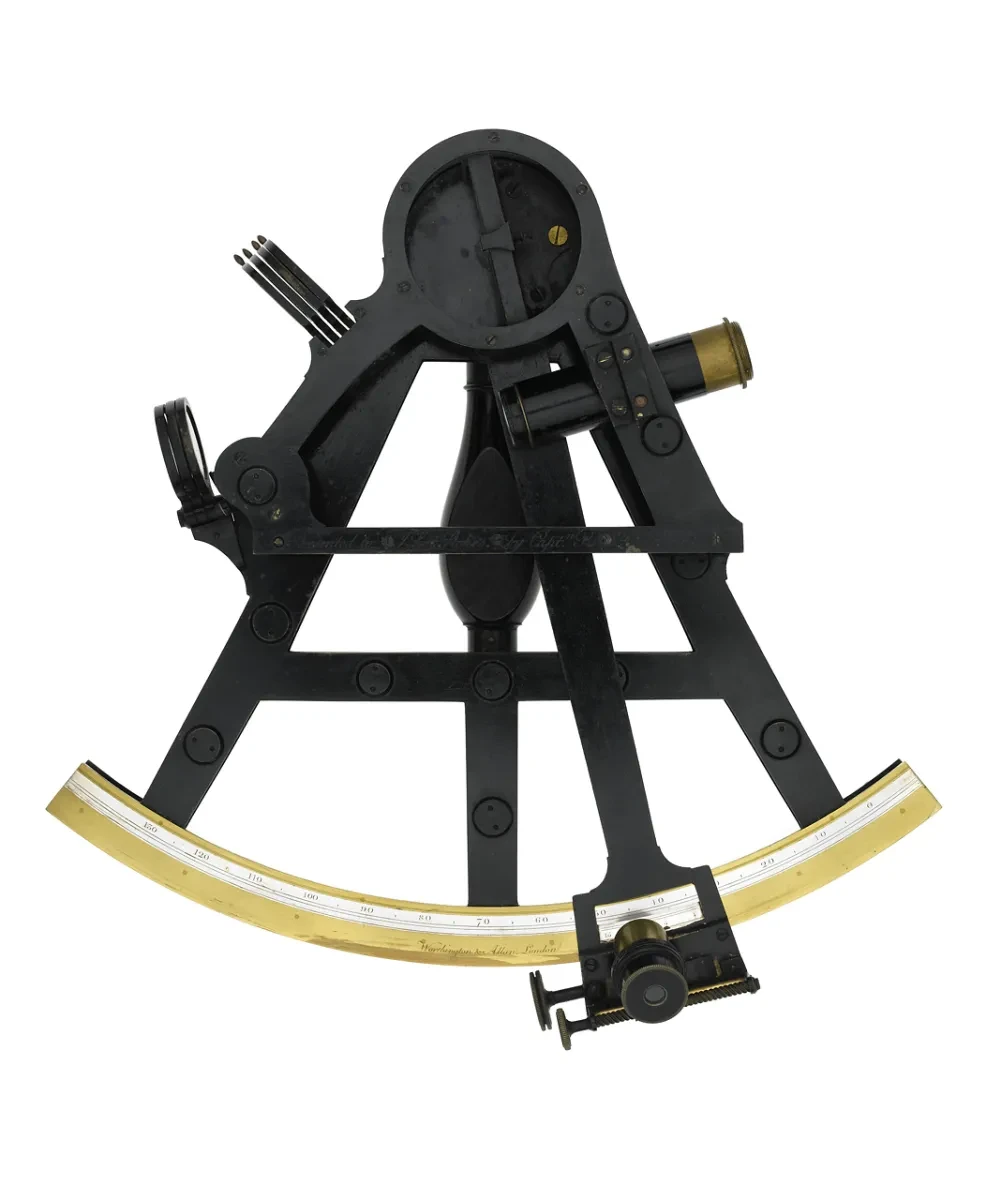
4. Double frame bridge sextant
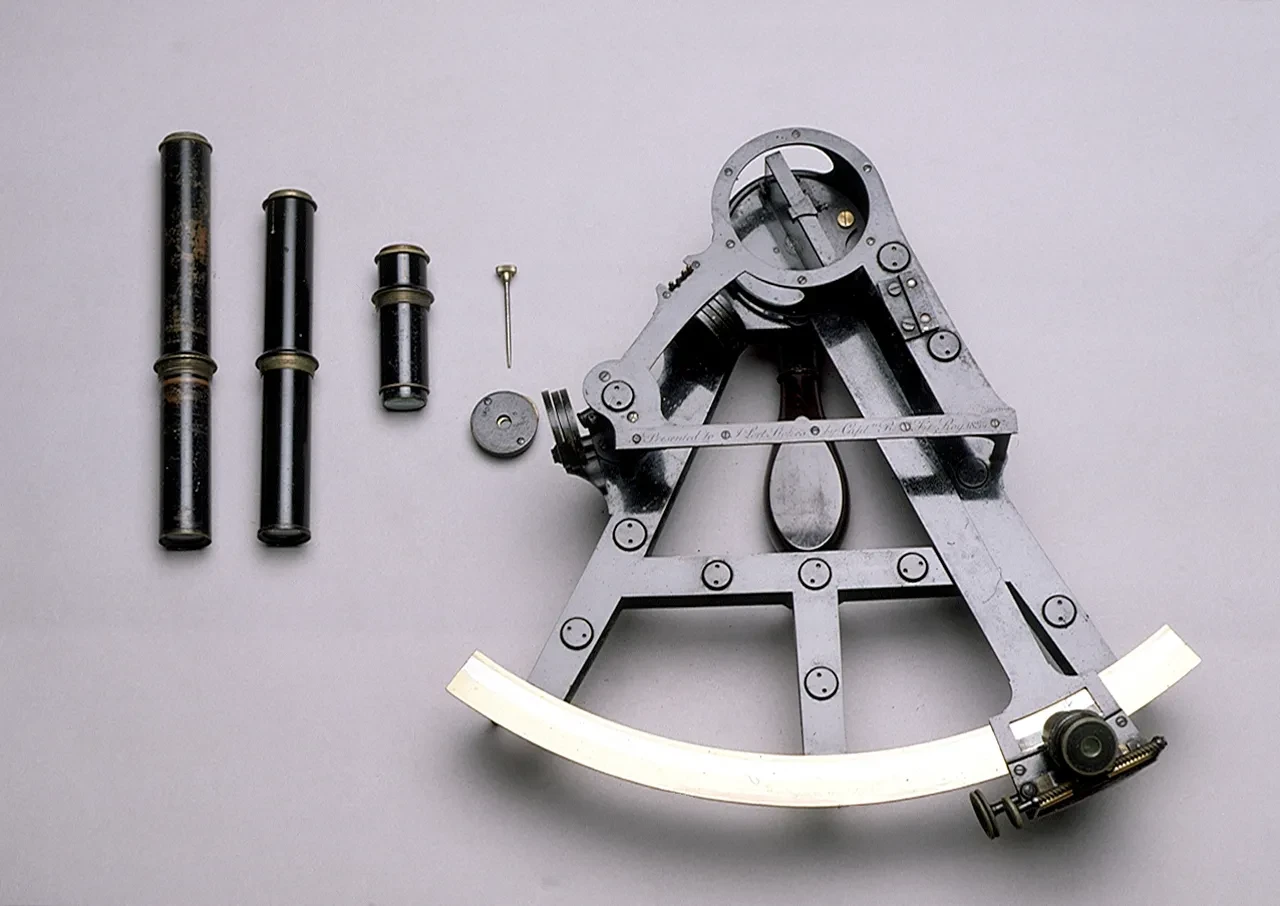
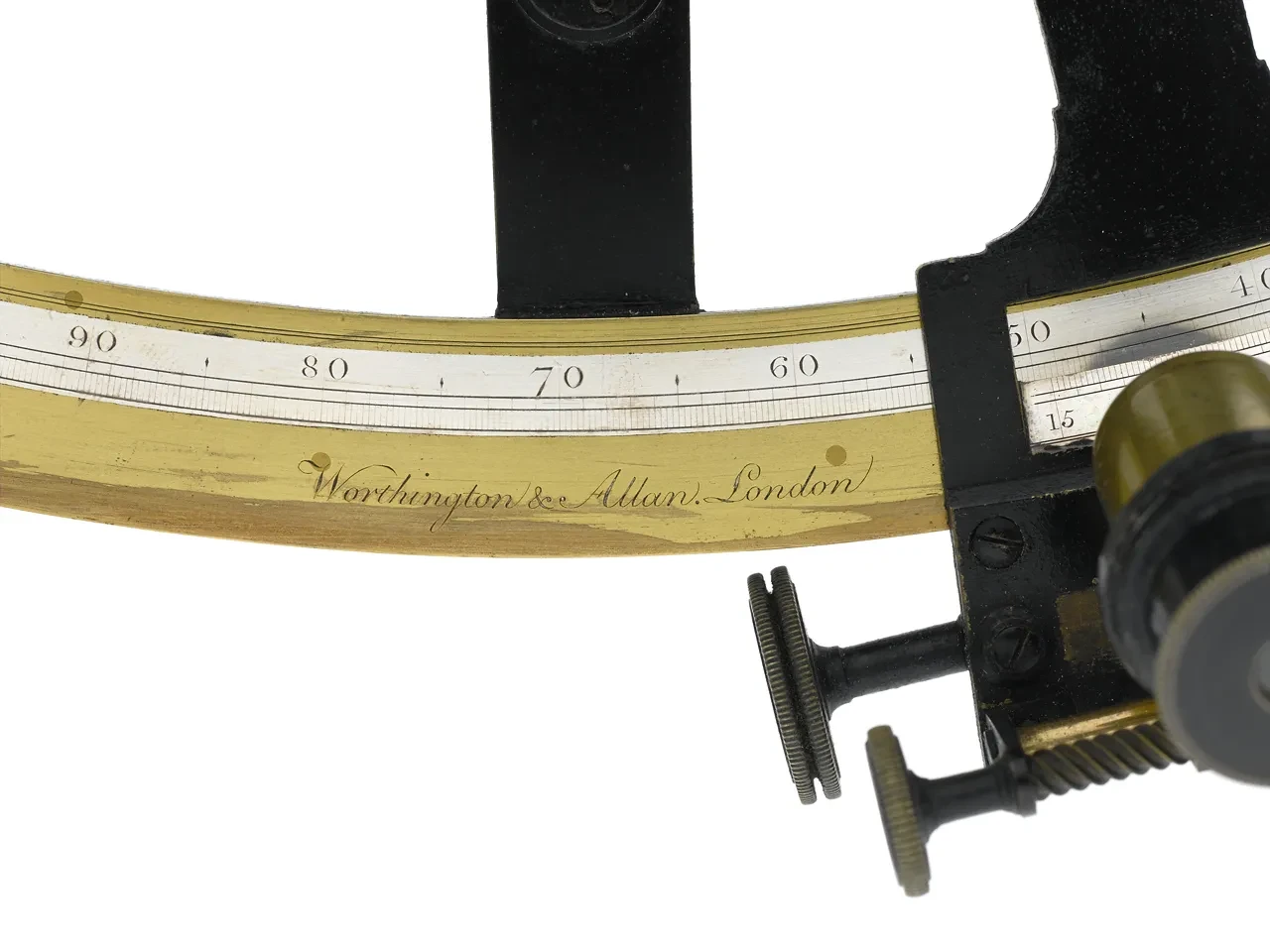
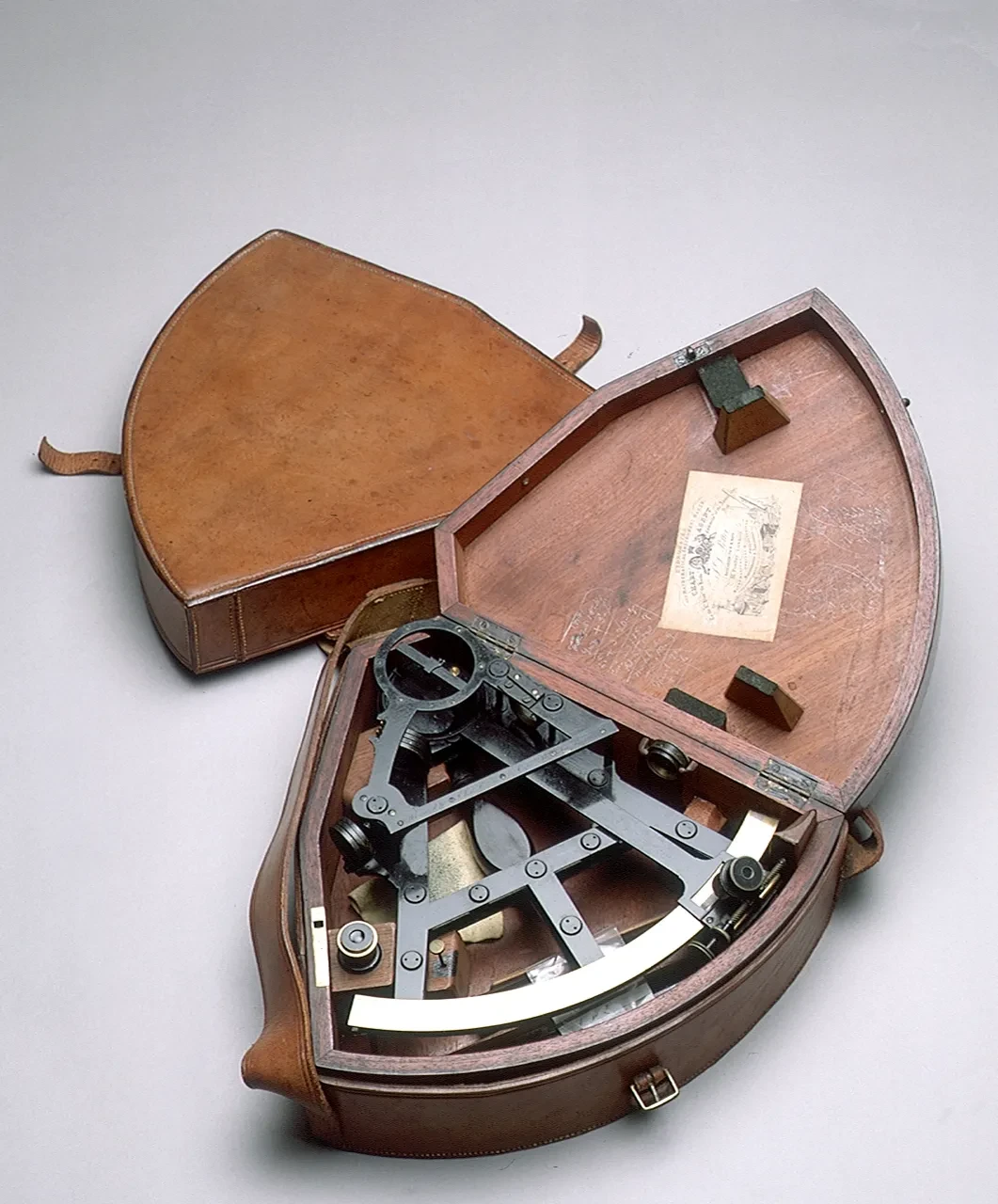
Another beautiful survivor from the Beagle surveying voyages is this sextant – a device used to measure angles between celestial objects and the horizon, allowing navigators to calculate their position.
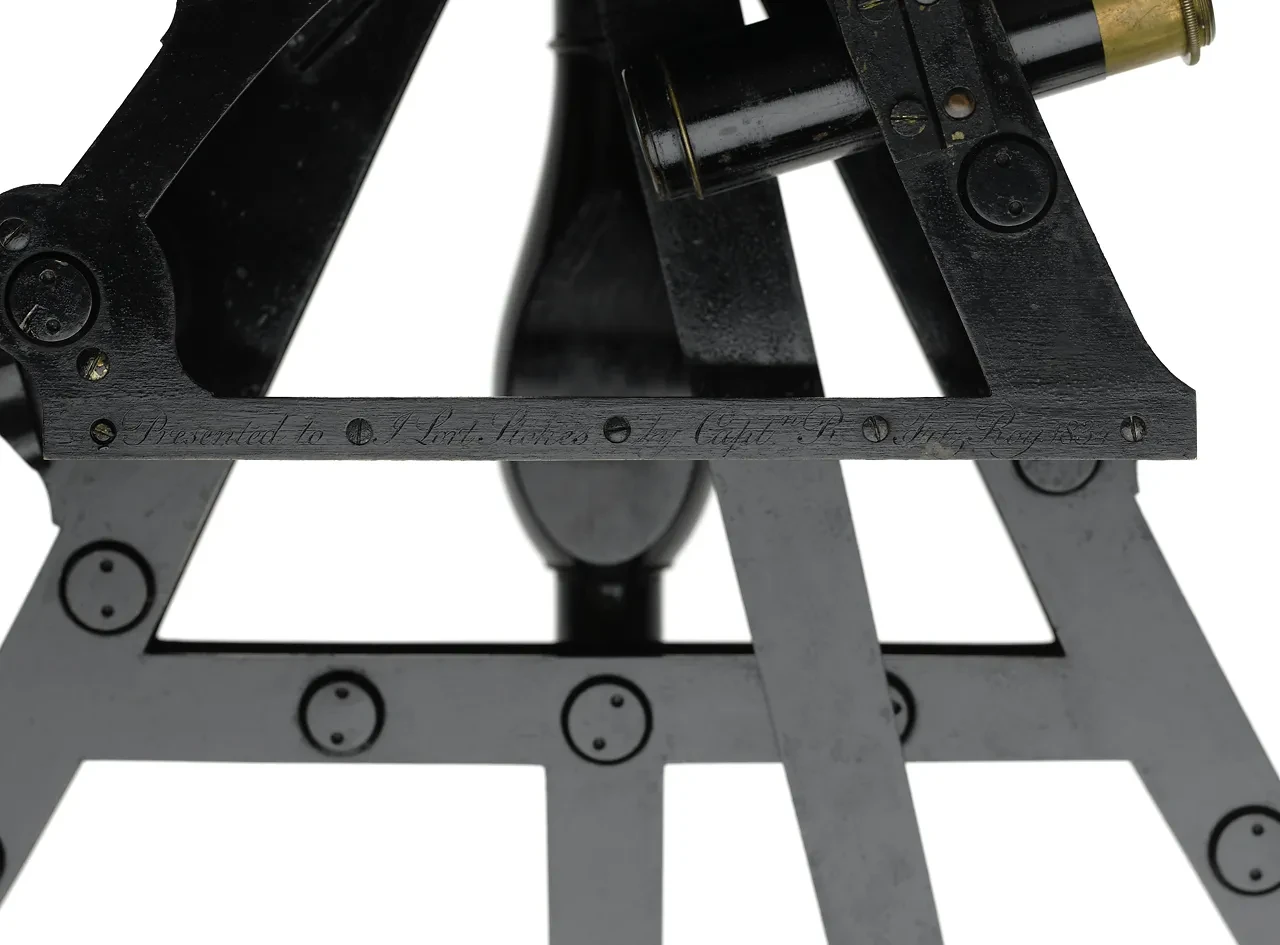
The serial number '2029' indicates this sextant was manufactured around 1831, which suggests FitzRoy bought it for the second Beagle voyage. The inscription on the instrument shows he then gave it to Stokes in 1834.
Like the chronometer and the rangefinder, this is another gorgeous tool that shows how the surveying was carried out by the men involved.
Take a closer look at Stokes's sextant
1 / 5
The double frame bridge sextant with telescopes and eye pieces laid out next to it
2 / 5
The engraved dedication on the sextant
3 / 5
The engraved makers' mark: Worthington & Allan London
4 / 5
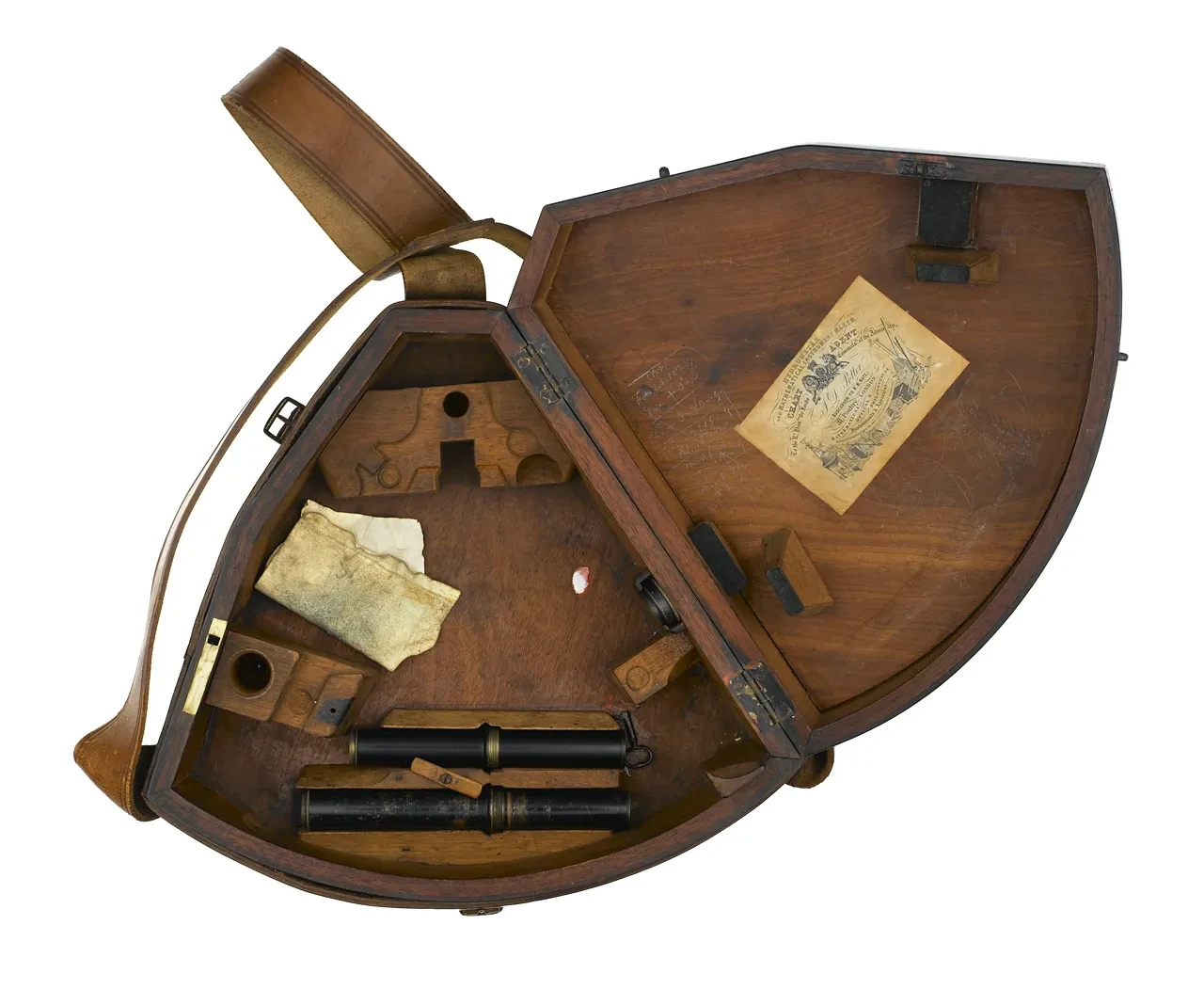
The sextant's box with telescopes, eye piece and chamois leather inside
Image
5. Earle's Tenerife watercolour
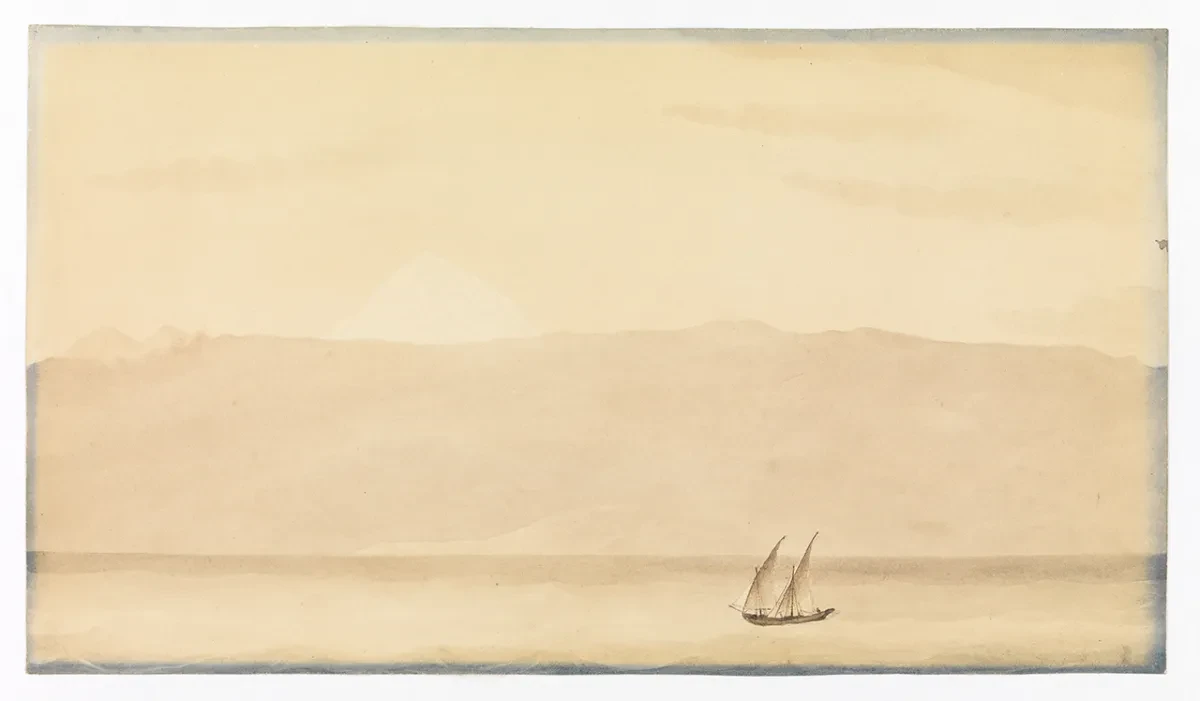
This is a particularly important survivor: the only drawing in the Museum's collection by Augustus Earle from the 1831–36 Beagle voyage. Earle was FitzRoy’s first draughtsman on board the Beagle. He became friends with Darwin; in April and May 1832 they stayed in a cottage together at Botafogo near Rio de Janeiro.
This rare, faded watercolour (it should be mainly blue) depicts the island of Tenerife as the Beagle approached the Canaries on the outward voyage. The boat is a local fishing boat; the white triangle to the left of the centre is the peak of the active stratovolcano, Mount Teide. Later, Earle left the expedition at Montevideo because he was unwell; Conrad Martens (see the next treasure) replaced him.
- Find out more about Earle's painting The Peak, Tenerife (PAF6239) here
'Poor Earl has never been well enough since leaving England & now his health is so entirely broken up that he leaves us –& Mr Marten, a pupil of C[opley] Fielding & excellent landscape drawer has joined us. He is a pleasant person & like all birds of that class, full up to the mouth with enthusiasm.'
Charles Darwin in a letter to his sister Caroline, 13 November 1833
Image
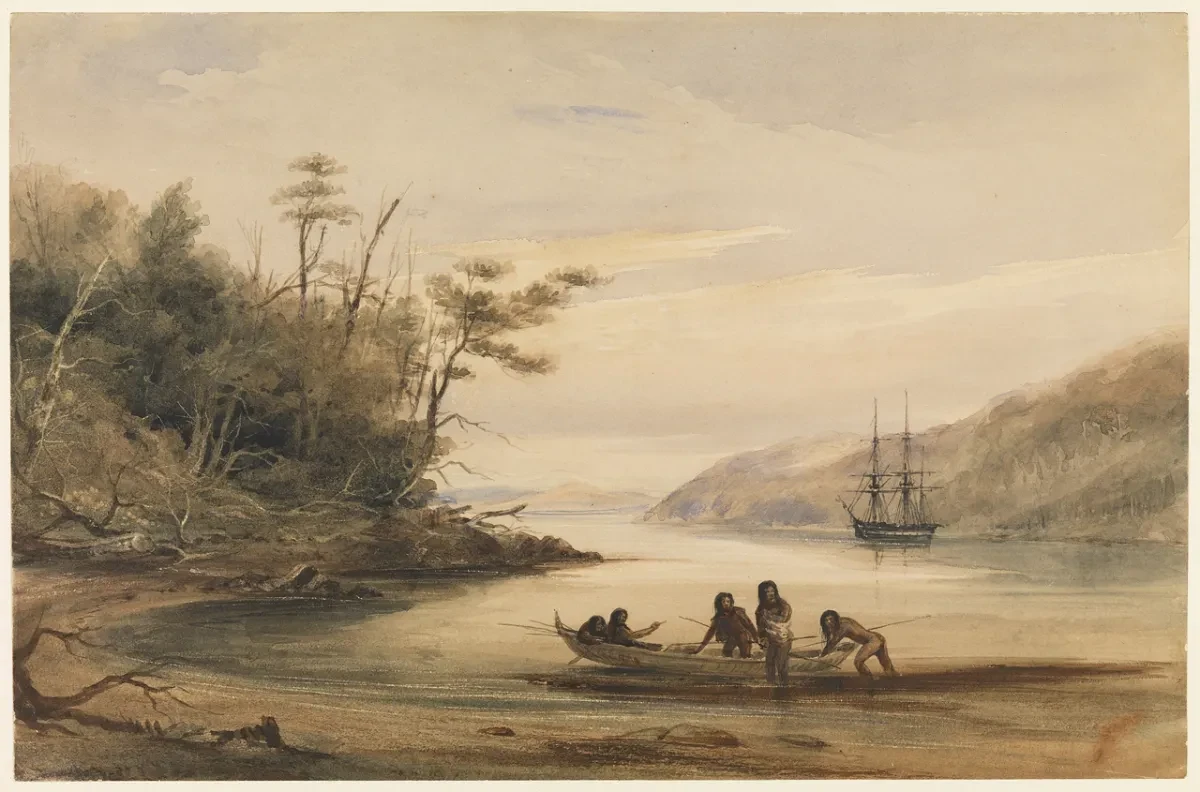
6. Conrad Martens's painting of the 'Fuegians'
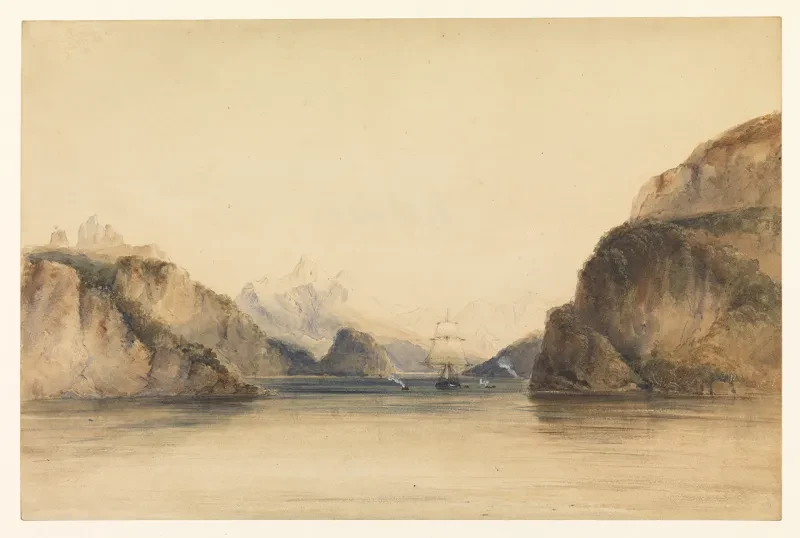
The Beagle's story is also a story of people and cultures. This painting, one of 15 watercolours in the collection made by Conrad Martens to illustrate Robert FitzRoy's Narrative of the Voyage of the Beagle (1839) reminds us that the expedition was not simply about surveying coastlines and collecting scientific specimens.
During the previous Beagle voyage, FitzRoy had taken four Indigenous people from Tierra del Fuego to England, initially as captives. He later conceived of returning them after they had been educated in England, hoping they would help spread Christianity and European culture among their communities. Three survived to return on the second voyage; one, nicknamed ‘Boat Memory’ had died in England of smallpox.
Their return was part of the human story of the voyage, but it was also an encounter shaped by profound inequalities of power and by contemporaneous European ideas about 'civilising' Indigenous peoples. The painting offers a reminder that the Beagle's story involved Indigenous communities as well as the British officers, scientists and artists whose records have survived in the Museum's collections.
- Find out more about Martens' Fuegians and the 'Beagle' at Portrait Cove, Beagle Channel (PAF6242) here
Image
7. John Lort Stokes's Beagle papers
These papers give a real insight into how the Beagle expeditions actually worked.
The papers contain survey notebooks, letters, a night order book, a game book, a list of the crew, some accounts and some loose sketches. Among them are captain's orders and a memorandum on the methods of surveying used on board Beagle between 1831 and 1836.
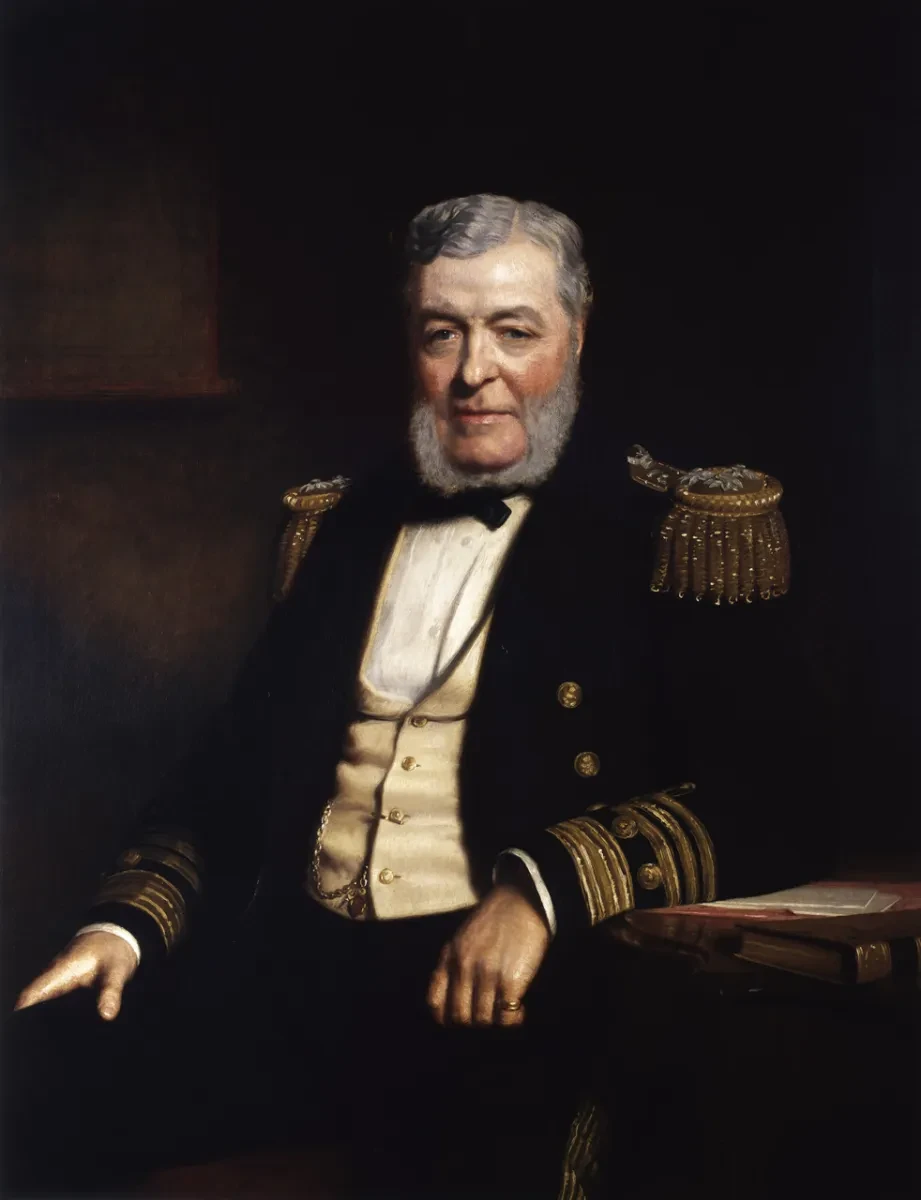
Stokes entered the Navy in 1824 and joined HMS Beagle the following year. He served in the ship for 18 years, first surveying in South American and then in Australian waters. He shared a cabin with Charles Darwin on the ship's second voyage.
It's in these documents that you can learn more about the mundanities of life at sea: where and when the crew took on fresh supplies (often mutton and vegetables); the weather; the crew's duties (and punishments); what tobacco and soap was issued to the ship’s company.
Image
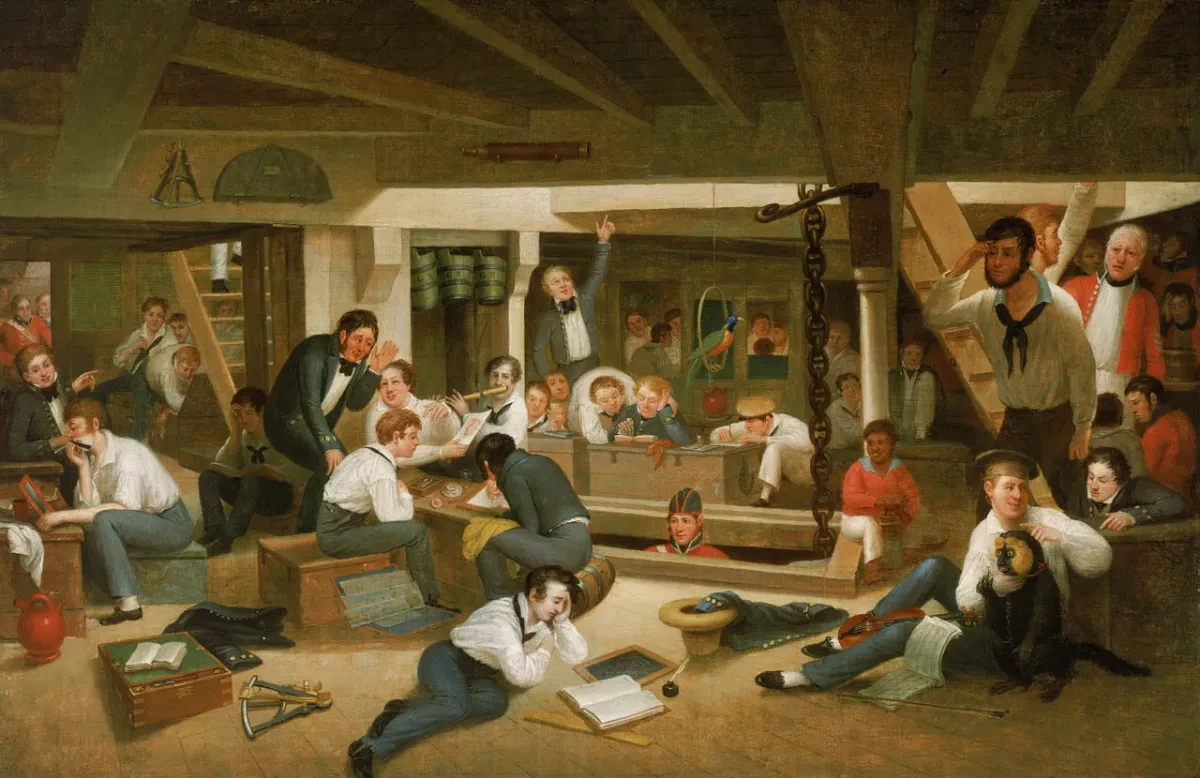
Life on board HMS Beagle
While not an artefact from the Beagle itself, this painting by Augustus Earle gives a vivid impression of the kind of life the ship’s officers experienced below deck.
Here the cramped mess between decks teems with life: young midshipmen can be seen shaving, painting, drinking, chatting, playing musical instruments, writing and making calculations. The tools of their trade, sextants, rulers and telescopes litter the scene. Earle may have included himself, jacket on, bent over his paintings, in the centre of the piece.
While there are sadly no chronometers pictured, you can't help but imagine precious pocket chronometers tucked safely out of sight in this evocative scene.
- Find out more about this painting (BHC1118) here
HMS Beagle: facts at a glance
What was HMS Beagle?
HMS Beagle was a Royal Navy ship best known for its surveying voyages, including the expedition on which Charles Darwin travelled from 1831 to 1836.
Who was HMS Beagle's captain?
- Pringle Stokes (1826–28) commanded the Beagle on its first voyage for a hydrographic survey of South America.
- Robert FitzRoy (1828–36) took command after Stokes's death, completing the first voyage and commanding the second famous expedition when Darwin was aboard.
- John Clements Wickham (1836–41) later took command for subsequent surveying work after FitzRoy stepped down.
When did Darwin sail on HMS Beagle?
Darwin joined the Beagle in December 1831 and returned to England in October 1836.
Who else sailed on HMS Beagle?
HMS Beagle carried roughly 75 officers, crew members and passengers during its famous second voyage.
Among them were:
- John Clements Wickham, First Lieutenant
- Bartholomew James Sulivan, Second Lieutenant
- Edward Chaffers, Main Master
- Philip Gidley King, Midshipman
- John Lort Stokes, Mate, and Assistant Surveyor
- Benjamin Bynoe, Acting Surgeon
- Augustus Earle and Conrad Martens, artists
- Orundellico, a Yaghan boy nicknamed 'Jemmy Button'
- Yokcushlu, an Alakaluf girl nicknamed 'Fuegia Basket'
- El'leparu, an Alakaluf man nicknamed 'York Minster'
The latter three Indigenous people from Tierra del Fuego were being returned to their homeland.
Where did HMS Beagle go?
HMS Beagle took three major exploratory voyages:
- First voyage (1826–30): from Plymouth, England, to survey the coasts of Patagonia and Tierra del Fuego in South America
- Second voyage (1831–36): from Plymouth to map the coasts of South America and the Galápagos Islands; then crossed the Pacific via Tahiti, New Zealand, Sydney and Hobart in Australia, and the Cape of Good Hope before returning to Falmouth, England
- Third voyage (1837–43): commanded by John Clements Wickham and John Lort Stokes to complete the first full surveys of the coastline of Australia
What was HMS Beagle doing?
The Beagle's principal work was hydrographic surveying: measuring and charting coastlines, harbours and waters to improve the accuracy of the navigational charts of the time.
Why is HMS Beagle's voyage famous?
Darwin's observations and collections during the voyage contributed to the research that eventually led to his theory of evolution by natural selection.
When was HMS Beagle built?
The ship was launched at Woolwich in 1820 and was later refitted as a surveying vessel.
What happened to HMS Beagle?
After its surveying career, the Beagle was sold in 1870 and eventually broken up. Its final fate has been the subject of recent research.
More to explore