

Standing on the shore of Haroldswick in Unst, Britain’s most northerly inhabited island, Gail McGarva watched as a wooden boat plied the waters of the North Sea.
It was a landmark moment: the first vessel she had built, gliding through the water after months of intensive work. “It was the most incredible feeling,” Gail says.
Gail’s boatbuilding journey had started the previous year in 2004, when she read an article about the Boat Building Academy in Lyme Regis, Dorset. She signed up for a nine-month course. As soon as she stepped into the workshop, she knew she had made the right decision. “It was like a homecoming,” she says.
From there, Gail’s career set sail. Now based in Dumfries and Galloway in western Scotland, Gail specialises in creating replicas of boats that are in danger of extinction, which she calls ‘daughter boats’. She’s passionate about spreading knowledge of wooden boatbuilding, maintaining a busy schedule of teaching, talks and community events. She's keen to impart a love of boats to others, running educational and storytelling workshops inside The Story Boat – her mobile maritime museum made from a retired fishing boat.
Her dedication to the craft has seen her receive accolades including a British Empire Medal. In 2024, she was awarded the President’s Award for Endangered Crafts at the Heritage Crafts Awards, supported by the King Charles III Charitable Fund and selected by His Majesty.
She speaks to us about the rich cultural heritage of wooden boatbuilding, the beauty of the craft – and the importance of keeping traditional skills alive.
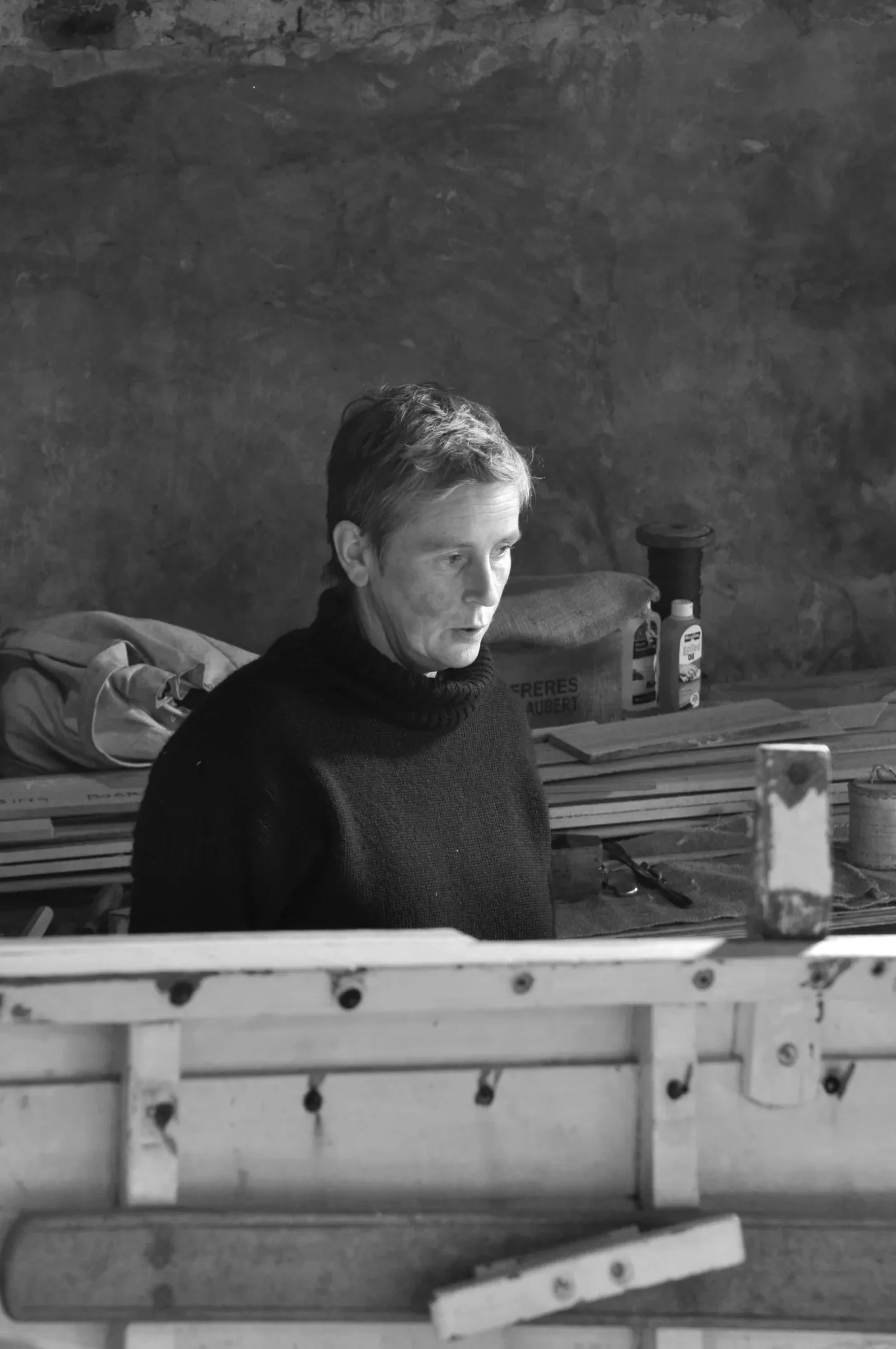
Why does traditional wooden boat building capture your imagination?
Wooden boats have a mesmerising quality to them – that evolution of form and function over the centuries is breathtaking.
I love everything about traditional construction; from working with the timber – how each log behaves differently, so you have to learn its characteristics – to persuading the boat on its journey from tree to sea.
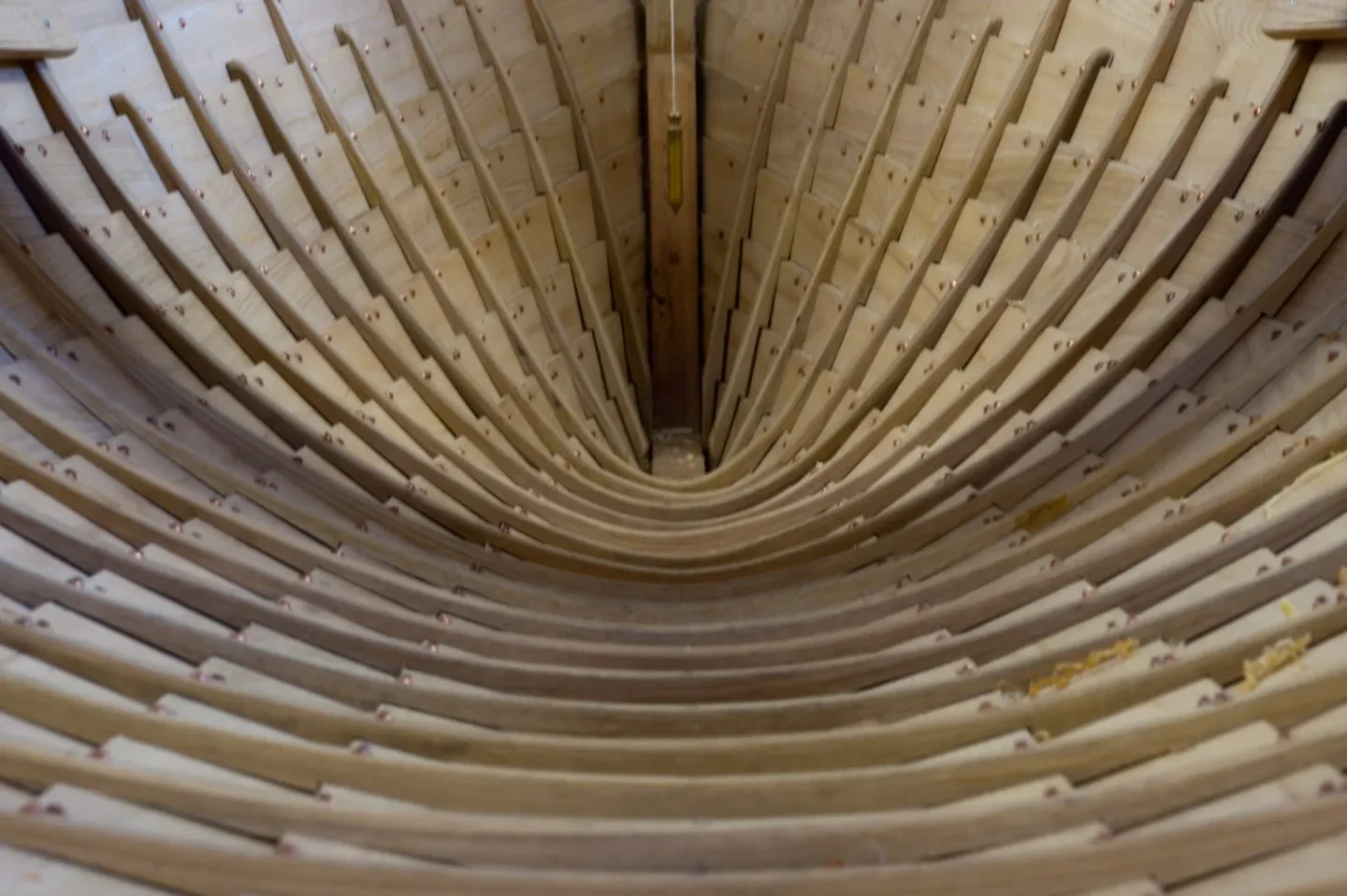
When I began the boatbuilding course in September 2004, I was throwing myself in at the deep end. I had always loved working with my hands, but I had no formal skills– I come from an era where girls weren’t offered woodwork at school. However, I knew in my bones that it was absolutely right. Wooden boatbuilding would be my purpose.
During the training, I built my very first boat, Georgie McDonald. She’s a replica of the Gardie boat, built in Shetland in 1882. The idea came when I read an article about a boatbuilder called Willie Mouat, who works at Unst Boat Haven, a museum located in the Shetland Islands. He talked about the Gardie boat that was in the collection. However, he mentioned how there was no one for him to pass his skills onto on the island of Unst.
There was just something about the way he spoke about the lines of the Shetland boats that I was drawn to. So, I wrote to Willie and asked if he would be my long-distance mentor in building a replica of the Gardie boat. He said yes!
I met Willie and the Gardie boat at Unst Boat Haven on a cold day in December. Shetland craft have unique design elements – many parts of the boats have retained their names in Norn, now an extinct spoken language – so I took as many notes, photographs and sketches as I could.
The construction involved building by eye, which involves looking at the materials you’re working with and reading and understanding the wood to ensure it is creating a fair shape. As Georgie McDonald grew, so did my confidence. It was the most incredible feeling to launch her into the sea at Haroldswick in Unst, using the same slipway as the Gardie boat in the museum.
That’s one of the reasons why traditional construction is my passion: it’s amazing to see a boat in its natural environment out at sea. I also love learning about the heritage of the craft, and the stories of the communities and boatbuilding history that are attached to the vessel.
What does daily life as a boatbuilder involve?
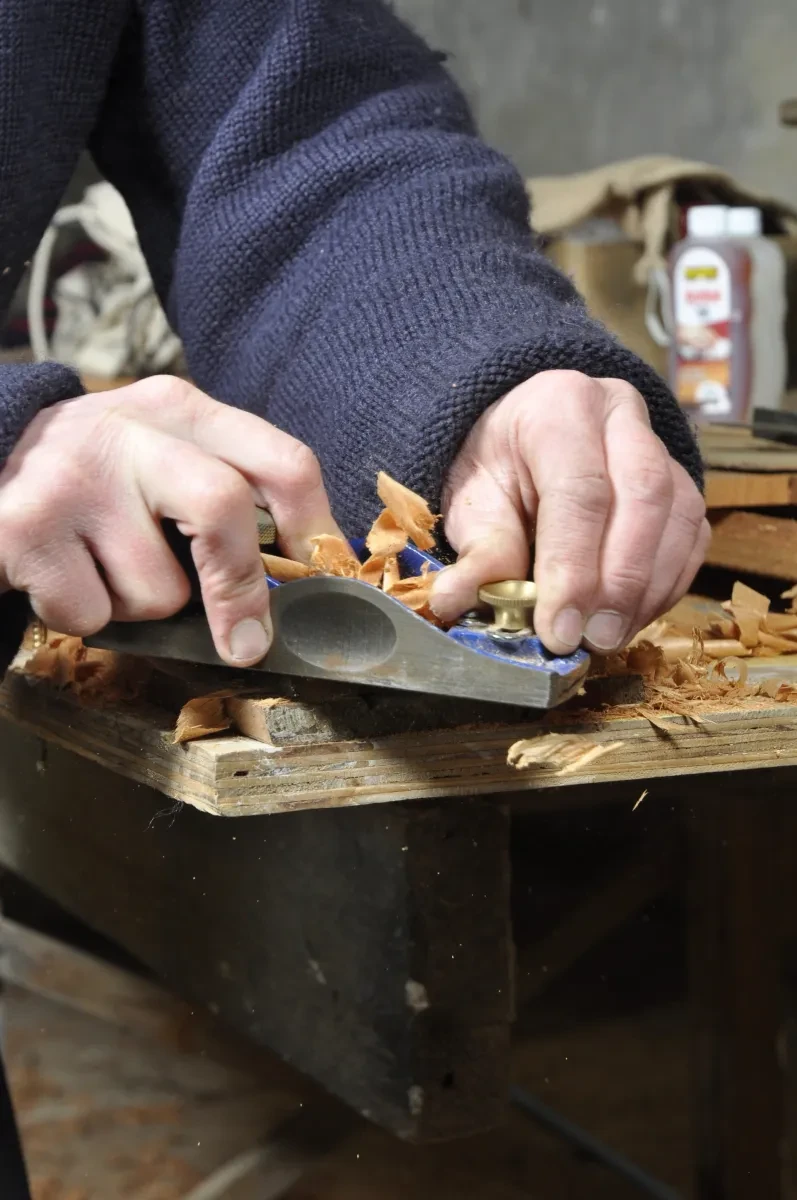
It’s very varied: I go from project to project, but there’s a great richness in that. If I’m on a build, I could be doing anything from planing the overlapping edges of a plank to riveting. Other days, I could be filling in project proposals and researching and undertaking restoration on vessels.
The main focus of my work is creating replicas of existing endangered boats, which I call ‘daughter boats’. While the new boats pay homage to the lines of the original mother boat, they are not clones, the character of the daughter boat is her own. It’s about breathing life into a new generation of craft, and giving them a future.
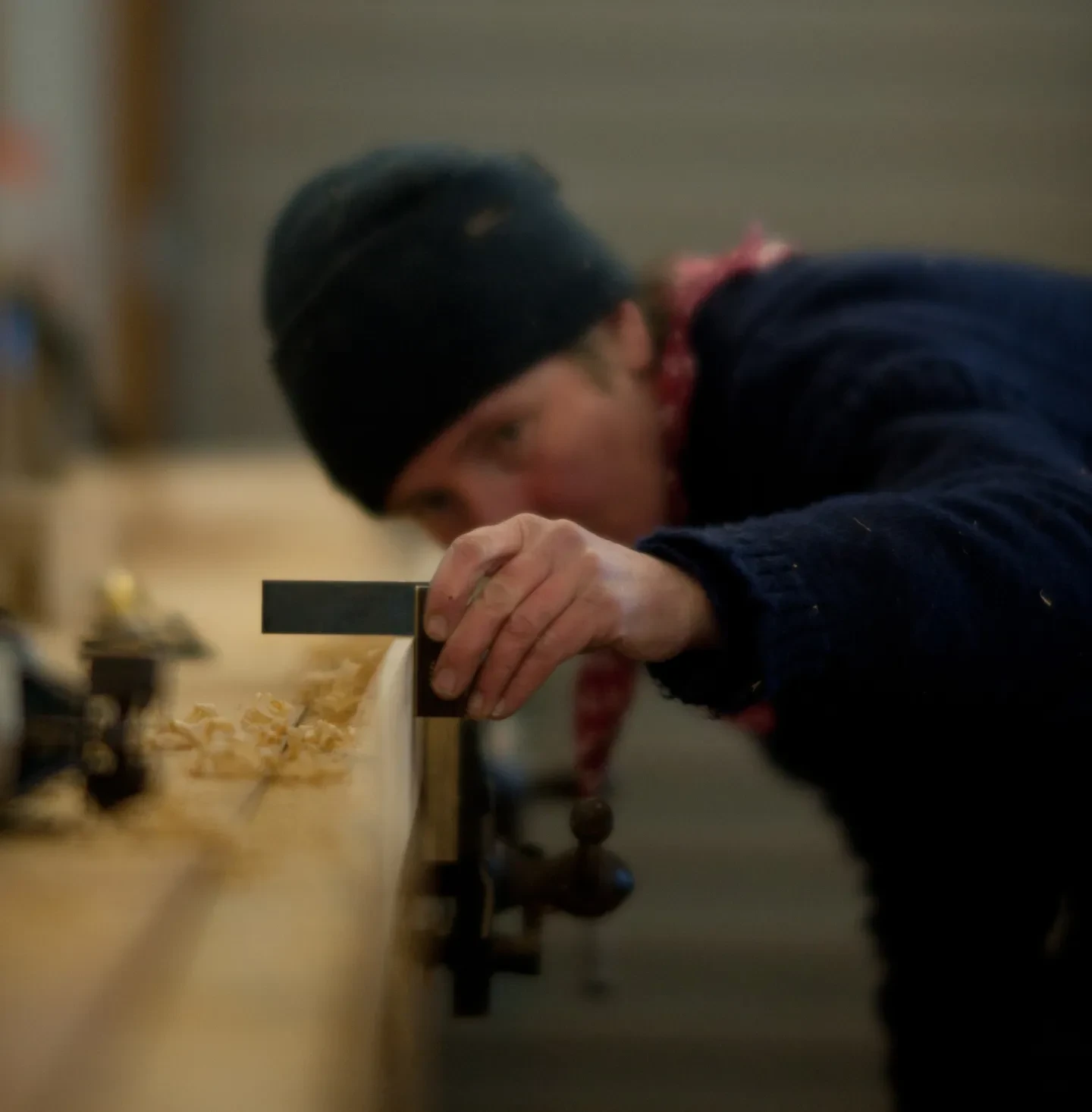
I’ve worked as a boatbuilder in Ireland and Dorset, but I’m now based in Galloway. I teach trainees as part of a heritage skills project called Building Futures Galloway. Some of these young people may have struggled in a school environment, but have found their strengths when they’re working with a chisel, plane or saw. It’s a great privilege to see them flourish in these skills. I’ve always had an open-door policy, with volunteers actively encouraged to be a part of the build, and visitors warmly welcomed.
Image
Alongside boat building and teaching, you run educational workshops inside your miniature museum, The Story Boat. How did the idea for this come about?
The Story Boat is an integration of all the past and present threads of my career. My background is in performance and arts, within the context of ‘Theatre in Education.’ I’ve worked as a British Sign Language (BSL) interpreter, and I’ve always been fascinated by the power of stories to engage communities.
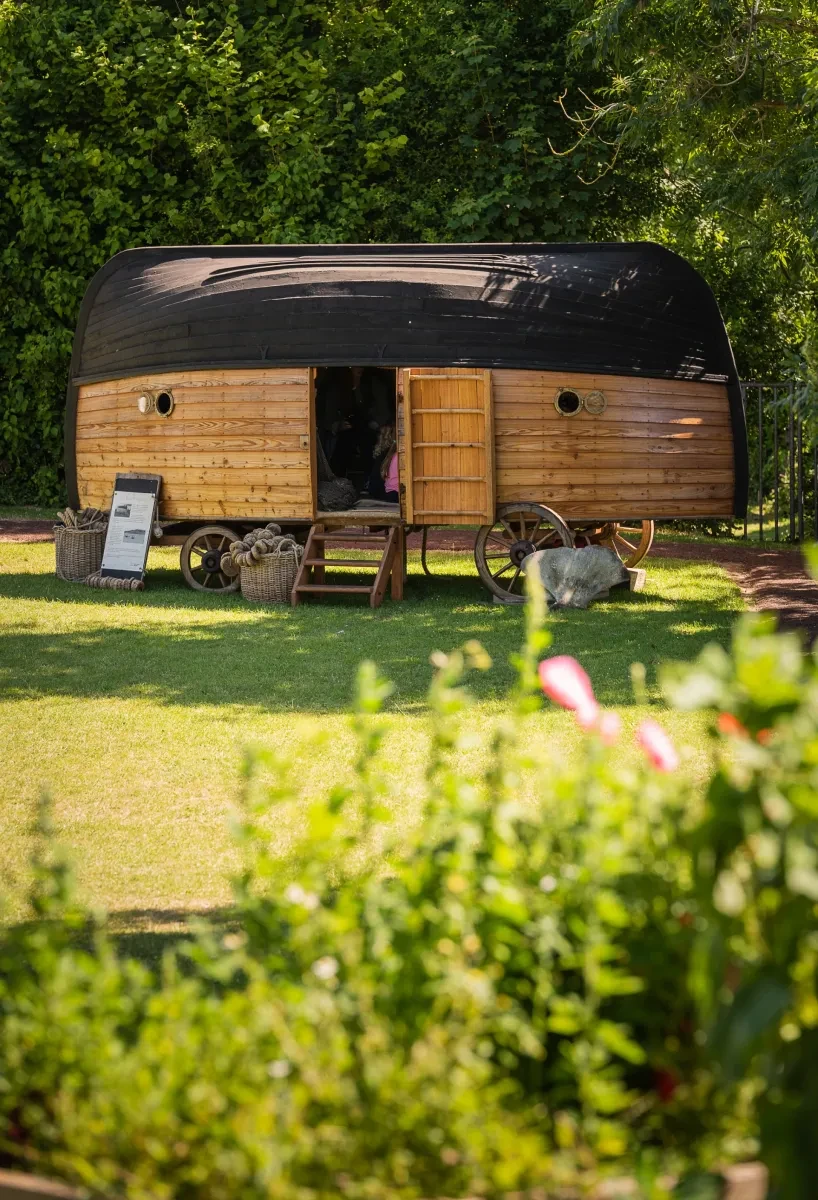
The Story Boat is a mobile maritime world, made from the upturned hull of Vera, a type of Dorset fishing boat known as a lerret. Vera was made in 1923 and, like other lerrets, was designed specifically to combat the challenges of the Chesil Bank.
The seed of the project began in 2009, when I received a scholarship from the Queen Elizabeth Scholarship Trust to build a ‘daughter boat’ to Vera, working closely with boatbuilder Roy Gollop.
As I was building the new boat, Littlesea, word spread along the Dorset coast. There hadn’t been a new lerret built for 40 years, and people from the fishing community started sharing their memories with me. I worked with Lyme Regis Museum to capture these stories, but I wanted to share Vera’s story too.
Vera’s previous owner had retired her, but he didn’t want her to fade away in a field. I decided to take her on, and bring her history to life. I wasn’t sure how I wanted to do this, but I had a vision of creating a mobile maritime museum that I could take to schools and communities. I worked with two Devon-based wheelwrights, Mike and Greg Rowland, to create a bespoke wagon, using Vera’s upturned hull as the roof. It was an incredible overlapping of two worlds: the world of the wheelwright and traditional boatbuilder.
Image
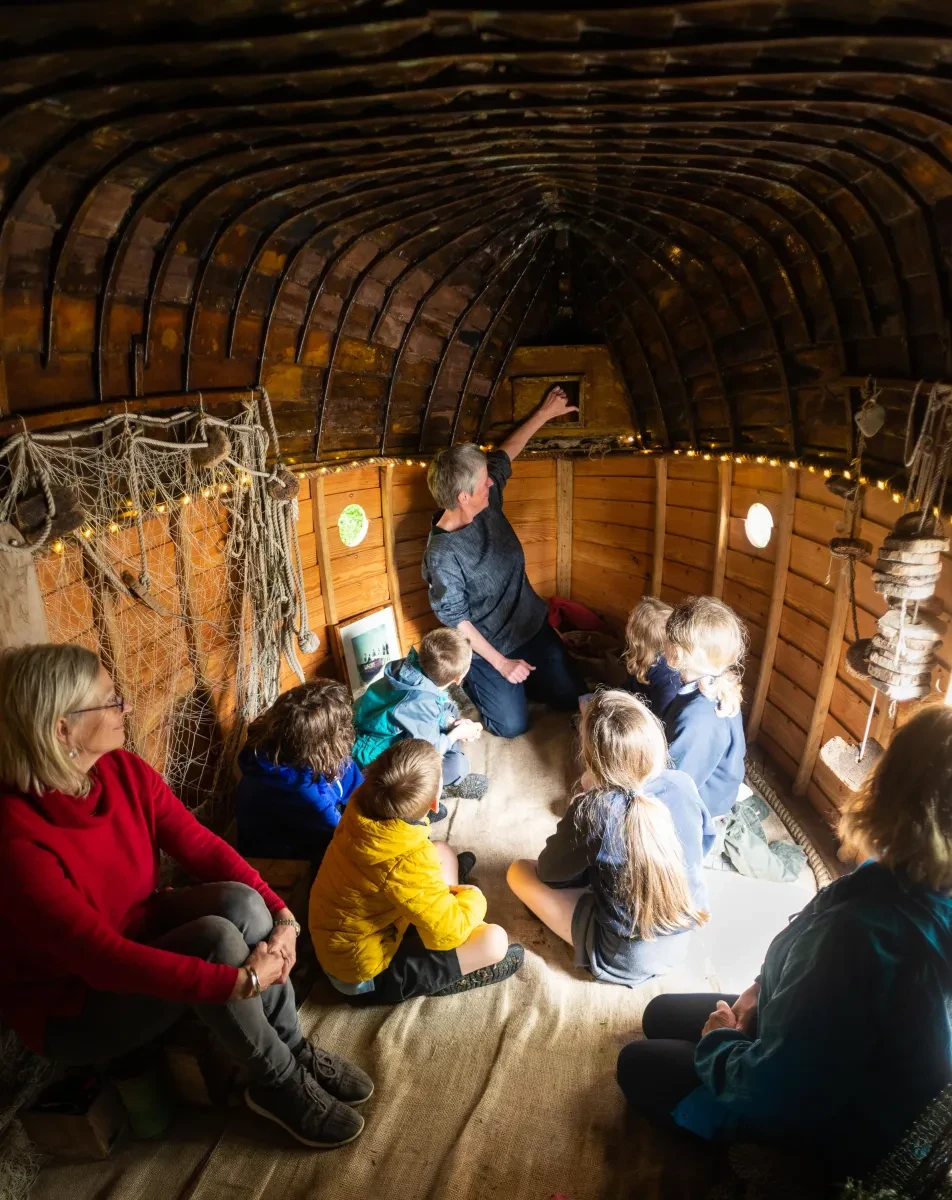
I’ve since taken Vera to primary schools and communities around Dorset, Devon and parts of Scotland. Children climb aboard and I tell Vera’s story, as if I am the boat herself. She’s filled with memory objects that link to her history, which have been given to me by fishing communities. As part of the workshop, each child makes a tiny miniature plank and rivets it, to capture a memory of Vera’s life.
Vera has such a strong personality, people fall in love with her. One of my favourite moments was seeing a child lying on their back, in their own little world, totally mesmerised by Vera’s hull. Wherever I’ve taken The Story Boat, people tell me their fishing memories. It’s an honour to be the custodian of Vera, and to have people share their stories.
Why is it crucial to raise awareness of our maritime heritage – and the craft of wooden boatbuilding?
I do feel that people have an instinctive response to boats – it’s almost part of our core. When I’ve seen people encounter boats like Vera or work alongside me on traditional vessels, it either ignites them with a sense of joy, or it touches them very deeply somewhere. I can’t explain it. However, people have become disconnected from the coast, even if they live there.
My driving force is to keep endangered wooden boats, their memories – and our maritime heritage – alive for future generations. The beauty of traditional wooden boatbuilding is my passion, but this phenomenal wealth of skill is on the brink of being lost. The craft is now classified as ‘Endangered’ by Heritage Crafts.
Image
The fact that the craft is listed on the organisation’s ‘Red List of Endangered Crafts’ gives urgency. We need to safeguard these skills to ensure the craft has a future, and the endangered vessels and their stories can be protected.
I hope that through teaching, like my work with Building Futures Galloway, that I can carry through the skills, knowledge and memories of the teachers I’ve had – and ensure that these aren’t lost.
I’ve been lucky to have had mentors who have so generously shared their lifetime of experience with me. I can’t thank them enough. I hope that a new generation will be able to know and hear the words of Ralph Bird, Jack Chippendale, Roy Gollop and Willie Mouat.
How important is it for women to see themselves represented in boatbuilding?
Boatbuilding, and specifically traditional wooden boatbuilding, has historically been such a male preserve, but there’s no reason at all why women can’t be boatbuilders.
When I first studied at the Boat Building Academy, I was the only female in that cohort. That wasn’t a problem in any way – it was just a fact – but that has now changed dramatically. Thanks to organisations like Women in Boatbuilding, there has been an increase in women taking up the craft.
For any young woman or any woman considering the profession, it’s absolutely paramount to have other female role models. It’s important to have this representation and know that it is possible.

Making Waves
Stories of incredible women working at sea
Discover more
Image: © Inka Cresswell
Banner image credit: Rebecca Collis
Our partners
With grateful thanks to The TK Foundation for its support of the Making Waves series.