

May’s night sky brings a rare blue moon, meteors from Halley’s Comet, and a strange galactic hamburger. We’ll also explore Coma Berenices and use it to find star clusters and distant galaxies.
Top 3 things to see in the night sky in May 2026
- 6 May - watch the peak of the Eta Aquariid meteor shower
- 31 May - see the second full Moon of the month, called a 'blue moon'!
Throughout the month - spot the 'hairlike' Coma Star Cluster
Look Up! podcast
Royal Observatory Greenwich astronomers Jess and Gideon explore May’s must-see cosmic objects and events in this podcast. They also discuss this month’s cosmic news story, with a special focus on the Artemis II mission.
Got a question about space? Send it to us at ROGeducation@rmg.co.uk and our team of astronomers will answer it in next month’s podcast.
Two moons in a month: the blue moon explained
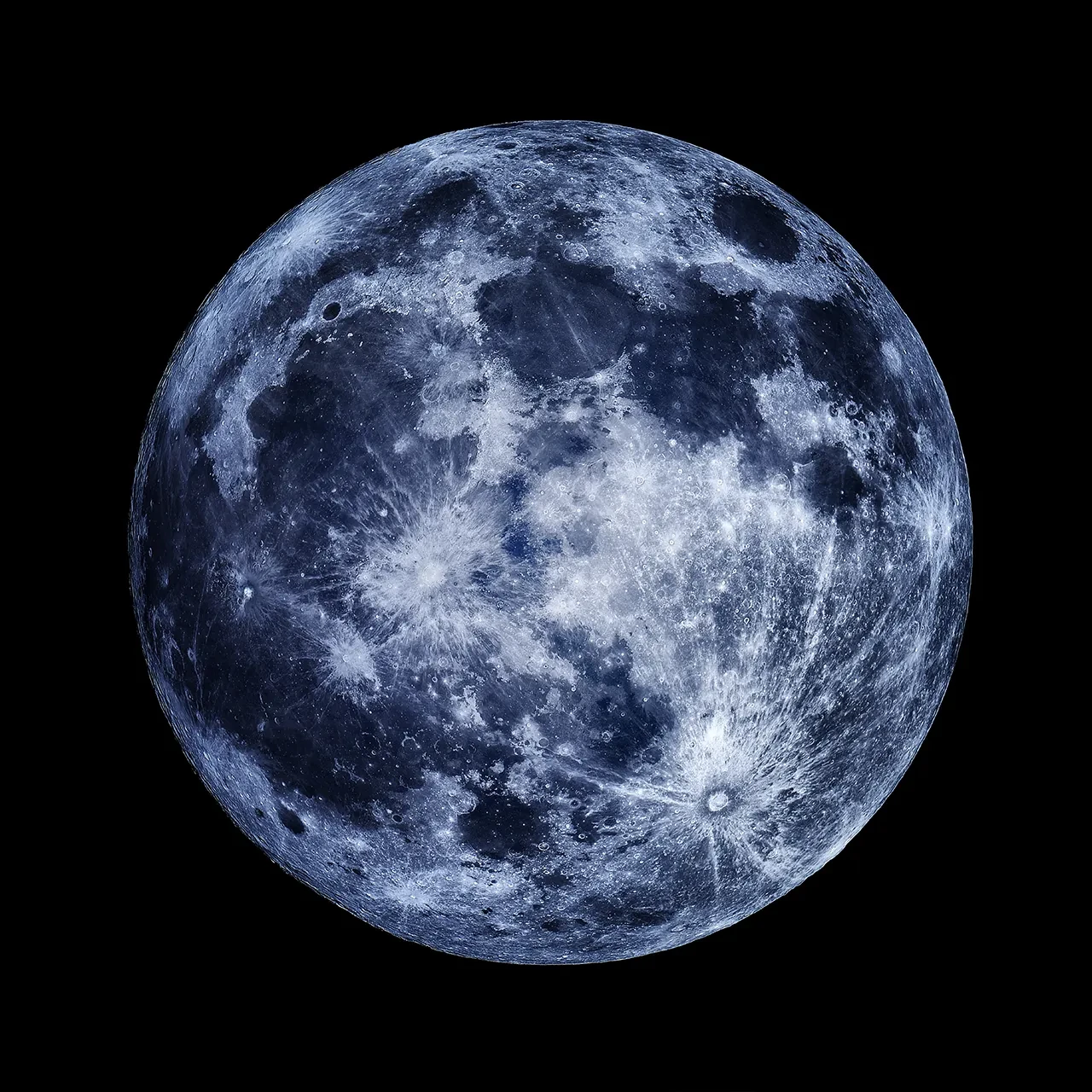
May is a special month for the Moon. Not only does it start with a full Moon on 1 May, but a second full Moon follows at the very end of the month, on the 31st. Two full Moons in a single calendar month is an unusual treat - and the second one has a rather evocative name: a blue moon. But where does that name come from, and why does it even happen?
The answer lies in a small but persistent mismatch between the Moon's rhythm and our calendar. The Moon completes a full cycle of its phases in roughly 29½ days, and over a full year it fits in 12 complete cycles - adding up to about 354 days. That leaves the lunar calendar running about 11 days short of the solar year. Over the course of two to three years, those missing days accumulate until a 13th full moon slips into the year. When two full moons fall in the same calendar month, the second one earns the title of blue moon.
Confusingly, that's only one of the definitions, but it would score you points in the 1986 edition of Trivial Pursuit. The older and arguably more technically correct meaning refers to the third full moon in an astronomical season that contains four - with seasons being defined by the equinoxes and solstices. Either way, blue moons occur every two to three years: unusual, but not vanishingly rare.
As for the colour itself: ordinarily, the Moon is resolutely not blue. But there have been remarkable historical exceptions. After the catastrophic eruption of Krakatoa in Indonesia in 1883, volcanic dust suspended in the atmosphere turned sunsets green and the Moon a genuine shade of blue for the better part of two years. In 1927, an unusually prolonged dry season in India filled the air with enough dust to produce a blue moon, and in 1951, smoke from vast Canadian forest fires had a similar effect over North America. Events like these are rare enough to have given us the expression 'once in a blue moon'.
The phrase has also embedded itself in culture far beyond astronomy. Elvis Presley and other crooners used it as a symbol of longing, it became an anthem for Manchester City Football Club, and should you wish to observe this blue moon with a glass in hand, you can mix one at home with gin, curaçao and lemon juice.
The planets in May: last chance for Jupiter
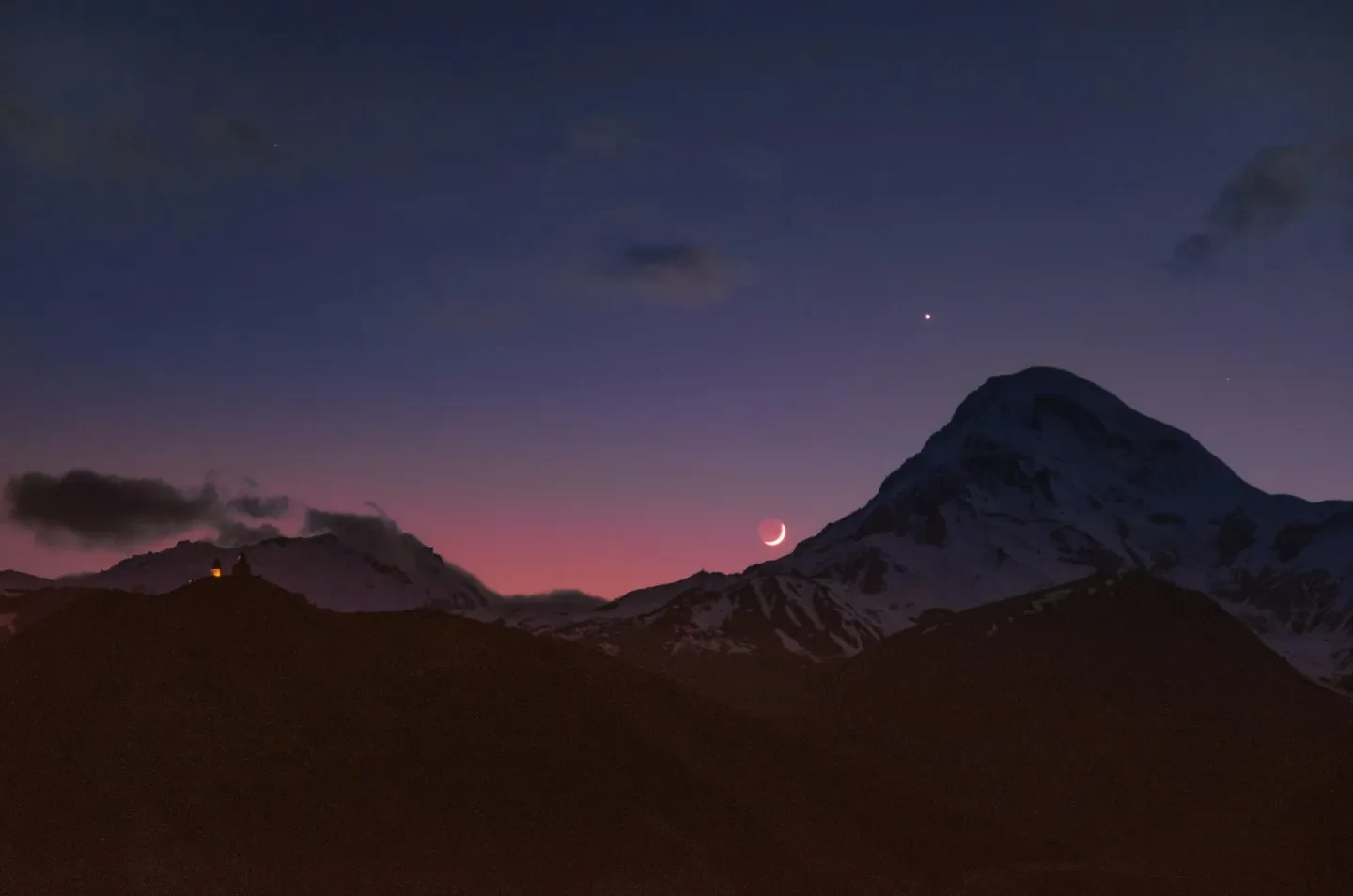
Sadly, May is not the richest month for planet spotting. Mars and Saturn are both rising in the early morning but remain washed out by the glare of the Sun - we'll have to wait until June for those to come into their own.
What May does offer, however, is a final opportunity to enjoy Jupiter before it sinks below the horizon as summer approaches. Make the most of it while you can.
Venus, meanwhile, continues to dazzle as the brightest object in the evening sky after the Sun itself, hanging low in the west after sunset.
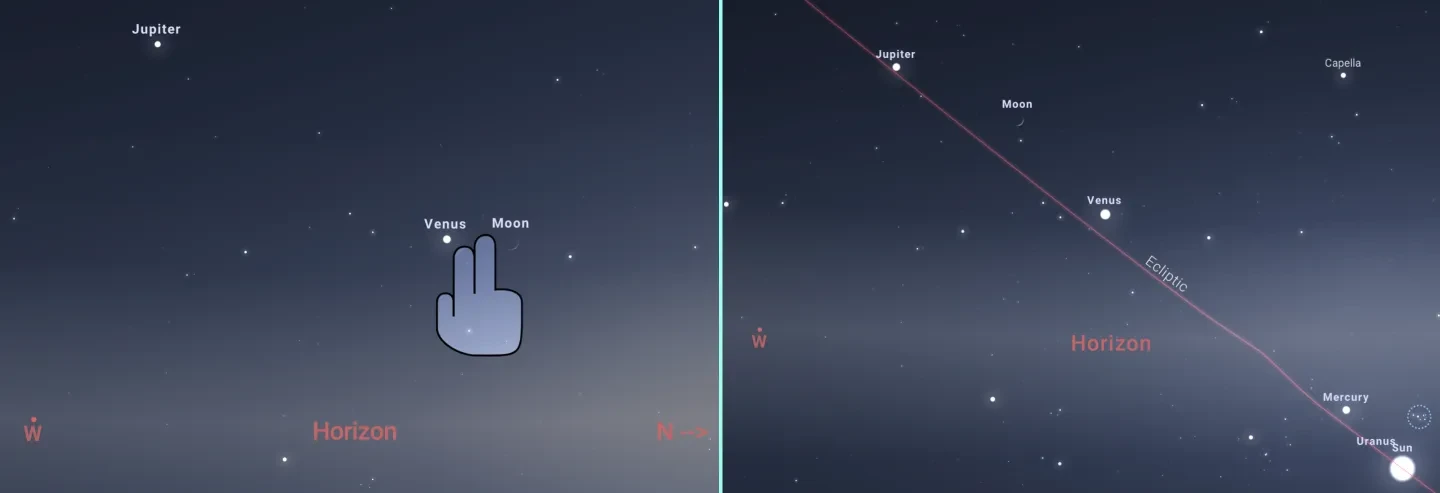
Two dates in particular are worth marking in your diary. On the evening of 18 May, a slim crescent moon will pass within about 3 degrees of Venus - roughly the width of two fingers held at arm's length. Then on the 19th, the Moon will have shifted to sit neatly between Jupiter and Venus, with all three forming an elegant line across the twilight sky.
That alignment is no coincidence: it's a reminder that the Solar System is remarkably flat. The Moon, the planets, and the Sun all travel along nearly the same plane in the sky - a great arc known as the ecliptic. On the 19th, you'll be able to trace it with your eye in a single glance.
An ancient haircut: Coma Berenices
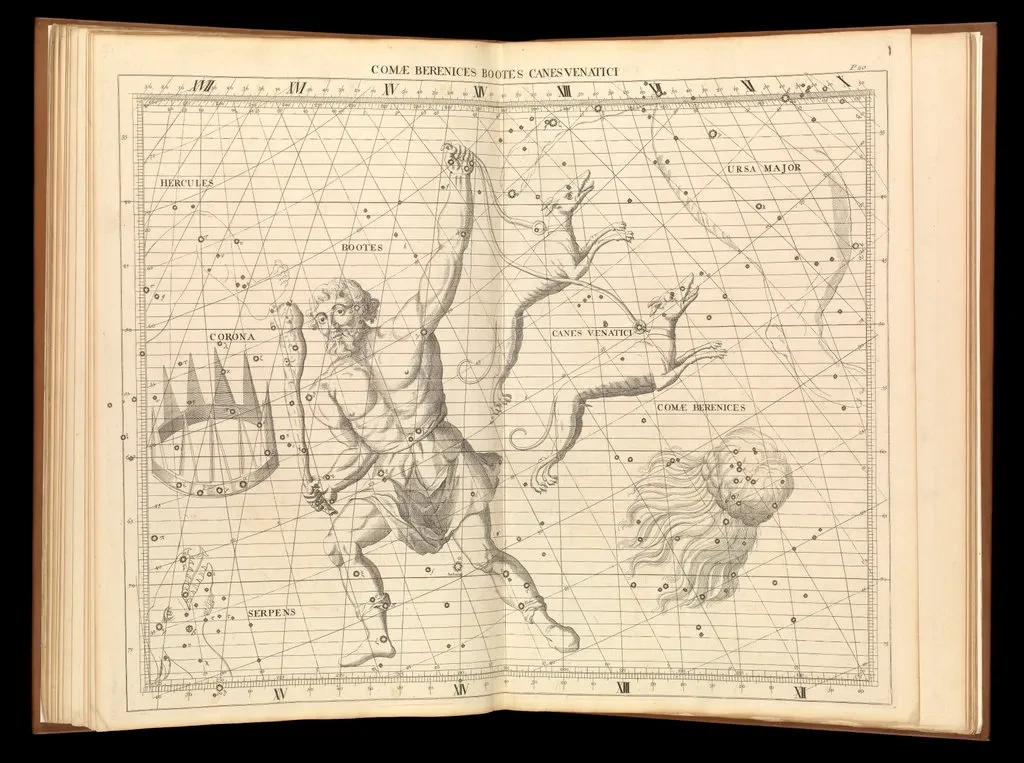
This month, we turn our attention to one of the sky's lesser-known but genuinely fascinating constellations: Coma Berenices - the Hair of Berenice.
The stars in this region of sky were well known to the ancient Greeks. The mathematician Eratosthenes, who, around 2,000 years ago, calculated the circumference of the Earth to within 1–2% of our modern measurements, wrote that they represented the hair of Ariadne, daughter of King Minos of Crete.
It was Ptolemy III who gave the constellation its current identity, renaming it in honour of his wife, Queen Berenice II. According to the legend, Berenice sacrificed her hair as an offering to the gods, praying for her husband's safe return from the Third Syrian War. When he came back victorious, her golden locks were said to have been swept up into the heavens.
Coma Berenices holds the distinction of being the only constellation named after a real historical figure.
The constellation is made up of just three stars, sitting east of Leo - and it has to be said that it helps to have a generous imagination to see a flowing lock of hair in them. The constellation fell out of use for a time, with many Renaissance-era astronomers treating these stars as Leo's tail, before western astronomers in the 1500s formally reinstated it to Coma Berenices.
What makes Coma Berenices worth seeking out is the star cluster nestled within it: Melotte 111, the Coma Star Cluster. Located just 280 light-years away, it is one of the nearest open clusters to Earth and is visible to the naked eye as a soft, hazy patch under suitably dark skies. The cluster spans around 4 degrees - roughly eight times the apparent diameter of the full Moon - which means binoculars are your best tool here; a telescope's field of view is actually too narrow to do it justice.
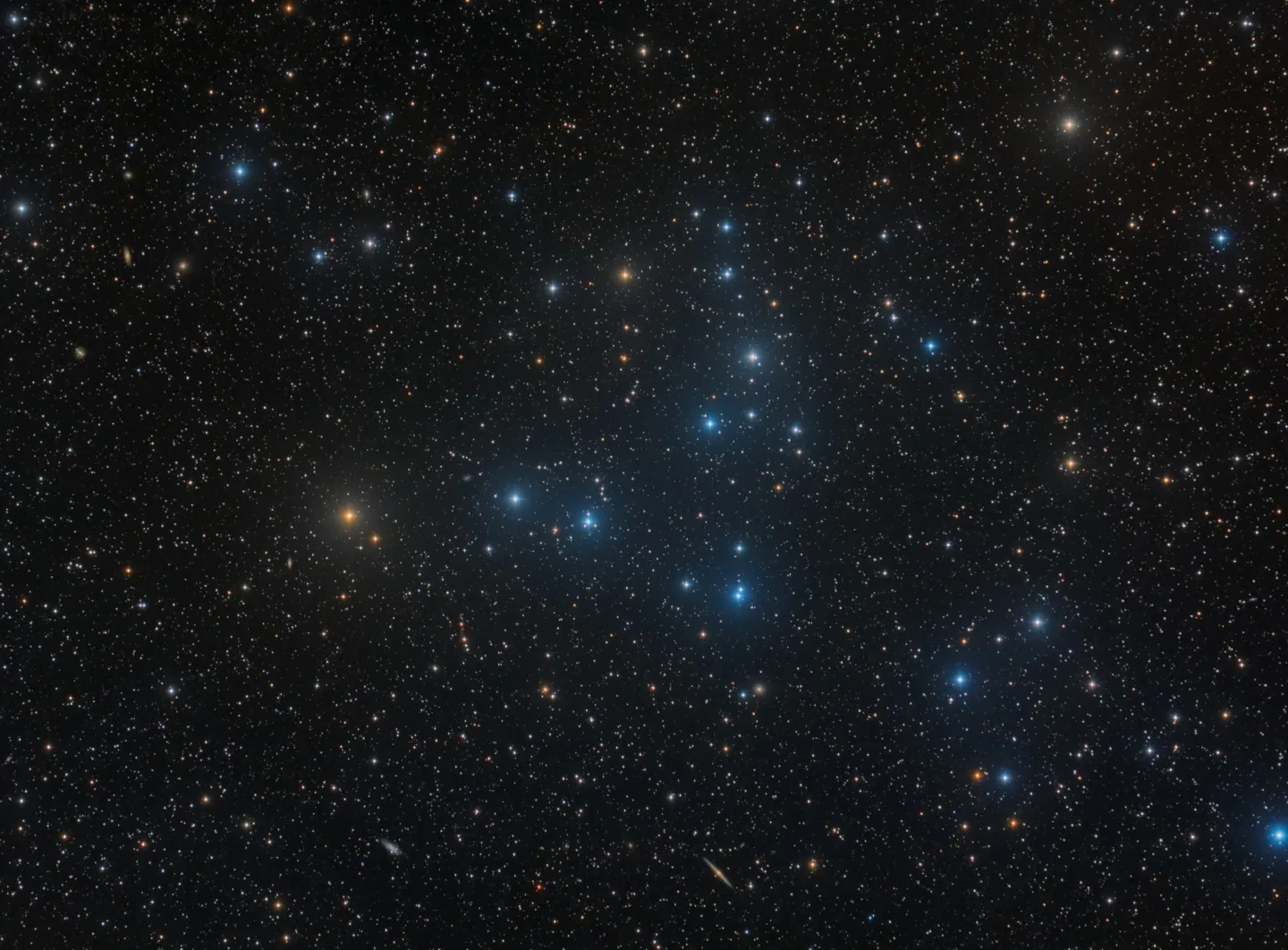
The cluster contains around 40 young, blue stars and, because it's so close, astronomers can measure its stars' distances, motions and chemistry with exceptional precision. Already quite spread out, it also offers a glimpse of the future: this is what happens as open clusters slowly drift apart and eventually dissolve into the wider Milky Way.
Looking deeper: the Needle Galaxy
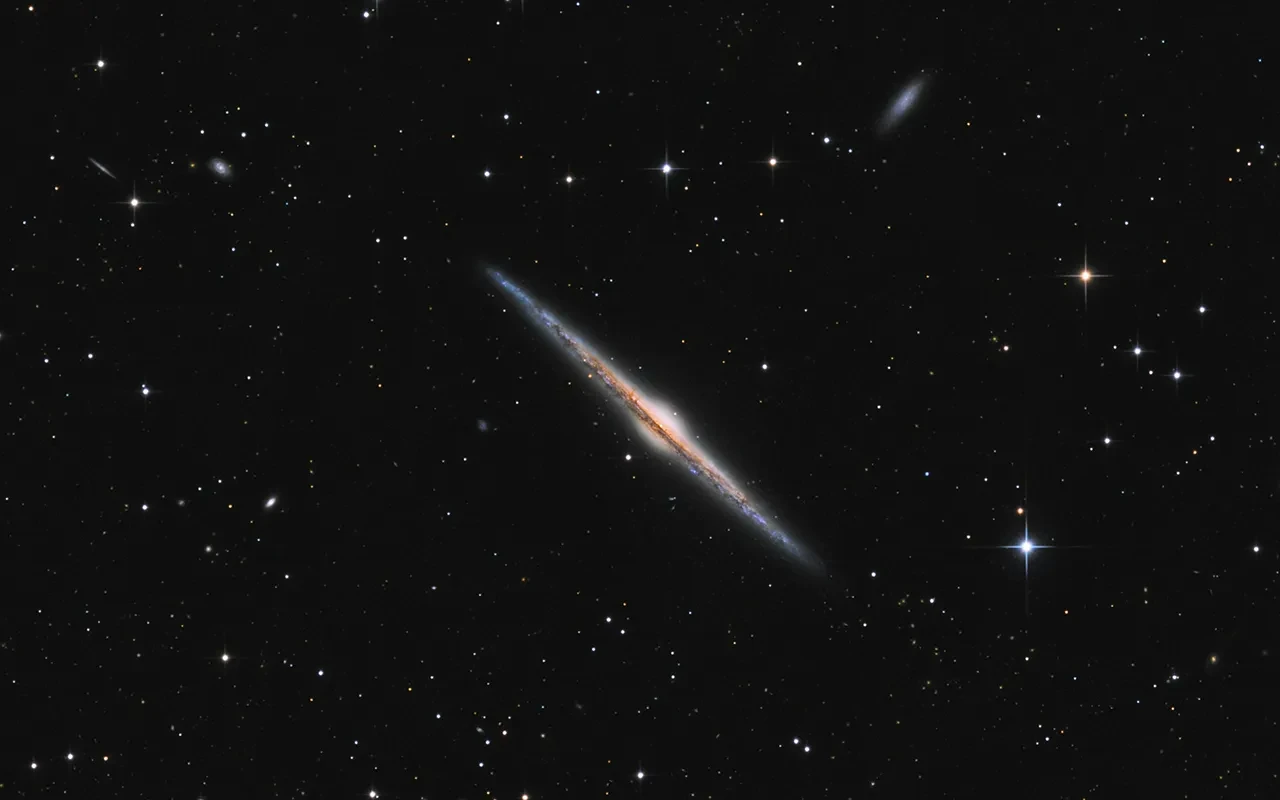
Spring is often called galaxy season. When we look towards Coma Berenices, we are gazing out of the plane of the Milky Way and into the depths of the Universe beyond - and it would be a shame not to take advantage.
Just east of the Coma Star Cluster lies the Needle Galaxy, a slender, edge-on spiral that appears through small telescopes as an impossibly thin sliver of light - exactly as its name suggests. Its spiral structure is hidden from us by its orientation; we are looking at it perfectly side-on. It was discovered by William Herschel, the astronomer who identified Uranus, whose family forged a remarkable connection with the Royal Observatory Greenwich that spanned more than a century.

His sister Caroline Herschel is particularly worth celebrating. A pioneering astronomer in her own right, she became the first woman to discover a comet and the first woman to hold a paid position as a professional astronomer in Britain.
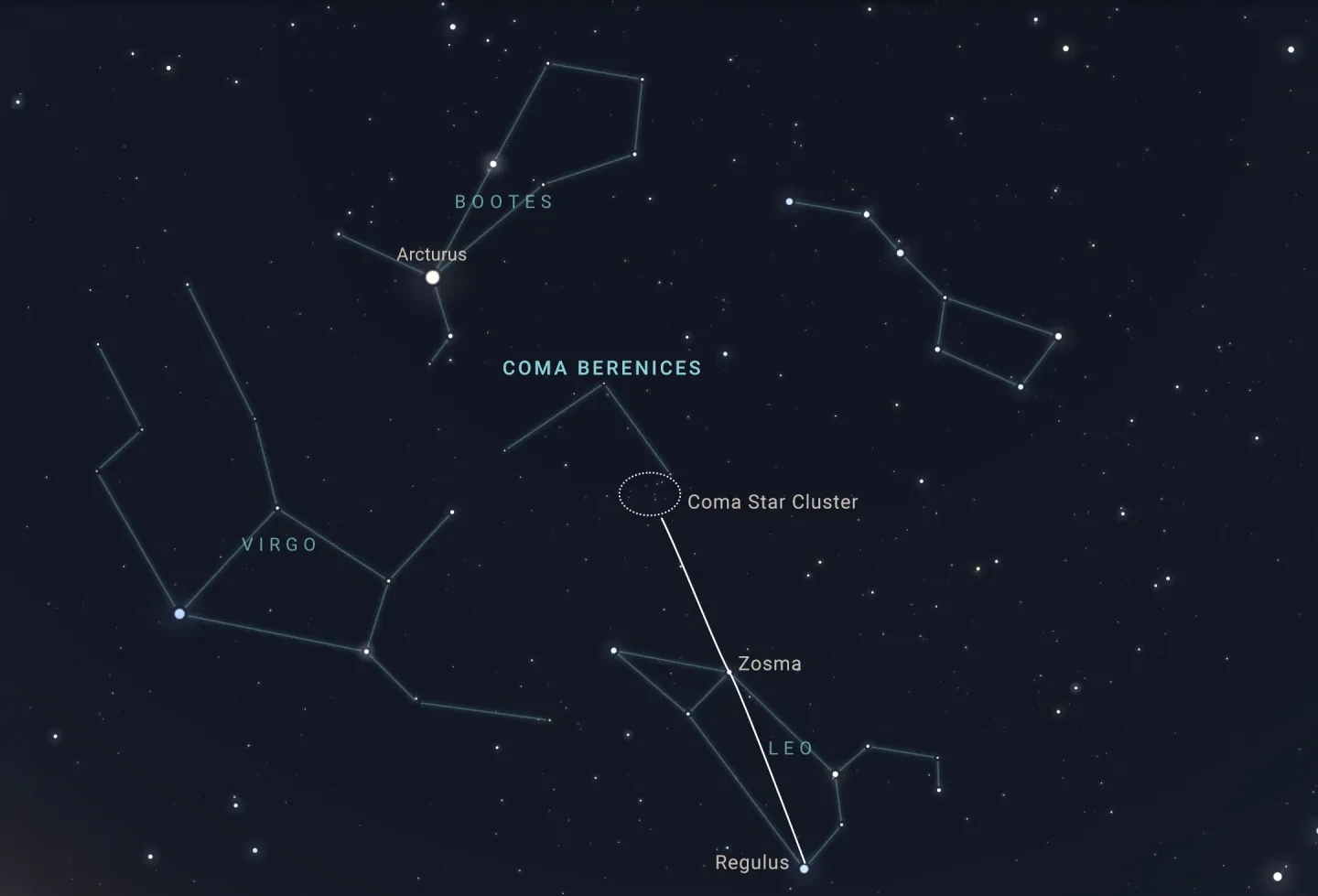
Finding Coma Berenices: start by locating Regulus, the brilliant blue-white star that marks the heart of Leo, in the south-western sky. It sits at the base of a backward question mark of stars called the Sickle. Draw a line from Regulus to Delta Leonis (also known as Zosma, from the Greek for 'girdle', a reference to its position on the lion's hip), then continue that line for roughly the same distance again, and you will land on the Coma Star Cluster.
Eta Aquariid meteor shower: debris from Halley's Comet
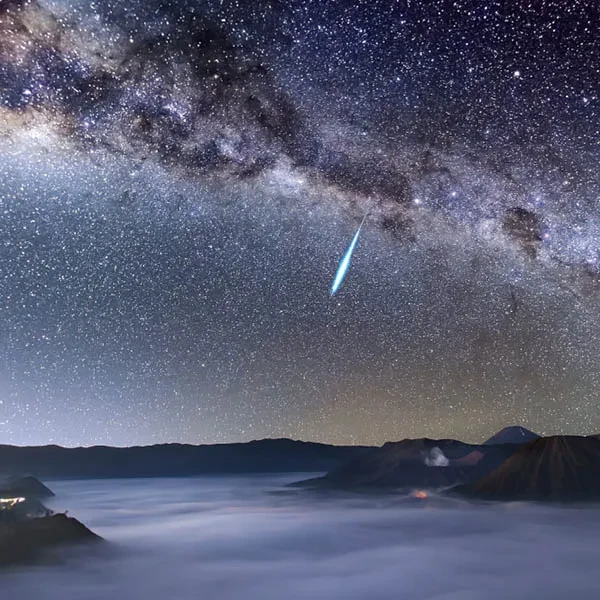
Hot on the heels of April's Lyrids, May brings another meteor shower: the Eta Aquariids. The shower is active until 28 May but reaches its peak on the night of 5-6 May.
Like the Orionids in October, the Eta Aquariids are made of debris shed by Comet Halley - the most famous of all comets, first linked to its recurring appearances by Edmond Halley, the second Astronomer Royal to work here at the Royal Observatory Greenwich.
As the Earth passes through the trail of dust and ice particles left in the comet's wake, those tiny fragments burn up in our atmosphere, producing fast, bright streaks of light.
And fast they are: Eta Aquariid meteors strike the upper atmosphere at around 40 miles per second, and many leave long, glowing trains in their wake - a particularly beautiful effect that lingers for a moment after the meteor itself has vanished.
Conditions this year are unfortunately not ideal. A bright waning gibbous moon will be up for much of the night, and its light will wash out fainter meteors. However, the Moon rises just after midnight, so the hours before then will offer the best window. That said, the shower favours observers in the Southern Hemisphere - from the UK, the radiant point in Aquarius remains low in the pre-dawn sky, so don't expect the rates you might see from further south.
As for Comet Halley itself, it will not return to our skies until 2061. For now, catching one of its meteors will have to do.
Southern Hemisphere: Hamburger Galaxy
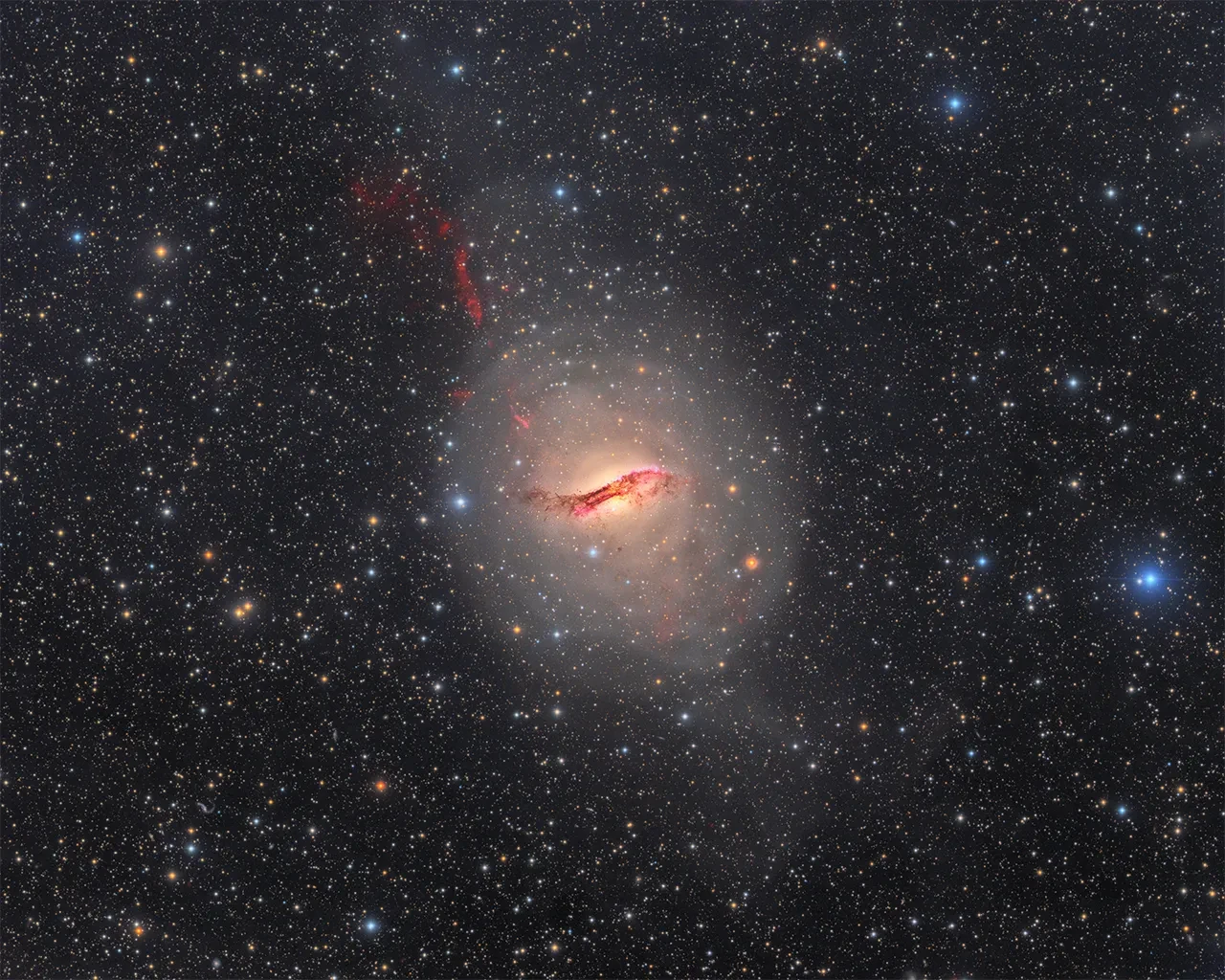
For readers observing from the Southern Hemisphere, May offers one of the finest objects in the entire sky: Centaurus A, sometimes nicknamed the Hamburger Galaxy for the dramatic dark band that bisects its appearance.
It is the closest active galaxy to us at around 11 million light years away, and is quite unlike anything else in the sky. Astronomers believe its complex, disturbed appearance is the result of a colossal collision between two galaxies, long since merged into one. That turbulent past has left it with a chaotic dust lane cutting across its core and faint, rippling shells of stars extending outwards - structures first revealed by the astronomer David Malin, who pioneered photographic techniques capable of capturing extraordinarily faint structures in space from black-and-white photographic plates.
At its heart sits a supermassive black hole, which drives powerful jets of material outward at close to the speed of light. These jets blaze across the Universe in X-ray and radio wavelengths, making Centaurus A one of the most intensively studied objects in the entire southern sky.
It was first discovered in 1826 by the Scottish astronomer James Dunlop, observing from Parramatta Observatory in what is now western Sydney.
Under pristine dark skies, Centaurus A may just be detectable to the naked eye - though binoculars or a small telescope will reveal far more.
Finding Centaurus A: use the Southern Cross to hop to Delta and Gamma Centauri, then locate Omega Centauri (the largest globular cluster in the sky). Centaurus A sits just a little to the north of Omega Centauri, and is a superb target for both visual observers and astrophotographers alike.
The Moon's phases in May 2026
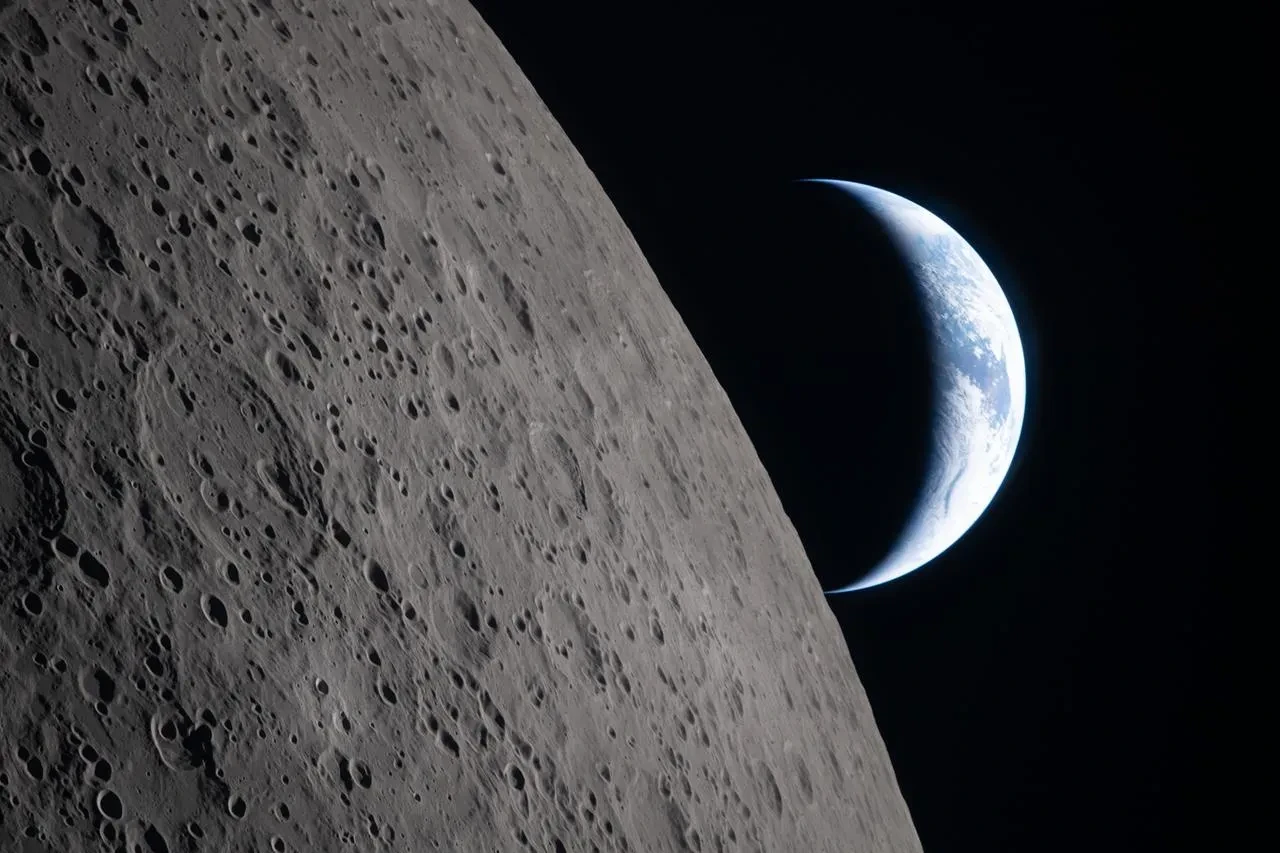
- Full Moon - 01 May (11:23)
- Last quarter - 09 May (05:51)
- New moon - 16 May (14:01)
- First quarter - 23 May (05:11)
- Full Moon - 31 May (02:45)
Stargazing tips
When looking at faint objects such as stars, nebulae, the Milky Way and other galaxies, it is important to allow your eyes to adapt to the dark so that you can achieve better night vision.
Allow 15 minutes for your eyes to become sensitive in the dark, and remember not to look at your mobile phone or any other bright device when stargazing.
If you're using a stargazing app on your phone, switch on the red night vision mode.
Read next
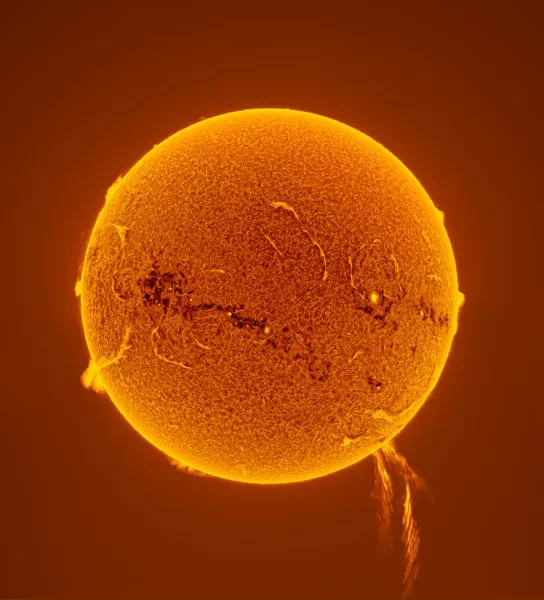
Night sky highlights - June 2026
June brings short nights and spectacular skies - from noctilucent clouds to the first true views of the Milky Way's glowing core.
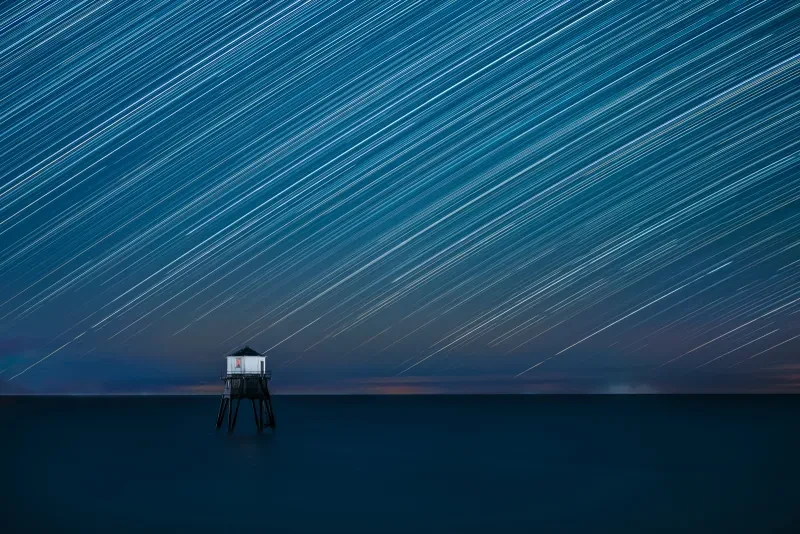
Space and astronomy highlights in 2026
What should you keep your eyes on the skies for in 2026? Discover this year's standout moments with Royal Observatory astronomers
How to see the 12 August 2026 partial solar eclipse
Learn more about the best solar eclipse visible from the UK and Ireland so far this century, when around 90-96% of the Sun will be covered by the Moon
Meteor shower guide 2026
Want to see shooting stars? Check the key dates for major meteor showers in the UK in 2026, and how to see them in the night sky
Artemis Programme: what you need to know about NASA’s Moon missions
NASA's Artemis missions aim to land humans on the Moon again, create a lunar base, and lay the groundwork for a future trip to Mars
Full Moon calendar 2026
Check the dates for every full Moon throughout the year, learn about the Moon's phases, 'supermoons' and more
Astronomy with the naked eye
Learn what you could see in the night sky with no equipment from the Royal Observatory Greenwich; from galaxies and meteor showers to comets, star clusters, cloud formations and more
'Observing the Universe reveals how small yet precious we are'
An accident led Takanobu Kurosaki to rediscover life’s beauty and fall in love with astrophotography. Explore his image shortlisted in ZWO Astronomy Photographer of the Year 2025
How could humans live on Mars?
Astronomer and author Brendan Owens examines the challenges of sending humans to Mars - and what the future holds for our study of the Red Planet
The new space race: a high-stakes competition of politics and power
Competition between the USA, China and Russia will have consequences for all of us here on Earth. But how is this 21st century space race different to the last one?


