Explore some interesting space science, written by our Astronomy Ambassadors Group.
These fascinating articles covering different topics within astronomy were researched and written by members of the Astronomy Ambassadors Group in February 2026.
Astronomy Ambassadors is a place for young people (between 16 and 21 years old) to get a taste of the work we do at the Royal Observatory and explore their passion for astronomy, space science or science communication. If you're interested in joining this group yourself, please click here for more information.
We hope you enjoy their work!
The smells of space
By Sharvari
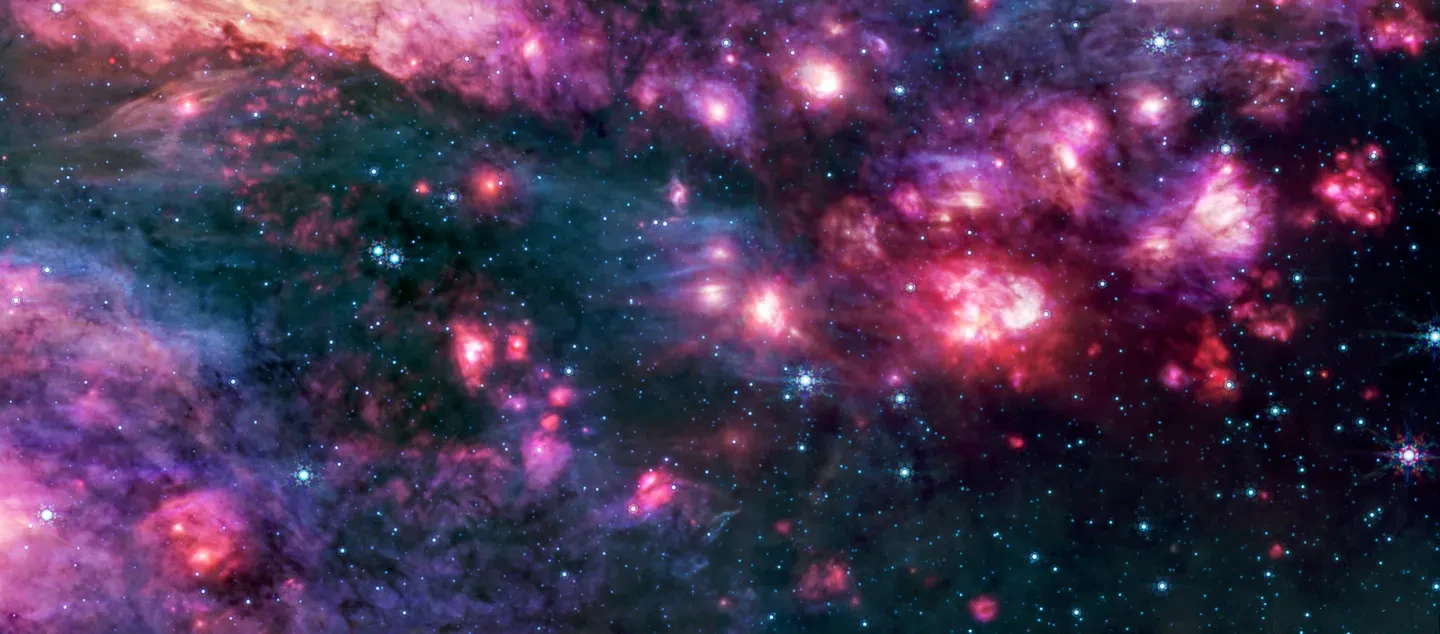
‘Space is a vacuum’ is something you’ve probably heard before, but this isn’t true. Beyond our planet, and indeed beyond our solar system, there is no shortage of matter floating around. For decades astronomers have been attempting to determine the exact chemical makeup of gas clouds which are tens of thousands of light years away from us (incredibly far away). How do they manage this, you might ask?
A technique called spectroscopy is used to determine their compositions. This involves looking at these regions in space through telescopes (which can make observations in radio waves, visible light or any other window of the electromagnetic spectrum) and analysing what type of light we are looking at. This works because different chemical compounds absorb different wavelengths of light. From this, we have discovered something unprecedentedly sweet.
Towards the centre of the Milky Way is a relatively dense region in which lots of star formation occurs. This region is called Sagittarius B2, and contains a large amount of esters (compounds containing carbon, hydrogen and oxygen). A particularly abundant ester whose chemical fingerprint we found was ethyl formate – the compound responsible for the smell of raspberries. That’s right, the centre of our galaxy most probably smells of raspberries.
There are a number of other exciting astronomical aromas which astronomers are finding evidence for This includes a less-enticing smell of rotten eggs produced by sulphur present on Comet 67P, evidence for which was gathered during the Philae lander’s investigations on its surface in 2014. Other locations supposedly smell of almonds due to the presence of benzonitrile, found in another interstellar star-forming region named the Taurus Cloud.
With ongoing discoveries proving that space is by no means a barren wasteland, and instead a splendid sensory spread for us to explore, there’s no knowing what new celestial mysteries we have left to unearth!
Doubling down on gravitational lenses
By Nafim
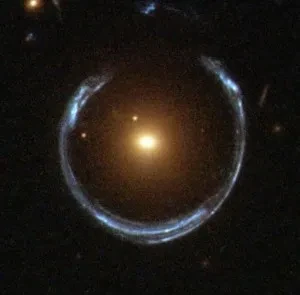
A single black hole, several times the mass of the Sun, can bend light by reshaping the fabric of space-time around it, in a process known as gravitational lensing - a direct consequence of the immense gravitational pull of massive astronomical objects. This phenomenon can be observed by the altering of light along this warped 'fabric'. For the effect to be detected, the light must be coming from a background star which is directly aligned with the line of sight of the black hole.
To make matters more interesting, the same event can be seen within a binary black hole system. Treating a black hole as a lens, think of a binary black hole as two rotating lenses, orbiting a common centre of mass. The result is a diamond-shape zone of quasi-periodic lensing events called the 'caustic curve'. To put this in terms that feel less overwhelming, a binary black hole essentially creates a region of space where any background star will appear to flash periodically, in sync with the orbital period of the said binary black hole. This happens every time the caustic curve passes by a bright star.
Fundamentally, caustic curves generate repeating bursts of starlight. These provide a clear and distinctive signature that can then be used to locate and identify binary black hole systems elsewhere in the Universe.
Ionic plasma thrusters
By Aadi
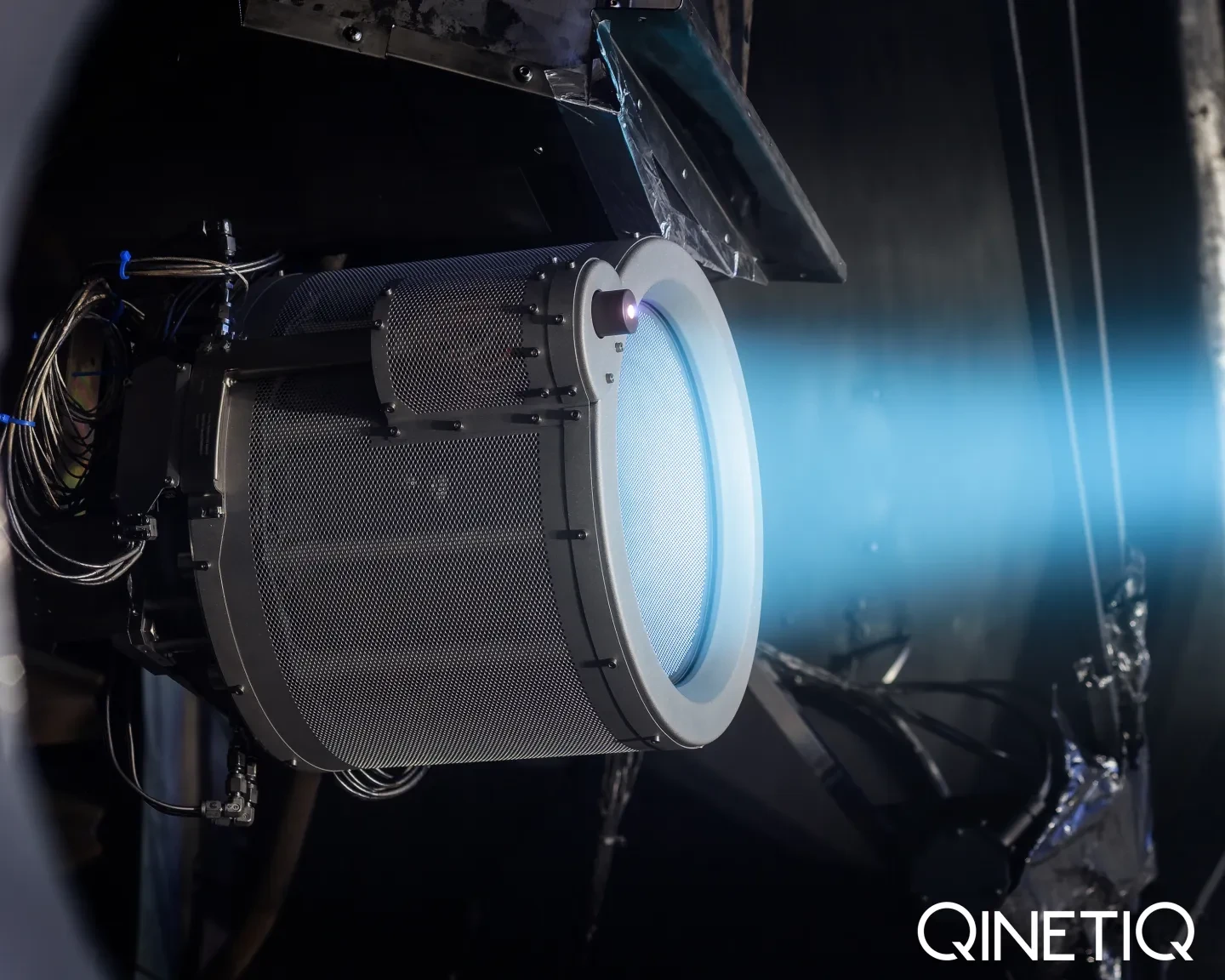
You may be wondering what an ionic plasma thruster is, how it can help us as a society, and more importantly, how the development of these thrusters would change our daily lives.
Well, a typical rocket launch releases 200 to 300 tonnes of carbon dioxide, and the largest rockets release tens of thousands of tonnes of carbon dioxide with each launch. This is obviously a massive problem; with our desire to increase space travel and expand to other planets, we don’t want to pollute our own planet and dig our grave while trying to climb out.
Well, ionic plasma thrusters are a form of electric propulsion that converts electric energy into mechanical energy using electrostatic or electromagnetic fields to accelerate gases, ionising them and accelerating them, providing thrust. The fact of the matter is that they do not need carbon-based fuel. So why don’t we use them already?
A Falcon 9 engine produces around 845,000 newtons of thrust, whereas an ionic plasma thruster releases 25-250 millinewtons of force. This means it is not useful for short, fast flights like launching satellites into orbit around Earth. However, it has many uses in long-term missions, as it could possibly allow spacecrafts to use solar energy and the gases of passing planets’ atmospheres to refuel and travel further on long missions.
Previously, ionic plasma thrusters have been used by the Dawn spacecraft to travel to and orbit Vesta and Ceres, two massive objects in the asteroid belt. They have also been used by BepiColombo to reach Mercury using xenon gas accelerated to 50,000 metres per second, producing 290 millinewtons of thrust. It was extremely useful for the 7-year flight and worked for an extended period of time.
In conclusion, ion thrusters can very much be the future of space travel, as they allow us to reduce the carbon footprint of space travel, and allow us to reach places not achievable with current liquid-based fuel systems that require large fuel stocks.