
The aurora is one of the most spectacular displays in the night sky – but how are these curtains of colourful light formed?
Learn more about what causes the aurora borealis with astronomers from Royal Observatory Greenwich, and discover the secrets of photographing the 'Northern Lights' with award-winning entrants from Astronomy Photographer of the Year.
What is the aurora?
The aurora can be seen near the poles of both the northern and southern hemisphere. In the north the display is known as the aurora borealis; in the south it is called the aurora australis.
These 'northern' and 'southern lights' have fascinated, frightened and inspired humans for centuries. More recently, photographers have gone to remarkable lengths to try and capture the beauty of these atmospheric events.
What causes the aurora borealis or 'northern lights'?
The lights we see in the night sky are caused by activity on the surface of the Sun.
Solar storms on our star's surface give out huge clouds of electrically charged particles. These particles can travel millions of miles, and some may eventually collide with the Earth.
Most of these particles are deflected away, but some become captured in the Earth’s magnetic field, accelerating down towards the north and south poles into the atmosphere. This is why aurora activity is concentrated at the magnetic poles.
“These particles then slam into atoms and molecules in the Earth’s atmosphere and essentially heat them up,” explains Royal Observatory astronomer Tom Kerss. “We call this physical process ‘excitation’, but it’s very much like heating a gas and making it glow.”
We are therefore seeing atoms and molecules in our atmosphere colliding with particles from the Sun. The aurora's characteristic wavy patterns and 'curtains' of light are caused by the lines of force in the Earth’s magnetic field.
The lowest part of an aurora is typically around 80 miles above the Earth's surface. However, the top of a display may extend several thousand miles above the Earth.
What are the different colours in the aurora?
Different gases give off different colours when they are heated. The same process is also taking place in the aurora.
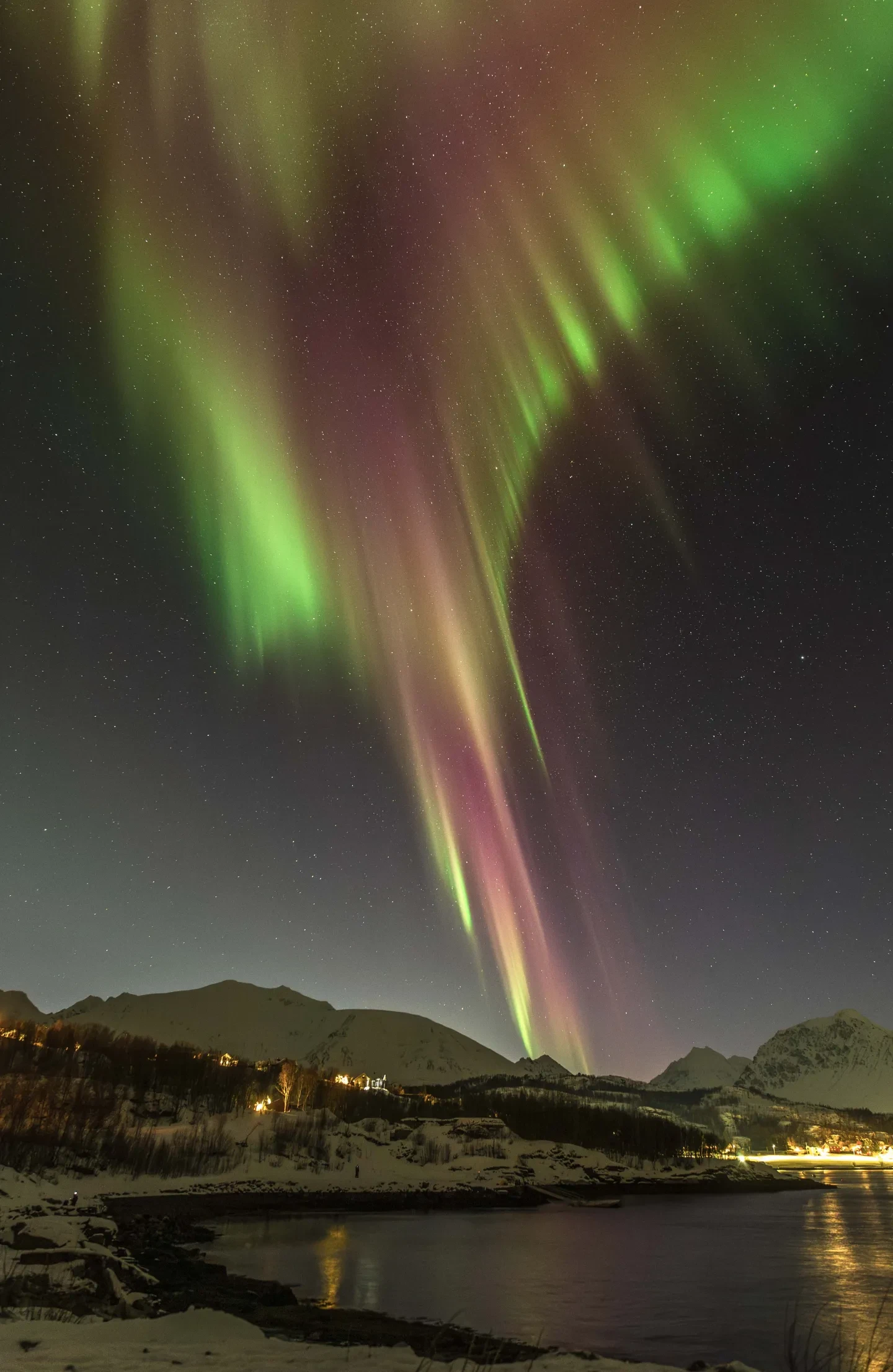
The two primary gases in the Earth’s atmosphere are nitrogen and oxygen, and these elements give off different colours during an aurora display.
The green we see in the aurora is characteristic of oxygen, while hints of purple, blue or pink are caused by nitrogen.
“We sometimes see a wonderful scarlet red colour, and this is caused by very high altitude oxygen interacting with solar particles,” adds astronomer Tom. “This only occurs when the aurora is particularly energetic.”
Is the aurora borealis visible in the UK?
The aurora borealis can be seen in the northern hemisphere, while the aurora australis is found in the southern hemisphere.
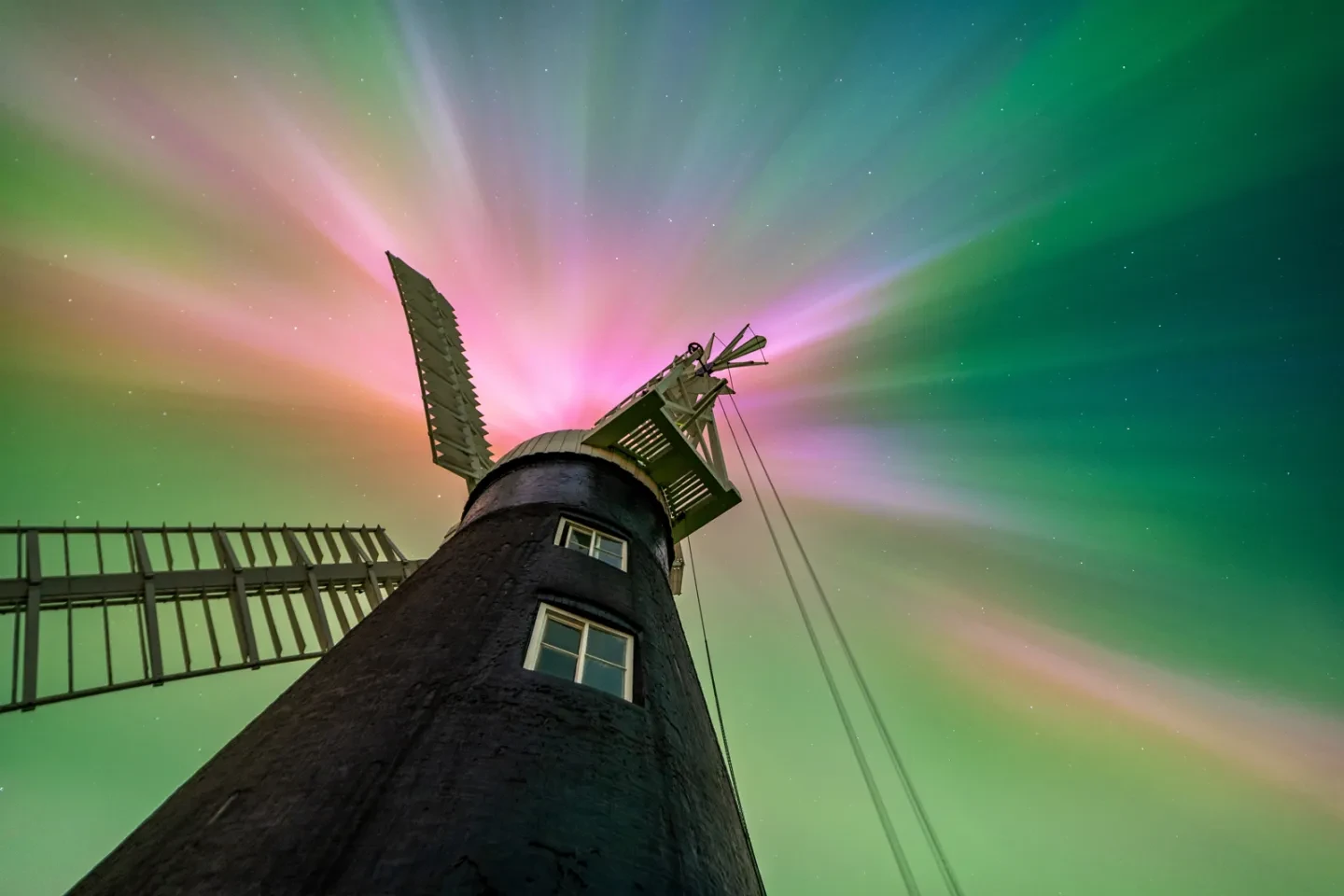
While the best places to see the aurora are concentrated around the polar regions, the aurora borealis can sometimes be seen in the UK. The further north you are, the more likely you are to see the display – but heightened solar activity has meant that the northern lights have very occasionally been seen as far south as Cornwall and Brighton.
The conditions do still need to be right, however. Dark and clear nights, preferably with little light pollution, offer the best chance of seeing the aurora.
Lancaster University's Department of Physics runs a website called AuroraWatch UK, which estimates the likelihood of an aurora being visible based on geomagnetic activity.
Never miss a shooting star
Sign up to our space newsletter for exclusive astronomy news, guides and events, and stay connected with Royal Museums Greenwich.
Do other planets have aurorae?
Any planet with an atmosphere and magnetic field is likely to have aurorae. Scientists have captured incredible images of aurorae on Jupiter, Saturn, Uranus and Neptune.
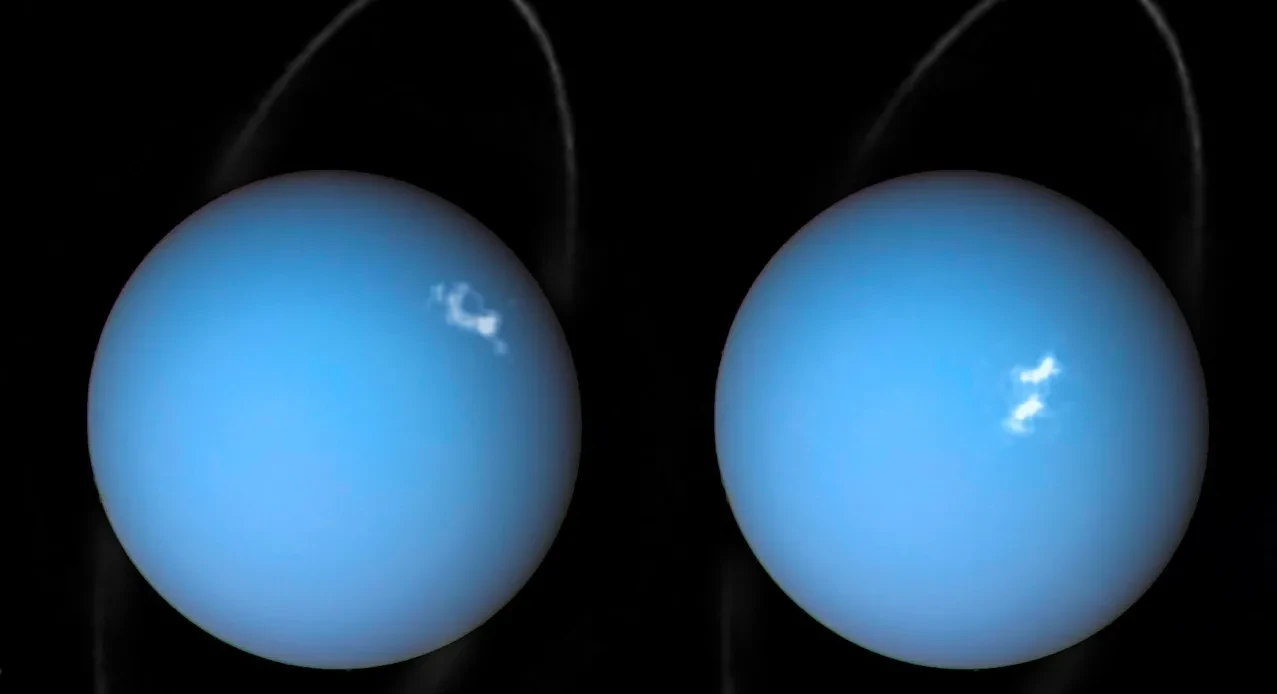
Aurorae on Mars have also been seen, but as the 'red planet' does not have a global magnetic field, aurorae behave differently and appear to be far more widespread.
What are solar flares and how do they affect the aurora?
The aurora is a very dramatic example of the ways in which solar activity affects the Earth.
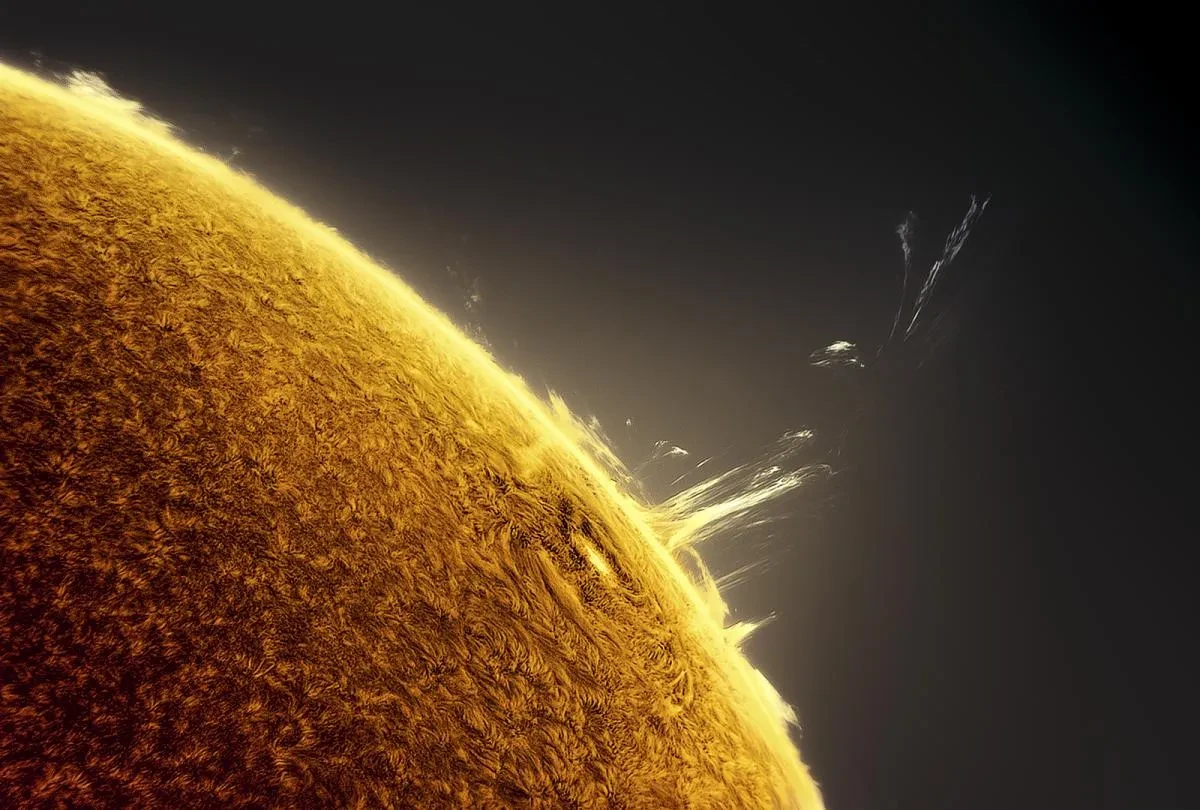
Solar flares are like enormous explosions on the surface of the Sun in which streams of charged particles are emitted into space. It typically takes two days after the flare is seen on the Sun for the particles to reach Earth. Upon their arrival, these particles can result in aurora activity.
What are geomagnetic storms?
Intense aurora displays are generated following massive explosions on the Sun known as 'coronal mass ejections'. These explosions release clouds of hot plasma containing billions of tons of material travelling at around two million miles per hour. When the clouds reach the Earth, they interact with the Earth's magnetic field to cause events called geomagnetic storms.
The Sun's activity fluctuates, reaching a peak every 11 years. In late 2024 the Sun entered the peak of its 11-year solar cycle (also known as solar maximum), which usually lasts for one to two years.
Regardless of the Sun's activity, aurorae can still occur at any time and observers in high latitudes should always look out for them.
Find more stories you might like
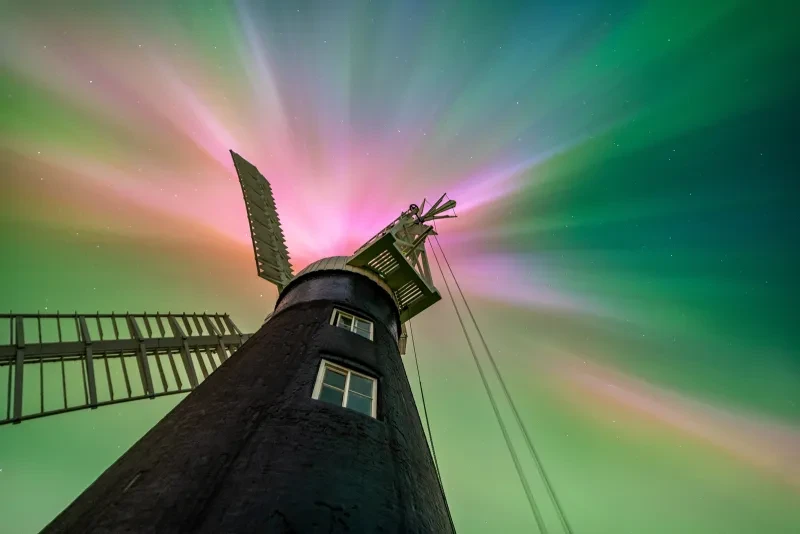
A rare spectacle: photographing the aurora in England
An incredibly strong solar storm in May 2024 made the aurora visible across the UK. Astrophotographer Darren Flinders seized this once-in-a-lifetime opportunity

Behind the lens with Monika Deviat
Dancer, educator, heavy metal fan and astrophotographer, discover more about the Aurorae winner of Astronomy Photographer of the Year 2023
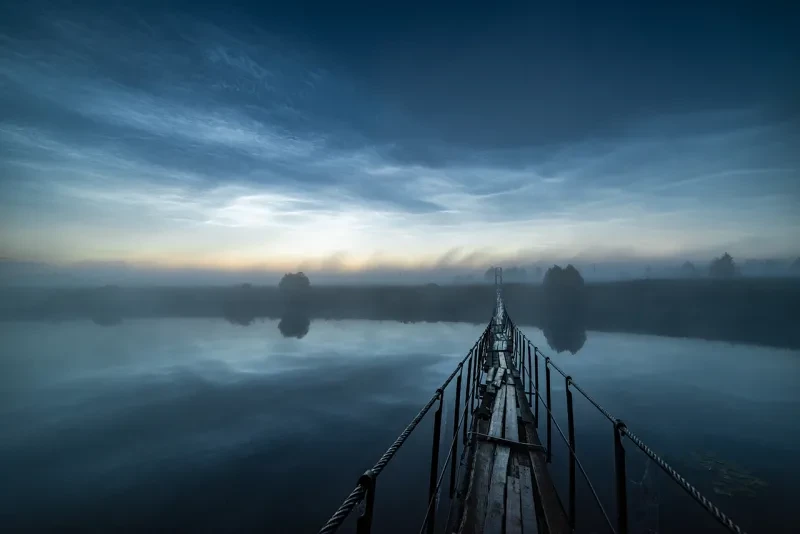
Noctilucent clouds: what are they and when can you see them?
Discover more about the astronomy phenomenon that makes clouds appear to glow at night
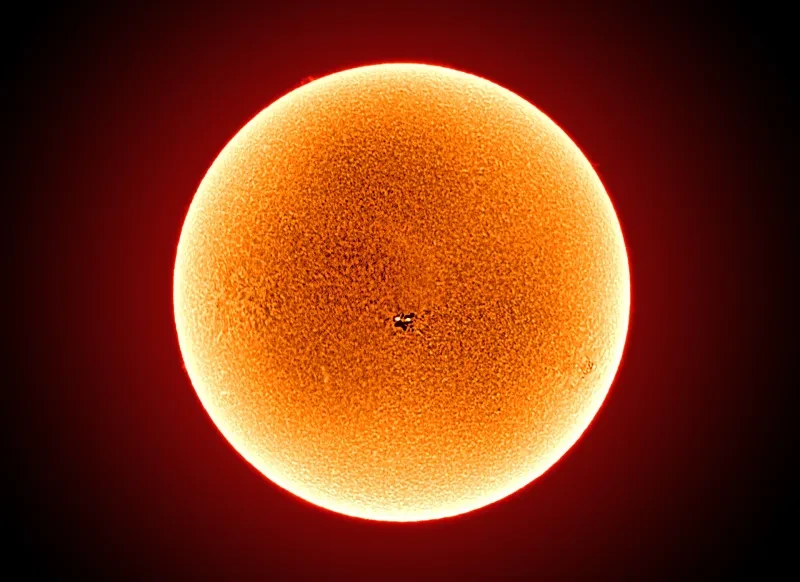
What can I see in the night sky this month?
Read our monthly guides to the night sky, and check out the latest news from the Royal Observatory Greenwich astronomy team
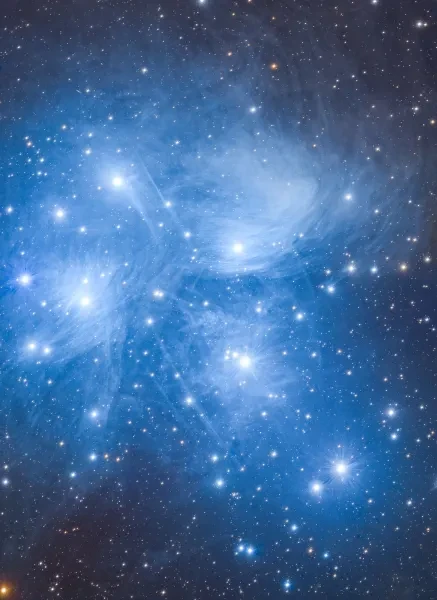
What are the Pleiades?
Take a closer look at the Pleiades, an extremely hot cluster of young stars. Also known as the 'Seven Sisters' or M45, this stellar family has been the subject of numerous myths in cultures worldwide
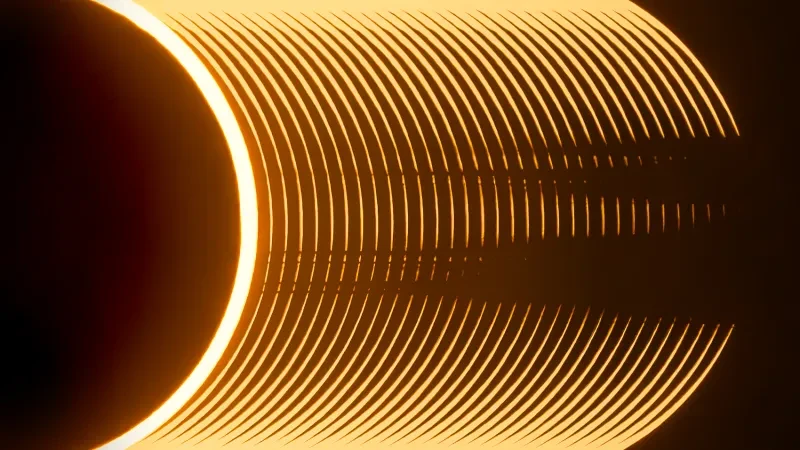
Beads of sunlight: photographing an annular solar eclipse
Ryan Imperio's spellbinding image of our Sun earned him the top prize in Astronomy Photographer of the Year 2024
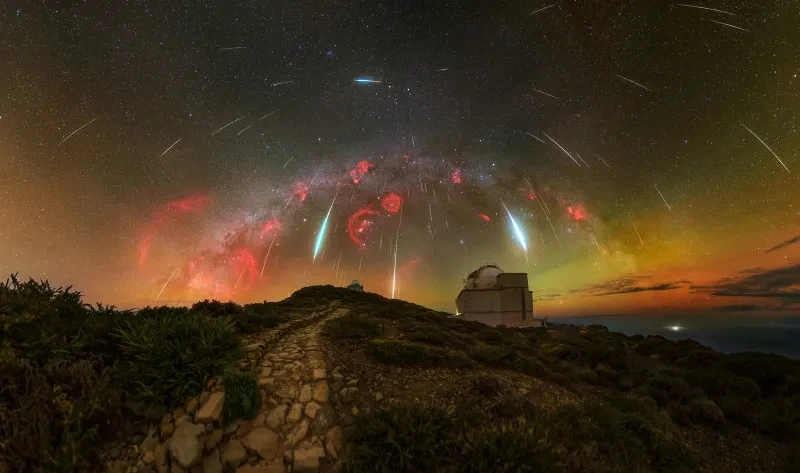
Meteor shower guide 2026 and 2027
Want to see shooting stars? Check the key dates for major meteor showers in the UK in 2026 and 2027, and how to see them in the night sky
Get into space and astronomy

Header image: An Auroral Deluge © Julien Cadena - shortlisted in ZWO Astronomy Photographer of the Year 2026