Image
Category winner
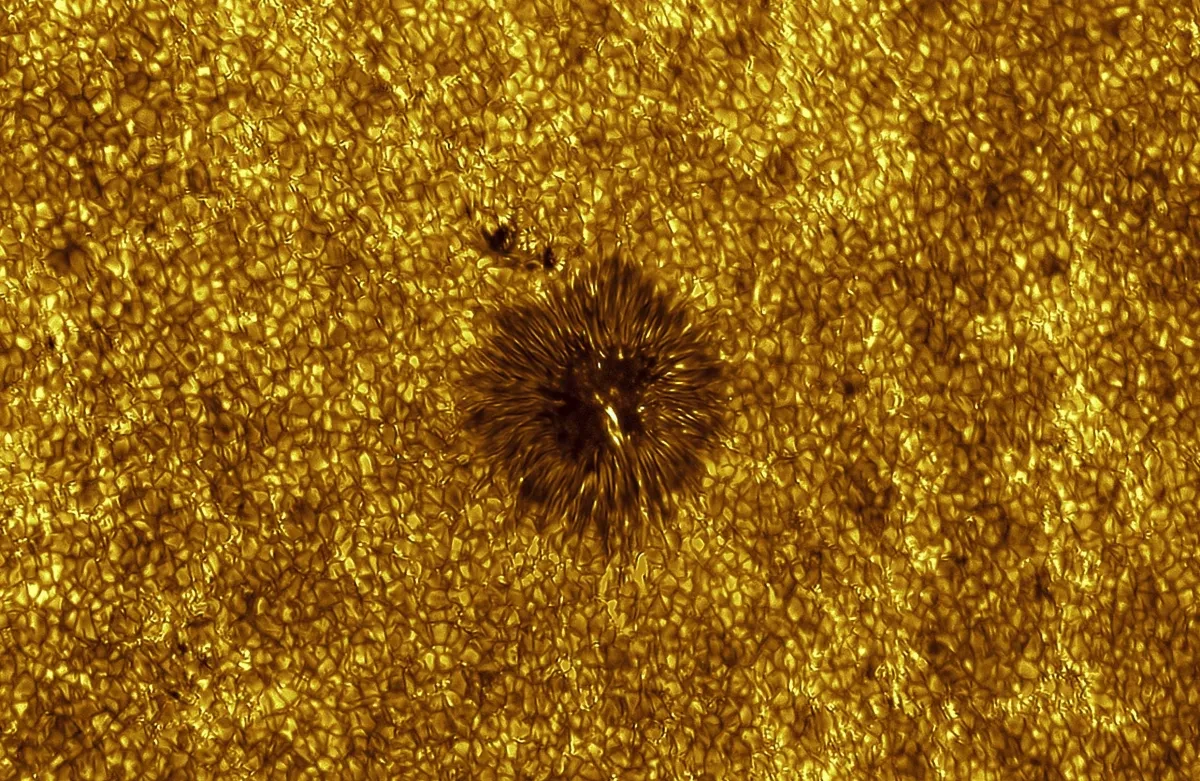
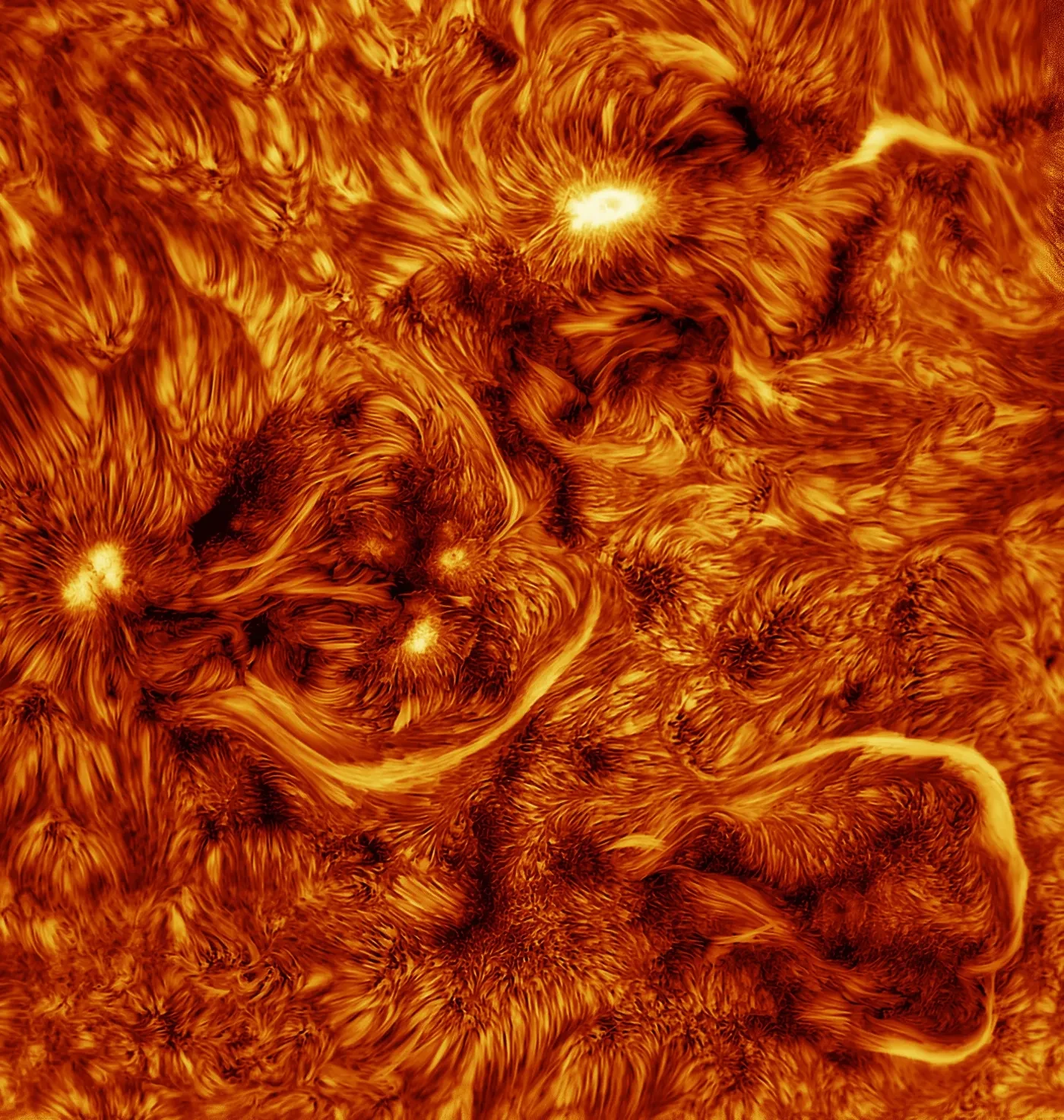
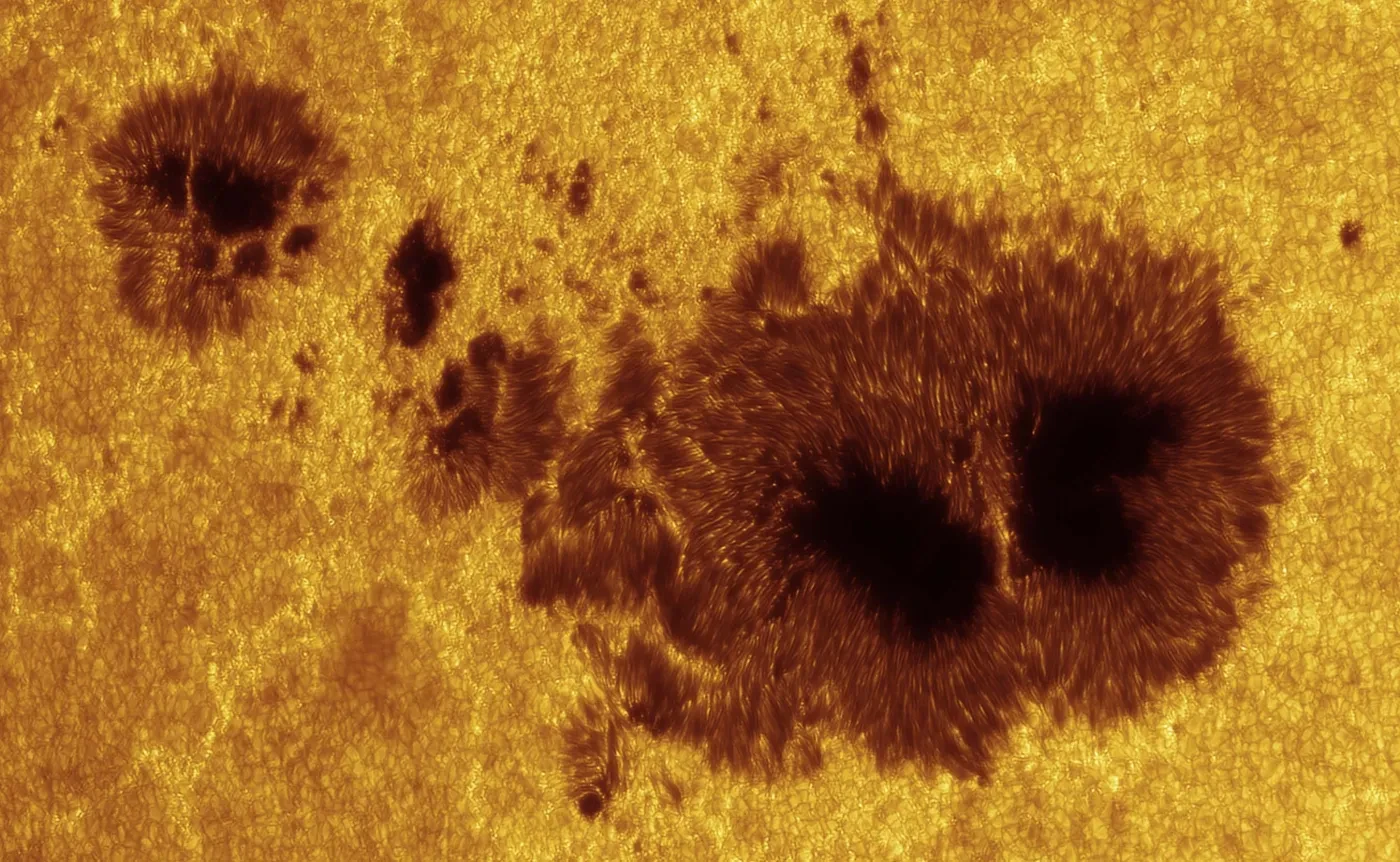
Active Region 4122 by Miguel Claro
"This image was captured with a new dual-band telescope to try to reveal a greater level of detail in the Sun’s photosphere [visible layer]. Seeing stability [the steadiness of Earth's atmosphere] is always the deciding factor. After several attempts, a perfect opportunity eventually arose. The excitement that morning was palpable. The temperature was mild, the wind light and there were moments of great seeing – the perfect conditions to try my luck at capturing convection cells [the constantly shifting regions of rising and falling plasma on the Sun's surface] and the delicate filigree, or bright spots, found between them.
I noticed a medium-sized active region on the photosphere and used it to help me focus. I captured several short videos at a high frame rate to 'freeze' those fleeting moments of atmospheric stability. Watching the first results of the pre-processed image appear on screen was a pure thrill – seeing that impressive level of detail ready for the final processing made every bit of effort worth it."
Taken in Reguengos de Monsaraz, Évora District, Portugal, 2 July 2025
Image
Runner-up
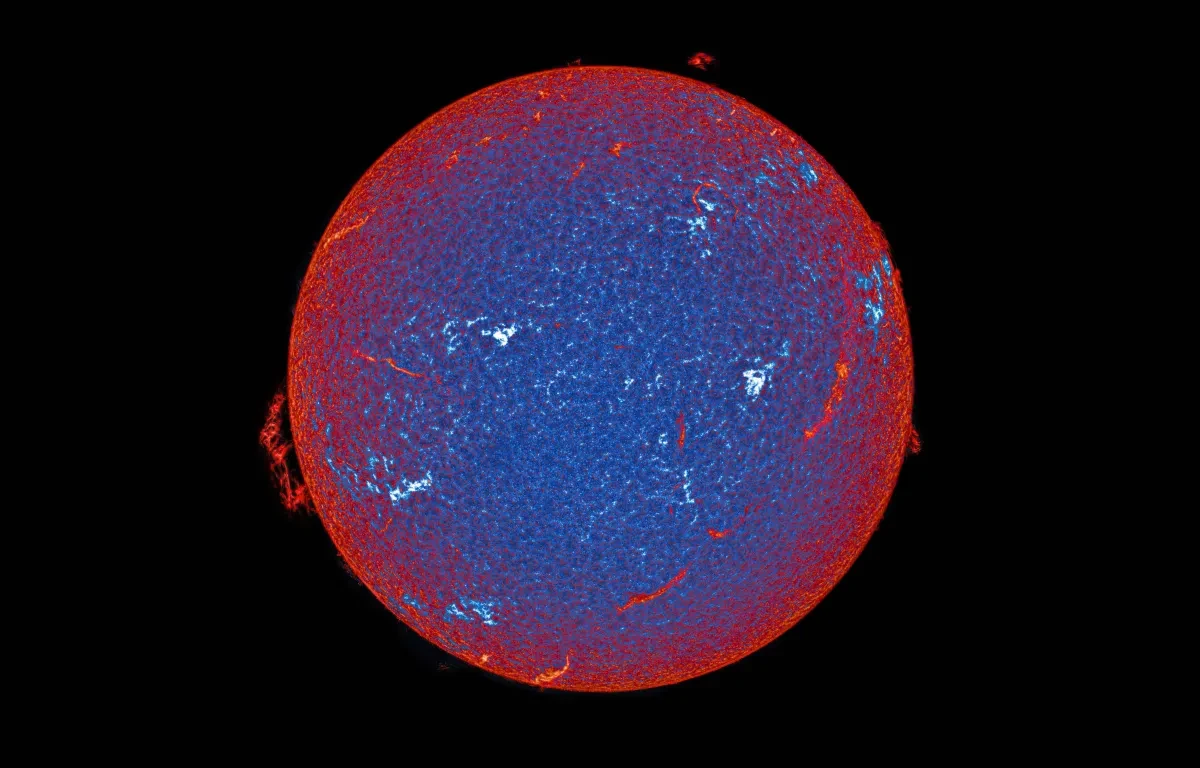
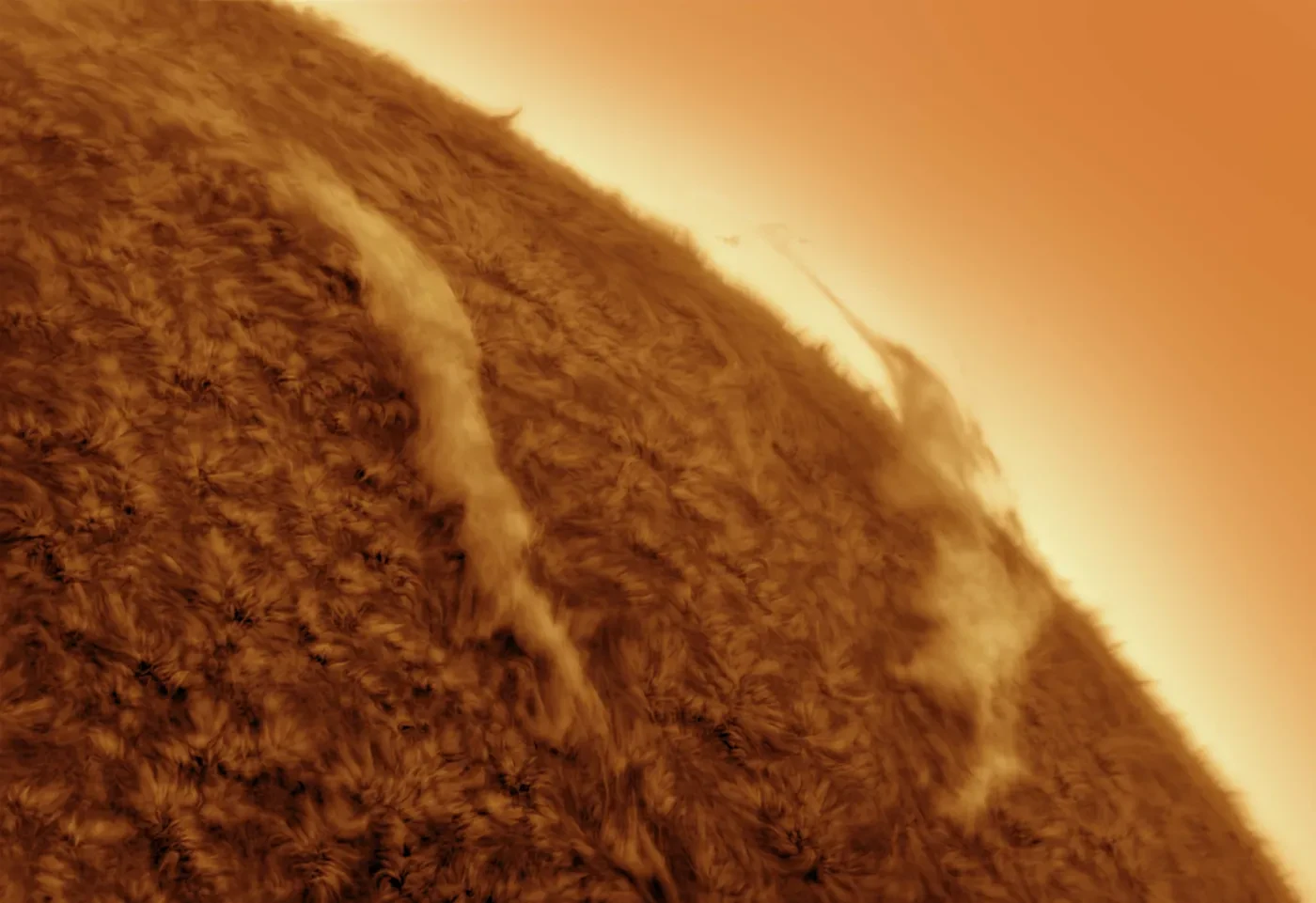
Anatomy of the Chromosphere by Peter Ward
"The layers of the Sun’s chromosphere [the section of the Sun’s atmosphere above its visible surface], are usually best revealed by studying them with one wavelength of light at a time. Here, the results of H-alpha and Calcium-H line imaging are fused into a single, compelling image.
A spectroheliograph captured calcium filaments and prominences [plumes of gas expelled from the Sun’s outer layers] in the UV spectrum, which were then combined with simultaneous H-alpha observations. The two different techniques are brought together, resulting in a unique multispectral portrait of our closest star.
The image reveals the chromosphere’s deep hidden structure. Calcium-H structures shimmer in electric lilac, interwoven with the scarlet glow of ionised hydrogen. Red H-alpha filaments cross the solar surface and prominences rise from the limb [the edge of the solar disc]. The blue component reveals the Sun’s magnetic architecture, highlighting the areas where powerful magnetic fields erupt through the surface."
Taken in Barden Ridge, New South Wales, Australia, 11 October 2025
Image
Highly commended
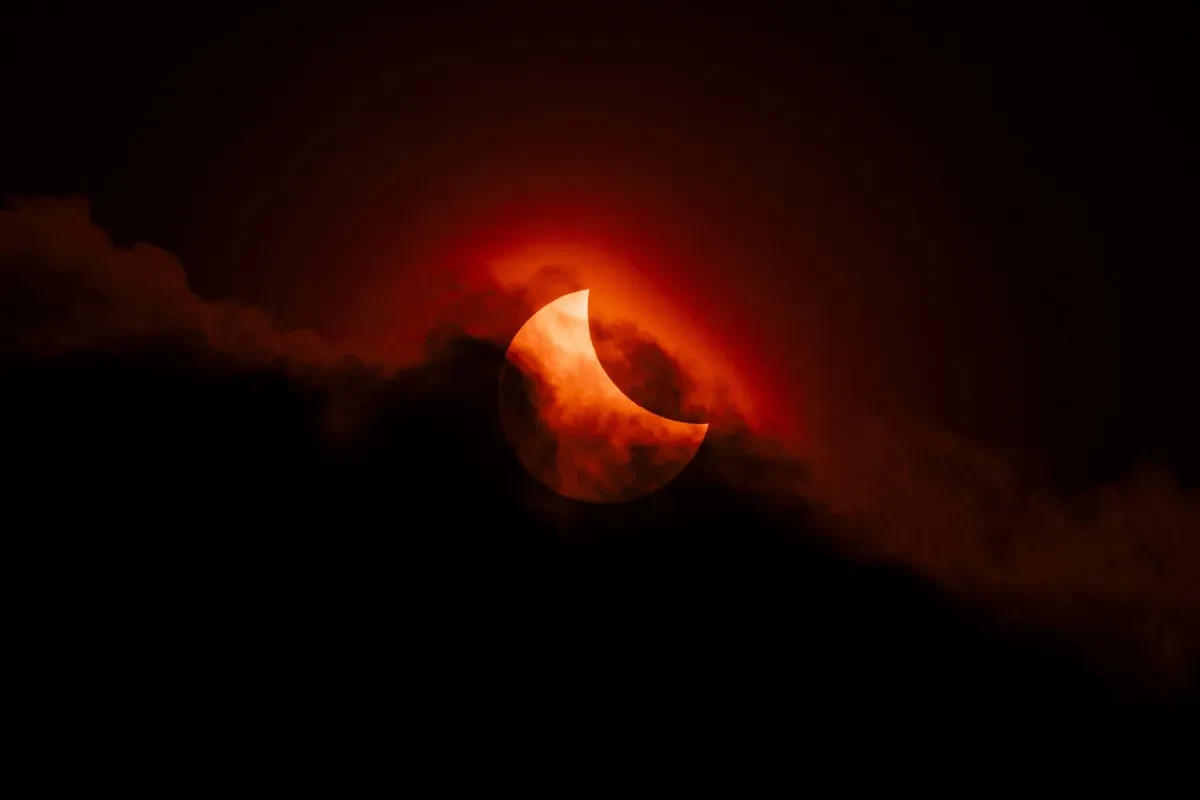
Moody Partial Solar Eclipse © by James McBeath
"Here, the partial solar eclipse of 2025 was shot through fast moving clouds on what was a beautiful spring morning. I spent several hours in a local park tracking the eclipse with my camera, showing many passers-by what I was doing and giving them a good view of the eclipse. I ended up with hundreds of shots, but this one, with the clouds framing the Sun perfectly, immediately caught my eye. I am very happy with most of the shots I took that day, but this one is easily the dreamiest."
Taken in Leeds, West Yorkshire, England, 29 March 2025
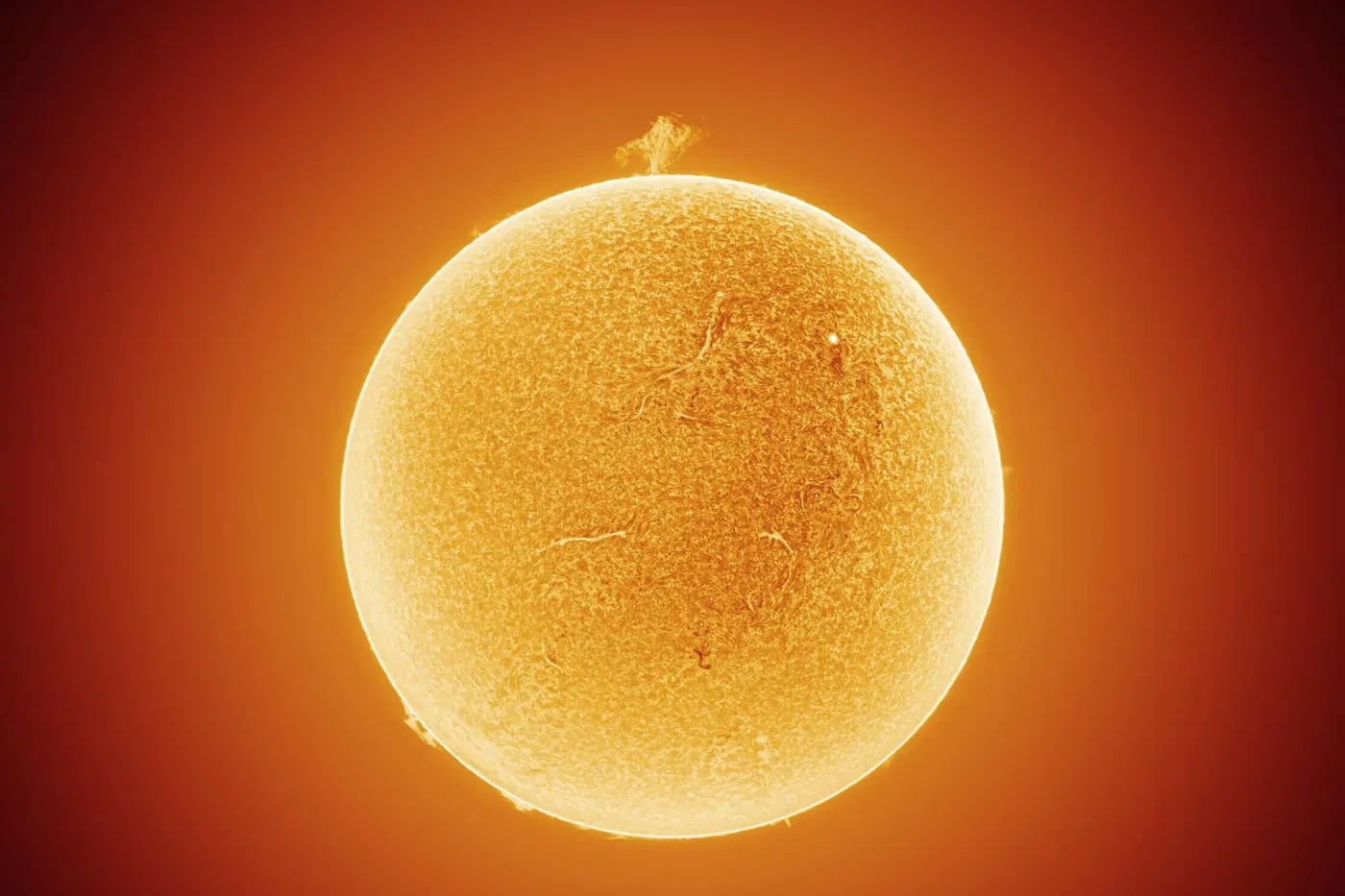
See the full shortlist
See the full shortlist
1 / 9
The Savanna Tree
© Rafael Schmall
2 / 9
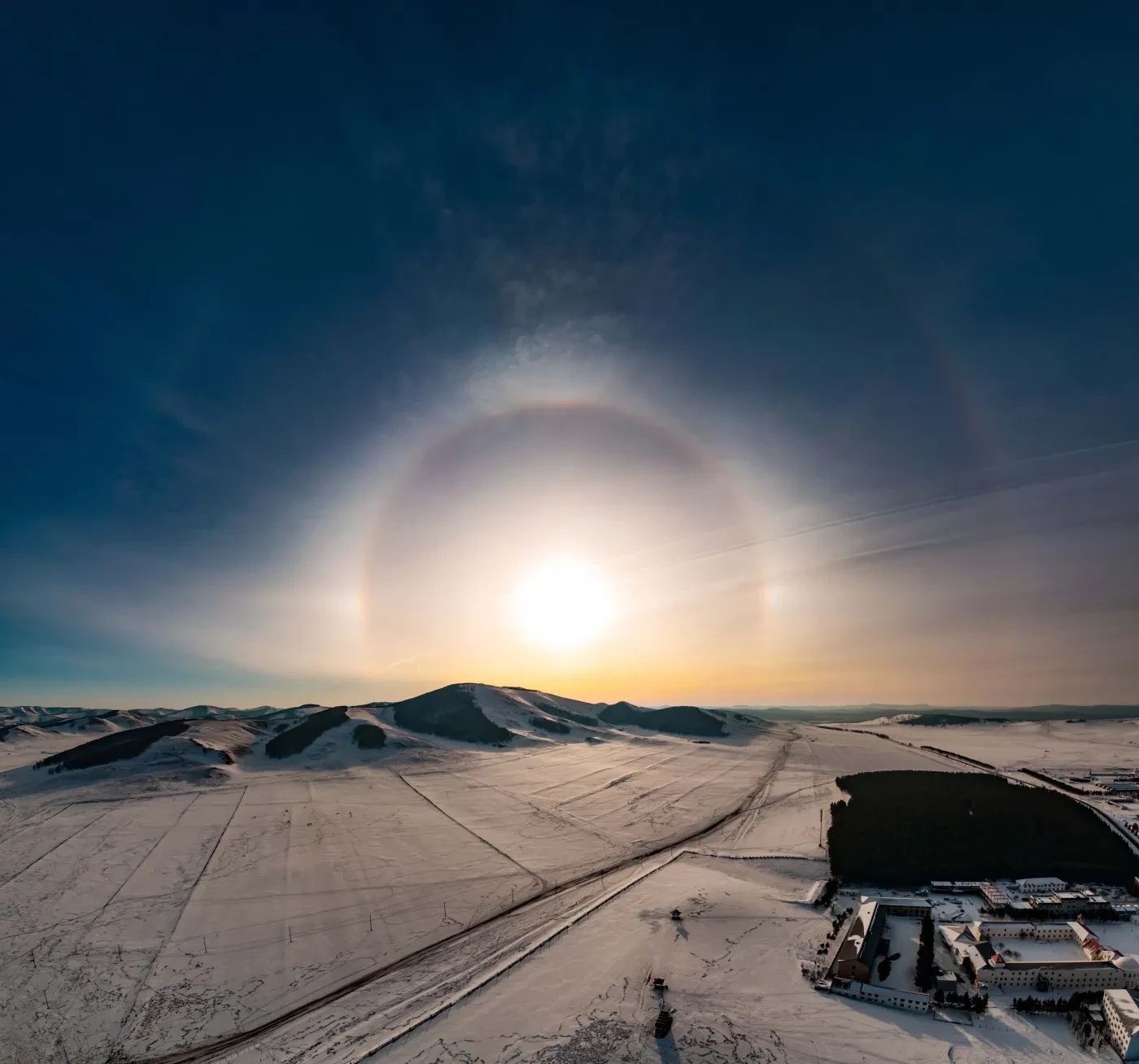
Halo Over the Frozen Plains
© Chen Xu
3 / 9
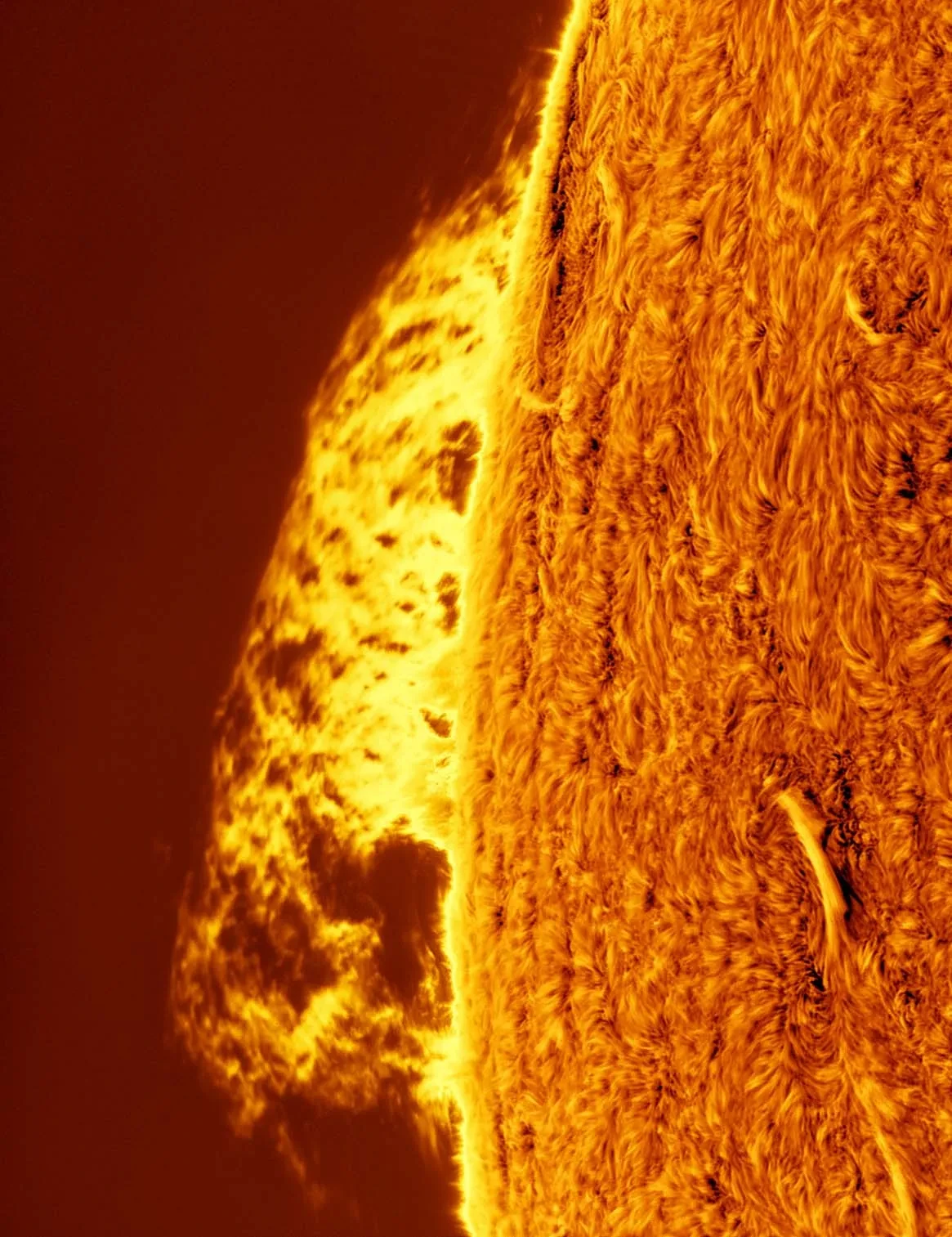
A Shark in Flame
© PengFei Chou
4 / 9
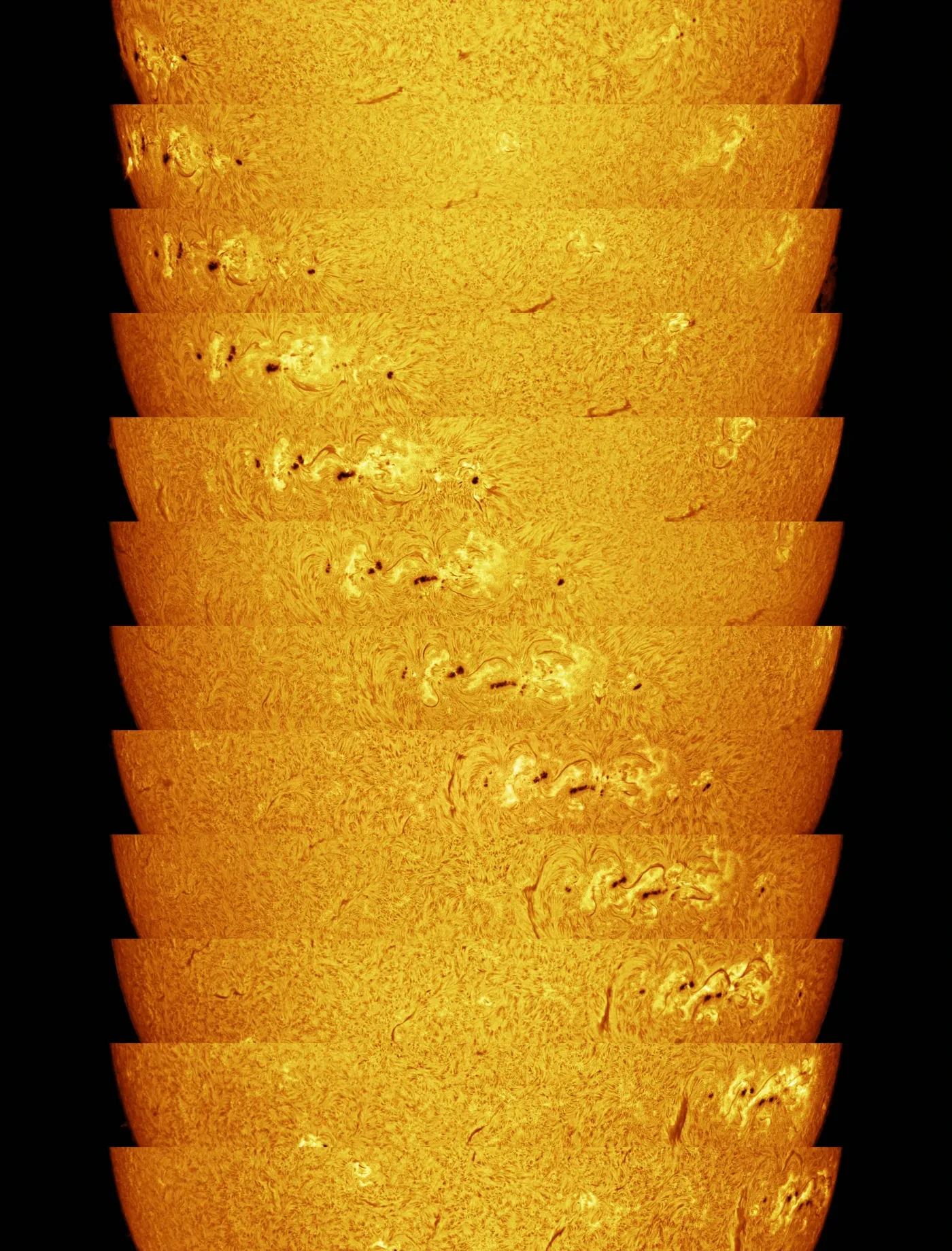
Twelve Days of the Sun
© Deepak Singh Dogra
5 / 9
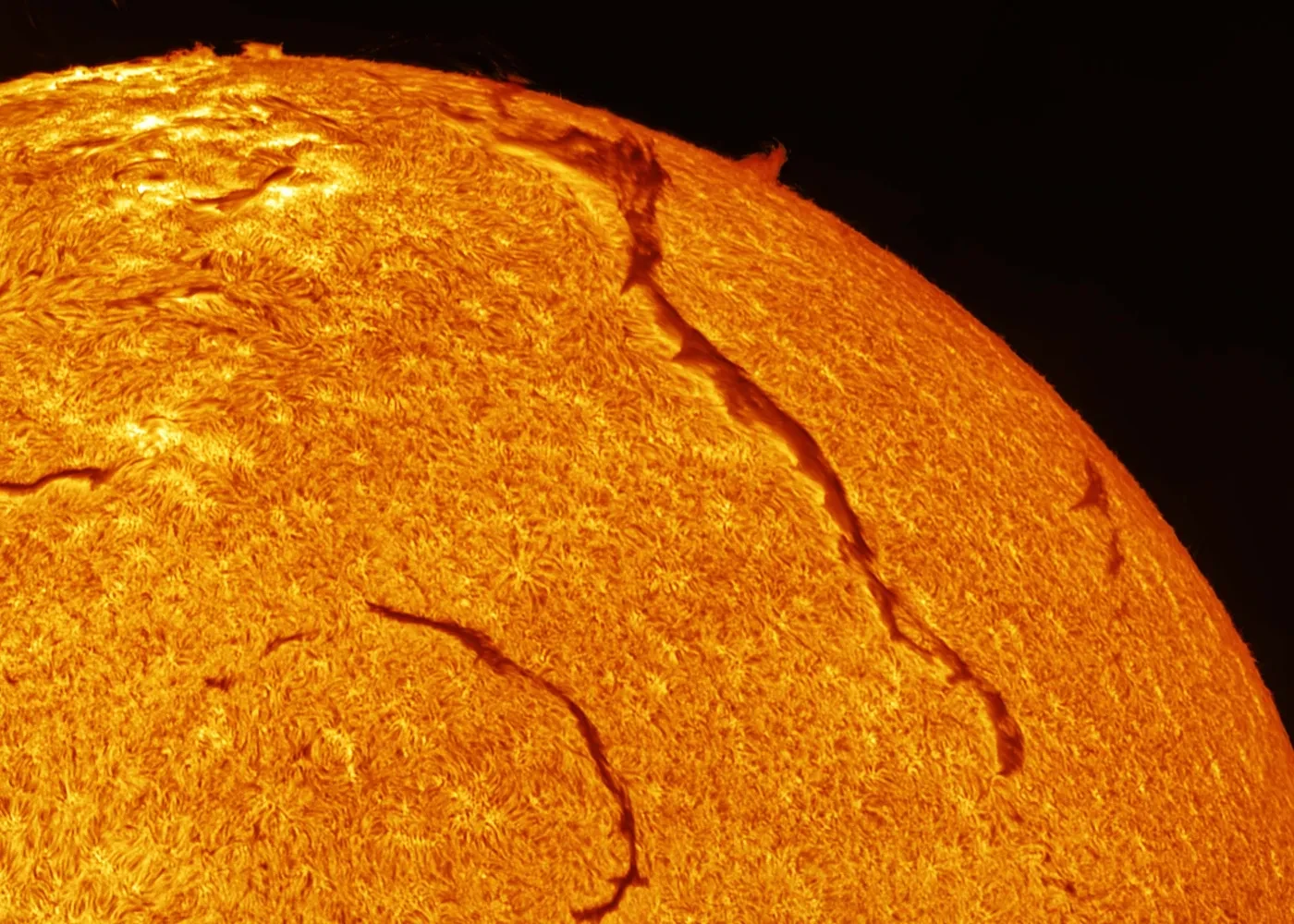
Giant Filament
© Zhang Yanguang
6 / 9
Brushstrokes of the Sun
© Zhang Yanguang
7 / 9
Suspended Plasma
© Mario Cogo
8 / 9
The Large Sunspot Active Region 4079
© Laszlo Francsics
9 / 9
The 230,000 km-Long Active Region 4048
© Laszlo Francsics
Never miss a shooting star
Sign up to our space newsletter for exclusive astronomy news, guides and events from Royal Museums Greenwich.
Visit and explore

Read more
Browse the collection of award-winning astrophotography.

Our partners