
Essential information
| Type |
Talks and tours
|
|---|---|
| Location |
Online
|
| Date and times | Tuesday 29 September 2026 | 5.15-6.30pm |
In 1844 the London Missionary Society (LMS) launched a ship bound for the Pacific: the first of seven ships purchased and outfitted entirely with donations from children.
This relationship between the LMS ships and children would persist for the next 123 years. While the successive ships of the line were all named after the missionary martyr, John Williams, they were also known as the 'Children's Ship'.
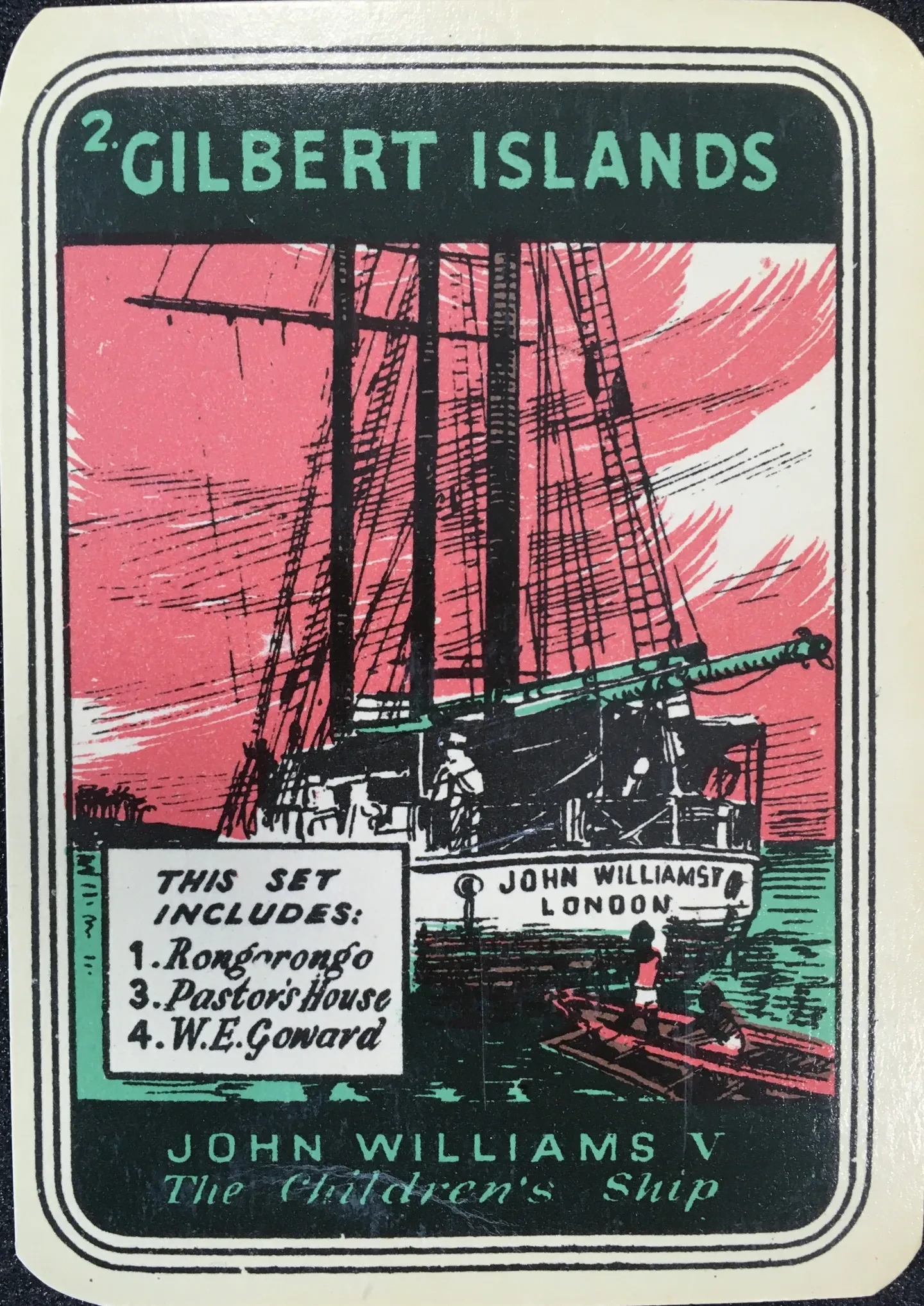
A key part of the LMS's (1795-1967) operational strategy was to cultivate British children as donors, fundraisers and future missionaries. Children played a key role in the operation of the LMS by fundraising for, commemorating, and visiting the 'Children’s Ship'.
Through their Juvenile Magazine, books, games and other ephemera, the LMS captivated the attention of children. Young readers were constantly reminded that it was ‘their ship’ and through their pennies that the missionaries could carry out their work in the farthest reaches of the world.
In this talk, Gréine Jordan will explore the role played by children in the London Missionary Society through the 'Children's Ship'.
- Why were children and young people so important to the LMS?
- How did the LMS appeal to British children through imagery, books and ephemera?
- How did the 'Children's Ship' create encounters (real and imagined) between the children in Britain and those across the seas?
About the speaker: Gréine Jordan
Gréine Jordan is an interdisciplinary researcher whose work brings together art history, anthropology, visual culture, and digital humanities.
She recently completed an AHRC-funded collaborative PhD in Art History and World Art Studies at the University of East Anglia and the National Maritime Museum. Her doctoral research examined how missionary images, publications, and objects shaped British children's understandings of Britain's place in the world between the mid-19th and mid-20th centuries. As part of this research, she created and analysed a dataset of more than 12,000 historical images, combining close visual analysis with digital methods.
Gréine has held research positions at the University of East Anglia, the University of Oxford, the National Maritime Museum, and Trinity College Dublin. Her current research explores the visual and material culture of missionary rhetoric, with particular interest in children's engagement with missionary ships.
What’s on
See all upcoming Maritime History and Culture Seminars.

Maritime History and Culture Seminars
Our free talks cover a range of fascinating subjects, from maritime art and naval strategy to Black History and museum exhibitions.