
Beagle was a Royal Navy ship, famed for taking English naturalist Charles Darwin on his first expedition around the world between 1831 and 1836.
Beagle was launched at Woolwich Dockyard, London, in 1820. She was originally a 10-gun brig sloop, but as there was no immediate active use for her, she was refitted and allocated as a surveying vessel, under the command of Captain Robert FitzRoy.
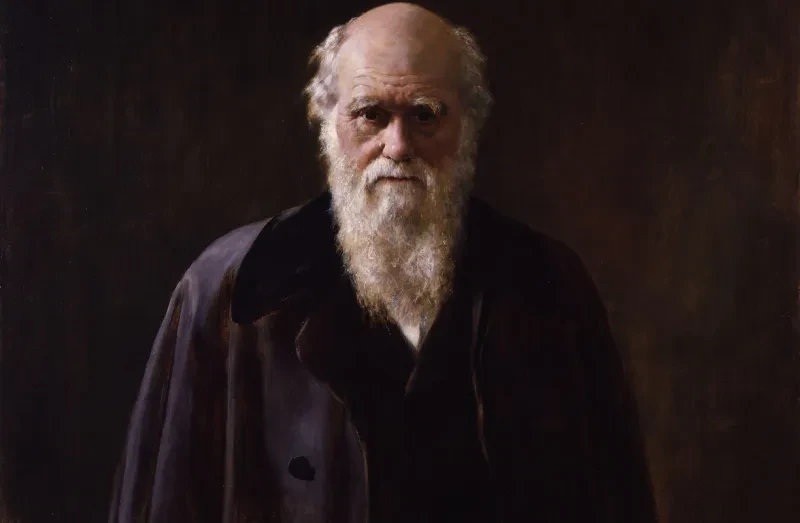
Her most famous passenger was the English naturalist Charles Darwin, who wrote about his five-year expedition aboard her in his travel memoir, The Voyage of the Beagle.
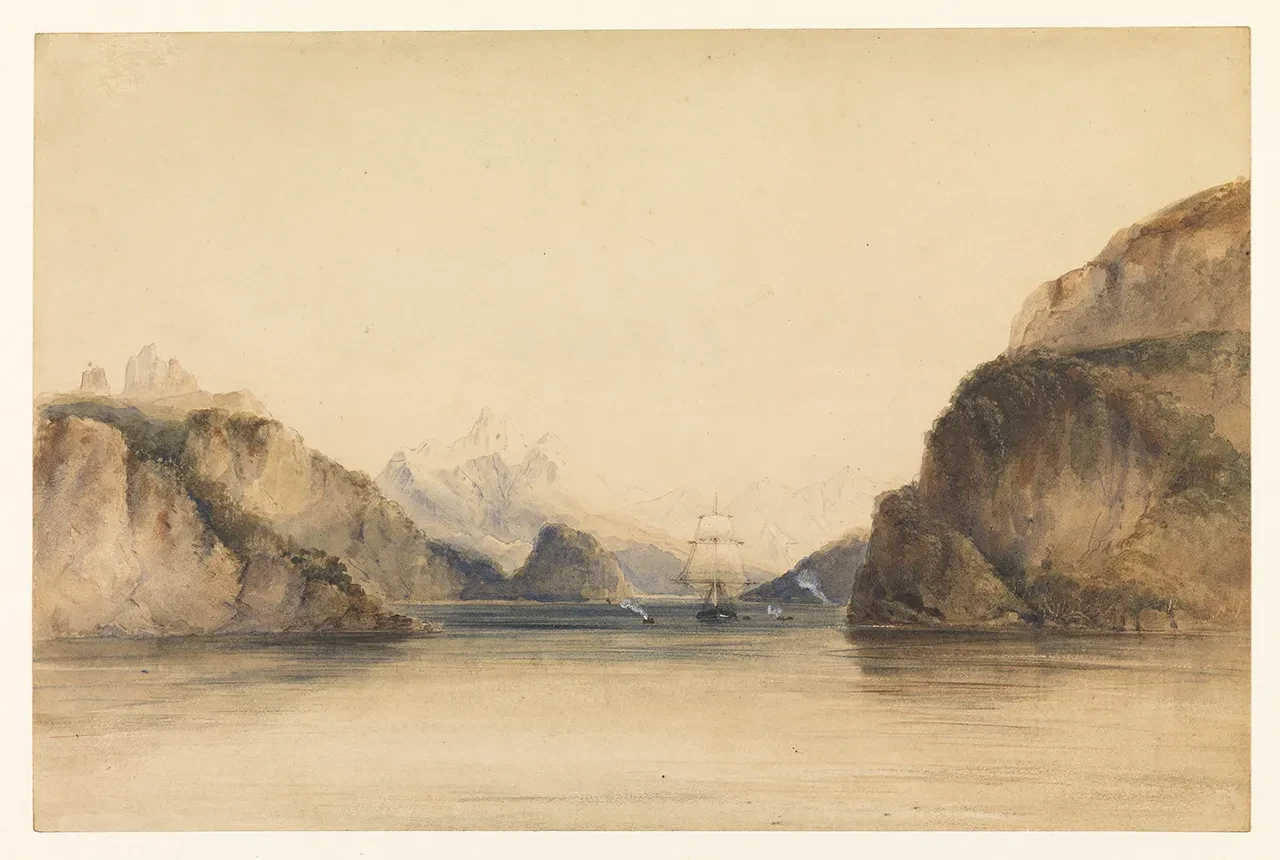
One of a group of 15 watercolours made by Conrad Martens to illustrate Robert Fitzroy's 'Narrative of the Voyage of the Beagle'. (PAF6238)
What exploratory voyages did Beagle go on?
Beagle's first voyage of exploration was to South America, surveying Patagonia and Tierra del Fuego between 1826 and 1830.
The second voyage (1831–36) took her to South America and then around the world. Darwin was on board during this voyage, which became one of the most famous and important voyages of exploration ever made.
Beagle's third and final voyage (1837–43) surveyed large parts of the Australian coast.
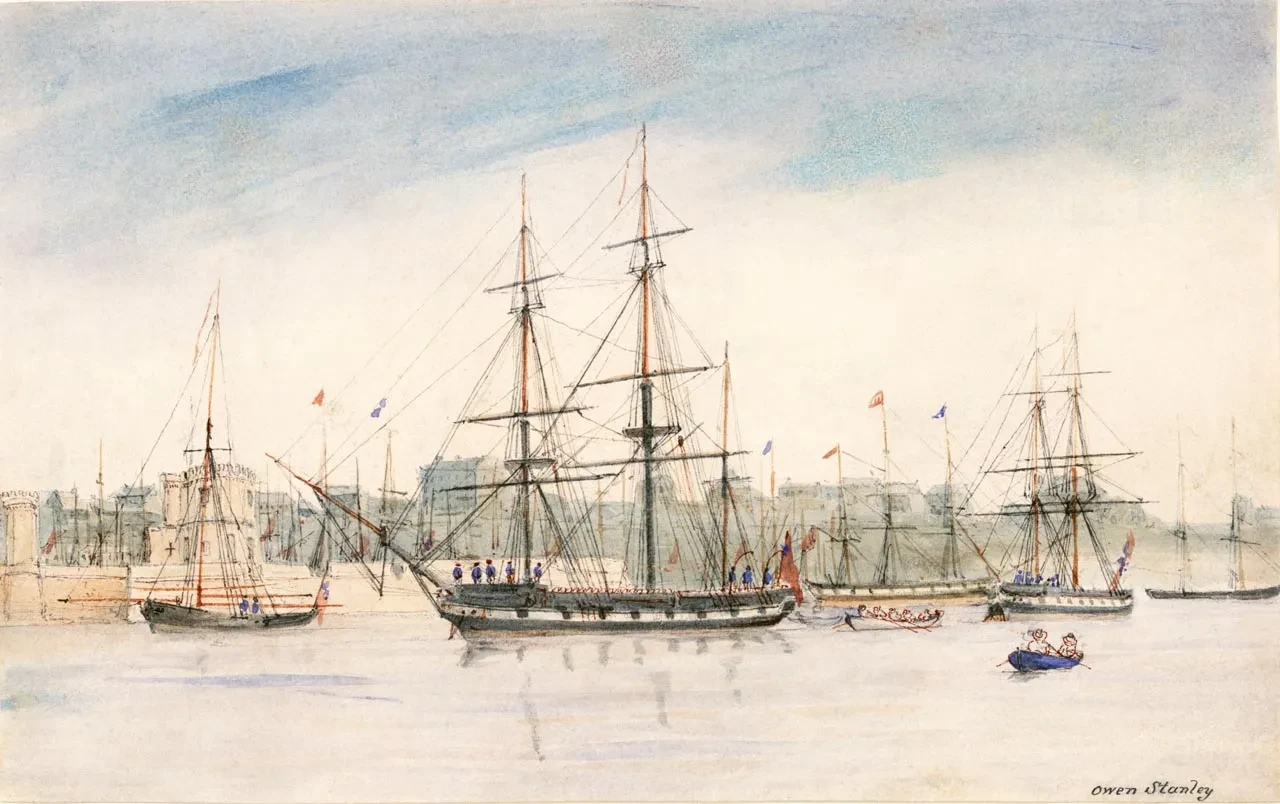
How big was Beagle?
The Beagle measured just 27 metres long and seven metres wide, and weighed 235 tons.
She underwent a number of improvements throughout her life on the seas. For example, her hull was reinforced and a mizzen-mast (a third mast) was added to make her more manoeuvrable in shallow coastal waters.
What scientific equipment did Beagle carry?
The Beagle voyages under Captain Robert FitzRoy included the use of scientific technology such as theodolites, chronometers and barometers used to provide accurate survey information for new charts and, equally importantly, meteorological data and weather forecasting.
The Darwin voyage was the first time the Beaufort wind scale was used for wind observations. The crew also undertook various experiments and, despite some disappointments, they produced useful results. They were especially successful in the measurement of earthquakes during experiments in 1835.
What happened to Beagle?
It was believed that Beagle's remains were in the marshland alongside the River Roach in Essex. However, new research by Mike Salter in 2025 has indicated that Beagle was sold to Messrs Murray and Trainer in 1870.
The hull was then towed from Paglesham up the Thames to their shipbreaking yard at Crowley's Wharf, East Greenwich, where the vessel was broken up.
This new research has not currently found any evidence of what happened to the copper and timbers of HMS Beagle. Some may have survived as oak ornaments and furniture, in addition to an inscribed oak box made for Admiral John Lort Stokes (which forms part of the Museum’s collections).
These artefacts serve as reminders of the extraordinary voyage that led to Darwin's great scientific breakthrough.
Read more about HMS Beagle
Shop the collection


