Most of us are familiar with the doomed 1845 Arctic Expedition led by Sir John Franklin and with his contemporary, the novelist Charles Dickens. But largely forgotten is a connection between the two.
Dickens's play The Frozen Deep (1856) was inspired by the Franklin tragedy. The play was hugely popular, riding on interest in polar exploration and a desire to find out what happened to Sir John Franklin and his crews. Today I plan to explore the background to the play's creation, and some of the related items we have at Royal Museums Greenwich.
The Franklin Expedition
Following the end of the Napoleonic Wars, in 1815, the Royal Navy needed a new challenge and employment for its vast workforce. The search for the North-West Passage was pitched as a national adventure, with the creation of a £20,000 reward. The public's imagination was captured by the supposed 'civilising of untamed and alien wildernesses by gallant and noble Englishmen'. The nation became obsessed by all things polar – there were paintings, lectures and merchandise.
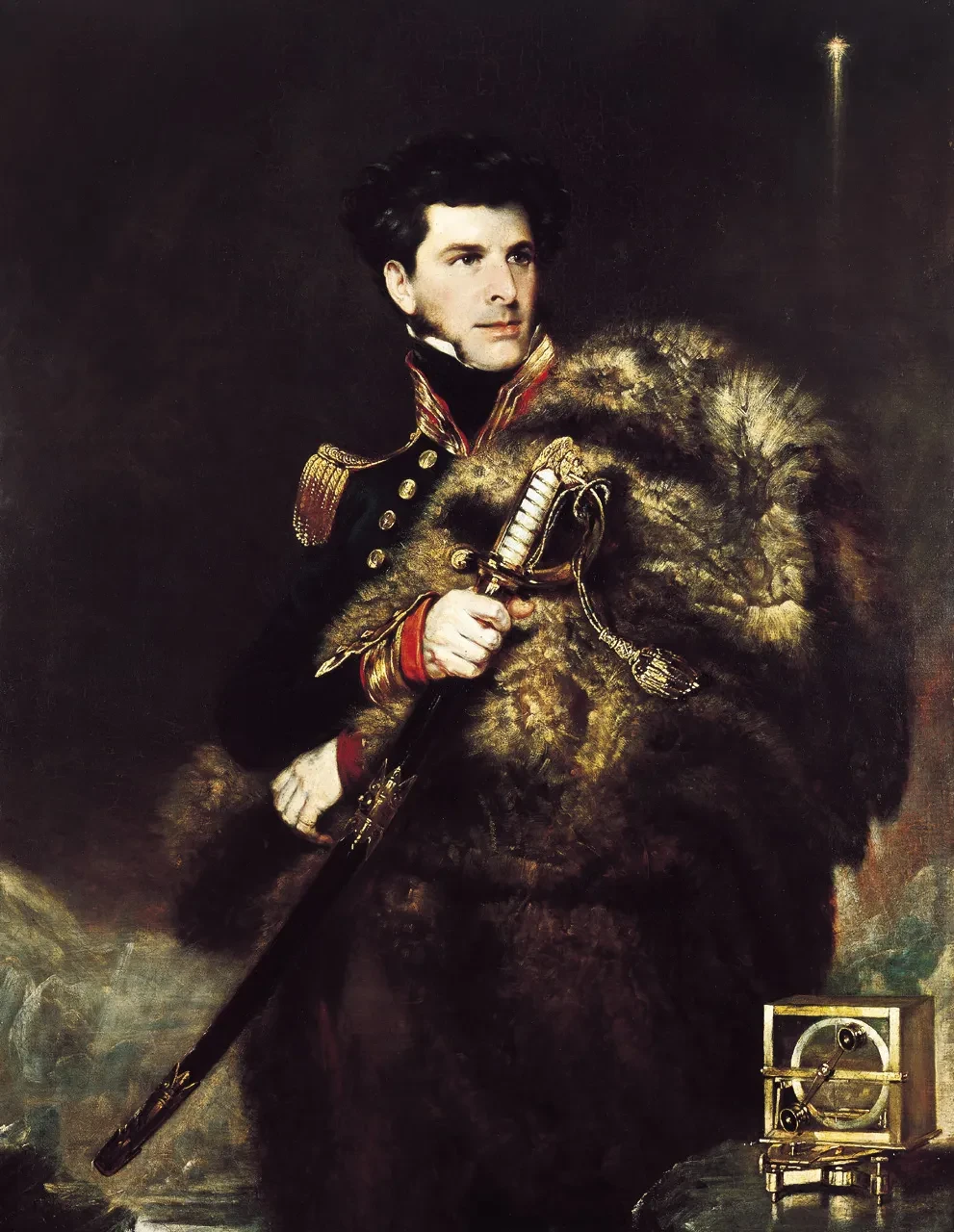
Some of the polar explorers became the swashbuckling pin-ups of the era. A romanticised portrait (BHC2981) of Commander James Clark Ross was commissioned to mark his return from an expedition in 1833.
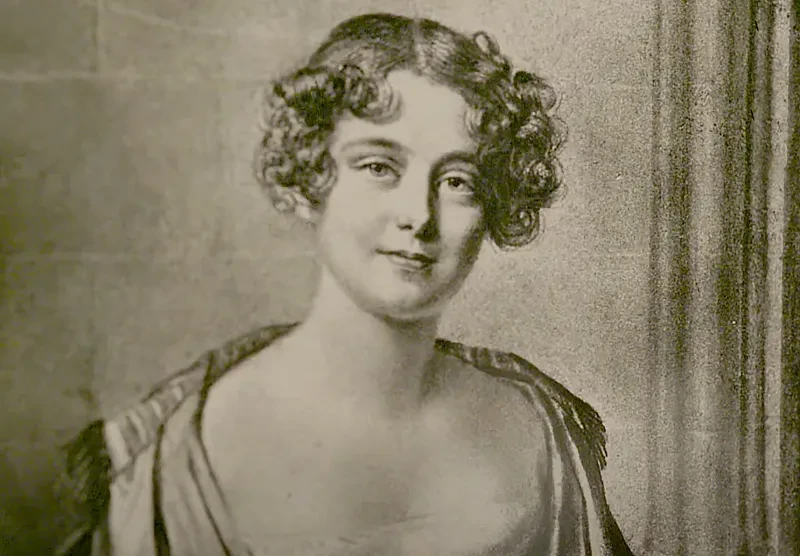
Just over a decade later, in May 1845, the Franklin Expedition left England, aboard HMS Terror and HMS Erebus. The expedition party was last sighted in the July of that year. Concerns grew for their welfare and, in 1848, a series of highly publicised searches for Franklin and his crews commenced, largely instigated and partially funded by Franklin’s wife, Jane. A total of 39 missions set out, between 1847 and 1880, in an attempt to determine what happened.
Selected letters of Lady Franklin from this period were published in 2009, a copy of which is available in the Caird Library on our open access shelves (PBH2103).
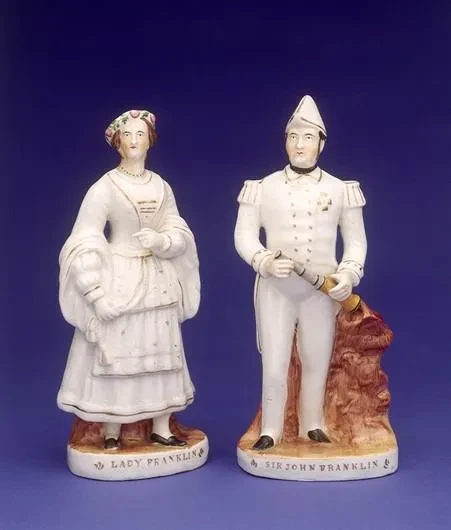
A flurry of Franklin-related articles and merchandise were written and produced; there are some Staffordshire earthenware figures of Sir John and Lady Franklin in the Museum's decorative arts collection which are believed to date from this period (AAA5957).
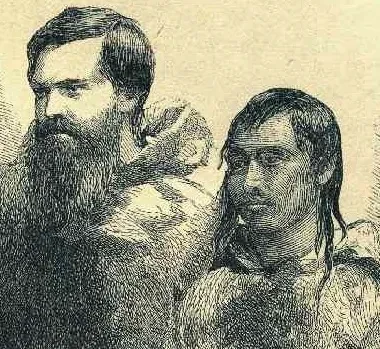
In 1854, John Rae, a Scottish surgeon and explorer employed by the Hudson’s Bay Company, made the first European discovery of evidence of the crews' demise. On his return to London, he submitted a confidential report to the Admiralty, suggesting that cannibalism had taken place among the last survivors, based on Inuit eyewitness reports (a theory supported by more modern evidence). An important book, held on open access in the Caird Library, documents the significance of these oral testimonies (PBH8200).
From the mutilated state of many of the corpses and the contents of the kettles, it is evident that our wretched countrymen had been driven to the last resource - cannibalism - as a means of prolonging existence.
Rae, taken from the 1854 Admiralty Report
Rae also wrote a second sanitised report, intended for the public, which omitted the charges of cannibalism. The Admiralty released the wrong report to the press, causing a nationwide outcry, with the public believing, along with Lady Franklin, that such action was incompatible with the behaviour of Royal Navy sailors.
Dickens, who had already published several articles, poems, and short stories regarding the fated expedition, was strongly of the same opinion as Lady Franklin. With her support, he publicly discredited Rae's evidence in articles published in the journal Household Words.
But Dickens went further in correspondence accusing the Inuit peoples of being 'a gross handful of uncivilised people, with a domesticity of blood and blubber', and of attacking and killing Franklin and his men (Dickens to Mrs Watson, 1 Nov 1854, The Letters of Charles Dickens, Vol VII, 1853-1855, Oxford 1993).
The play: The Frozen Deep
Dickens co-wrote The Frozen Deep in 1856 with fellow writer Wilkie Collins. He was arguably at the height of his career and influence, both as a novelist and as a journalist; he was writing the novel Little Dorrit alongside publishing, editing, and contributing not only to the journal All the Year Round but also to Household Words.
The play tells the action-packed story of two rival suitors, Richard Wardour and Frank Aldersely, vying for the love of Clara Burnham. The men unwittingly join two different ships as part of the same expedition to discover the North-West Passage. When the ships get stuck in the ice, and both men are randomly drawn into the same search party, Wardour, the rejected lover, finds himself torn between a desire for revenge on his successful rival and the need for solidarity in such adverse conditions. Gentlemanly sacrifice prevails. Dickens later based the self-sacrificing hero of Sydney Carton in A Tale of Two Cities on Richard Wardour.
The play was first performed in private, in Dickens's home, Tavistock House, in January 1857. Dickens typically took not only the lead role of Wardour but also acted as stage manager. Other members of the cast were family and close friends. An account of the performance in the 17th January edition of The Illustrated London News says of Dickens 'too much praise cannot be bestowed on this artistic interpretation.'
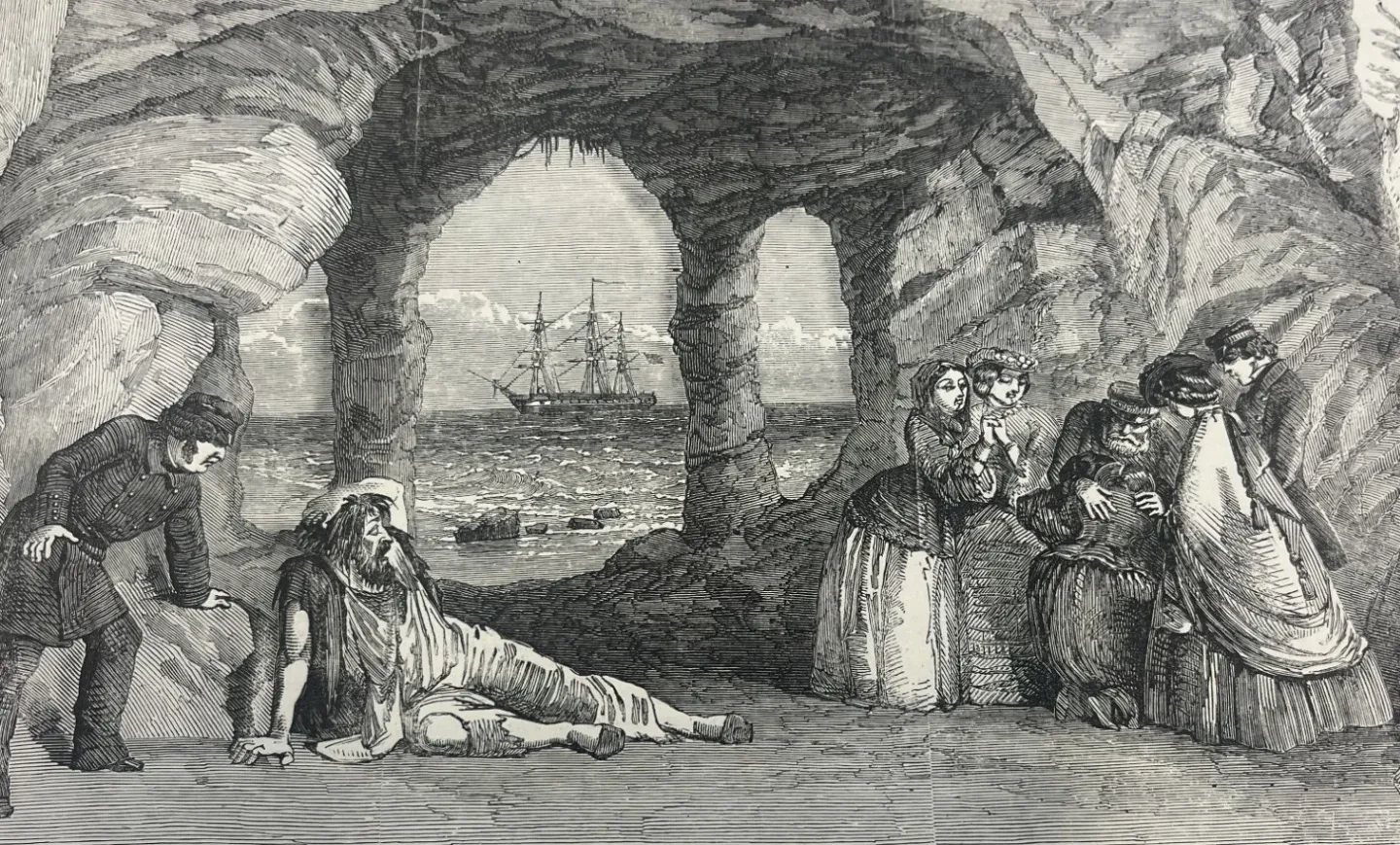
The Caird Library and Archive hold an entire run of The Illustrated London News in its periodical collection, and is available to view on request in the Reading Room.
The popularity of the play grew rapidly. Even Queen Victoria attended a Royal Command Performance in July of that year, praising both the writing and Dickens's acting, in her diary.
The Frozen Deep also had dramatic personal consequences for Dickens. It was through casting professional actors for the public runs that he first met 18-year-old Ellen Ternan, for whom he would later leave his wife Catherine. These larger performances, in the late summer of 1857, were seen by thousands.
Dickens also spoke at the Royal Geographical Society, in 1857, in support of the pending Fox voyage led by Captain McClintock. The Fox voyage was funded by public subscription, including a large sum from Lady Franklin. Here at the Caird Library and Archive we have on loan the papers of Captain McClintock, which are available on request for viewing in the Reading Room.
The McClintock expedition did discover the fate of Franklin and his crews – that the ships had become trapped in the ice, where many had died, including Franklin, and that the remaining men attempted to reach safety but died upon 'an island'.
On his return, McClintock was knighted and wrote an account of his trip. We hold several copies of the title, the voyage of the Fox in the Arctic Seas.
The aftermath of the Franklin Expedition
The Rae report and the subsequent furore marked a change in both attitudes towards, and methods employed, in polar exploration. The hysteria died down, and a more scientific, controlled, and rational approach was taken. The Frozen Deep was never successfully revived.
Franklin remained in the public imagination, largely due to Lady Jane Franklin's perseverance and aided by Dickens's key role in a high-profile public relations campaign. The search for the vessels and crew continued. It remains the worst disaster in the history of British polar exploration, with the loss of 129 men.
Prompted by the 50th anniversary of the fated expedition, artist William Thomas Smith imagined a scene of its final moments. The painting was exhibited at the Royal Academy in 1895 (BHC1273).
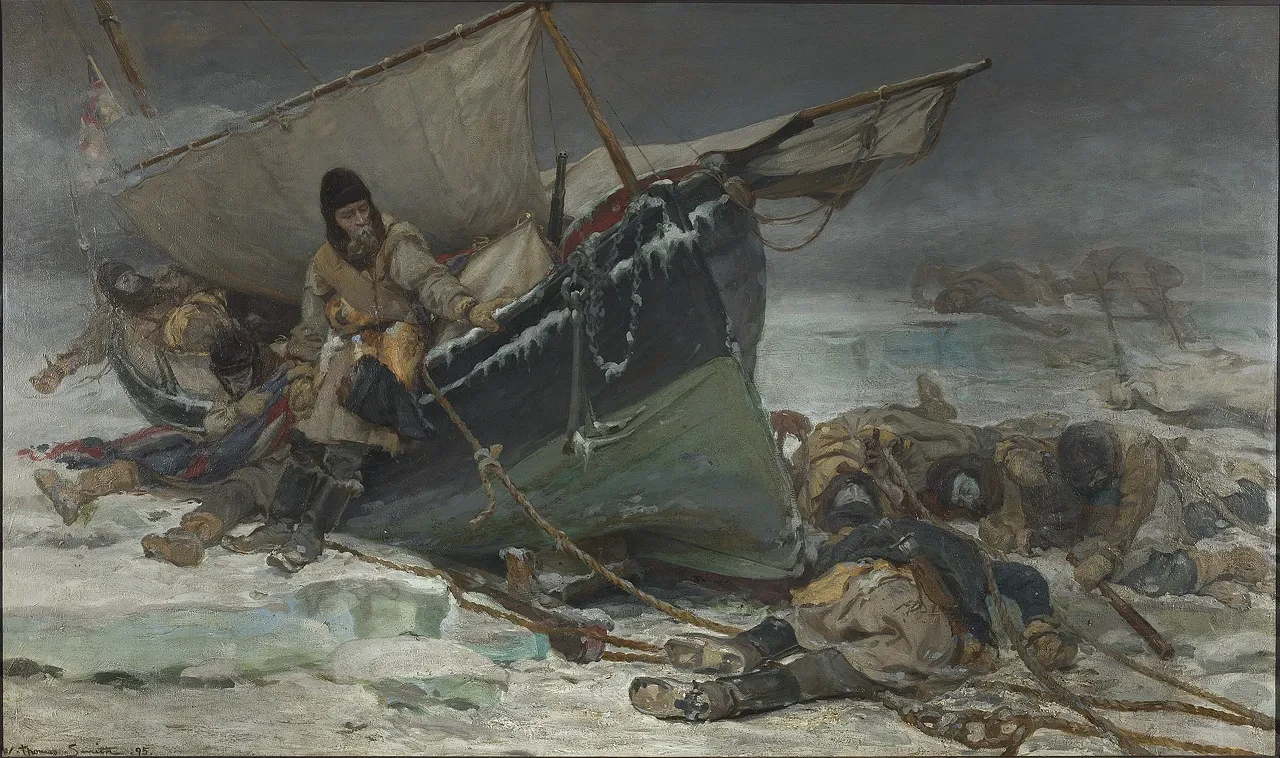
Despite the contemporary nationwide refusal to accept that cannibalism could possibly have occurred, in the 1980s researchers recovered remains of the expedition crew on King William Island. Both academic and public interest in the fate of the men was reawakened.
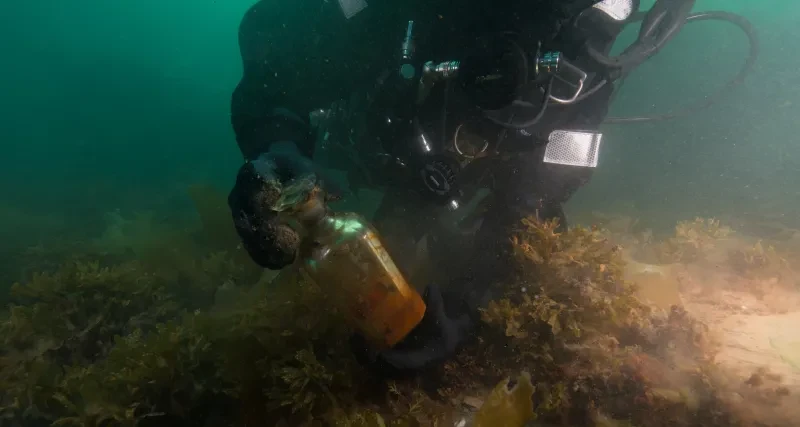
This was heightened in 2014 and 2016, with the discovery of the wrecks of HMS Erebus and Terror. The expedition continues to fascinate, and recent television dramas have whet the appetite of the public, providing the kind of entertainment that Dickens also sought to produce with The Frozen Deep more than 170 years ago.

Dive into the Caird Library and Archive
Explore the largest maritime library and archive collection in the world
Read more