
A solar eclipse occurs when the Moon moves between the Sun and Earth, resulting in the Sun’s light being blocked either partially or fully for viewers in certain locations on Earth.
On Wednesday 12 August 2026, people in the UK and Ireland will see a partial solar eclipse, when around 90-96% of the Sun will be covered by the Moon.
Viewers across swathes of Europe including France, Belgium, Switzerland and northern regions of Italy will also be able to see around 88-95% coverage, while spectators in parts of Greenland, Iceland and Northern Spain will see a total eclipse.
This will be the most coverage seen from the UK and Ireland since the 1999 solar eclipse, which was total from most of Cornwall and Devon.
Find out all you need to know about the 12 August 2026 partial eclipse below.
The Royal Observatory Greenwich will be live streaming this special event!
Jump to
- What is a solar eclipse?
- What will happen during the 12 August partial solar eclipse?
- What time will the solar eclipse happen around the British Isles?
- Where can I see a total solar eclipse on 12 August?
- How to see the partial solar eclipse
- When is the next total solar eclipse in the British Isles?
- About the accompanying partial lunar eclipse
What is a solar eclipse?
A solar eclipse occurs when the Earth, Moon and Sun align. The Moon passes in front of the Sun and blocks its light, casting a small shadow on Earth.
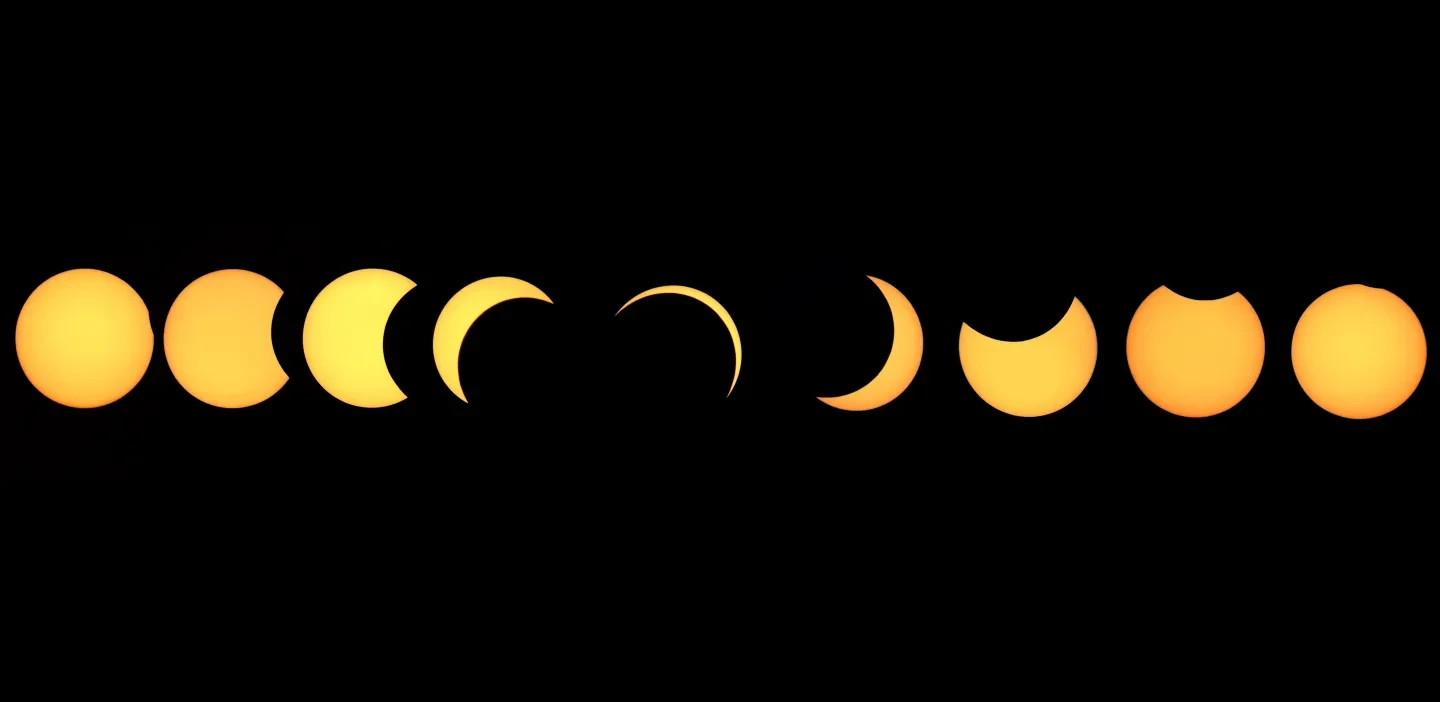
Due to the relatively small size of the shadow, only the handful of countries that fall within the path of the eclipse will be able to experience it.
There are a few different types of solar eclipse: total, annular, hybrid and partial. Which one you see depends on how much of the Sun is covered from your location and how close the Moon is to Earth.
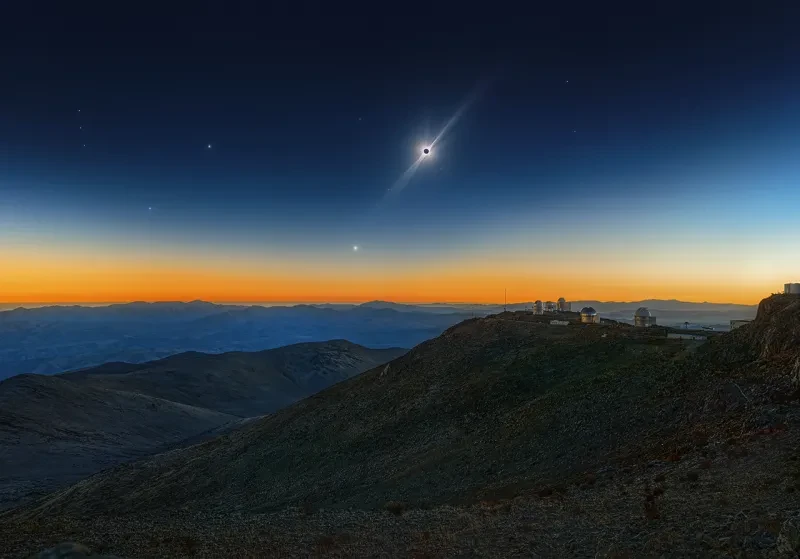
A total eclipse occurs when the Sun is fully covered by the Moon. An eclipse’s ‘path of totality’ is a track where viewers are fully in the Moon’s shadow and therefore see a total eclipse. For the 12 August eclipse, the path of totality falls over parts of Greenland, Iceland and Spain.
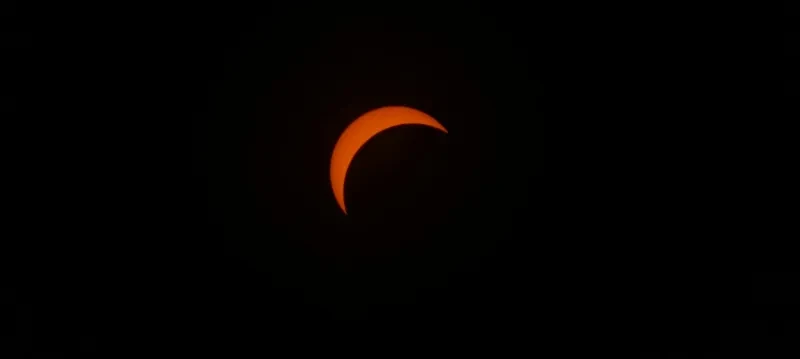
From the UK and Ireland on 12 August 2026 we’ll see a partial eclipse, where a portion of the Sun is covered by the Moon. However, it’ll be a particularly large portion at 90%, making this as close to a total eclipse as we’ve seen in almost 27 years from the British Isles.
What will happen during the 12 August solar eclipse?
The new Moon and the Sun will gradually move closer together in the sky in the late afternoon. As the side facing us will be dark, the Moon will be invisible without specialist equipment.
At 6.17pm from London (timings vary slightly from other parts of the UK and Ireland), ‘first contact’ will occur, when the Moon first covers part of the disk of the Sun.
The Moon will move slowly in front of the Sun until roughly 90% of the Sun is covered (the eclipse’s maximum). This will be at 7.12pm from London.
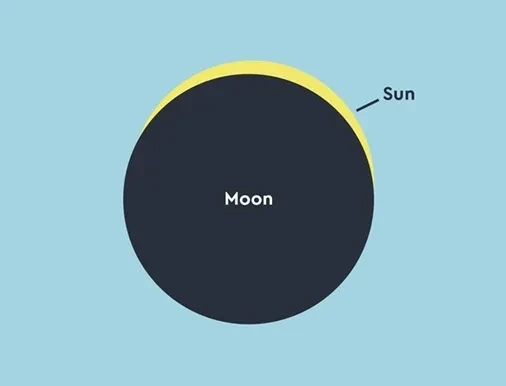
At the maximum, enough of the Sun will be covered to make a noticeable difference in the temperature and light levels. However, unlike with a total eclipse, the sky will not become dark – it will feel more like a cloudy day or close to dusk or dawn.
After the maximum, the Moon will then slowly move off the Sun’s disk until the eclipse ends, at 8.06pm from London.
The partial solar eclipse will take place as the Sun is setting, and the Sun and Moon will become increasingly low on the horizon as the eclipse goes on. Getting to a high point with a clear view of the western horizon will allow you to see the whole event.
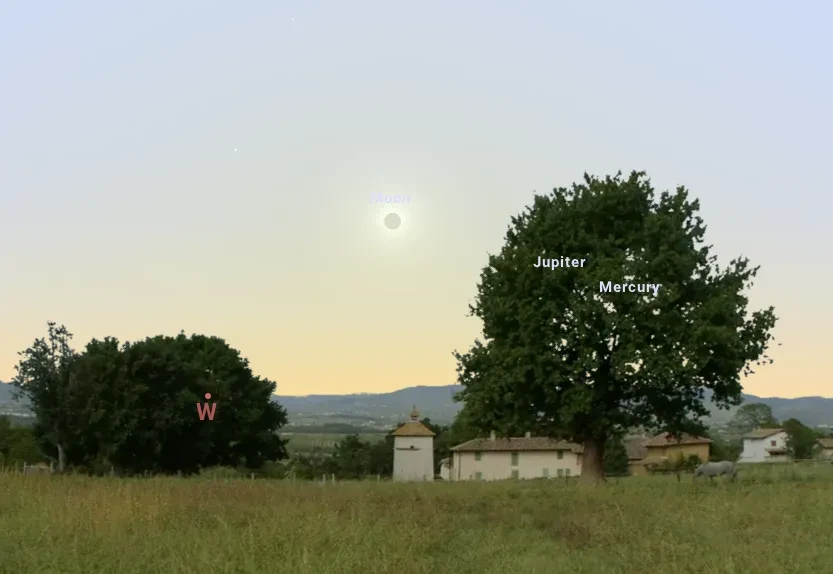
As always with astronomy, we're at the mercy of the weather; there’s always the possibility that clouds could obscure part or all of the eclipse.
Eclipse timings around the UK
Exact timings of the 12 August solar eclipse will vary around the UK and Ireland. In general you’ll be able to see more coverage the further south-west you are.
For example, viewers in London will see 90% coverage, while viewers in Cornwall will see roughly 95%, and viewers in Pembrokeshire will see 94%. If you’re able to go to the south-western tip of Ireland, you might see almost 97.5% coverage.
| Stage | Edinburgh and Glasgow | Galway and Dublin | Manchester and Liverpool | Norwich and Birmingham | London, Bristol and Cardiff | Truro, Cornwall |
| ‘First contact’ (the Moon first covers the disc of the Sun) | 6.08pm | 6.12pm | 6.13pm | 6.15pm | 6.17pm | 6.18pm |
| Eclipse maximum (when most of the Sun is covered) | 7.05pm | 7.10pm | 7.10pm | 7.11pm | 7.12pm | 7.16pm |
| End of eclipse (the Moon is no longer covering the Sun) | 8pm | 8.05-06pm | 8.03-04pm | 8.04pm | 8.06pm | 8.10pm |
Image
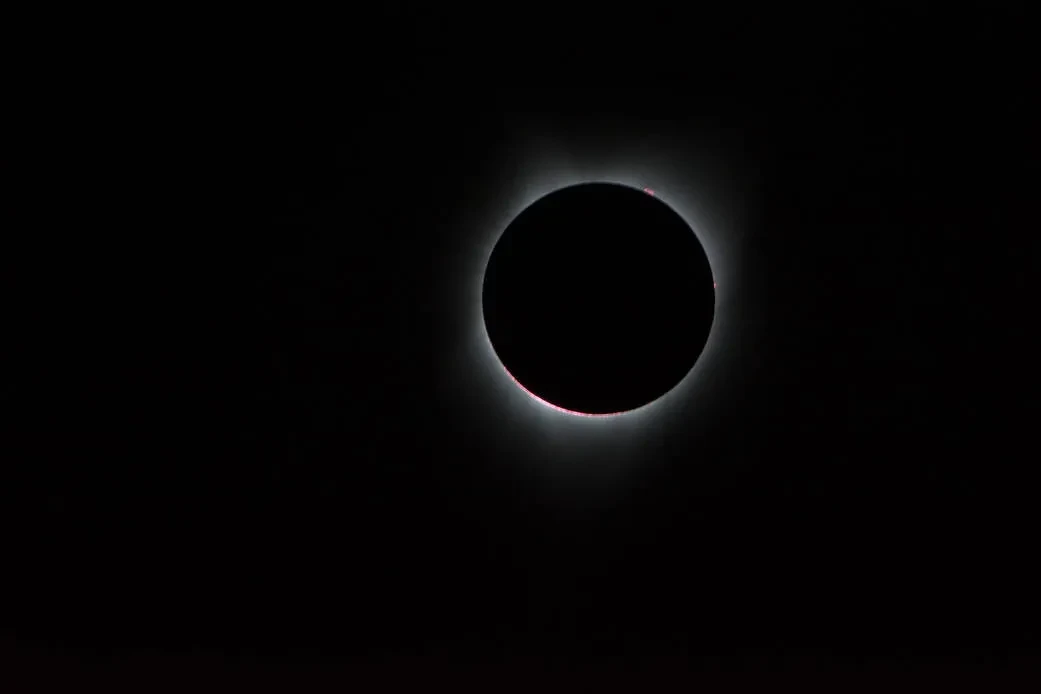
Where will see a total solar eclipse on 12 August?
This will be the first total eclipse visible from central or western Europe since 1999.
The path of totality on 12 August falls over parts of Greenland, the very western tip of Iceland, and curves round Northern Spain, ending on the Balearic Islands.
It varies by location, but spectators will be able to see up to 2 minutes and 18 seconds of totality – with the longest duration of totality seen from Iceland.
Cities that will see the total solar eclipse on 12 August include Reykjavík in Iceland. In Spain, cities that fall in the path of totality include A Coruna, Oviedo, Zaragoza, Bilbao and Valencia.
Spain is fortunate to see two total solar eclipses in the space of a year, which is quite rare – with another on 2 August 2027 visible from the very southern tip of Spain.
How to see the 12 August 2026 solar eclipse
Don’t go into this much-anticipated event unprepared!
It's important to note that you should never look directly at the Sun, even during an eclipse when some of its intense light is blocked. Doing so can severely damage your eyes.
Here are four ways you can safely watch the 12 August partial solar eclipse:
Image
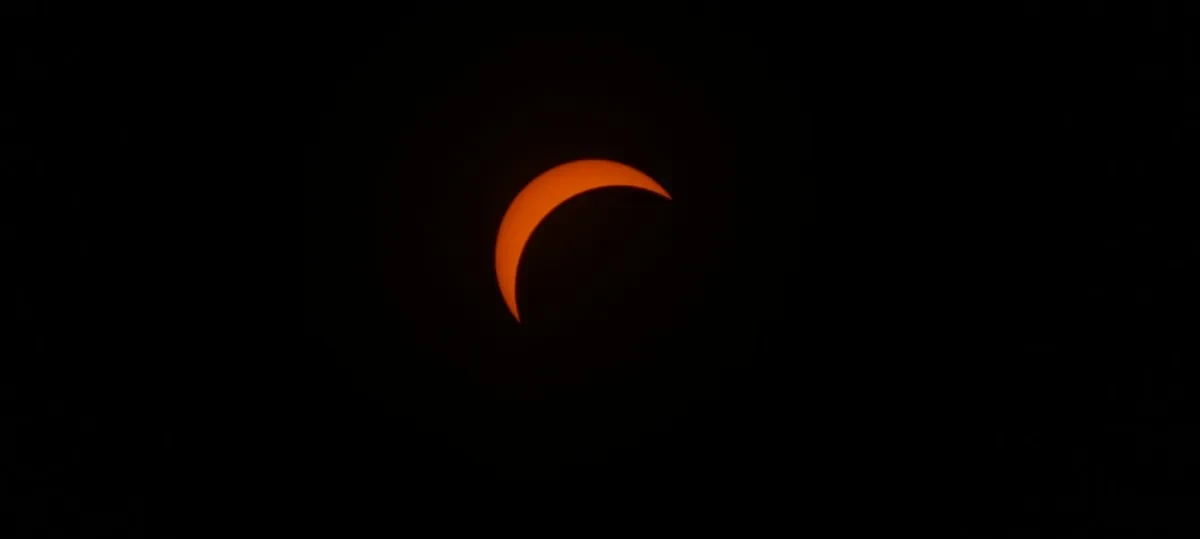
1. Watch the Royal Observatory's live stream – we'll be broadcasting a free, live feed of the eclipse from London. Learn more and tune in here.
Image
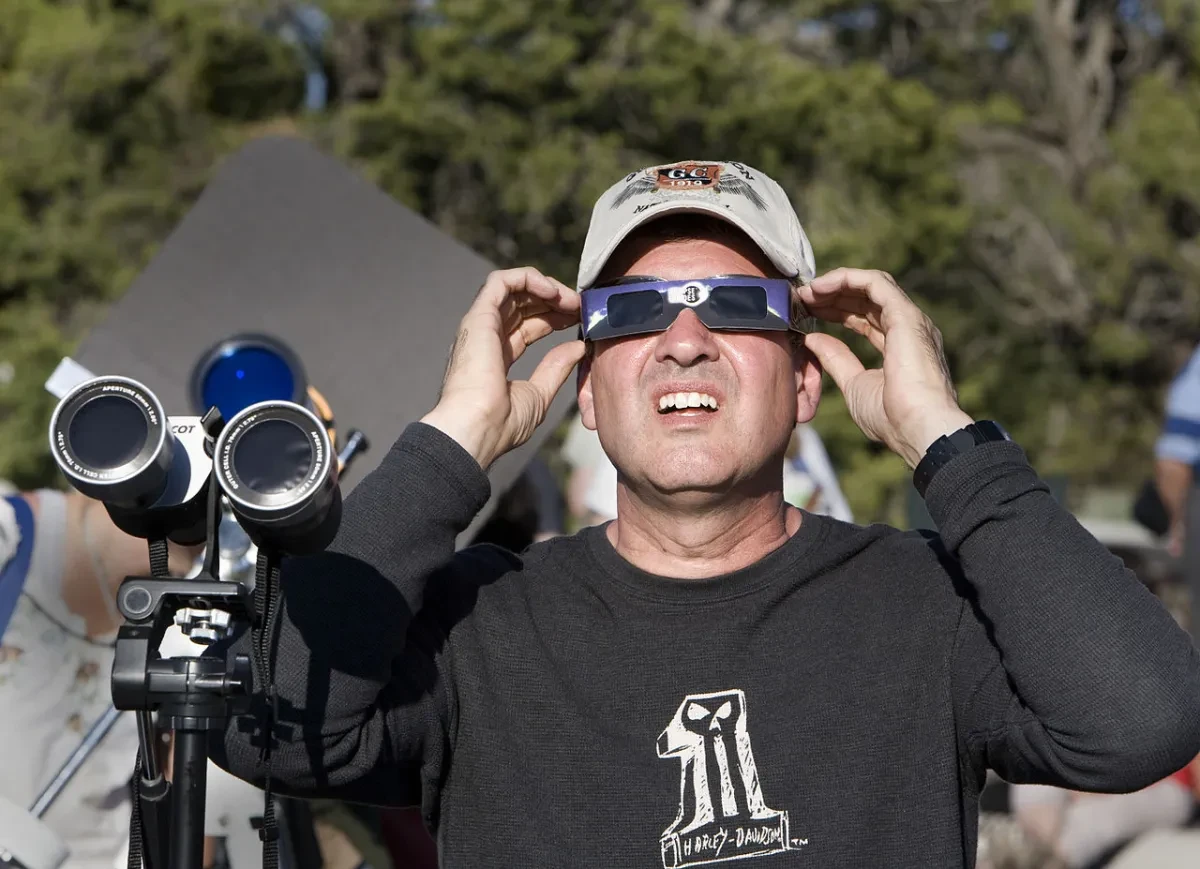
2. Use eclipse glasses – Buy or borrow a pair of special eclipse glasses. These block out the Sun’s harmful rays and enable you to look at the eclipse safely with your own eyes. Please note that regular sunglasses are not safe to use, as they don’t have adequate UV protection to protect your eyesight.
To ensure your eclipse glasses are legitimate, make sure that they have safety certification ‘ISO 12312-2' or ‘ISO 12312-2:2015’ printed somewhere on the glasses. Be careful if you’re planning on reusing an old pair of eclipse glasses: these may not be safe, especially if the lenses are creased or scratched, as their filtering properties may have been compromised. Don’t take risks – buy yourself a fresh pair.
Solar eclipse glasses are now sold out both in our shops and online.
Image
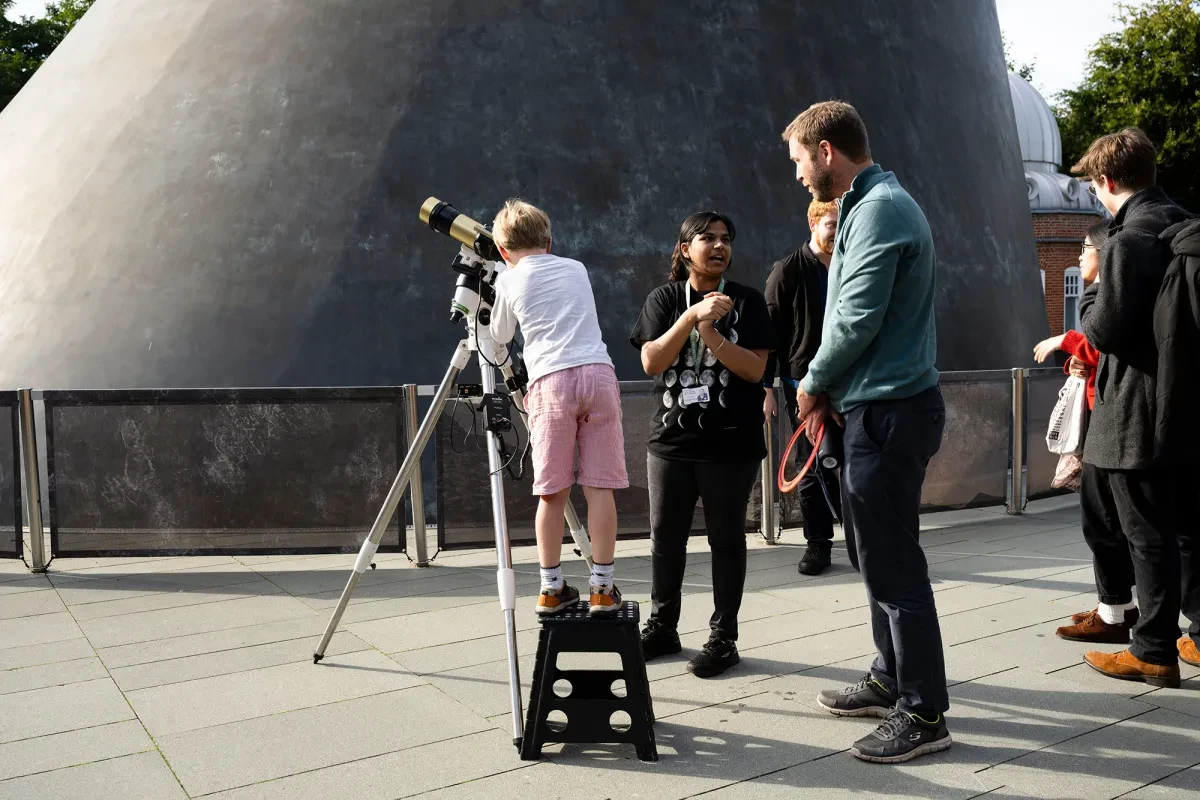
3. Use a solar telescope – Check with your local astronomical society to see if they’re running any eclipse-viewing events on 12 August. They’re likely to have a few telescopes fitted with special solar filters, which are safe to use to observe the Sun.
Please note that regular telescopes without a solar filter should never be used to look at the Sun.
Image
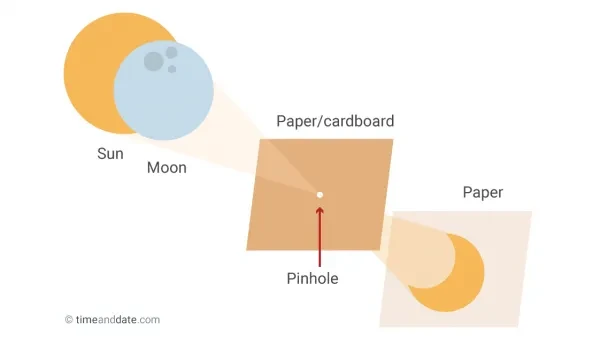
4. Make a pinhole projector – There are a few ways you can go about making a ‘pinhole projector’, which will allow you to see the eclipse by projecting the Sun’s light, and the bite being taken out of it, onto another surface.
- Two pieces of paper: make a small hole in one piece of paper and hold it above another piece of paper to see the shadow being cast on the Sun replicated in miniature.
- Colander: Hold up a colander and look at its shadow.
- Tree leaves: The gaps between leaves are natural pinhole projectors - simply look at the shadows cast by leaves on the ground.
Never miss an eclipse
Sign up to our space newsletter for exclusive astronomy highlights, night sky guides and out-of-this-world events.
When is the next total solar eclipse in the UK?
You'll have to wait until 2090 for the next total solar eclipse visible from the UK! The 12 August 2026 eclipse is the closest to total that the British Isles will see for quite some time.
The only eclipse that comes close to total for the British Isles will be on 3 September 2081, where up to 99% of the Sun will be obscured by the Moon. Cornwall and the south coast will again be the best place to observe from.
Other significant partial eclipses will occur in 2030 (~50%), 2053 (~40%), 2066 (~60%), 2075 (~70%), 2082 (~70%) and 2088 (~40%), with a handful of more minor eclipses taking place.
Image
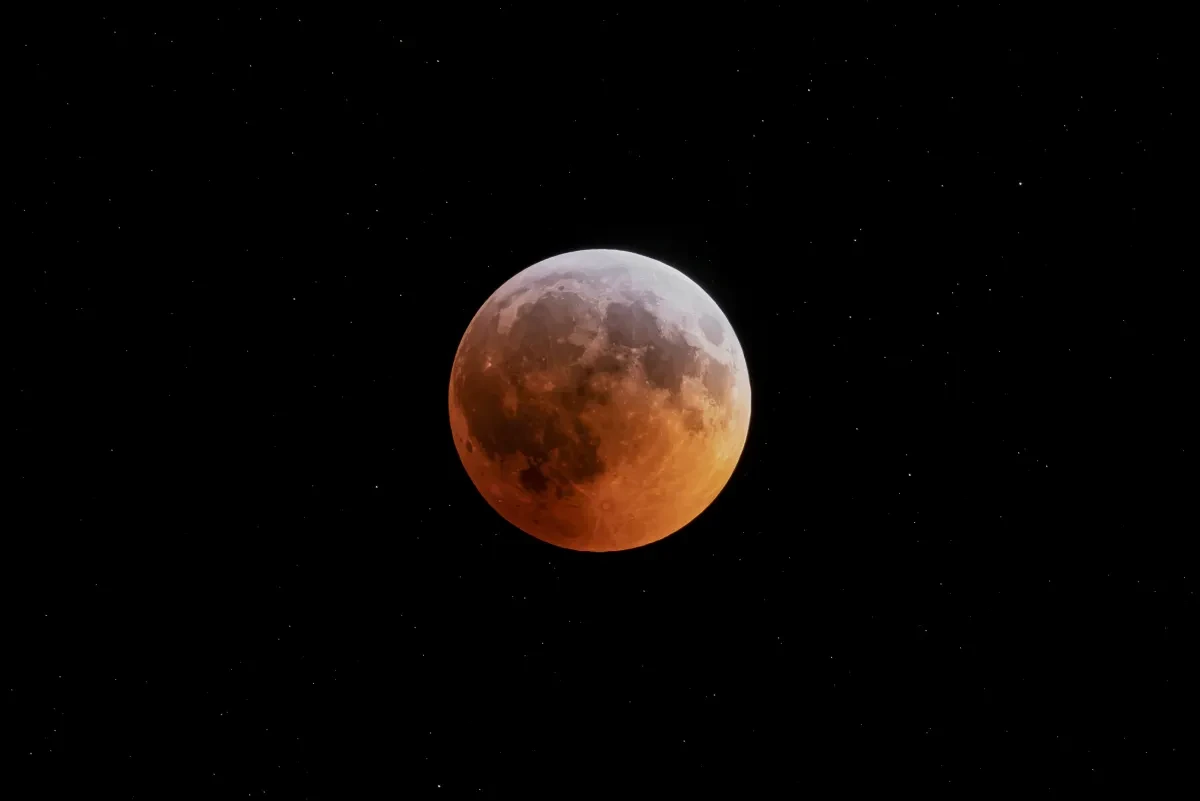
An accompanying partial lunar eclipse in the UK
Solar and lunar eclipses come in pairs, with a lunar eclipse always coming two weeks before or after a solar eclipse.
A lunar eclipse occurs when Earth moves between the Sun and the Moon, and the Moon falls in Earth's shadow.
A 90% partial lunar eclipse will be visible from the UK on 28 August, around two weeks after the 12 August 2026 solar eclipse.
This partial lunar eclipse will begin at the rather unsociable hour of 3.33am BST. The Moon will move further into Earth's shadow until the maximum of the eclipse at 5.12am, when approximately 90% of the Moon will be in Earth's umbra, the darkest part of its shadow.
The Moon will be very low on the horizon, so you’ll need to get somewhere with a clear view towards the western horizon to see this.
During the eclipse's maximum, the Moon will appear reddish because it will be illuminated by sunlight that has passed through the Earth's atmosphere and been refracted towards the Moon. The red hue is why lunar eclipses are often referred to as 'blood moons'.

Visit the Royal Observatory Greenwich
Visit the home of Greenwich Mean Time and stand on the world-famous Prime Meridian Line


Header image by Cris Menles on Pexels