
On 4 December 1872, the crew of the brigantine Dei Gratia sighted a ship adrift in the Atlantic near the Azores. The other vessel, Mary Celeste, was on an erratic course.
On receiving no answer to his hails, Captain Morehouse of the Dei Gratia sent two of his men over in a boat to investigate.
What they found on boarding the ship would give rise to one of the most intriguing and debated maritime mysteries of all time: the Mary Celeste was completely deserted.
The only clue as to the whereabouts of her crew was the missing boat which was normally stowed over the main hatch. However, nobody on board was ever seen again.
Was it foul play, an insurance scam, a mutiny, or something else that caused the crew to abandon ship? Discover more about this compelling unsolved puzzle.
Image
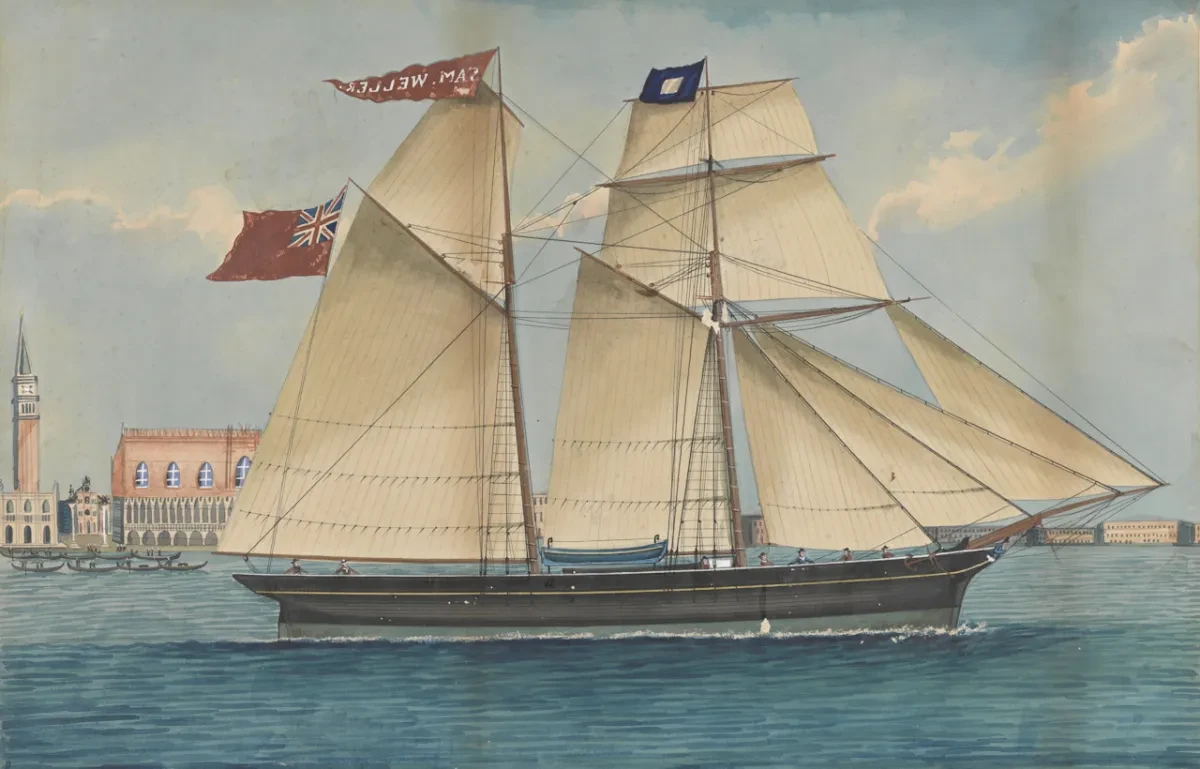
The Mary Celeste
The brigantine Mary Celeste left New York on 7 November 1872, heading for Genoa, Italy.
On board was Captain Benjamin Briggs, his wife Sarah and their two-year-old daughter Sophia.
Brigg’s crew numbered seven: his first mate Albert Richardson, who was well known to him; second mate Andrew Gilling; steward William Head; and seamen Gottleib Gouldschaal, Arian Martens, and brothers Boz and Volkert Lorenzen.
The ship was carrying around 1,700 barrels of high-grade alcohol.
Image
What did they find on Mary Celeste?
Stepping aboard the drifting ship about a month after it had left New York, Oliver Deveau and John Wright from Dei Gratia found a strange scene: nobody was on board Mary Celeste.
A missing boat normally stowed over the main hatch suggested the crew may have abandoned ship – but why?
The ship's sails were partially set, but they and the rigging showed signs of damage. The fore and aft cargo hatches had been lifted and were lying on the deck.
One of the ship's two pumps was partially disassembled and nearby was a sounding rod – a measuring tool used to work out the depth of liquids in a ship's hold or tanks.
Aside from some water ingress, the crew's belongings appeared to be intact, and the only items missing were the ship's papers and Briggs' navigational instruments, reinforcing the idea that the ship had been deliberately abandoned.
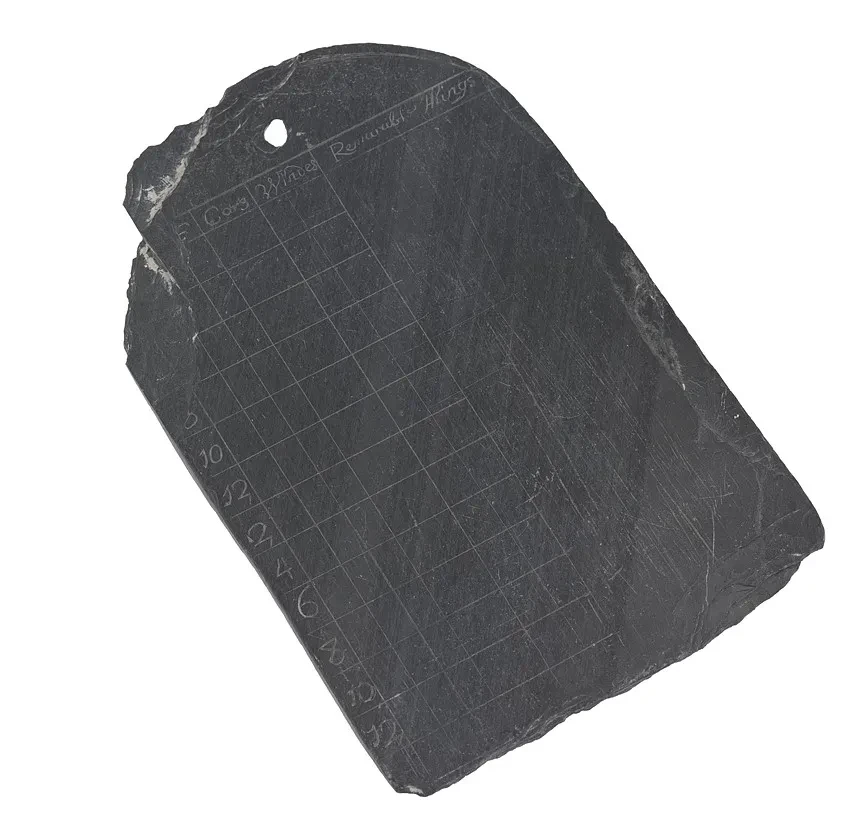
Strangely, the log slate had been left behind, bearing a final entry for the morning of 25 November. A sword was also found in the captain's cabin, but Deveau and Wright saw no obvious signs of violence.
Bringing Mary Celeste to port
Despite the small number of crew available to him, Morehouse was determined to bring the Mary Celeste into Gibraltar. It was a risky decision, but the potential salvage payout justified it.
Sending Deveau and just two sailors back to the Mary Celeste, he set course for Gibraltar, roughly 600 nautical miles away.
Following an epic journey, the exhausted Deveau and his men arrived at Gibraltar on 13 December, the day after Morehouse and the Dei Gratia.
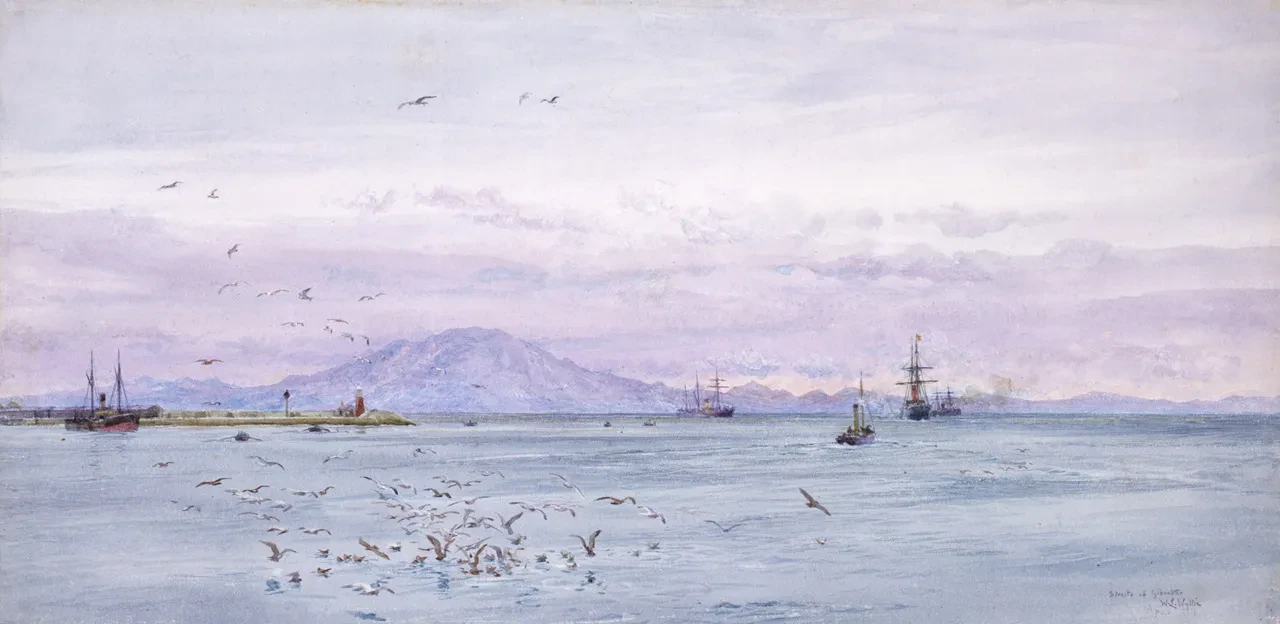
The Mary Celeste was impounded and a salvage court convened on 17 December. The proceedings continued until 25 February.
During that period, there was an intense debate as to what exactly could have caused the mysterious disappearance of Briggs, his family and his men.
Mary Celeste theories
Frederick Solly-Flood, the Attorney General for Gibraltar, remained convinced throughout that the cause of Mary Celeste's abandonment was foul play, and that Briggs and his family had been murdered by members of the crew, who then made off in the boat.
As the investigation progressed, evidence against this interpretation steadily mounted, but Solly-Flood remained convinced he was right.
The court's inability to come to a quick consensus fuelled wild speculation on both sides of the Atlantic, made worse by the press, some of whom added a steady stream of uninformed speculation.
The mystery of the Mary Celeste has never been solved, although many theories have been put forward in the decades since the investigation. These range from the fanciful (sea monsters or aliens), to violence among the crew, a possible insurance scam in which both Briggs and Morehouse were complicit, and an explosion caused by alcohol vapours in the hold panicking the crew.
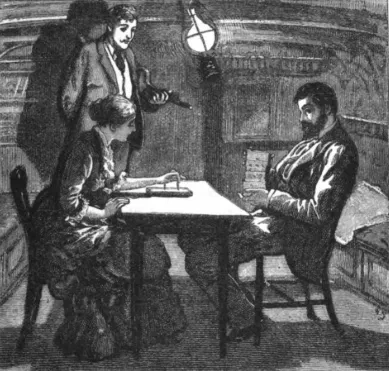
The waters have been further muddied by popular culture, especially the fictitious J. Habakuk Jephson's Statement, which caused a sensation when it was published in the 1880s.
Claiming to be a true account by the only survivor of the Mary Celeste, it was written by Arthur Conan Doyle and is riddled with factual inaccuracies that are still sometimes taken as fact. One of the most persistent of these is the misspelling of the ship's name as 'Marie Celeste'.
We may never know the precise details of what caused the Mary Celeste’s crew to abandon their ship, or what might have been going through Briggs' mind as he left the security of his ship to take his and his family's chances in a small boat in the middle of the Atlantic.
One thing is certain, though. For all the theories of what might have happened, the compelling mystery of the Mary Celeste and her company will continue to intrigue.
More maritime stories
From the National Maritime Museum.
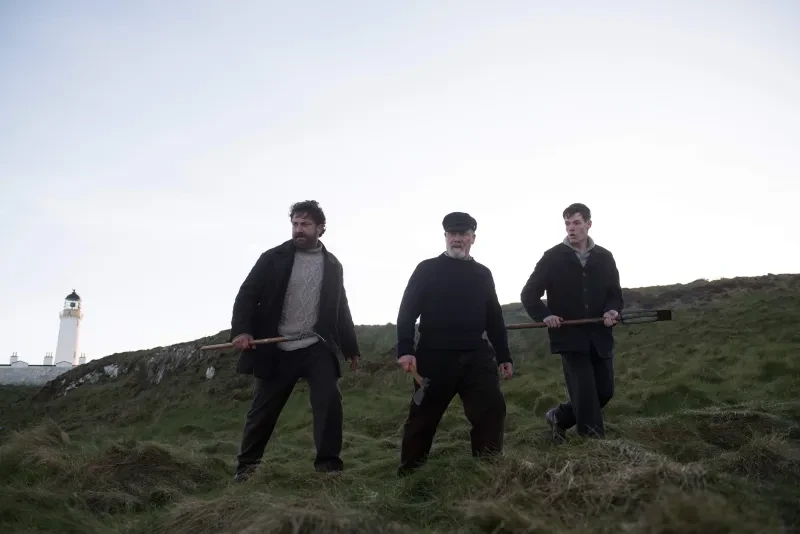
What caused the disappearance of the Flannan Isle lighthouse keepers?
Were the lighthouse keepers on Flannan Island swept away? Or did something darker take place that night?
Ghost ships
Delve into several hair-raising tales from our collection
What happened to the crew of Erebus and Terror?
Sir John Franklin's final voyage in 1845 in HMS Erebus and HMS Terror became the worst disaster in the history of British polar exploration
A whistle for a life: surviving the Titanic tragedy
Meet steward Cecil and passenger Lillian, two young people whose fates intertwined during the sinking of the Titanic
The nautical origins of everyday phrases
Ever heard that traffic was chock-a-block, been called a son of a gun, or told someone you like the cut of their jib? Learn the maritime origins of phrases you hear every day
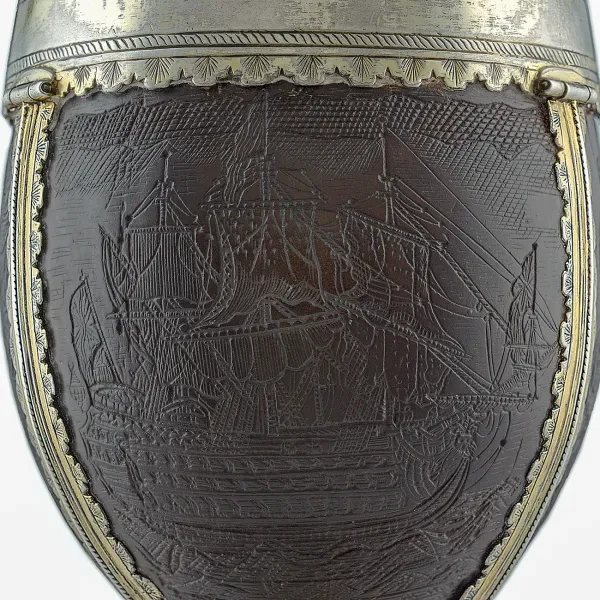
The pirate hunter's cup
What does a carved coconut shell have to do with one of the most deadly pirates in history?
Header image: An English Ship at Sea Lying-To in a Gale by Willem van de Velde the Younger © National Maritime Museum, Greenwich, London
Shop maritime mysteries


