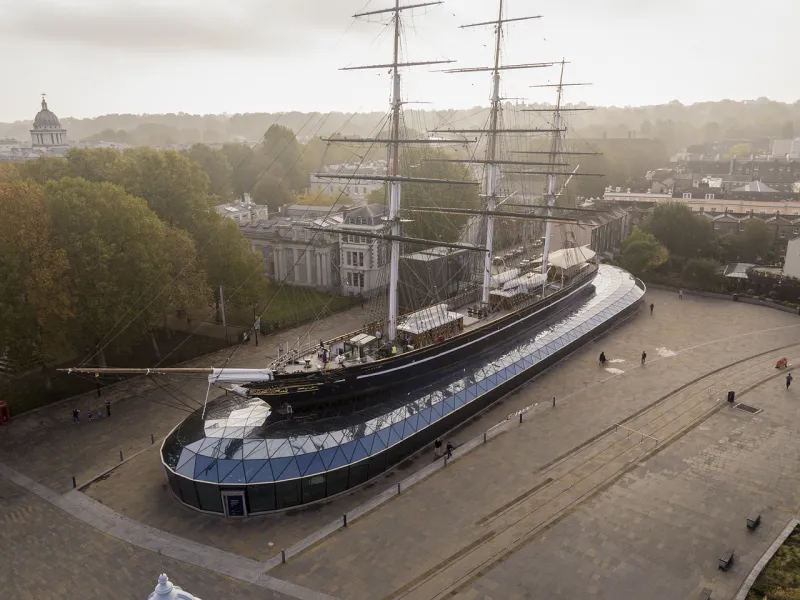
Cutty Sark’s three masts are a beloved part of the south London skyline. The vertical structures carry a series of wooden horizontal poles, which once would have supported the ship’s sails when at sea.
In 2025, one of these horizontal spars – or yards – had rotted and needed replacing. This spar is known as the mizzen royal yard and is situated at the top of the mizzen mast, located at the stern (or rear) of the ship.
Spar making is a specialist skill, with just a handful of makers in the country. Shipwright Kevin Finch was enlisted to make the new mizzen royal yard. Here, we show the work involved in creating the 32-foot wooden spar – and the process of hoisting it up Cutty Sark’s 106-foot mizzen mast.
Image
Creating the mizzen royal yard
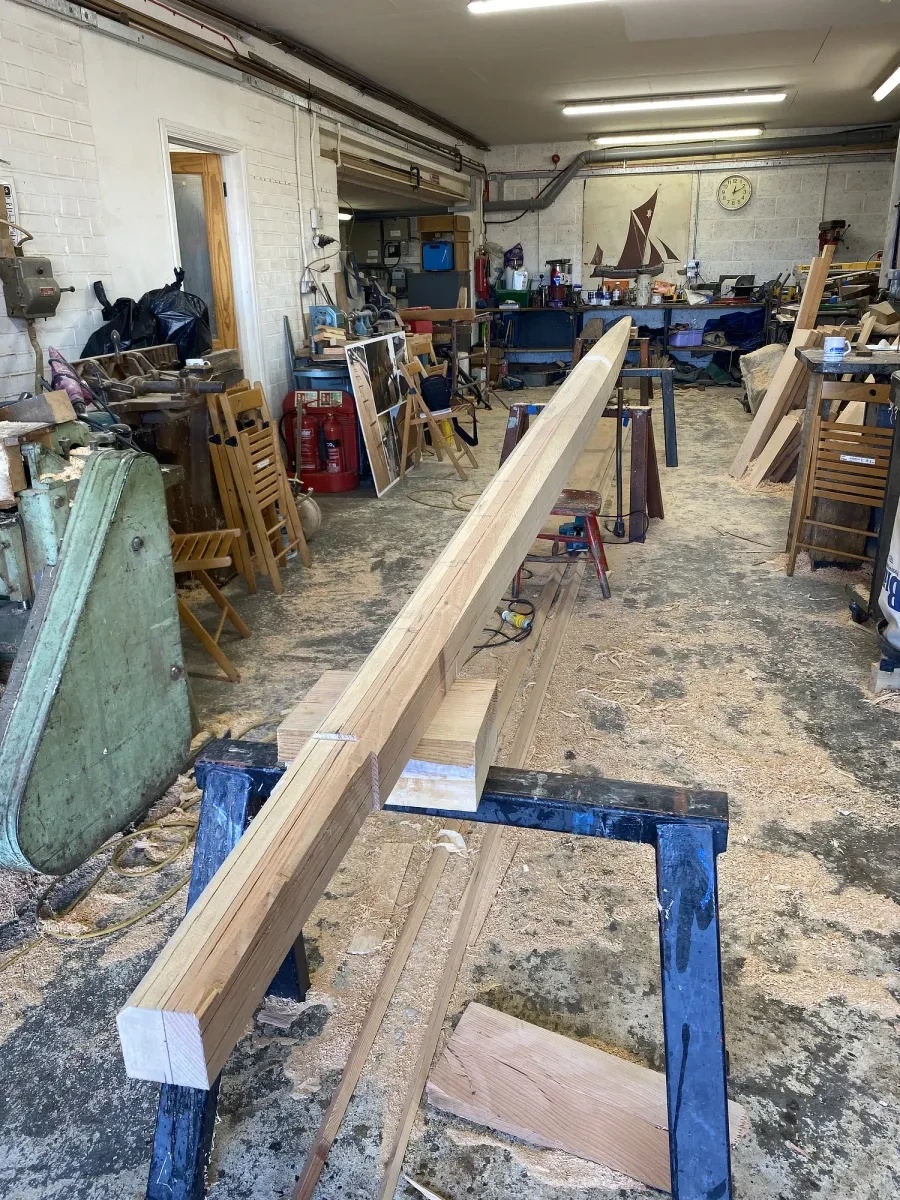
The spar began as a bulk of timber at Kevin Finch’s workshop in Maldon, Essex. Kevin has long been involved with Cutty Sark, having worked on the rigging and the making of a spar for the ship’s reopening in April 2012.
The new mizzen royal yard is made from Douglas fir, a softwood that has been used for spars on Cutty Sark since the ship’s sailing days. “It’s a wood that’s strong, springy and light,” Kevin says.
Over the course of a few weeks, Kevin transformed the timber into the 32-foot spar, a process that involved skills such as hand planing and laminating. This also required detailed knowledge of the characteristics and tensions of the wood. The craft of oar, mast, spar and flagpole making is classified as ‘Endangered’ by Heritage Crafts, an advocacy body that assesses the viability of specialist skills across the UK.
For Cutty Sark’s shipkeeping and conservation team, supporting these traditional skills is crucial. “We want to keep these skills alive, and to ensure the work is done in the traditional way,” explains Claire Denham, Cutty Sark’s Conservation Research Advisor.
Image
Getting the spar to Greenwich
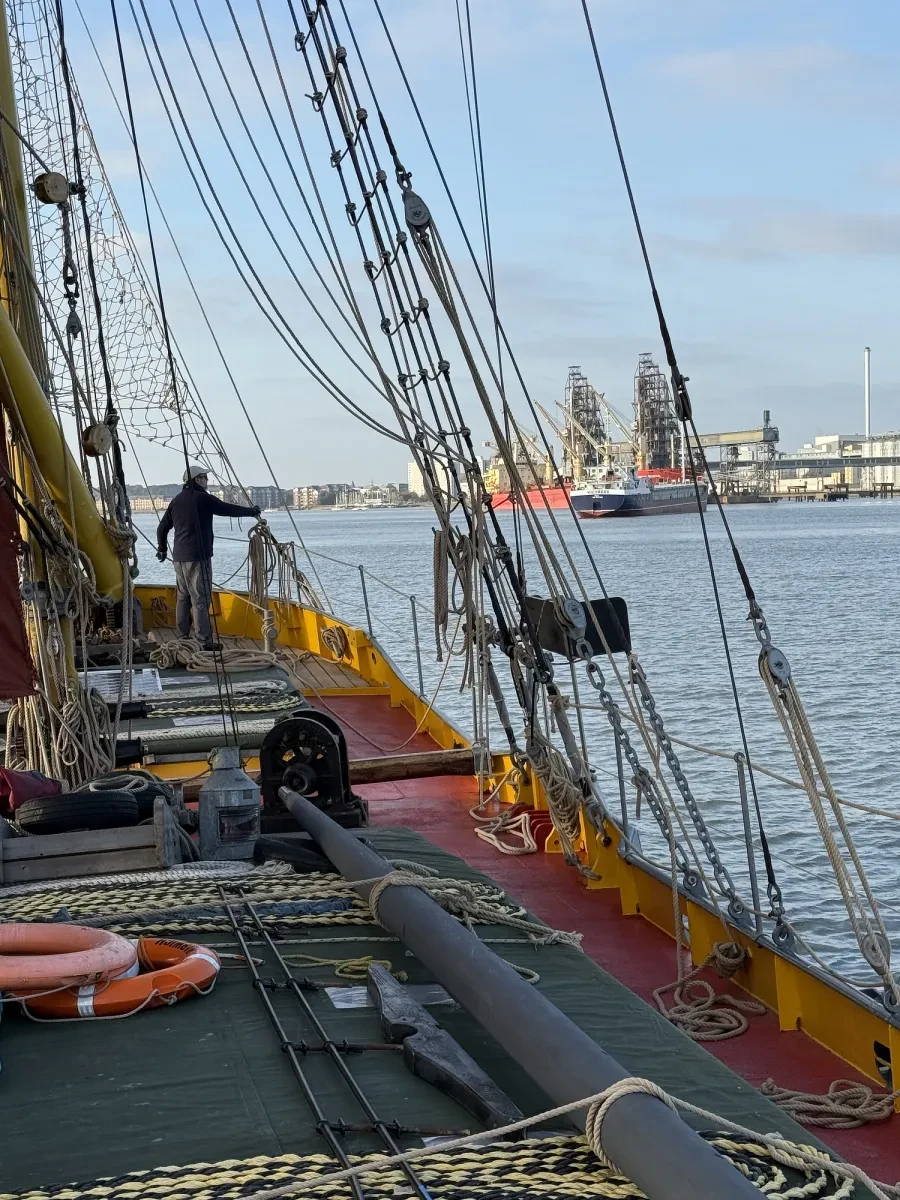
Once completed, the mizzen royal yard was transported from Maldon to Greenwich Pier by Blue Mermaid, an engineless Thames sailing barge run by Sea-Change Sailing Trust. The charity aims to develop life skills through seafaring experiences.
While championing traditional crafts was central to the spar-making process, the project had another aim: to raise awareness of traditional seafaring techniques, such as sailing using wind and waves.
A large crew worked to bring this ambitious venture to life. Alongside the team from Blue Mermaid, other members on board included Cutty Sark volunteers Graeme Tipp, Glyn Jones and John Wheeler, young people from local schools and sea cadet units.
The two-day voyage saw them pass locations and landmarks from the Blackwater Estuary and Canvey Island to the Dartford Crossing and the Thames Barrier.
Image
Delivering the mizzen royal yard to Cutty Sark
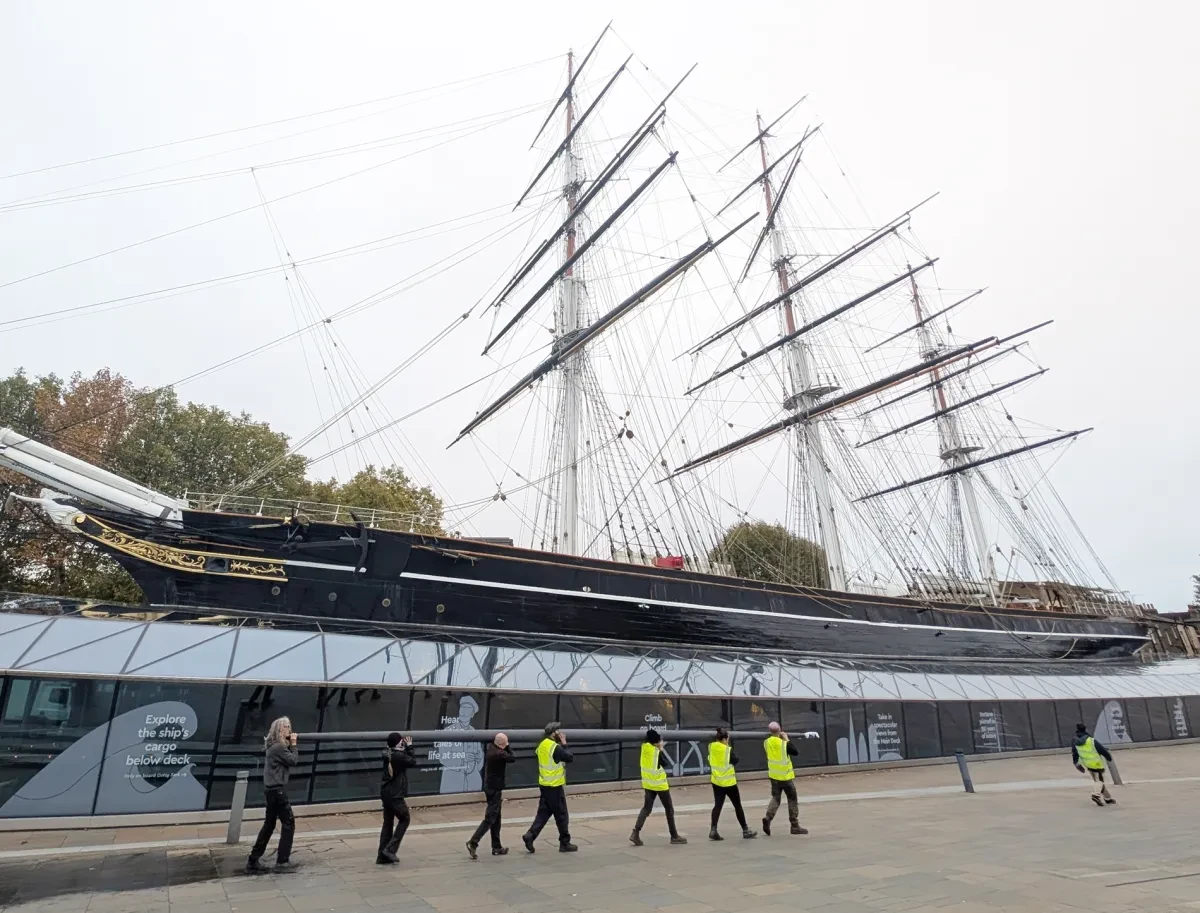
With the mizzen royal yard safely arrived in Greenwich, members of Cutty Sark's shipkeeping team and traditional rigging company TS Rigging – Tall Ships Ltd set to work bringing it ashore.
The team unloaded the spar, carried it from Greenwich Pier and set it down beside Cutty Sark – all in the space of a few minutes. A series of ropes were attached to the mizzen royal yard, which was then winched onto the main deck of the tea clipper.
Image
Painting the spar
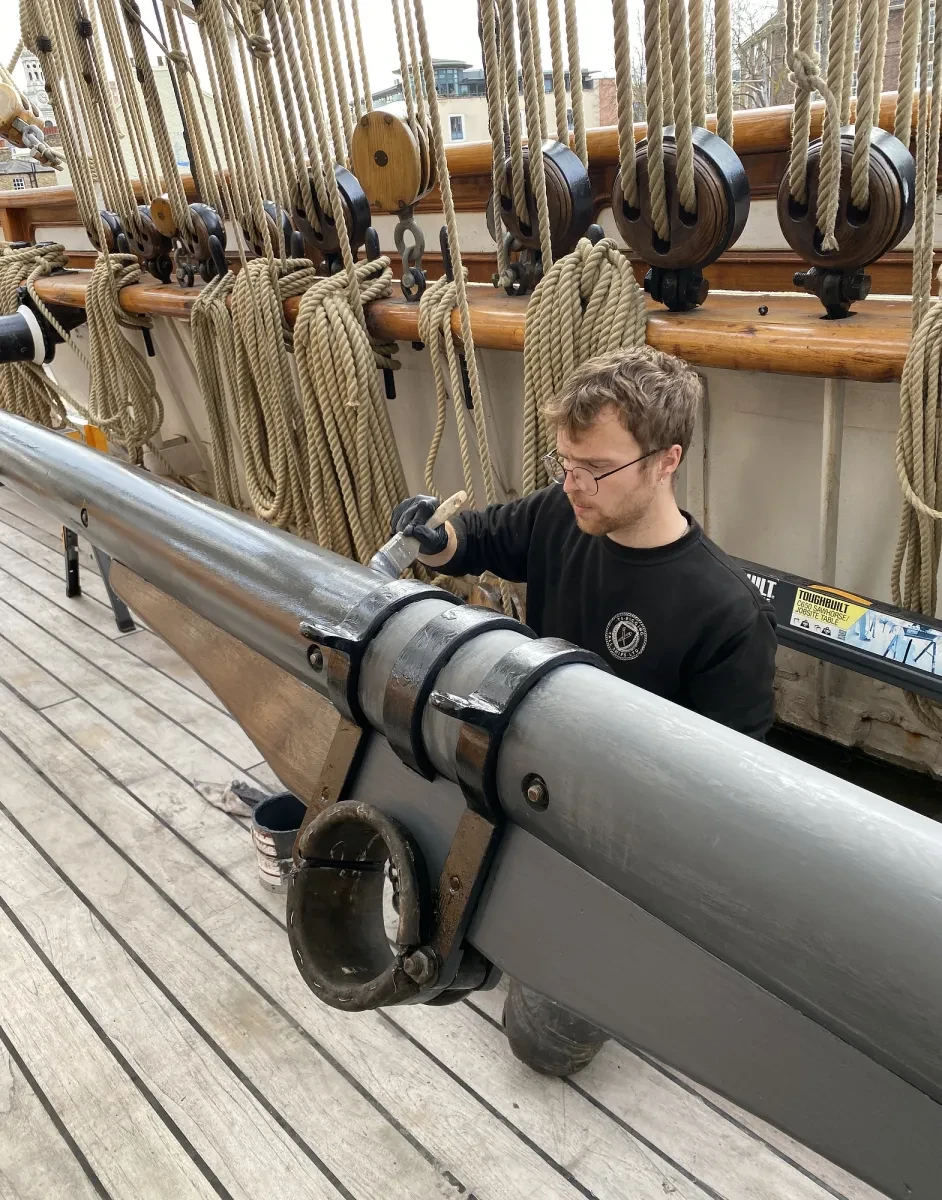
Before installing the mizzen royal yard on the mast, the spar required several coats of paint, to protect it from sunlight and UV rays.
This is because Cutty Sark is situated in a dry dock, which means some areas of the spar will be more susceptible to sun damage.
Grey undercoats were first applied, followed by black top coats.
Image
Hoisting the spar up the mizzen mast
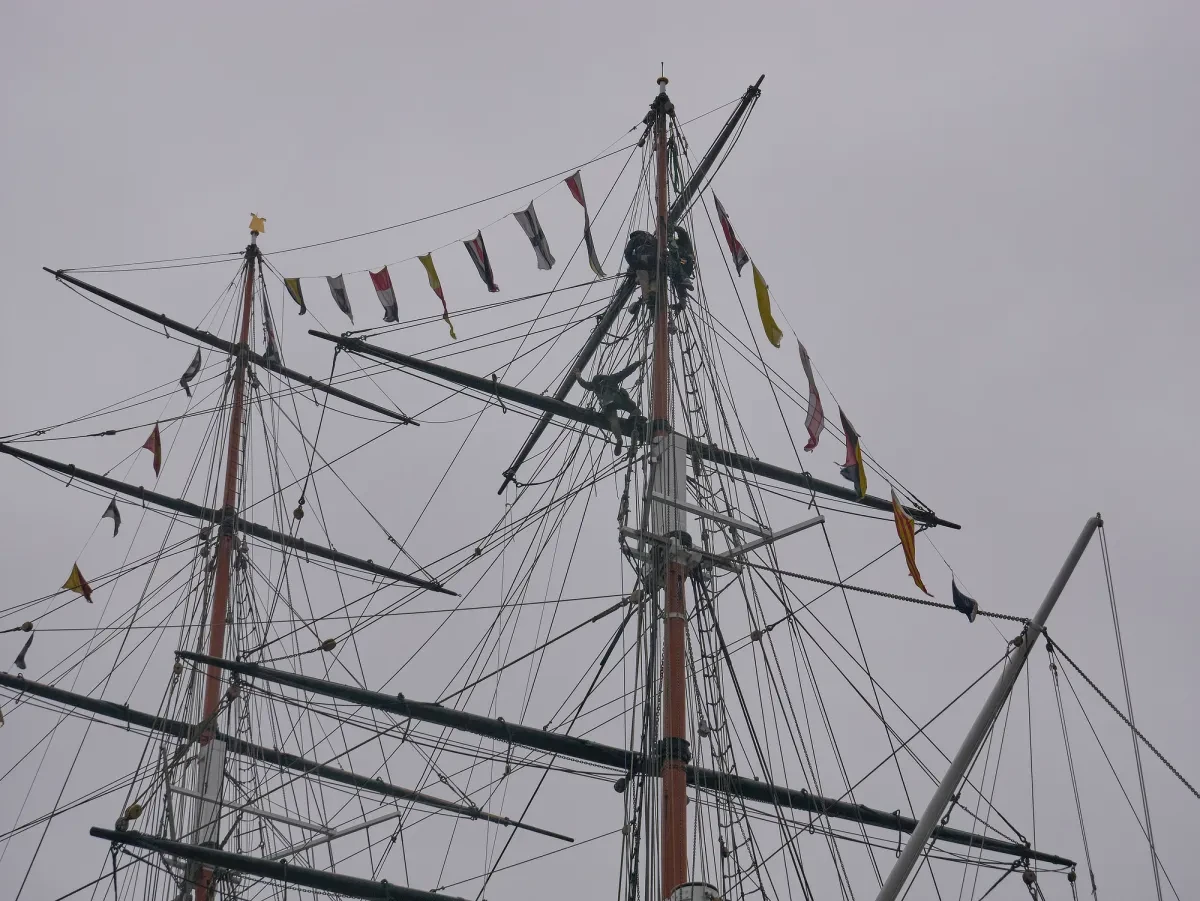
Installing the spar at the top of the mizzen mast was a challenging operation.
Supervised by Cutty Sark’s shipkeepers, the team at TS Rigging – Tall Ships Ltd secured and carefully hoisted the mizzen royal yard up the 106-foot mizzen mast.
This complex process took around an hour to complete.
Image
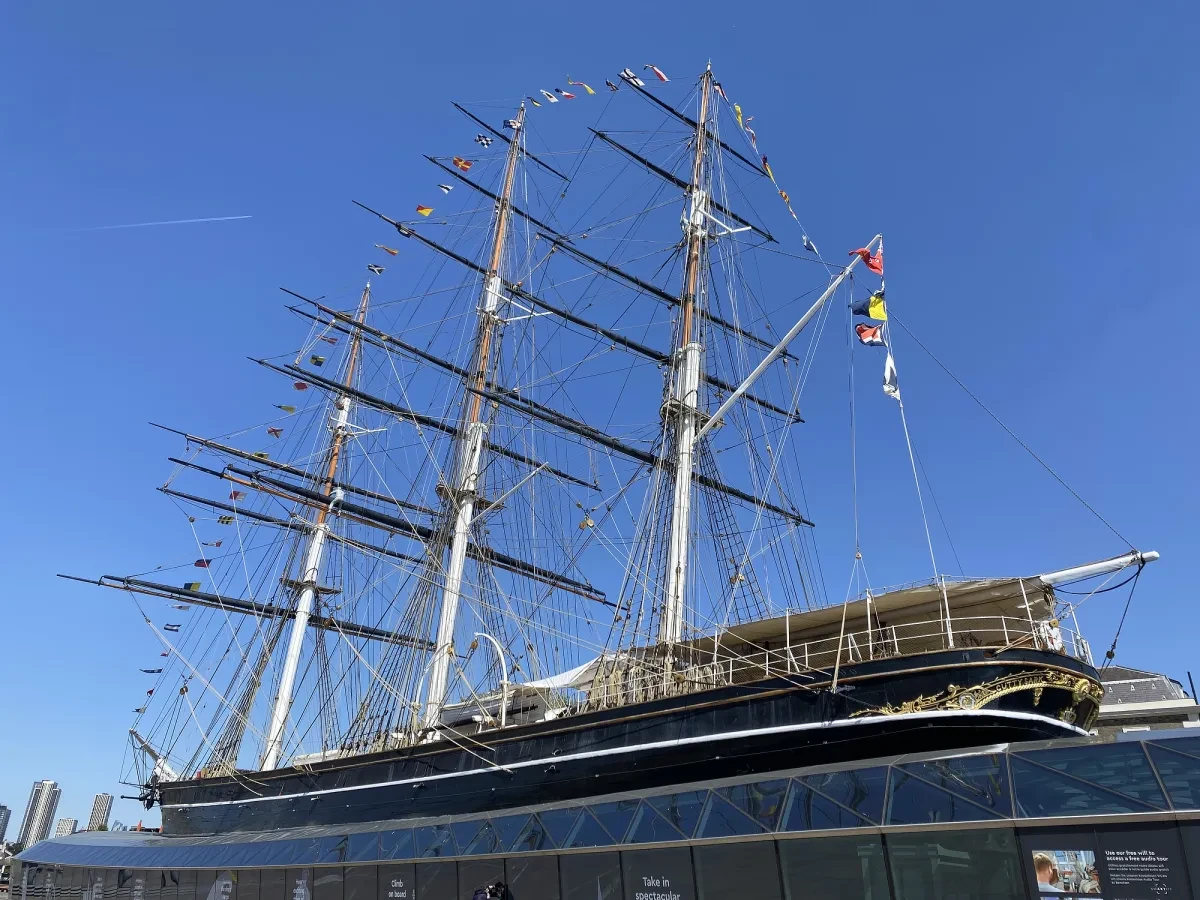
The new spar on display
The next time you visit Cutty Sark, don’t forget to look up and spot the new spar. As well as large-scale conservation projects, our shipkeeping team carry out daily maintenance works, preserving the ship for future generations.
You can meet some of the team connected to this project – and find out more about how we care for the ship – at our regular shipkeeping demonstrations and volunteer talks.
Support stories like this
Help conservators care for our collections and support future galleries, exhibitions and displays at Royal Museums Greenwich
Discover more