
At first sight, I couldn’t even recognise HMM Southampton, an Ultra Large Container Vessel (ULCV), as a ship.
Docked in the Port of Hamburg and hemmed in by gantry cranes, its full outline was impossible to grasp. At almost 400 metres long, longer than The Shard skyscraper is tall and nearly the length of four football pitches, it seemed less like a single vessel than part of the port’s architecture.
I already knew its form in miniature. A scale model of its sister ship, HMM Algeciras, is on display at the National Maritime Museum. In Hamburg, however, the relationship was reversed: standing beneath the cranes beside the hull, peering up at the stacks of containers above me, I was the one who seemed reduced to model scale.
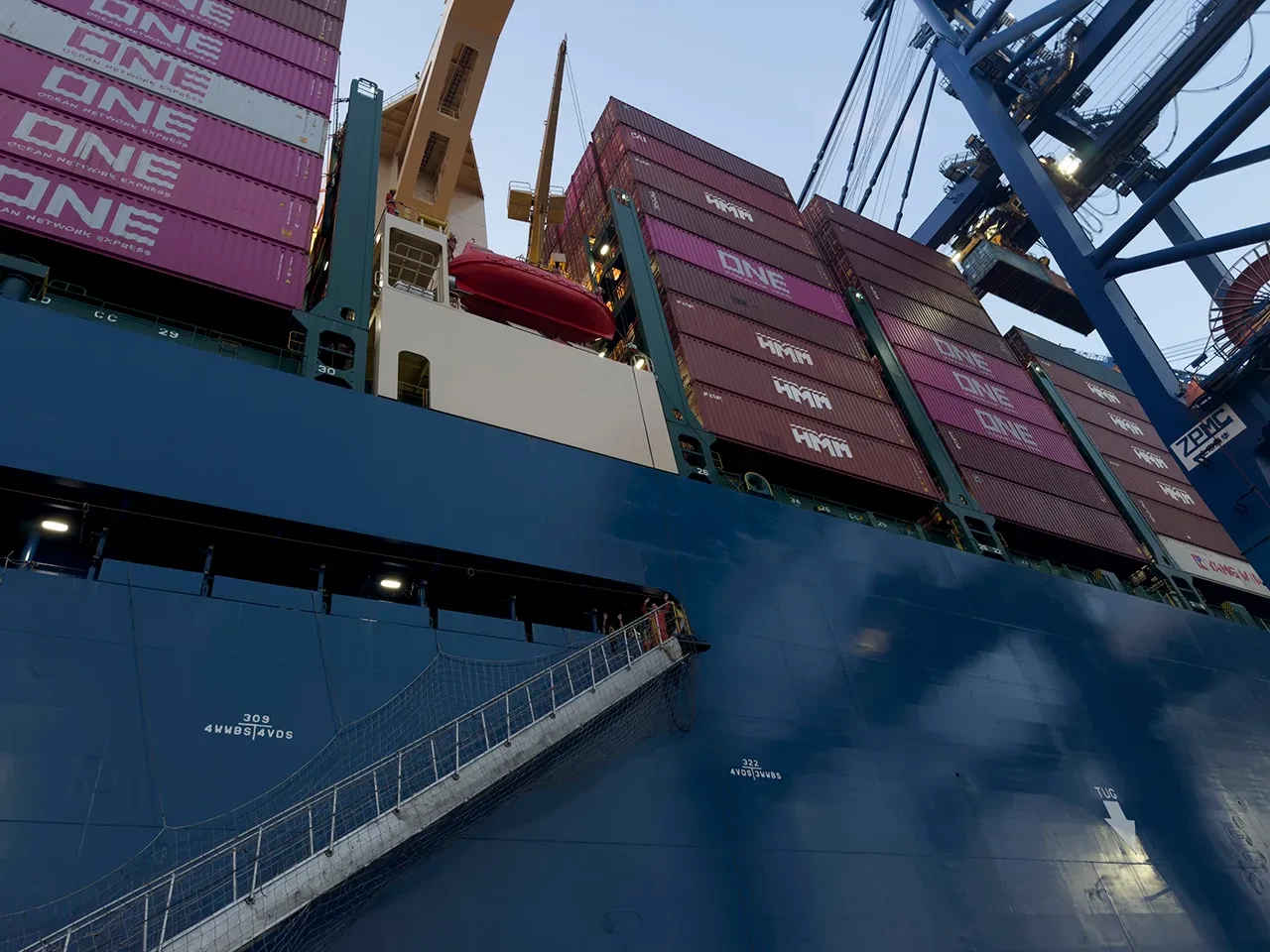
Boarding meant climbing an accommodation ladder of around 60 steps, rising steeply from the quayside towards the deck high above. We were then led through a hatch and up two more flights of stairs into Level A of the towering white superstructure known as the accommodation block.
After completing some paperwork in the deck office, the chief officer handed me an orange coverall and directed me to my cabin. I think this gesture was more about protecting my own clothes rather than an expectation to ‘muck in’, but it did elicit a sense of belonging, however tenuous. For the next two weeks I would be part of something that few outside the maritime world get to experience.
Remote working: how different is life on board ship?
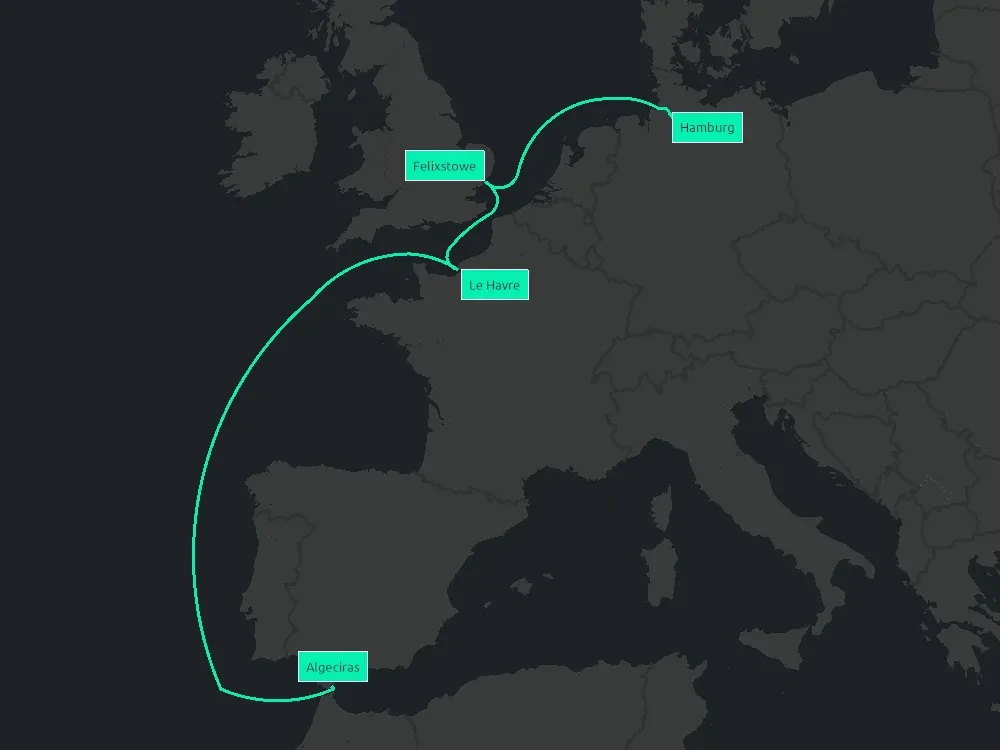
My plan was to depart Hamburg with the ship and stay aboard for two more European port calls before disembarking in Algeciras, Spain in about two weeks. The ship would then continue along its regular route to Asia.
Like all commercial ships, HMM Southampton never rests. It criss-crosses the ocean in 15-week rotations, part of a global fleet of around 62,000 cargo vessels carrying containers, raw materials, fuel, food and manufactured goods between the world’s ports.
My cabin was on Deck D, one of 11 floors of the accommodation block. The building-like structure houses cabins, offices, mess and recreation rooms, a galley, a gym, store rooms, and at the very top, the bridge (or wheelhouse), where the ship’s navigation and command take place.
In comparison to the industrial metallic sublime of the exterior, inside the accommodation block resembles the bureaucratic interiors of workplaces found the world over: fluorescent-lit offices, corridors, control rooms and communal spaces housing desks, computers and plastic furniture. It can be easy to forget that all this happens to be crossing a vast and potentially perilous ocean – a swift transition from the mundane to the monumental.
There are windows in every room, but curtains are usually kept shut even during the day. Pulling back one curtain, I was greeted by a view of a large metal container. Closed curtains were preferable. There was a tiny elevator for the regular traversing between floors. The doors were heavy and swung tightly shut: a sign reminded people to close them quietly, as other crew members would be sleeping.
Setting sail from Hamburg
We left Hamburg as the sun went down, but the beginning of the voyage still felt embedded in the land. HMM Southampton had to travel approximately 130 kilometres down the River Elbe before reaching open sea. Towns, terminals and industrial sites remained visible for hours, while other vast ships passed closed by in the restricted channel. Pilots arrived and departed at successive stages, each responsible for a different section of this congested route to the North Sea.
There was also a deep sea pilot on board. Unlike the harbour pilots who guided us in and out of individual ports, the deep sea pilot accompanied the bridge team throughout the passage across the English Channel and North Sea. These waters are crowded with commercial shipping, ferries, fishing vessels and offshore infrastructure such as wind farms and oil platforms. Currents, variable depths and rapidly changing weather add further complexity. The pilot, licensed through Trinity House, brought detailed regional knowledge, advising on routes, traffic systems, reporting procedures, weather and the timing of our arrival at the next port.
Image
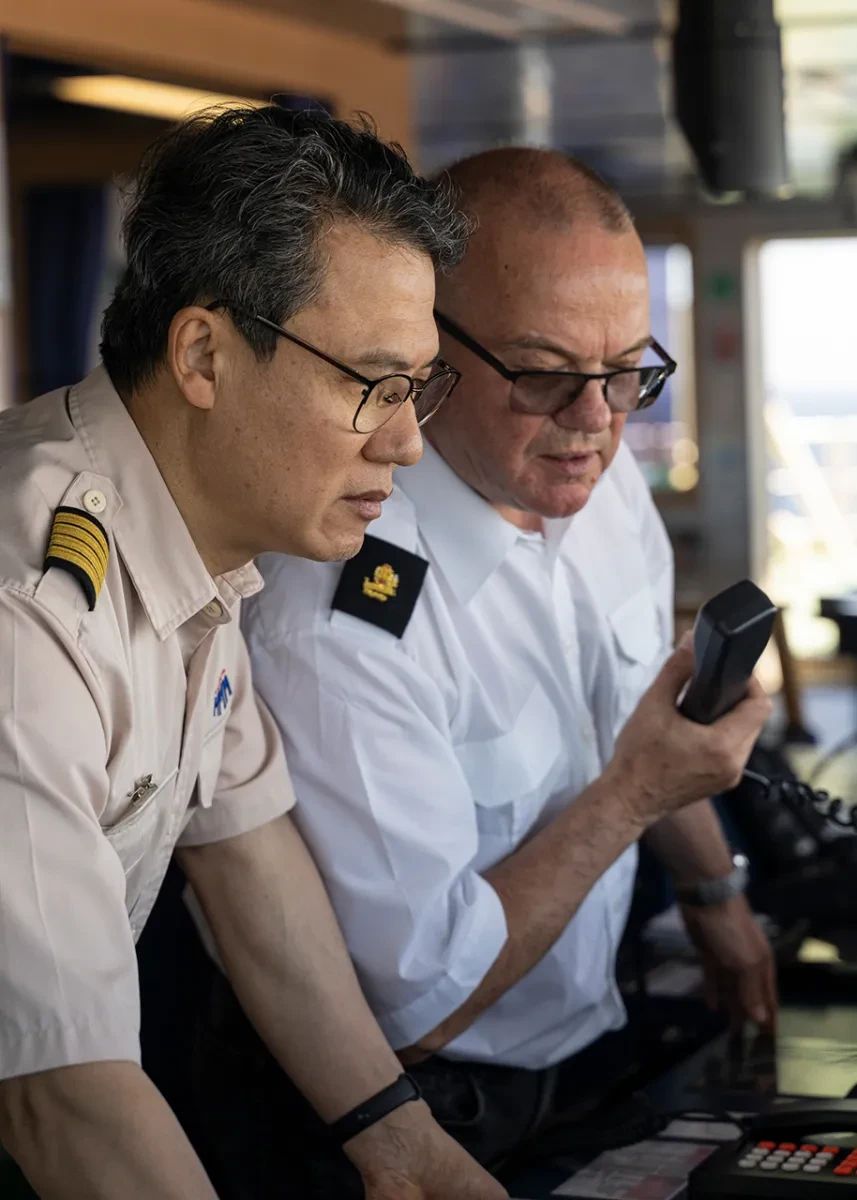
The captain (left) monitors the radar with the deep sea pilot (right) on the bridge of HMM Southampton.
Traffic jams at sea
The distance from Hamburg to Felixstowe was relatively short, approximately 400 nautical miles, yet it took us several days to complete. With no berth available, HMM Southampton waited offshore, drifting and periodically repositioning.
The delay exposed a tension within ‘just-in-time’ logistics: a system organised around precise schedules and rapid circulation remains dependent upon weather, tides and port capacity. Thousands of containers were travelling through a system designed to keep goods in almost continuous motion, yet for a few days our ship went nowhere in particular.
However, drifting with fine weather provided the opportunity to observe repairs and maintenance on deck. The images captured during repairs to the anchor winch reminded me of photographer Robert Howlett’s iconic image of Isambard Kingdom Brunel standing before the massive chains that launched the SS Great Eastern in 1858, his most ambitious ocean-going steamship and the largest ship of its time.
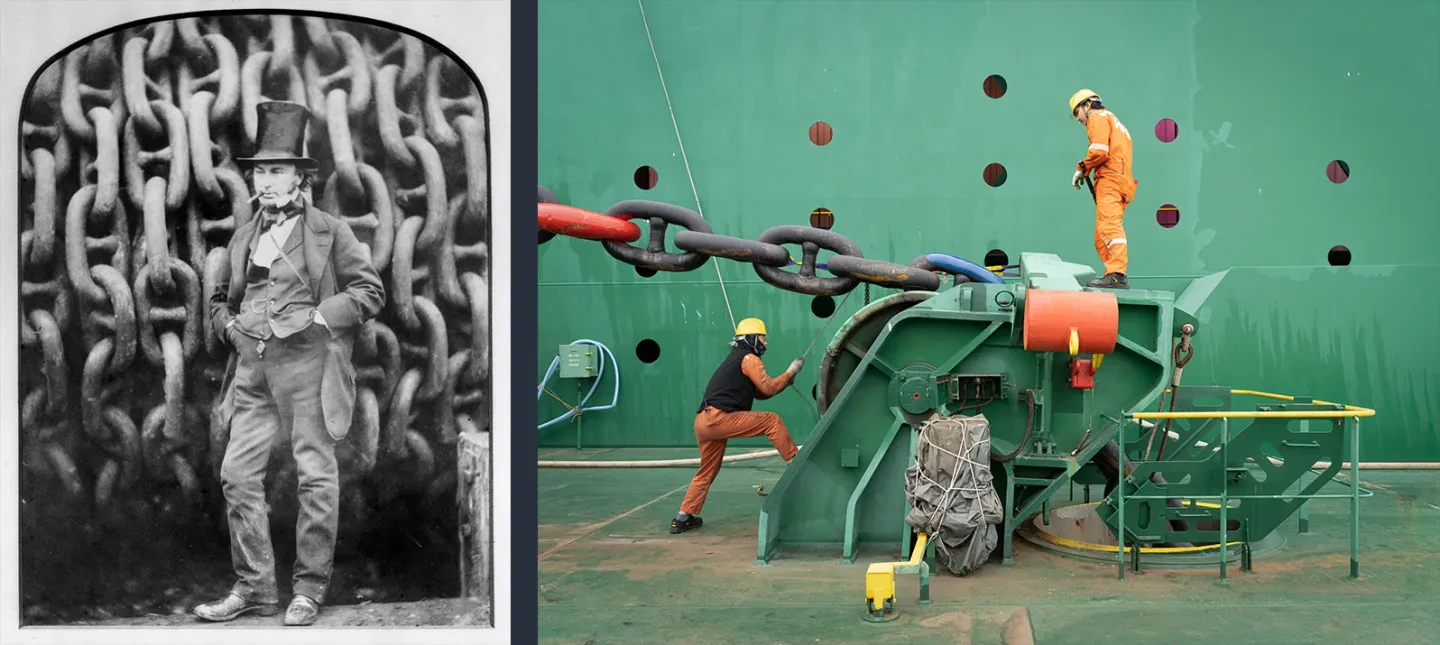
During one watch, the third officer noticed on the electronic chart that the cumulative pressure of wind and current was carrying us towards shallower water. Nothing outside appeared to have changed, the sea remained open and almost featureless, but on the screen our slow lateral movement had become unmistakable. The engine was started and the ship repositioned before the drift began again.
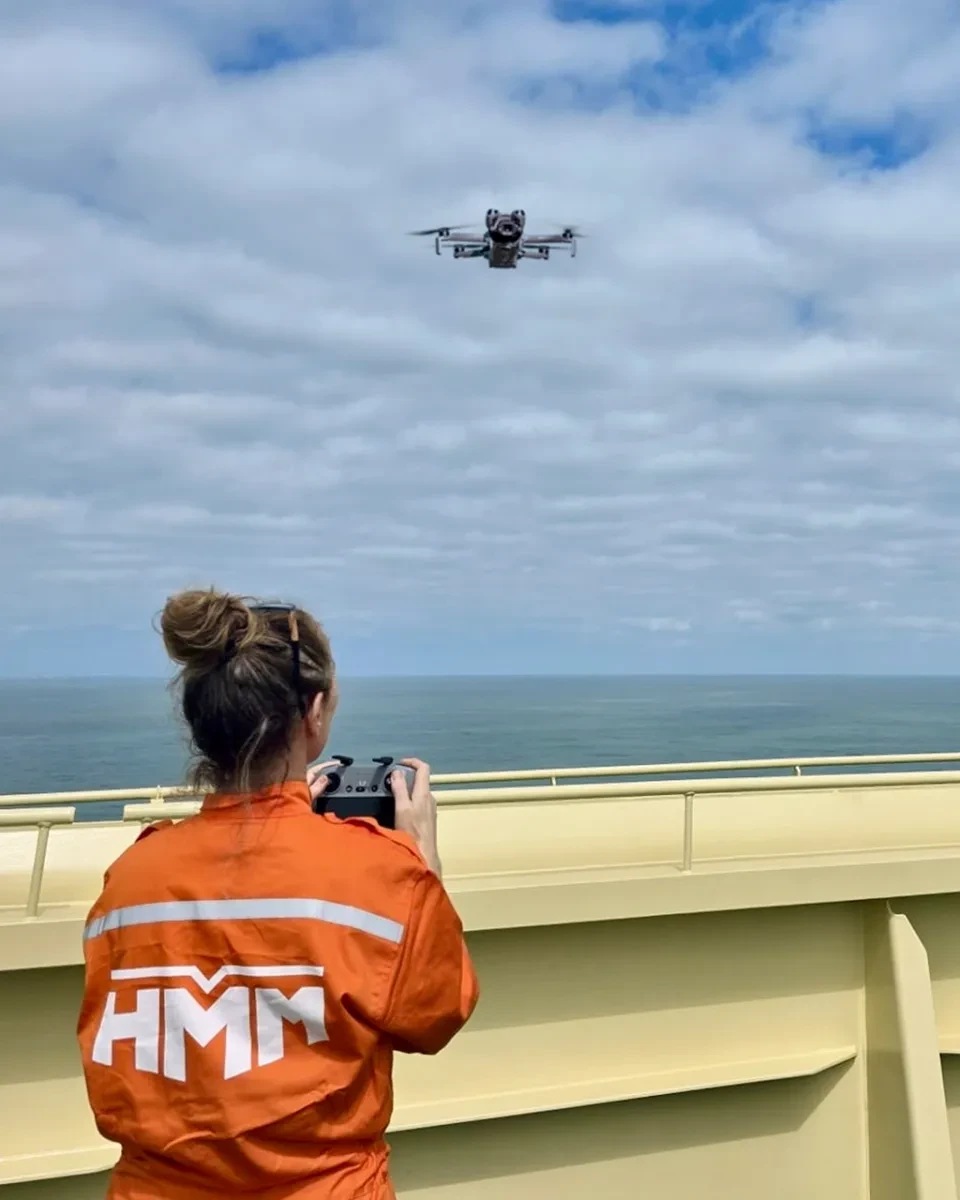
Drifting gave me the opportunity to take some drone footage (above), the heightened perspective of which finally provided an awesome sense of scale. Yet even ships as large as these require very little human labour. The crew of HMM Southampton numbered 26 in total, including three cadets. Across the world’s oceans, 1.5 million seafarers work, mostly out of sight, on contracts anywhere between three and nine months, making worldwide trade possible.
Maritime pilots: the world's trickiest commute?
We were finally given the go-ahead to come into port, and were met by the pilot launch boat.
I watched the boat approach the hull from the pilot door. The launch accelerated until it was parallel with us, then pressed close enough for the pilot to step from the moving deck onto the ship's ladder. He climbed through the opening and disappeared into the ship, on his way to join the captain and officers on the bridge.
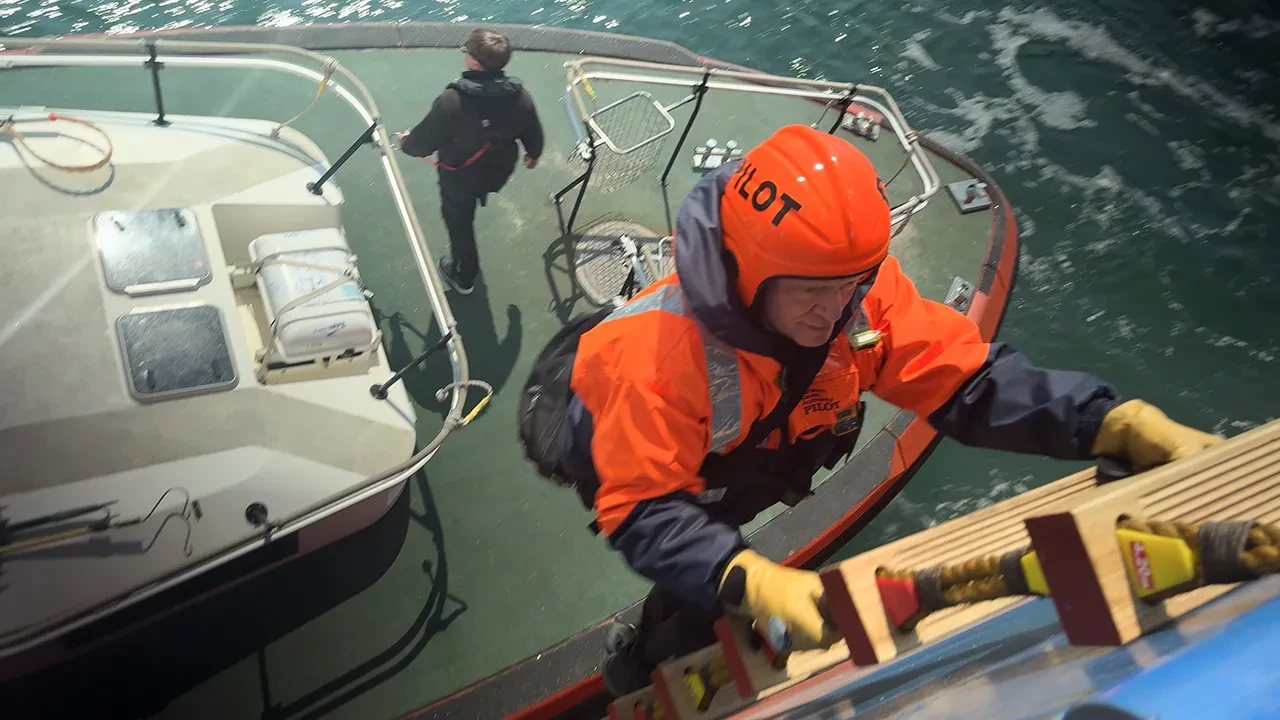
Then the tugboats appeared, almost toy-like alongside our huge hull, but their small size belied their extraordinary strength: each was capable of exerting around 70 to 80 tonnes of pulling force. Lines stretched taut as one tug checked our forward movement and another helped to draw the ship through the turn. From the deck the manoeuvre felt improbably slow: a 400-metre-long structure being rotated, straightened and brought sideways towards a narrow section of quay.
Once the vessel was alongside, I walked to the bridge to observe the cargo being unloaded and loaded. Though I've seen this several times now, I'm still captivated. The huge gantry cranes stack each container box in less than a minute. An operator manoeuvres a carriage that glides back and forth, a container is lifted from a waiting truck, then is carried forward before being carefully placed into in its designated spot. The colourful containers create a sprawling, modular playground around me.
Yet the homogeneity of the stacked boxes obscures an unbalanced story. Containers travelling from Asia carry almost every consumer good you can imagine, and 90 per cent of everything we buy comes via sea. However, on the journey back to Asia, many boxes contain little more than scrap metal or recovered paper, while others are left completely empty. Crew and port officials joke about ‘the world’s most expensive air’, pointing towards a structural imbalance: Europe consumes more containerised goods from Asia than it sends back, leaving shipping lines to carry both the recyclable waste and the empty boxes required for the next cycle of consumption.
Felixstowe to Le Havre
Port of Felixstowe is one of only three UK container ports, along with London Gateway and Southampton, capable of receiving vessels of this scale. Commercial Managers from the Port offered us a tour, and so we drove between rows and rows of multi-coloured containers stacked six high, creating passageways along which trucks and cranes collect their loads. We passed forklifts, spreaders and trucks alongside the Autonomous Truck Fleet, which swept past in much-practised synchronicity.
We departed the UK at sunset. Next stop, Le Havre.
The French port presented quite a spectacle. The pilot arrived via helicopter, which flew alongside and kept pace with the ship. Hovering above the bridge wing, the pilots were lowered one at a time by winch, each suspended in a harness. Several of the crew had never seen this, so for once I wasn’t the only one taking photographs. The aircraft’s noise and downdraught briefly drowned out the ship’s steady mechanical hum. Although dramatic to witness, this is an established part of pilotage at Le Havre, where helicopters undertake approximately 1,800 pilot transfers each year, mostly for expediency.
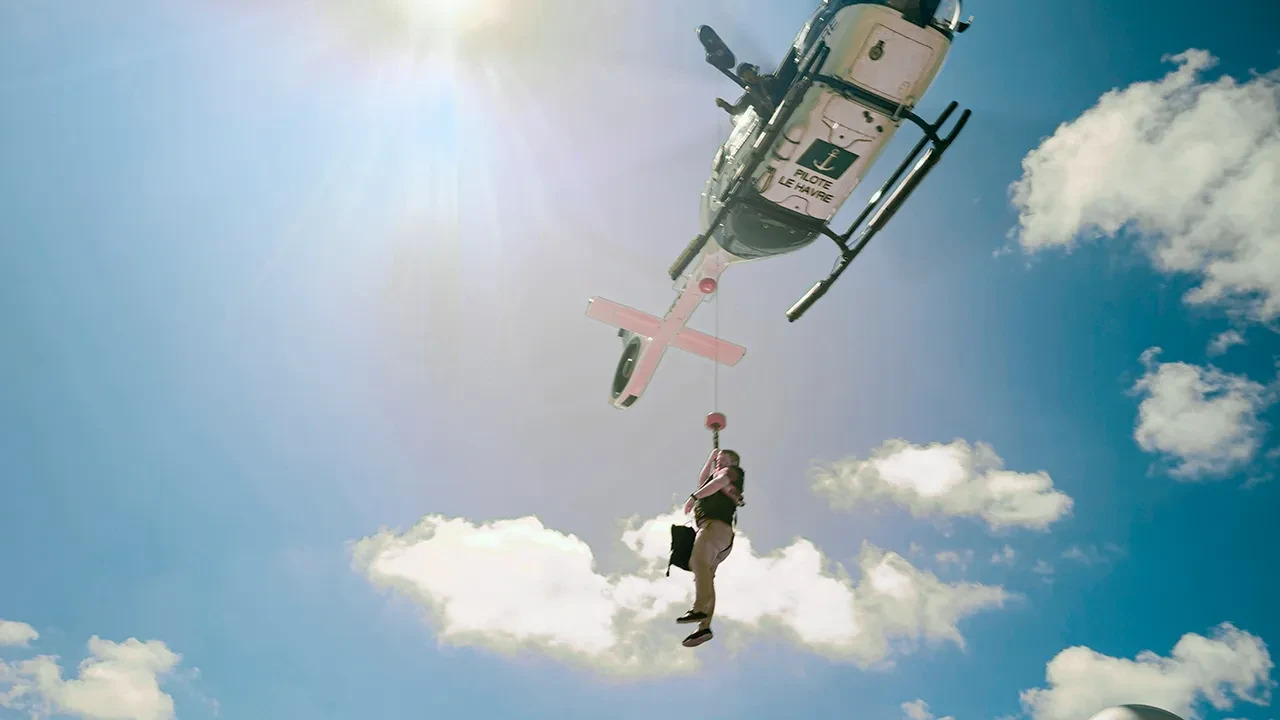
Le Havre is an exposed port at the mouth of the River Seine. We could see the container terminals extend out into the Channel, and behind the cranes a wide industrial landscape of storage tanks, refineries, warehouses and transport infrastructure, connecting the sea to the Seine and, eventually, Paris.
With the assistance of tugs, HMM Southampton began to swing slowly through 180 degrees within a 700-metre turning circle. Once the ship was aligned parallel with the quay, the tugs helped ease it sideways towards the berth, checking the movement of its bow and stern until the hull was close enough for the mooring lines to be passed ashore. From the deck, the manoeuvre seemed both improbable and meticulously controlled: the ship was rotated, straightened and brought alongside with remarkable precision.
On board, it was the proverbial all hands on deck to moor the ship. Thin lines were thrown down to the waiting mooring team and used to draw the ship’s much heavier ropes ashore. Paid out from enormous winch drums at the bow and stern, each rope was hauled along the quay and its looped end placed over a bollard. The crew reeled in the slack until the lines rose taut between ship and shore, gradually securing the vast hull in position. As the line tightened, the deck was cleared. The rope groaned under increasing strain, rising towards a screech as it came under tension. Nobody remained within its possible path: if the line snapped, it could whip violently across the deck.
Image
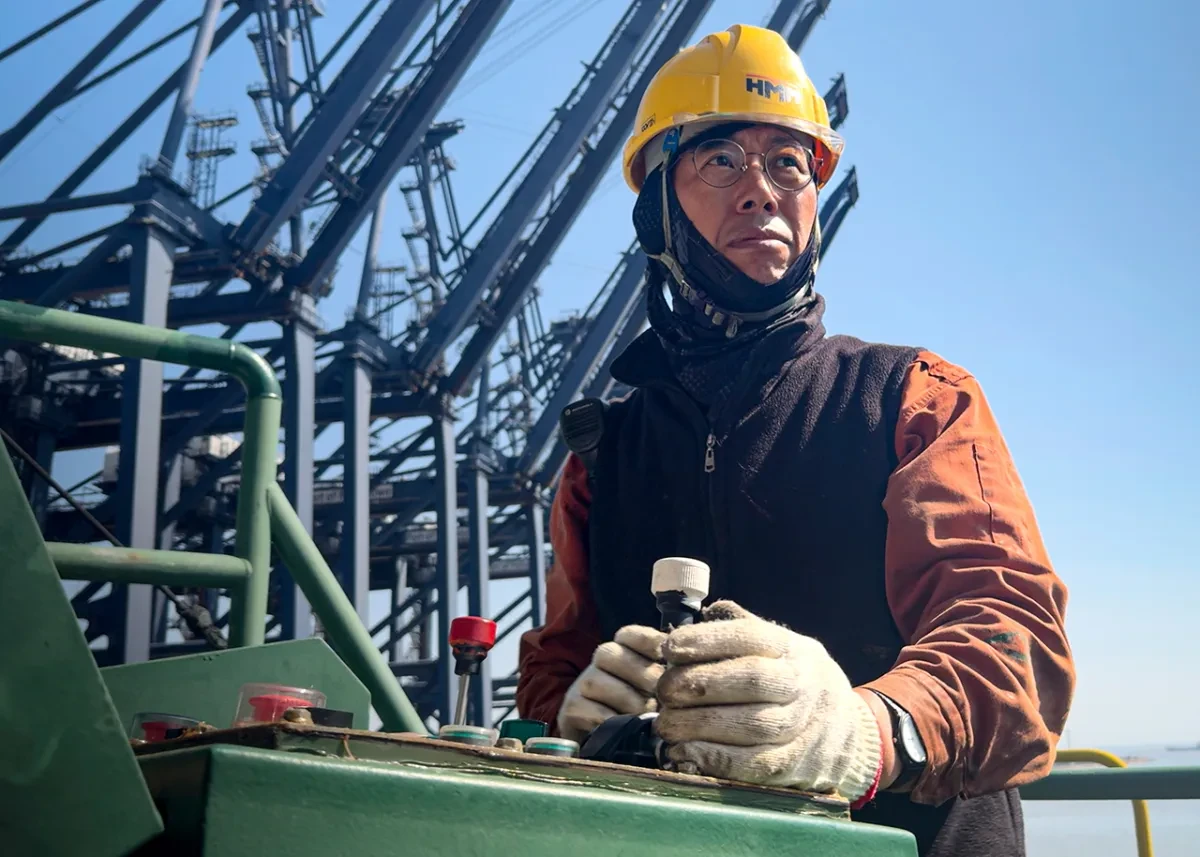
The ship's bosun at the mooring line controls during HMM Southampton's arrival in Le Havre.
A global workforce
The final and longest leg of the journey involved crossing the Bay of Biscay, rounding the tip of Portugal and passing into the Mediterranean before disembarking at Algeciras in the Strait of Gibraltar. It was an opportunity to spend more time with the crew, as everyone wasn’t quite so busy as when in and out of ports.
HMM is South Korea’s largest shipping company and all the ship’s officers were Korean. The bosun, one able seaman (AB) and the chief cook were also Korean. The remaining ratings were from Myanmar, including the other able seamen, the ordinary seamen (OSs), and the messman who assisted the cook. The only Filipino crew member was an engineering cadet, who also served as the ship’s barber. The hierarchy was therefore strongly patterned by nationality, but did not strictly divide between Korean officers and Myanmar ratings.
Myanmar has a long-established seafaring workforce, but I heard several stories about an increasing number of young men seeking work at sea in order to escape the country's ongoing civil war. Overseas maritime employment has become one way of escaping economic insecurity and, since the activation of compulsory military service for all men in Myanmar under 36, the threat of conscription. The composition of the crew was shaped not only by the economics of global shipping, but also by war taking place thousands of miles away.
Image
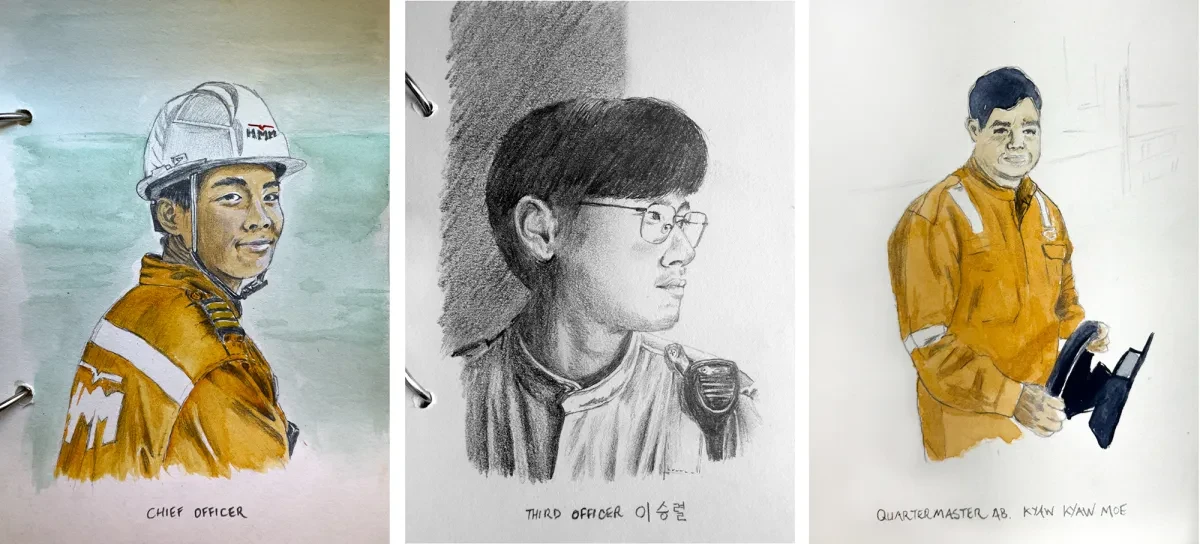
As an inquisitive guest, constantly asking questions and taking photos, I decided to give something back. These are a few of the sketches I made as gifts for the crew, which were thankfully well received.
Travelling across the Bay of Biscay meant not glimpsing land for a few days. For me it still evoked feelings of adventure and human fragility, engulfed by the seemingly infinite sky and seas. I was struck by awe and trepidation, and also by a sense of boundless possibilities.
For most seafarers however, the everyday reality is not so different to labour on shore. The crew, whether on deck or in the engine room, are subsumed by a succession of maintenance jobs. Deck officers watch screens and complete paperwork, tasks synonymous with office-based work. At the same time, they are constantly monitoring and adjusting dozens of controls, keeping a piece of machinery approaching a quarter of a million tonnes upright and on course.
As we approached the Strait of Gibraltar, land slowly came into focus on both sides. The hills of southern Spain first appeared as tonal variants on the horizon. To the south, the Rif mountains of northern Morocco gradually separated into ridges and slopes. The distance between the two continents appeared to contract, and marine traffic increased. The cranes and container stacks of the Port of Tanger Med became clearly visible on the Moroccan shore.
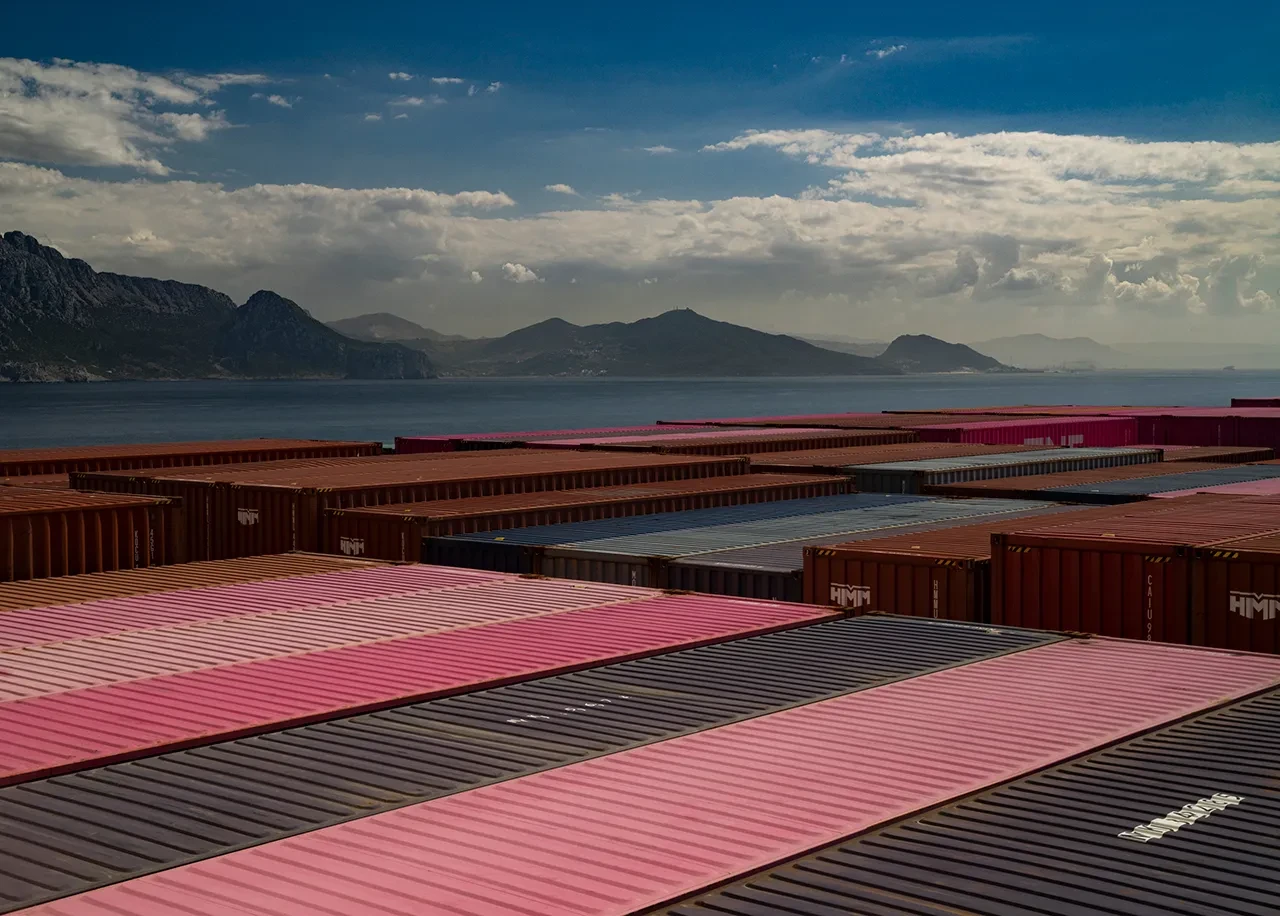
The sea itself also seemed to change. Looking down from the bridge wing, the water appeared crossed by bands of differing colour and texture. I wondered whether I was seeing the currents themselves as we passed from the Atlantic into the Mediterranean. I knew there couldn’t be a fixed boundary, so I checked with the captain, and, yes, I wasn’t imagining it: surface water flows eastwards into the Mediterranean while denser, saltier water passes beneath it in the opposite direction. Compressed by the narrowing Strait and disturbed by tides and underwater ridges, these flows can appear on the surface as two bodies of water merging. At around the same time, I saw some flying fish leaping right in front of the ship. I was delighted to be finishing my trip – all too soon - with a small glimpse into the natural phenomena that are part of the shipping environment.
Image
Follow the project
Zoe Childerley is a REACH Collaborative Doctoral Partnership PhD, supported by the National Maritime Museum and the University of Brighton. She is utilising photography, film and sound, collaborating with seafarers in creating a body of work inspired by maritime archives and fieldwork on board ships and in ports. Find more of Zoe's work on her website, or follow her progress on Instagram.
Find more stories
Read more about Zoe's work, and learn more about the past, present and future of global trade with the National Maritime Museum.
Life on board a container ship – in pictures
Artist Zoe Childerley is embarking on a project with the National Maritime Museum to bring experiences of modern seafarers to light. How did she find her first voyage on board a container ship?
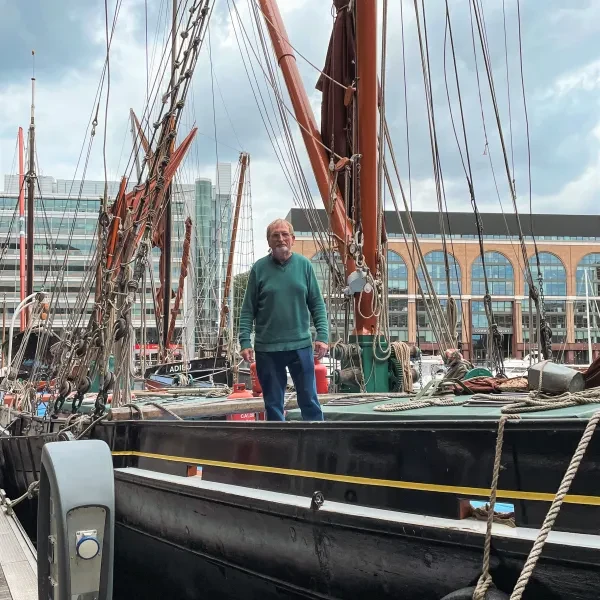
Thames barges and London docks – an oral history
Gordon 'Willie' Williamson worked aboard Thames barges throughout the 1960s, and witnessed the final years of central London as a busy cargo hub
The unexpected history of the shipping container
They carry everything from apples to iPhones – but how did a simple metal box have such a profound impact on the way we live, work and shop?
The women leading India's maritime future
A new project supported by Royal Museums Greenwich documents the experiences of women in India's maritime industries. How do they compare to stories from the past?
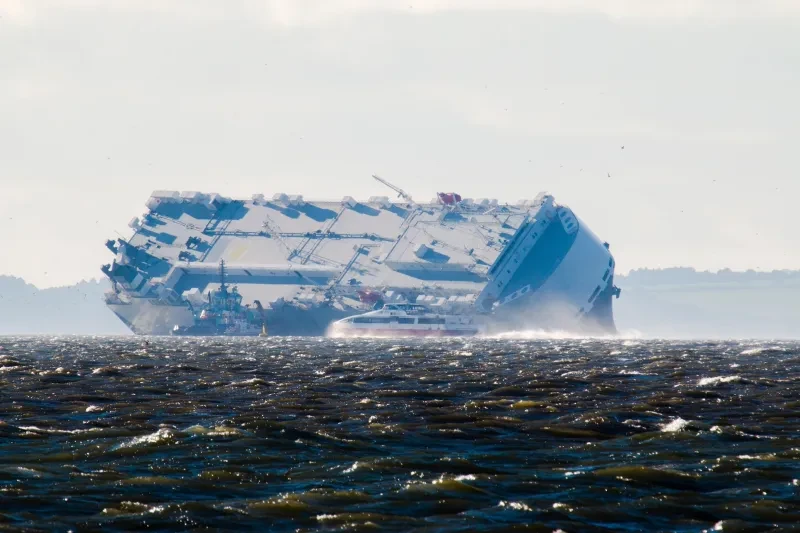
What happens in a maritime emergency?
If a ship runs into trouble in UK territorial waters, an individual known as ‘SOSREP’ is often one of the first to be notified. Who are they, and how do they help prevent disaster at sea?
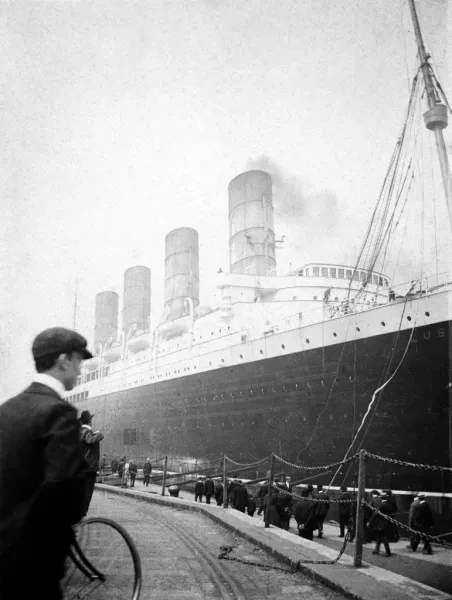
From sailing ships to steam power: how the Industrial Revolution changed life at sea forever
The shift from wind to fossil fuels was far from smooth. As shipping tries to reduce its greenhouse gas emissions, can we learn from fuel transitions of the past?
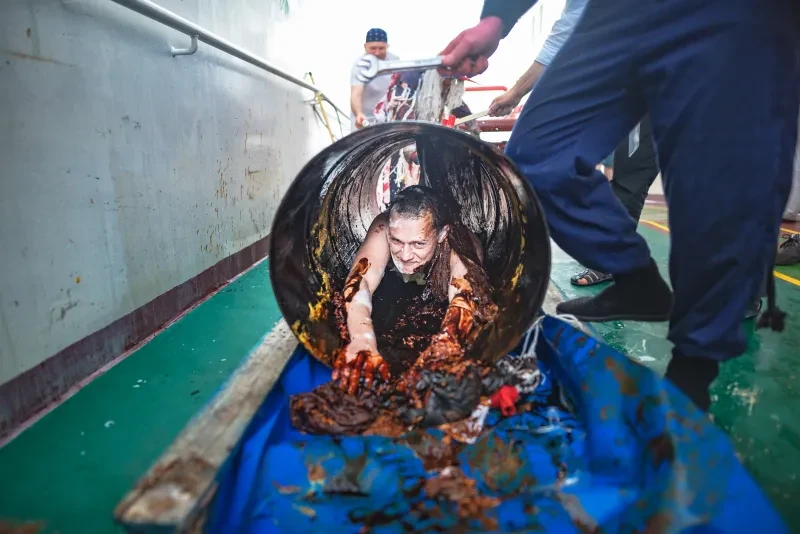
Crossing the line
Time at sea is by its very nature isolating, and even on a very short voyage a strong sense of community, albeit a temporary one, is often created. Traditions, ritual and celebrations are an important part of ensuring unity and staving off boredom.
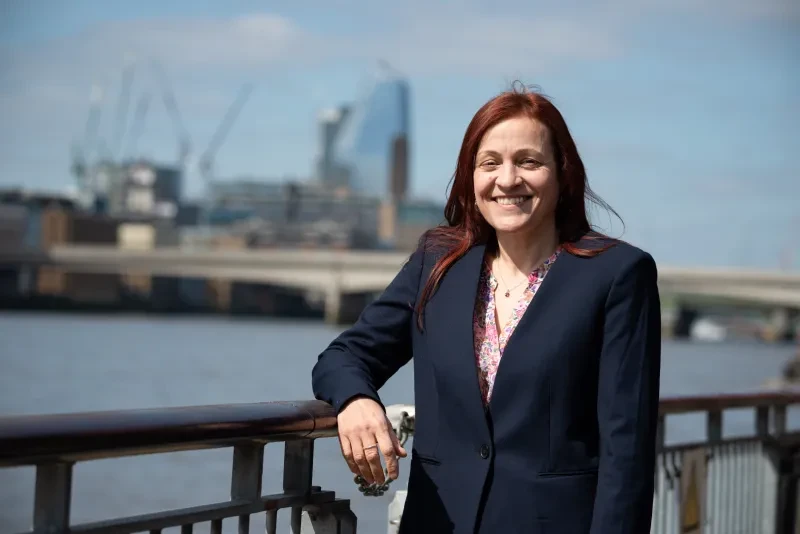
'The maritime industry has got better for women – but there’s more to be done'
Meet Senior Harbour Master Cathryn Spain, who oversees navigational safety on the River Thames

Research and collections
Explore Royal Museums Greenwich collections online, get expert help at the Caird Library, or come behind the scenes at our state-of-the-art conservation and collections centre