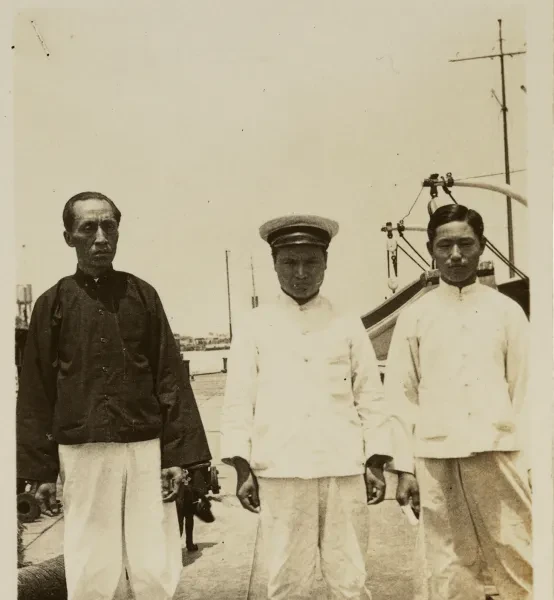
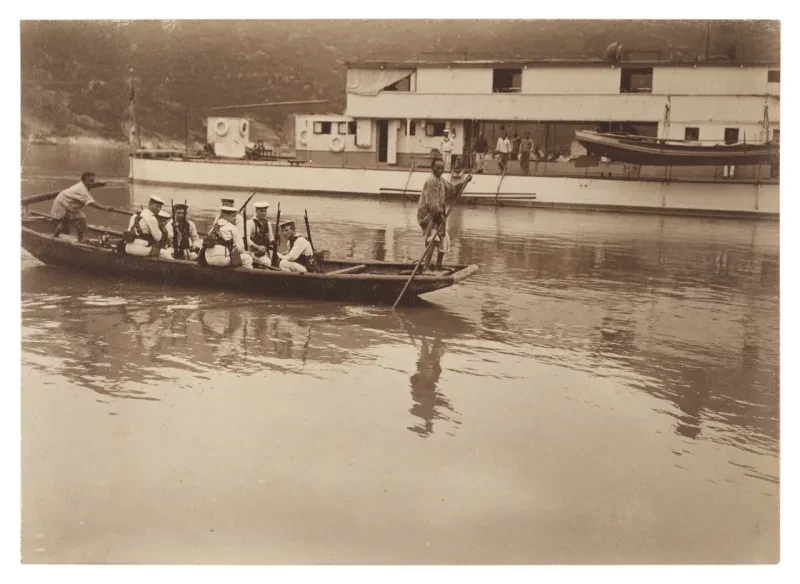
‘Lascars’ were seafarers from across the Indian Ocean region.
Most were born in areas that are now part of the present-day states of India, Pakistan or Bangladesh. Confusingly, the term could sometimes refer to other Asian sailors too. A lascar crew might include Muslims, Hindus or Christians.
European captains began hiring lascars to solve labour shortages, resulting in them staying or settling in Britain from the 1600s onwards. They often led difficult lives, facing challenges such as low pay and discriminatory regulations.
Lascars appear in a huge range of artworks and photographs across our collections. They are one of the three groups covered in the Museum’s new book Black & Asian Seafarers: A Visual History, which explores the experiences of mariners from the 1790s to the Second World War.
Image
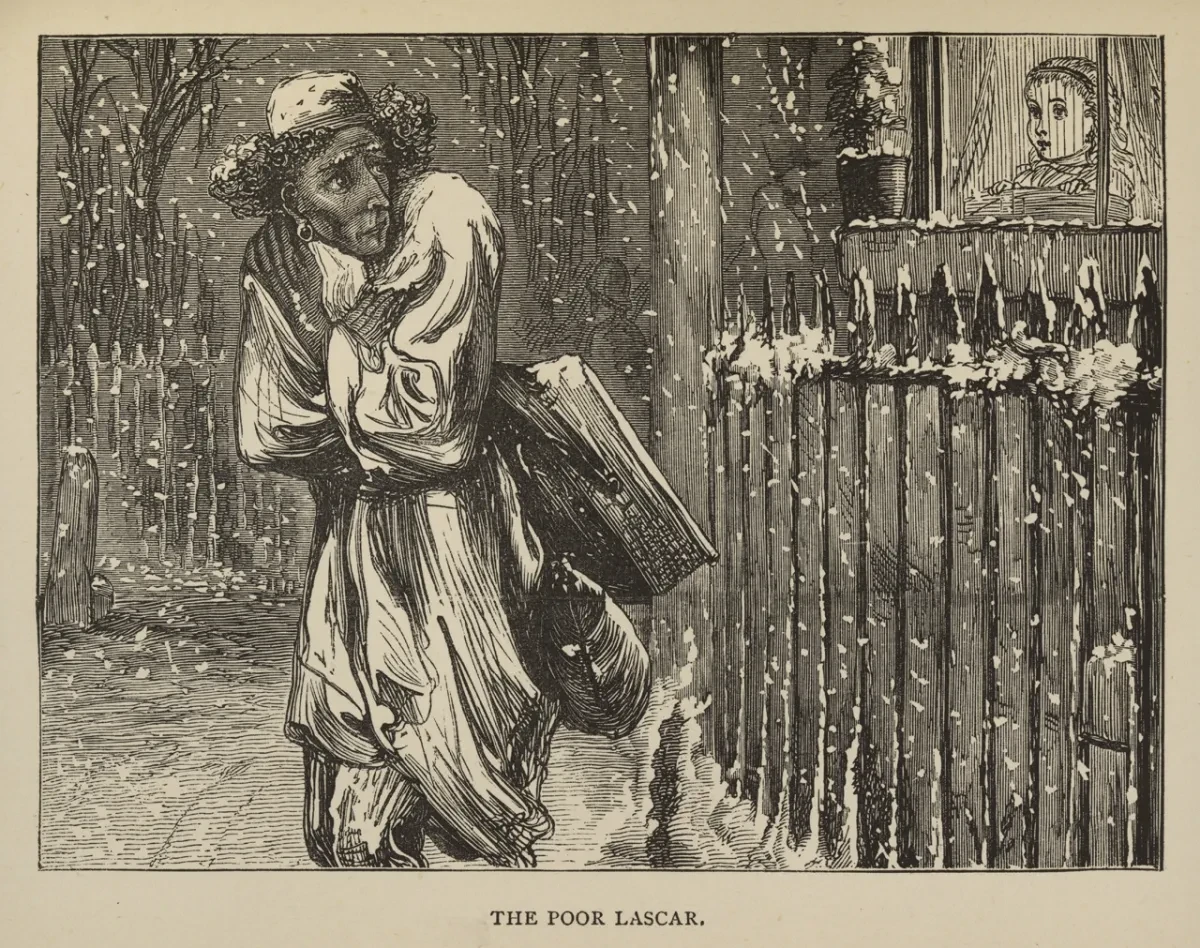
‘The Poor Lascar’, Frederic T. Gammon, about 1882
Many people first encountered lascars in works of fiction. Famous examples include a suspected accessory to murder in the Sherlock Holmes adventure 'The Man with the Twisted Lip' (1891) and a member of a bloodthirsty global cult in H.P. Lovecraft's ‘The Call of Cthulhu’ (1928). In many cases, these ‘exotic’ characters came without a name or much backstory.
Lascars who jumped ship in Britain or were abandoned by their employers often struggled to find work. Authors often presented them either as perpetrators of crime, as in the abovementioned Holmes case, or as objects of charity, as in 'The Poor Lascar' here. This illustration accompanied a moralising tale from the 1880s about a little girl who sees a lascar shivering in the snow and, remembering a Christmas sermon, invites him in to share her family’s food.
Image
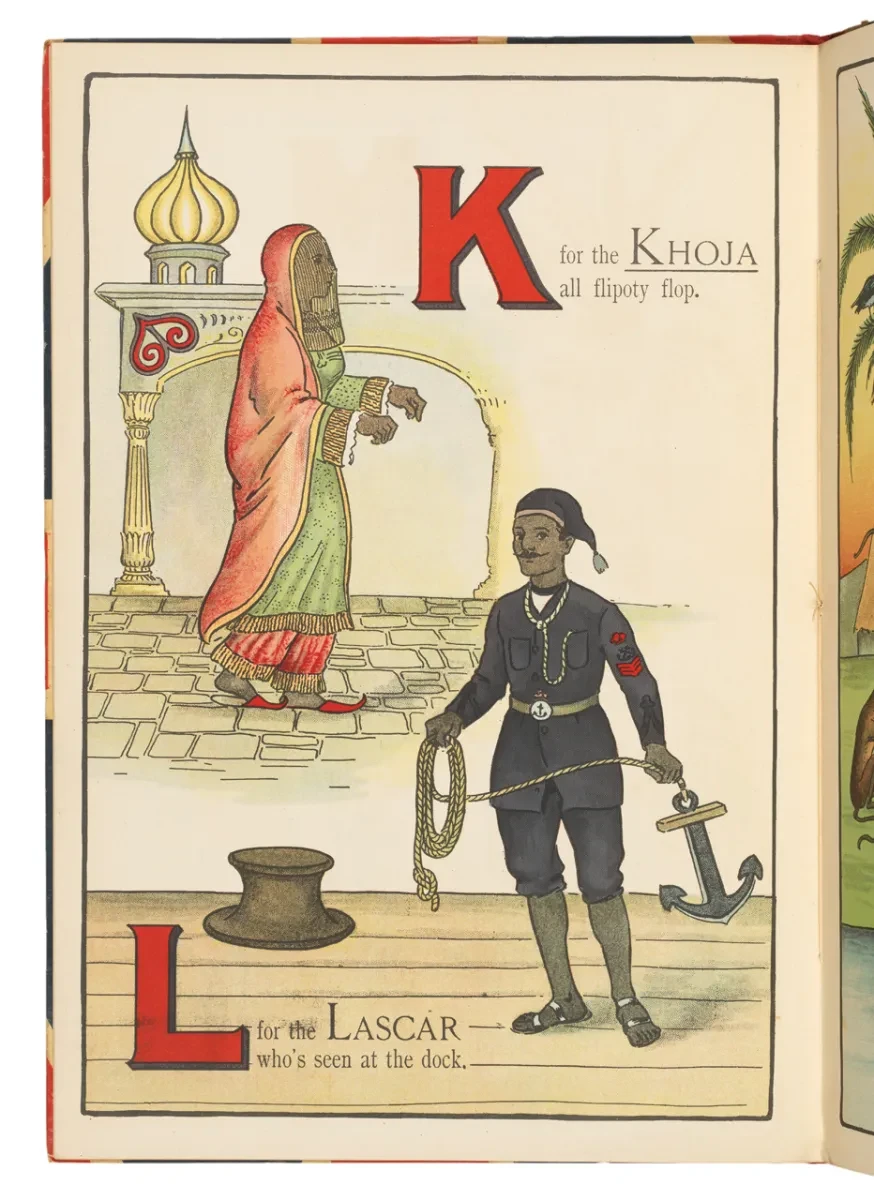
‘L for the Lascar’, about 1900, Bowden’s A.B.C. Book of India, Arthur Charles Bowden
Lascars were a common sight in the ports of British India, such as Bombay (now Mumbai) and Calcutta (now Kolkata). It comes as no surprise, therefore, that one appears in Arthur Charles Bowden’s A.B.C. Book of India, published in about 1900.
This alphabet-based volume features various South Asian figures, often described in derogatory terms, beginning with ayah (nanny) and ending with zamindar (landowner and tax collector). The lascar – ‘who’s seen at the dock’ – is shown in a uniform typical of many shipping companies of the era, including a tasselled stocking cap on his head and a lanyard round his neck.
Now in the National Maritime Museum's Caird Library, this book is one of around 30 items that the 'Unlocking Collections' project has acquired in order to increase the number and variety of images featuring Black and Asian seafarers in the Museum's collections. Other examples include a book featuring a famous illustration of injured sailor Joseph Johnson and a postcard by Maharashtrian artist M. V. Dhurandhar featuring a lascar dressed in similar fashion to the lascar in Bowden's book.
Image
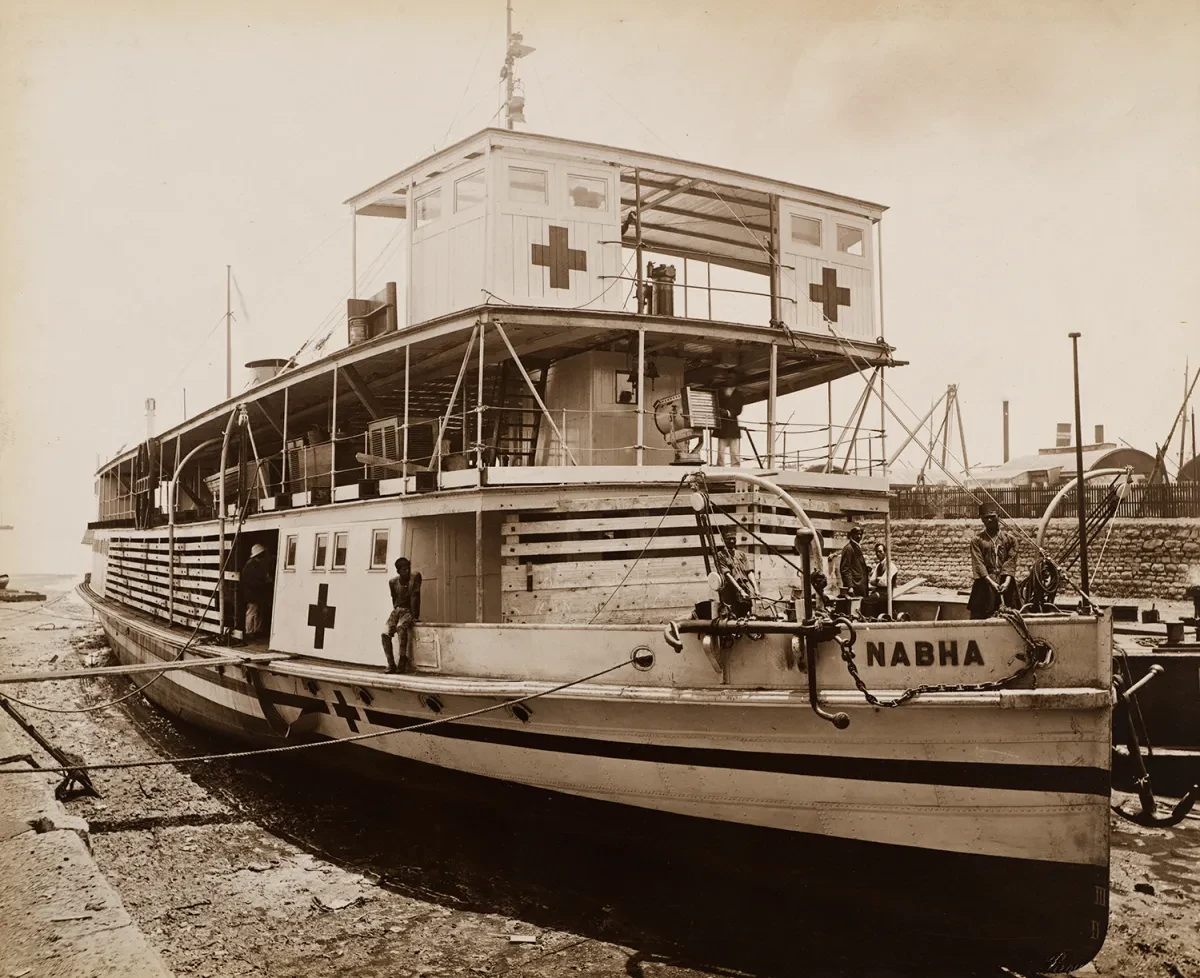
The hospital ship Nabha with lascars posing at the bow, 1917
The First World War had a huge impact on India, which fought on the Allied side as part of the British Empire. Around 1.3 million Indians served as soldiers or in military support roles, including in the trenches of the Western Front.
The rulers of Indian princely states aided Britain’s war effort for many reasons. Some felt genuine loyalty to the Crown, while others hoped that their support would win them more autonomy. Maharaja Ripudaman Singh of Nabha State in Punjab sponsored the shipbuilding firm Thornycroft to construct one of the many hospital ships deployed during the conflict.
The National Maritime Museum holds a photograph album showing the brand-new Nabha, which was launched in 1917. Shipbuilders often produced such volumes to advertise their work, showing decks and cabins in pristine condition. The sailors required to crew this vessel can be seen in several images if you look carefully. This portrait of the ship includes a pair of lascars striking energetic poses for the camera although their efforts are redundant since the ship is resting on mud in a dock.
Image
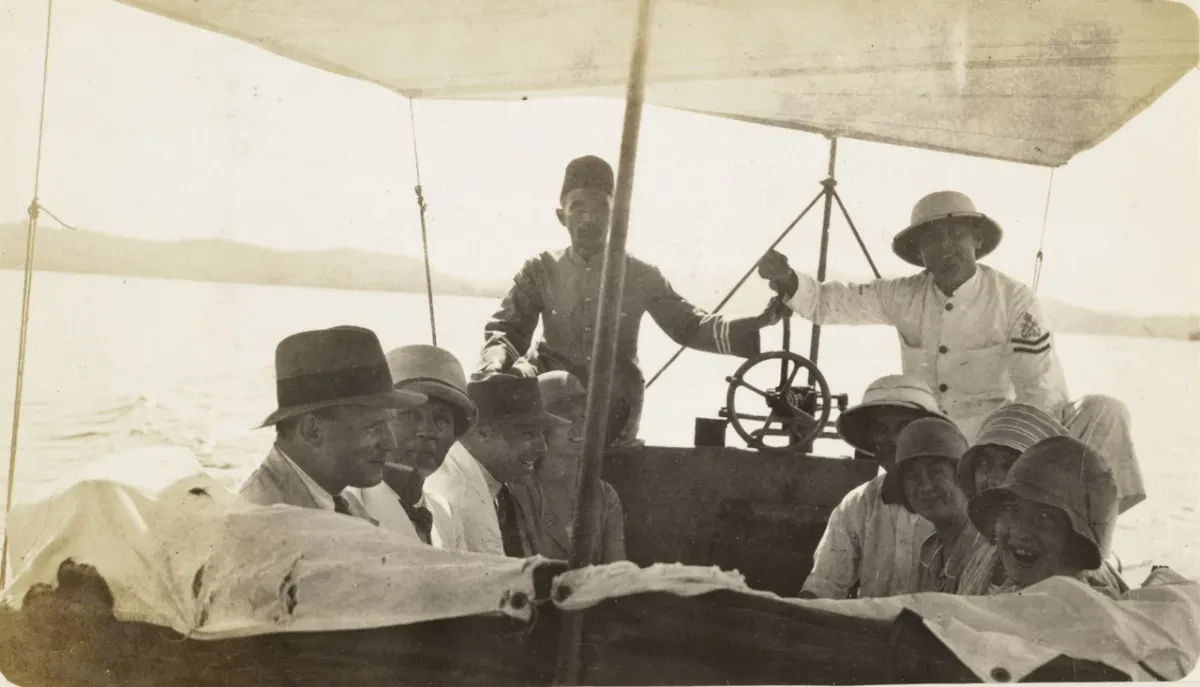
A photograph of people in a motorised launch, including a lascar identified in the caption as a serang, 1928
Lascar crews had their own ranks and people who worked on ships in the Indian Ocean had to learn the terms for them. The serang performed a role similar to that of a boatswain. He was usually the most important person (although outsiders sometimes exaggerated his influence). In addition, some of his subordinates might be related to him, be in debt to him or owe their position on board the ship to him (one of the many fascinating oral history recordings with former seafarers held in the National Maritime Museum's collection describes this in detail). This photograph, probably taken in Borneo in 1928, includes a serang steering a motorised boat.
It's very common for photographs of seafarers to be labelled by rank rather than name. Captions like 'mid' (for midshipman), ‘gunner’s mate’ or 'carpenter', for example, often appear under European crewmembers. This is even more likely with images of lascars because the people who compiled photograph albums – typically officers or wealthy passengers – were often unfamiliar with the names of Asian crewmembers.
Discover more