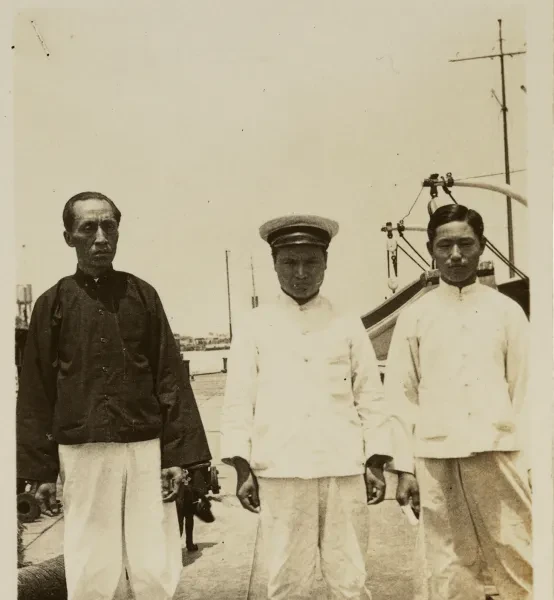
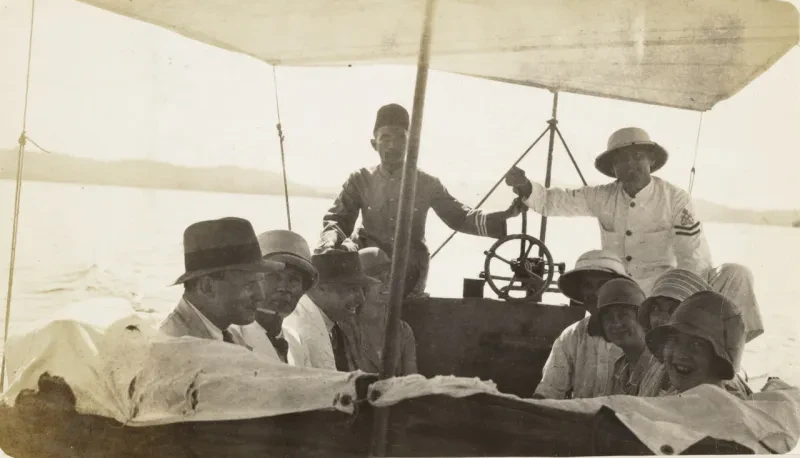
Chinese seafarers became increasingly common on merchant vessels traversing the world’s oceans during the 1800s.
By the end of the century, London and Liverpool had Chinatowns where sailors also lived. These men are an important part of the wider story of Chinese migration to Britain.
Royal Navy warships in East Asia also hired Chinese men and boys. This included many men from Hong Kong, which became a British colony after the Opium War (1839-42). They served as able seamen, stokers, cooks, laundry workers and personal servants.
Chinese seafarers appear in a huge range of artworks and photographs across our collections. They are one of the three groups covered in the Museum’s new book Black & Asian Seafarers: A Visual History, which explores the experiences of mariners from the 1790s to the Second World War.
Image
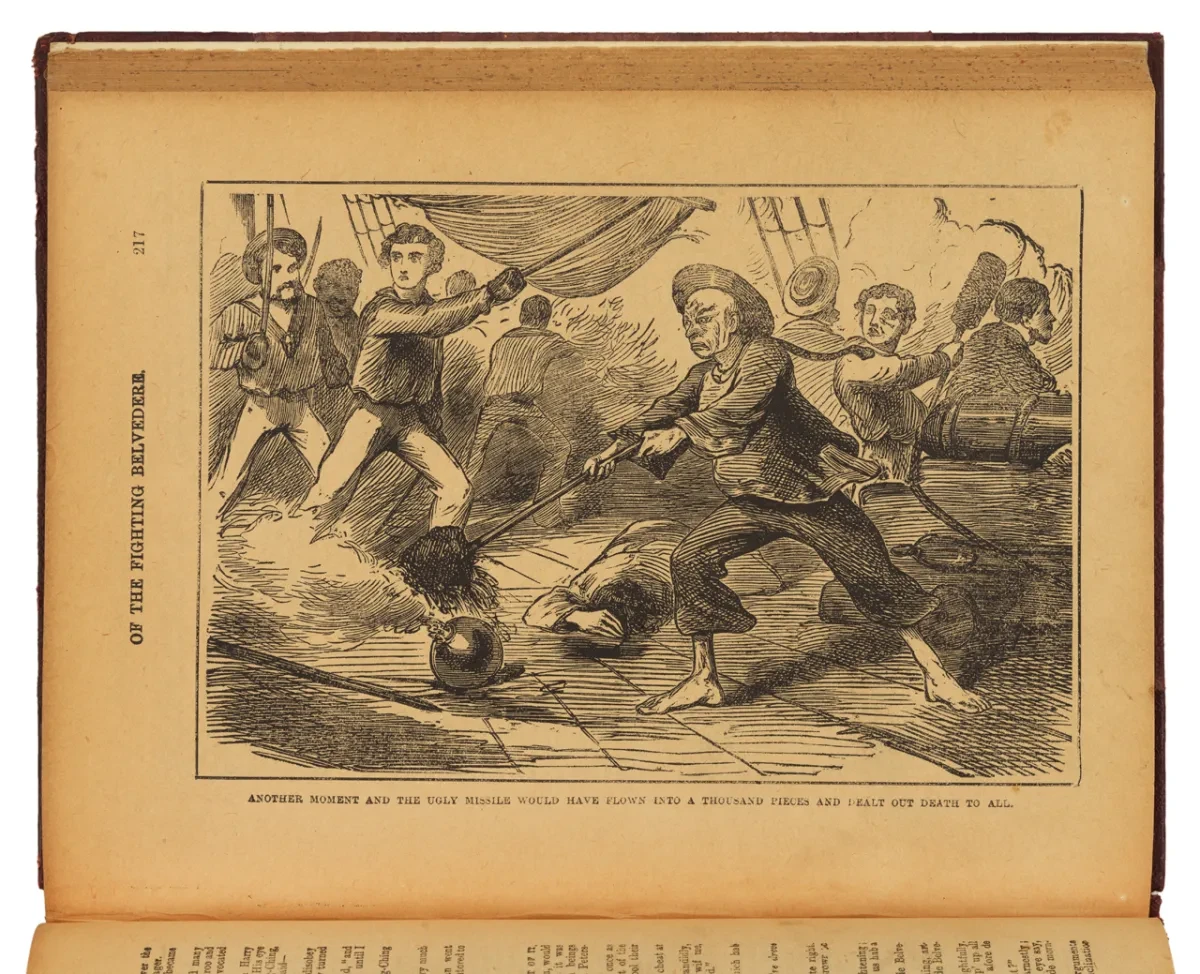
Illustration featuring the character Ching-Ching from Handsome Harry of the Fighting Belvedere (1876) by Edwin Harcourt Burrage
One of the most popular nineteenth-century children’s stories to feature Black and Asian seafarers as characters was Edwin Harcourt Burrage’s Handsome Harry of the Fighting Belvedere (1876). The rather complicated plot follows the adventures of young Sir Henry March and his shipmates who come from around the world.
Ching-Ching, a Chinese sailor, appears in many of the book’s illustrations, which show him doing everything from boxing to acrobatics. Here, he is clearing an explosive projectile off the deck during a battle.
Ching-Ching was a product of Victorian stereotypes about China but, unusually for the era, his character got more complex over time. He became so popular that he went on to feature in a series of spin-offs, Burrage even making him a detective in one.
Image
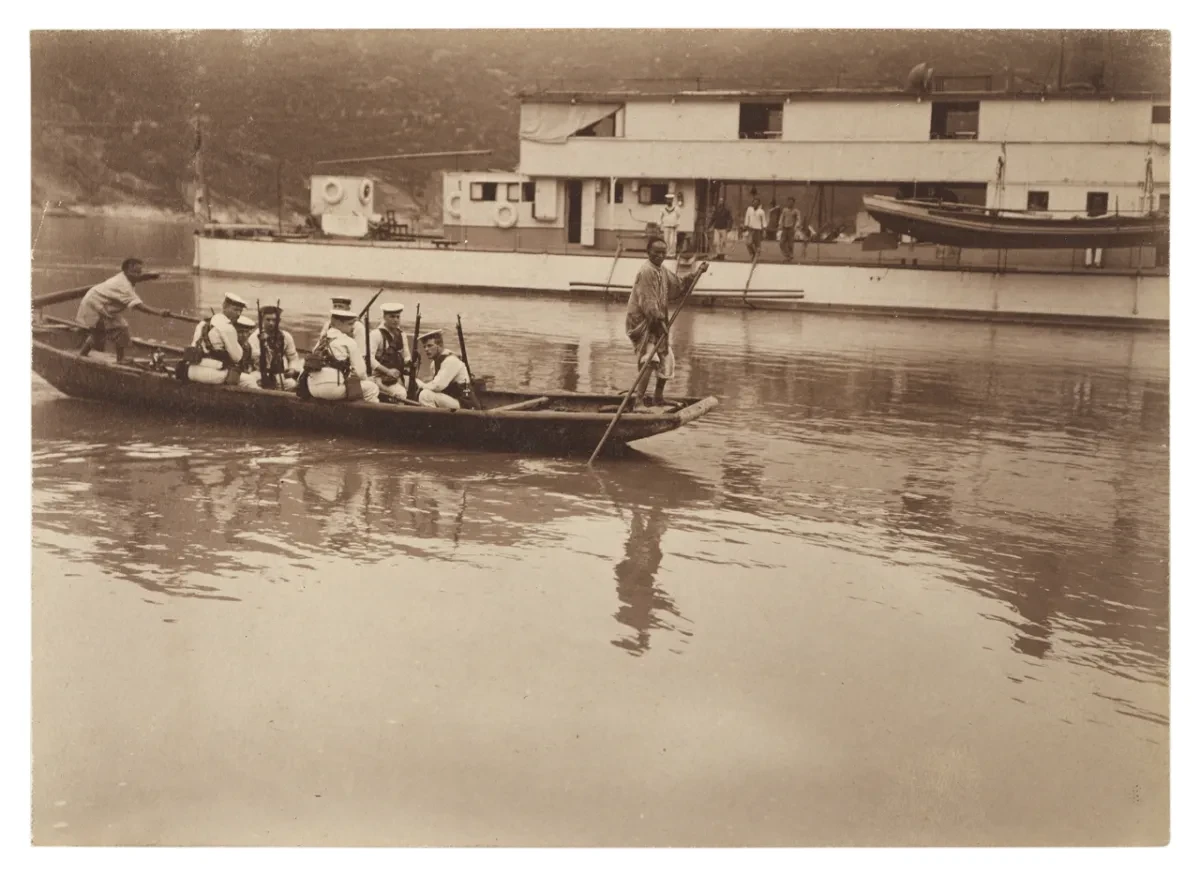
A sampan on the Yangtze with the gunboat HMS Woodcock in the background, about 1908
China managed to resist full-scale colonisation during the nineteenth and twentieth centuries. Powers including Britain, France, Germany, the USA and Japan nonetheless forced the country to accept a huge amount of foreign interference in its internal affairs.
One aspect of this was agreeing to allow their gunboats to patrol the River Yangtze and other waterways. The Royal Navy operated the largest fleet, employing Chinese people as stokers (who shovelled coal into boilers), stewards (who waited on officers) and in other roles.
This photograph is from an album compiled by naval surgeon Norman Jacob. HMS Woodcock is visible in the background whilst a party of armed British sailors can be seen in a sampan in front. These flat-bottomed, punt-like boats were an integral part of life on the river, and the skilled men and women who handled them often appear in photographs like this one.
Image
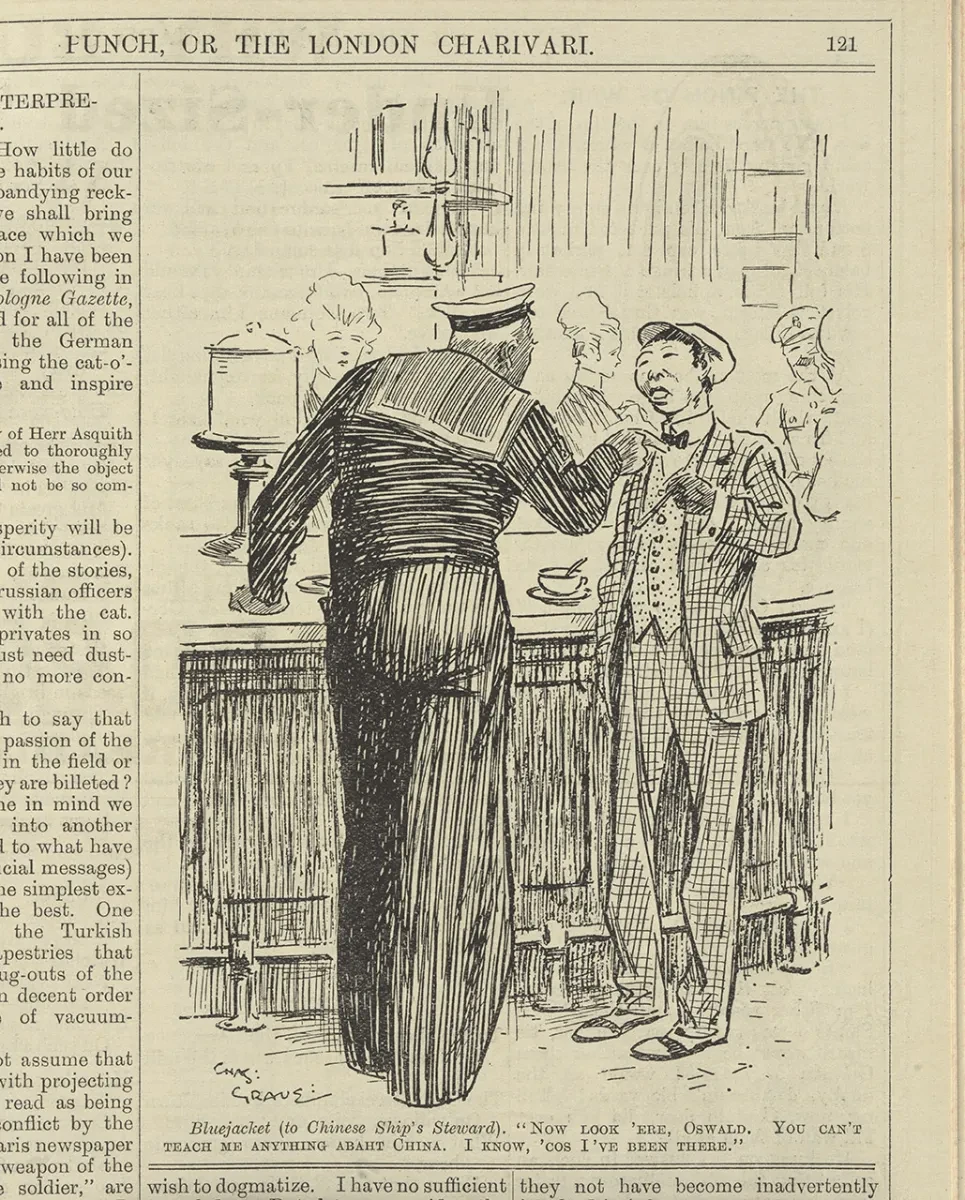
Punch cartoon featuring a British sailor lecturing a Chinese steward by Charles Grave, 1916
Punch (short for Punch, or The London Charivari) was a hugely successful satirical magazine founded in 1841. Maritime-themed cartoons appeared in almost every issue during the late nineteenth and early twentieth centuries. Asian sailors occasionally featured in them or other comic pieces, often but not always as the butt of the joke.
This image features a Chinese steward standing in some sort of tearoom or canteen. Punch regularly made China and its people the subject of its sketches, many of them highly offensive and with derogatory depictions.
Here, the principal target is an overbearing, know-it-all British sailor (the ‘bluejacket’). He is claiming to know everything about the country just because he’s visited, presumably on a naval posting (and possibly a brief one at that) by declaring ‘You can’t teach me anything [about] China. I know, ‘cos I’ve been there.’
Image
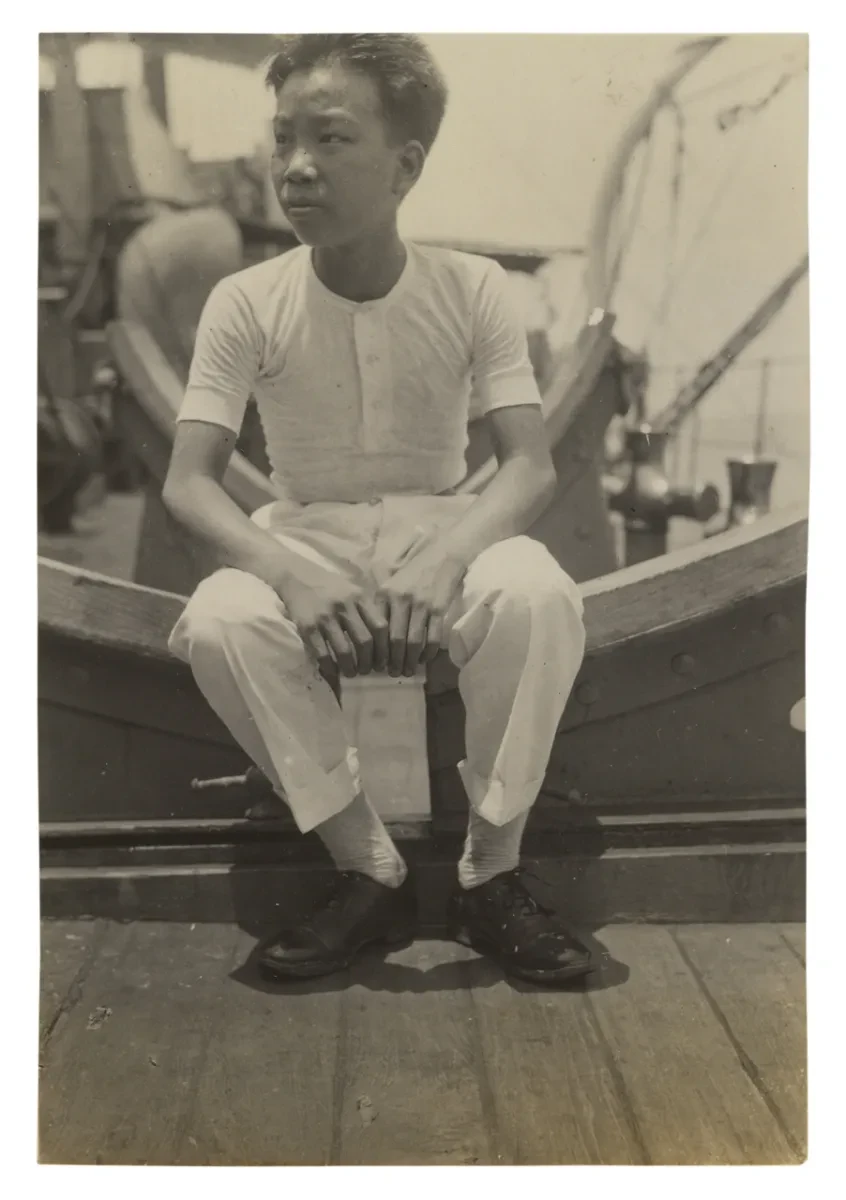
Photograph of a Chinese boy identified as 'Lee Ming' sat on a boat cradle, about 1928
If you read the letters, diaries and memories of British people who worked or lived in China during the first half of the twentieth century, you will often see the phrase 'makee learn'. This Pidgin English phrase usually referred to someone in a very junior, and sometimes informal, role similar to that of an assistant or apprentice.
Local boys who were eager to earn money, gain status or improve their English worked on board Royal Navy gunboats and other vessels in this capacity. They assisted adult crewmembers, both British and Chinese, by doing things like fetching equipment, going ashore to run errands or serving drinks at shipboard social functions.
This image is from an album compiled by William Guy Ward-Smith, who was one of several naval officers known to have photographed these boys. The small, smartly dressed figure sits on an empty cradle, which would normally support a boat. Taken on board the surveying ship HMS Iroquois, it is unusual because, rather than simply stating the boy’s role, the caption also gives his name: ‘Lee Ming’.
Discover more