
Explore what you can see in the night sky this January, including the Quadrantid meteor shower, Jupiter at its best, and some of the brightest stars in the sky.
By Prishaa, Work Experience Student
Top 3 things to see in the night sky in January 2026:
- Throughout January - Find the brightest stars in the sky, Betelgeuse and Sirius
- Early hours of 4 January – Spot a shooting star at the peak of the Quadrantid meteor shower
10 January – Admire Jupiter at opposition
Betelgeuse and Sirius
Throughout January you’ll be able to spot one of the most remarkable constellations from the Northern Hemisphere: Orion. One of the brightest stars in Orion is Betelgeuse, which is easy to spot low in the southern sky.
Betelgeuse has a distinctive orange-red hue because it is a red supergiant star and, interestingly, it will one day (relatively soon on the scale of the Universe) explode in a powerful supernova. Betelgeuse is around 10 million years old and lies roughly 400-700 light years away from Earth, meaning when we look at it, we actually see the star as it was up to 700 years ago.
This means it's possible that Betelgeuse has already gone supernova, and the light from that explosion is still travelling towards us. However, it’s also possible that the explosion won’t happen for another 100,000 years – stars operate on very different timescales from people!
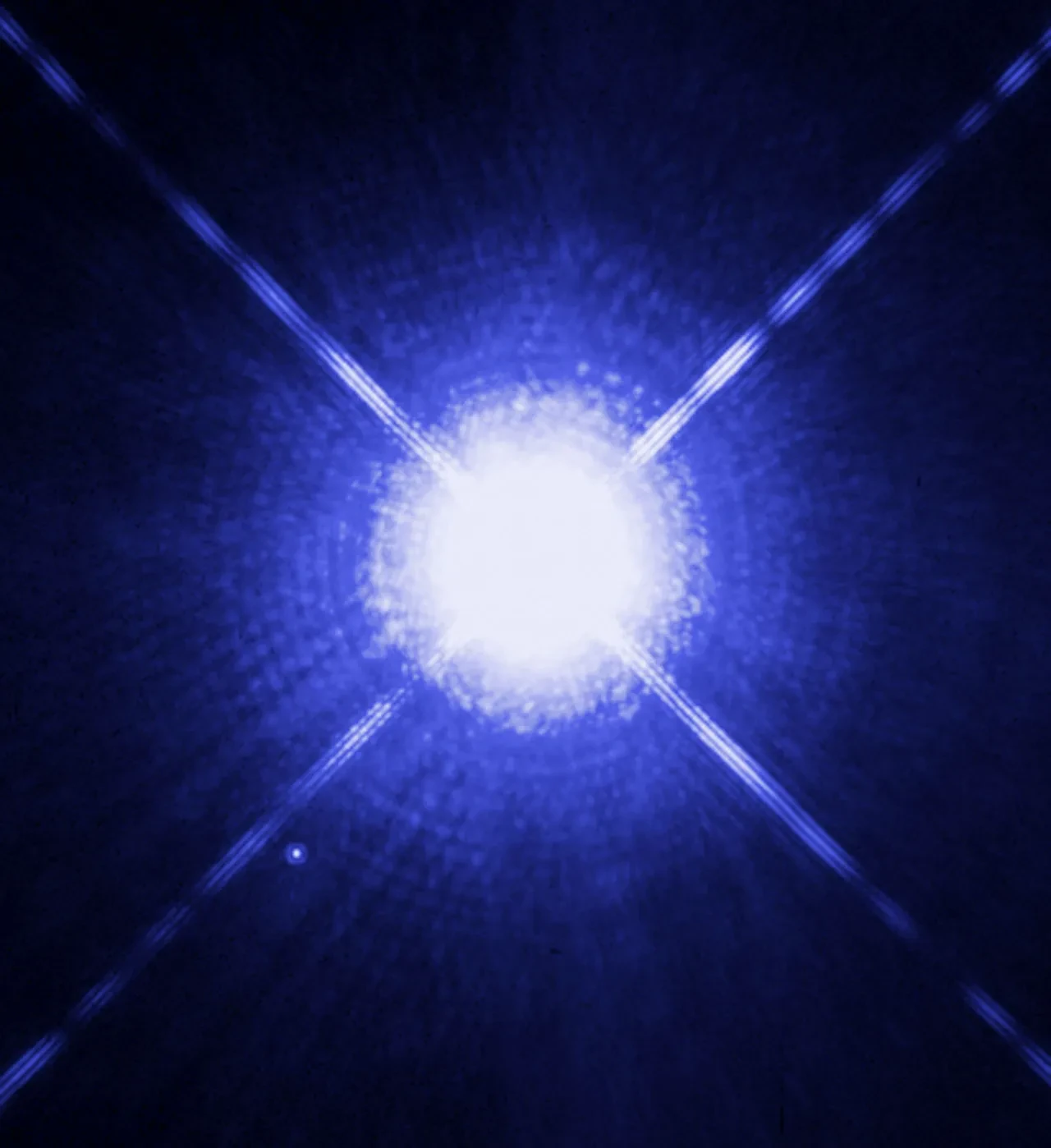
Another bright star you'll be able to see is Sirius, the brightest star in our night sky. Sirius belongs to the constellation Canis Major and, unlike Betelgeuse, it is part of a binary star system made up of Sirius A and Sirius B.
The brighter of the two is Sirius A, which is roughly twice the size of our sun, while Sirius B is smaller and dimmer.
You can see Sirius A with the naked eye in the southeastern sky, below and to the left of Orion. Sirius B is in the same area, but it's definitely a challenge to spot - you’ll need a telescope, and even then it can be tricky to see.
The Quadrantid meteor shower
The Quadrantid meteor shower can be spotted from the UK from 28 December 2025 until 12 January 2026. It'll peak in the early hours of 4 January, after midnight but before dawn. At the peak the Quadrantids can produce up to 120 meteors per hour, making this one of the best meteor showers of the year.
A bit of lore: the Quadrantids get their name from a historic constellation called Quadrans Muralis. This constellation is no longer officially recognised, but its name lives on through this meteor shower.
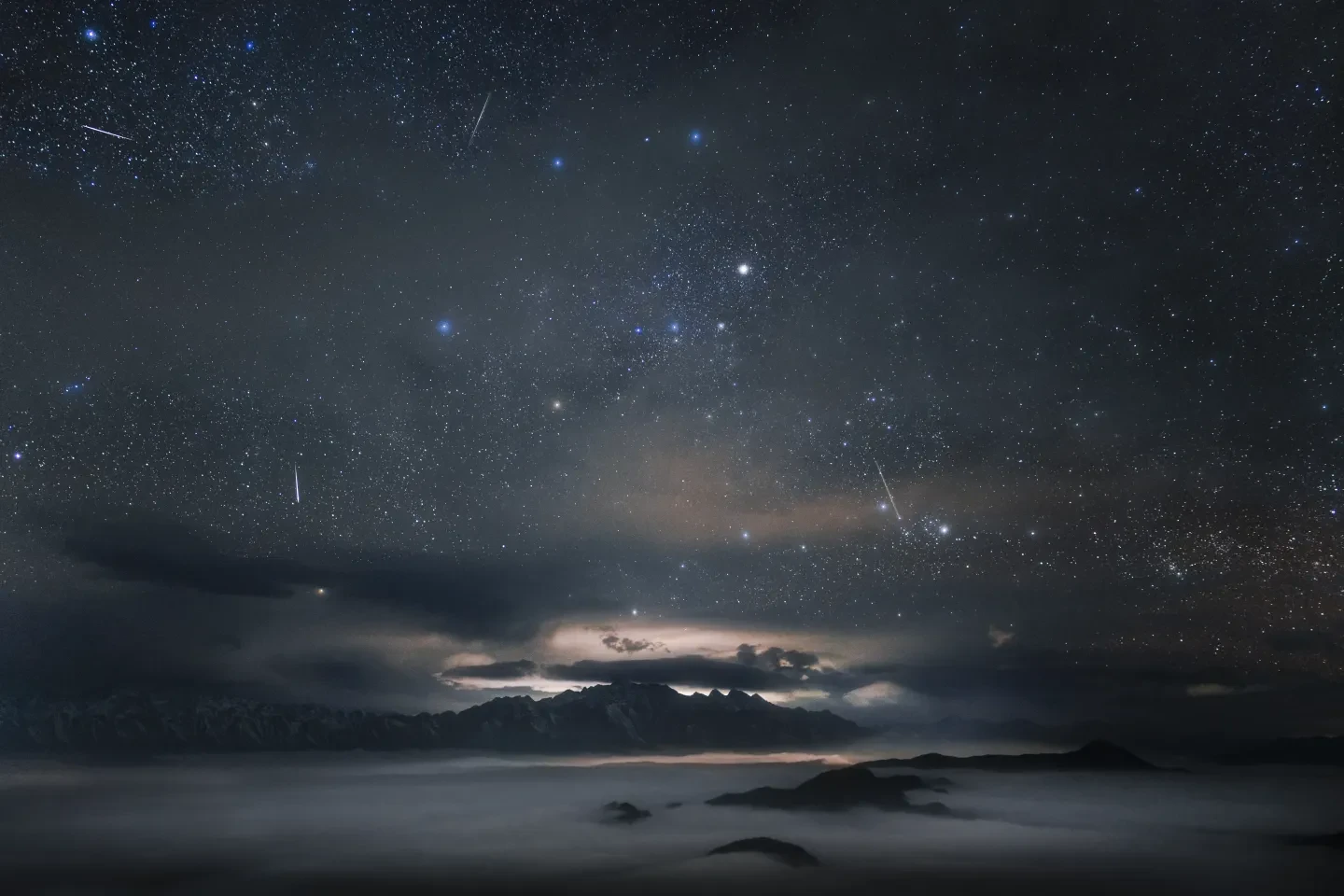
Quadrantid meteors are made of debris from asteroid 2003 EH1, and they burn through the atmosphere with a blue/white trail, which is caused by the presence of metals such as magnesium and iron.
When searching for meteors in the sky, the brightness of the Moon may hinder your ability to see shooting stars. Unfortunately, the Moon will be full at the peak of this shower, so moonlight will drown out a lot of the meteors.
A top tip would be to block the Moon with a tree or even your hand, shielding your eyes from its bright light, which might help you to see the meteors more clearly.
Jupiter at opposition
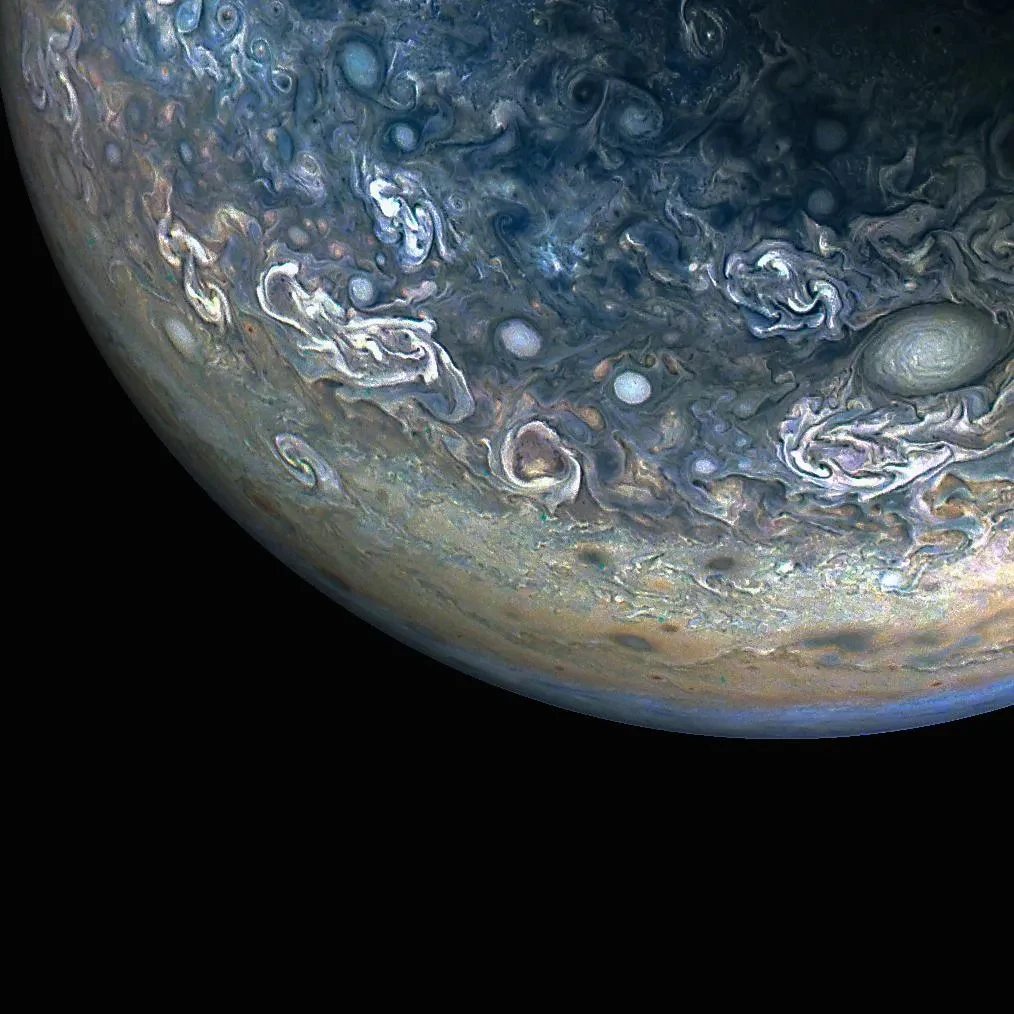
Mark your calendars, because on 10 January Jupiter (the largest gas giant of our solar system) will be at its closest point to Earth. This is a point called opposition, when Jupiter is on the opposite side of the Earth to the Sun.
You will be able to see Jupiter in the southeastern sky right after sunset, where it will outshine every star in the sky. To the naked eye it will be a bright white spot.
On 10 January you'll find Jupiter in the constellation of Gemini, just below the two bright stars Castor and Pollux. Using a telescope, you'll be able to see the belts of different coloured gases forming the top layers of Jupiter’s atmosphere.
If you use binoculars, you won’t be able to see the stripes of Jupiter too clearly, but you might just be able to see some of its Galilean moons as tiny points of light.
Jupiter is named after the Roman god of the sky and thunder, the king of the gods. This is fitting for Jupiter as it is the largest planet in our solar system, reigning over the others, and is known for its thunder and storms. Jupiter’s largest storm is popularly known as the Great Red Spot, which has a diameter roughly 1.3 times larger than Earth.
Southern Hemisphere stargazing: a stellar cluster
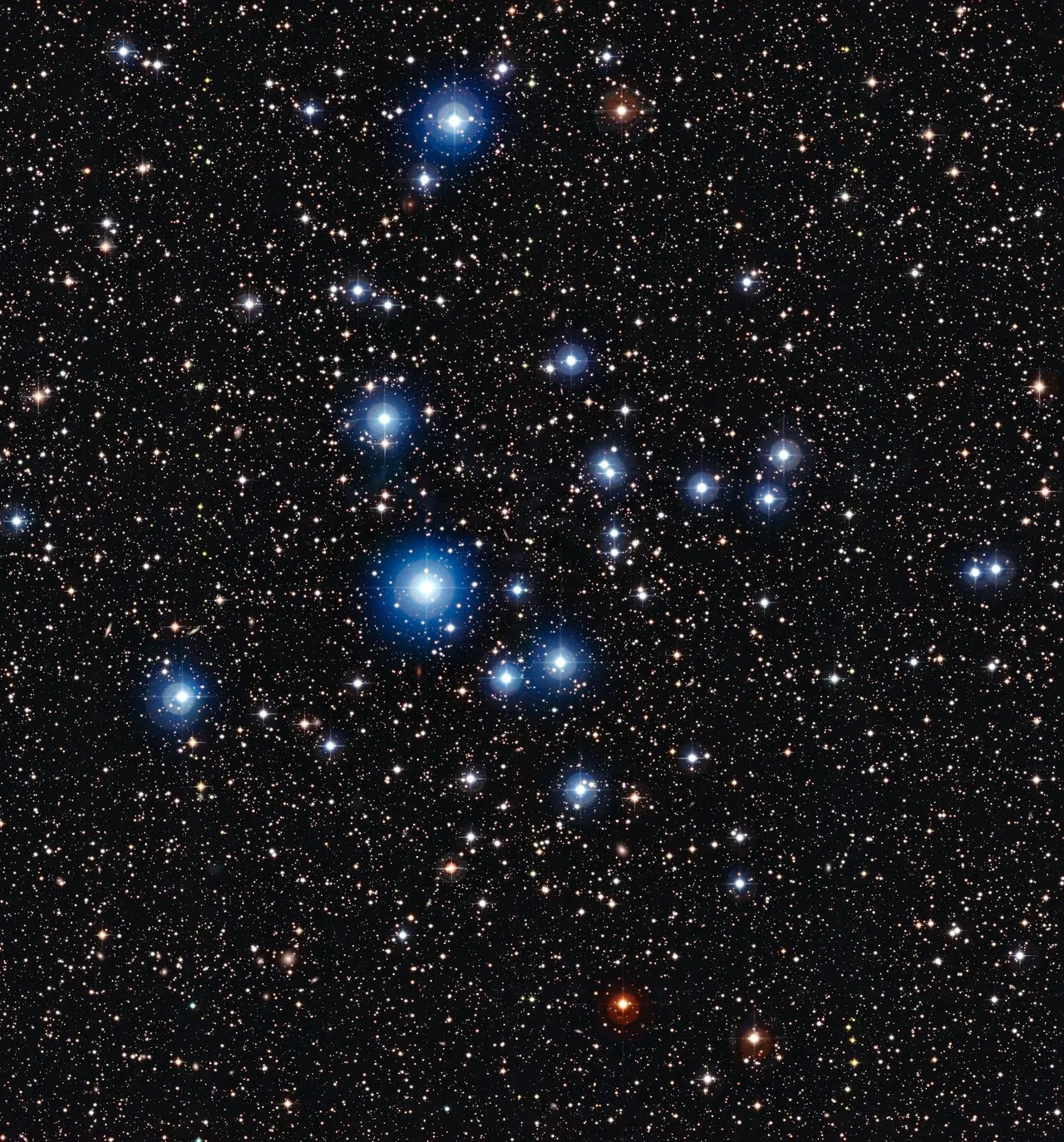
Star clusters are groups of stars held together by self-gravitation.
One of these star clusters which is visible for readers in the Southern Hemisphere in January is NGC 2547. You'll be able to see this cluster after sunset throughout the month, and it will reach its highest point in the sky on 23 January.
NGC 2547 is hard to see with the naked eye, so you'll need to use binoculars or ideally a telescope to see it in the constellation of Vela.
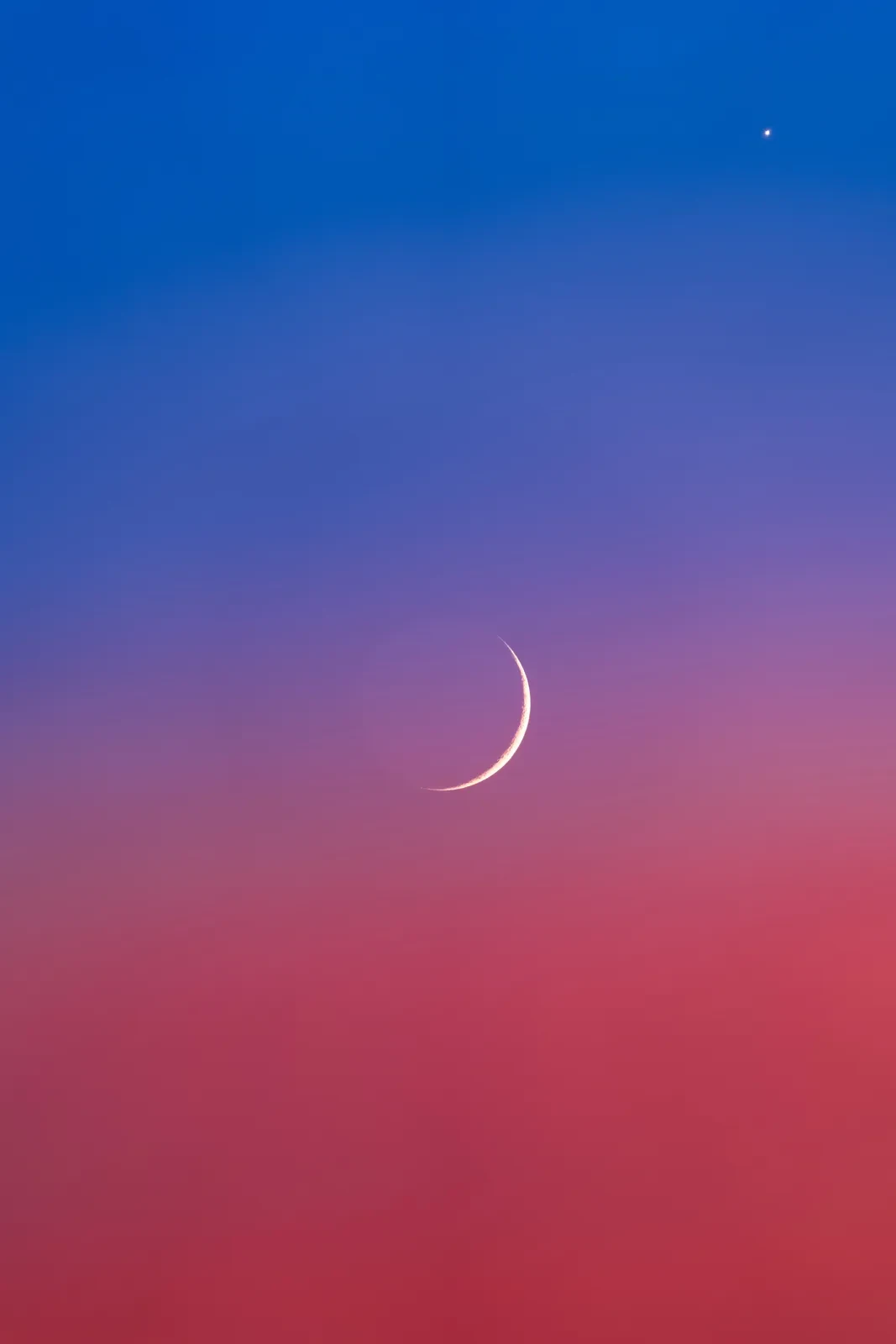
The Moon's phases in January 2026
Full moon - 3 January (10:02)
Last quarter - 10 January (15:48)
New moon - 18 January (19:52)
First quarter - 26 January (04:47)
Stargazing tips
- When looking at faint objects such as stars, nebulae, the Milky Way and other galaxies, it is important to allow your eyes to adapt to the dark so that you can achieve better night vision.
- Allow 15 minutes for your eyes to become sensitive in the dark and remember not to look at your mobile phone or any other bright device when stargazing.
- If you're using a star app on your phone, switch on the red night vision mode.
More space and astronomy
From the Royal Observatory Greenwich
Night Sky Highlights - February 2026
Explore what you can see in the night sky this February, including the Pleiades and the four biggest planets in our Solar System.
Space and astronomy highlights in 2026
What should you keep your eyes on the skies for in 2026? Discover this year's standout moments with Royal Observatory astronomers
ZWO Astronomy Photographer of the Year 2025 winners
Take a look at the winning images in the world's biggest space photography competition 2025
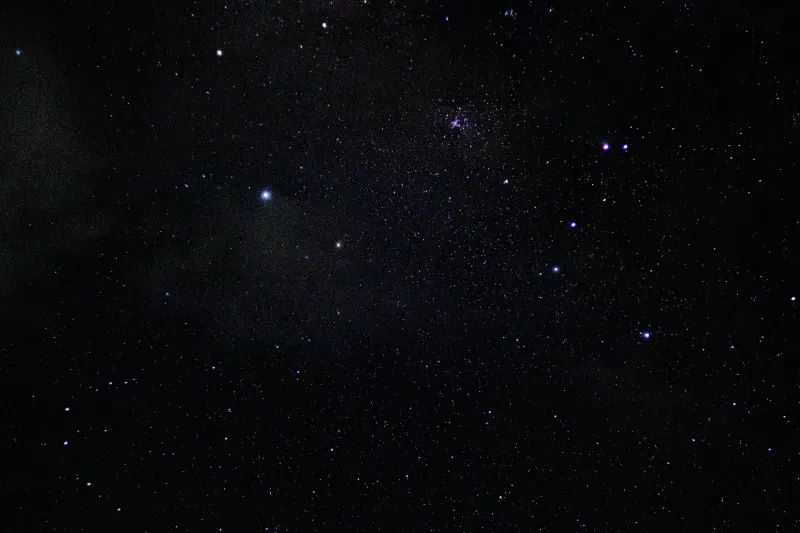
Astronomy with the naked eye
Learn what you could see in the night sky with no equipment from the Royal Observatory Greenwich; from galaxies and meteor showers to comets, star clusters, cloud formations and more
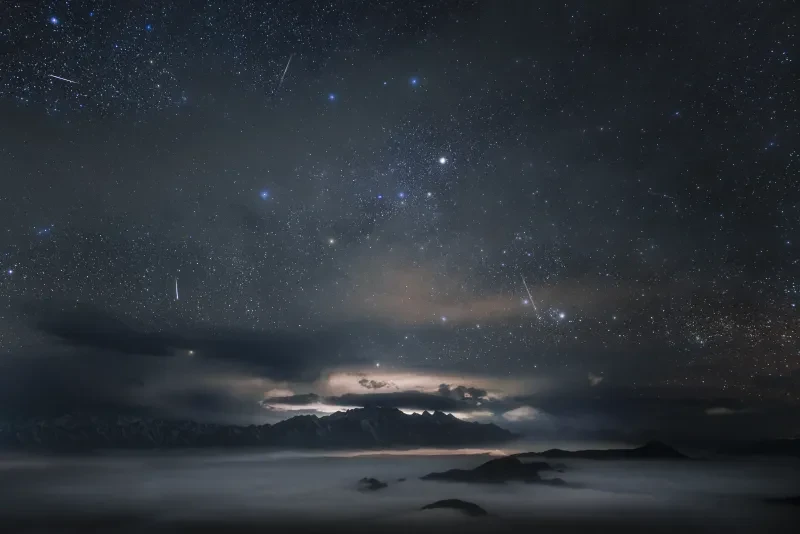
Quadrantid meteor shower: when and where to see it in the UK
Your guide to seeing the Quadrantid meteor shower, among the strongest and most consistent meteor showers of the year
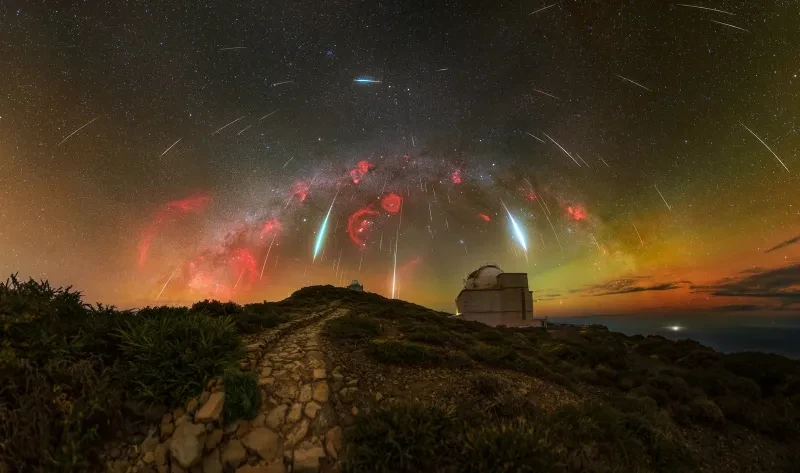
Meteor shower guide 2026
Want to see shooting stars? Check the key dates for major meteor showers in the UK in 2026, and how to see them in the night sky
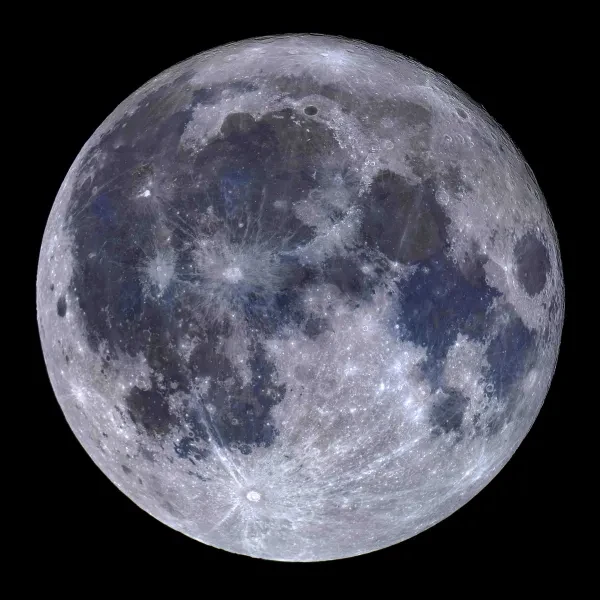
Full Moon calendar 2026
Check the dates for every full Moon throughout the year, learn about the Moon's phases, 'supermoons' and more

Artemis Programme: what you need to know about NASA’s Moon missions
NASA's Artemis missions aim to land humans on the Moon again, create a lunar base, and lay the groundwork for a future trip to Mars
Header image: Orion's Belt © Yang Liu, shortlisted in ZWO Astronomy Photographer of the Year 2025