
This month Uranus reaches its closest point to Earth, Leonid meteors put on a sparkling show, Mars and Jupiter have a celestial rendezvous and the Moon is supersized.
By Mayya (work experience student) and Gideon Bendavid-Walker, Royal Observatory astronomer
Top 3 things to see in the night sky in November 2026
- 16 November (pre-dawn) - Mars meets mighty Jupiter in the sky
- 18 November (early morning) - the Leonid meteor shower peaks
- 25 November (all night) - Uranus reaches opposition
Halloween fireballs - the Taurid Meteor showers
The Taurid meteor shower is split into two showers: the Northern and Southern Taurids. Both radiate from the constellation Taurus and originate from two parts of the same ancient cometary debris field whose origin is still debated. Unlike other meteor showers that consist of fine dust grains, the Taurid stream is unique because it is made up of heavier, pebble-sized material. This causes the debris to travel relatively slowly through our atmosphere, producing bright, long-lasting meteors. Due to the time of year, they are sometimes known as Halloween fireballs.
The Taurid meteor shower is visible from both hemispheres, but is best visible in the Northern Hemisphere, as Taurus rises high in the night sky. While it is best to catch them at their peak, the Taurids are active from October through to December.
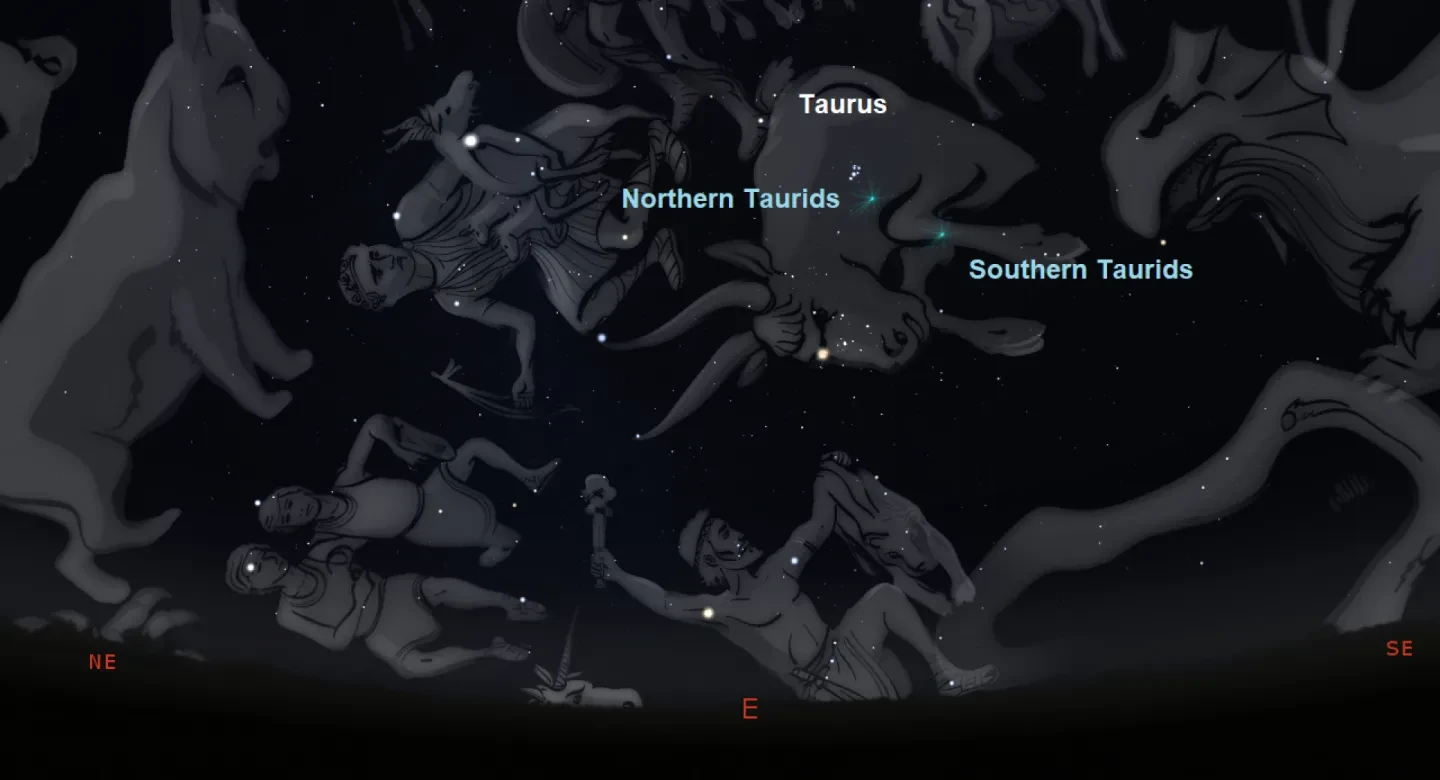
The Southern Taurids peaked on 10 October, while the Northern Taurids peak on 12 November and will be best visible late in the night as Taurus will appear high in the southern sky in the late evening. Taurus can be found beside the constellation of Orion, with the red star Aldebaran marking the eye of the bull.
The Taurus constellation in Ancient Greek tradition commemorates the transformation of Zeus into a magnificent white bull. Zeus used this form to woo and abduct the Phoenician princess Europa, taking her across the sea to Crete.
A new moon on November 9 means dark skies, making the period around this date ideal for spotting the Northern and Southern Taurids' slow, bright meteors.
Jupiter and Mars

A conjunction is when two celestial objects appear close together in the sky as seen from Earth (sharing the same right ascension or ecliptic longitude), though they are in fact millions of kilometres away from each other.
This month, Mars and Jupiter pass within approximately 1.2 degrees of each other, visible from midnight until sunrise on 16 November. With your hand at arm's length, the gap between the planets will be roughly the width of your pinkie finger.
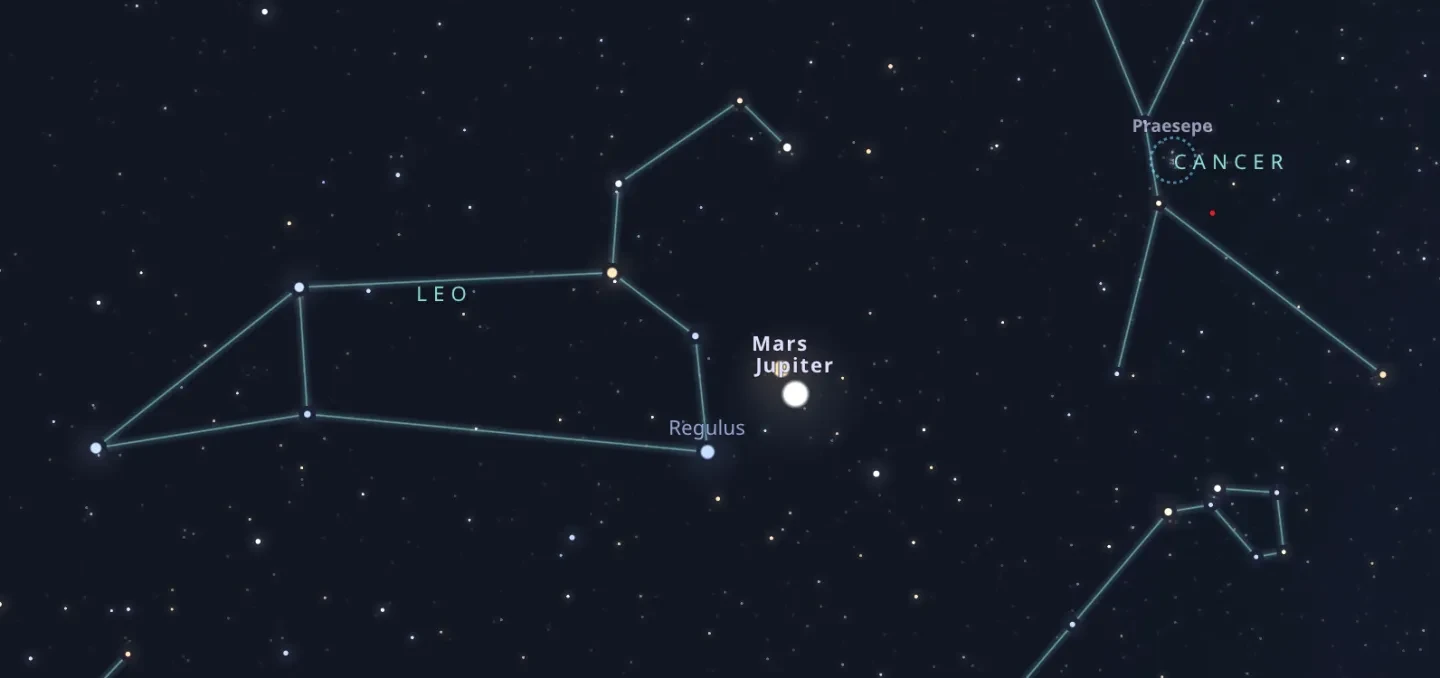
Both planets have conjunctions on average every 2 to 2.5 years as Mars completes its orbit around the Sun faster and laps Jupiter in the night sky. However, closer conjunctions are far less common. One of the closest conjunctions recorded occurred in 1761, which brought the planets so close in the sky that they merged into a single point of light to the naked eye.
You’ll be able to see the planets together this month with the naked eye, or you can get a closer look through a low-powered telescope (less than 40x magnification) or binoculars.
Catch a meteor from Leo the Lion
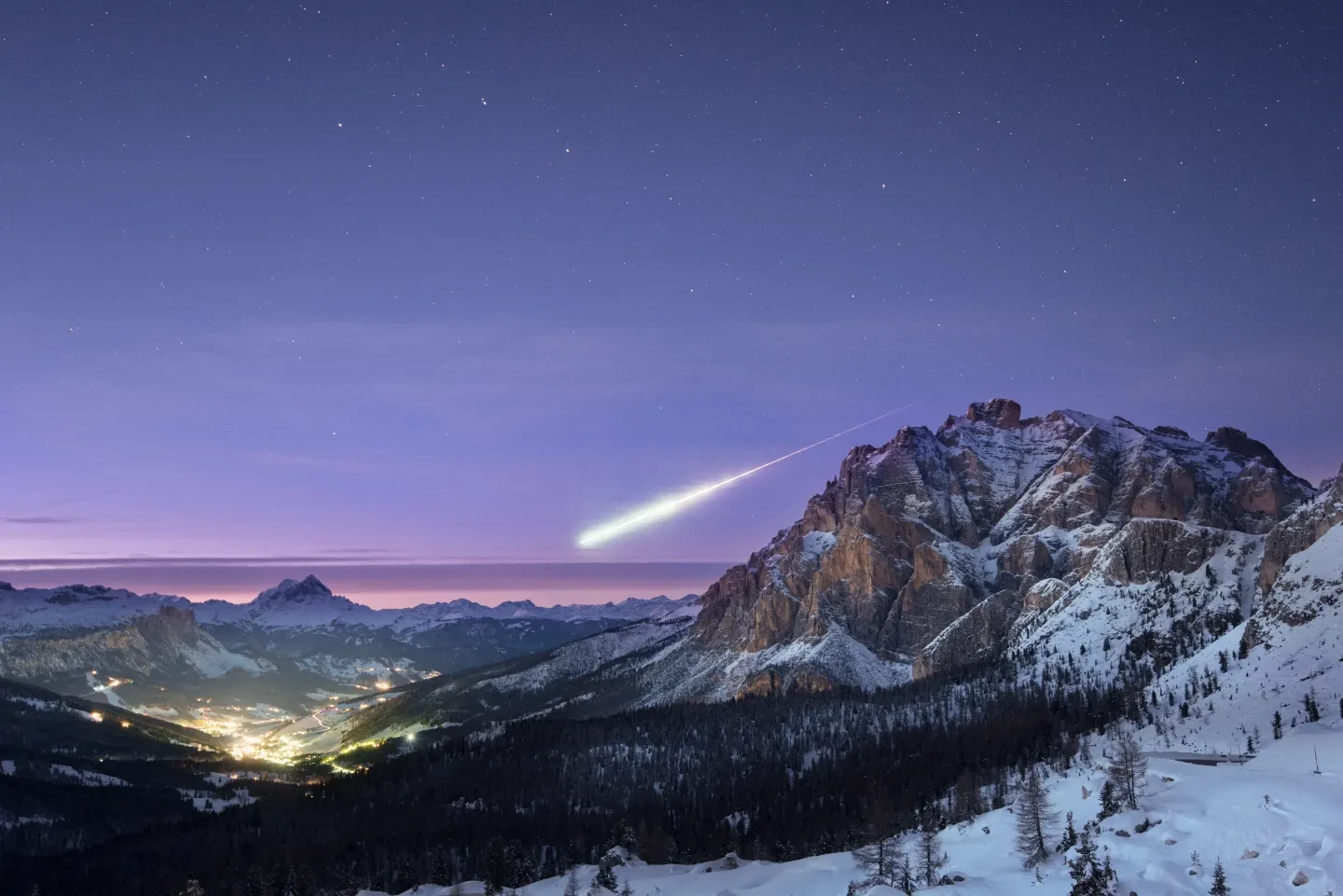
The Leonid meteor shower gets its name from the constellation Leo, as its meteors appear to radiate from the lion’s head. The shower will be active from 6-30 November and peak overnight on 17 November. Expect to see 10-15 fast meteors per hour under clear, dark skies.
The constellation of Leo dates back over 5,000 years to Ancient Greece, where it famously represents the fierce Nemean Lion of Greek mythology that was defeated by the hero Heracles. The Nemean Lion was a monstrous beast with golden fur that could not be pierced by iron, bronze or stone. When Heracles defeated it, it was given a place in the sky as a symbol of Heracles’ bravery.
In Ancient Egypt, the stars of Leo were associated with the lioness goddess Sekhmet, goddess of war, destruction, plagues and healing. The annual flooding of the Nile, a key event for agriculture and survival, was linked to the Sun’s position in Leo in the summer months.
See Uranus at its closest

On 25 November 2026 Uranus reaches opposition, meaning Earth moves directly between the Sun and Uranus. This alignment brings Uranus closest to Earth and means that it appears its brightest for this year (+5.6 magnitude).
Uranus will rise as the Sun sets and set as the Sun rises, so it is visible all night long, which is great if you want to go to sleep at a sensible time. On the 25th, the 97% lit Moon can be used to find Uranus nearby.

Uranus was discovered relatively recently in 1781. Earlier observers logged it as a star at least 21 times before William Herschel, with help from other astronomers, finally identified it as the 7th planet from the Sun. Herschel named it 'Georgium Sidus' (George's Star) after King George III, but later astronomer Johann Bode proposed calling it Uranus, the Greek god of the sky, to fit the classical Greco-Roman mythology naming system of other celestial bodies. Though theoretically visible with the naked eye, it is very tricky to locate without an optical aid; it is best seen through a telescope or binoculars.
Learn more about opposition here
November's Beaver Moon
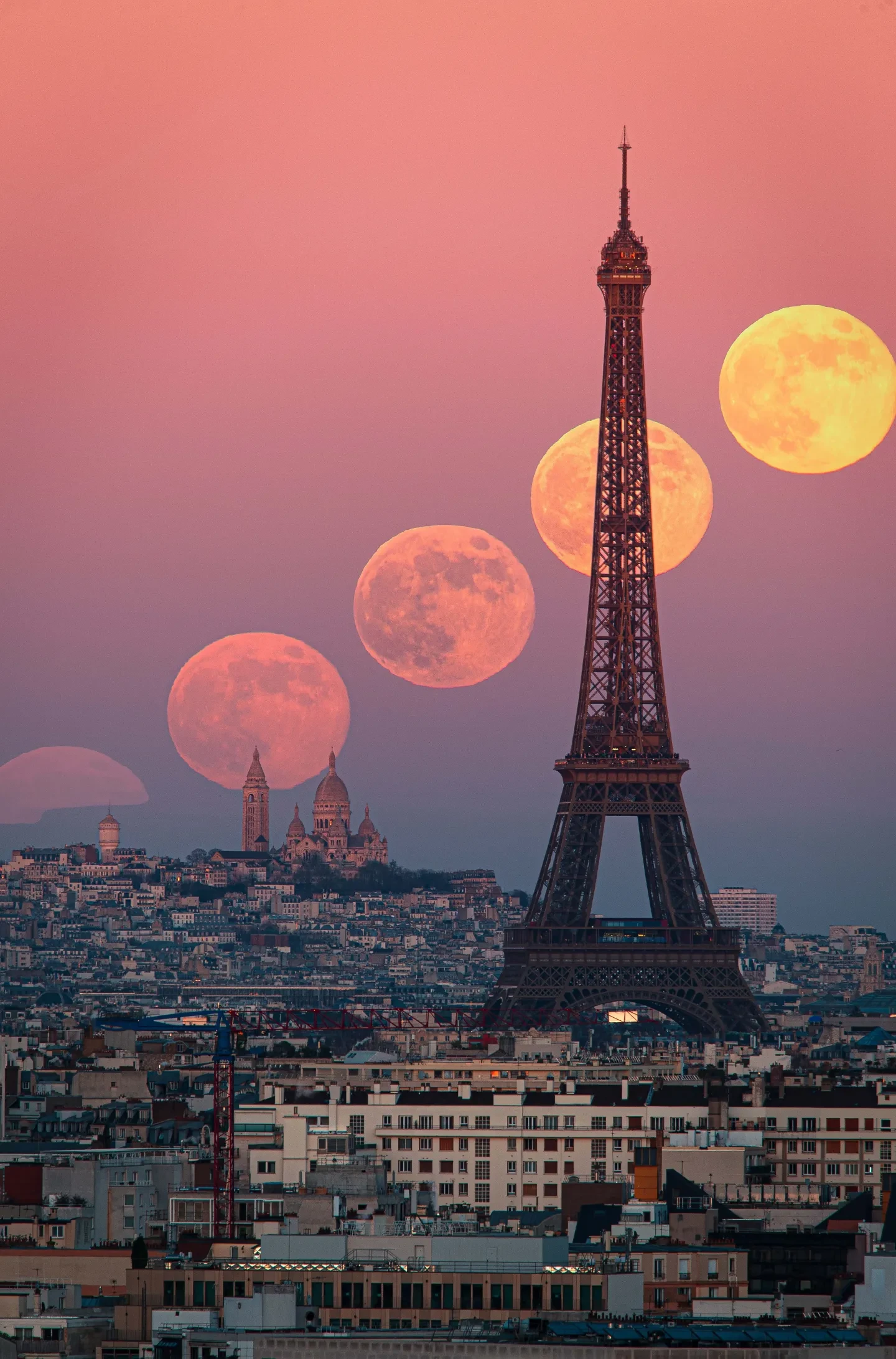
There is disagreement over the origin of November's 'Beaver Moon' name. Some say it comes from historic Native Americans setting beaver traps this month, while others say the name comes from the peak of activity of beavers building their winter dams. Another name is the Frost Moon.
This year, however, is no ordinary Beaver Moon, as this one is a supermoon! On 24 November the Moon will be roughly 360,800 km from Earth (~20,000km closer than average).
A supermoon occurs when the Moon reaches the closest part of its elliptical orbit to the Earth, making it appear 7% larger and 15% brighter than an average full Moon. It will be at its closest point to Earth at 2.53pm GMT, though will not be visible until around 3.18pm GMT when it rises above the horizon. It is worth watching the Moon rise on the day of and the days around the full Moon to experience the 'Moon illusion'- the strange perceptual effect that makes the Moon appear larger when it is low in the sky.
Moon phases in November 2026
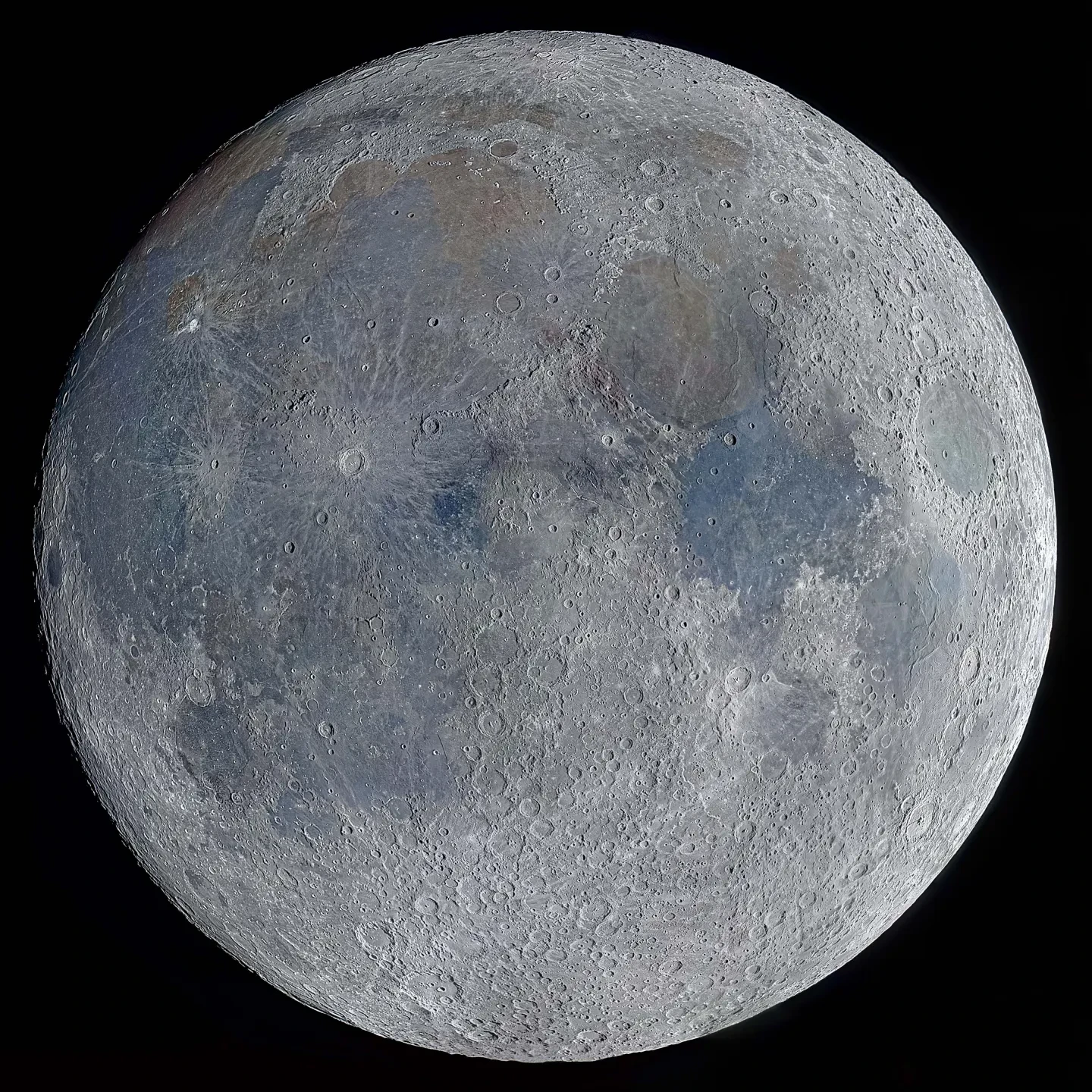
- Third quarter - 1 November (20:28)
- New moon – 9 November (07:02)
- First quarter – 17 November (11:47)
- Full supermoon – 24 November (14:53)
Stargazing tips
When looking at faint objects such as stars, nebulae, the Milky Way and other galaxies, it is important to allow your eyes to adapt to the dark so that you can achieve better night vision.
Allow 15 minutes for your eyes to become sensitive in the dark, and remember not to look at your mobile phone or any other bright device when stargazing.
If you're using a stargazing app on your phone, switch on the red night vision mode.

The winners revealed...
Discover the out-of-this-world winning images from ZWO Astronomy Photographer of the Year 2026.
Read next
The place for space
Blast off to Royal Museums Greenwich this autumn for a full programme of space-themed fun across our sites, perfect for all ages
Meteor shower guide 2026
Want to see shooting stars? Check the key dates for major meteor showers in the UK in 2026, and how to see them in the night sky
Artemis Programme: what you need to know about NASA’s Moon missions
NASA's Artemis missions aim to land humans on the Moon again, create a lunar base, and lay the groundwork for a future trip to Mars
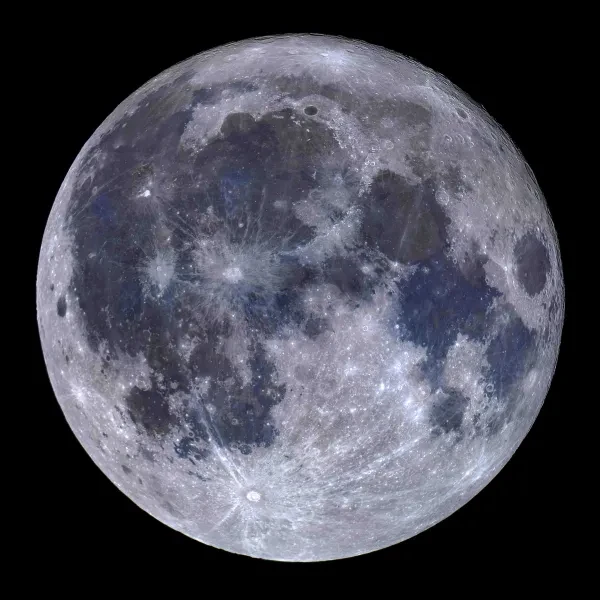
Full Moon calendar 2026
Check the dates for every full Moon throughout the year, learn about the Moon's phases, 'supermoons' and more
Astronomy with the naked eye
Learn what you could see in the night sky with no equipment from the Royal Observatory Greenwich; from galaxies and meteor showers to comets, star clusters, cloud formations and more

‘I think everyone benefits from being out under the night sky’
Go behind the lens with Jennifer Rogers, who was shortlisted in ZWO Astronomy Photographer of the Year 2026 with her photo of star trails above a Cornish tin mine
How could humans live on Mars?
Astronomer and author Brendan Owens examines the challenges of sending humans to Mars - and what the future holds for our study of the Red Planet
The new space race: a high-stakes competition of politics and power
Competition between the USA, China and Russia will have consequences for all of us here on Earth. But how is this 21st century space race different to the last one?


Header image: Uranus photographed by the James Webb Space Telescope, with rings visible - credits NASA