
Light pollution can make it hard for many of us to see the night sky in all its beauty.
However, if you know where to look there are plenty of places where you can get away from the streetlights and see a number of incredible astronomy sights with the naked eye, from the Milky Way to nebulae and galaxies.
These places are known as 'dark sky sites', and you may be surprised at how easy it is to find them in the UK.
What is a dark sky site?
Dark sky sites are areas where your view of the night sky is unobstructed by light pollution or other unnatural light sources.
Why are dark sky sites important?
Dark sky sites can be assigned special status, which can help to protect and preserve their unique nighttime conditions.
Not all dark sky sites are officially recognised, but often community groups and astronomy organisations work to highlight the benefits of keeping certain areas free of light pollution.
Research suggests that light pollution can impact both wildlife and human health, not to mention our ability to see and photograph the wonders of the night sky.
Dark sky sites are some of the best places for amateur astronomers to undertake astronomical observations - but where exactly are they?
Where are dark sky sites located?
All around the world! There are dark sky sites everywhere from America to Africa.
They’re the perfect places to spot everything from the brightest nebulae to the Milky Way.
Find out more about the best dark sky sights in the UK below.
Brecon Beacons, Wales
This mountain range in South Wales is home to two national trails, one national park, and some of the best stargazing locations in the UK.
It was recognised as a 'Dark Sky Reserve' by the International Dark Sky Association in 2012, becoming the first in Wales and the fifth in the world.
Isle of Sark
Located just off the coast of Normandy, the Isle of Sark has no public street lighting. There are no motor vehicles other than tractors and a population of just 500, making it a perfect location to stare at the stars.
The smallest of the Channel Islands, the Isle of Sark is just three miles long and one wide. It is the world’s first dark sky island.
Moffat, Dumfries and Galloway, Scotland
A spa town in the Annandale valley, Moffat uses special street lighting so as to reduce its light pollution. It is Europe’s first dark sky town.
The specific dark sky location is a car park just outside the town, picked specifically to allow you to see the best features of the night sky.
The town was once a favoured spot of poet Robert Burns, and is now the haunt of many a stargazer.
Galloway Forest Park, Scotland
In 2009 Galloway Forest Park in Scotland was granted dark sky park status. The first area in the UK to be given this status, it is also the largest forest in the UK.
Very few people live in or near the forest and hills of the park, making it a peaceful spot to snap some pictures of the night sky.
With 777 square kilometres of park to explore and over 7000 stars and planets visible to the naked eye, it's a treasure trove for star chasers.
Exmoor Dark Sky Reserve
Bordering the counties of Devon and Somerset, Exmoor became Europe's first dark sky reserve in 2011. Working with local councillors, landowners and businesses, the park even has dark sky friendly campsites for those stargazers in for the long haul.
Elan Valley, Wales
The Elan Valley Estate in Wales was granted silver-tier status by the International Dark Sky Association (IDA) which means that the entire 45,000 acres of the Elan Valley are protected against light pollution.
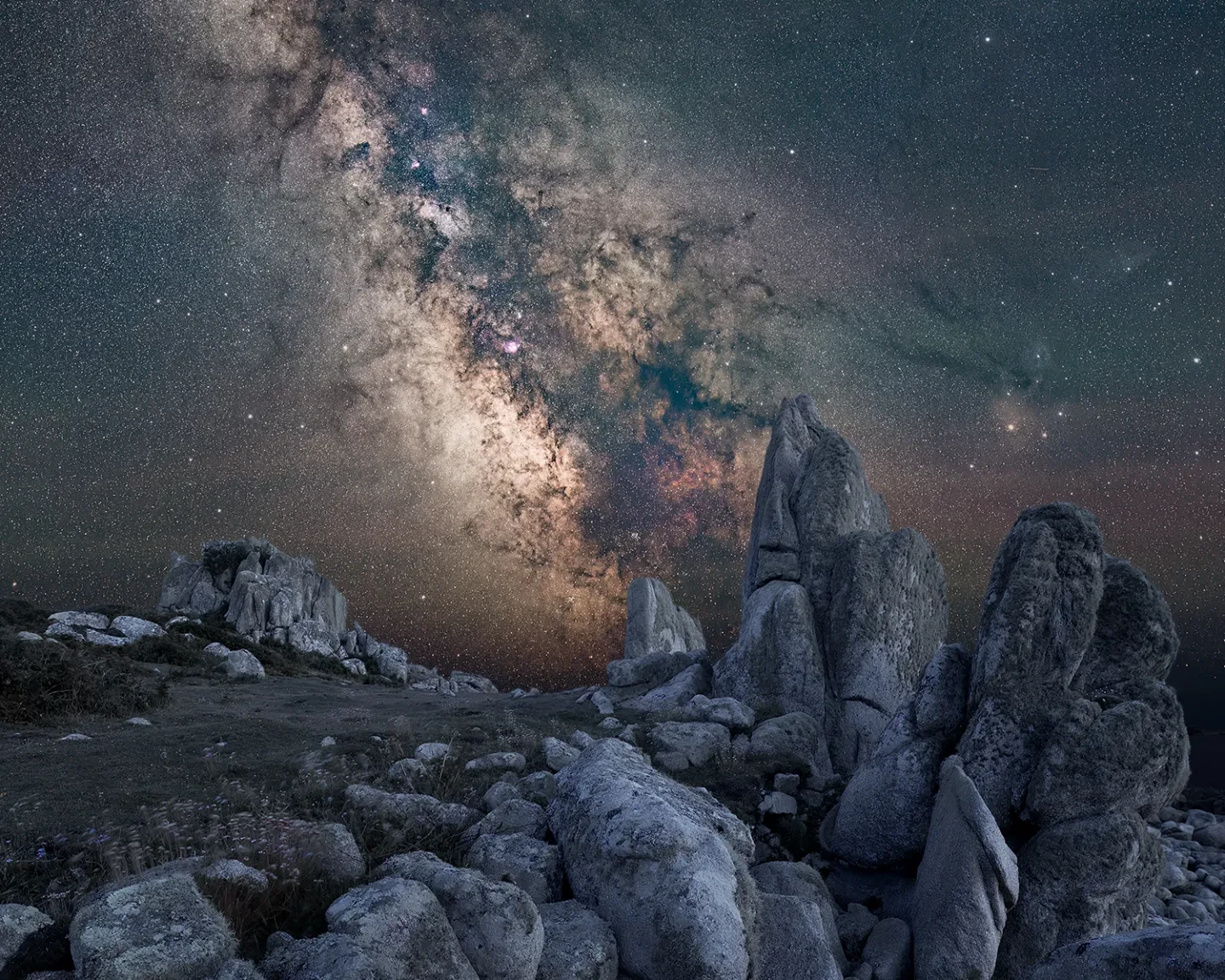
Header image: The Enigma of The North © Josh Dury - shortlisted in Astronomy Photographer of the Year 2023