
Got a question about the Moon? We're pretty sure you'll find the answer here.
From how the Moon was made, to how much it weighs and even why you can see it during the day, we've got all your Moon facts covered below.
How was the Moon made?
There are a few different ideas about how the Moon was made. The most widely accepted is that the Moon was created when a rock the size of Mars slammed into Earth, shortly after the solar system began forming about 4.5 billion years ago.
When the Sun first formed in our galaxy, leftover dust and gas was swept up in its orbit. The Earth and the other planets were formed out of this cloud of material. The young Solar System was an incredibly turbulent place with a lot of collisions between large, rocky bodies.
The giant-impact theory suggests a rocky body smashed into the young Earth, which threw debris out into space. Gravity pulled the debris from the impact together as it orbited the Earth, which collected to form the Moon.
If the Moon had previously been an asteroid and formed somewhere else in the Solar System, the Moon and the Earth would have different compositions. However, astronomers found the composition of the Moon and the Earth are similar, pointing to a linked history.
If not cheese, what is the Moon made of?
Through the Apollo missions, we have collected around 380kg of rock directly from the surface of the Moon. We have also gathered a few hundred grams more with robots, or 'automated sample return missions'. Finally, a number of meteorites found on Earth have been identified as originating from the Moon.
Observations from a distance and analysis of these samples show the rocks of the Moon share many similarities to those on Earth. This indicates the Moon probably formed from the same material the Earth did.
The lunar samples remain objects of study even today. Yet more discoveries are likely to be made as analysis methods change and improve and we learn more about our celestial neighbours.
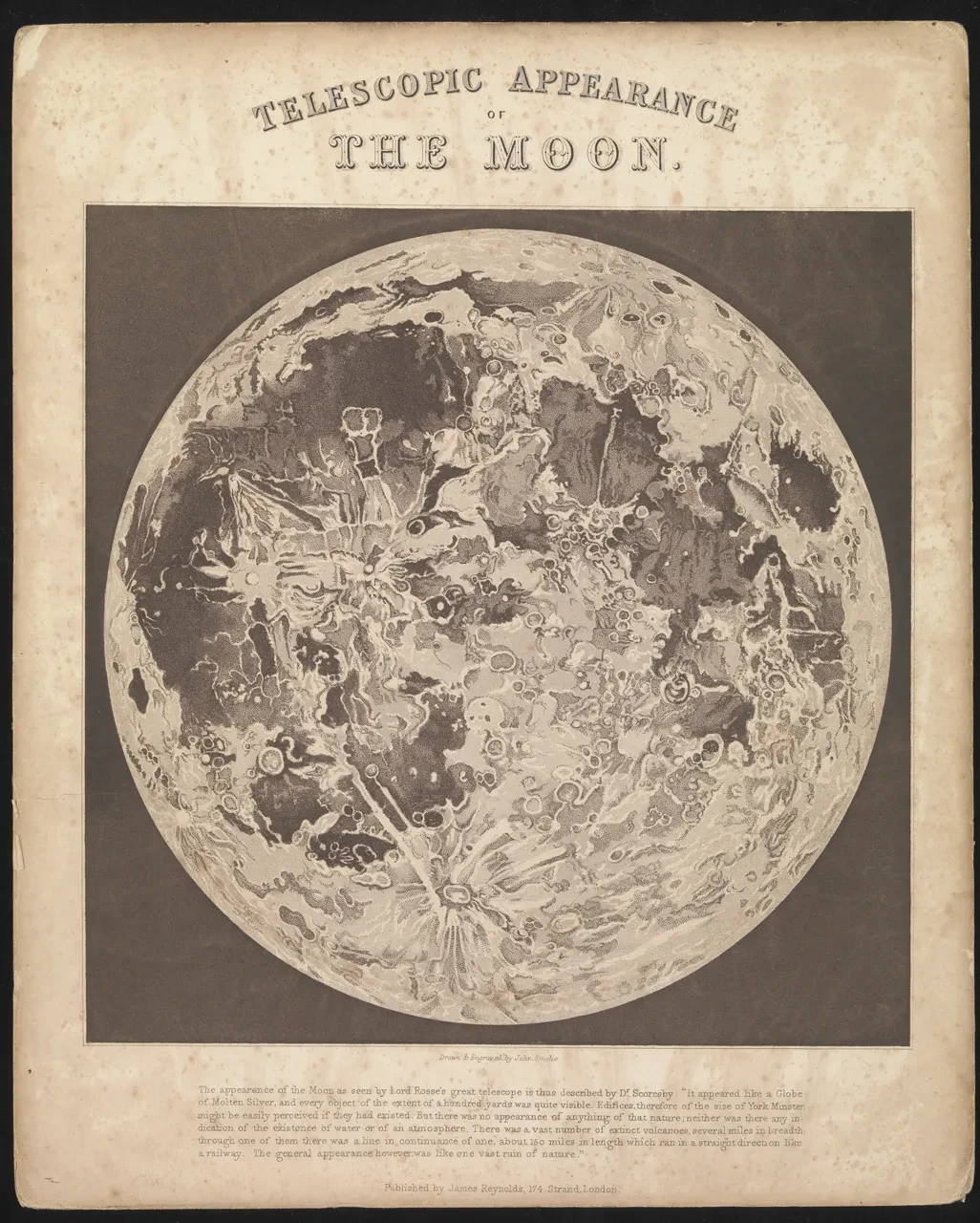
How big is the Moon?
The Moon has a diameter of 3,476 km. You can fit about four Moons across the diameter of the Earth.
The Moon is the fifth-largest satellite in our Solar System. No other planet has a satellite as large in comparison to its own size.
How far away is the Moon from Earth?
The short answer is: the Moon orbits the Earth at a mean distance of 384,000 km. The Moon moves approximately 3.8cm away from Earth every year.
How long does it take to get to the Moon?
On average, it takes around three days to get to the Moon.
The record for the shortest journey time to the Moon is currently held by the New Horizons spacecraft with a time of 8 hours and 35 minutes.
How long would it take to drive to the Moon?
If you were driving at 40mph, it would take approximately 5,791.375 hours, or 34 weeks, to get to the Moon. However, this depends on whether the Moon is in apogee or perigee – and, of course, what kind of rocket car you have.
How old is the Moon?
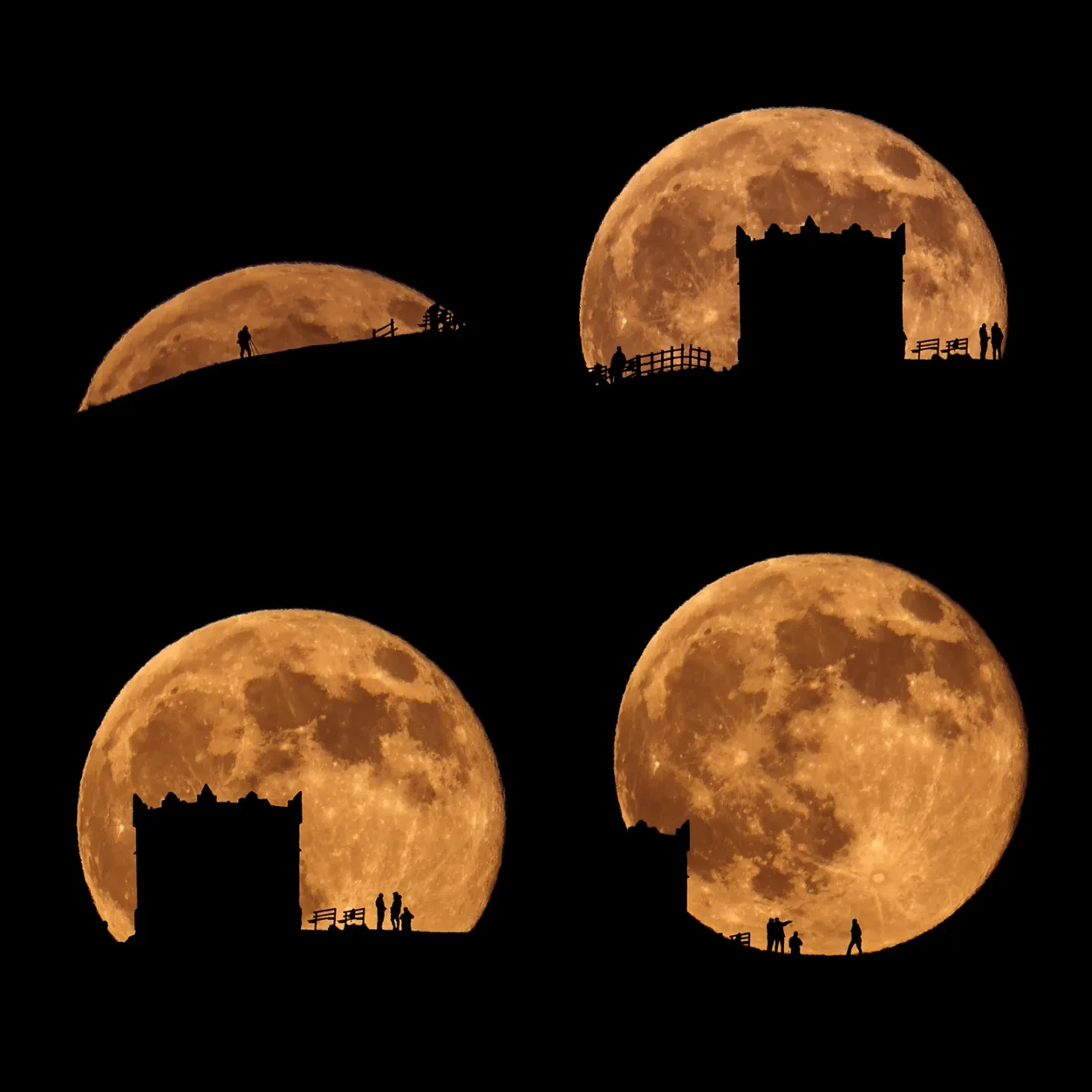
It is thought the Moon formed 4.51 billion years ago – not long after the Earth.
How much does the Moon weigh?
The mass of the Moon is 7.35 x 10^22 kilograms, which means the Earth is 81 times more massive than the Moon. This means someone who can jump 5ft on Earth could jump 30ft on the Moon!
The Moon is the second densest satellite in the Solar System, among those whose densities we know. The densest satellite is Jupiter's moon, Io.
Is there gravity on the Moon?
Although the Earth and Moon are both very massive, the Moon is smaller, so its force of gravity is less. An object on the Moon will weigh about six times less than it does on Earth.
Does the Moon have an atmosphere?
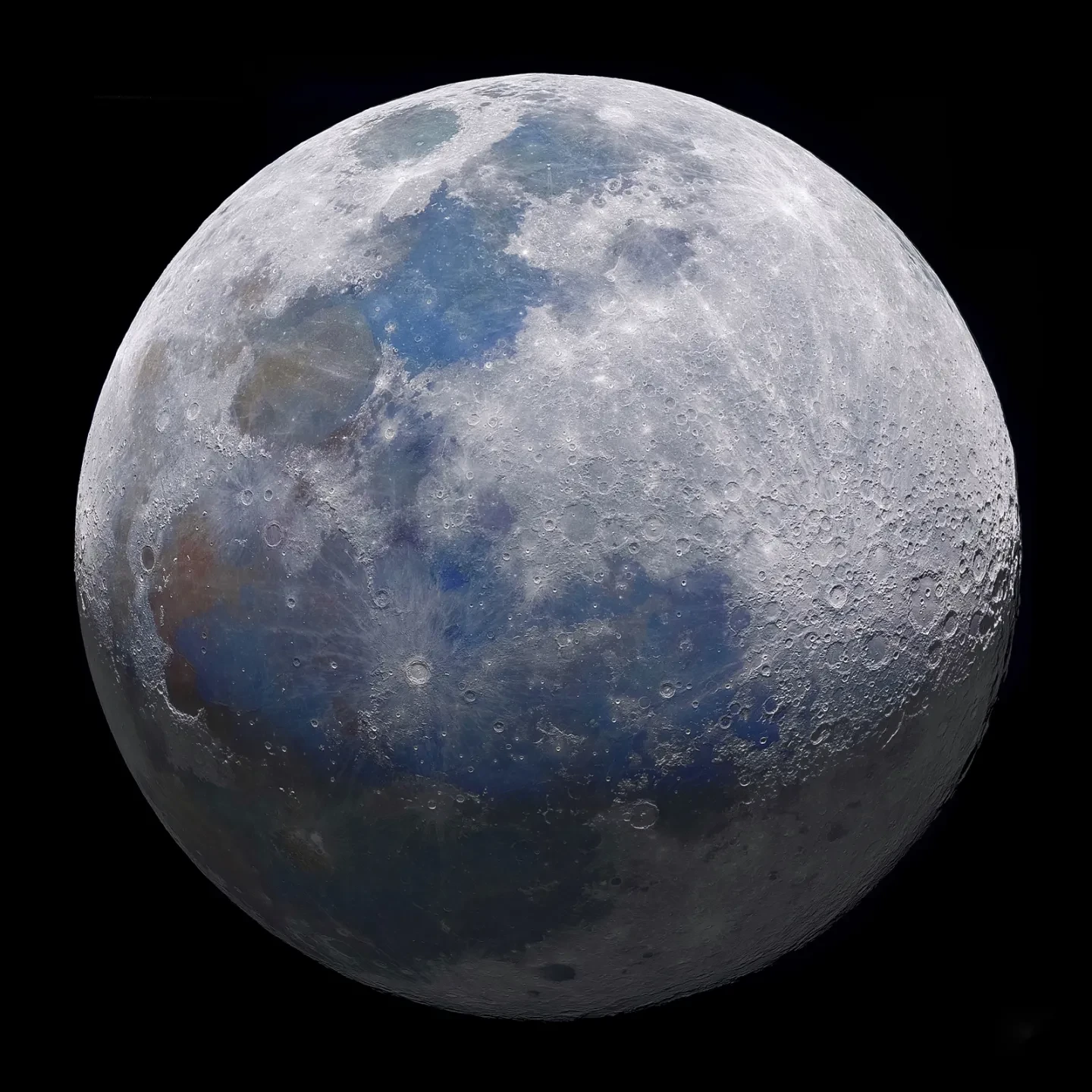
Any early atmosphere the Moon might have had has escaped from the Moon's feeble gravitational pull.
Because of the lack of any atmosphere, the temperature of the Moon's surface varies between -180°C and +110°C. The Moon has little protection from the solar wind, cosmic rays or micrometeorites, and so it's not surprising there's no form of life there.
Why can we see the Moon during the day?
It is common idea that the stars and the Moon 'come out' at night.
In reality, the stars and the Moon are always up there. But depending on your position on the Earth and the time of year, they won't all be above the horizon.
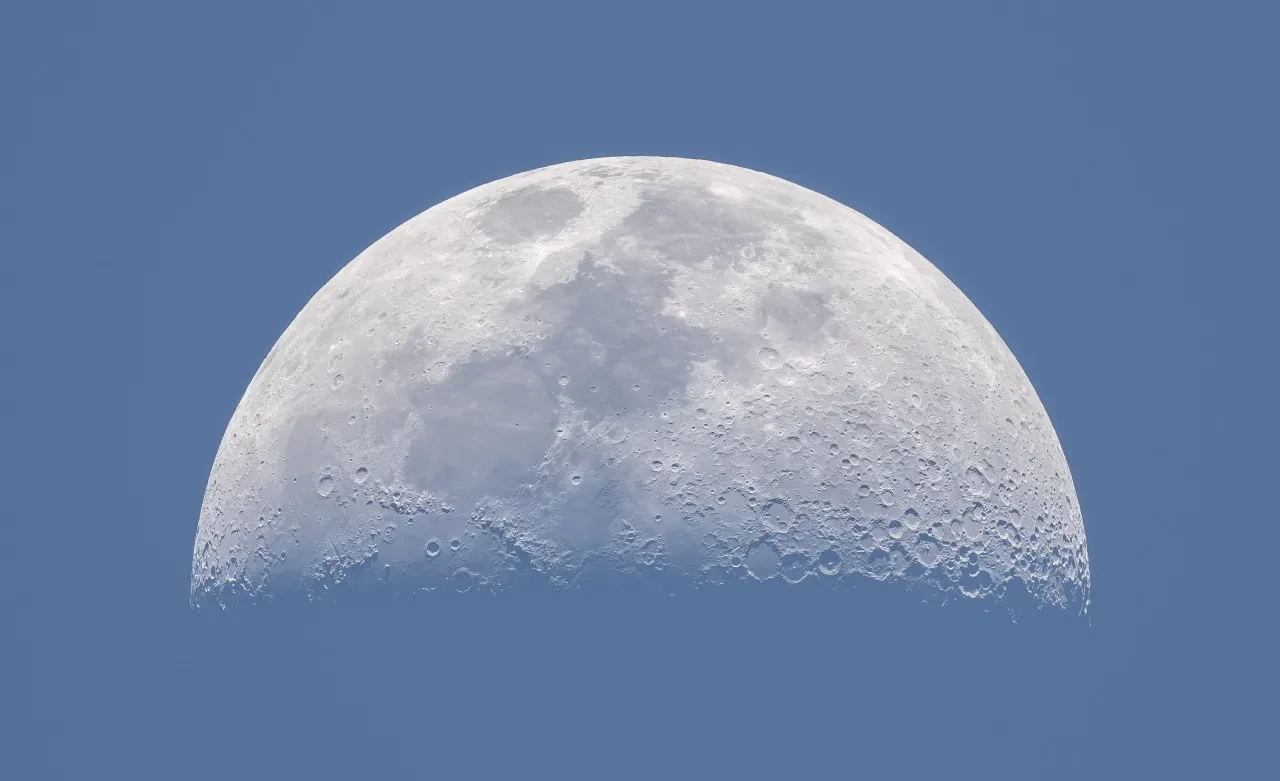
During the day, the light from the Sun, scattered by the atmosphere of the Earth, drowns out the fainter stars. This makes them impossible to see without specialist equipment. However, the Moon, being far closer and brighter than the distant stars, can often be seen during the day.
When am I most likely to see the Moon in the daytime?
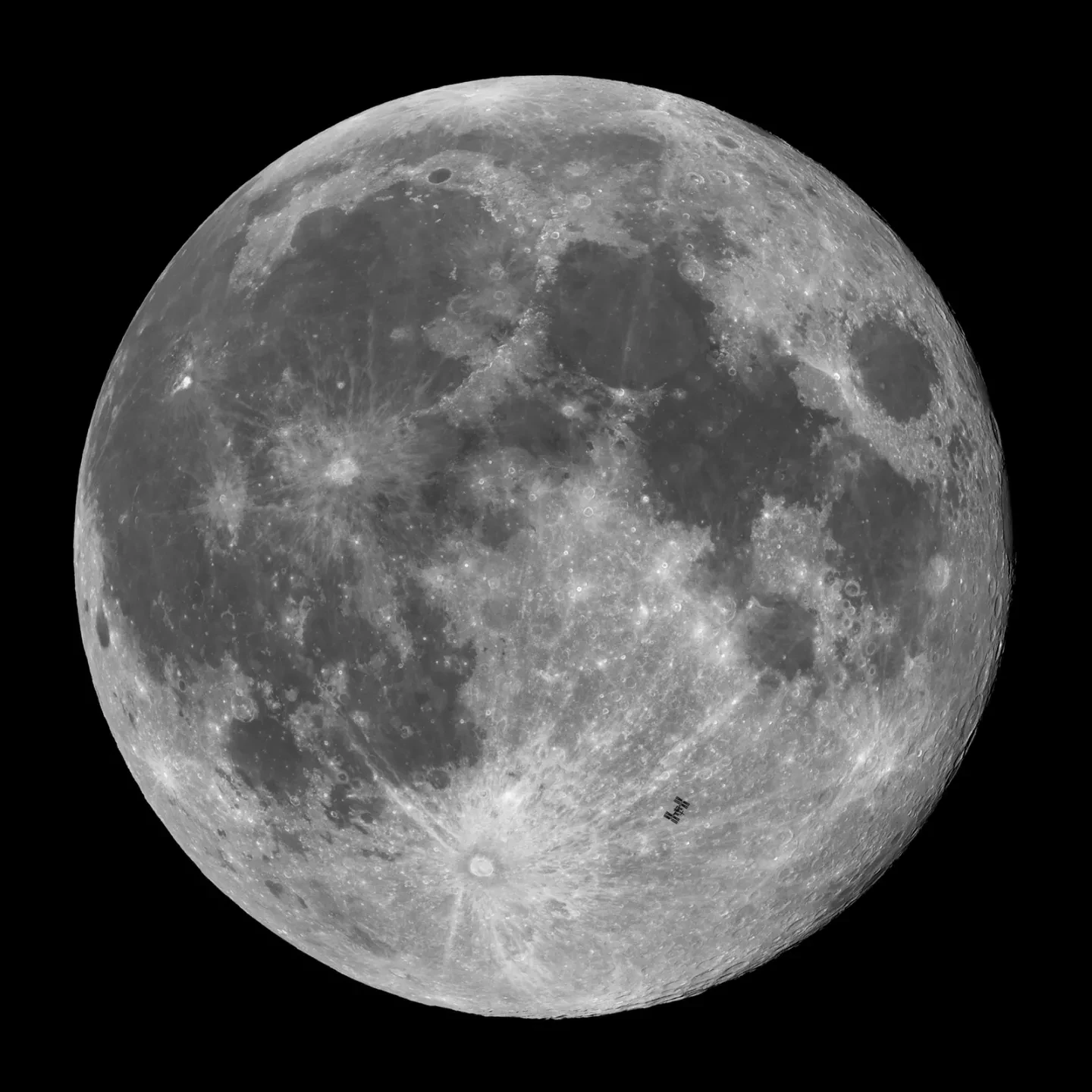
You're most likely to see a daytime Moon between a wide crescent and a thin gibbous Moon (i.e. close to the quarter Moon).
At this point the Moon is illuminated enough to be visible (not a new Moon); is far enough from the Sun in the sky to avoid looking too closely at the Sun (as would happen at new Moon or a thin crescent); but it's not on the complete opposite side of the sky from the Sun and therefore only rising when the Sun is setting (as would happen around full Moon).
Does the Moon rotate?
Yes, the Moon does rotate. It spins on its own axis exactly once every 27.3 Earth days – the same amount of time it takes to complete one orbit around the Earth.
This synchronized movement is called synchronous rotation or tidal locking. Because the Moon's rotation and orbital speed are perfectly matched, it always keeps the same hemisphere (the 'near side') facing Earth.
The Moon's near side is marked by large dark plains (volcanic ‘maria’) that fill the spaces between the bright ancient crustal highlands and the prominent impact craters.
Why do the Sun and the Moon look the same size in the sky?
From Earth, both the Sun and the Moon look about same size. In fact, the Moon is 400 times smaller than the Sun, but also 400 times closer to Earth.
How does the Moon affect tides?
The water on the side of the Earth closest to the Moon is pulled by the Moon's gravitational force. The effect is to make 'bulges' in the water on opposite sides of the Earth.
As the Moon orbits the Earth, it also causes a tide of rock to rise and fall in the same way as it does water. The effect is not as dramatic as with the oceans, but it is a measurable effect: the solid surface of the Earth moves by several centimetres with each tide.
Is there water on the Moon?
Yes! There’s water in the form of ice trapped within dust and minerals on and under the surface of the Moon. Water has been detected on areas of the lunar surface that are in permanent shadow and are therefore very cold, enabling the ice to survive.
The water on the Moon was probably delivered to the surface by comets.
Are there earthquakes on the Moon?
Earthquakes, called 'moonquakes', happen on the Moon. They're caused by the gravitational influence of the Earth. Unlike the quakes on Earth that only last a few minutes, moonquakes can last up to half an hour. They are much weaker than earthquakes though.
Is the Moon's surface shiny?
No. The Moon's surface is actually dark. It appears very bright compared to the night sky, but in reality, the Moon's surface has a reflectance just slightly higher than worn asphalt or tarmac.
What is the 'Man in the Moon'?
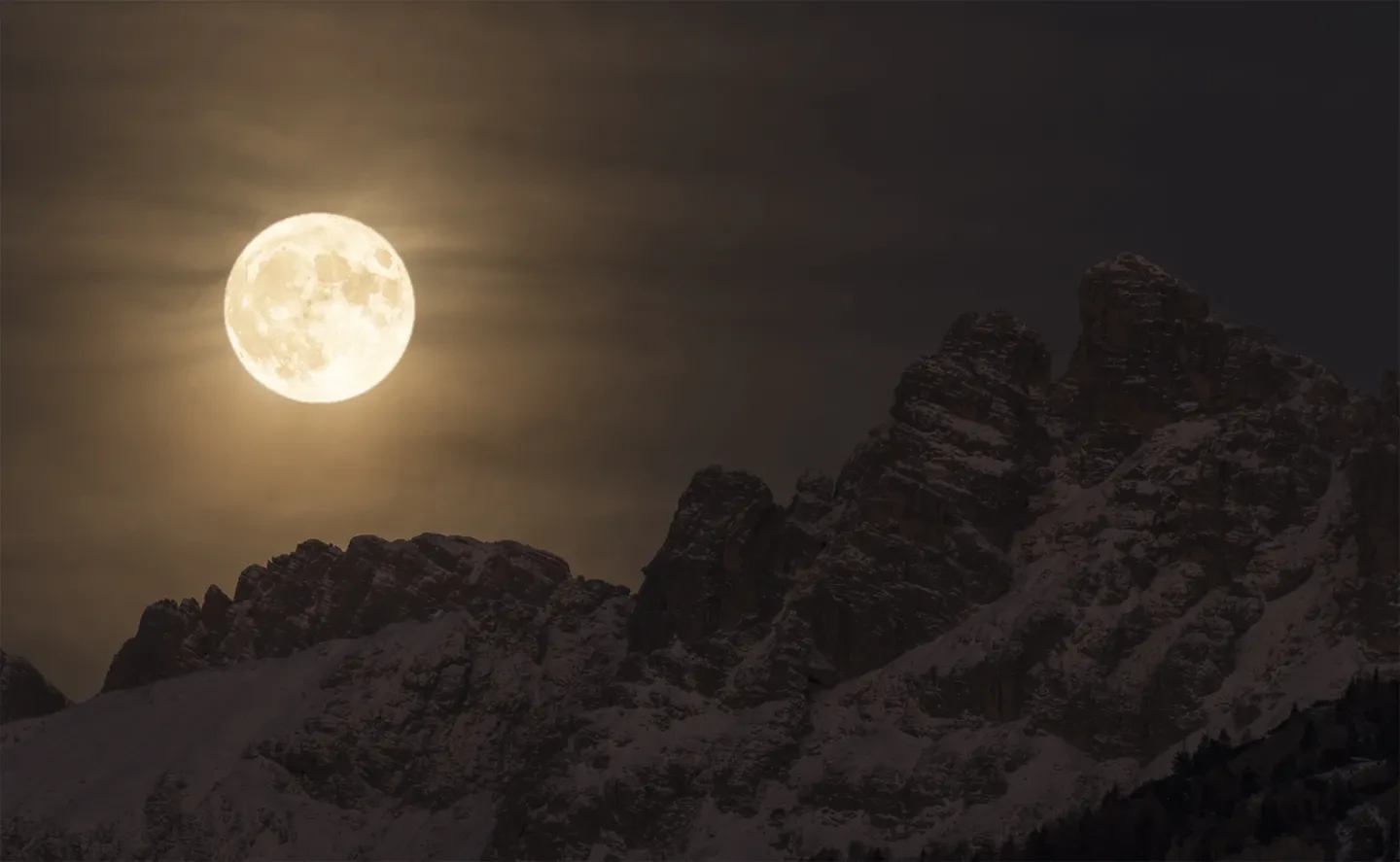
The Moon's surface is characterised by light mountainous regions interspersed with dark maria or 'seas'. The 'Man in the Moon' is formed from patches of these two types of terrain. The maria are vast impact basins which filled with basaltic rocks some 3,000 million years ago.
Much of the Moon's surface is covered with craters. These are the result of impacts by meteorites. The largest are about 200km in diameter, the smallest are only about a metre across. Most of these craters were formed between 3,000 and 4,000 million years ago.
How many times have humans landed on the Moon?
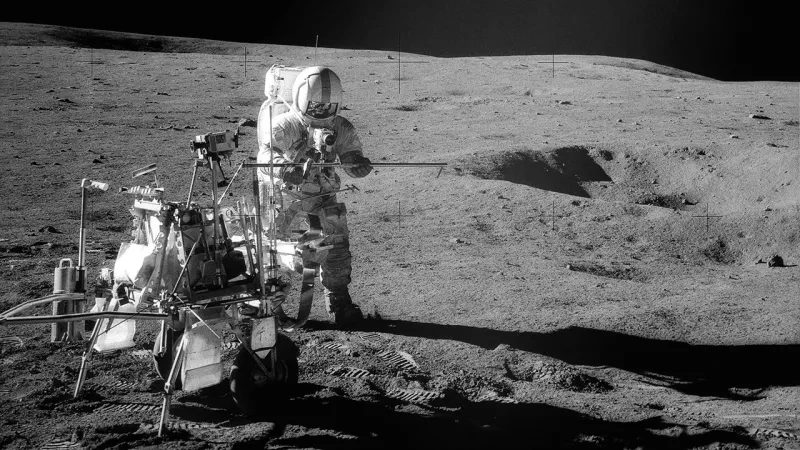
Americans have landed on the Moon six times. The first time was in July 1969 and the last time was in December 1972.
Much of our knowledge of the structure of the lunar surface and the geology of the Moon comes from the landings of the Apollo series and the samples of lunar material brought back to Earth.
What does 'Once in a blue Moon' mean?
The phrase 'once in a blue moon' is a familiar one, meaning once in a very long interval of time.
A blue moon, by folklore definition, is said to be the second full Moon of the month. However, researchers at Southwest Texas State University have been using historical documents to prove that a blue moon was really a term used by the Maine Farmers' Almanac to indicate the presence of a 13th full Moon in a tropical year which usually had 12. A tropical year is a measurement of time from one winter solstice to the next.
What is the biggest crater on the Moon?
At roughly 1,600 miles in diameter and between 3.9 and 5.1 miles deep, the South Pole-Aitken Basin is the largest crater on the Moon, and one of the largest known impact craters in the Solar System.
The South Pole-Aitken Basin is believed to have been made about 4.3 billion years ago, while the Moon was relatively young - only a few hundred million years old.
Astronomers think the basin was created by a massive asteroid scraping along the lunar surface, carving out a gigantic crater.

Visit the Royal Observatory
Come and see the home of GMT, stand on the Prime Meridian line, and explore the historic home of British astronomy
More to explore
Shop stylish Moon-inspired gifts


