
Essential information
| Type |
Talks and tours
|
|---|---|
| Location | |
| Date and times | Tuesday 27 October 2026 | 7.15pm |
| Prices | Flamsteed Members: FREE | Guests of Flamsteed Members: £15 | Royal Museums Greenwich Members: £12 |
| Flamsteed Member exclusive. Not a Member? Join now |
Water is one of the most crucial ingredients for sustaining life, and nowhere is this more evident than on Earth.
But what if water also exists on our nearest celestial neighbour: the Moon?
For the longest time, humanity has looked up at the Moon and considered it to be a geologically inactive and anhydrous body.
This long-held view was challenged with the return of lunar samples and observations from spacecrafts. The results from various missions presented signs of hydroxyl (OH) and water (H20) on the lunar surface. Is water only confined to the permanently shadowed regions near the poles, or is it heterogenous on the entire surface?
This lecture, Lunar Hydration: Discoveries and Impact will explore the history of lunar hydration, examining how our current knowledge of hydration has evolved from Earth-based observations to recent discoveries drawing on evidence from
- Cassini
- Deep Impact
- and Chandrayaan-1.
The talk will discuss the processes responsible for the delivery, incorporation and retention of these volatiles. The presence of hydration will support and sustain long-term future missions to the Moon and help us understand the geological evolution of the lunar surface.
As humanity prepares to return to the Moon through the Artemis programme, understanding the origin, distribution and evolution of lunar hydration has become vital. This will not only enable us to understand hydration on the Moon but will provide valuable knowledge for other airless bodies.
Meet the speaker
Pranjal Garg graduated with a BSc in Planetary Science with Astronomy from Birkbeck, University of London and is currently a Science Explainer and Astronomy Planetarium Presenter at Royal Museums Greenwich.
Her interest includes lunar geology, planetary evolution and physics. She is passionate about science communication and enjoys making science accessible to audiences of all ages and backgrounds.
Doors open at 6.30pm
What’s on
Find more exclusive events for Members.
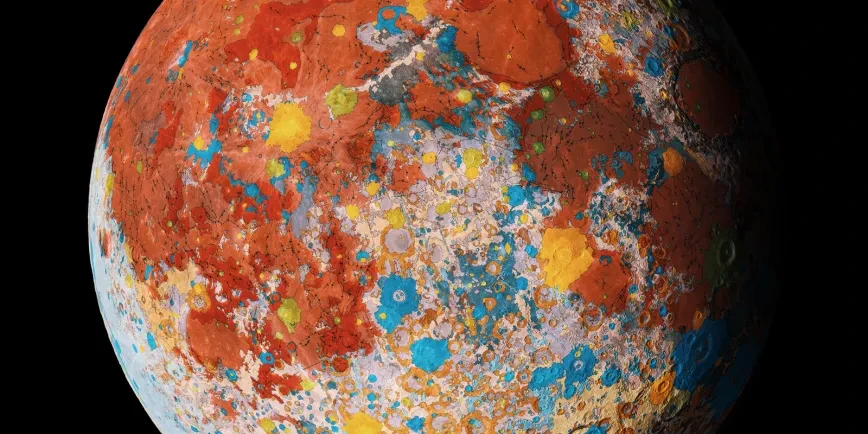

Image: Tracing the Moon's History © Julian Zoller - ZWO Astronomy Photographer of the Year 2025 Annie Maunder