
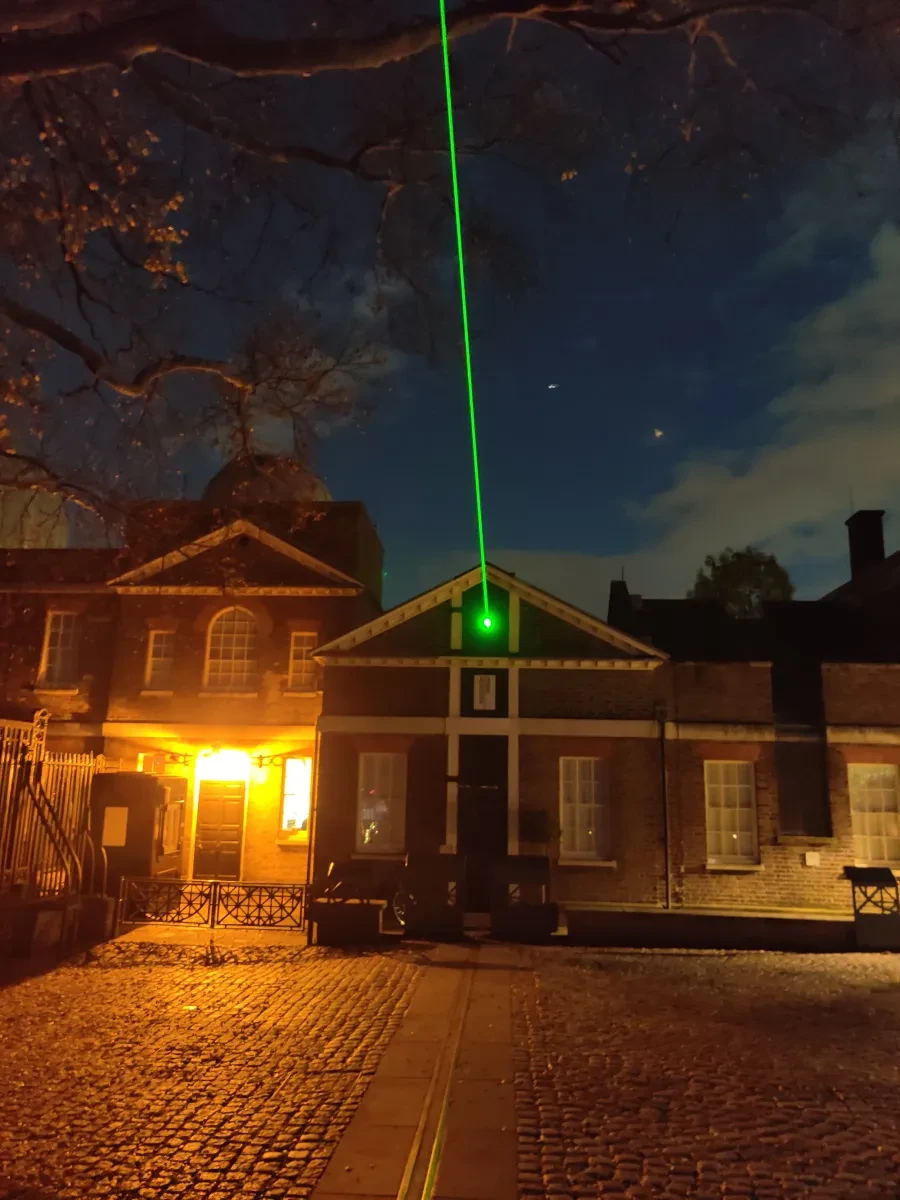
If you’re in Greenwich, East London, or even further afield after the Sun sets, you might notice a bright green beam in the sky.
Sadly aliens aren't communicating with us: this is the Greenwich Meridian laser, beamed north from the Royal Observatory Greenwich to mark the Prime Meridian (0 degrees longitude).
Designed by artists Peter Fink and Anne Bean, the laser is titled 0 degrees. It was initially set up in 1993, which required a permit from the Civil Aviation Authority, before the laser was upgraded in 1999.
The beam is reported to have been seen up to 36 miles away with the naked eye under excellent seeing conditions, and even farther with binoculars.
It originates from a point above the Airy Transit Circle, the telescope historically used to determine the Prime Meridian.
The laser is switched on each evening when the Royal Observatory closes and switched off at 11pm. It's much harder to spot - if it's visible at all - on summer evenings, due to the late setting of the Sun. However, the laser is easily visible during the long, dark winter evenings.
Image
What is the Prime Meridian?
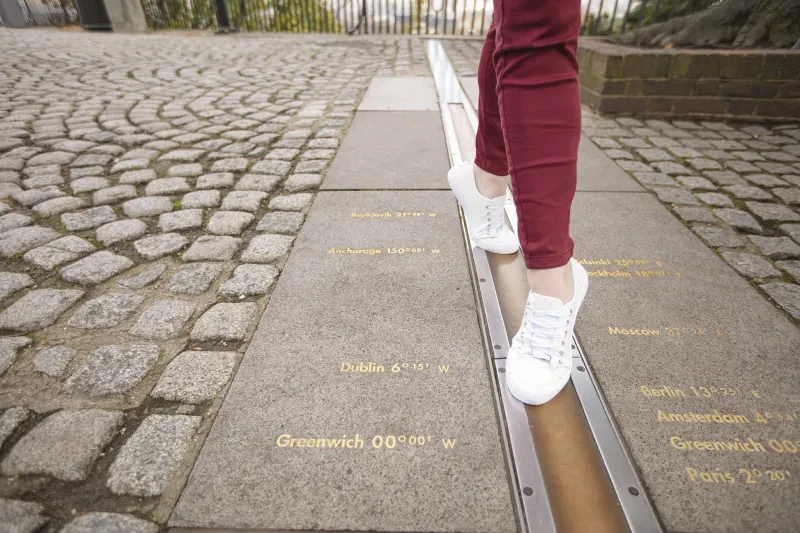
Just like the equator separates the Northern and Southern Hemispheres, the Prime Meridian separates the Eastern and Western Hemispheres.
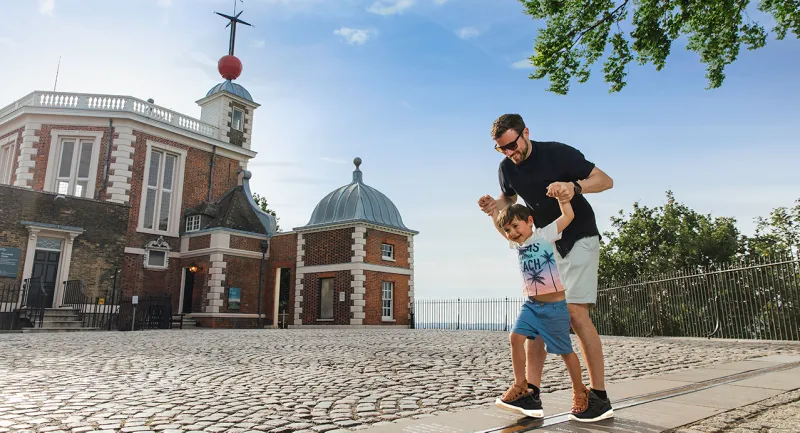
By day it's marked by the Prime Meridian line, a metal strip embedded in the cobblestones of the Royal Observatory Greenwich's courtyard.
The Royal Observatory was chosen as the location of the Prime Meridian and the heart of international time zones in 1884.
Learn more about the Prime Meridian
Visit the Royal Observatory

More to see in Greenwich

Visit Greenwich
Green space, historic London attractions and beautiful city views - discover the best that Greenwich has to offer

Greenwich Park
Greenwich Park is full of hidden gems, from gardens and playgrounds to viewing points, museums and cafes. Here's all you need to know about visiting
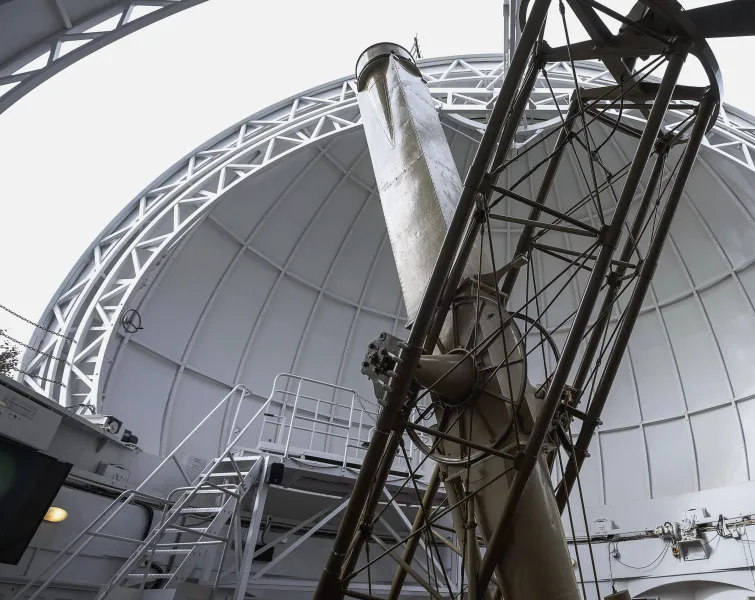
The Great Equatorial Telescope at the Royal Observatory
Stand beneath the magnificent onion dome and marvel at one of the largest refracting telescopes in the world
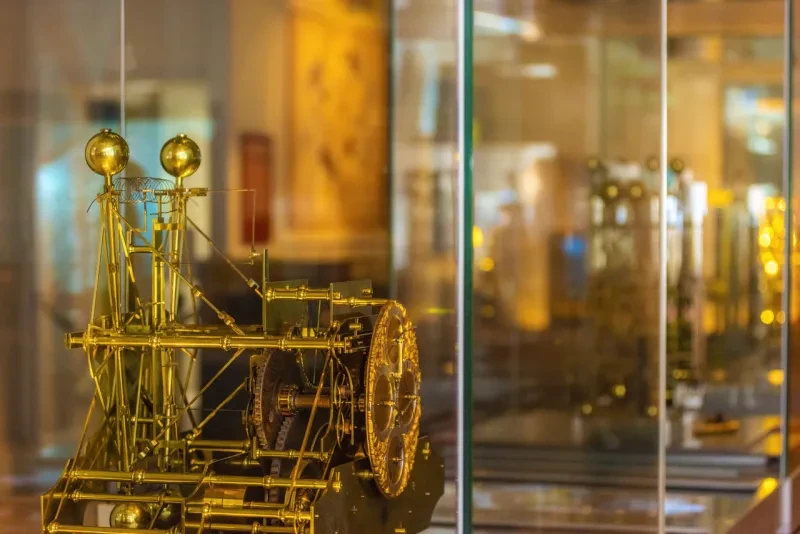
John Harrison's marine timekeepers
Revolutionary timepieces that allowed ships to determine their longitude at sea
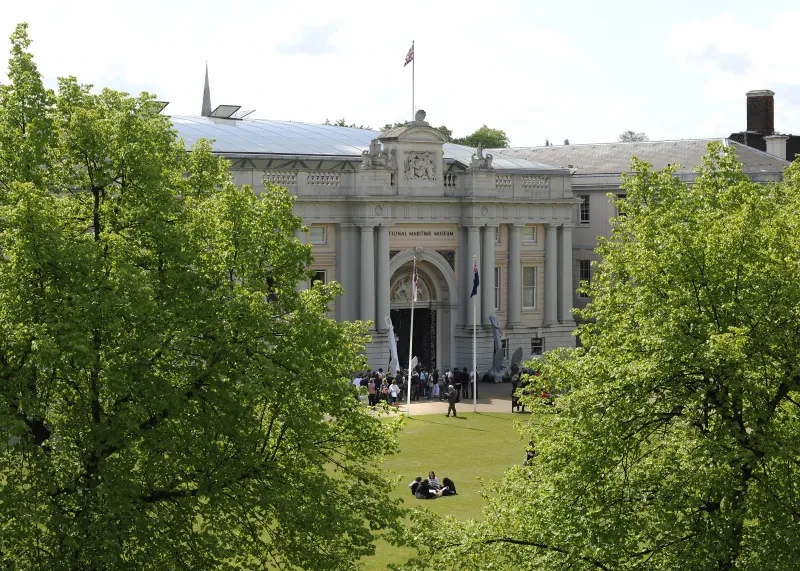
National Maritime Museum
Discover epic stories of exploration and endeavour that have shaped our world today

Cutty Sark
Step aboard the historic sailing ship, the fastest of its time
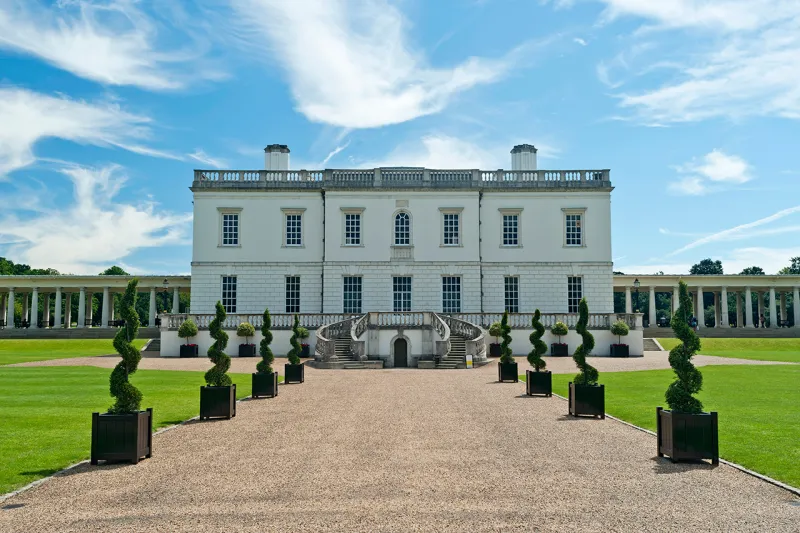
Queen's House
See extraordinary art for free inside one of London's most beautiful buildings