Long before the acclaimed Guyanese scholar, poet and novelist David Dabydeen became one of the world's leading voices on the history and legacies of Indian indenture, he was a child growing up in Guyana, immersed in a landscape that would shape his imagination, advocacy and writing.
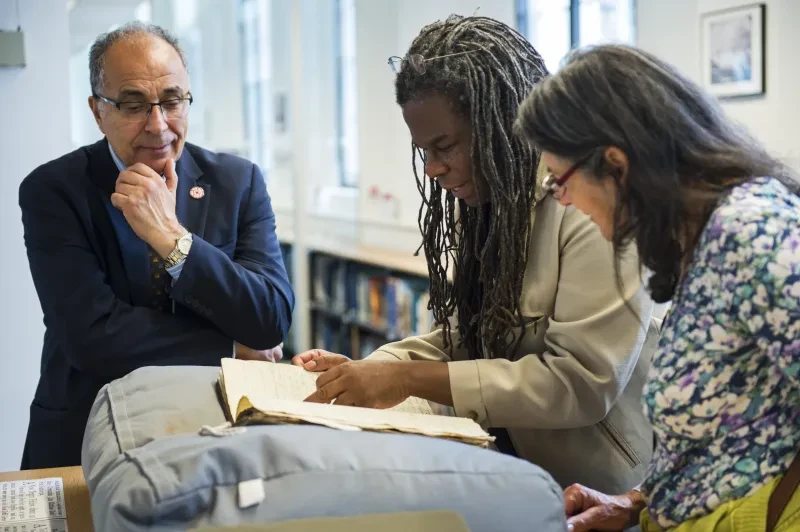
In 2025 Dabydeen sat down with the Indo-Caribbean Windrush Oral History Project to share memories of growing up in Guyana and his arrival in England. The project, spotlighted by Royal Museums Greenwich, aims to record the life stories of Indo-Caribbeans who migrated to the UK between 1948 and 1971.
Growing up in Guyana
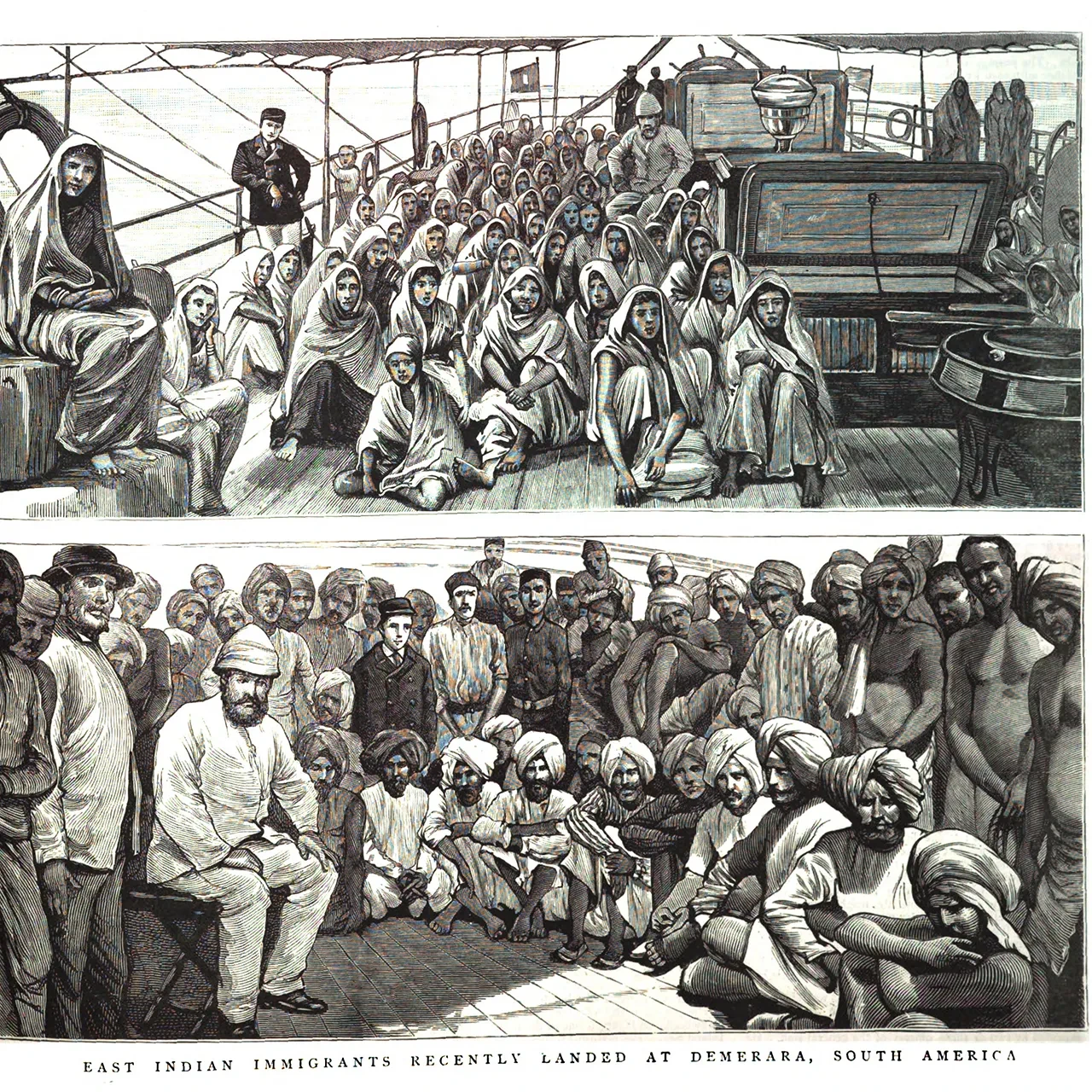
Dabydeen's connections to Guyana stretch back to the 19th century. His great-great-grandfather had arrived from Kolkata (then Calcutta) as an indentured labourer to work in a sugar estate.
Indentured labourers in the Caribbean were people coerced or forced to migrate and work under exploitative contracts. Following the abolition of slavery in most British colonies in 1833, plantation owners in places like Guyana began to recruit indentured labourers from South Asia, exploiting them as an alternative workforce to formerly enslaved Africans.
After a decade of gruelling work, Dabydeen's ancestor managed to buy his own land. 'It must have been something divine for him, something beyond his expectation when he was young, that he would actually own land,' Dabydeen says.

View of Georgetown, Guyana
PAH3047 • Prints & Drawings
A coloured lithograph depicting Georgetown harbour in British Guiana (Guyana) and life in the town, including troops marching through the streets.
Dabydeen himself was born in 1955. While his family never mentioned India 'because of shame' around their origin as indentured labourers, the India to which Dabydeen was exposed in Guyana was one of glitz and glamour. 'We all went religiously to all the Bollywood films,' Dabydeen reminisces. 'And what was Bollywood about? It was about song and dance. Even poverty was romanticised [...] the Bollywood films were glitter. So we had a sense of India being a place where everybody sang and danced, jumped on the sofa, waved their arms around and so on.'
Yet despite the strong Indian presence in Guyana – today, people of Indian descent make up the largest ethnic group in the country, at 40 per cent – Dabydeen says he was aware of a sense of 'antagonism' between Afro-Guyanese and Indo-Guyanese people: '[It was] nothing rooted in ideology of superiority or inferiority; it was just that ancient memory of divide and rule by the British.' Dabydeen explains that, in the 19th century, plantation owners had encouraged a sense of resentment to develop between formerly enslaved Africans and indentured Indians, and undermined the former's economic freedom after emancipation by replacing them with the latter on plantations.
'In moments of crisis, that [antagonistic] racial feeling arose,' he says. 'For example [...] we had some strikes and fighting in the city in the '60s [...] between Africans and Indians, and so therefore [...] we were removed late at night to the countryside for our safety to an Indian village.'
According to Dabydeen, modern-day Guyana has come a long way in terms of race and integration. 'I'm so happy now to know that at least 20 per cent of Guyana is of mixed heritage. That's amazing,' he says. 'When I was a boy, it was very rare for a Black person and an Indian person to get married. Now it seems to be normal. And to me, that's a tremendous achievement on our part as Guyanese, that although we inherited a divide-and-rule situation, we've moved to overcome it.'
Moving to England
In 1969, as a teenager, Dabydeen moved to England, where his father had migrated to continue his studies as there was no university in colonial British Guyana. 'Coming to England I had absolutely no expectation of anything but a vision of something positive that might happen in my life,' Dabydeen reflects. 'I never, ever thought of encountering the stupidity and the nastiness of racism.'
The reality was very different. Dabydeen recalls facing racism regularly: after graduating from Cambridge, he eventually moved to a primarily white area of south-west London.
'When I first lived in Kingston upon Thames in 1978,’ he recalls, ‘I was probably one of the very few people of colour in the place. I remember walking down the street one night and a woman got out of her car and said to her husband, “God, they're everywhere.”’
Despite the racism he faced, writing grounded Dabydeen, who said he is grateful that England has always been a ‘space for writers and a place of libraries’ for him.
‘There's no place in England that is not associated with a writer,’ he says. Writing gave him a sense of purpose as he navigated his own identity in Britain and within the Caribbean community. He was recently nominated for the 2026 Nobel Prize in Literature in recognition of his poetry and novels, which include Slave Song and The Intended.
But for a long time, even as a scholar, Dabydeen was only vaguely familiar with the history of indenture. 'It was only after I completed writing a couple of books related to African [transatlantic slavery] that I was able to turn to indentureship with a fuller sense of history in a bigger context,' he says. He credits Clem Seecharan, an Indo-Guyanese historian based in England, with sparking his interest in learning and writing about indentureship.
In 2020 Dabydeen helped establish the Ameena Gafoor Institute for the Study of Indentureship and its Legacies. The institute brings together dozens of scholars from around the world and seeks to move indentureship studies to the centre of scholarly and public conversation around Caribbean history, the British Empire and the era of migration sometimes known as the Windrush generation.
Image
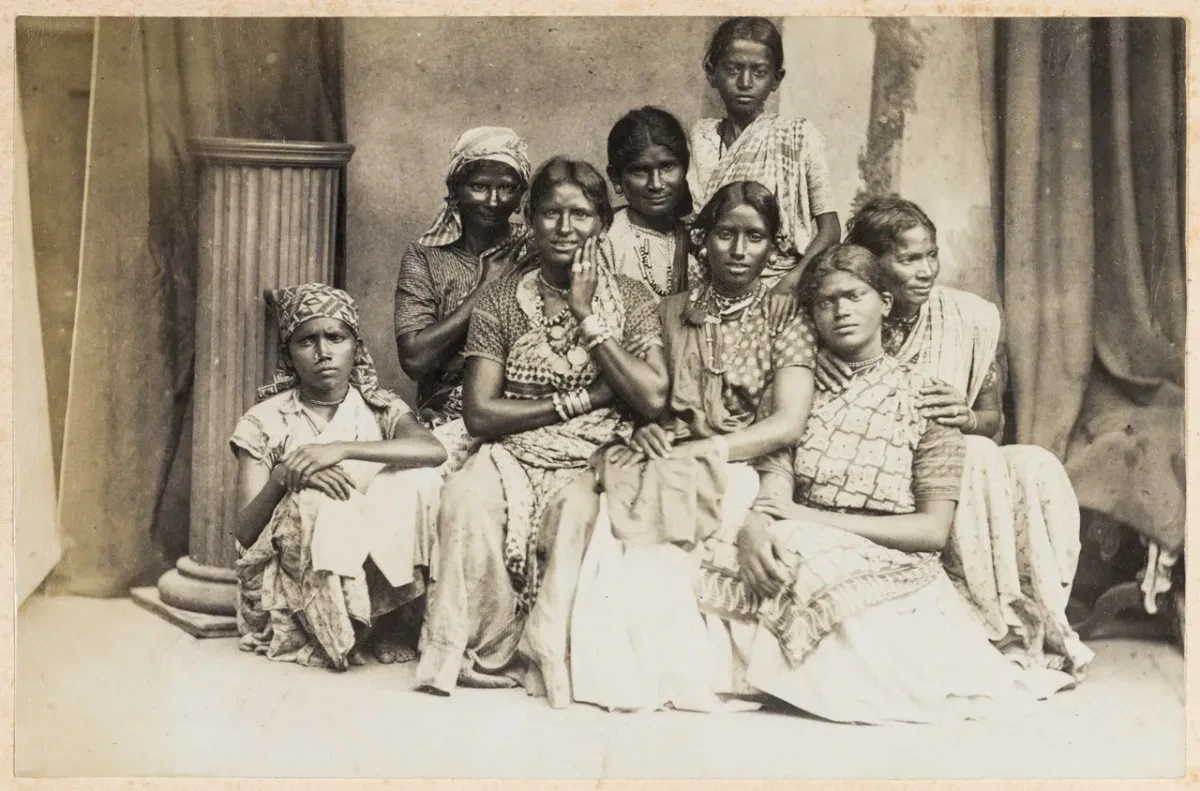
Studio photograph of eight South Asian women
This image was taken in the late 1800s in Trinidad, and appears in an album of photographs in the collections of Royal Museums Greenwich. The women are possibly indentured labourers.
For more information about searching the collections for material relating to South Asian history, especially historic images of people, download the South Asian history research guide.
'We, as Indo-Caribbean people, are largely invisible'
Directing the Ameena Gafoor Institute is just another feather in Dabydeen’s already-impressive cap, which includes two Guyanese ambassadorships, to UNESCO and China, and many years directorship of Yesu Persaud Centre for Caribbean Studies at the University of Warwick, where he was also a professor of postcolonial literature.
While Dabydeen is proud of his Indo-Guyanese heritage, he wishes for people that look like him to be seen as Caribbean and West Indian, rather than simply Asians in the Caribbean.
‘At the end of the day,’ he says, ‘I see myself as Guyanese. I see myself as Indo-Guyanese as well, but I'm Guyanese first, and Indo-Guyanese second, and anything else after that, third.’
Public recognition of Windrush is an opportunity to spotlight the diverse ethnicities of Caribbean people and expand the definition of the identifiers ‘Caribbean’ and ‘West Indian’, which Dabydeen says continues to centre people of African descent.
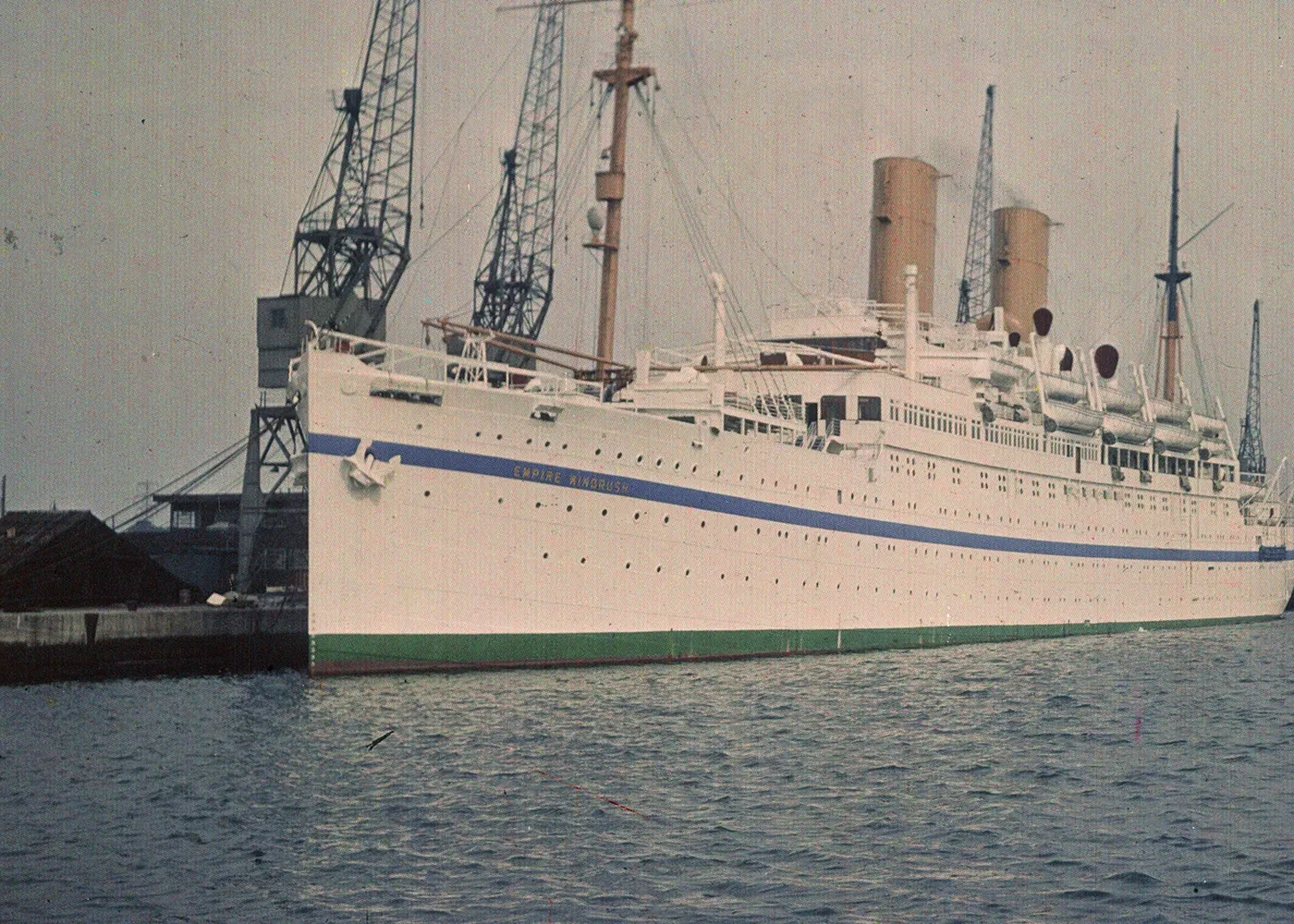
‘Windrush has been very important in putting Caribbean people on the map, and most people in Britain now would probably recognise the word “Windrush”,’ he says. ‘But I've not seen any space to discuss the Indian people who arrived from Trinidad and Guyana. And if you look at the photographs of people on the Windrush boat, you'll see Indians, but nobody talks about them’.
'We, as Indo-Caribbean people, are largely invisible,' Dabydeen says of the memorialisation of the Windrush era through events, exhibitions and scholarship. 'And the public discourse is about the African diaspora, the African immigrant experience, and so on, which is terrific, but there must be space for us as well.'
In addition to helping raise public awareness of indenture, Dabydeen’s work with the Ameena Gafoor Institute also serves as a reminder that indentureship’s legacy spans far into the present and future, as Britain begins to spotlight the silenced histories of Indo-Caribbean Windrush immigrants and their ancestors. ‘I keep telling some of the organisations that are doing post-Windrush studies, “don't forget us”,’ Dabydeen says.
Ultimately, refusing to forget is essential to progress – it is only through remembrance and recovery of marginalised histories, including those of Indian and Chinese Caribbean peoples, that Britain can ultimately reshape how it understands Windrush, the Caribbean and the lesser-known chapters of British history. ‘Whatever we do must be inclusive,’ Dabydeen says, adding that he met a British Chinese man in London who argued he was also part of Windrush, but ‘nobody remembers him’. ‘So, when we talk about Windrush [...] we have to remember each other.’
Learn more about this series
This article is part of a series highlighting oral histories recorded as part of the Indo-Caribbean Windrush Oral History Project. The project aims to document and preserve the life stories of Indo-Caribbeans who migrated to the UK during and after the Windrush era (1948-1971). Project director Meena Venkataramanan co-founded the project with research director Jeevan Kaur Sanghera. Sanghera interviewed David Dabydeen in 2025.
Related stories and projects