

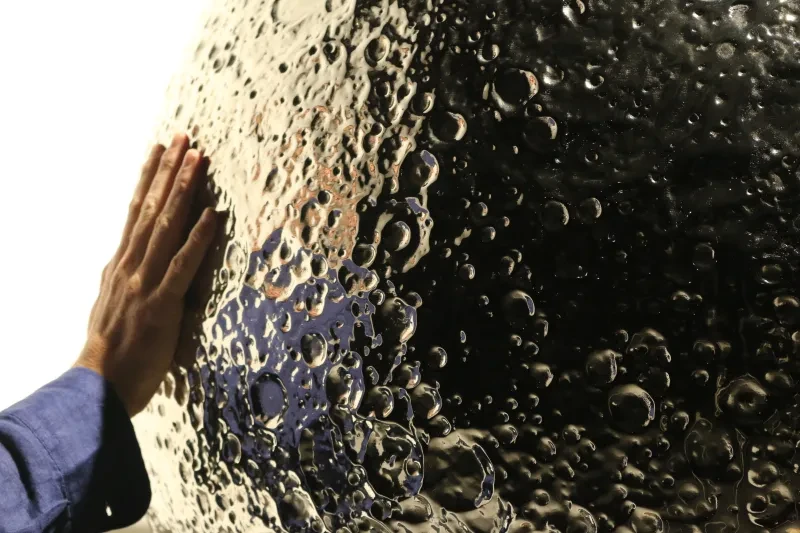
Creating a sculpture that accurately reflects the surface of the Moon at a monumental scale is no small feat.
Luke Jerram's Mirror Moon brings together space research, cutting-edge computing, advanced manufacturing and centuries-old craftsmanship to transform raw lunar data into a beautiful artwork.
Shrinking the Moon with supercomputers
This unique art project begins more than 380,000 kilometres away, with detailed topographic data gathered by NASA.
NASA's vast digital map of the Moon's surface is incredibly information-rich – too large to be printed in one piece. To adapt it to make a scale model while preserving all the detailed craters and mountain ridges, NASA's data is processed and compressed without sacrificing accuracy.
This task requires the power of a supercomputer; Jerram partnered with the University of Bristol's supercomputing team at the Bristol Digital Futures Institute to refine the enormous datasets into a form that remains faithful to the Moon's terrain.
From pixels to plastic: 3D printing the lunar surface
With the data prepared, Jerram’s Mirror Moon takes physical shape through 3D printing.
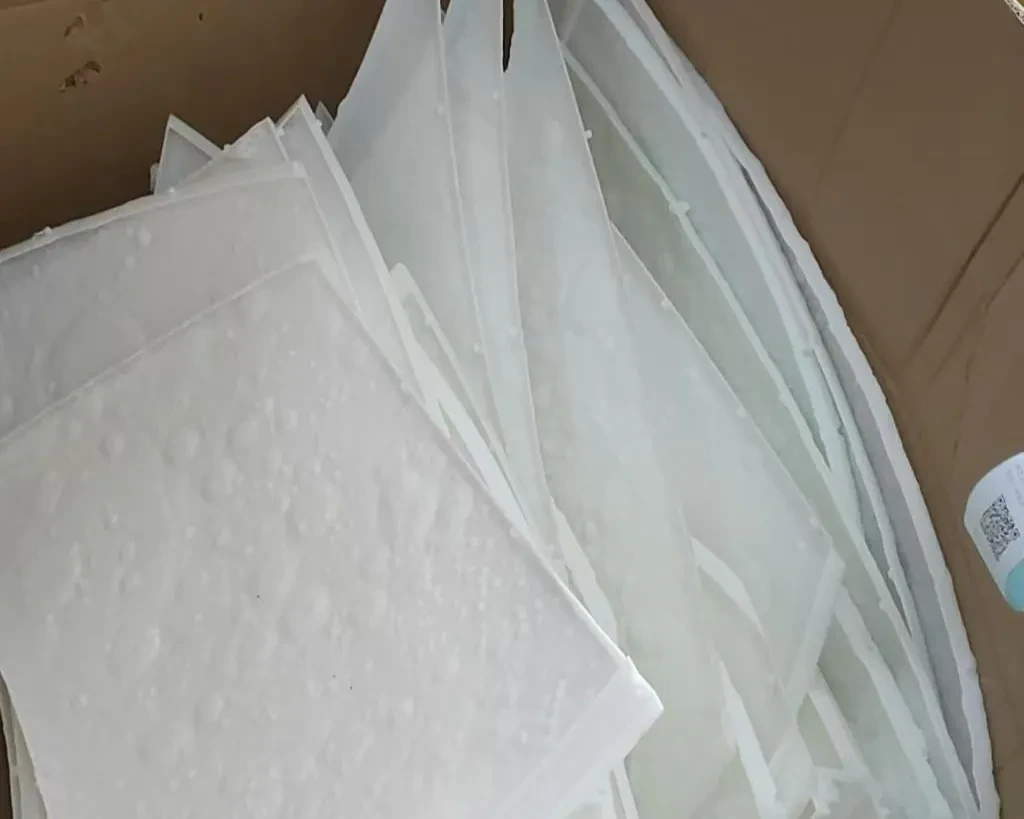
Sections of the lunar surface – including every mountain and valley, from the Lunar Apennines to the Clavius crater – are printed in plastic.
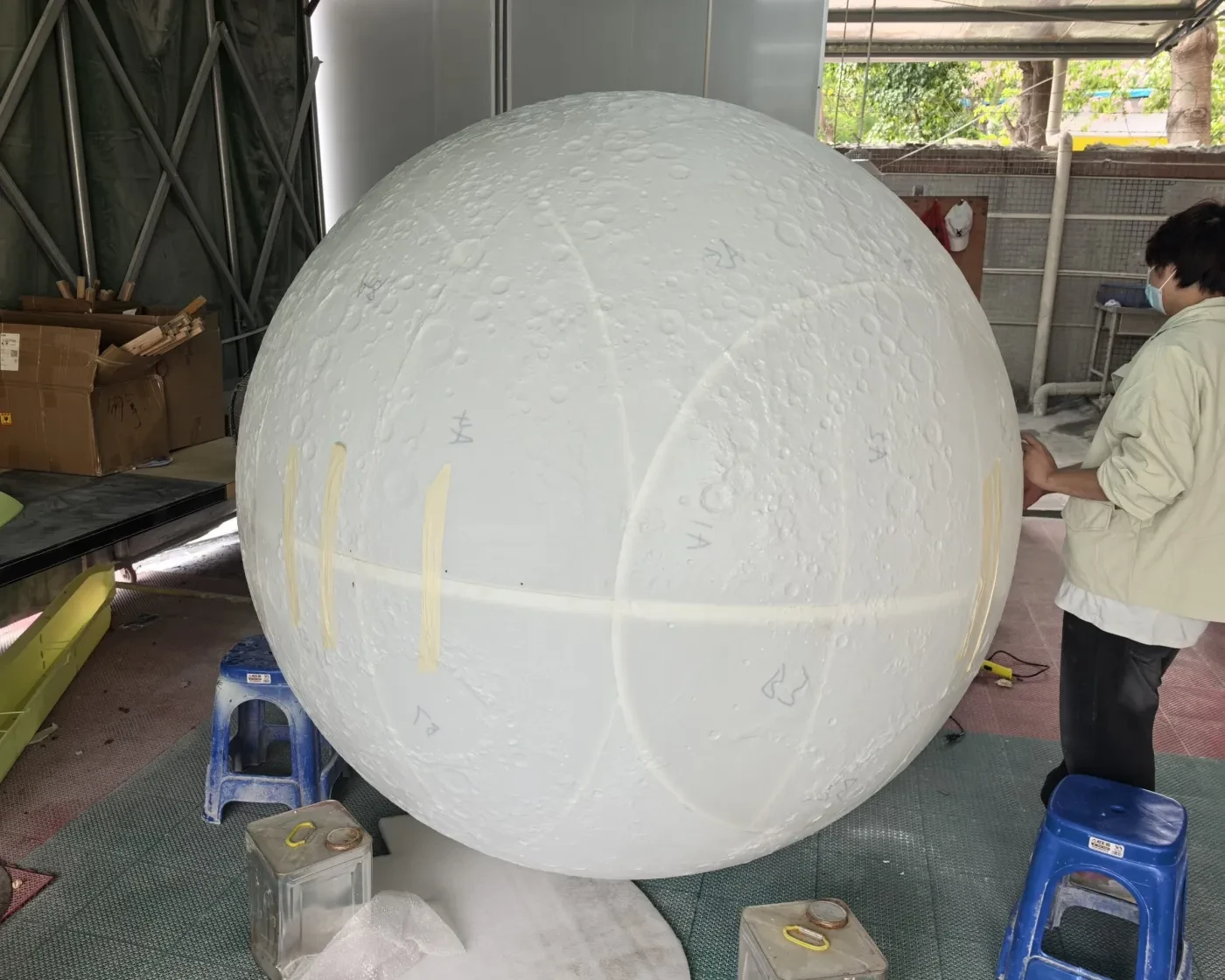
These individual pieces are then assembled like a spherical jigsaw into a precise two-metre replica of the Moon.
1 / 2
Sheets of 3D printed plastic showing the lunar surface
2 / 2
The plastic shell of Mirror Moon during the fabrication process
Making the mould: capturing every crevice
From this master model, Jerram creates moulds to begin the transformation of the Moon into metal.
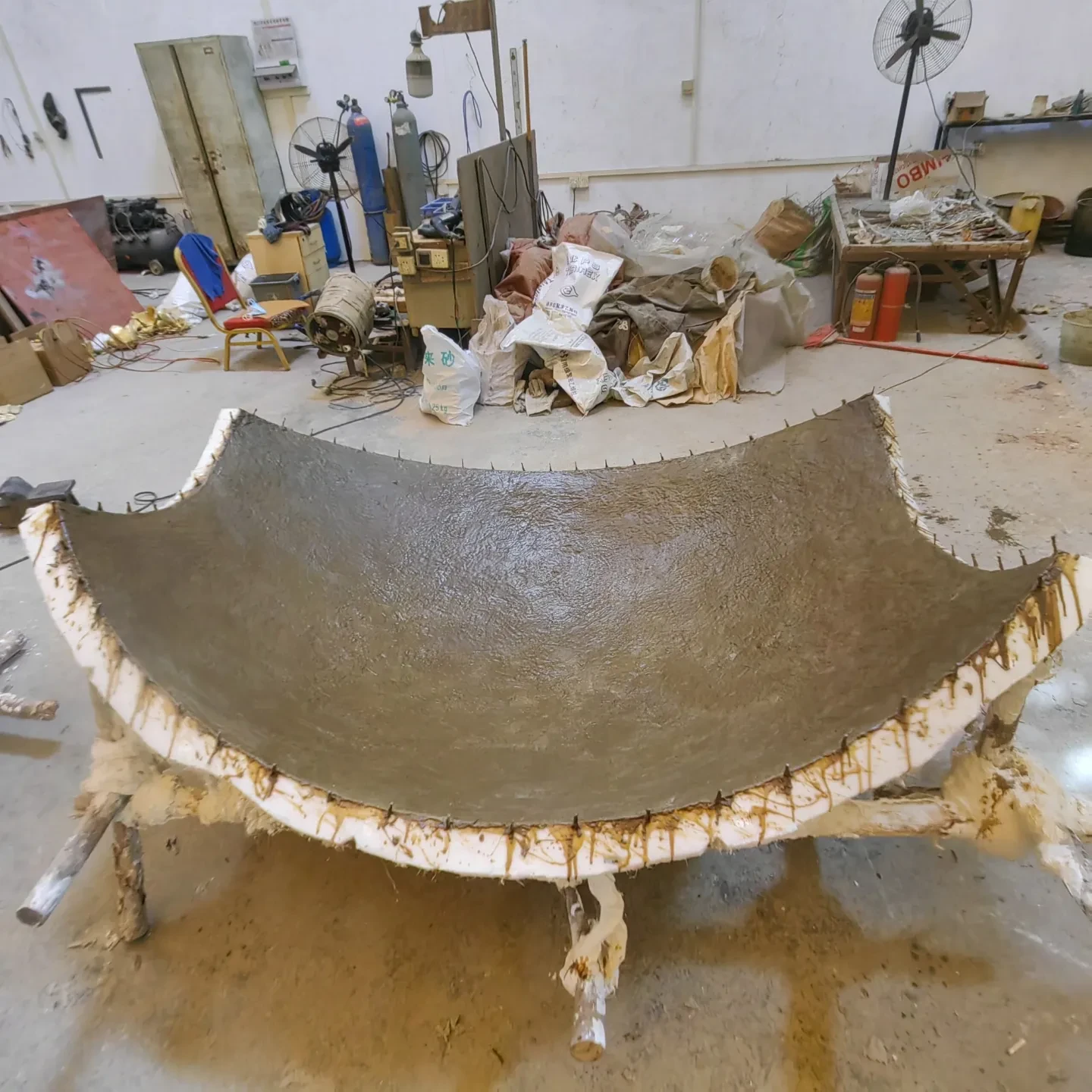
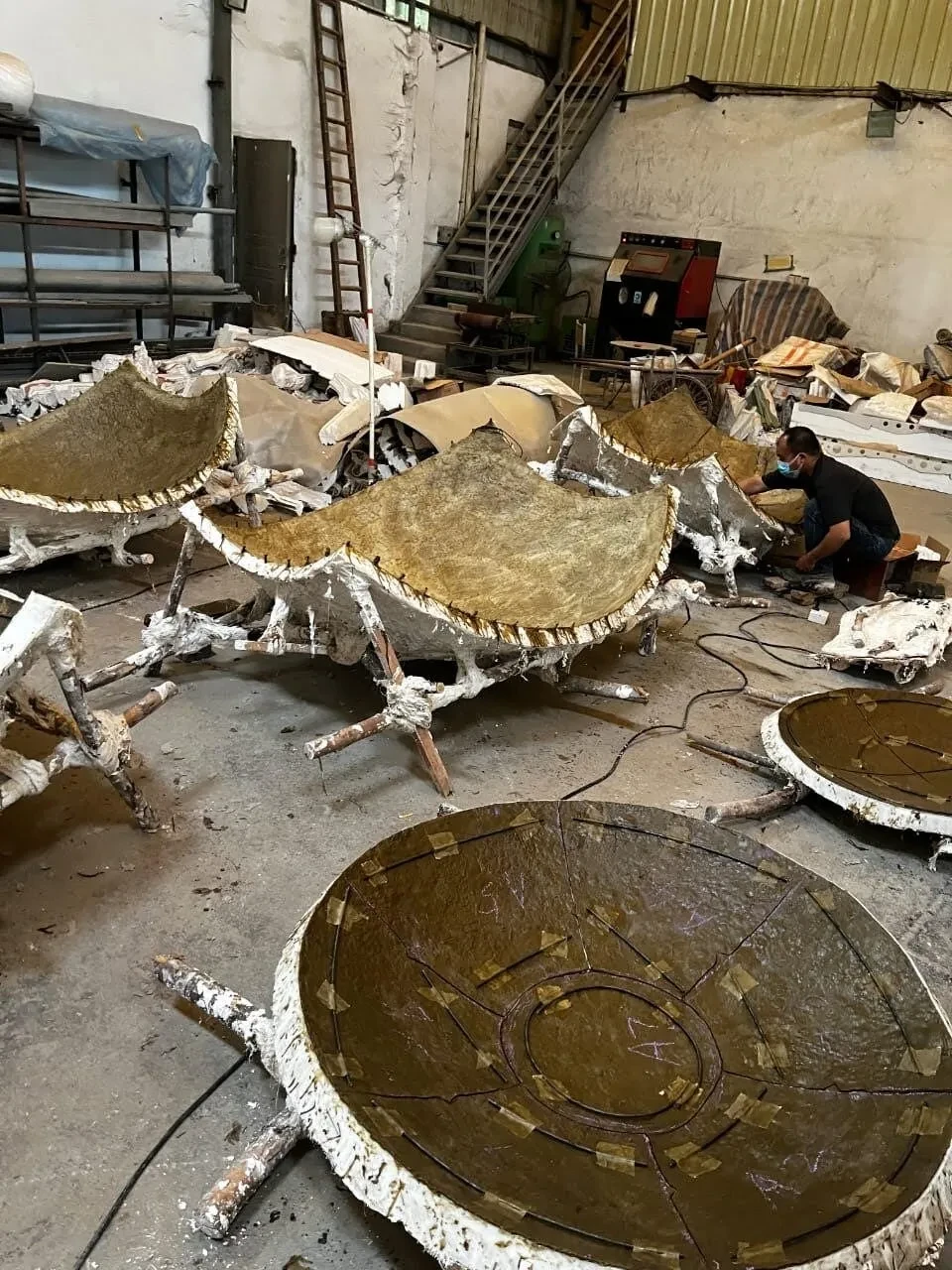
Molten wax is carefully brushed and painted into each mould, forming detailed wax 'positives' that replicate the Moon's surface relief.
Fire, clay and steel: the lost-wax magic
To turn wax into steel, Jerram relies on a centuries-old metal-moulding technique still used in aerospace, medical engineering, and precision manufacturing today: investment casting, sometimes called the lost-wax process.
Each wax form is encased in a clay-like ceramic shell to create a mould. The wax is melted away, leaving a finely detailed, hollow cavity.
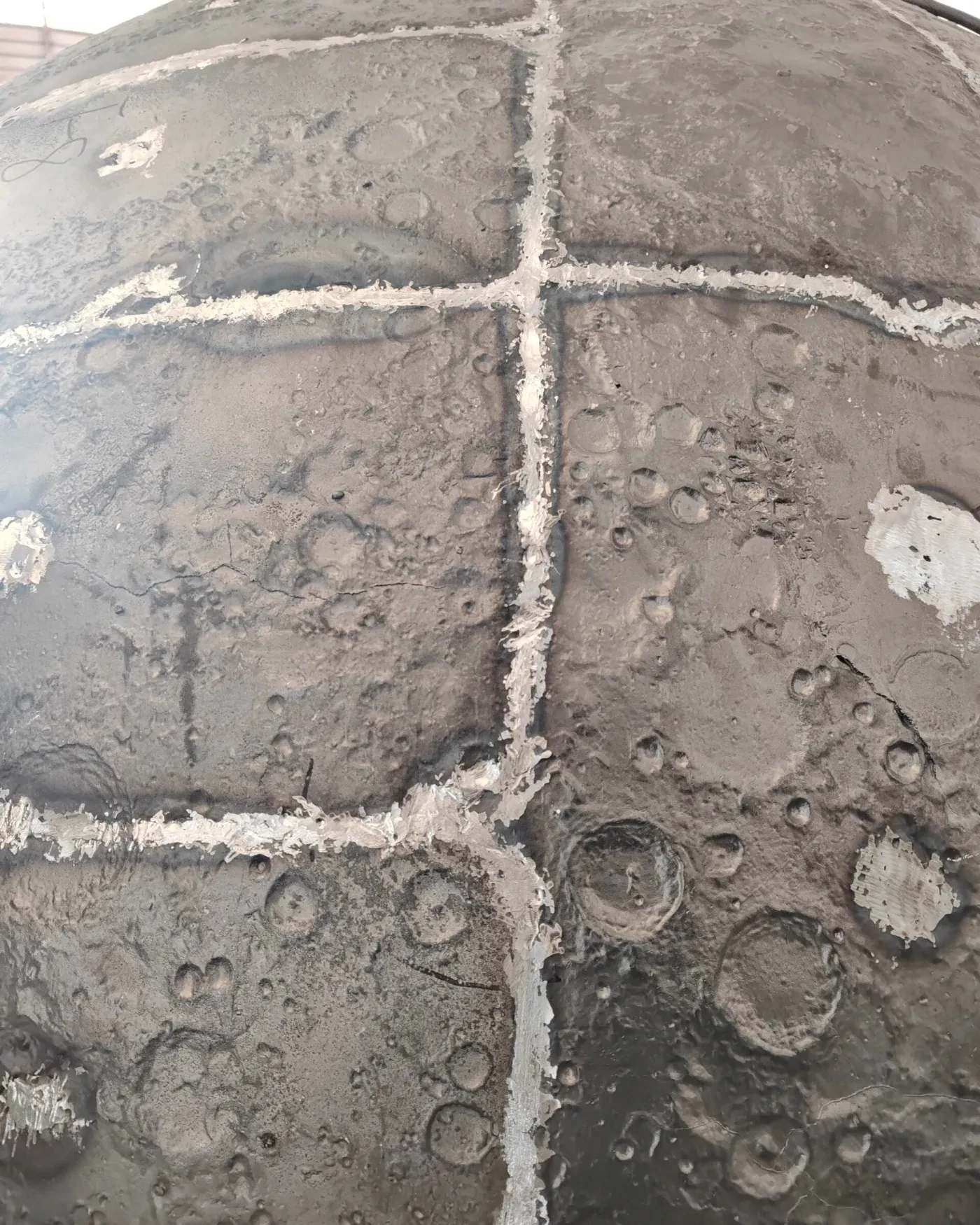
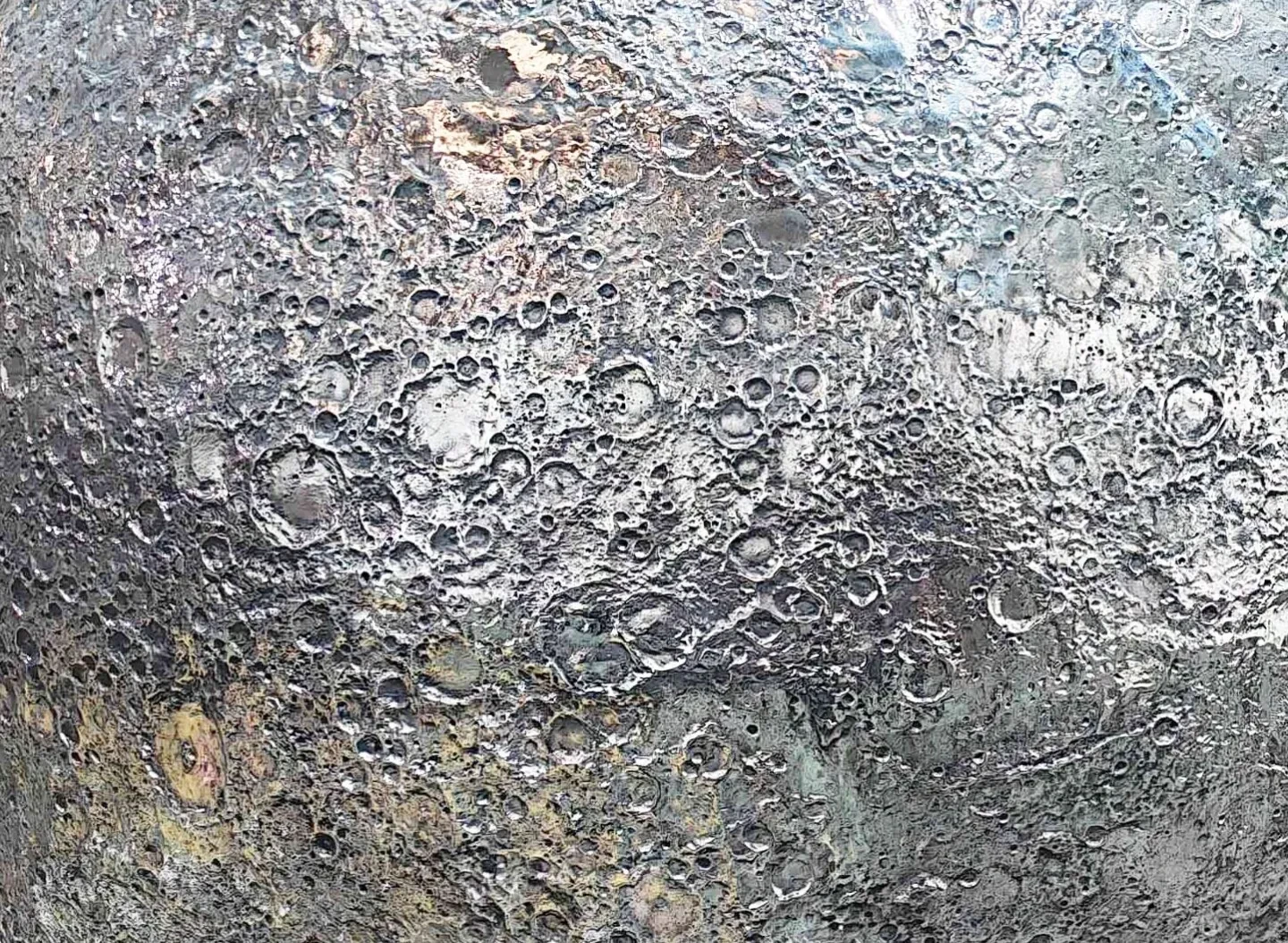
Into this hollow space, molten stainless steel is poured; and that liquid metal captures every minute detail of the lunar landscape. Once cooled, the ceramic moulds are broken apart to reveal individual steel castings: gleaming slices of the Moon.
Assembling a polished celestial puzzle
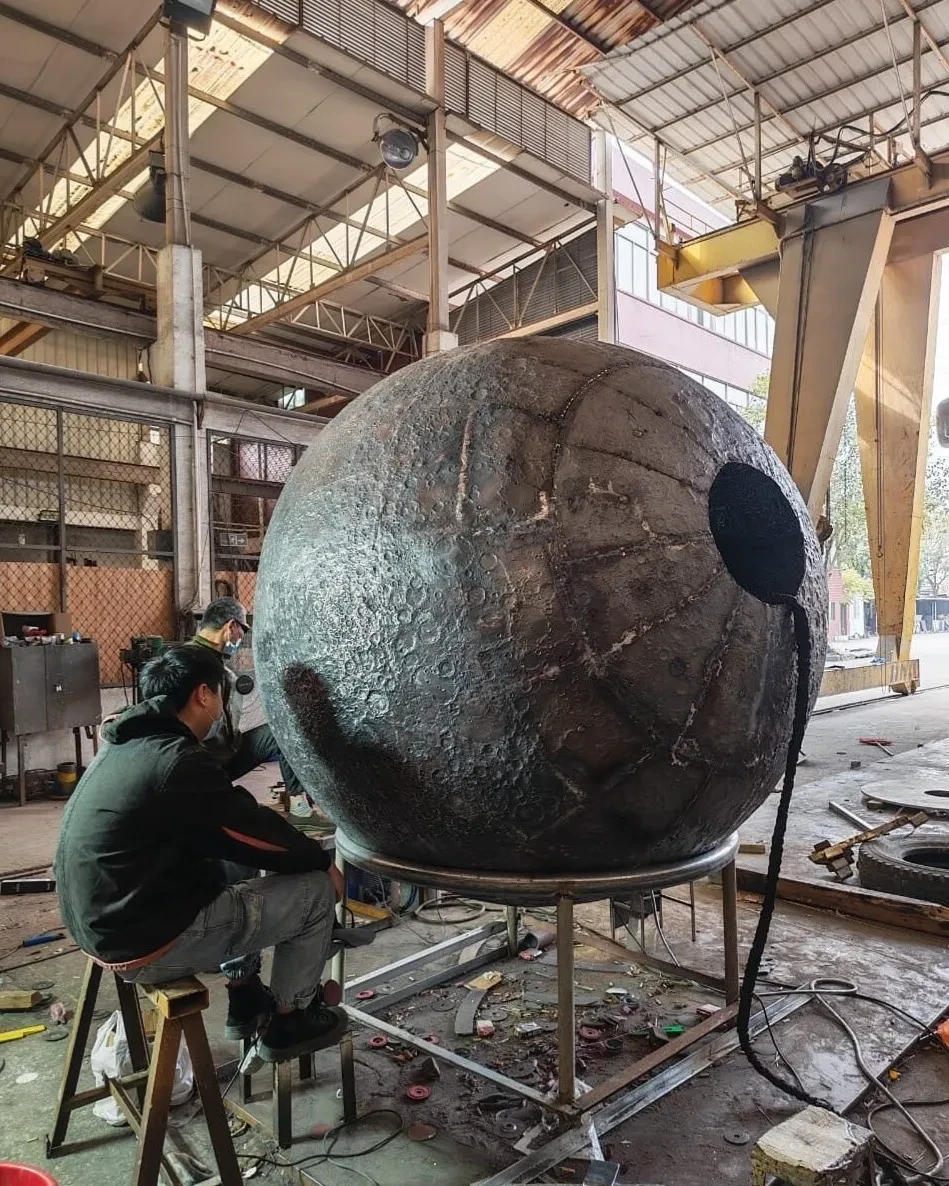
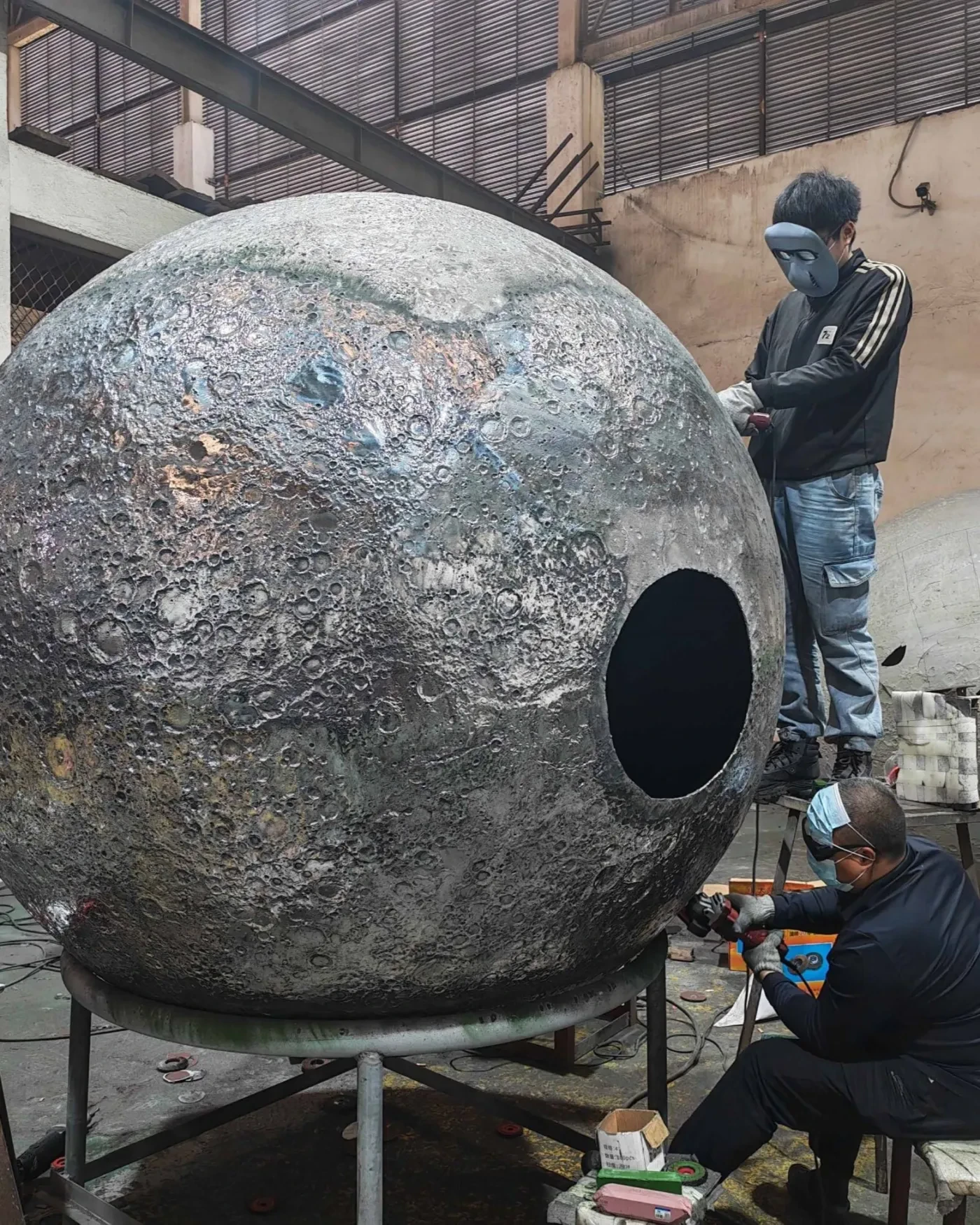
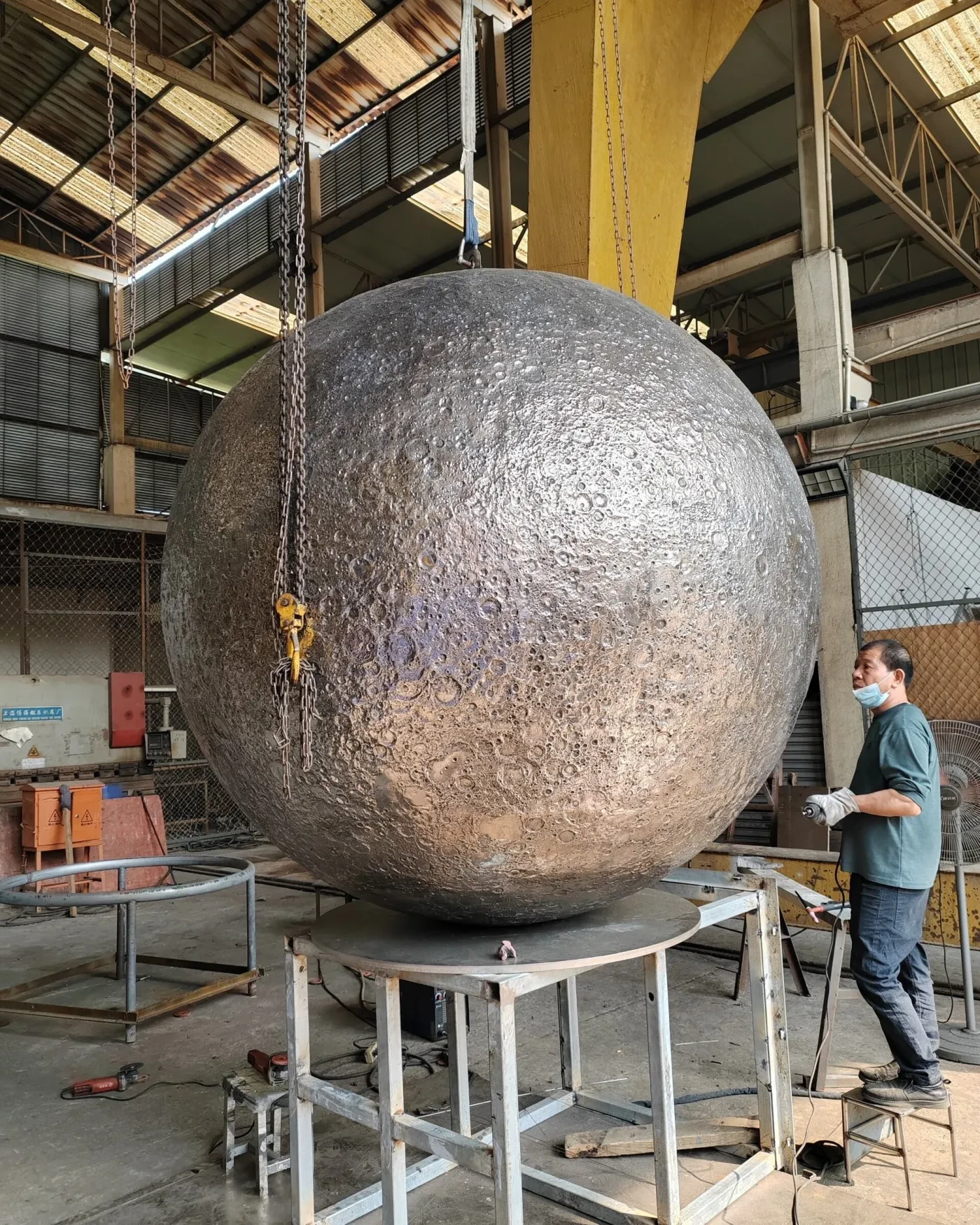
These stainless-steel sections are then assembled around an internal steel framework.
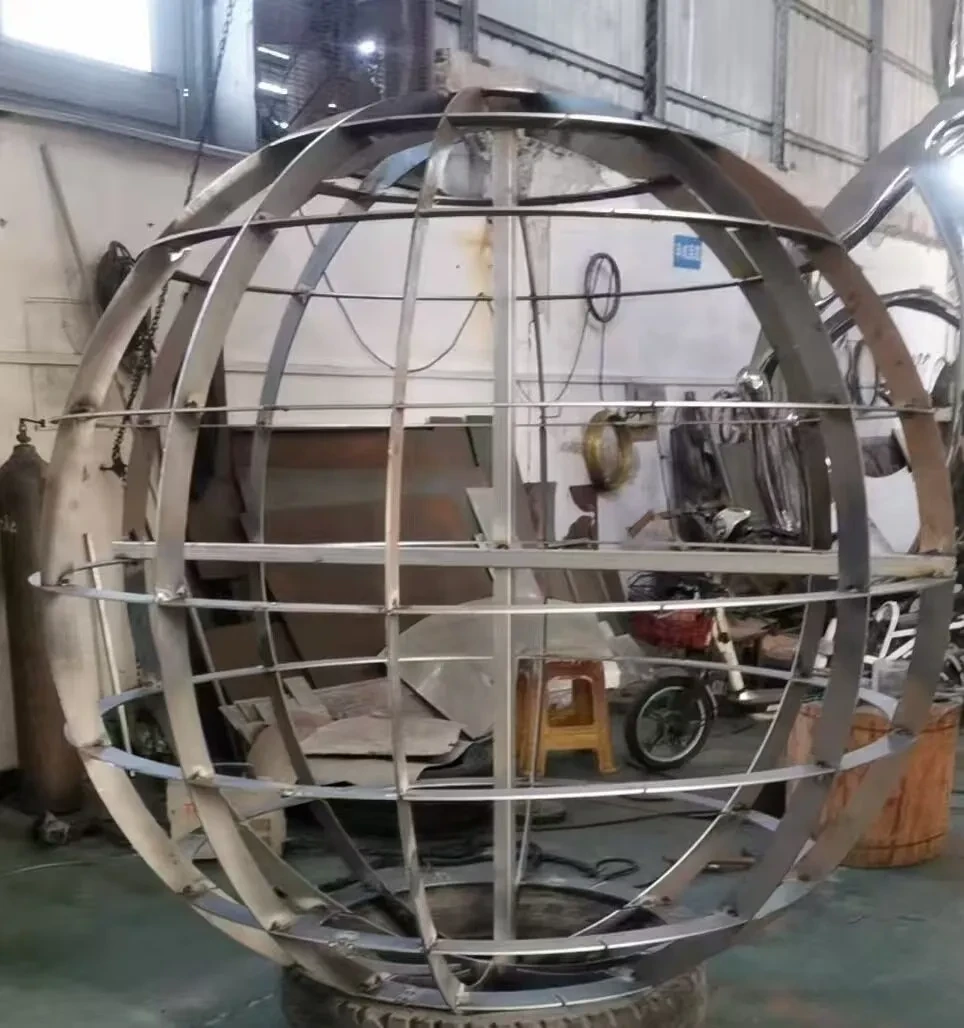
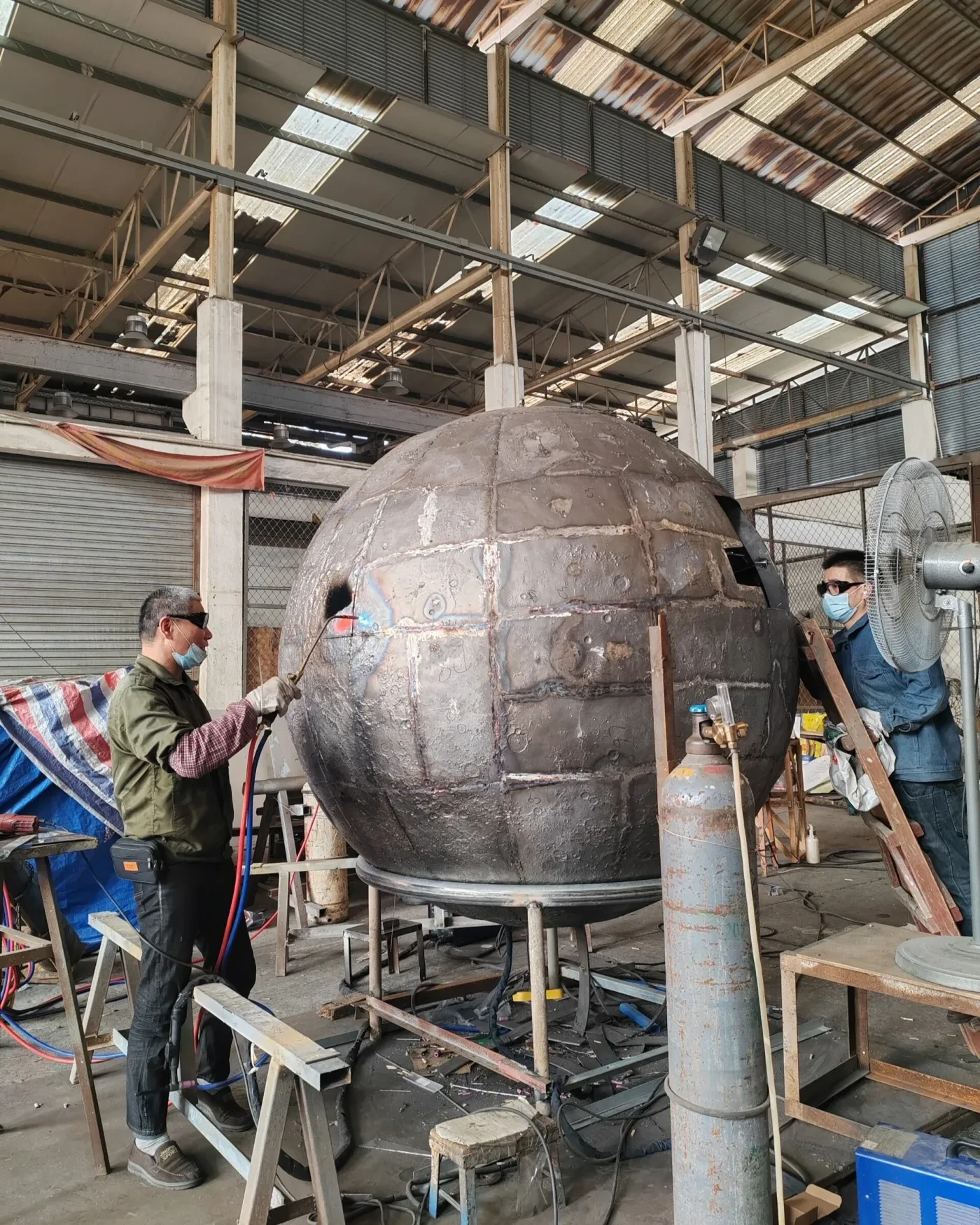
Carefully welded together, the lunar segments create a single sculptural sphere – the Moon in metal.
1 / 3
Mirror Moon takes shape
2 / 3
A close-up of the sections of Mirror Moon during the fabrication process
3 / 3
Mirror Moon during the welding part of the project
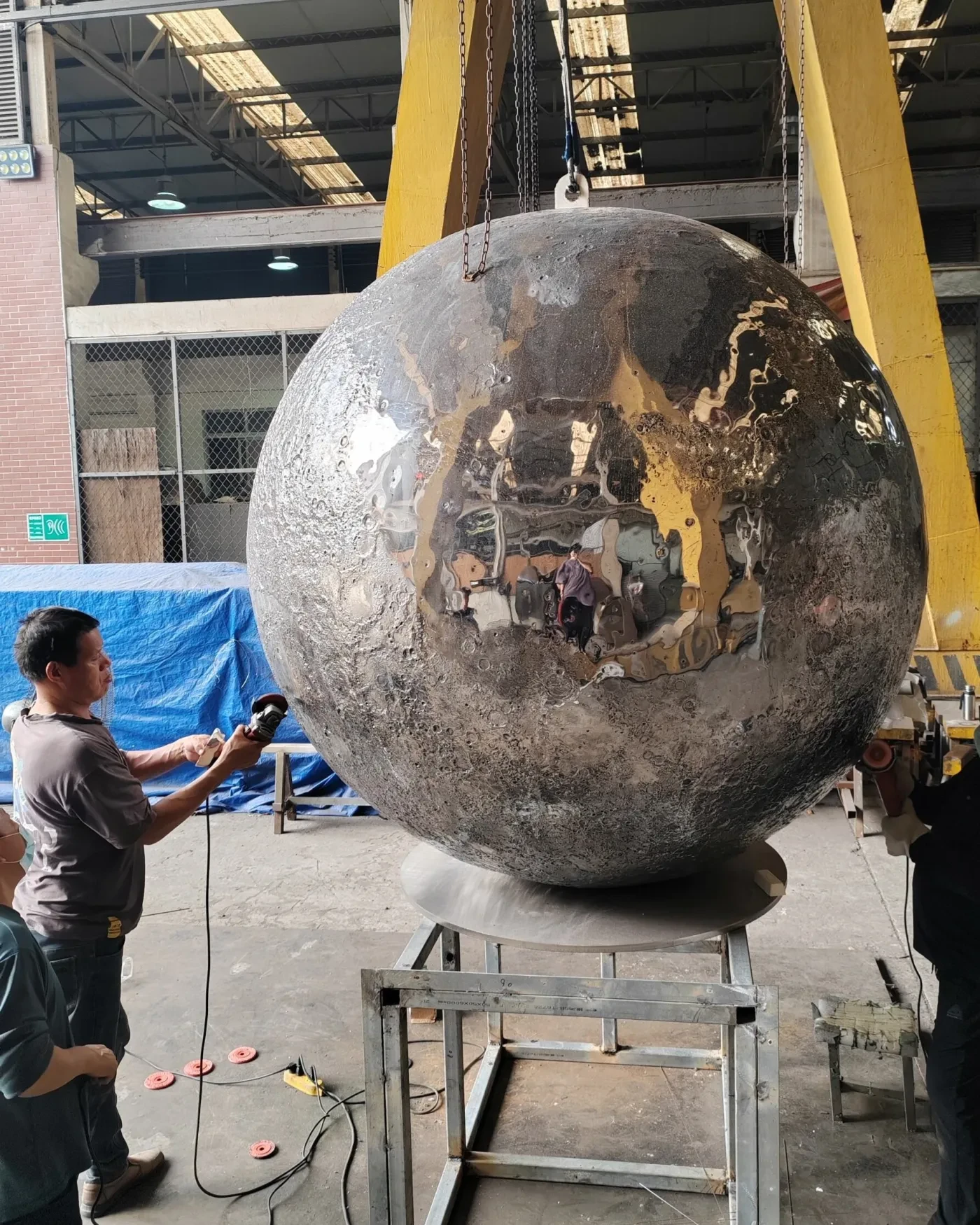
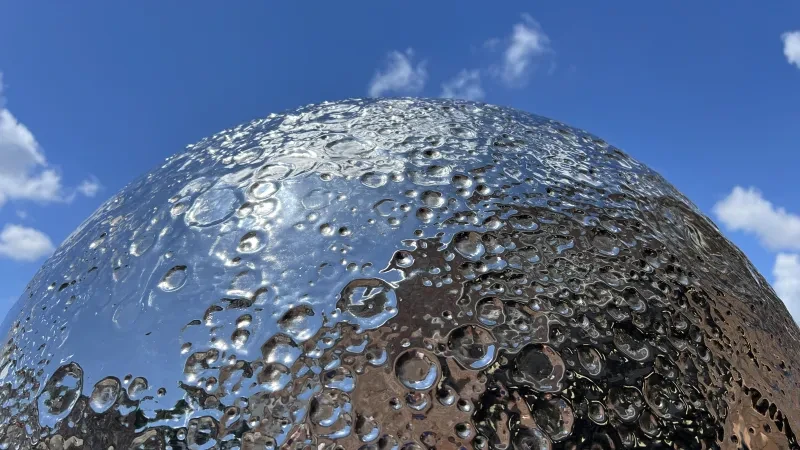
The final stage is a meticulous polishing process, progressing through increasingly fine grades of polishing tool to achieve the artwork's smooth, luminous mirrored surface.
1 / 3
Polishing Mirror Moon
2 / 3
The polishing process, progresses through increasingly fine grades of polishing tool
3 / 3
Mirror Moon begins to shine under the polishing process
The result is a fusion of scientific accuracy and artistic expertise: a sculpture that conveys the raw beauty of the Moon and is a testament to the craft required to bring it into our orbit here on Earth.
And you must come and see it! Just as the real Moon reflects sunlight, when we meet Mirror Moon, it reflects us: our movements, our faces, and our enduring fascination with our closest celestial neighbour.
1 / 3
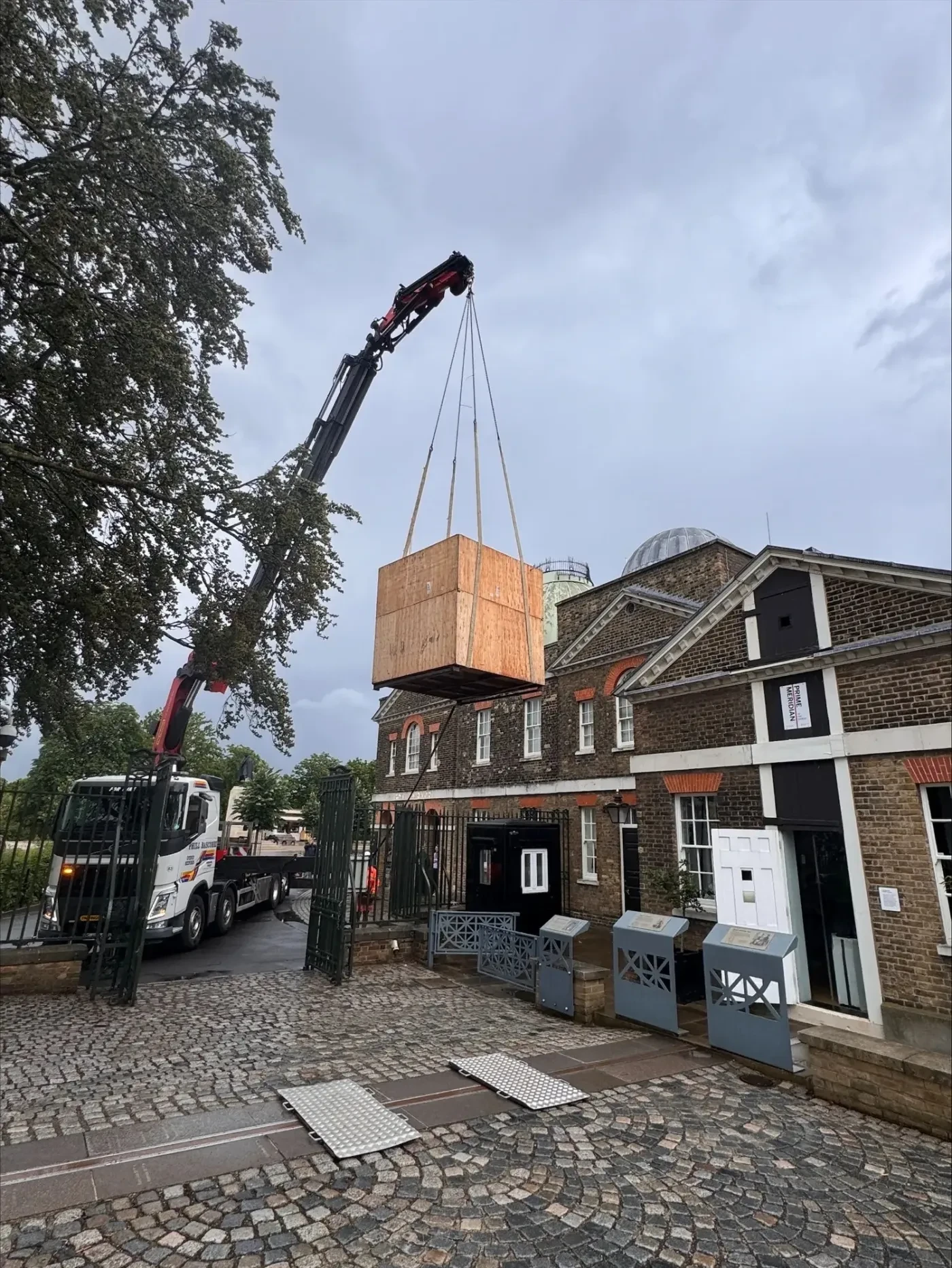
A crane lifts the boxed Mirror Moon into the Royal Observatory's Meridian Courtyard
2 / 3
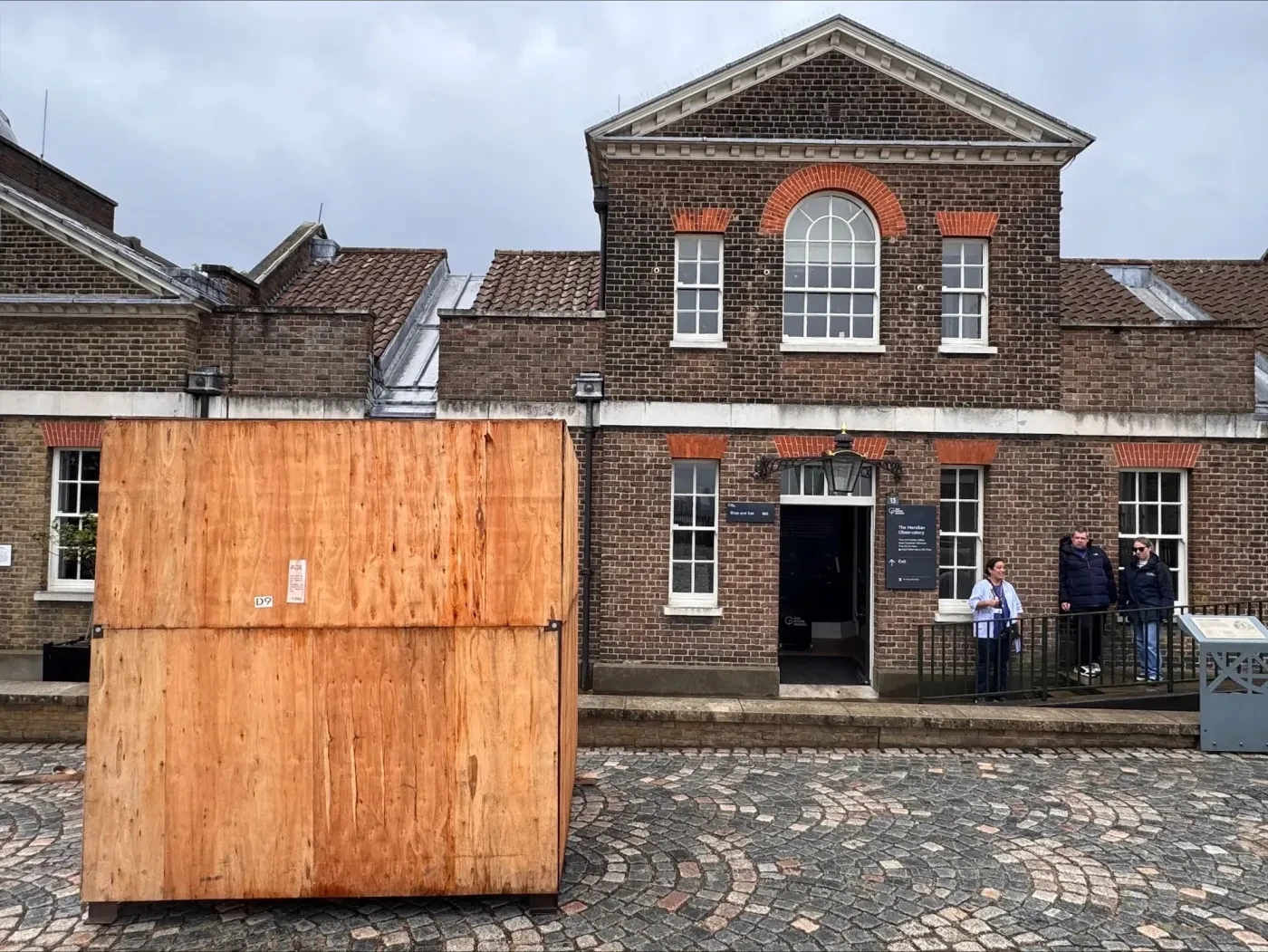
The boxed Mirror Moon arrives in the Meridian Courtyard
3 / 3
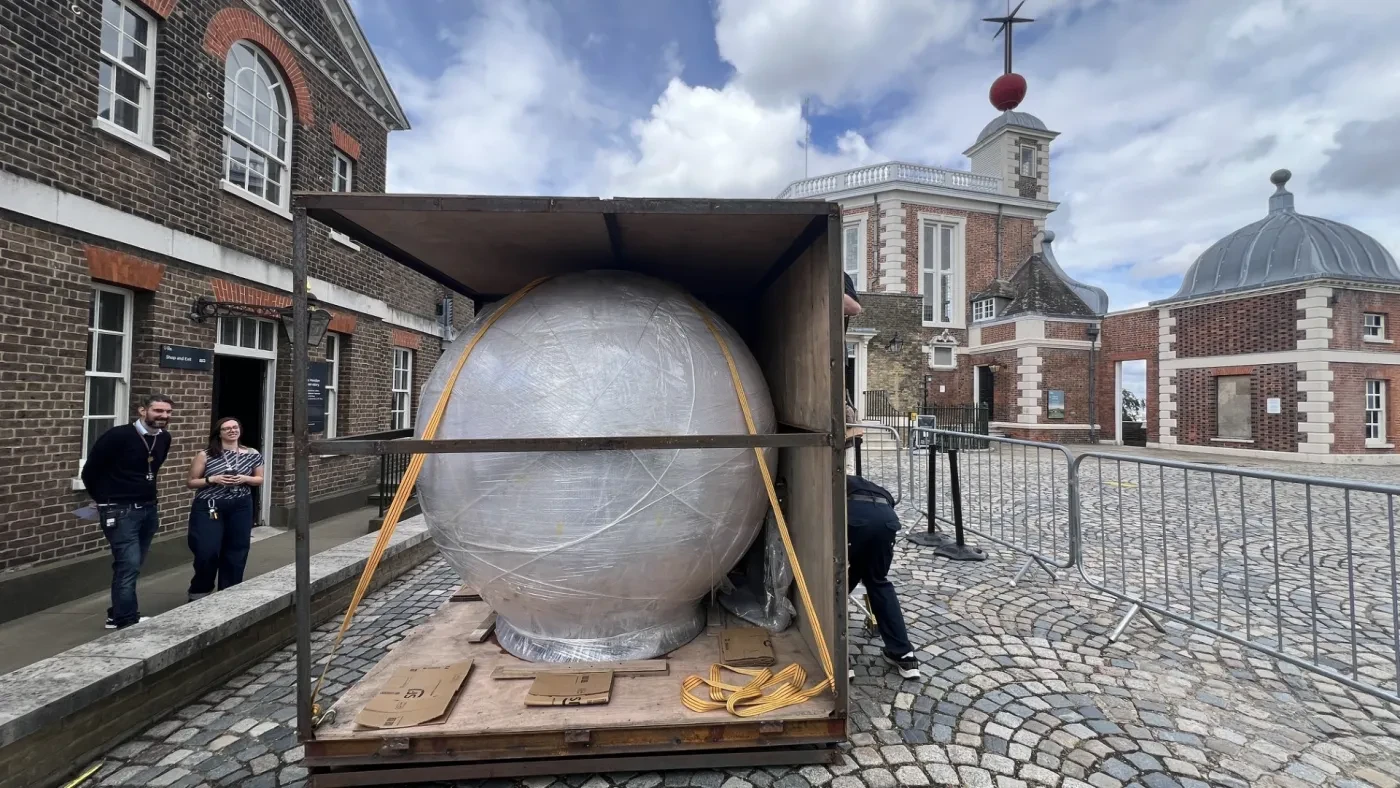
Mirror Moon emerges from its box
More to explore
Shop the collection


