Uncharted Voices: Subaltern Cultures and Identities in Global Seafaring, 1880–1950
An AHRC Collaborative Doctoral Partnership (CDP) studentship with Royal Museums Greenwich and University of Portsmouth
About the project
Applications are invited for a fully-funded four-year PhD to commence on 1 October 2026.
The National Maritime Museum, part of the REACH CDP Consortium, and the University of Portsmouth are pleased to announce the availability of a fully funded collaborative doctoral studentship from October 2026 under the AHRC’s Collaborative Doctoral Partnerships (CDP) scheme.
This project will be jointly supervised by Lucy Dale and Dr Hannah Stockton from the National Maritime Museum and Professor Brad Beaven and Dr Karl Bell from the University of Portsmouth. The student will be expected to spend time at both the University of Portsmouth and the National Maritime Museum, as well as becoming part of the wider cohort of CDP-funded students across the UK.
CDP doctoral training grants fund full-time studentships for four years or part-time equivalent up to a maximum of eight years.
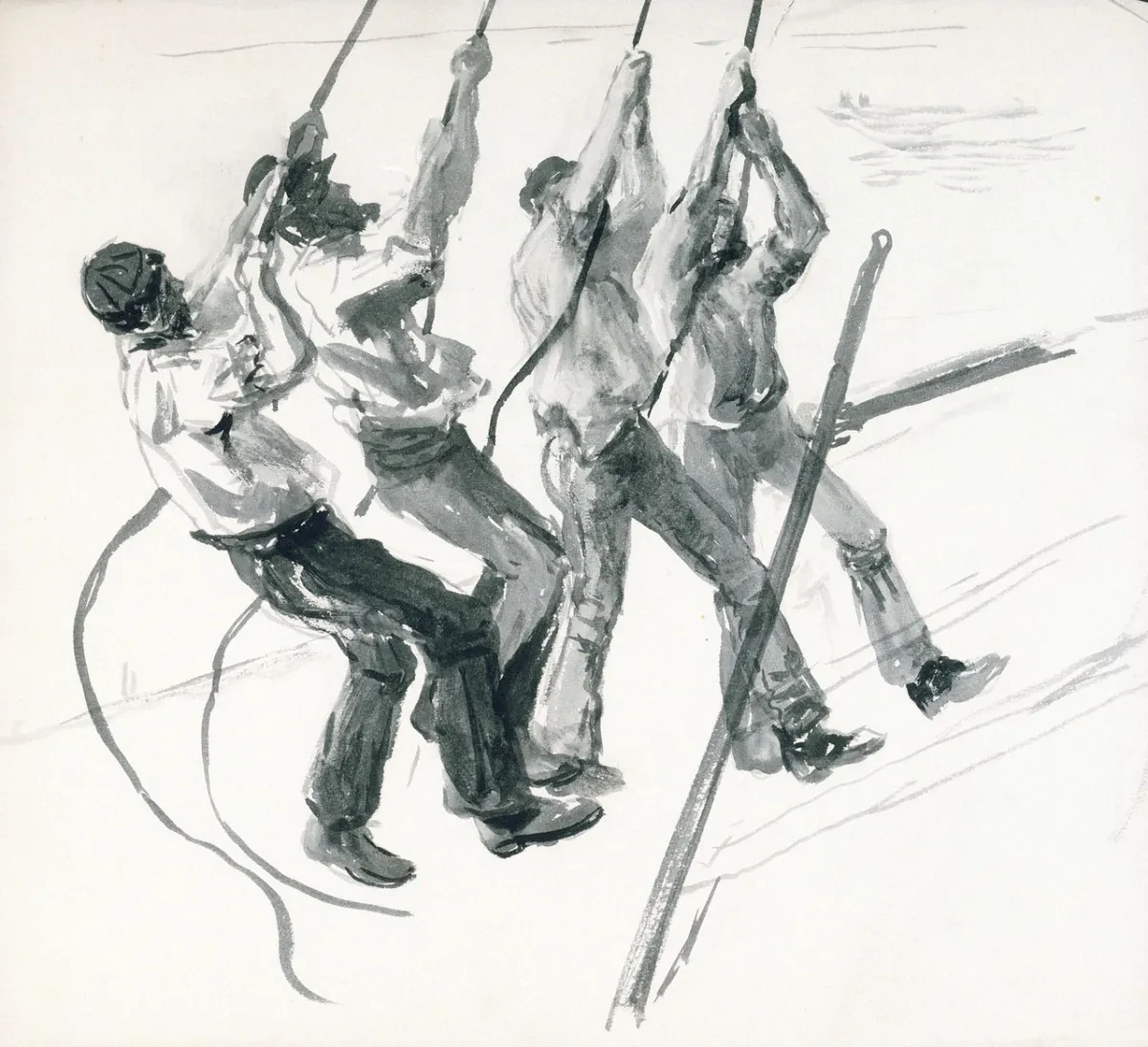
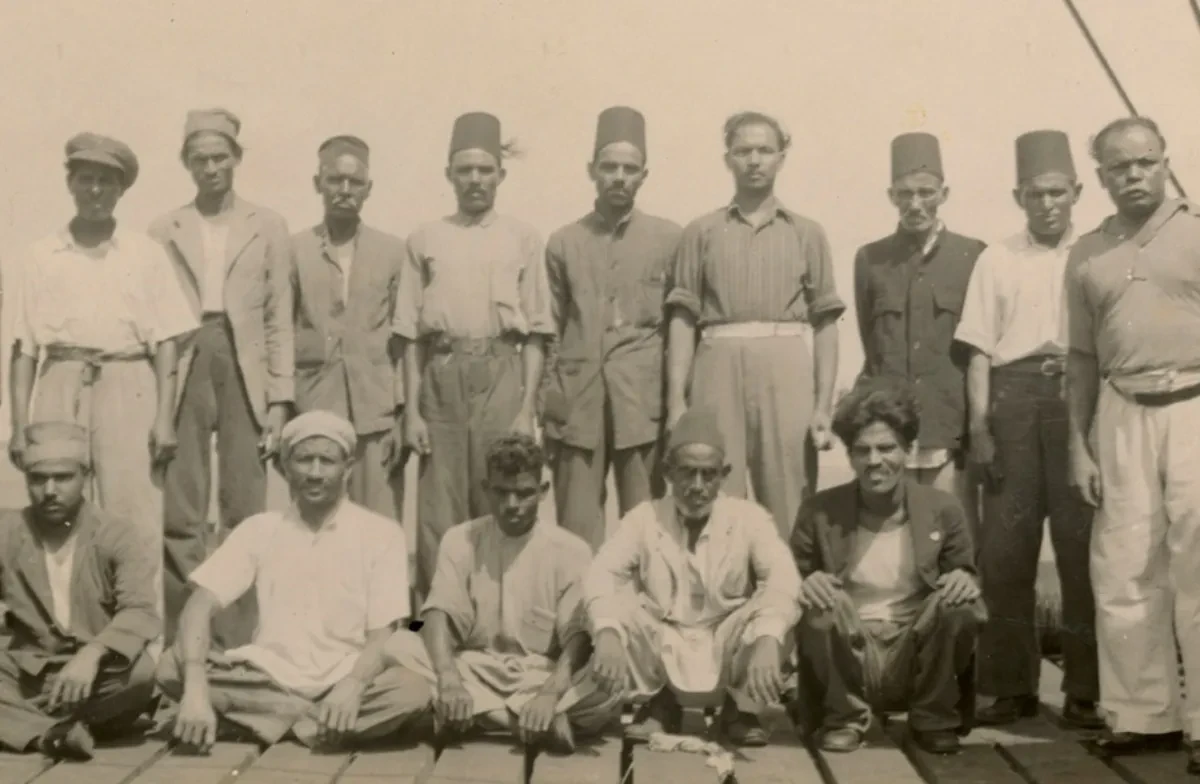
This PhD proposes a critical investigation of the Campbell McMurray Collection (CMC), a remarkable but unexplored oral history collection housed at Royal Museums Greenwich. Comprising around 500 digitised tapes, the collection captures personal narratives of (primarily British) merchant seamen from the 1890s to the 1950s. Through a thematic analysis of these testimonies, this research will recover hidden maritime voices and explore the complex ways in which seafarers navigated their identities, family relations, cultural interactions, occupational knowledge, and working-class affiliations across maritime and urban domains.
As transient workers, seafarers embodied the migration of people, objects and ideas between distant ports, while navigating their own marginalised positions within imperial and postcolonial worlds. By foregrounding voices from the CMC, some of which belong to migrant, and working-class men, this research addresses the theme of diverse and hidden histories. Integrating analysis of family relations further uncovers emotional and domestic dimensions of global labour histories.
Image
Through collaboration with the National Maritime Museum’s public history initiatives, the project will also contribute to interpreting this archive for broader audiences, enhancing heritage narratives and public engagement. The CMC represents a rich but under-researched source of information about maritime intangible heritage, especially regarding mariners’ cultural practices at sea.
The successful student will be expected to develop their own lines of enquiry and research approach to the project, but initial research questions might include:
- In what ways did merchant seafarers articulate their sense of identity across maritime and urban domains?
- How did seafarers manage family relationships while navigating between maritime and urban lives?
- What sort of traditions and cultural practices at sea did seafarers engage in?
- To what extent were seafarers integrated into or excluded from working-class communities ashore?
The work on this project could involve:
- Professional immersion: The student will gain direct experience in the cultural and heritage sector through a collaborative partnership, spending time at both lead organisations.
- On-site research and training: The role includes four years of embedded training and career development, primarily based at the National Maritime Museum in Greenwich.
- International recognition: Benefit from the Centre of Port Cities and Cultures’ wealth of knowledge and international networks while simultaneously showcasing cutting-edge research.
- Flexible engagement: While the project allows for remote work, the student is encouraged to regularly collaborate on-site with the National Maritime Museum curatorial team to conduct oral history and archival research.
Image
General admissions criteria
You'll need a good first degree from an internationally recognised university (minimum upper second class or equivalent, depending on your chosen course).
Students should have a Master's Degree in a relevant subject or demonstrate relevant equivalent experience.
English language proficiency should be at a minimum of IELTS band 6.5, with no component score below 6.0.
- We encourage applications from a diverse range of people, from different backgrounds and career stages. This studentship is open to both home and international applicants.
- Further guidance can be found here based on revisions to Training Grant Terms and Conditions for projects starting in October 2026: Policy statement: review of the training grant conditions – UKRI.
- International students are eligible to receive the full award for maintenance, as are home students. The University will waive the difference between what the AHRC provides to the university for tuition and the charge made by the University for tuition fees for international students studying for a doctoral degree.
- We want to encourage the widest range of potential students to study for a CDP studentship and are committed to welcoming students from different backgrounds to apply. We particularly welcome applications from people of Global Majority backgrounds as they are currently underrepresented at this level in this area.
Specific candidate requirements
- Applicants should ideally have or expect to receive a relevant Master's-level qualification in a relevant subject e.g. History, Social History, Urban History, Cultural History, Maritime History, Heritage Management, Museum Studies – or be able to demonstrate equivalent experience in a professional setting such as the cultural and heritage sector. If you have any questions on eligibility, please email us at the address below.
- Applicants must be able to demonstrate an interest in social, cultural and maritime history, oral history, the museum and heritage sector, collections-based research and an enthusiasm for developing interdisciplinary skills.
Information webinar
We recommend all candidates watch this recording of the Project Information Webinar which was held on 24 March.
How to apply
We’d encourage you to contact Professor Brad Beaven to discuss your interest before you apply. You are required to include a 1,000-word proposal. There is information on how to structure your proposal.
Please use our online application form. Make sure you submit a personal statement, proof of your degrees and grades, details of two referees, proof of your English language proficiency and an up-to-date CV. Our ‘How to Apply’ page offers further guidance on the PhD application process.
We ask all applicants to complete a voluntary EDI monitoring form here. All responses are anonymous.
If you want to be considered for this funded PhD opportunity, you must quote project code ASH10030526 when applying. Please note that email applications are not accepted.
Application Deadline: Sunday 10 May at 23.59
Funding notes
The award pays tuition fees up to the value of the full-time home fee. Research Councils UK Indicative Fee Level for 2026/2027 is £5,238. The University will waive the difference between this and the fee for overseas students.
The award pays an annual stipend for all students, both home and international students. This stipend is tax free, and is the equivalent of an annual salary, enabling the student to pay living costs. The UKRI Minimum Doctoral Stipend for 2026/2027 is £21,805 plus London Weighting of £1,000/year. There is a CDP uplift of £600 per year that will be paid with the stipend. The total amount of the award per annum, with London Weighting and CDP uplift, is therefore £23,405.
The successful candidate is eligible to receive an additional travel and related expenses grant during the course of the project courtesy of the National Maritime Museum worth up to £1,000 per year for four years. There is an additional £750 per year available for research expenses from the AHRC via the Research Training and Support Grant within the CDP award.
Costs for student visa and immigration health surcharge are not covered by this bursary.