
Essential information
| Location | |
|---|---|
| Price | Free |
For much of the 18th and 19th centuries, Britain was at war with European rivals, such as France.
During this period, the Royal Navy played a crucial role in British daily life. It protected the nation against invasion and generated wealth and employment by defending and promoting trade.
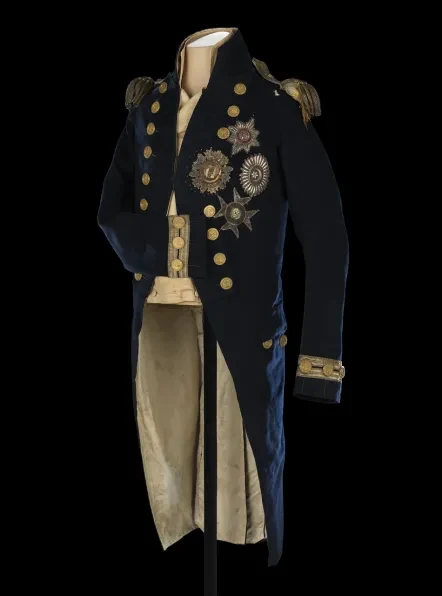
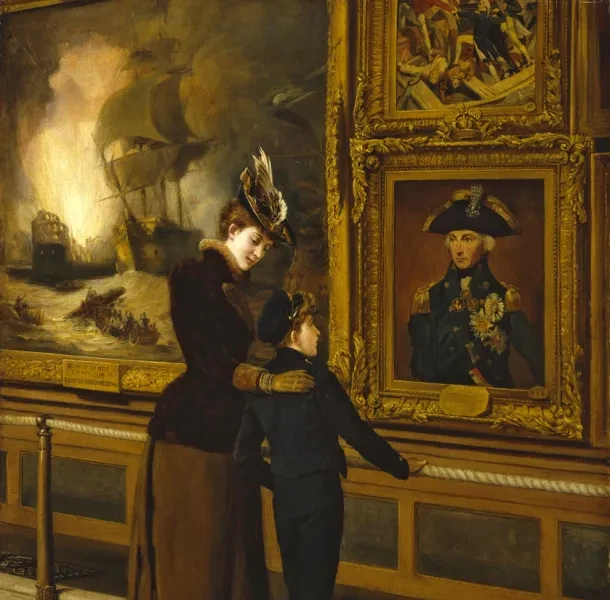
Britain’s naval successes saw officers achieve celebrity status. The most famous of these was Vice-Admiral Horatio Nelson, whose daring victories in the Napoleonic Wars and the Battle of Trafalgar in 1805 established his heroic reputation.
Triumph and loss, fear and bravery, fame and pain: discover the history of life at sea in the Nelson, Navy, Nation gallery at the National Maritime Museum.
Inside the gallery
Image
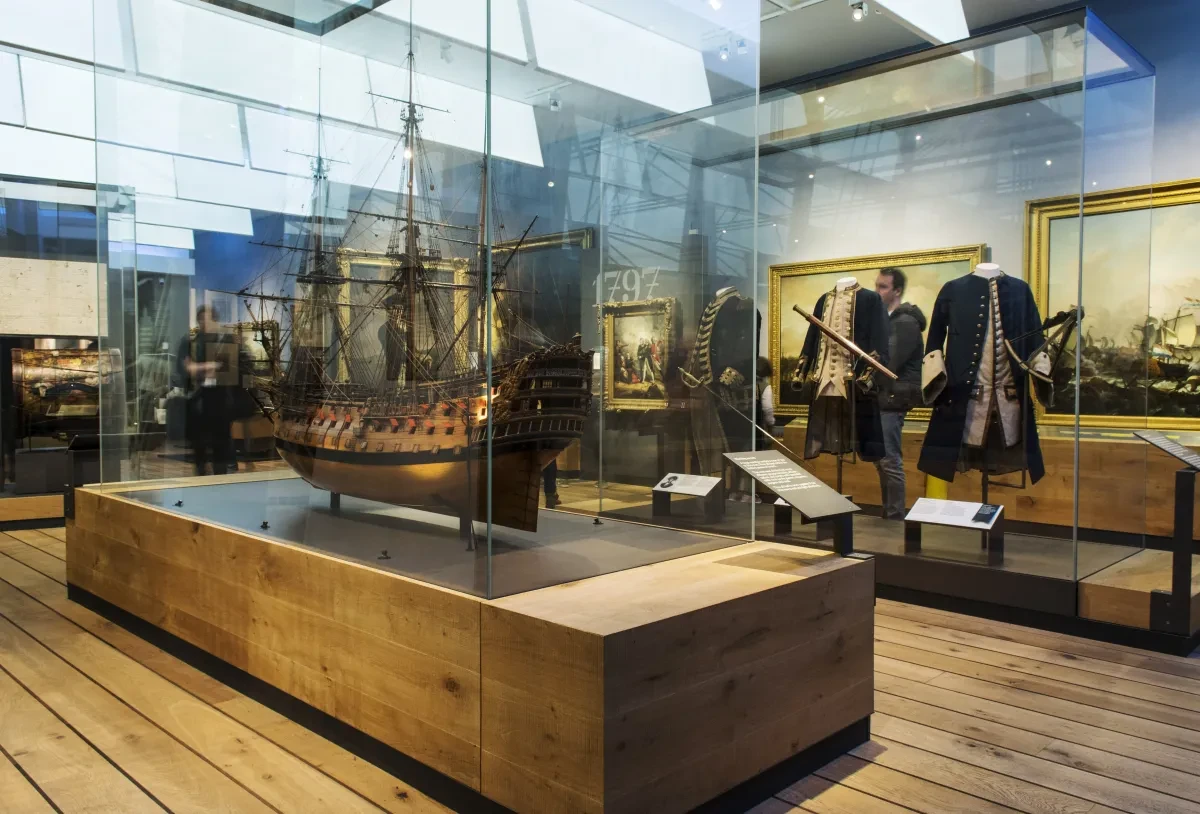
From bustling dockyards to sea battles, the gallery offers an insight into life in the Royal Navy, spanning the Glorious Revolution of 1688 to the defeat of Napoleon in 1815.
This was a time of turmoil. The Glorious Revolution – which saw James II overthrown by William III and Mary II – and ongoing tensions with France highlighted the ever-present threat of invasion.
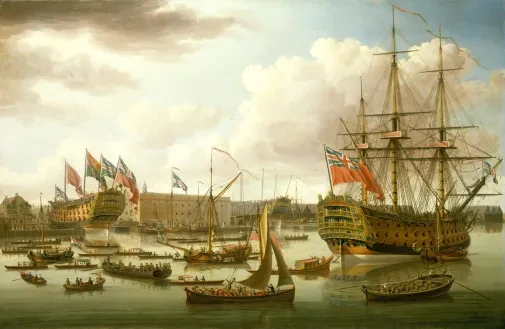
The Royal Navy was Britain’s first line of defence against potential attacks. The Royal Dockyards at Deptford, Woolwich, Chatham, Sheerness, Portsmouth and Plymouth were vast industrial hubs, responsible for building and maintaining state-of-the-art warships.
These large vessels accommodated up to 800 crew members, such as officers, sailors, carpenters and surgeons.
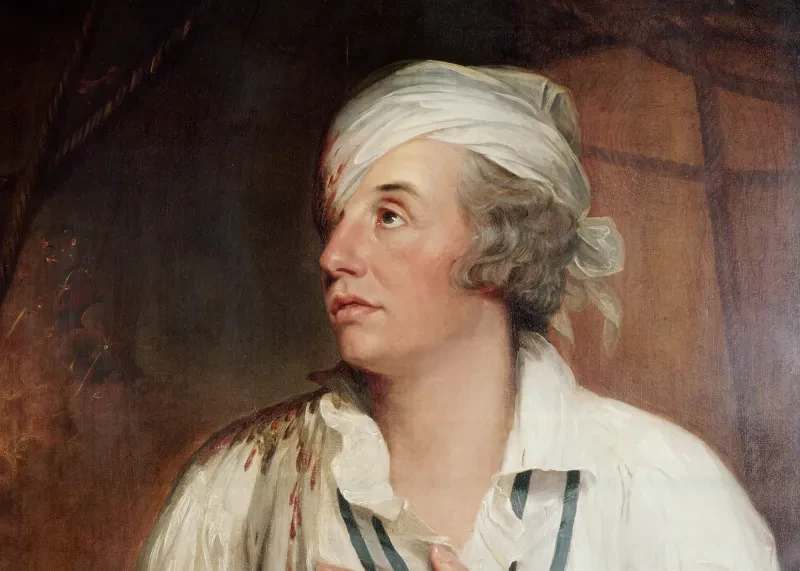
Life on board was filled with challenges, including cramped conditions and disease. Naval battles came with the risk of serious injury and death; however, victories in these conflicts could result in officers becoming celebrities.
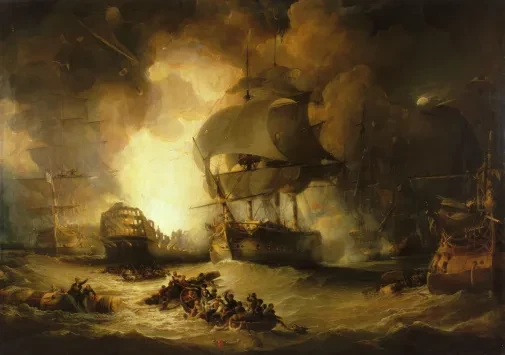
The most celebrated naval officer in British history, Vice-Admiral Horatio Nelson was catapulted to fame following his defeat of the French fleet at the Battle of the Nile in 1798.
His greatest victory – and final encounter – occurred on 21 October 1805 at the Battle of Trafalgar. Nelson led Britain to victory against a combined French and Spanish fleet, but he was killed in the conflict by a musket shot. Nelson’s death resulted in an outpouring of public grief, and he received a state funeral at St Paul’s Cathedral.
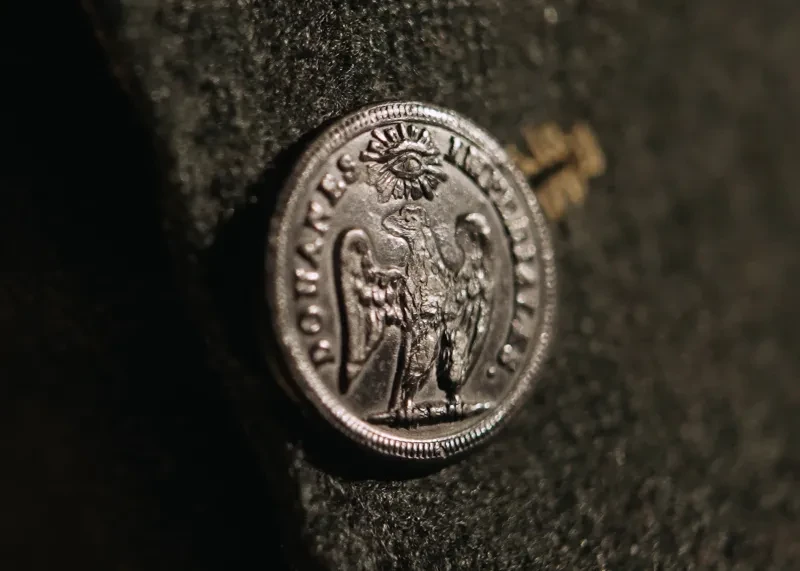
Following the Battle of Trafalgar, Britain’s naval success continued. In 1815, the Royal Navy played an instrumental part in defeating French Emperor Napoleon Bonaparte at the Battle of Waterloo.
Visiting Nelson, Navy, Nation
Where is the gallery?
Nelson, Navy, Nation is a permanent gallery at the National Maritime Museum in Greenwich, located on the second floor. Entry to the Museum is free: book tickets online in advance to guarantee entry and receive updates before you visit.
Tours and audio guides
Nelson, Navy, Nation features as part of the range of audio guides available at the National Maritime Museum. Listen to a free introduction to the gallery here, or find out more about objects on display by ordering a special Treasures Tour.
Accessibility information
The main section of Nelson, Navy, Nation gallery has a large aisle down the centre.
Some display cases in the main gallery display are from near-floor level, others range from 50cm-76cm display height.
The main audio-visual interactive, Nelsons' Tactics, is on a table at 73cm height, for leg room and the screen is 93cm to use.
There are five smaller alcoves off the main gallery. Three of these, ‘Navy and Nation’, ‘Surgery at Sea’ and ‘The Death of Nelson’ have seating in them. ‘Navy and Nation’ has a film to watch displayed on a large screen with sound. ‘Surgery at Sea’ has loud audio, audible throughout this section with a small screen displaying BSL interpretation and subtitles. This section has a display table with a leg room height of 69cm, display 85cm. In the fifth alcove, ‘A hero mourned’, the paintings are displayed at around 100cm and the labels at 78cm from floor.
At the west end of the gallery, there are several wall mounted interactive panels, called ‘Trafalgar & Beyond – Fleet’. The lowest of these is at 108cm and the highest is 146cm from the floor. Running the length of the main section of the gallery is a timeline. This is 69cm from the floor. The ‘Leisure & Letters home section at the east end of the gallery is 79cm height. This features a musical audio. A separate visual element and a display case. There is a large AV interactive at the east end of the gallery. There is a tactile ship model that can be touched also at the east end. Please be aware that a body of weapons is on display among the artifacts as well as images of war.
There are automatic glass doors at each end of the Nelson, Navy, Nation gallery.
BSL is included as part of the National Maritime Museum audio guide. Large print guides are also available inside the gallery.
Gallery closures
Occasionally some gallery closures may affect your visit to the National Maritime Museum.
Ideas for families
Keep an eye out for the special 'Play' boxes dotted around the gallery. Discover what seafarers ate at sea and learn how they kept ships clean!
Make the most of your visit
Find more free galleries and attractions at the National Maritime Museum.
Tickets and Opening
Free entry
10am-5pm daily
- Greenwich Station
- Cutty Sark DLR
- Maze Hill Station
- Greenwich Pier
Delve deeper


Visit the National Maritime Museum
Discover epic stories of exploration and endeavour that have shaped our world today