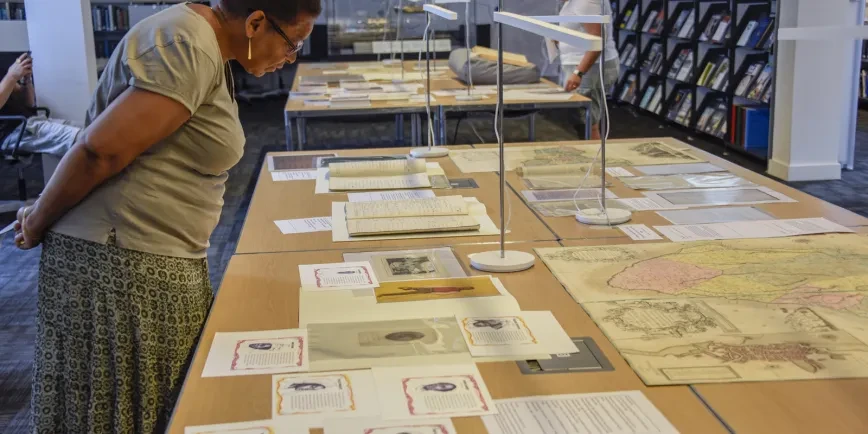
On the cusp of our sub-tropical winter, on 1 May 2026, the Norfolk Island Museum Trust and the Norfolk Island Museum celebrated the arrival of the Pitcairn Register to Norfolk Island.
The venue for the celebration was the Pier Store Museum, which stands at the neck of the Kingston Pier. At this spot almost exactly 170 years ago, a group of people from the island of Pitcairn had disembarked from the British emigrant ship Morayshire. It was 8 June 1856, a miserable and unbearably windy day. The islanders were soaked and colder than they had ever been on tropical Pitcairn, and they huddled together as they walked to find shelter and warmth.
The Pitcairn Register tells the story of those people.
Image
In brief: the story of the Bounty mutineers
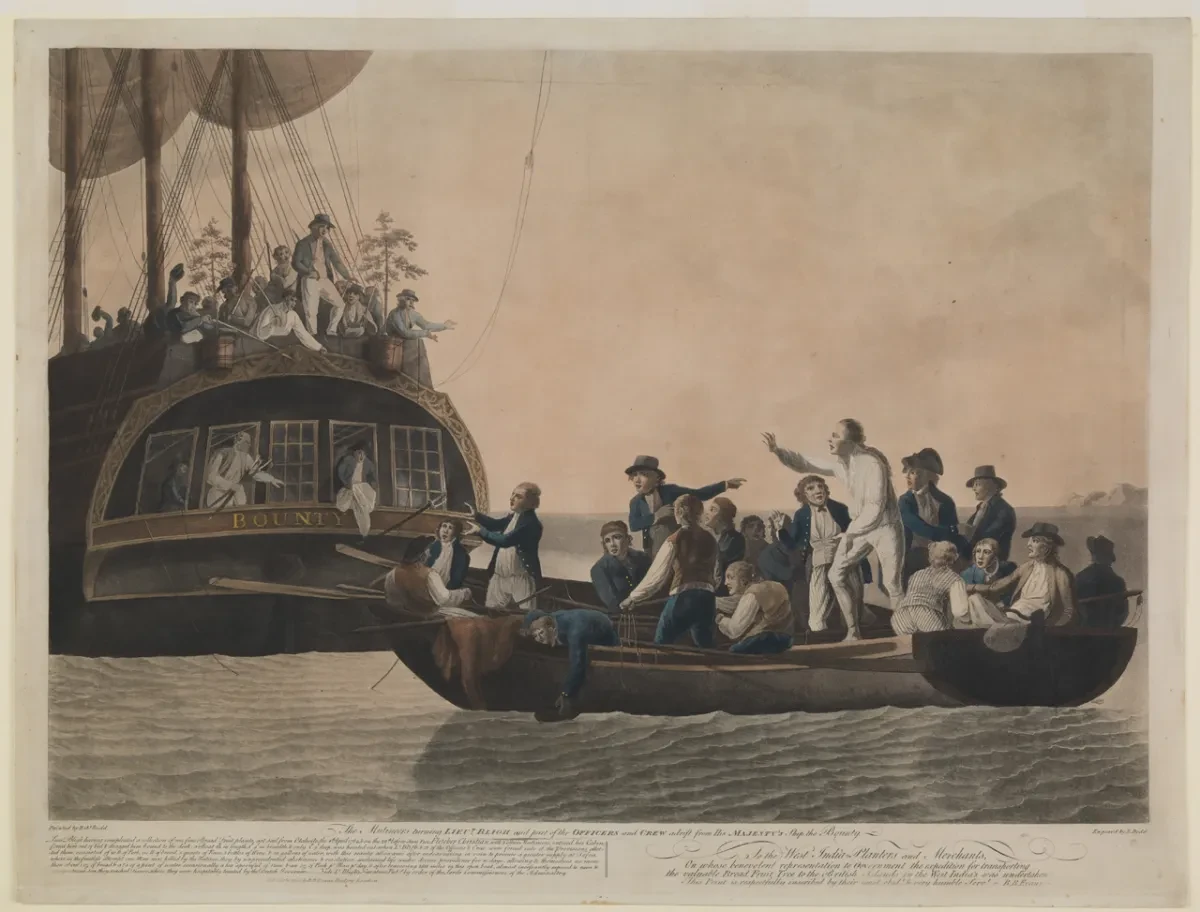
In 1787 HMS Bounty, a British ship under the command of William Bligh, set out on a voyage to Tahiti. Bligh's task was to collect breadfruit to transport to the West Indies.
Tensions grew after the ship departed Tahiti, and on 28 April 1789 Master’s Mate Fletcher Christian led a mutiny against Captain Bligh. The mutineers took control of the Bounty and set Bligh and 18 men loyal to him adrift in a small boat.
The rest of the crew returned to Tahiti. In order to escape reprisals, nine of the original mutineers later fled along with a group of Tahitian men and women. On 15 January 1790 they landed on the island of Pitcairn, where there had been previous Polynesian settlements but at that time was uninhabited.
For more than 60 years, a community descended from this original group developed on Pitcairn. The Pitcairn Register records births, marriages and deaths on the island from 1790 to 1854. In 1856, with the population increasing, the islanders agreed to move to Norfolk Island with the support of the British government.
A unique record of an island community
In 1823 a young man from Bristol arrived on Pitcairn Island. He was asked by the last living mutineer, John Adams, to stay among the community as a school teacher. The man’s name was John Buffett and, thankfully, he agreed.
In an inspired moment, the young immigrant put pen to paper, backdating the story, not to the infamous mutiny of the Bounty, nor to tales of rebellion, but to the very beginning of these unique people. He wrote,
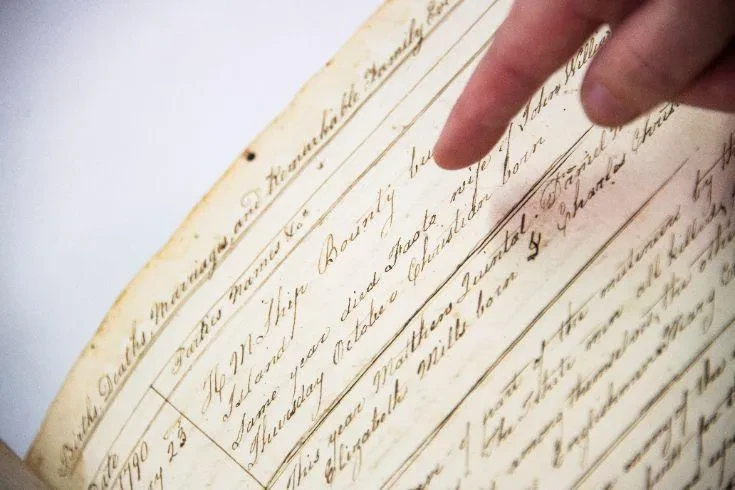
‘Date: 1790, January 23d. H.M. Ship Bounty burned at Pitcairn Island’.
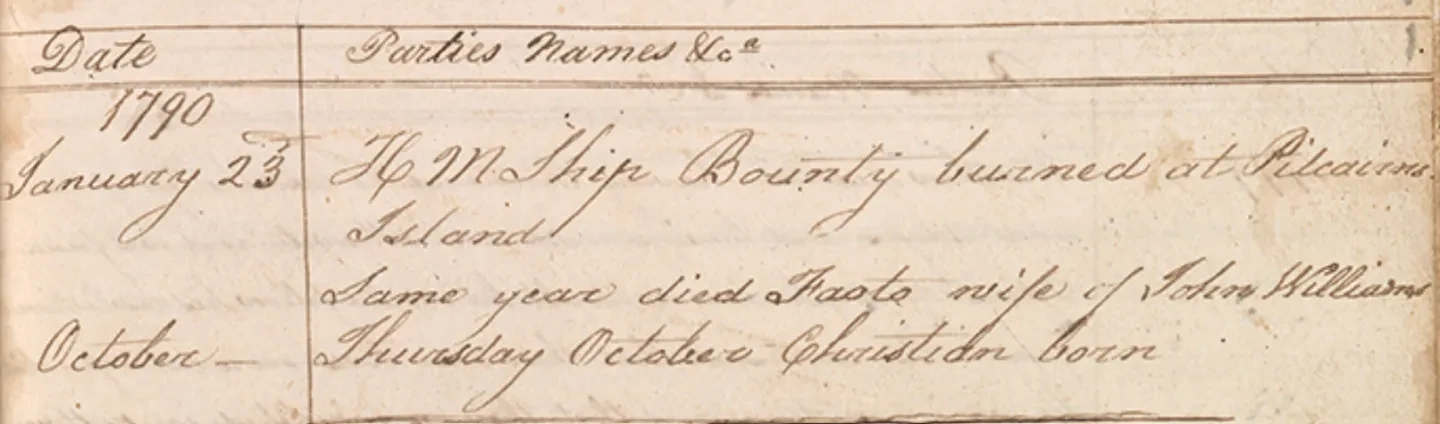
From there, Buffett wrote our book of origins – for that is how our community sees the Pitcairn Register today. It carries genealogical, cultural and linguistic information. He recorded the oral stories told by those in the community who actually witnessed those early years, when the Bounty settlers were birthing a new culture, a new community, and he wrote them down in detail.
When the Pitcairners left for their new home on Norfolk Island in 1856, the Pitcairn Register did not accompany them. It had in fact been shipped to England two years earlier as a (water-damaged) gift to John Murray, Secretary to the Society for Promoting Christian Knowledge. From there the Register eventually found its way to the National Maritime Museum in Greenwich.
That was where I first saw it, in the Pacific Gallery in 2010 during a Churchill Fellowship, but I did not grasp the significance of the book then. It was another descendant, Mervyn Buffett, who came to understand its importance after his family found it by searching online for objects related to their forebear.

'Pitcairn's Island, Augt 12th 1849'
PAI4613 • Prints & Drawings
Watercolour of Pitcairn by Edward Gennys Fanshawe. Fanshawe made three drawings of the island during a visit while in command of HMS 'Daphne' in August 1849. The caption notes the island's height, stating, '1200 ft - The Village is on the green patch about 500ft above the sea.'
The Pitcairn Register returns
In 1824, a year after first settling on the island, John Buffett married Dolly, the daughter of the Tahitian woman Mauatua and the mutineer Edward Young. By writing the Register therefore, Buffett was also writing the story of his future descendants – including mine.
When people on Norfolk Island understood the magnitude of the Pitcairn Register’s existence on the other side of the planet, the community became highly motivated to have it brought back to the people it describes. The campaign became a focus for many on the island, spearheaded by the Norfolk Island Museum Trust, a group of seven trustees representing the community. The Trust oversees the care of the collection of tao’a or treasures that tell the community’s stories, and works closely with the Norfolk Island Museum.
It took years of negotiating and fundraising and jumping through hurdles, but the journey has been well worth it. Work such as this is not only about the artefact, but also about the connections made along the way. The partnership with the National Maritime Museum has been rewarding and, I am sure, long lasting.
Film produced by Eye Design Films
Returning to the beginning of this story: at that night of celebration in the Pier Store Museum, an estimated 200 community members gathered, upstairs and downstairs, out the front and on the lawns outside, and squeezed in among the many artefacts that tell our stories. Together we welcomed the Register with hymns, traditional songs in our Indigenous Norfk language, and a chant of the names of the Polynesian women who were the foundation of the community in the very beginning. Eventually, the Register was unveiled by Mervyn Buffett’s partner Clare and Dr Helen Mears, who had accompanied the Register across the planet, crossing hemispheres, from Greenwich to Norfolk Island.
The cloth that veiled the Register up until that point was made by two tapa (barkcloth) artists, reigniting this Pacific practice in honour of our tupuna wahine (foremothers), who of course are recorded in this precious book of origins.
Image
Shared history
The Pitcairn Register is currently on display at Norfolk Island Museum. Helen Mears, Head of Curatorial at Royal Museums Greenwich, said, ‘With the support of the Norfolk Island Museum Trust, the National Maritime Museum is delighted to enable the descendants of this community to see the volume and excited by the opportunities for further knowledge sharing and partnership.’
Find your collection connections
Read more
Ocean crossings, cultural shifts and global forces