
Today in the UK, the subject of migration is highly politicised.
We're bombarded with slogans like ‘Stop the Boats’, ‘Island of Strangers’ and ‘Take Back Control’, which reduce migrants to mere numbers and strip them of their humanity. In the process, we lose sight of migrants as mothers and fathers, daughters and sons, sisters and brothers.
What about the lived experience of migrants themselves? This is something we’re actively seeking to address in ‘Crossings’, a new selection of 11 works now on display at the Queen's House.
Image
'Crossings' aims to centre migrant voices, and includes pieces from the existing collection which have never been displayed before as well as three exciting new acquisitions. The display is divided across two rooms: one speaking primarily to the process of maritime migration, and the other to its aftermath.
As an island nation, most movement in and out of Britain has historically taken place by sea. With its maritime focus, Royal Museums Greenwich is well-placed therefore to facilitate conversations around migration. It is also a subject which touches the lives of many of our visitors, especially in London, where around 40 per cent of the population were born abroad.
If we look deeper into our family histories, we can usually find a migration story. In my case, some of my father’s ancestors came over from Ireland, fleeing economic hardship. On my mother’s side, there were refugees escaping persecution in Eastern Europe. Like many northerners, I moved to London for better work opportunities.
Migration has enriched Britain in countless ways, the arts being one such example. We can see this reflected in the many objects in the collection made by artists who migrated to Britain.
The rooms where ‘Crossings’ is displayed for instance were used by the Van de Veldes, a Dutch father and son duo who were invited by Charles II to set up their studio in the Queen’s House in the 1670s. These economic migrants brought their artistic skills with them, initiating the English maritime painting tradition. The Queen’s House has many other migration stories. The two queens most closely associated with the building, Anna of Denmark and Henrietta Maria of France, were migrants too.
There are many reasons for migration, and in future years ‘Crossings’ will continue to provide a space to explore this complexity through rotating artworks. In my remit as Curator of Maps and Mobilities, I’m focused on acquiring new contemporary artworks for the Museum which help to communicate the varied experiences of migration, especially pieces which help to push the narrative beyond victimhood. By showcasing migrants' strength and cultural expressions, we are able to more fully humanise them as individuals.
What to expect
You’re likely to hear ‘Crossings’ before you see it. That’s because one of the featured artworks is a sound piece, Shore to Shore by artist Güler Ates in collaboration with Leyla Huysal and Yusuf Huysal.
Acquired by the Museum in 2025, the work was inspired by the story of a Turkish refugee family’s migration and exile. You can learn more about their story here.
The medium of sound provides a uniquely immersive ambience to reflect on the turmoil of displacement. Its multi-layered vocals ebb and flow in a hypnotic and tender lamentation, shaped by the complex textures of Anatolian folk music. Its haunting quality poignantly speaks to the uncertainty of the destination and the sadness for what is left behind.
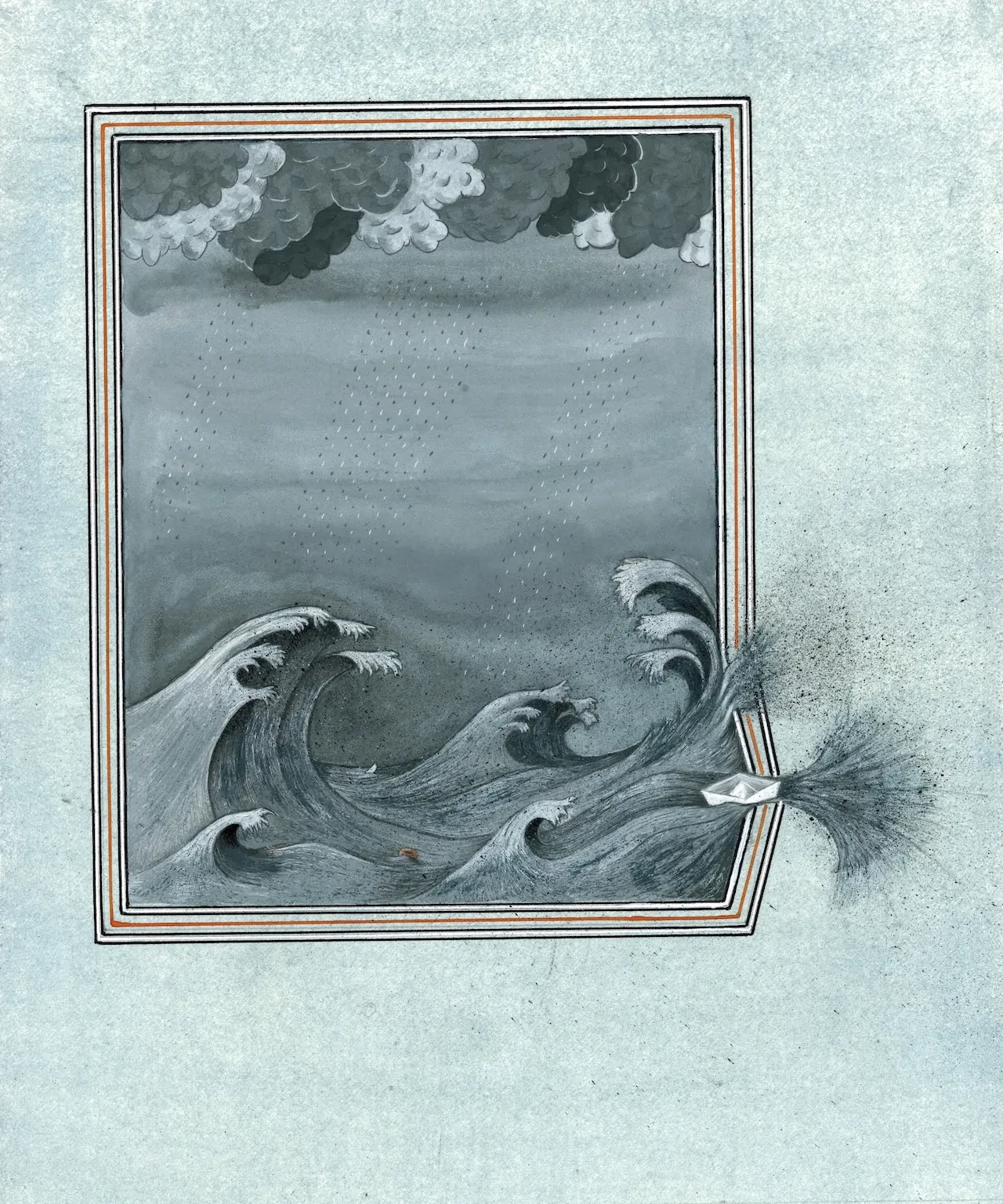
The sound piece seeps through the two rooms, interacting with the other displayed artworks, like Crossing Border by Shorsh Saleh. Another of the Museum’s new acquisitions, this painting highlights the dangers of sea crossings drawn from the artist’s own personal experience.
Employing traditional Indo-Persian miniature techniques, Saleh invites the viewer to look closely for delicate details, such as an orange life ring, almost invisible amongst the cresting waves. The paper boat breaking free of the frame suggests both migrants’ vulnerability as well as their tremendous courage braving such desperate circumstances in the hope of a better life.
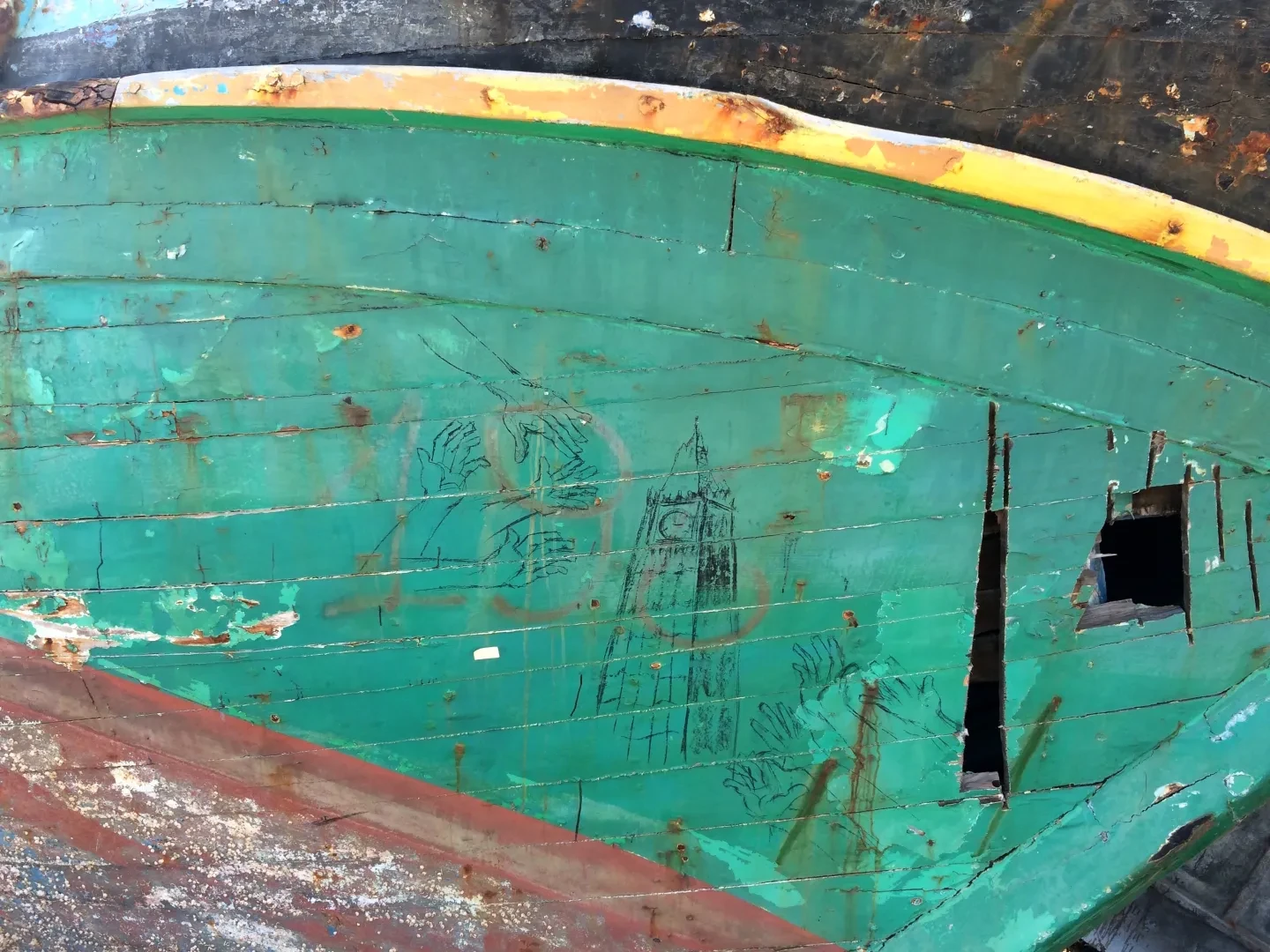
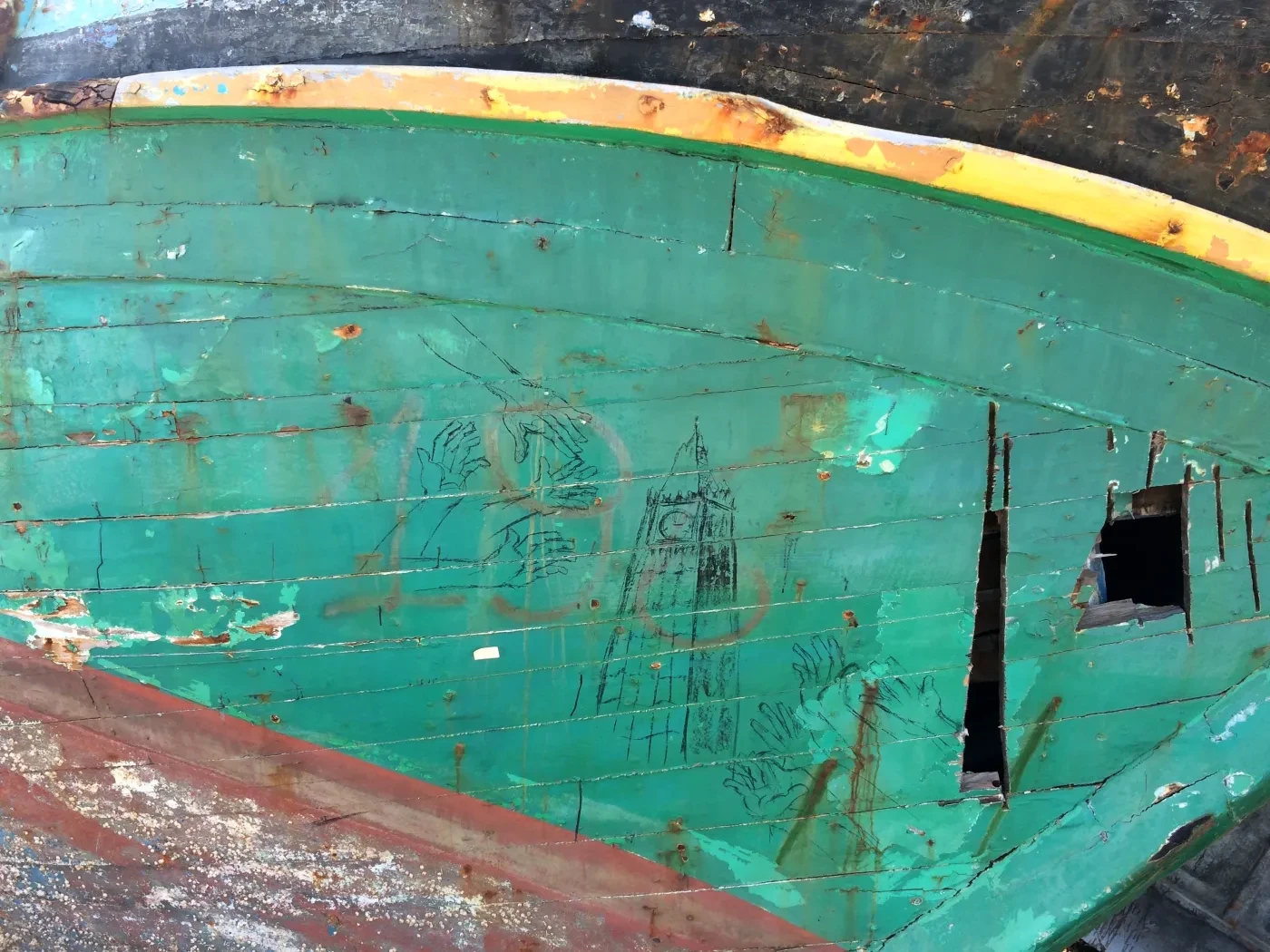
This aspiration is also evident in Maya Ramsay’s poignant photograph Hands Reaching out to Big Ben, which depicts an anonymous drawing found on the side of a shipwrecked and compounded migrant boat in Sicily. It is one of Ramsay's Anonymous (2017) series of photographs, taken to document these drawings before the vessels were destroyed and this fragile evidence lost forever.
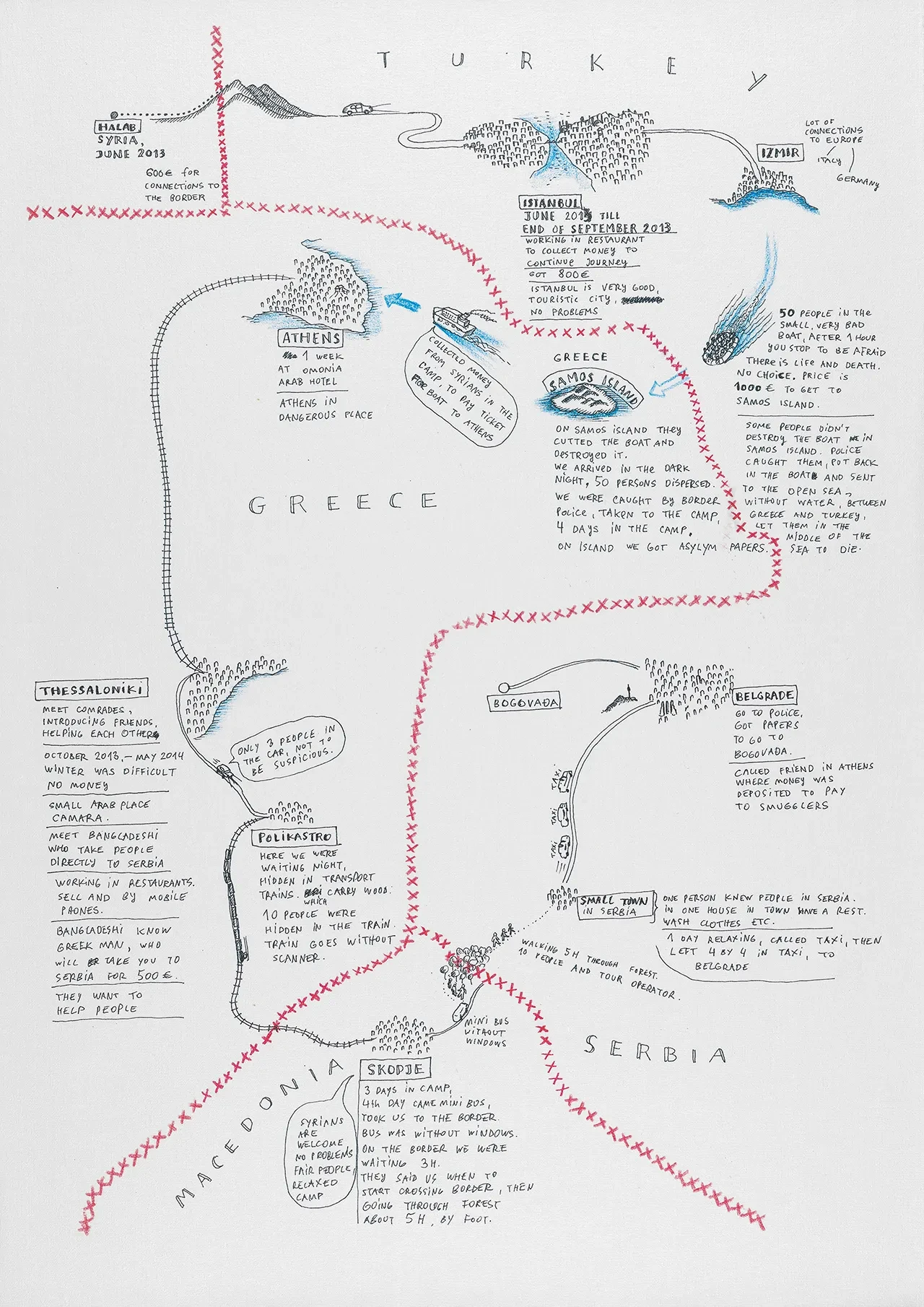
While Saleh and Ramsay’s works relate the emotional context of maritime crossings, Djordje Balmazovic hones in on the practical details as voiced by migrants themselves:
‘POLICE CAUGHT THEM, PUT BACK IN THE BOAT AND SENT TO THE OPEN SEA, WITHOUT WATER, BETWEEN GREECE AND TURKEY, LET THEM IN THE MIDDLE OF THE SEA TO DIE’
These are select words from his refugee narrative map, No.9 from Halab, Syria. Balmazovic co-produced the map through a series of creative workshops with migrants in Bogovađa asylum centre in Serbia.
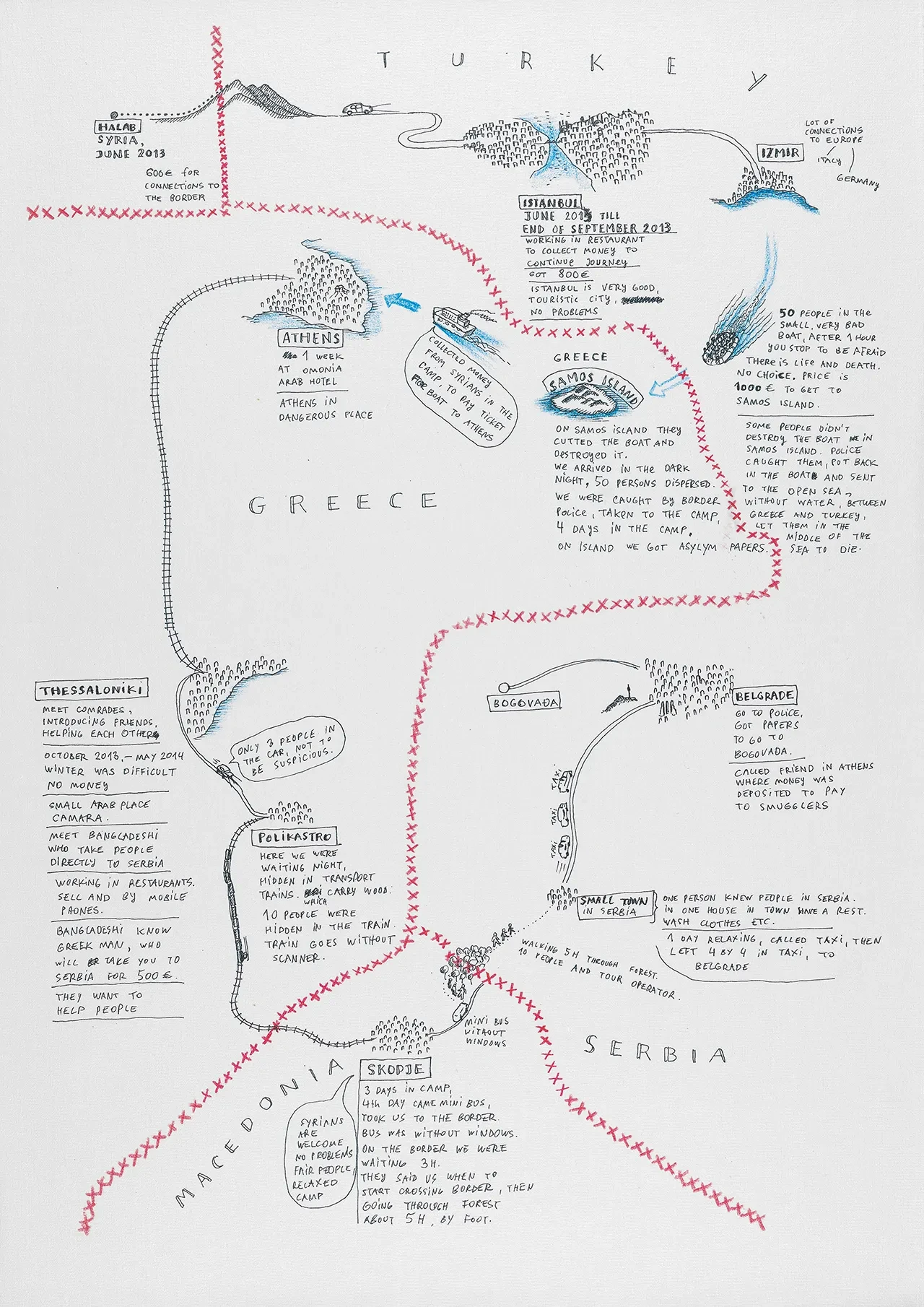
In Britain, migrants’ journeys are often flattened to just the final stage of their Channel crossing. In contrast, Balmazovic’s work matter-of-factly communicates the arduous and complex logistics and practicalities of migrants’ journeys. Embedded within his simple but powerful illustrations, these migrant voices enable the viewer to more fully comprehend the direct and personal impacts of inhumane European border regimes.
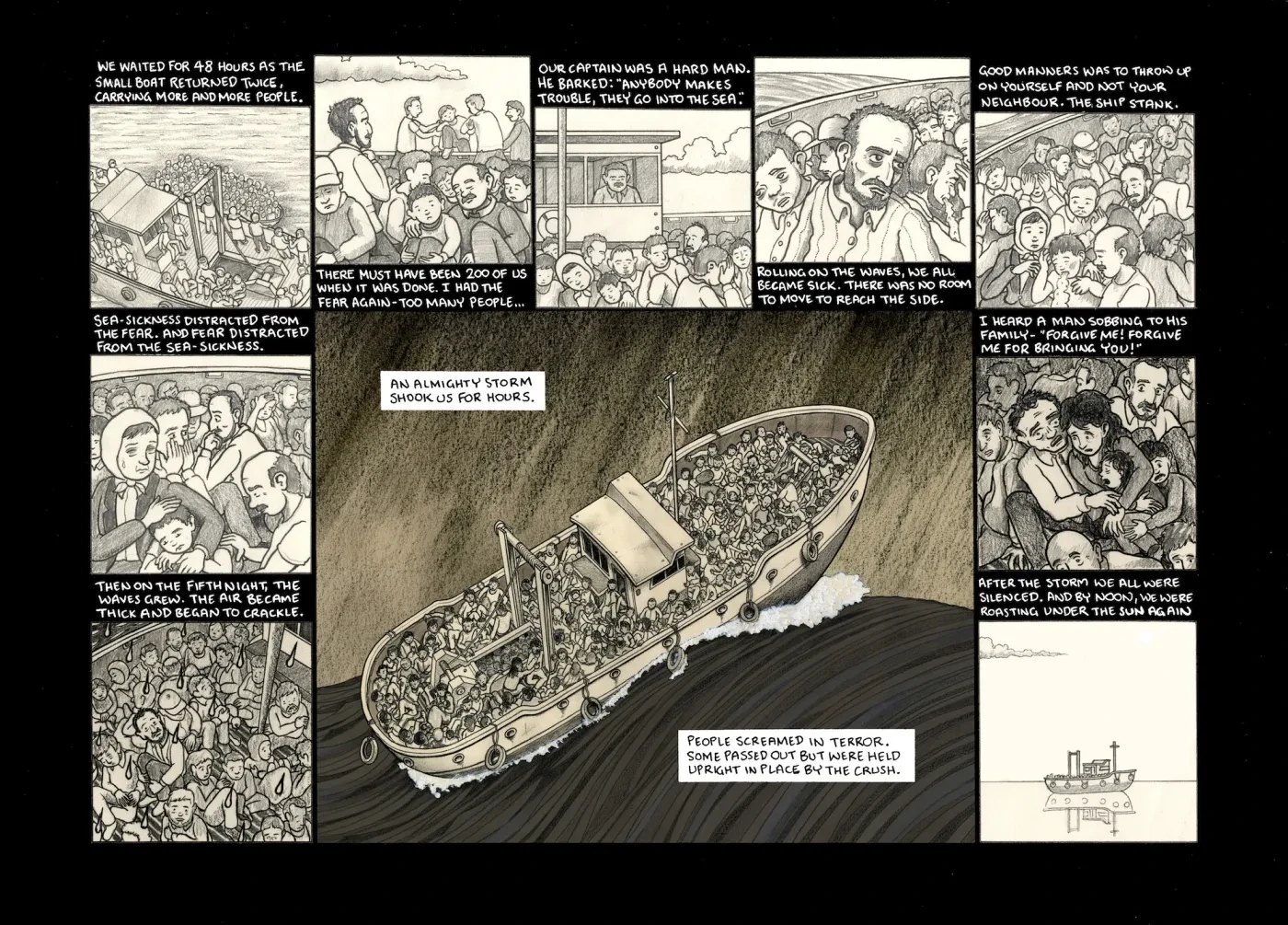
A Perilous Journey by PositiveNegatives also highlights the lived experience of migration, but in a more personal and intimate way. This comic strip illustrated by Lindsay Pollock presents the first-hand account of the journey made by the Syrian artist Hasko.
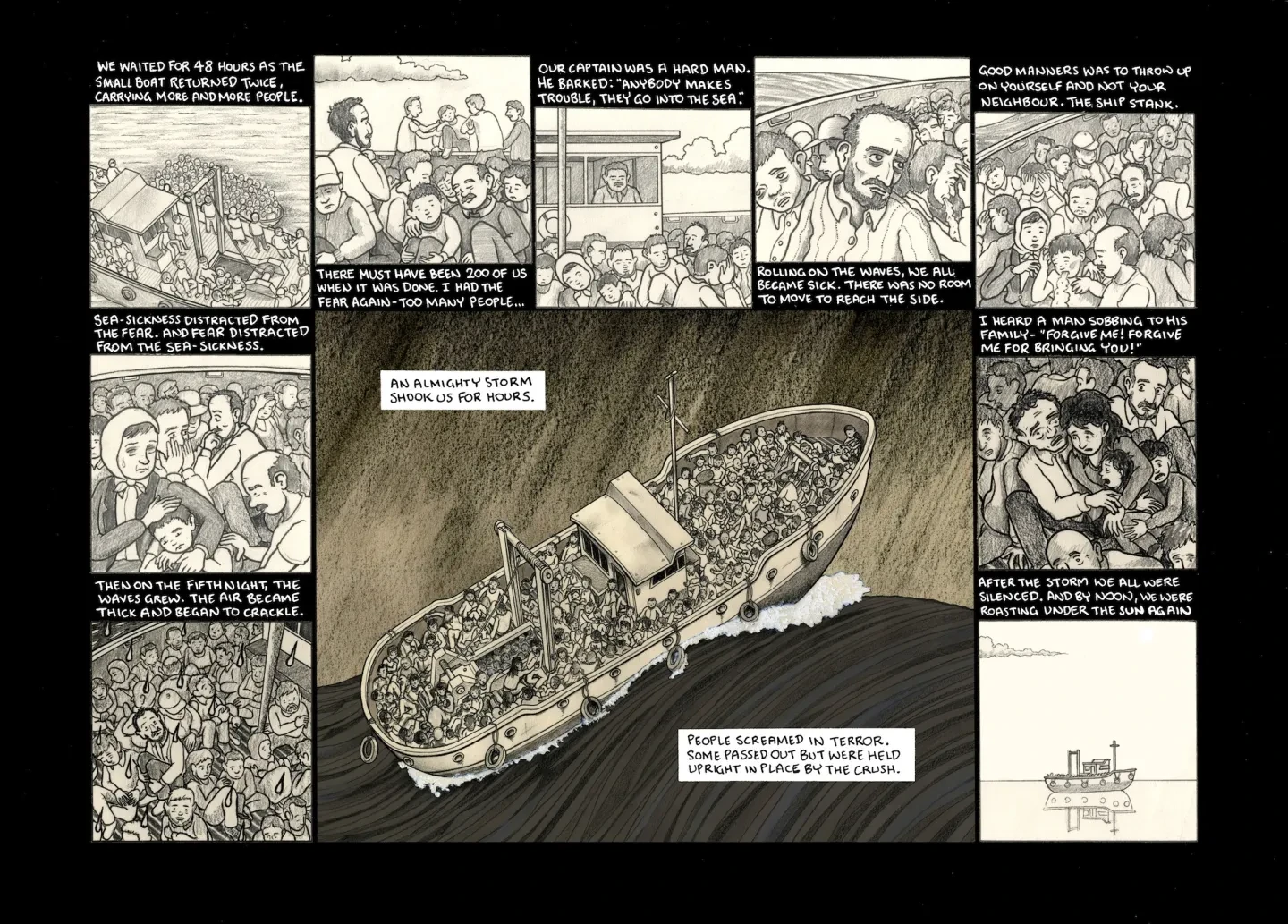
Through this visual storytelling we are confronted by the visceral and uncomfortable details of Hasko’s maritime crossing, from fear-provoked sobbing to vomiting seasickness. Occupying an entire wall in the form of an undulating wave, the cramped boat in the central panel prompts us to imagine its terrifying precarity at the mercy of the immense power of the ocean.
In the first room, centred on the process of maritime migration, borders are everywhere. You can see them clearly in the red barbed wire fences of Balmazovic’s map or the literal frame of Saleh’s Crossing Border that the paper boat is attempting to break through. In contrast to these physical borders, those of the second room, focused on the aftermath of migration, are more subtle. The works here relate to the borders which continue after the act of migration has taken place.
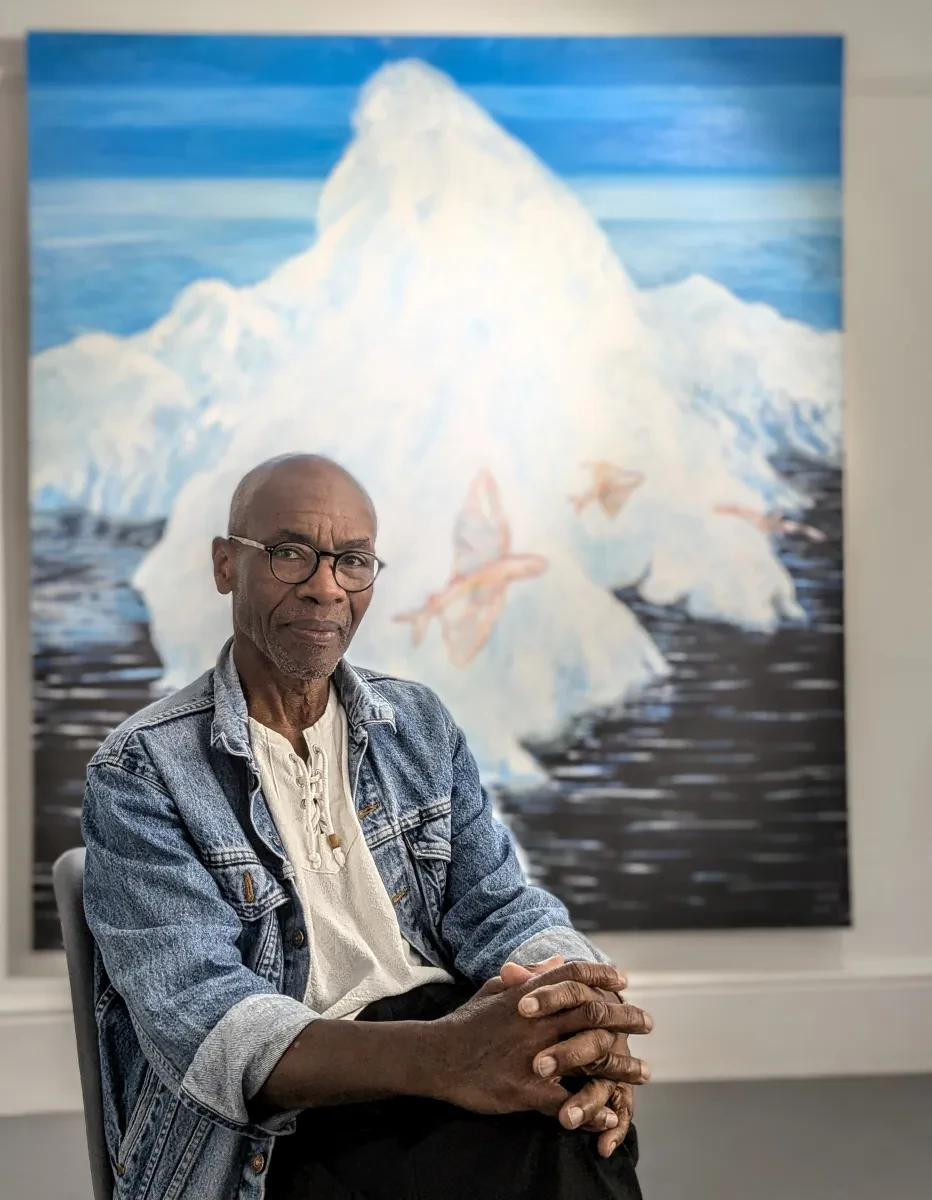
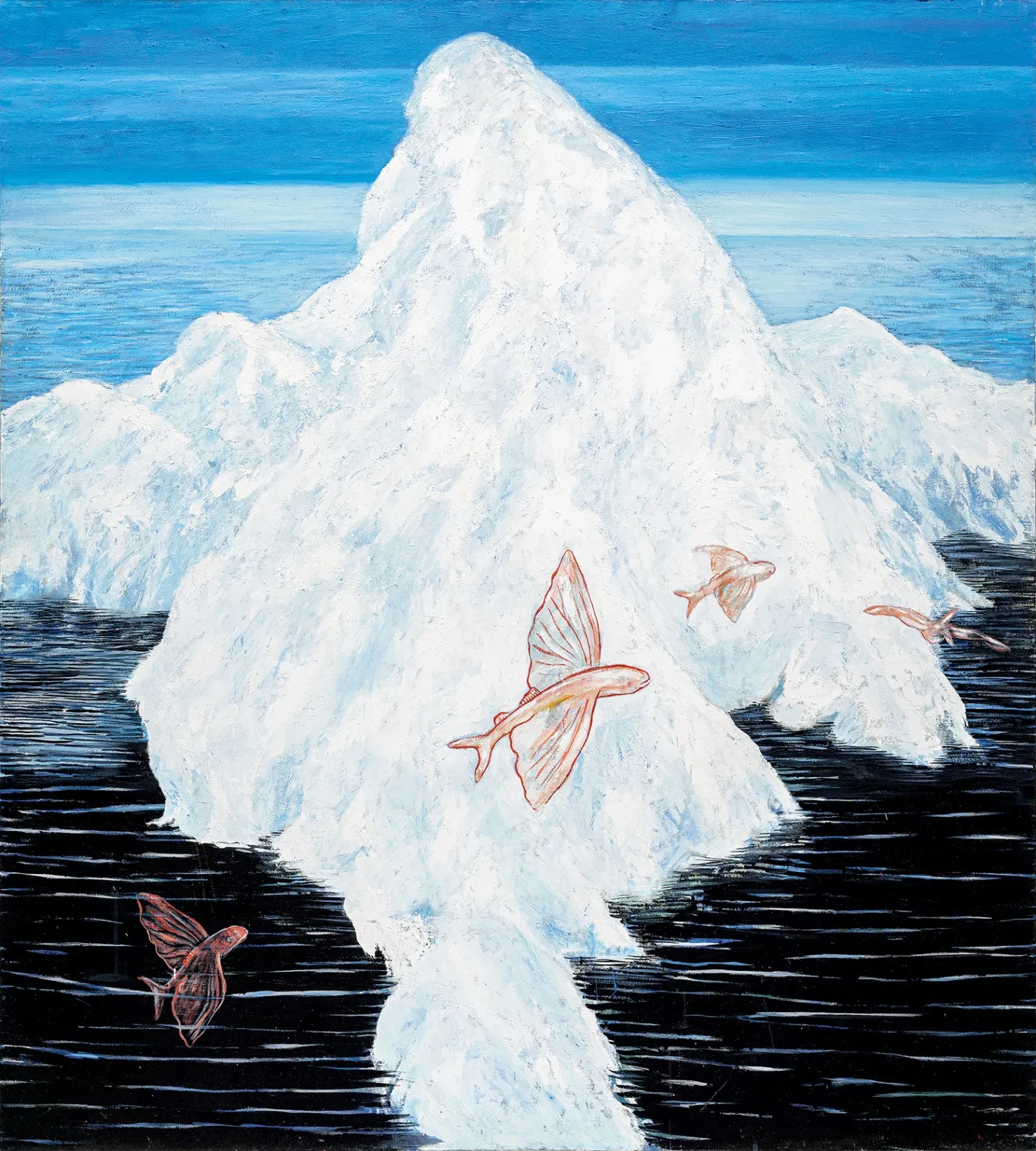
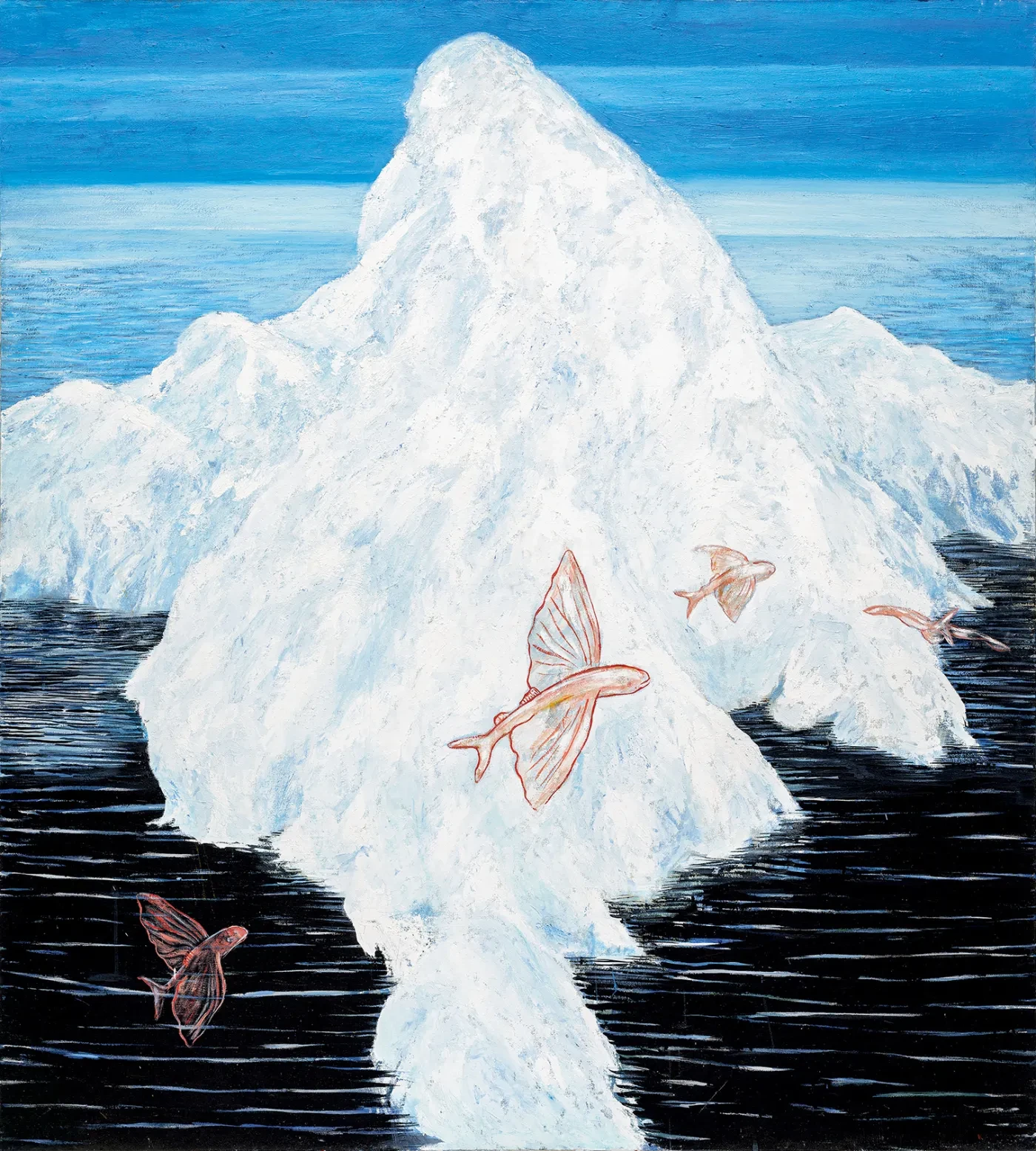
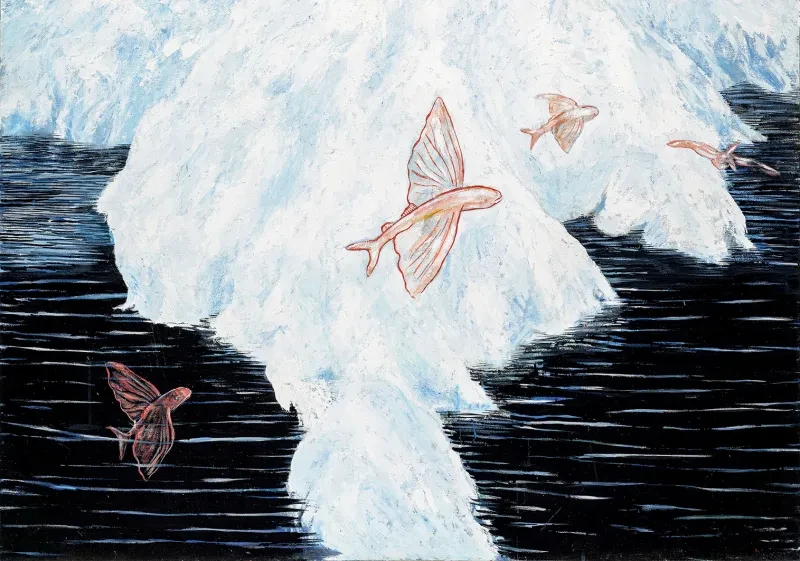
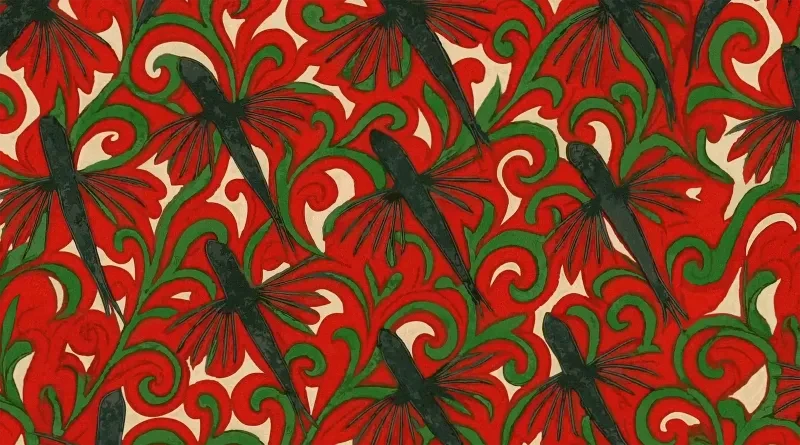
Tam Joseph’s painting Migrants is the largest work in the display. It depicts tropical flying fish leaping out of an icy Arctic Sea, literal fish out of water, reflecting the cold reception the artist experienced following his migration to the UK from Dominica as a child.
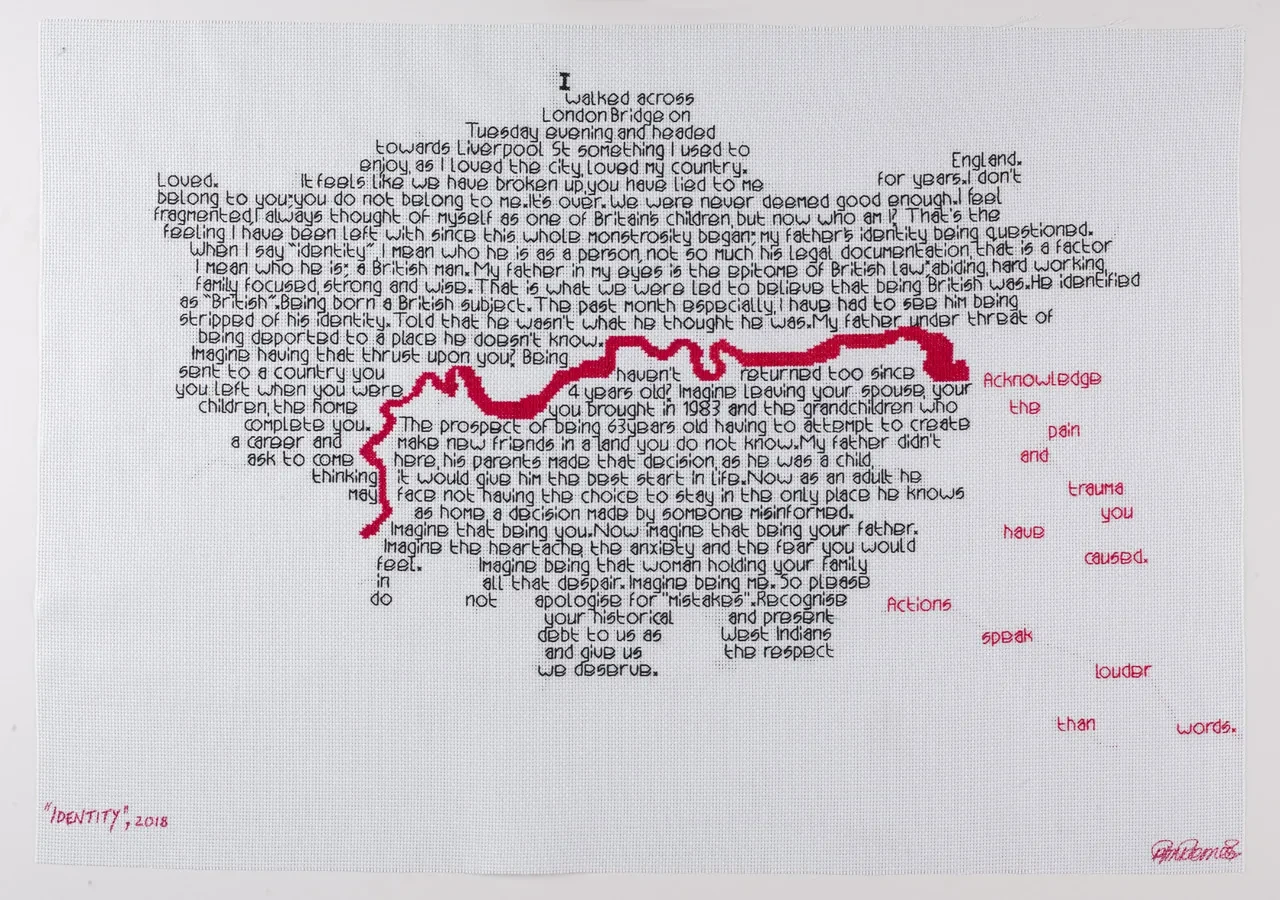
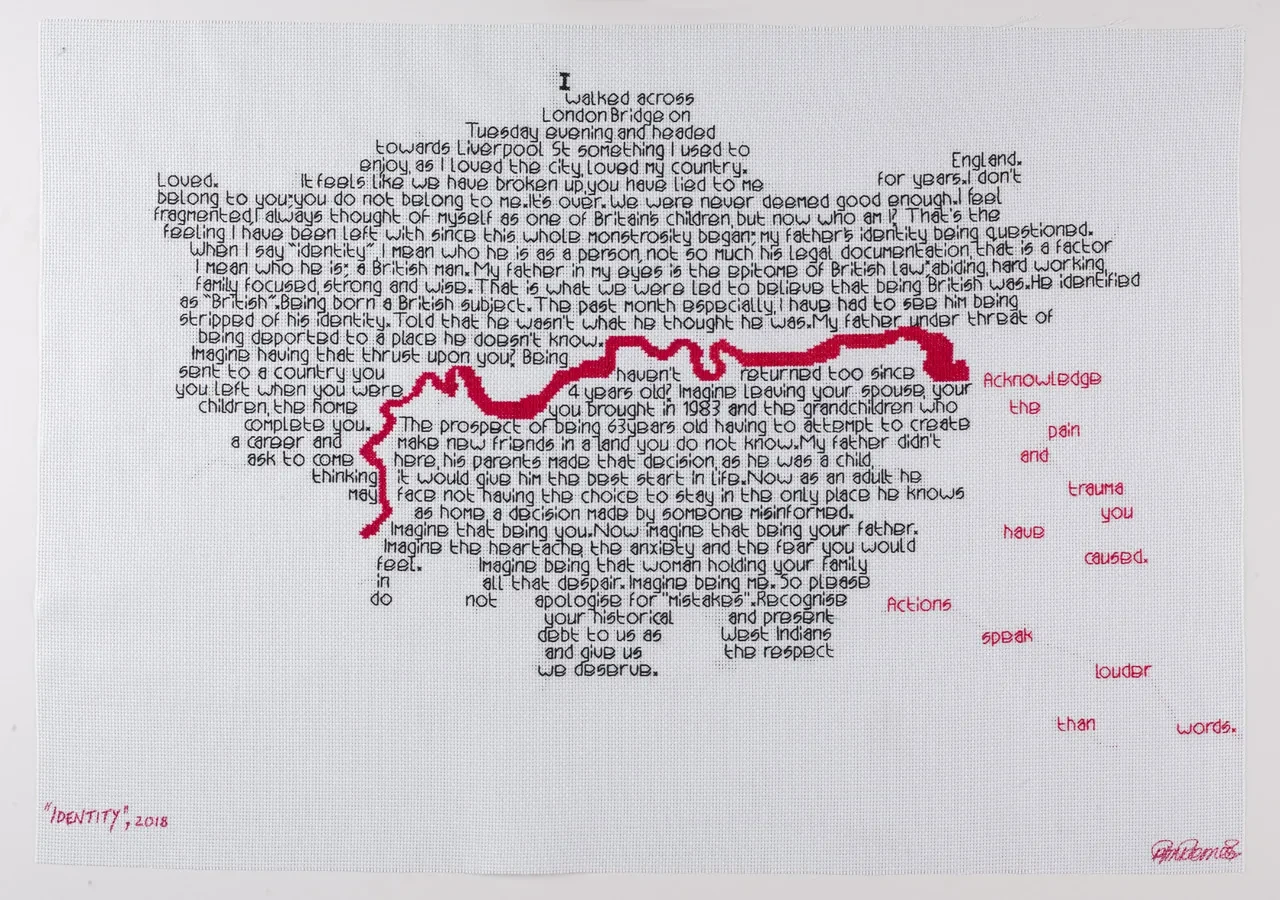
Rachelle Romeo’s embroidered map Identity similarly draws attention to the barriers of belonging that her father faced as a Windrush migrant threatened with deportation by the government.
Crossings are only part of the story of migration. Borders continue to govern notions of British identity for both migrants and their descendants.
Explore the works on display
Explore the works on display
1 / 8
Crossing Border by Shorsh Saleh
‘Crossing Border combines the tradition of Indo-Persian miniature painting with contemporary politics,’ explains artist Shorsh Saleh (born 1980). ‘Art has always portrayed the immense power of the sea over human beings – a power that I experienced for the first time when I fled conflict and persecution in my homeland and crossed borders in search of safety. The painting shows the vulnerability, strength and immense courage of migrants attempting unauthorised crossings.’
2 / 8
'Hands Reaching out to Big Ben' by Maya Ramsay
Artist Maya Ramsay (born 1976) has documented numerous anonymous drawings found on the sides of shipwrecked and compounded North African migrant vessels in Sicily. She explains: ‘The outstretched hands signify both the desire of many migrants to reach the UK and the desperation, pleading for help, as they drown. Migrant boats are usually destroyed in Italy, so I wanted to document these drawings before they were erased.’
3 / 8
'Migrants' by Tam Joseph
The artist, Tam Joseph (born 1947), explains his painting: ‘When I was eight years old, I came over to England from Dominica on a boat... I remember seeing flying fish leaping out of the warm waters, and when I painted this many years later I thought about us passengers, like those fish – we were fish out of water, travelling to colder waters, and a colder land, where the people were colder still.’
4 / 8
'No 9 from Halab, Syria' by Djordje Balmazovic
Balmazovic (born 1965), from the experimental art collective Škart, describes how this work was made: ‘In 2013, we were invited to work with migrants at the asylum centre in Bogovađa, Serbia. The people in the centre were exhausted. Some had been travelling for years, fleeing wars and miserable conditions in their home countries, trying to find a better place to live. We invited them to draw maps of their journeys, which they accepted with joy.’
5 / 8
Extract from 'A Perilous Journey' by PositiveNegatives, illustrated by Lindsay Pollock
This comic illustrates part of Hasko’s story. Hasko is an acclaimed artist from Syria who was forced to make this sea crossing to Scandinavia to secure a safer future for his family.
PositiveNegatives create compelling animations, comics and podcasts about pressing social, humanitarian and environmental issues. They combine ethnographic research with creative techniques to transform personal stories into art.
6 / 8
'Identity' by Rachelle Romeo
‘Identity is an emotional reaction to the Windrush scandal,’ says Romeo, ‘exposing the profound pain of those from the Caribbean disowned by the only nationality they knew. It parallels this injustice with the historical stripping of their identities for colonial gain. More than just showcasing suffering, the artwork celebrates the resilience of these communities and their allies, highlighting the power of their united voices.’
7 / 8
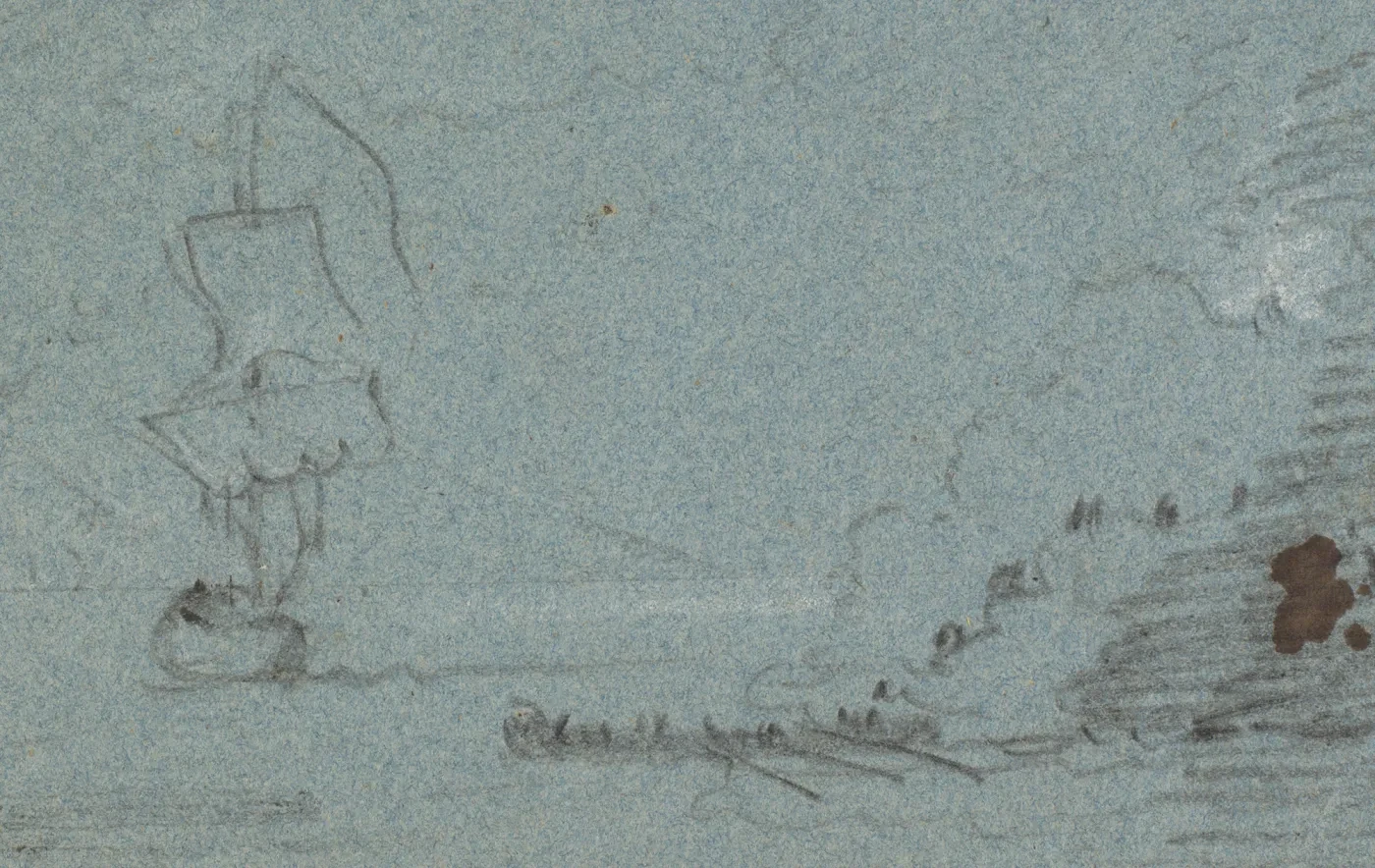
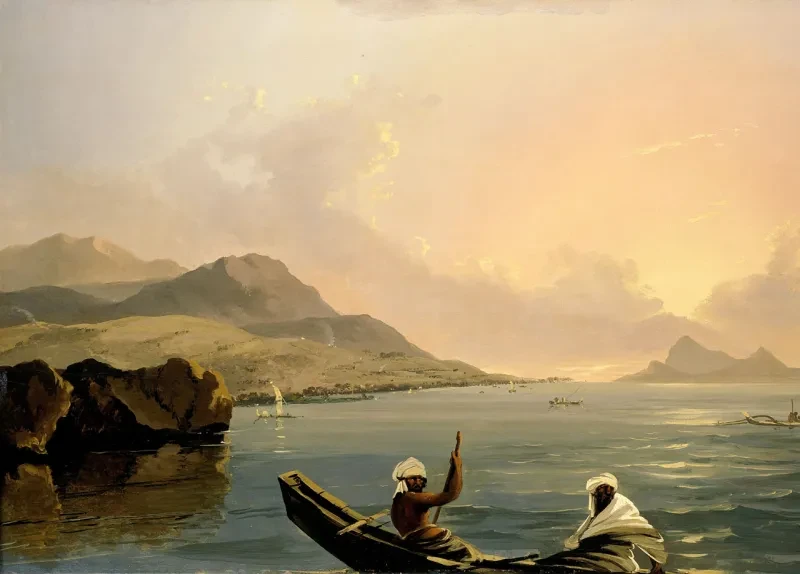
Detail from 'A vessel near the coast with people landing' by Willem van de Velde the Younger
The Van de Velde family migrated from the Dutch Republic in the winter of 1672–73. Charles II issued an open invitation to Dutch citizens, offering religious freedoms, tax benefits and other incentives. Although the precise motivation for their migration is unknown, they brought their artistic expertise to the royal court and were paid high salaries. This scene, showing people arriving in England at the end of their sea voyage, is one with which the artist could personally empathise.
8 / 8
'Shore to Shore' by Güler Ates, Leyla Huysal and Yusuf Huysal
The sound piece was inspired by the story of a refugee family’s migration and exile. It serves both as a record of their experiences and as an act of healing. The artist Güler Ates (born 1977) explains:
‘At age nine, a profound experience of travelling in the back of a lorry for 24 hours with our belongings from eastern Turkey to Istanbul [is] deeply embedded in my memory. I became particularly interested in the journey of displaced people and often wondered what they might have experienced and felt.’
Read more about the Queen's House rehang
Introducing new contemporary art at the Queen's House for 2026
Victoria Lane, Senior Curator of Art and Identity, explores highlights from some of the contemporary artworks that have gone on show
Highlights of the Queen's House refresh
What to look out for in the inspiring new take on the Queen’s House’s displays in 2026
Reframing the Pacific in the Queen’s House
Curators Katherine Gazzard and Hannah Cusworth highlight the steps involved in redeveloping a room in the Queen's House
Mapping uncharted histories: the 19th century woman who developed London’s map trade
Artist Remiiya Badru’s new display in the Queen’s House tells the story of maritime publisher, Penelope Steel
Look inside: The Many Invincible Ones by Sharon Walters
Find out about the artworks in Sharon Walters’ display, now on show in the Queen’s House
Artemisia Gentileschi at the Queen's House
A painting by Artemisia Gentileschi recently rediscovered in the Royal Collection is now on loan at the Queen's House. Allison Goudie reveals Artemisia's Greenwich connections – and why the Queen's House is a fitting place to see the painting
Writing a museum label with 'Gendering the Museum'
Dr Kit Heyam explains the process behind writing the first co-curated label in the Queen's House for a painting of James I
‘I want people of the African diaspora to see ourselves in a positive light’
Artist Sharon Walters reveals the journey behind the making of her new display, 'The Many Invincible Ones'

Stories of the ocean
Our relationship with the sea is changing. From climate change and marine pollution to global trade and migration, discover how the ocean impacts us – and we impact the ocean