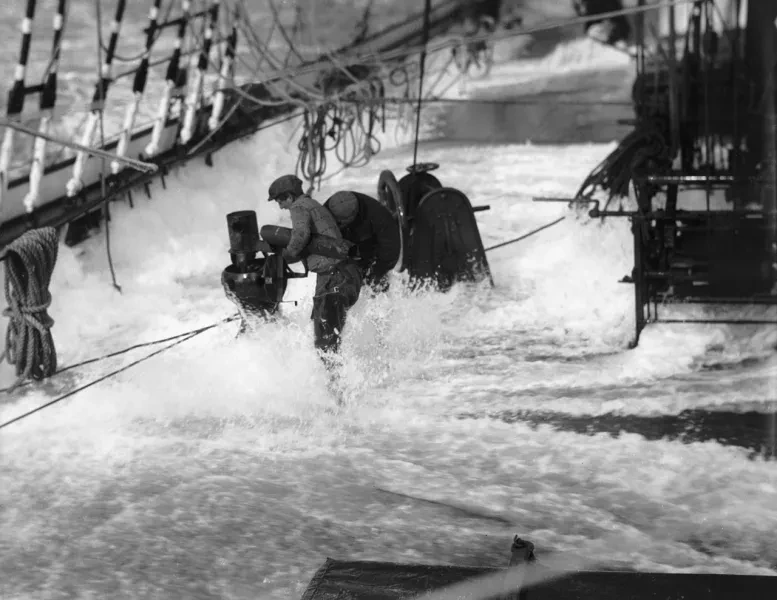
Nina Baker was a pioneer in opening up access to seafaring careers for women, rising through the ranks of an industry that for centuries had been a male-dominated environment.
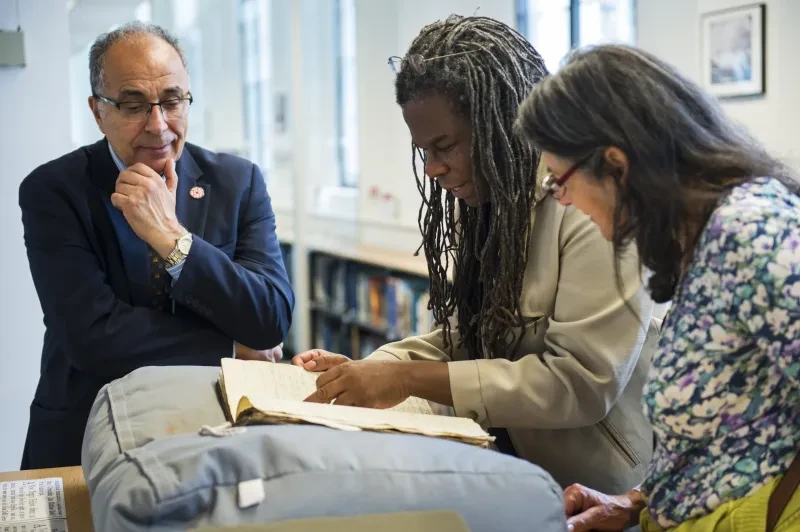
In 2020 Nina shared her story with the National Maritime Museum as part of an ongoing oral history project, recording the experiences of people connected to, living or working at sea.
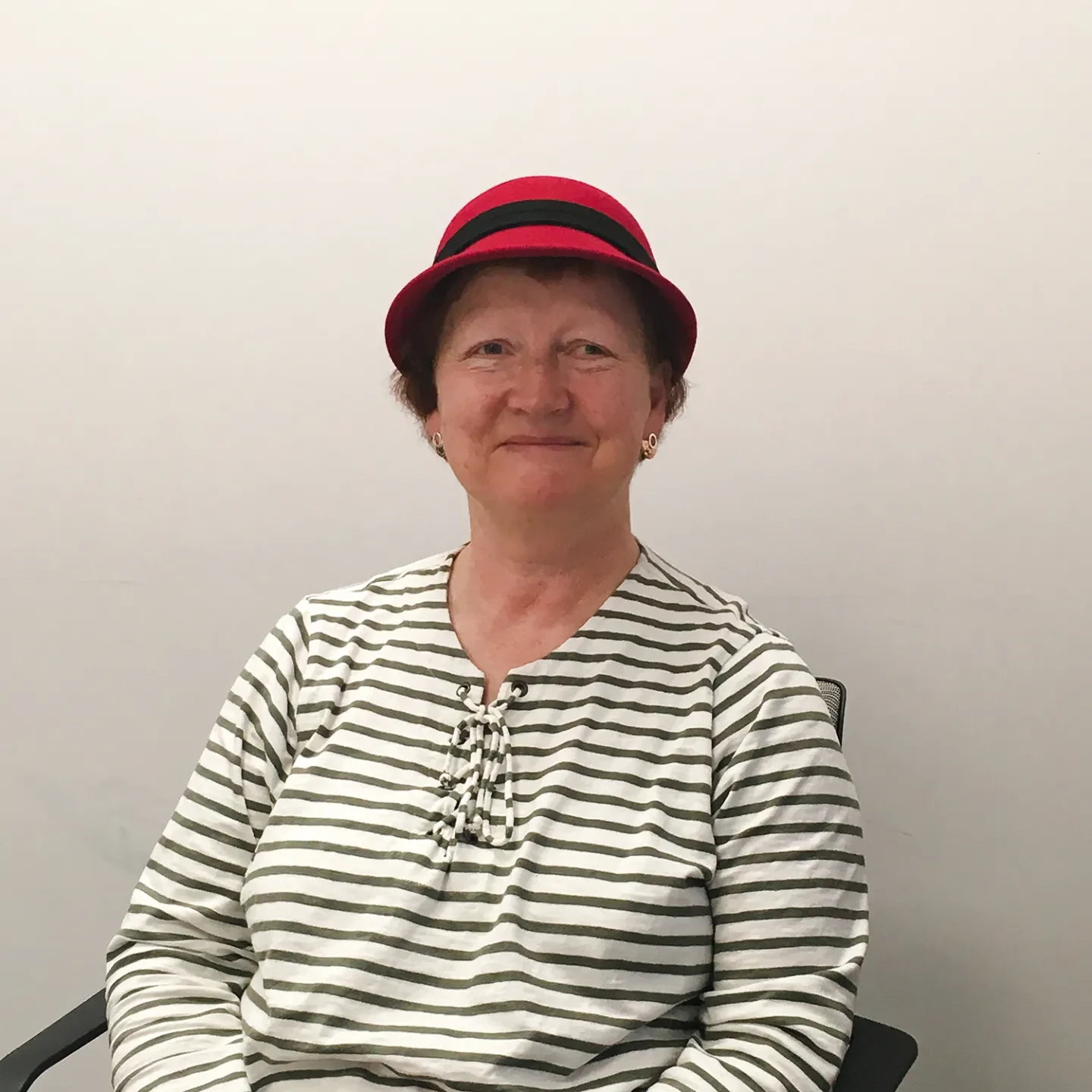
The recordings, along with her journals, service records and photo albums, offer a generous and detailed view of her life – from a childhood love of all things afloat to her efforts to secure a cadetship. Nina spent seven years at sea before leaving the Merchant Navy, going on to study mechanical engineering and completing a PhD.
Here we share extracts from her oral history, and follow her experiences as Britain's first female deck cadet. Donald Mullis, Curatorial Assistant (Oral History), takes up the story.
'I was mad about boats'
Born in 1954, Nina Baker’s introduction to maritime life came very early.
Her parents lived on a rented Thames barge berthed at Cheyne Walk in Chelsea, London, described by Nina as being 'quite a bohemian location'. With a shared love of all things afloat, Nina and her father would often go to watch the cargo ships in the Pool of London – a section of the River Thames running from London Bridge towards Limehouse, still busy in the 1950s with merchant ships. She has even kept one of her first picture books, ‘The Little Golden Book of Boats’, which she was given as a child.
‘By the time I could express any kind of opinion I was already mad about boats, and very much a tom-boy from quite a young age,’ Nina says. Did she already have ideas of a life at sea? Listen to her answer below.
Nina can’t recall having a direct discussion with her parents about wanting to pursue a maritime career. By her early teens however, she was already considering ‘how I might make myself the most possible person to employ at sea’.
Describing herself as a ‘misfit’ at her academically leaning secondary school, Camden School for Girls, Nina decided a change was needed.
‘I could see that it was a bad idea to go straight from an all-girls school into an all-male environment. So I asked to move school,’ she says. ‘I then went to the school that all my primary school classmates had gone to, namely Holland Park Comprehensive, which of course is a mixed school.’
Nina was under no illusions that this was not a typical career path for a woman at the time: ‘Anybody I met who had any connection with the Merchant Navy, I was up saying, “You know, I want to go to sea, and do you think this might be possible?”. And some of them would say, “Well, the only women at sea are stewardesses on the cruise ships” and this kind of thing.’
There were some positive signs however: Nina recalls speaking to somebody who had met trailblazer Victoria Drummond MBE, who, in 1926, had become the first woman in the UK to be a marine engineer. ‘So I knew somebody had been able to get to sea,’ she says. Listen to her reflections in full below:
Nina’s break came when she met a recruiter at the Shipping Federation (an association of employers in the shipping industry) who supported her search for a company willing to taking her on. After a barrage of interviews, the oil company British Petroleum (BP) ‘decided that I might have what it took’ and promised her a cadetship after she had finished her A-Levels.
In 1972, aged 18-and-a-half, Nina left school to take up her Merchant Navy training.
Image
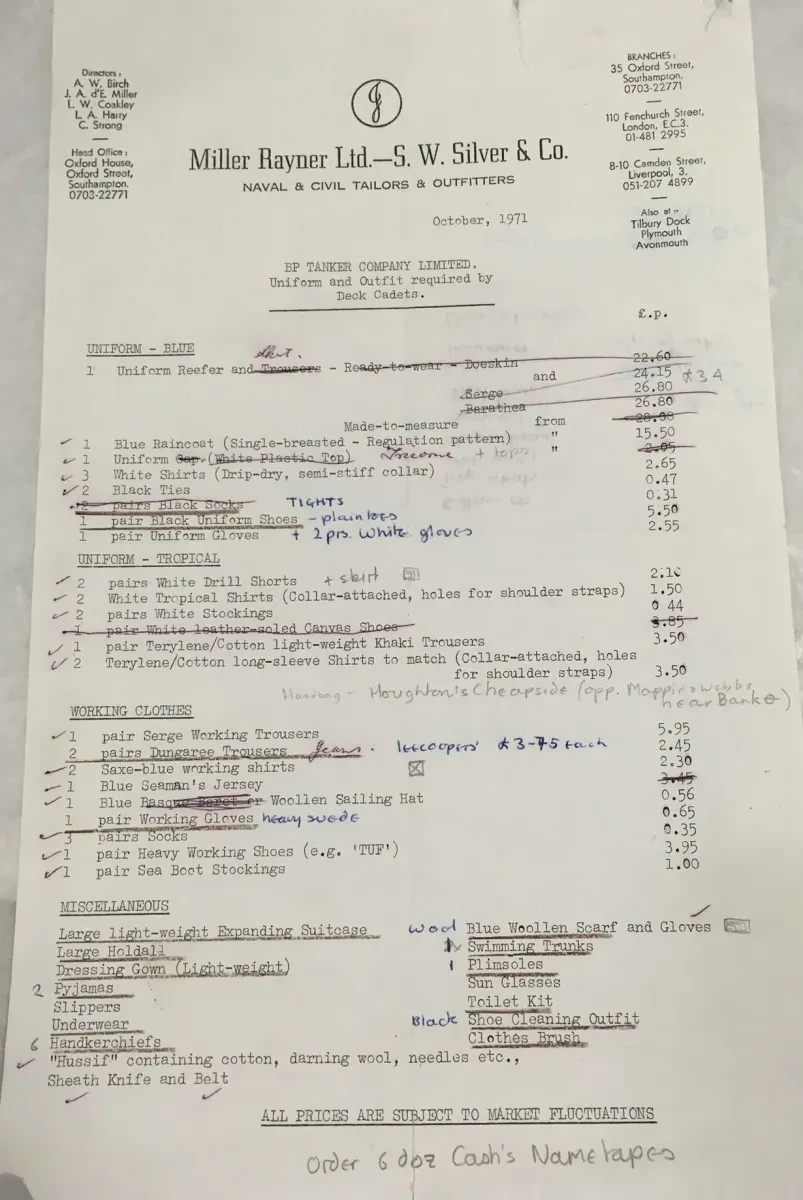
This is a list of items required as part of the ‘Uniform And Outfit by Deck Cadets’ with BP. You can see where Nina has annotated or amended the list for her own needs, including tights, skirt and a handbag.
Nina remembers the branch of the outfitters she went to being ‘full of these very old-school tailor guys with tapes around their necks. The first fitting of my blue double-breasted suit, the thing didn't fit at all because they'd been too timid to sort of measure me right up.’
Cadet training and a life at sea
Nina’s naval training began with two weeks’ induction – ‘very basic ship safety’ – followed by a year at sea on various ships. ‘That’s your first sea period,’ she explains.
Her first voyage, on the tanker vessel British Willow, took her from Japan to the Persian Gulf doing hard manual work, in what she remembers as ‘baking sun’, before sailing on to Australia and New Zealand to deliver liquid fuels.
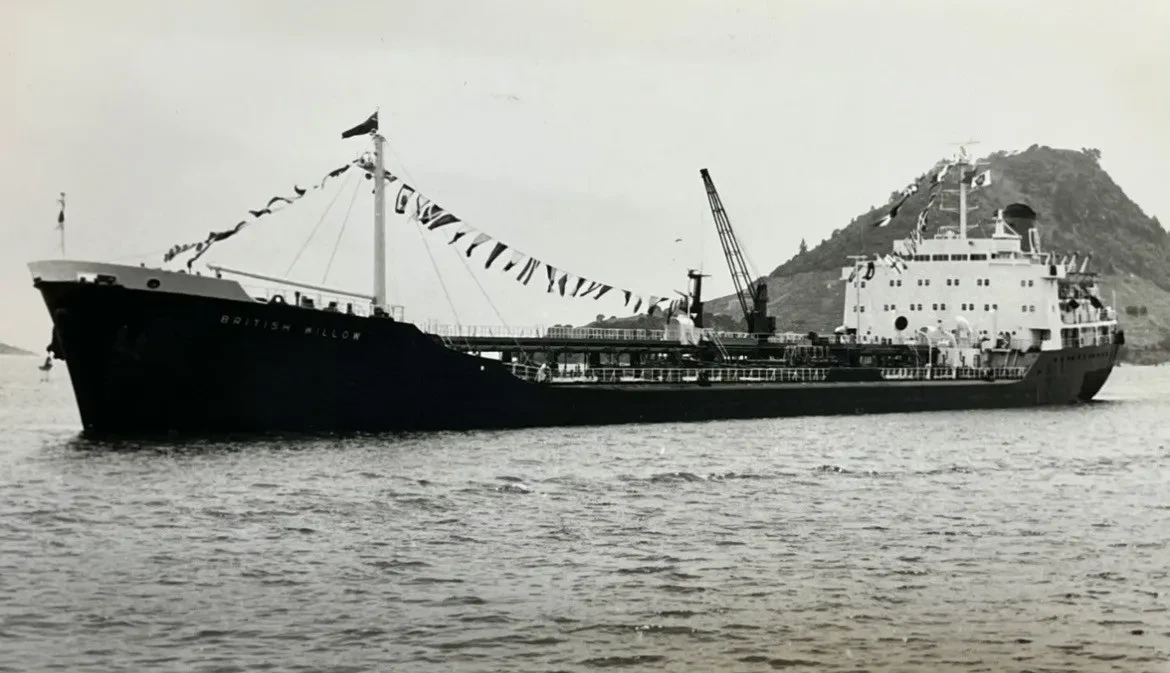
‘That first ship had all-British crew, and some of them were a bit of a rough lot, as you might suppose, but I didn't have any problems with them,’ she says. Indeed, Nina formed strong working relationships with the men on board.
‘There was this one Scot AB [able seaman],’ she remembers, ‘and he was regarded as unmanageable. But there was this residual Scottish gentlemanliness about him, and he would never say boo to me. If there was an issue [the officers would say], “Send Nina to get him.” And he was probably the most skilled, practical seaman on the ship.’
‘People like that had a lot to teach,’ Nina reflects. ‘Some of the older ABs had grown up in a time when a lot of old-school skills were still in use. So they taught me to splice wire ropes and things, which was very useful. When I got back to college, during phase one in those days you had to take an exam called the Efficient Deck Hand exam – EDH ticket – which included doing something which I imagine is now long out of use called a Board of Trade splice. I could do it practically in my sleep, and nobody else had ever seen it before! I gained a lot from working with these quite tough guys.’
After her first period at sea, Nina spent six months at the Plymouth School of Maritime Studies, where she encountered the first major challenge to her maritime career. She found her classmates in the hall of residence ‘deeply hostile’, a situation made worse by there being no female staff on the premises at night and ‘nothing in the way of pastoral care’.
Following another period at sea combined with directed study, Nina returned to the School to take her final exams.
‘We were in a different hall of residence but again there was nobody on site, no female on site, and I did have a difficulty there,’ she says. ‘I found somebody in my room at night. I hadn't ever found it necessary to lock my door at sea, and I didn't realise that it might be necessary ashore. I did find somebody, and I hauled them out, and was on the point of hammering on the warden's door with this character. I basically got him by the neck at this point. And the other cadets said, “Don't, it'll finish his career, we'll deal with him.” So, OK.’
She never reported the individual directly, but believes that her experience shaped how later female cadets were accommodated while in halls of residence: ‘I just had to tough it, but it wasn't easy. And I think the fact that girls were always in pairs or in groups afterwards at each of the other colleges, [that] must have been part of the learning experience for companies.’
Image
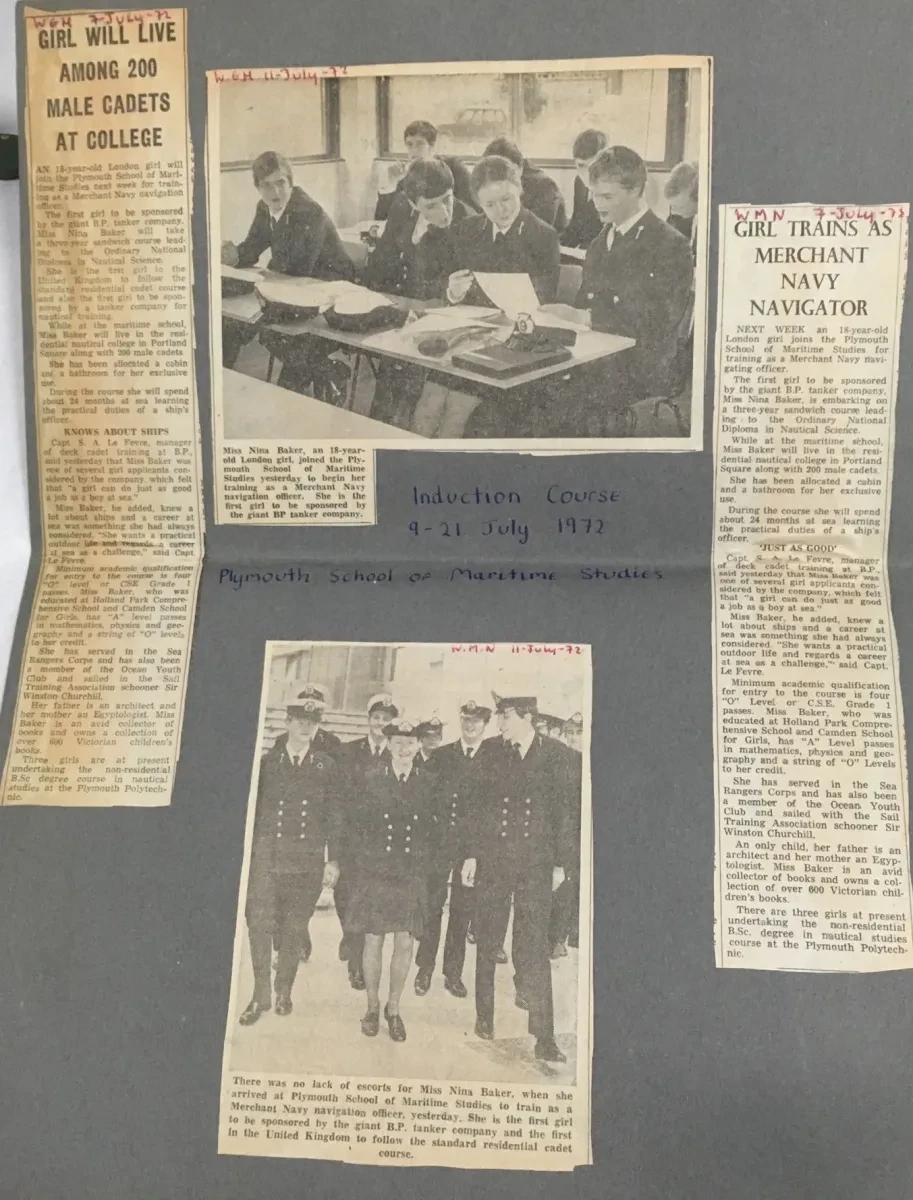
Newspaper clippings kept by Nina Baker show how her acceptance into the Plymouth School of Maritime Studies was covered at the time.
The caption in the centre photograph reads, 'There was no lack of escorts for Miss Nina Baker, when she arrived at Plymouth School of Maritime Studies to train as a Merchant Navy navigation officer, yesterday.'
Expected challenges – and the lack of them
Hearing Nina’s words directly, it’s clear that she’s not someone to mess with. But expecting to be treated with little respect on a ship because of her sex, Nina offers that she felt treated appropriately according to her rank.
She never experienced hazing (a slang term for a humiliating initiation) and at her first ‘crossing the line’ ceremony – a messy, riotous ritual to mark a ship or its crew crossing the Equator – she says the crew ‘got off pretty lightly’.
‘The gunk that we were lathered in and the things we were made to eat were fairly innocuous for the time,’ she says, adding that at the end of the ceremony, ‘I was welcomed into the “Sisterhood of the Sea”, and as a mermaid I’m entitled to sit on a rock at sunset combing my hair. I’ve got a certificate to prove it!”’
Nina remained with BP after completing her cadetship. Here she recalls a typical day as a Third Officer:
Nina remembers only one person who took against her while at sea. On the cargo ship British Unity, Nina encountered a captain who did not wish to take her on as a crew member. The shipping company gave the captain an ultimatum: take Nina or resign. The captain did not resign and Nina was taken on.
The resentment persisted, however. During their first meeting on board, Nina recalls that ‘his opening words to me were, “We will have no sex on this ship, if you please, Miss Baker.” Which was a bit of a start.’
When her contract with the British Unity ended, the captain sent a negative conduct report about her to the shipping office. Nina recalls what happened next:
Apart from this one exception, Nina feels that she was treated no differently to any of the male cadets, and that no allowances were made for her by male co-workers. Nina suggests that this was possibly to avoid any accusations of her receiving privileges or being given special consideration. On the other hand, Nina claims that she has heard some accounts of other female cadets not being given enough work to gain full experience of a ship, resulting in them failing to complete training.
Nina progressed from Deck Hand, responsible for berthing procedures as a ship comes into or leaves a port, advanced to Second Officer, responsible for navigation, observation and maintenance of navigational equipment, and eventually completed her studies to become First Mate.
Ship bars and faraway ports
Nina’s most vivid memory is of her first, working voyage. But across her sea career, working all types of merchant ships, Nina remembers the ships’ bars and a full social life, adding that a good ship’s bar made for a happy ship: ‘It was the focus of social life and on the deep sea ships, particularly the ones that weren't going into port very often, most captains saw it as their business to make sure that there was enough social life to keep everybody entertained.’
She also greatly enjoyed travelling to many ports around the world. Here, Nina cheekily recalls socialising shoreside in Durban, South Africa:
Leaving behind a life at sea
In 1979 Nina decided to leave the sea after seven years’ service, in part because she missed family and friends, but also because she found maintaining meaningful friendships and romantic relationships ‘just hopeless’.
An opportunity arose for Nina to get married – ‘unwisely as it turned out’. Her partner was in the Army, and very soon after the wedding he was posted to Cyprus for four years. Nina went with him, but found the rapid transition from a male working environment to the Army ‘wives’ club’ challenging. ‘I had no idea what to say to anybody,’ she reflects. ‘It took me about two years to be able to have normal female friendship relationships and conversations.’
Because of her high rank, Nina also transitioned from being waited on ‘hand and foot’ at sea (for instance, not having to do laundry or cleaning for herself) to finding herself ‘suddenly a housewife’. Nina describes the whole experience in Cyprus as being a ‘huge cultural shift’ for her. When her husband left the Army, they both chose to go to different universities and went their separate ways.
Nina studied Engineering Design and Appropriate Technology at Warwick University, a mechanical engineering course that covered renewable energy and technologies. At university she joined the UK Ecology Party, later the Green Party, and was elected in 2007 as a city councillor for the Scottish Green Party in Glasgow.
Nina has since stepped back from politics but remains an environmental champion, and follows from a distance developments in the industry she once worked in. ‘It's interesting how slow, in some ways, the technology is to change,’ she says. ‘I'm sure that the efforts to clean things up in terms of emissions have progressed, but in terms of a step change, I'm not sure I'll live to see that.’
Despite her environmental awareness, Nina still has a soft spot for BP, the company that gave her a career chance when nobody else would. She even still receives a pension from them: the princely sum of £3.46 per year. ‘It must cost them a fortune to administrate.’ she says:
Nina feels privileged to have had the opportunity to be at the right age at the right time when times were changing, and to have achieved her ambition. Of her career choices and determination to succeed, Nina has no regrets.
Image
The recordings featured in this story are part of an ongoing oral history project at the National Maritime Museum. The project intends to record people's experiences at sea and memories of maritime events. If you think you may have a story to share, email research@rmg.co.uk. Please note that the team is small so may not be able to respond immediately.
More about Nina Baker
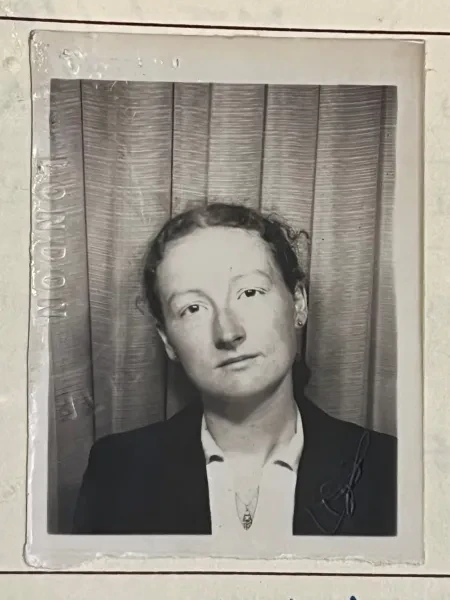
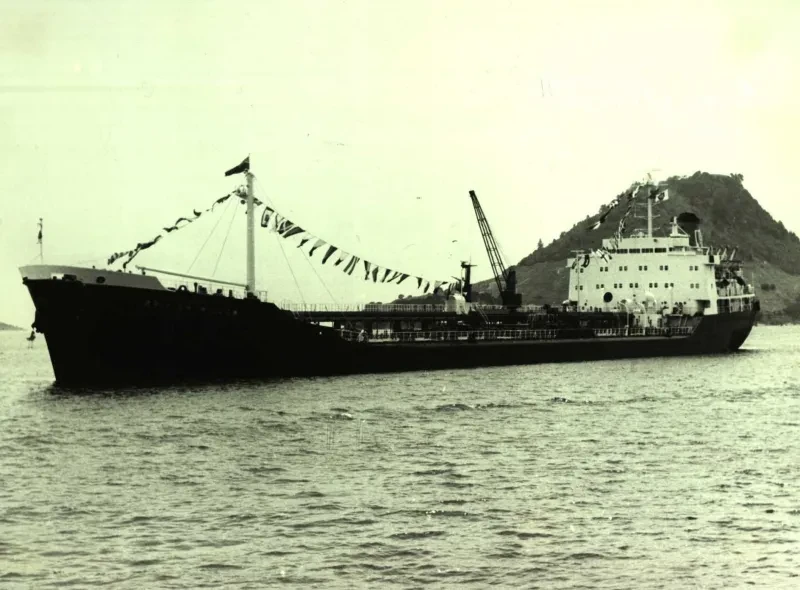
Explore more oral histories
Life and love at sea
Seafarers Michael Rudder and Dominic Brown spent years working in the Merchant Navy. A chance encounter and a missed departure led to a life at sea together
'There was an awful smell once we got to the Thames'
Gordon 'Willie' Williamson worked aboard Thames barges throughout the 1960s, and witnessed the final years of central London as a busy cargo hub
'When I'm in Jamaica, I'm Jamaican. Here, I'm British'
Shirley Fox shares her memories of moving to the UK, in a special oral history marking 75 years since the Empire Windrush's arrival in Britain
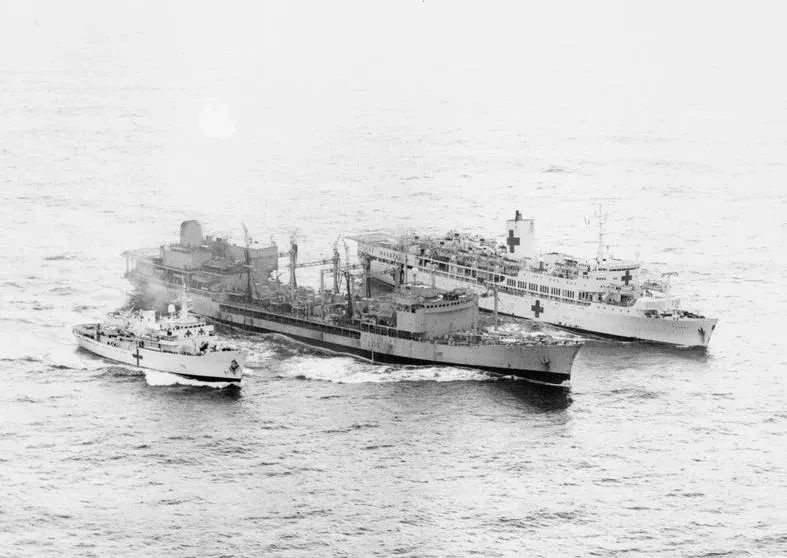
From cruise ship to floating hospital – the SS Uganda during the Falklands conflict
Ship's purser Alison Harris shares her memories of the Falklands conflict, and how her ship was transformed into a floating hospital
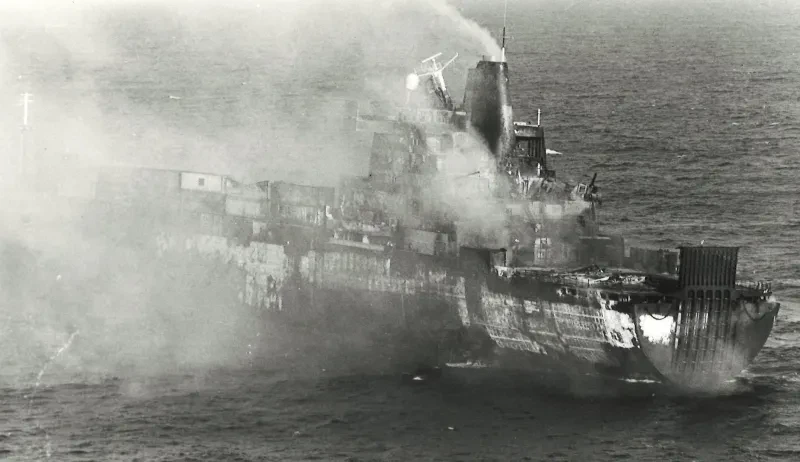
The sinking of the Atlantic Conveyor: Falklands conflict oral history
Naval volunteer Howard Ormerod shares his memories of 25 May 1982, when a container ship requisitioned by the British government was hit and sunk by Argentinian forces.
Search the collections