Ticketed - temporarily closed

Essential information

Location

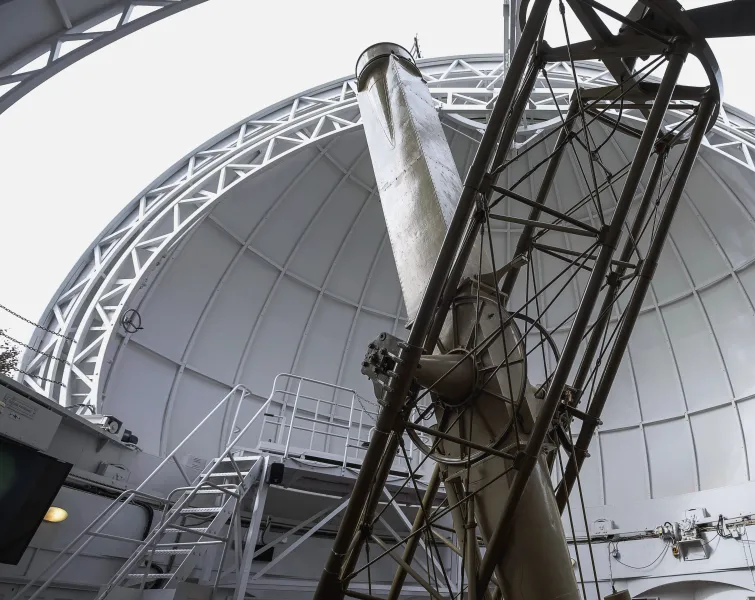
Learn more about the historic Prime Meridian of the World at the Royal Observatory Greenwich.

Since 1884, all distances east and west have been measured from the Prime Meridian line in Greenwich.

Astronomers at the Royal Observatory took thousands of measurements to define the Prime Meridian and establish zero degrees longitude. In an age before smartphones and satellites, their work transformed how we explored our world.

Please note that the Prime Meridian line at the Royal Observatory is temporarily closed for a landmark renovation project.

What's so special about the Prime Meridian line?

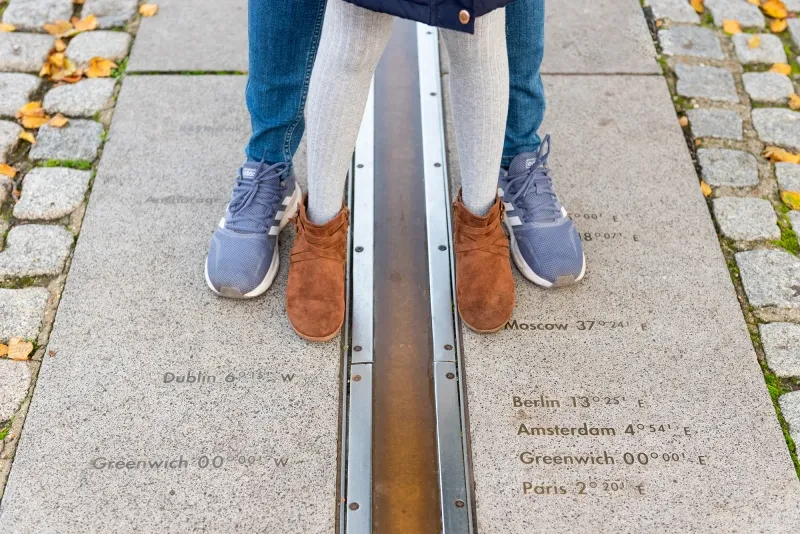
Since the late 19th century, the Prime Meridian at Greenwich has divided the eastern and western hemispheres of the Earth - just as the equator divides the northern and southern hemispheres. When you stand across the line, you have one foot in the east and one in the west!

The Greenwich Meridian also helped to establish the world time zone system we still use today.

An image for 'What's so special about the Prime Meridian line?'

What is a meridian?

A meridian is an imaginary line running north to south that is used as a reference line for astronomical observations. Meridian lines also help to plot locations here on Earth by offering a way to determine longitude.

Why is the Prime Meridian in Greenwich?

Until the 1880s, countries used their own meridian lines for mapmaking and navigation. This meant there was no globally agreed way of measuring distances and plotting locations east and west.

In 1884, different nations gathered in Washington D.C. to choose one single meridian as a common reference. After weeks of discussion, delegates voted to make the Greenwich Meridian the world's Prime Meridian.

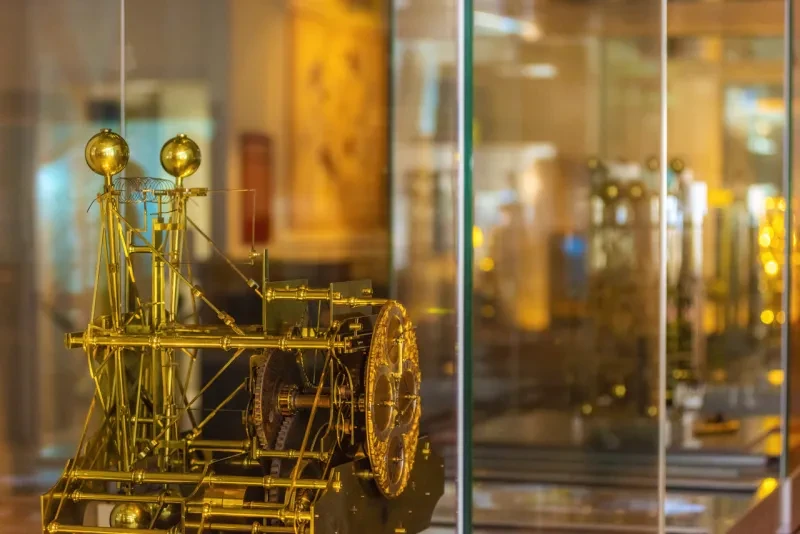
Greenwich was chosen because its measurements were already used by most of the world's seafarers and mapmakers. Thanks to the work of generations of astronomers, the Royal Observatory became the home for global time and navigation.

An image for 'Why is the Prime Meridian in Greenwich?'

How many countries does the Prime Meridian pass through?

From pole to pole, the Prime Meridian covers a distance of 20,000 km. 

In the northern hemisphere, the Prime Meridian passes through the UK, France and Spain in Europe, and Algeria, Mali, Burkina Faso, Togo and Ghana in Africa. The only land crossed by the Meridian in the southern hemisphere is Antarctica.

In Greenwich the Prime Meridian is marked by a metal line fixed into the Royal Observatory courtyard, and at night by a laser beam. Depending on the weather, the beam can be seen from more than 20 km away.


An image for 'How many countries does the Prime Meridian pass through?'

There's more to see in Greenwich

Visit historic ship Cutty Sark and explore the Queen's House and National Maritime Museum for free