

This month Earth reaches its farthest point from the Sun, we look for a lunar crater named by the Artemis II crew, and a morning star cluster heralds in Matariki, the Māori new year.
Top 3 things to see in the night sky in July 2026
- 5 July – lunar libration opens a window to Carroll Crater on the Moon's western limb
- 10 July – observe the Pleiades star cluster and celebrate Matariki
- From 12 July – see the Delta Aquariid meteor shower
Royal Observatory Greenwich astronomers Gideon and Jess cover this month’s must-see cosmic objects and events in this podcast. They also discuss this month’s cosmic news stories, including NASA's Swift mission and ancient methods and monuments to track the Sun.
Tune in on Soundcloud and Apple podcasts.
Got a question about space? Send it to us at ROGeducation@rmg.co.uk and our team of astronomers will answer it in next month’s podcast.
Farthest from the fire
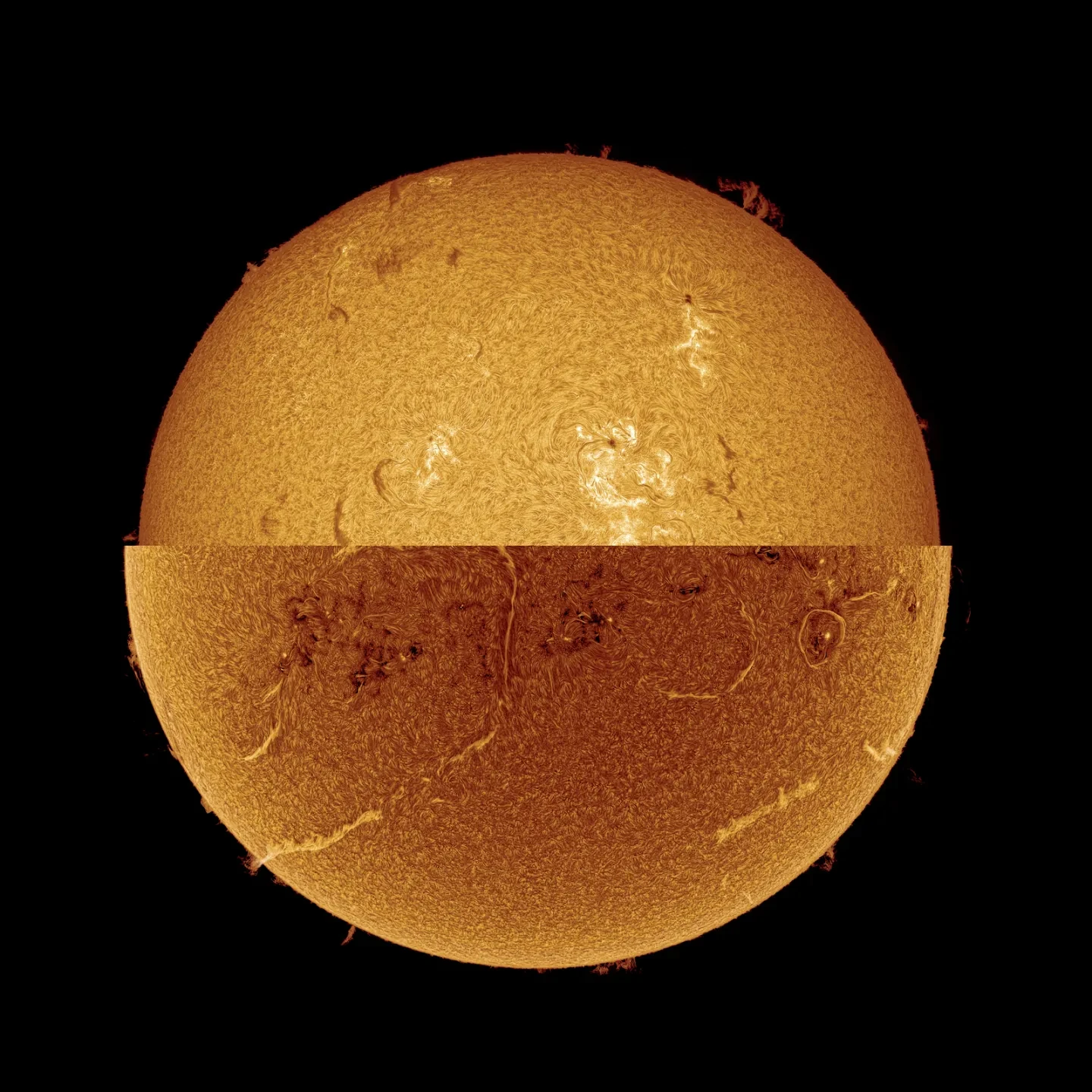
It might currently feel like the height of summer, but on 6 July Earth quietly reaches aphelion - its most distant point from the Sun in its year-long orbit, at about 94.5 million miles (152 million km). That's around 3 million miles (5 million km) farther away than we were back in January at Perihelion.
The word comes from the Greek: apo, meaning away from, and Helios, the Sun. Kepler adapted the term from apogee (furthest from Earth), swapping Gaea for Helios to reflect the heliocentric model he'd helped to establish. Its counterpart is perihelion - peri, meaning near, as in perimeter and periphery. This is unrelated to the Portuguese-inspired peri-peri sauce, although both tend to generate a bit of heat.
This all occurs because the Earth’s orbit around the Sun is not precisely circular but elliptical, with the Sun positioned slightly to one side of the centre point. The difference in solar energy Earth receives between perihelion and aphelion is only about 7%. That's nowhere near enough to drive our seasons, which are instead governed by the tilt of Earth's axis.
The nights remain bright and short from the UK - the Sun won't dip more than about 18 degrees below the horizon from London for most of July. True astronomical darkness remains elusive until late in the month, but the sky has plenty to offer the patient observer.
Lunar illusions and hidden craters
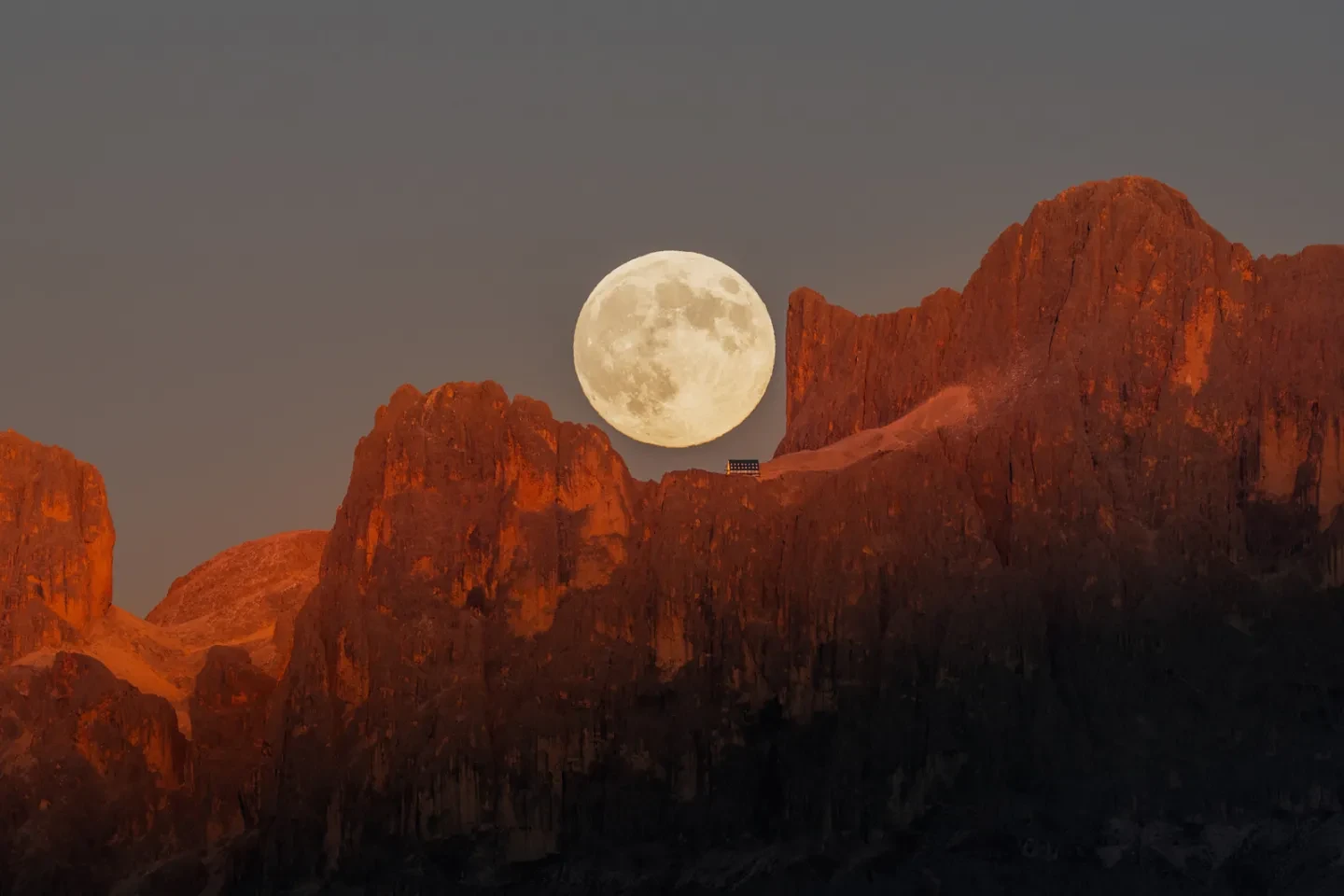
The full Buck Moon rises on 29 July at 3.36pm BST, and this month it comes with an added spectacle. From London, the full Moon sits no more than about 15 degrees above the southern horizon. A few days before, on 26 July, the waxing crescent Moon will skirt as low as 10 degrees over the horizon at its highest - hanging over rooftops and skylines.
It will likely take on an orange hue as moonlight low on the horizon has to pass through a much thicker slice of atmosphere, scattering away the bluer wavelengths and leaving the oranges and reds behind.
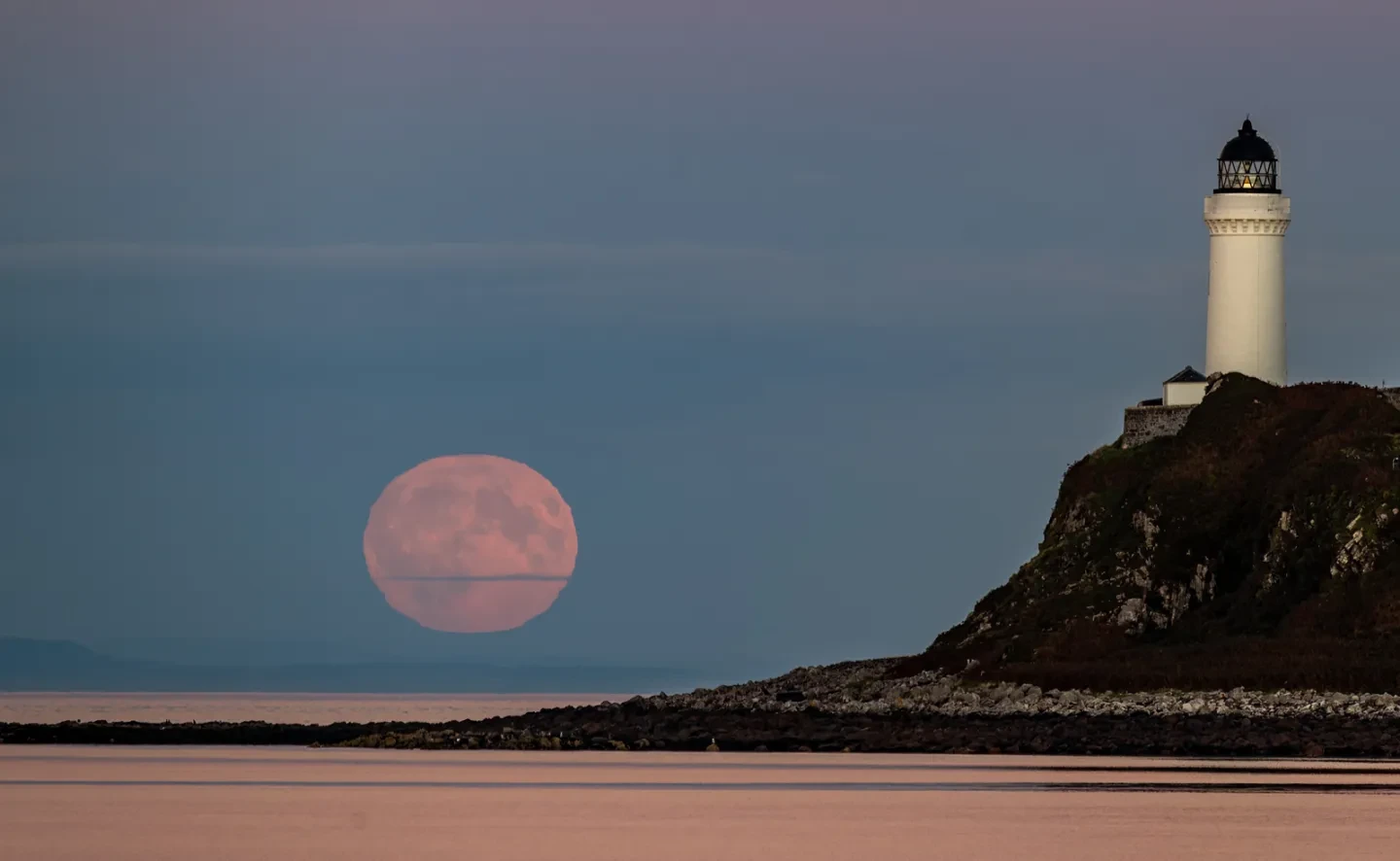
This makes July a perfect month for experiencing one of the sky's most compelling optical tricks: the Moon illusion. When the Moon sits low on the horizon near buildings, trees or hills, it appears dramatically larger than when it rides high overhead.
However, the Moon's angular size doesn't change at all. Hold out a pea (or pinky finger) at arm's length and measure it - the Moon will be covered exactly the same amount whether it's rising or at its peak height. What changes is your brain's interpretation, though scientists do not fully understand how this happens.
It is thought that, surrounded by familiar objects on the horizon, the brain perceives the Moon as far away, and therefore assumes it must be enormous. Strikingly, NASA astronauts in orbit report seeing the Moon illusion too.
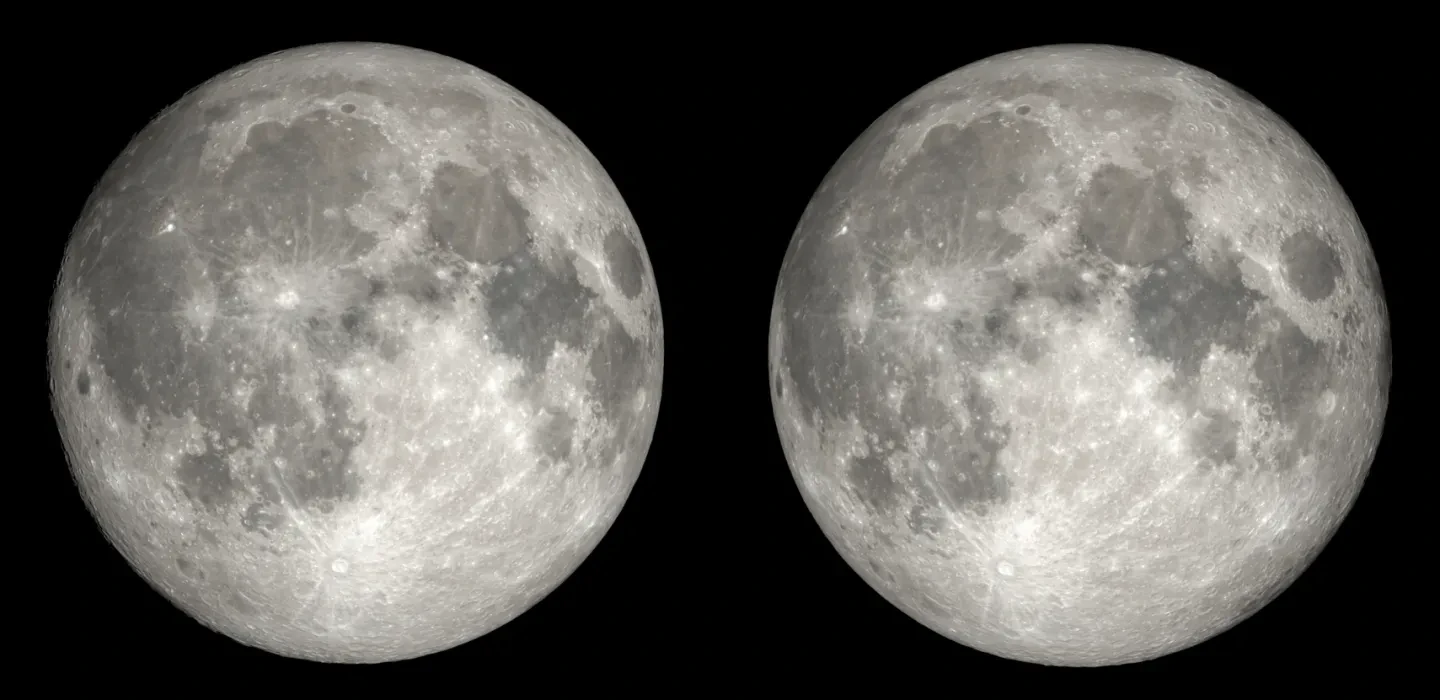
The Moon's changing size might be a trick of the mind, but its subtle wobble in the sky is a physical reality.
Due to a phenomenon called lunar libration, we can observe up to 59% of the Moon's surface from Earth over time, rather than the exact 50% you might expect from a tidally locked body. The Moon's orbit is slightly elliptical, and its rotational axis is tilted by about 6.7 degrees relative to Earth's, causing it to nod and sway gently from our perspective. This exposes a little more of the eastern or western limb, and the northern and southern edge, at different points in its orbit. This repeats in a cycle lasting about 27.55 days.
Around 5 July, libration favours the Moon's western limb - and that's your window to find Carroll Crater, one of the Moon's newest named features. Named in tribute to Carroll Taylor Wiseman, the late wife of Artemis 2 astronaut Reid Wiseman, it sits near the very edge of the lunar disc at around 86 degrees west and 18 degrees north - territory that's usually tricky to spot from Earth.
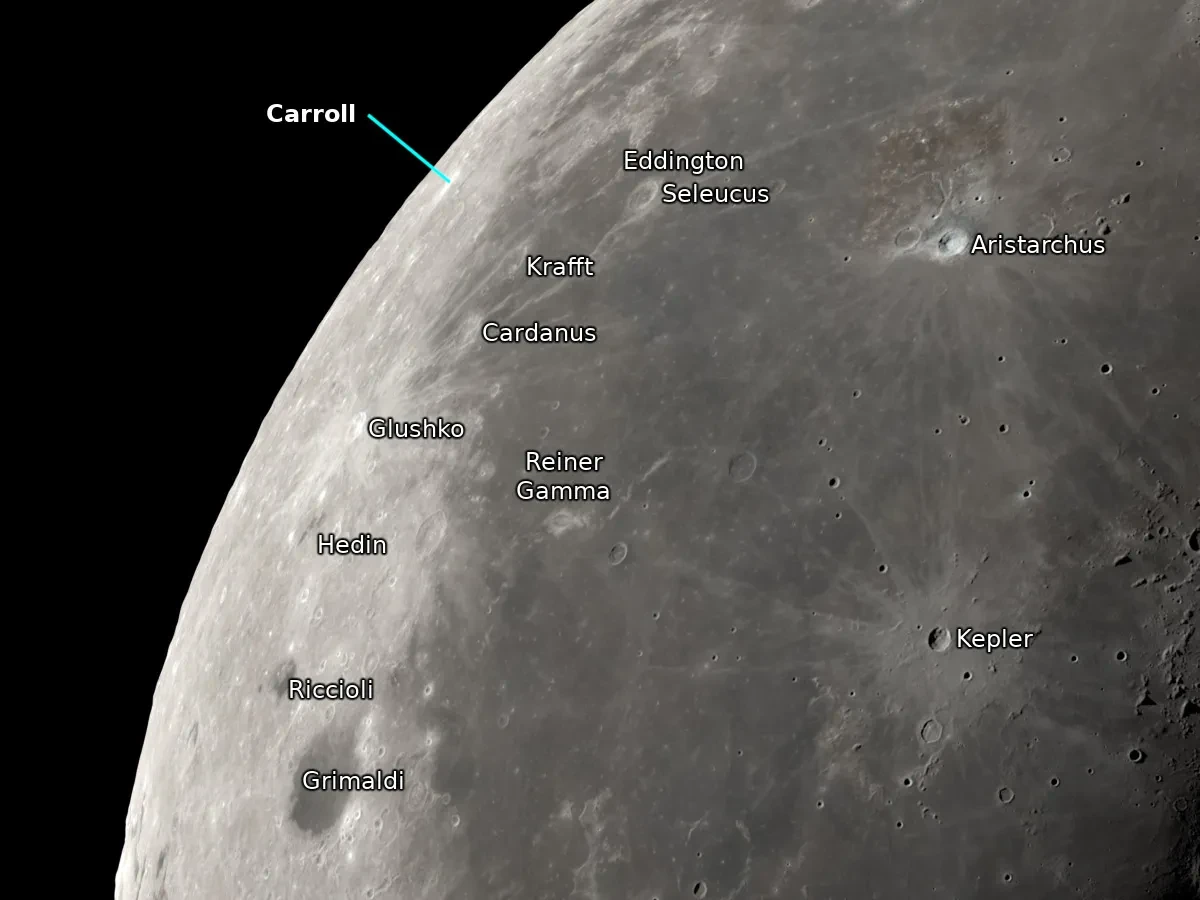
To find it, start at Grimaldi - a prominent dark oval patch near the lunar equator, close to the western edge of Oceanus Procellarum. Hop north through Riccioli and up to the paired craters Cardanus and Krafft. A short step northwest brings you to Carroll.
Because the view angle is shallow, expect long shadows and look for the bright ejecta that makes the crater stand out even in this challenging position. A small telescope will serve you well here. Libration remains favourable for a day on either side of the 5th July.
The illusion of size may deceive you. The libration, at least, is entirely real.
The first meteor shower of summer
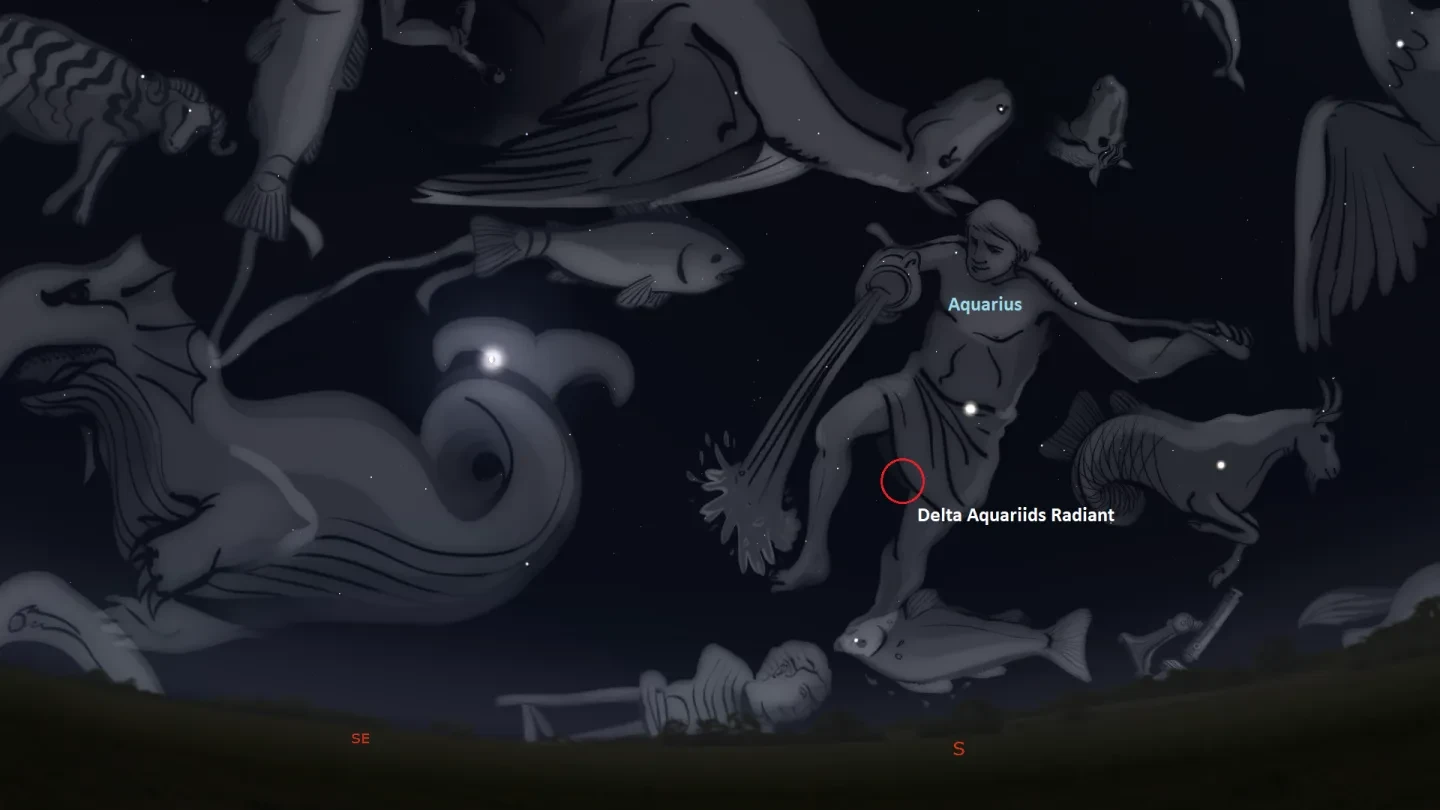
The Delta Aquariid meteor shower is active between 12 July and 13 August, with the radiant point located near Delta Aquarii - a star known as Skat, from the Arabic al-sāq, meaning 'the shin'.
The meteor rates from UK latitudes are modest, perhaps 10 to 15 meteors per hour under ideal dark skies, with Aquarius never climbing particularly high above the southern horizon. This is a shower that rewards those further south, but it's still worth a look for us further north.
Your best window for dark-sky viewing is 13-25 July, when there is a stretch of darkness. Find a dark spot, lie flat on your back, and look generally southward from around midnight.
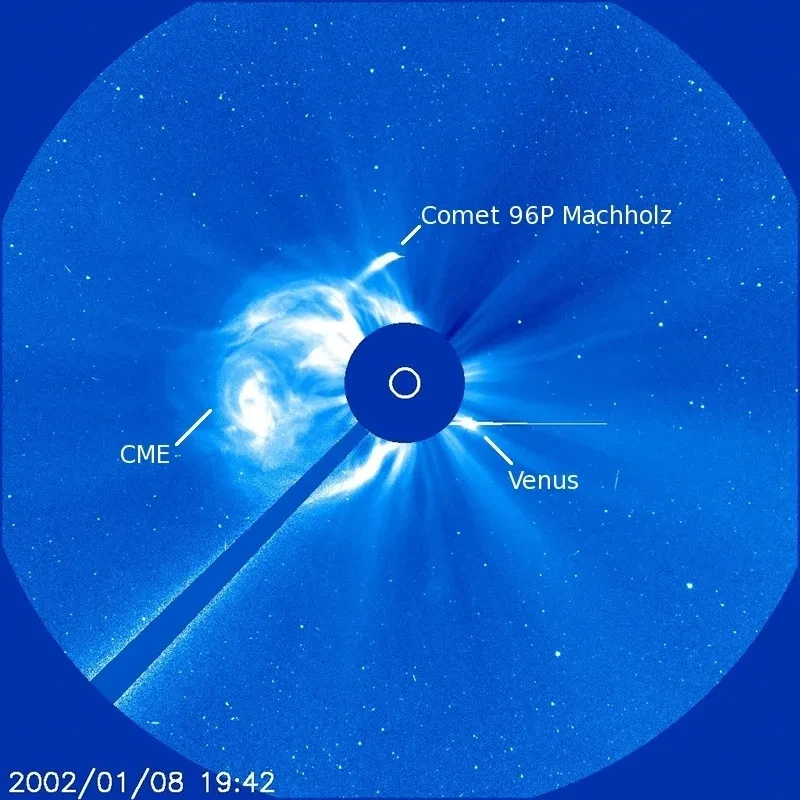
The debris trail the Earth ploughs through that causes this meteor shower belongs to 96P/Machholz, a sun-grazing comet that orbits the Sun every 5.3 years and swings to within about 18 million kilometres at its closest approach - well inside Mercury's orbit. It's an extraordinary traveller.
Unlike virtually every other known comet, 96P/Machholz is found to be both carbon-depleted and cyanogen-depleted, a chemical fingerprint so unusual that some researchers have suggested it may not have originated in our solar system at all. That alone makes this shower worth staying up for.
Ophiuchus: the missing zodiac
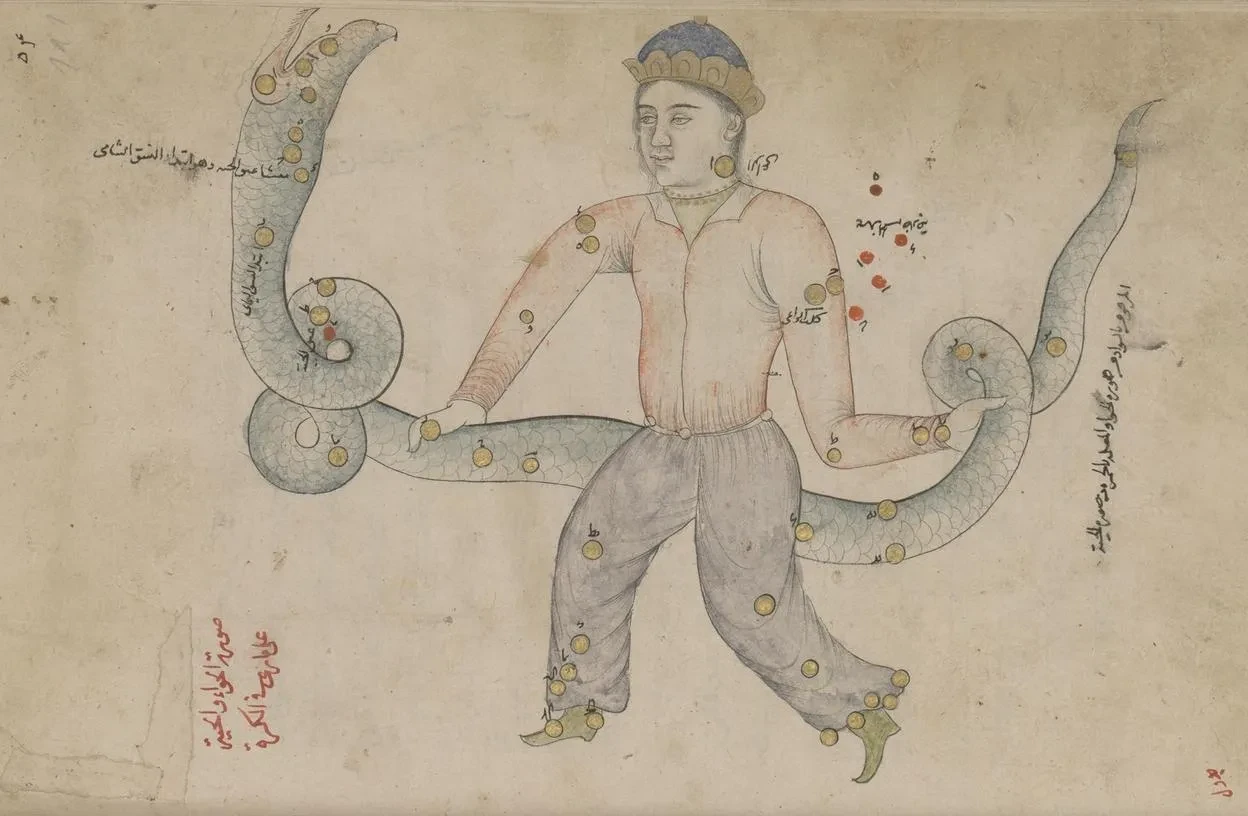
July is a good month to spend some time with Ophiuchus, the Serpent Bearer - a sprawling, ancient constellation that doesn't get nearly enough attention, despite the Sun spending 18 days inside its borders every year in late November to mid-December.
To find it, start with Antares, the vivid reddish star at the heart of Scorpius, burning low in the south about an hour after sunset. The name Antares roughly translates as 'rival of Mars' in Greek - it earned the comparison because of its deep red colour and its tendency to sit close to Mars in the sky. Look northwards from Antares to find Rasalhague, a bright white star that marks the head of Ophiuchus. The constellation stretches between the two.
The name Rasalhague comes from the Arabic Ras al-hawwa, meaning 'head of the serpent collector'. You might recognise the 'ras' root - it appears in Batman's Ras al Ghul ('head of the demon'). Ras has Semitic roots and historically refers to ‘head’ and ‘chief’. As well as its use in Arabic, it is related to the Hebrew Rosh, as in Rosh Hashanah - the Jewish New Year, and the Amharic Ras, as in Ras Tafari- Haile Selassi I, the former Emperor of Ethiopia.
Ophiuchus should, by any strict astronomical reckoning, be part of the zodiac. The ecliptic, the path the Sun traces through the sky, spends significantly longer in Ophiuchus than Scorpius. But the ancient Babylonians and Greeks, working within a twelve-month calendar system, opted for twelve constellations, and Ophiuchus didn't fit the pattern. It was left out.
Not only that, but due to Earth's axial precession (the slow wobble of our planet's rotational axis, tracing a full circle over roughly 26,000 years), the Sun no longer rises in the same constellation at the same time of year as it did when the zodiac signs were defined in antiquity. The spring equinox once had the Sun rising in Aries; it now rises in Pisces, and will eventually drift into Aquarius - the long-awaited 'Age of Aquarius'.
This is the difference between a sidereal year (one complete orbit relative to the background stars) and a tropical year (the time between successive equinoxes). Because the axis is precessing, the equinox creeps forward slightly each year, making the tropical year about 20 minutes shorter than the sidereal. Barely a lunch break, but over centuries the difference grows.
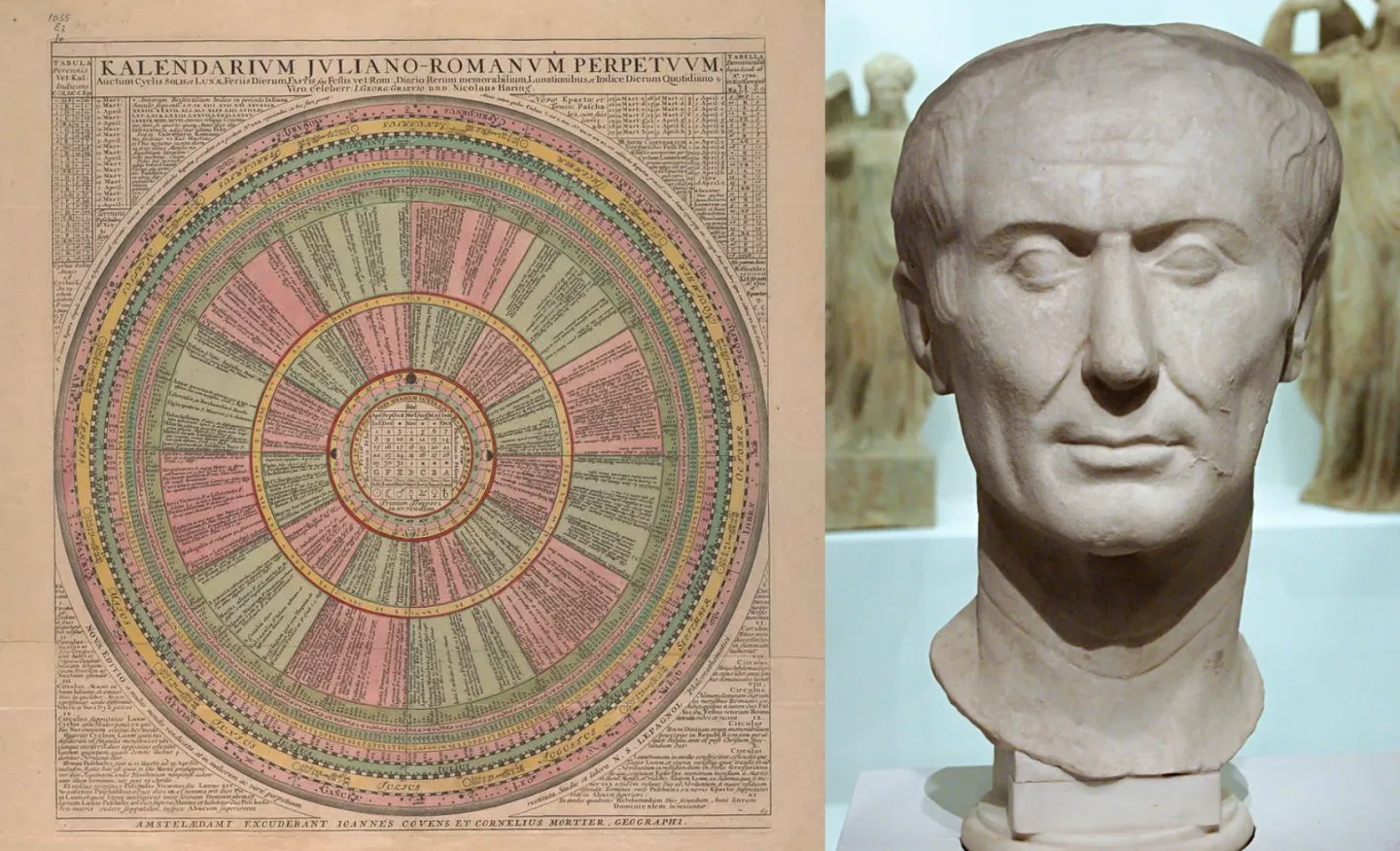
Julius Caesar - who, with characteristic modesty, named the month of July after himself, grappled with the consequences. The old Roman calendar, which was based on the Moon, had drifted so badly it had become unworkable. In 45 BCE, Caesar introduced the 365.25-day Julian calendar, borrowing from the Egyptian model and adding a leap year every four years. It functioned well for centuries, but it still accumulated a small error, gaining roughly three days per 400 years.
Pope Gregory XIII corrected this in 1582 with the Gregorian calendar we use today, which keeps the date of Easter consistent with the spring equinox.
The lingering effects of this calendrical transition were felt for centuries. Russia was still using the Julian calendar until 1918, perhaps part of the reason why the Russian Olympic team arrived nearly a fortnight late to the 1908 Summer Olympics in London, while much of Europe had long adopted this system.
Our Gregorian calendar keeps the seasons anchored. The constellations, slowly and imperceptibly, drift on.
M62: the cluster warped by the galaxy
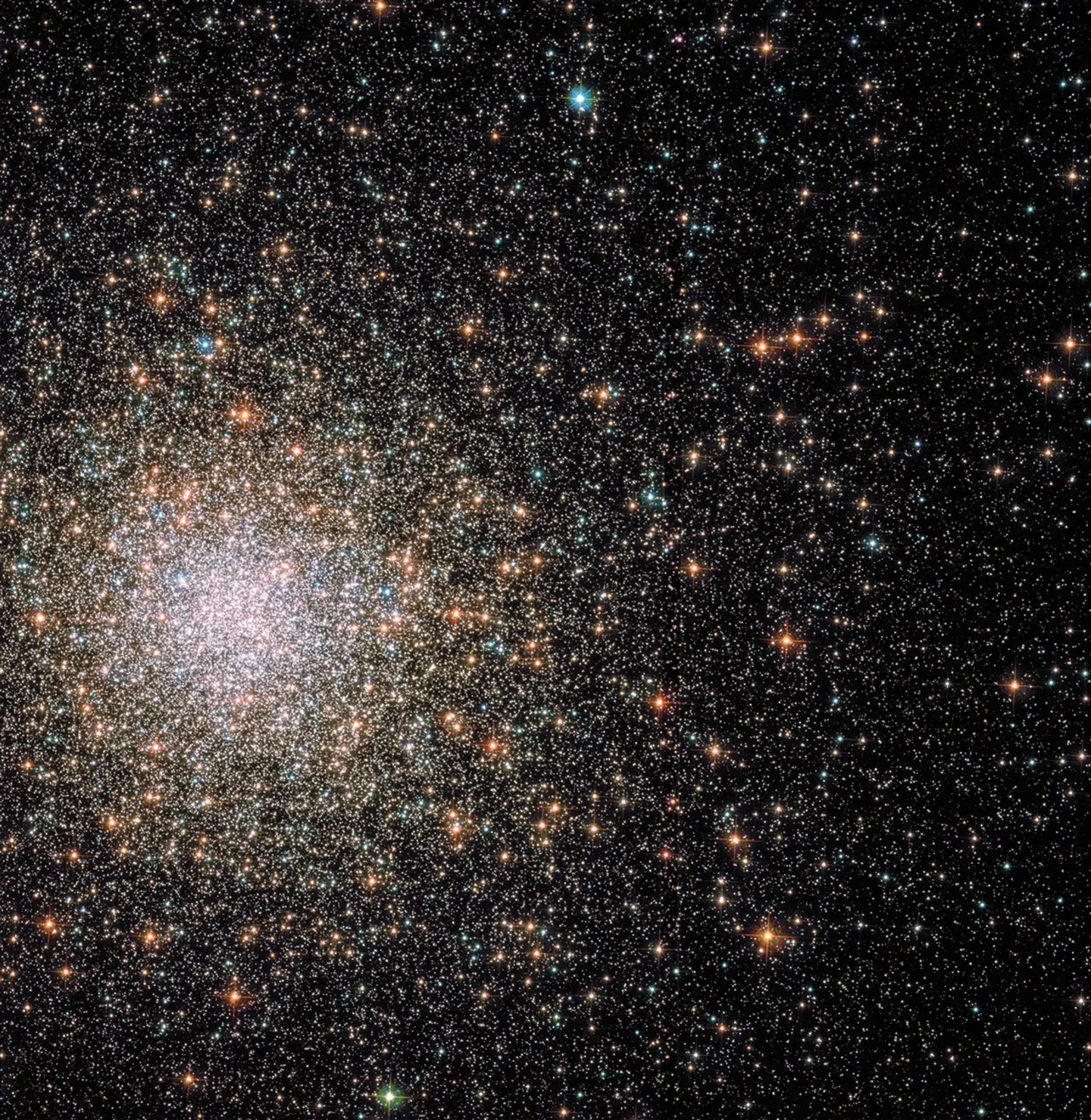
Within the borders of Ophiuchus are seven Messier objects - all of which are globular clusters. One of them demands particular attention.
Messier 62 is unlike almost any other globular cluster in the sky. Most globulars orbit deep in the galactic halo, tens of thousands of light-years from the Milky Way's centre, and appear as tidy symmetrical spheres of ancient stars. M62 is an outlier: at just 6,000 light-years from the galactic core, it lives far closer to the centre than most of its cousins - and the galaxy's gravity has left its mark.
M62 is noticeably elongated - its dense core is visibly offset from the rest of the cluster. The Milky Way's immense gravitational field is physically distorting it. Using binoculars or a small telescope, you can see the asymmetry.
M62 lies about 21,000 light-years away and spans around 15 arcminutes across, roughly half the width of a fingernail held at arm's length. To find it, locate Antares in Scorpius and move about four degrees south-east. Binoculars will show a faint, slightly smudged patch of light; a telescope will begin to reveal the elongated core.
If you could stand at the galactic centre, ignoring the supermassive black hole for a moment, M62 would hang overhead roughly the size of the full Moon. From where we stand, 21,000 light-years away, we are fortunate to see it at all.
Southern Hemisphere: Matariki and the Māori New Year
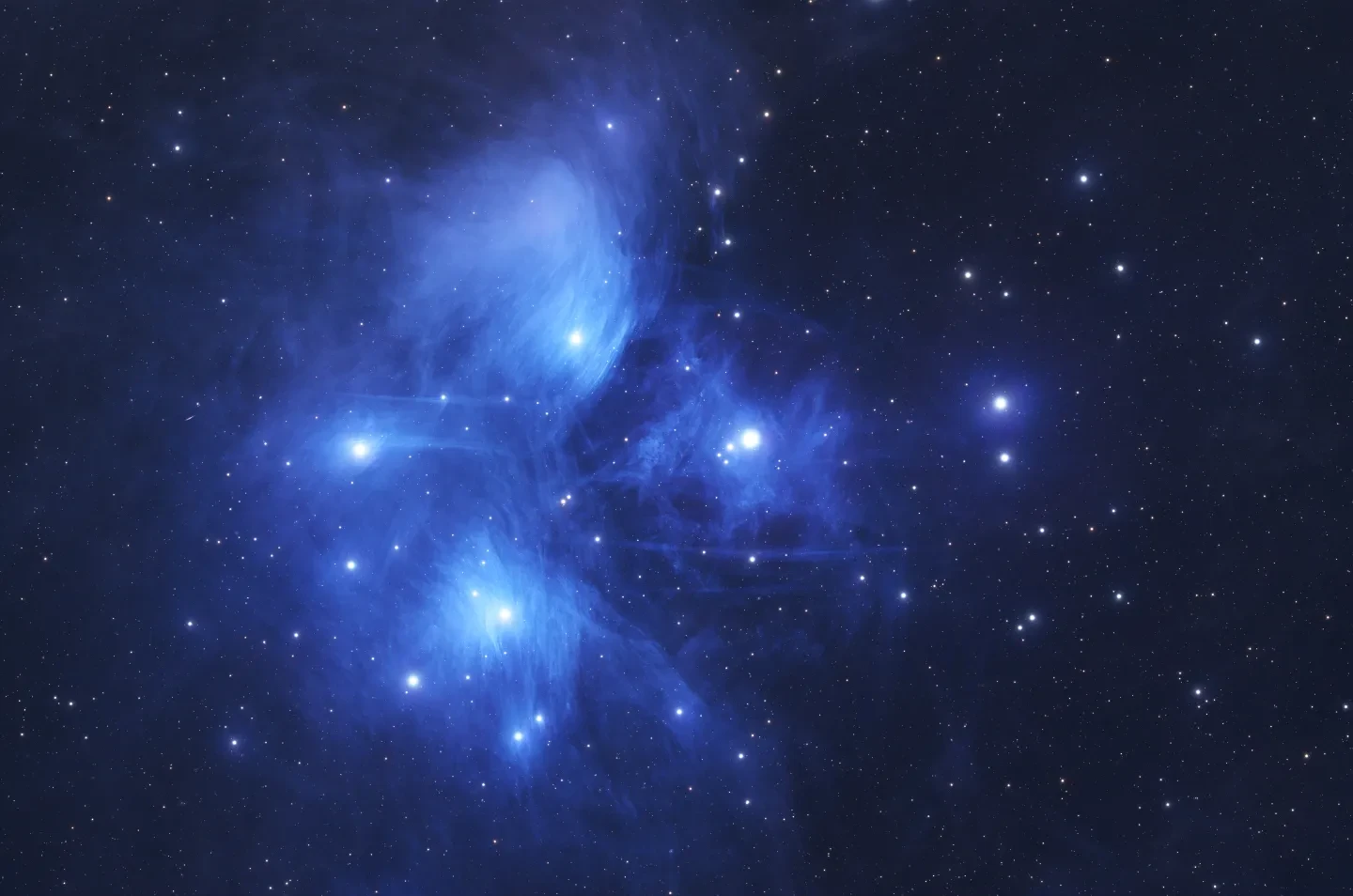
For readers in the Southern Hemisphere, this July brings one of the most significant astronomical events in the Māori cultural calendar: Matariki.
Matariki is the Māori name for the star cluster best known to us as the Pleiades, and in Japan as Subaru, part of the constellation Taurus. It is one of the earliest recorded groups of stars in human history, with observations stretching back some 17,000 years.
Its heliacal rising - its reappearance in the pre-dawn eastern sky after a period of invisibility - marks the beginning of the Māori New Year and coincides with mid-winter in the Southern Hemisphere.
In 2026, Matariki falls on 8–11 July, with the public holiday observed on Friday 10 July. It is the first public holiday in Aotearoa New Zealand to formally recognise Māori culture, and the traditions associated with it involve lighting ritual fires, honouring ancestors and celebrating life. It is a season of reflection as much as observation.
Find out about our Matariki celebrations at the National Maritime Museum here.
From New Zealand, the best time to view Matariki is in the pre-dawn sky, low in the northeast around 6:30am. UK observers can also catch it rising in the northeast from around 3:30am, though you'll be working against the beginning of twilight.
On the morning of 10 July, Mars sits nearby below the cluster, with the ruddy giant Aldebaran adding a warm red glow a little further along.
The stars of the Pleiades are hot, young blue-white suns, and binoculars will transform them from a tight blur into a scattered family of stars blazing through wisps of galactic dust.
The Moon's phases in July 2026
• Last quarter – 7 July
• New Moon – 14 July
• First quarter – 21 July
• Full Moon – 29 July
Stargazing tips
When looking at faint objects such as stars, nebulae, the Milky Way and other galaxies, it is important to allow your eyes to adapt to the dark so that you can achieve better night vision.
Allow 15 minutes for your eyes to become sensitive in the dark, and remember not to look at your mobile phone or any other bright device when stargazing.
If you're using a stargazing app on your phone, switch on the red night vision mode.
Read next
Night sky highlights - August 2026
This month brings a spectacular partial solar eclipse, a partial lunar eclipse, six planets lined up across the pre-dawn sky, and the year's best meteor shower.
How to see the 12 August 2026 partial solar eclipse
Learn more about the best solar eclipse visible from the UK and Ireland so far this century, when around 90-96% of the Sun will be covered by the Moon
ZWO Astronomy Photographer of the Year 2026 shortlist
Discover a selection of the breathtaking images shortlisted in the global astrophotography competition
Space and astronomy highlights in 2026
What should you keep your eyes on the skies for in 2026? Discover this year's standout moments with Royal Observatory astronomers
Meteor shower guide 2026
Want to see shooting stars? Check the key dates for major meteor showers in the UK in 2026, and how to see them in the night sky
Artemis Programme: what you need to know about NASA’s Moon missions
NASA's Artemis missions aim to land humans on the Moon again, create a lunar base, and lay the groundwork for a future trip to Mars
Full Moon calendar 2026
Check the dates for every full Moon throughout the year, learn about the Moon's phases, 'supermoons' and more
Astronomy with the naked eye
Learn what you could see in the night sky with no equipment from the Royal Observatory Greenwich; from galaxies and meteor showers to comets, star clusters, cloud formations and more
'Observing the Universe reveals how small yet precious we are'
An accident led Takanobu Kurosaki to rediscover life’s beauty and fall in love with astrophotography. Explore his image shortlisted in ZWO Astronomy Photographer of the Year 2025

How could humans live on Mars?
Astronomer and author Brendan Owens examines the challenges of sending humans to Mars - and what the future holds for our study of the Red Planet

The new space race: a high-stakes competition of politics and power
Competition between the USA, China and Russia will have consequences for all of us here on Earth. But how is this 21st century space race different to the last one?


Header image: The globular star cluster M62. Image credit: NASA, ESA, and S. Anderson (University of Washington) and J. Chaname (Pontificia Universidad Católica de Chile)