Essential information
| Type |
Talks and tours
|
|---|---|
| Location | |
| Date and times | Wednesday 11 March 2026 | 1-1.30pm |
| Prices | Free |
Join the artist Remiiya Badru as she explores the process of making The Rhumblineage of Penelope Steel.
Badru will begin by reflecting on her first encounters with Penelope Steel, the Jamaican-born mapmaker, during her Creative Research Fellowship at Royal Museums Greenwich.
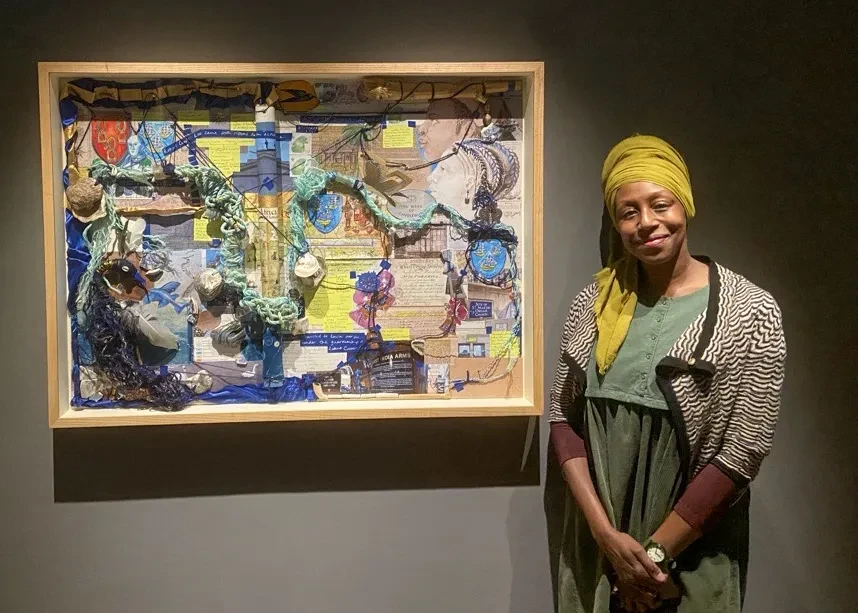
In this project, Badru worked at mapping the narratives around black and indigenous women at sea from the 17th century onwards. She developed an approach using rhumblines (the lines on maps) to bring complex narrative threads together and bring attention to the themes and characters who shaped Penelope Steel's life.
This talk will show how Badru has embedded that approach by exploring the visual symbolism in the artwork, particularly in representing the flow of finance. A particular touchstone is the Acts of Jamaican Assembly 1761, which restricted the way money could be bequeathed along racial lines. This had a major impact on Penelope Steel’s life. She inherited a large share of her father’s wealth from slavery, which made her rich before she came to this country.
Throughout the event, Badru will talk about her practice-based research methods, including her riverwalking practice, sitting with research material and Timehri, her navigator. She will also discuss working from a research-informed perspective and using critical fabulation (combining critical theory and fictional storytelling) as an anchor of reimagining and questioning.
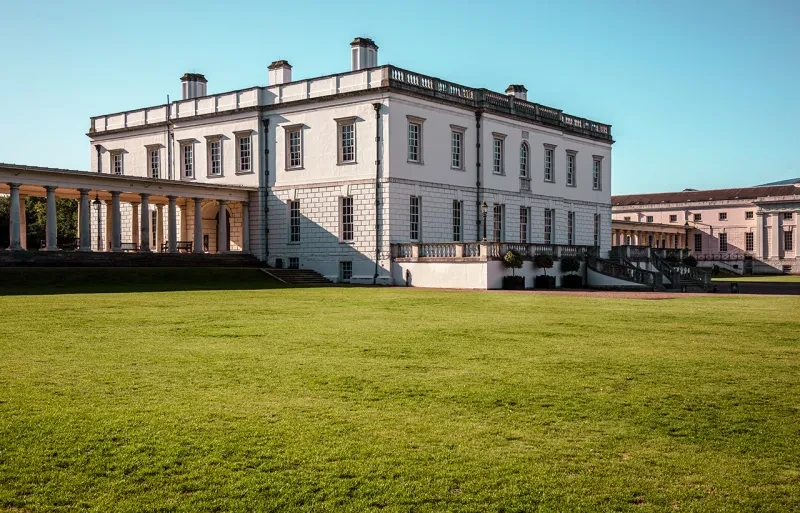
Attending the talk: Badru will deliver her talk next to the display of The Rhumblineage of Penelope Steel, on the first floor of the Queen's House. Staff will be happy to give you directions when you arrive.
Image
About the artist
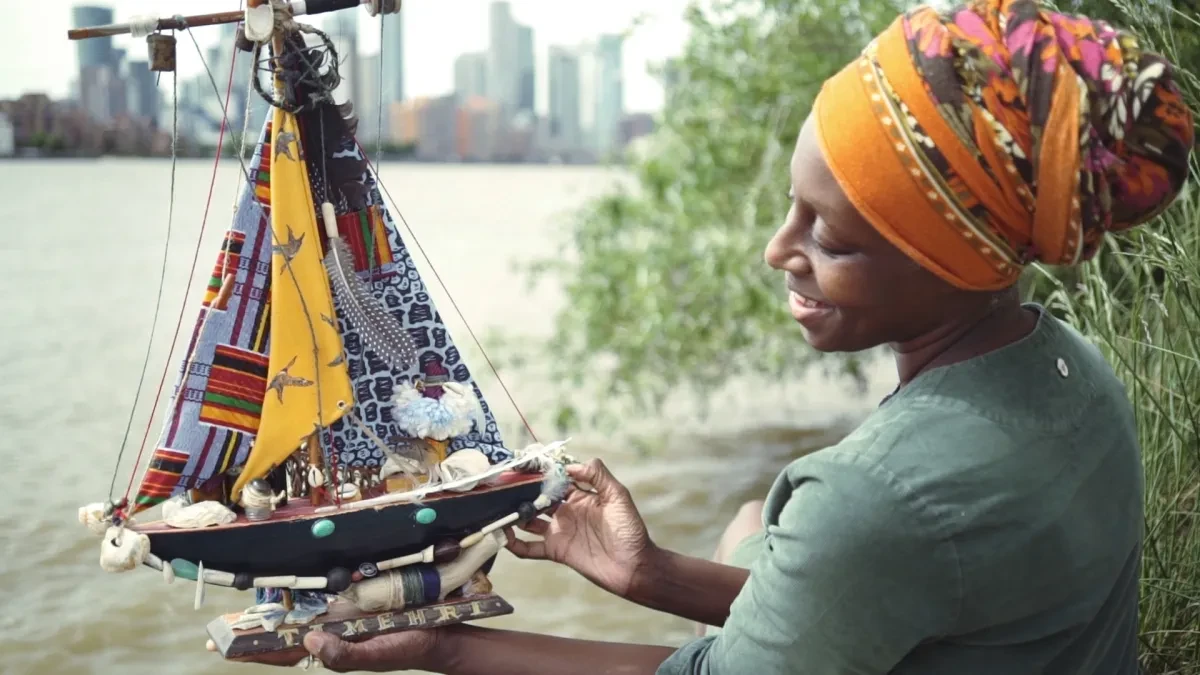
Remiiya Badru is a multi-interdisciplinary artist, whose practice centres on sharing her river-walking adventures through research-informed multimedia artwork and social engagement. She seeks to explore of the river Thames' changing palette of colour, sight, scent, sound and story, but also its silences, omissions and hidden histories.
In her walking practice, Badru communes and responds to the river from a multi-sensorial perspective, entering an immersive meditation in motion. She expresses these experiences through mapping, wayfinding and placemaking. Her work explores how the river has witnessed change over time, including shifts in infrastructure, memory, colonial and post-colonial history, industrial development, heritage, and both natural and built environments.
Her work continues to be navigated by Timehri, her model ship, and their travels along the river and associated bodies of water. Timehri is both the ‘navigator’ and ‘anchoress’ who guides Badru. With Timehri, Badru says, ‘liquid history flows as a continuum which synchronises the past, present and future that connects all of us as a global conduit that carries our stories.’
Learn more about Remiiya Badru's work
Salons in the Queen's House
Image
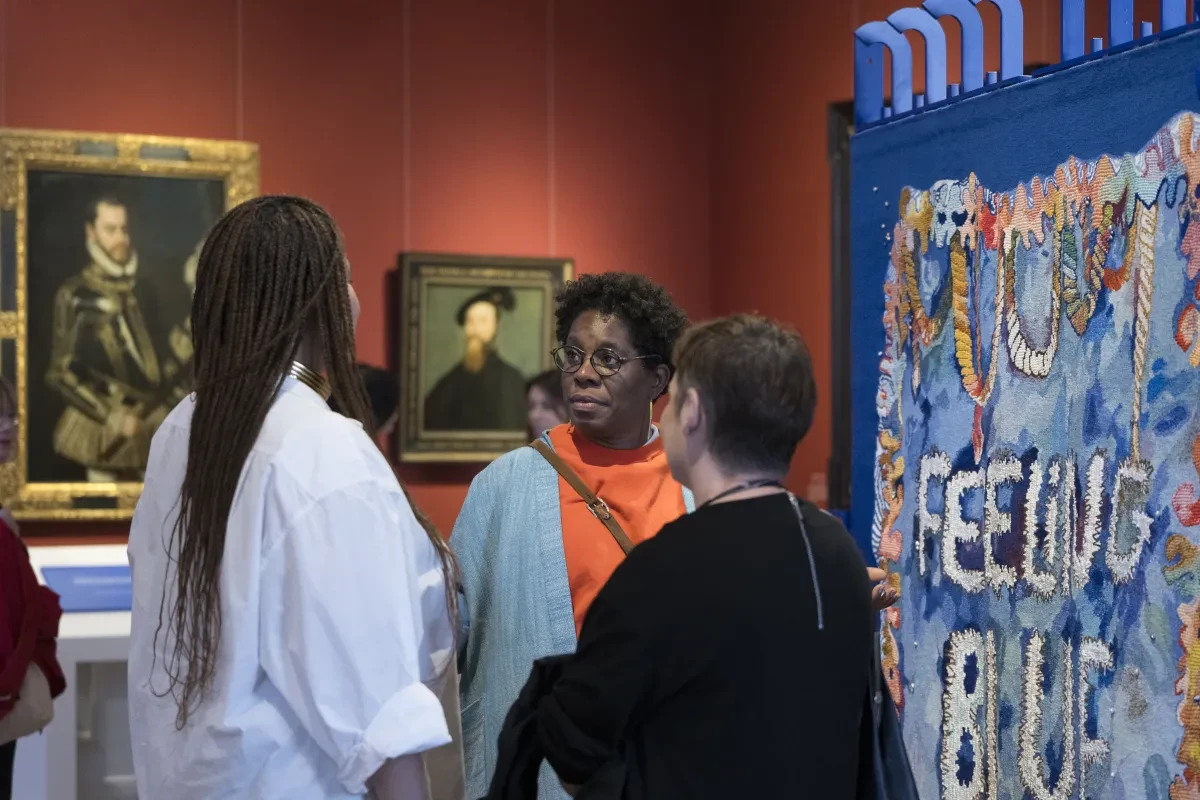
This event is part of our Salons series, a programme of talks inspired by the history of the Queen's House and its collections.
The term ‘salon’ was used historically to describe social gatherings in the domestic sphere. Participation was open to a range of individuals, and women often acted as hosts. Salons were alternative spaces for learning, debate and the exchange of ideas. We continue to explore this tradition at the Queen’s House.
Speakers at our Salons include artists, researchers, curators and creative practitioners. Their talks bring to light new insights and share different perspectives.
What’s on
Find more Salons events.
Make the most of your visit