Essential information
| Type |
Talks and tours
|
|---|---|
| Location | |
| Date and times | Wednesday 1 July 2026 | 1-1.30pm |
| Prices | Free |
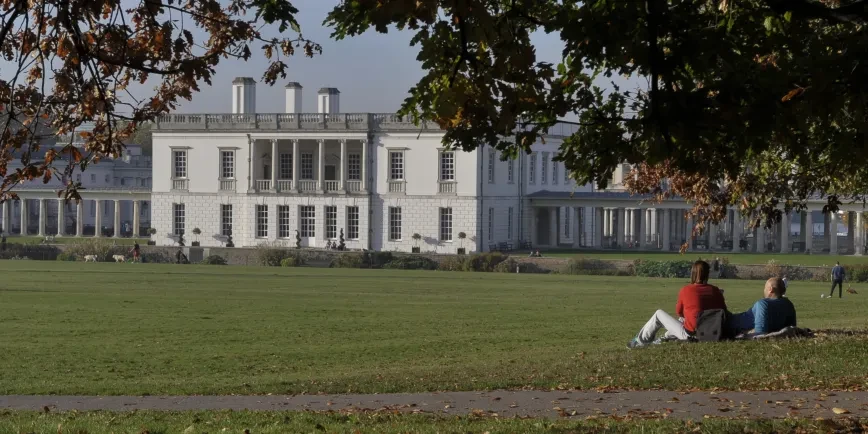
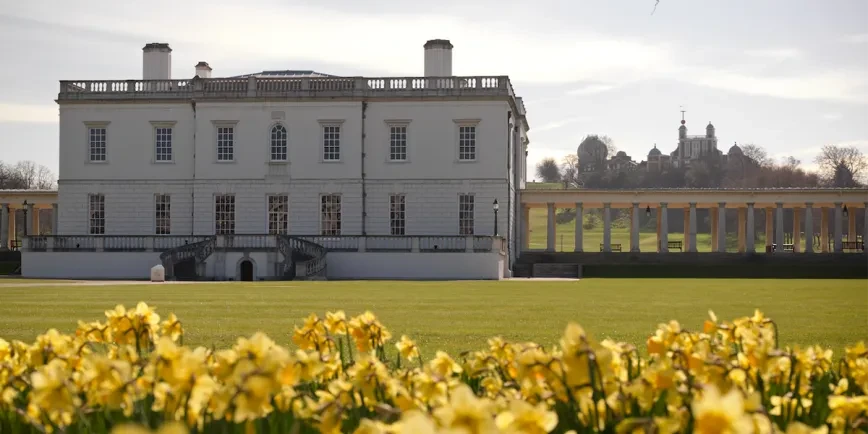
Join artist Remiiya Badru as she takes you on a tour of contemporary art in the Queen's House, featuring the symbolic motif of the flying fish.
Different cultures from around the world view flying fish as an important and significant totem, symbol, amulet and guide, rich with a multitude of meaning, folklore and myth. These creatures embody the ability to travel between the worlds of water and air, sea and sky.
They are magical and mythical, providing a rich source of spiritual sustenance for our development, from overcoming obstacles and breaking boundaries to embracing change and exploring new possibilities.
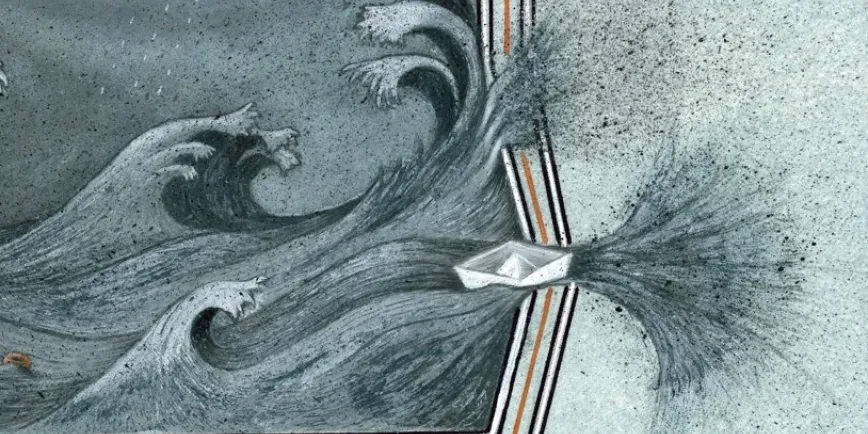
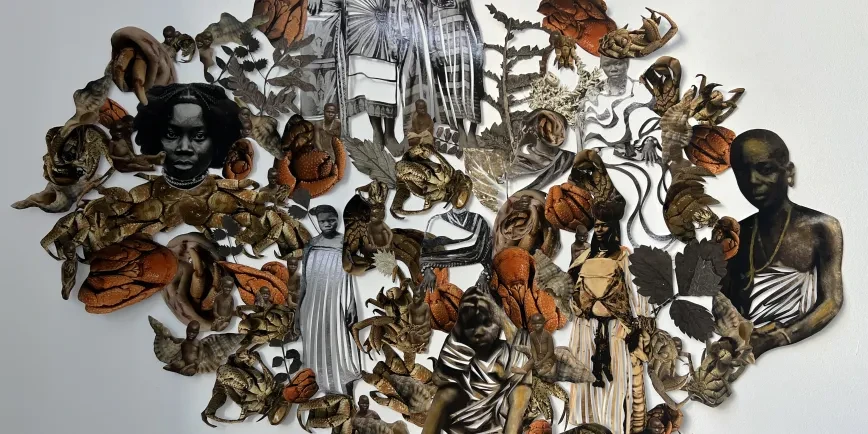
In this talk, Badru will explore the cultural, symbolic and artistic significance of flying fish within new contemporary artworks on display in the Queen's House, including Badru's collage work The Rhumblineage of Penelope Steel.
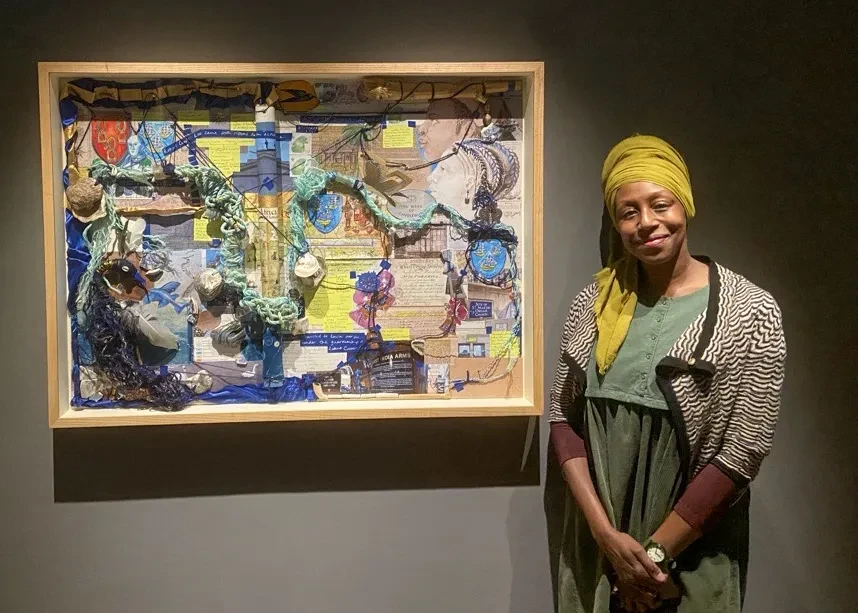
Badru will identify how each artist positions the flying fish as part of a greater narrative through connecting threads of relational experience through time, passage and purpose. Badru will also examine the connections between the artists and look at how flying fish become representative of migration; a central theme in all of the works, whether they look at this motif through constellations or cuisine.
This talk will start at Tam Joseph's painting Migrants, which is located within the Crossings display in the Orangery. Staff will be happy to give you directions when you arrive.
"I recall the pure joy of witnessing the magic of flying fish whilst sailing from Caricou to Grenada. The sunshine was bright and the weather beautiful after a period of heavy rain. I was sitting on the top deck waving to fishermen and seeing flying fish for the first time.
"They were like ‘taliswomen’ leaping out of the water - momentarily journeying in between worlds…– pure magic. Freedom. To me the oceans embody multi layered and multi sensorial mythic narratives connecting many realms of rhumblines, which are timeless and boundless."
Remiiya Badru, March 2026
About the artist
Image
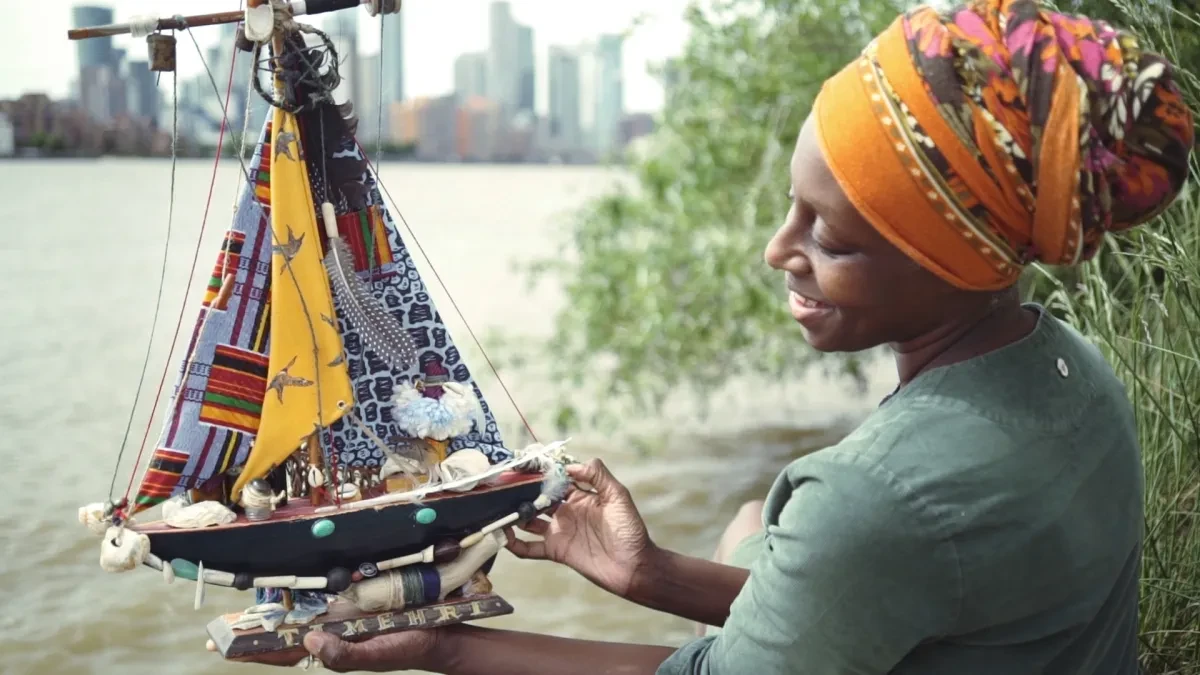
Remiiya Badru is a multi-interdisciplinary artist, whose practice centres on sharing her river-walking adventures through research-informed multimedia artwork and social engagement. She seeks to undertake a multi-layered exploration of the River Thames’ forever changing palette of colour, sight, scent, sound and story, but also its silences, omissions and hidden histories of people and place.
In her walking practice, Badru seeks to commune with and respond to the river as a timeless resource from a multi-sensorial perspective, entering an immersive and embodied meditation in motion. She externalises these experiences through mapping, wayfinding and placemaking. The stories that Badru seeks to uncover relate to the river as a witness to infrastructural change and flux, particularly in relation to memory, colonial and post-colonial histories, pre- and post-industrial change, heritage, natural and man-made environments.
Her work continues to be navigated by Timehri, her model ship, who is simultaneously her ‘navigator’ and ‘anchoress’ continuing to guide Badru in her travels along the river and associated bodies of water. Together they navigate these embodiments of water as ‘liquid history flowing as a continuum which synchronises the past, present and future that connects all of us as a global conduit that carries our stories.’
Her recent work The Rhumblineage of Penelope Steel is currently on display in the King's Outer Closet at the Queen’s House.
Salons in the Queen's House
Image
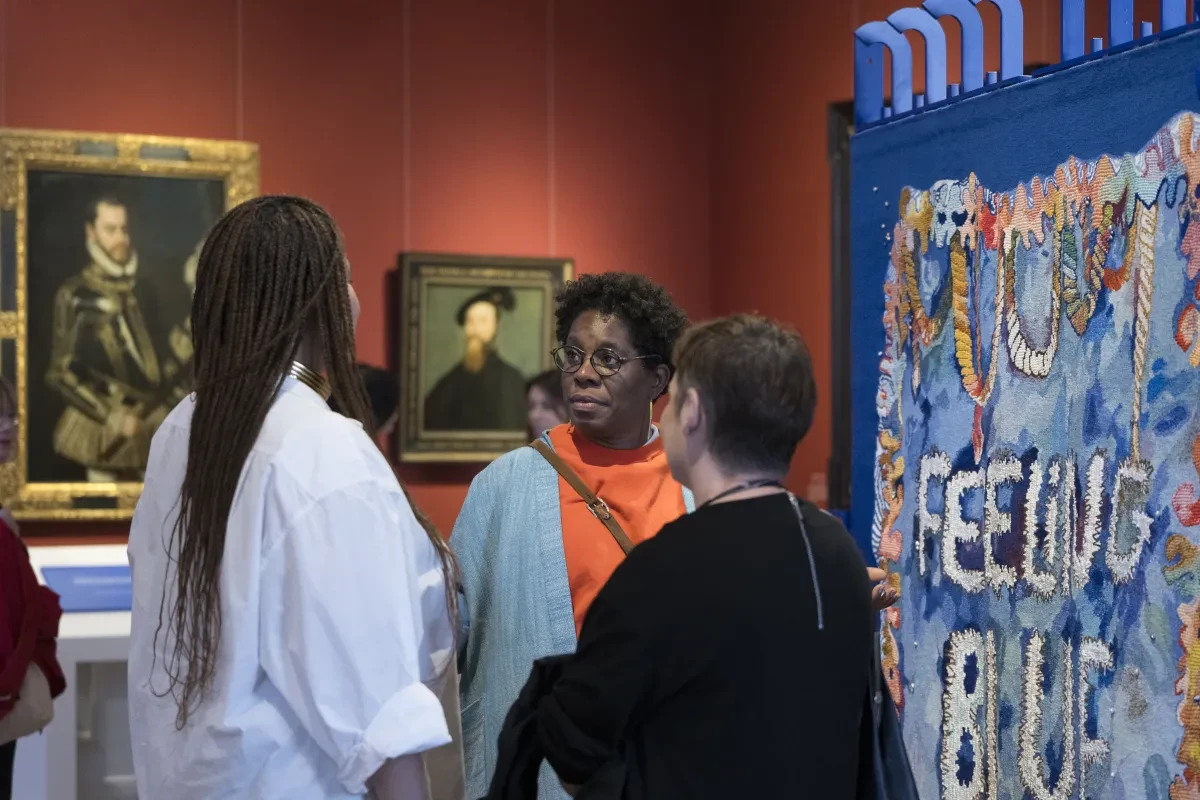
This event is part of our Salons series, a programme of talks inspired by the history of the Queen's House and its collections.
The term ‘salon’ was used historically to describe social gatherings in the domestic sphere. Participation was open to a range of individuals, and women often acted as hosts. Salons were alternative spaces for learning, debate and the exchange of ideas. We continue to explore this tradition at the Queen’s House.
Speakers at our salons include artists, researchers, curators and creative practitioners. Their talks bring to light new insights and share different perspectives.