The name of Penelope Steel (c.1767-1843) may not be instantly recognisable, yet during her lifetime, she charted her own course in London’s mapmaking industry.
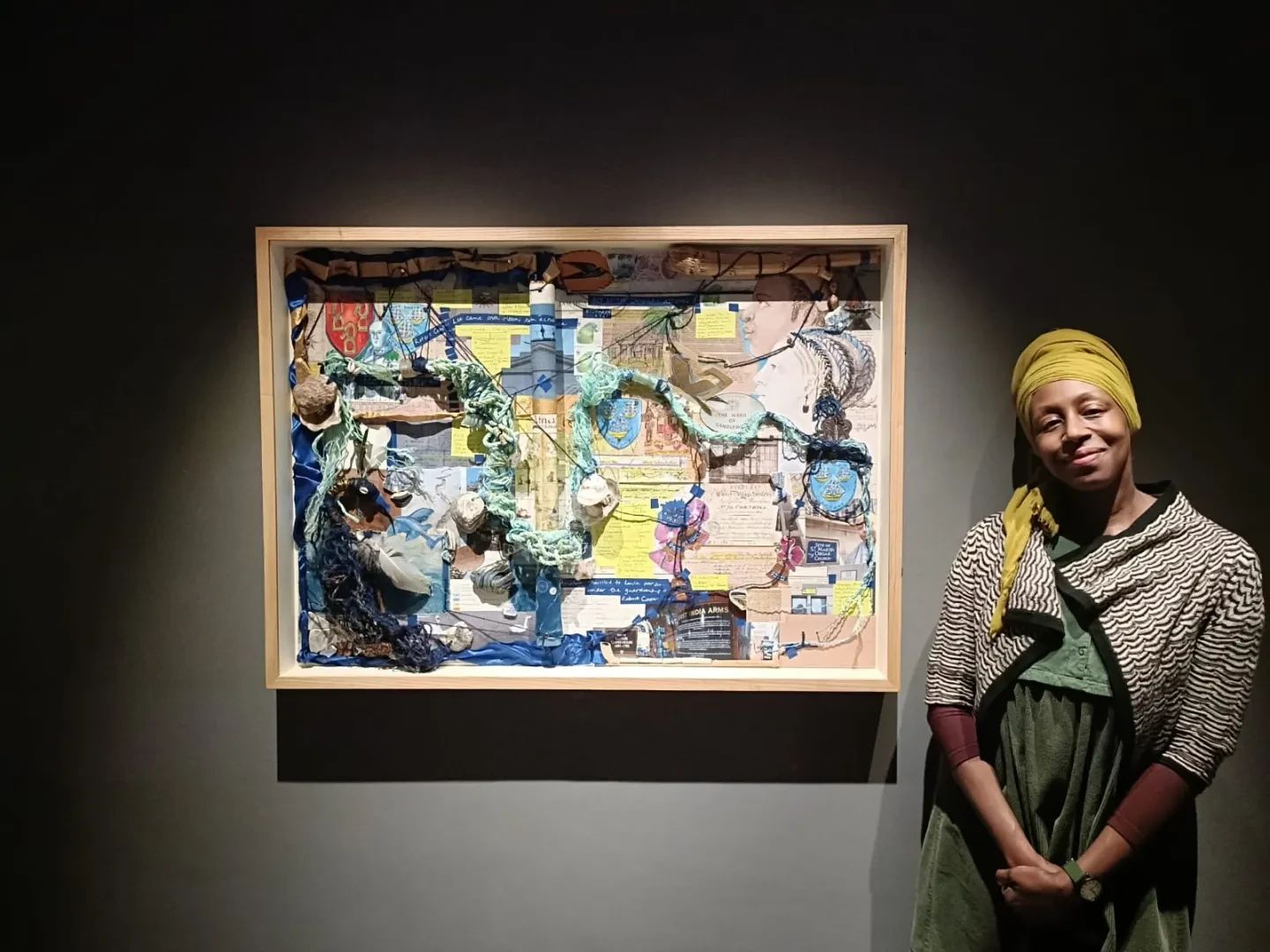
Multidisciplinary artist Remiiya Badru has created an artwork inspired by the life of the 19th century mapmaker. Her new piece, The Rhumblineage of Penelope Steel, is on display in the Queen’s House.
Part map, part family tree, part timeline, Badru’s artwork draws on her research from her Creative Fellowship at Royal Museums Greenwich in 2024. Like many of Badru’s works, The Rhumblineage of Penelope Steel is rooted in the history of London and the River Thames. It incorporates materials including rope, thread, as well as reworked images from the Museum’s collection, to map the contours of Steel’s story.
Here, Remiiya Badru and Maya Wassell Smith, Assistant Curator of Art at Royal Museums Greenwich, give a greater insight into the world of Penelope Steel – and reveal the influences behind Badru’s piece.
Who was Penelope Steel?
Badru’s artwork has been made in response to the life and work of Penelope Steel, who was born in Jamaica. Her mother, Sara Cox, was a free woman of colour. Her father, Scudamore Winde, was a trader in enslaved Africans from a wealthy, land-owning family in England.
When Scudamore Winde died in 1775, he left Penelope, her mother and siblings a large inheritance. Penelope is recorded as Winde’s ‘natural’ child, i.e. illegitimate. According to the Act of the Jamaican Assembly December 1761, mixed-race children could only inherit up to a limit of £2,000. While the will refers to her brother as a ‘mulatto’ – a dated and derogatory term used to describe people of mixed Black and white ancestry – Penelope is not described in any terms that signify her race, suggesting she might have been ‘passable’ as white.
Image
A pioneering publisher
After migrating to London, travelling with her guardian, Robert Cooper Lee, who was executor to Winde’s estate, Penelope married into the Steel family of maritime publishers in 1786.
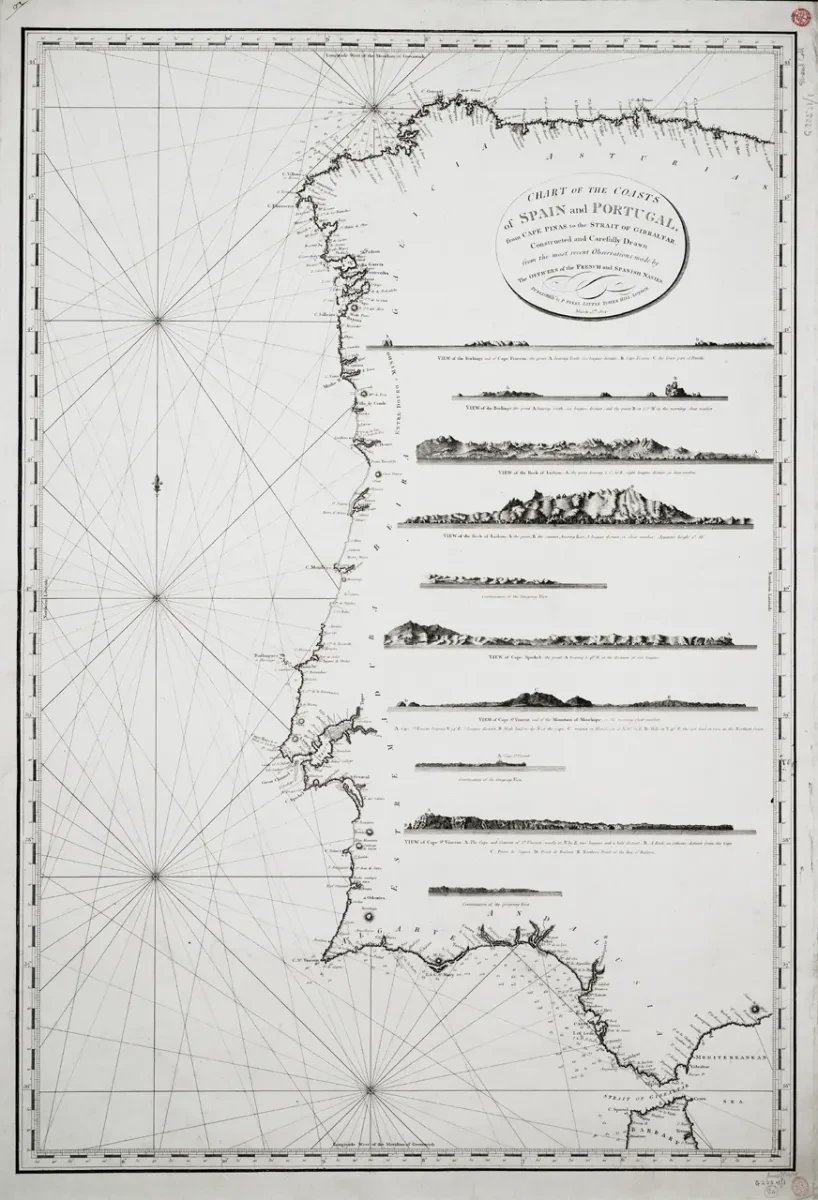
When her father-in-law and husband died in quick succession, Penelope Steel took on the business, Steel’s Navigation Warehouse. She ran it for over 15 years (sometimes alone and sometimes in partnership) selling charts, manuals of seamanship and the Steel’s Navy List.
She managed maritime information with a network of individual Merchant Navy captains, admirals and officials in the Royal Navy, and the administrators of the East India Company. As such, Penelope Steel had a complicated relationship with empire.
She was the descendant of enslaved Africans and the beneficiary of a fortune made from their sale. She was at once a woman of colour, potentially ‘passing’ as white, a migrant, and a mapmaker whose work served the expansion and extraction of empire.
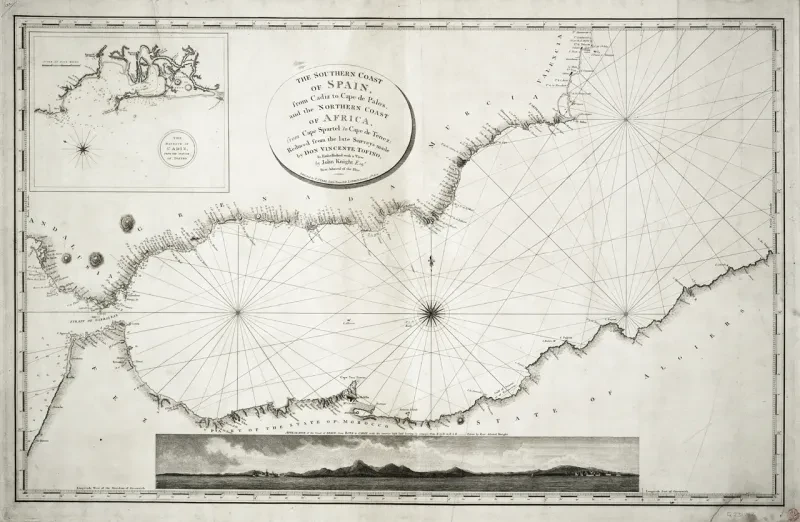
In the display is one of Penelope Steel’s blue back sea charts. This type of chart began to be produced in the 1700s using thick blue packing paper (sometimes described as sugar paper, because it was used to wrap sugar loaves) to make these loose maps more robust for use at sea.
Weaving narrative threads: the process of creating the artwork
Remiiya Badru became interested in the life and mapmaking of Penelope Steel when she was undertaking a Creative Research Fellowship at Royal Museums Greenwich in 2024. During her fellowship, she says how she, “allowed the liminal spaces in the collections to speak to me. I was interested in excavating the hidden narratives of Black women at sea in maritime history.”
Examining identity, migration and movement through her passion for maps, especially in the way they communicate complicated stories, she became fascinated with Penelope Steel as an early Black female pioneer of mapmakers.
In creating a work on Steel’s life and history, Badru brought personal and global narrative threads together using the concept of ‘rhumblines’. These are imaginary lines on the surface of a sphere that intersect all meridians at the same angle. The lines are plotted as a course on maps and help seafarers to navigate compass bearings.
In Badru’s interpretation and redefinition, rhumblines extend further than their formal definition to embody intersections of complex narratives, symbolism, metaphor and memory.
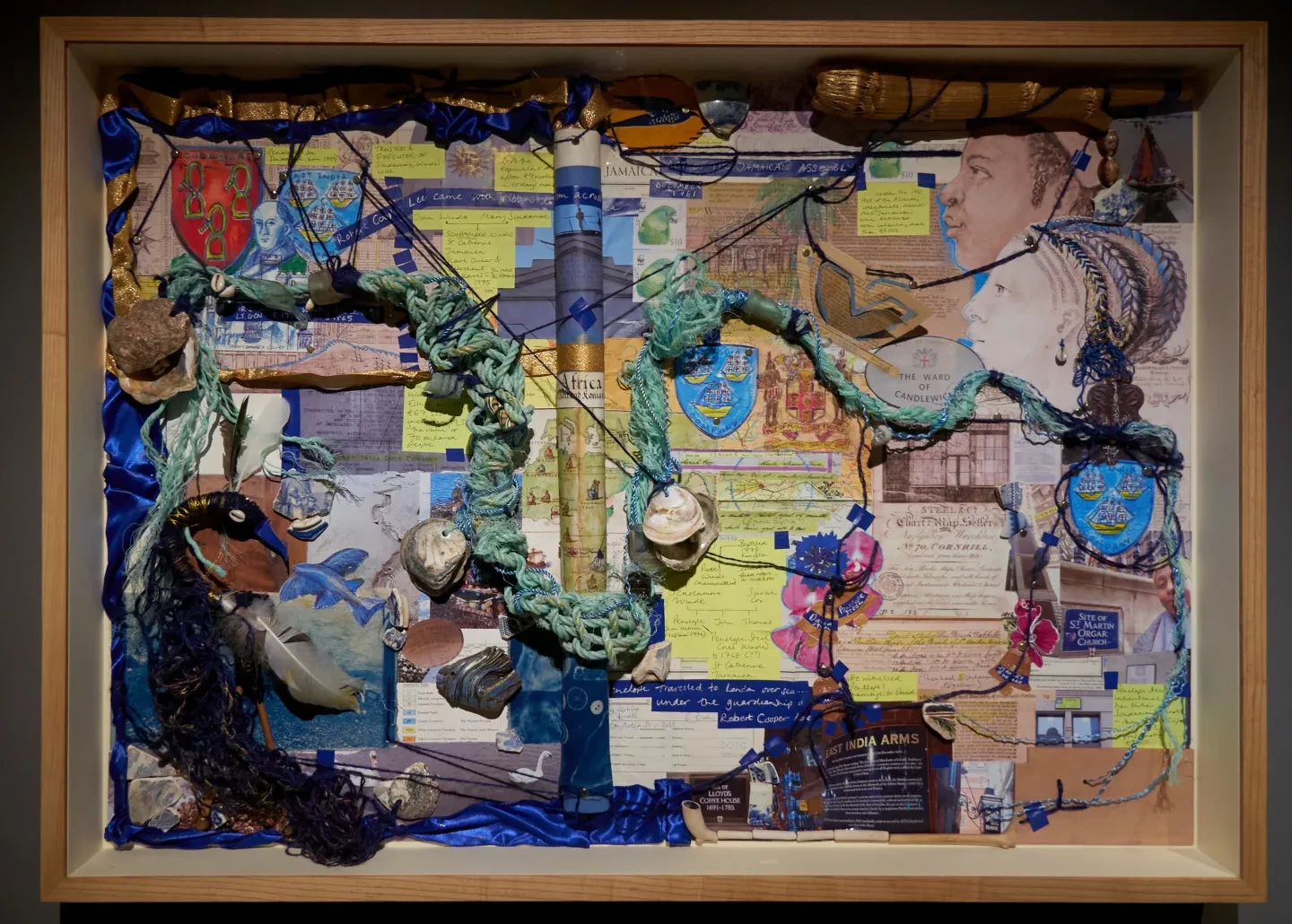
She was deeply inspired by mnemonic device systems (memory aids), including ‘quipu’ created by the Inca. This ancient recording system was made from knotted threads, which held complex, technological information and knowledge. She was also interested in ‘stick maps’, navigational devices (sticks and shells) made by mariners of the Marshall Islands. Badru sees these as “complex codified systems as ‘holders of memory’ in relation to specific communities.”
In The Rhumblineage of Penelope Steel, Badru uses the rhumblines as “lines of energy”, to hold memory and fill gaps, counteracting erasures of Black women’s narratives. The first of Steel’s maps she observed and studied was one of the River Thames. As part of her creative process, Badru reimagined walking with Penelope Steel along the foreshore of the river.
This enabled her to develop a real connection with Steel. "[It was a] magical moment of both transcending and moving in-between time,” she explains. “My walking route in tandem with her map and the river was a serendipitous moment of reimaginings and conversations experienced in a new liminal space.”
Image
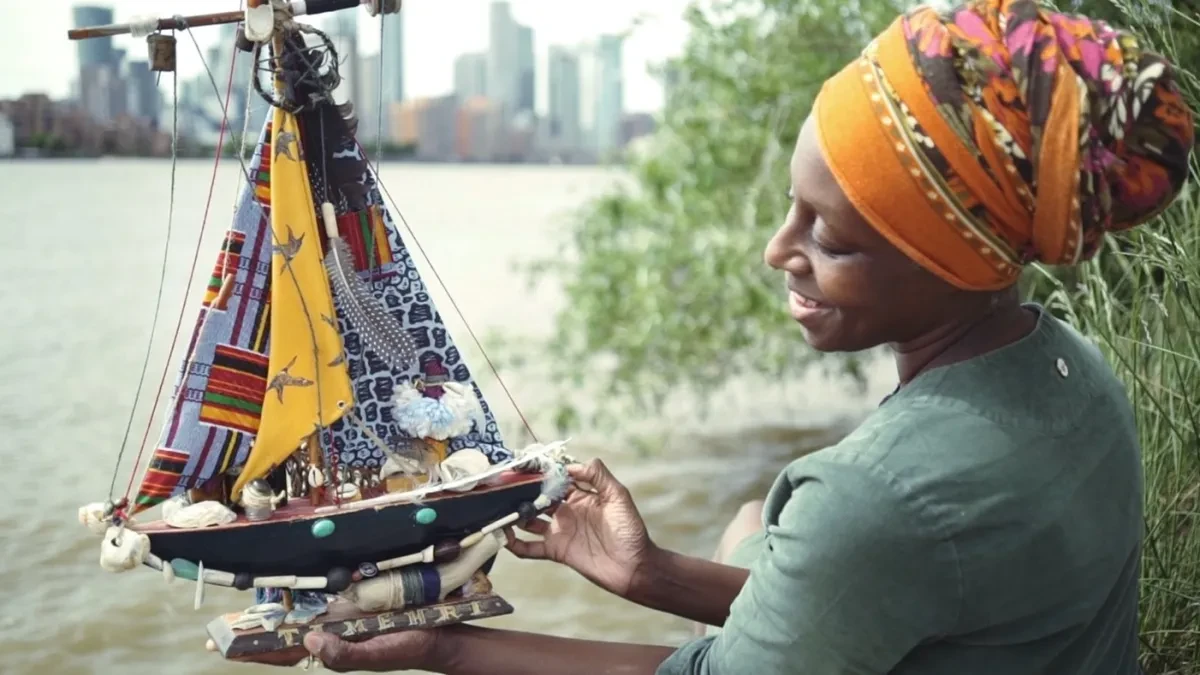
Timehri's Travels
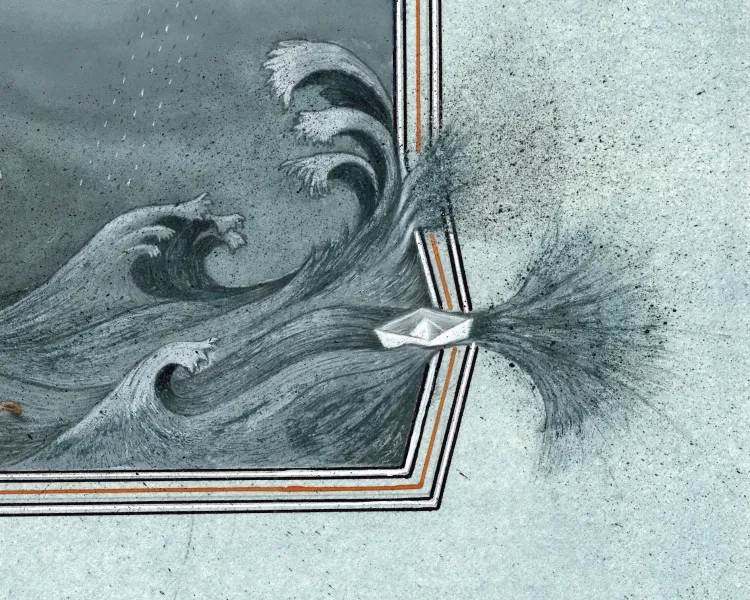
Walking around bodies of water is central to Badru’s practice. It was key to the making of her model ship Timehri, which has shaped the direction of her work – and informed her research fellowship at Royal Museums Greenwich.
In a series of blogs, she explores how Timehri came to be, and her experience of undertaking a creative partnership with the Museum.
Mapping the world of Penelope Steel
The Rhumblineage of Penelope Steel traces Steel’s lineage through her family’s movement between Africa, Jamaica and London. It includes images from the Museum’s collections of African women and maps of Africa and Jamaica.
It also contains the archival traces of Steel’s family life, like the references to her mother in Kingston, her marriage to David Steel in London and a portrait of her son, Sir Scudamore Winde Steel, a British Army officer in the East India Company.
Badru assembles these images and documents with fragments of London history, gathered through her artistic walking practice around bodies of water, particularly the Thames.
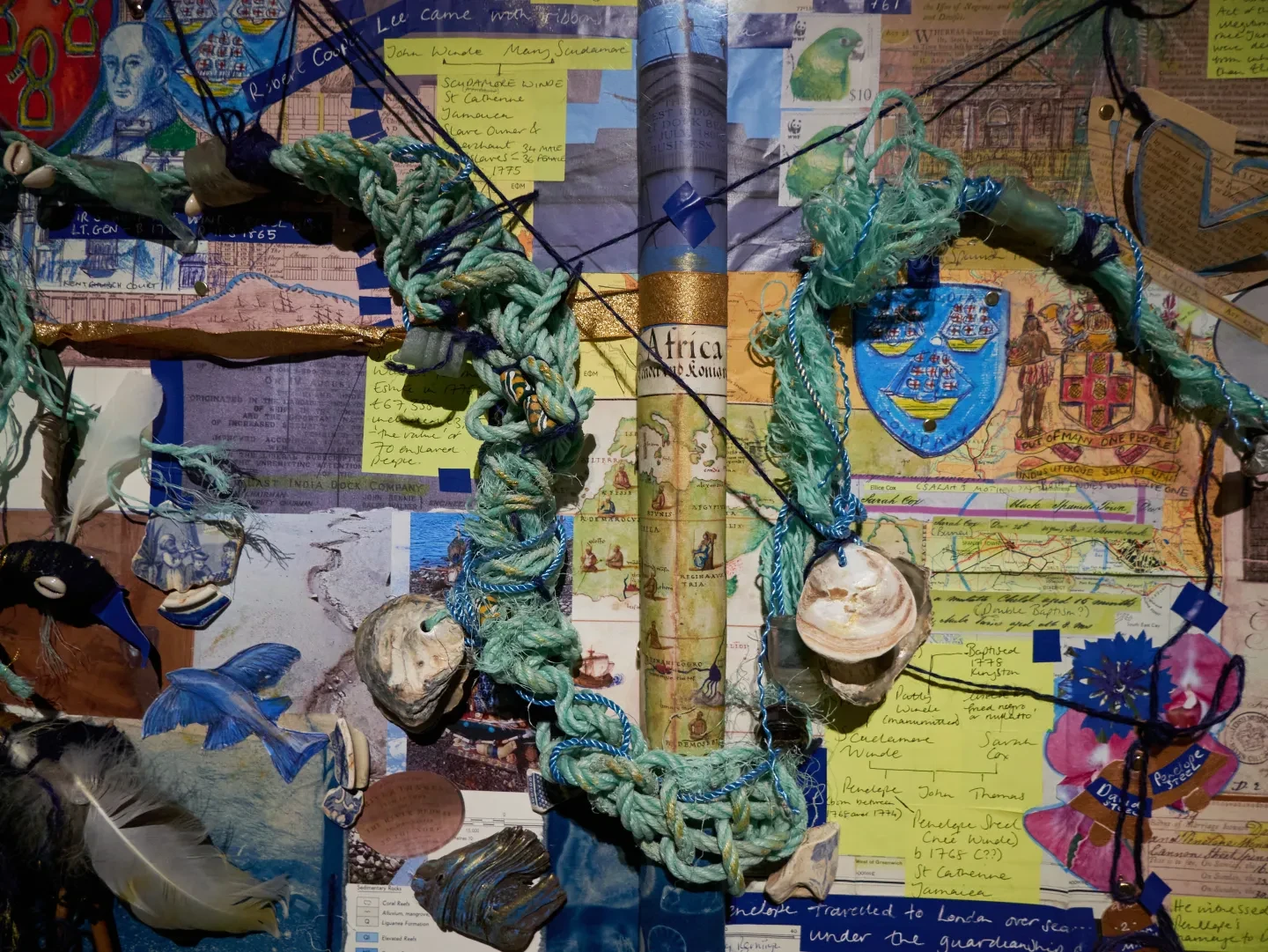
Pieces of rope found on the foreshore trace the shape of the Thames around the Isle of Dogs – which Badru describes as “the Smile in the River” – overwritten with an African map. She explains: “This is a different kind of ‘triangle of trade’ from the cowrie shell, as currency to trade enslaved people, where the flow and migration of finance over the sea and through the river plays a pivotal role in Steel’s story.”
She adds: “I was particularly interested in how this complex external scaffolding shaped her position and navigation as a woman and as a woman of colour, who could pass as white, in a male-dominated world, but also her relationship with the East India Company, whose former headquarters stands on the site of Lloyd’s of London today. I was also curious about how these attributes, especially around the complexities of empire, and external social landscapes, shaped her agency, choices and inner world”.
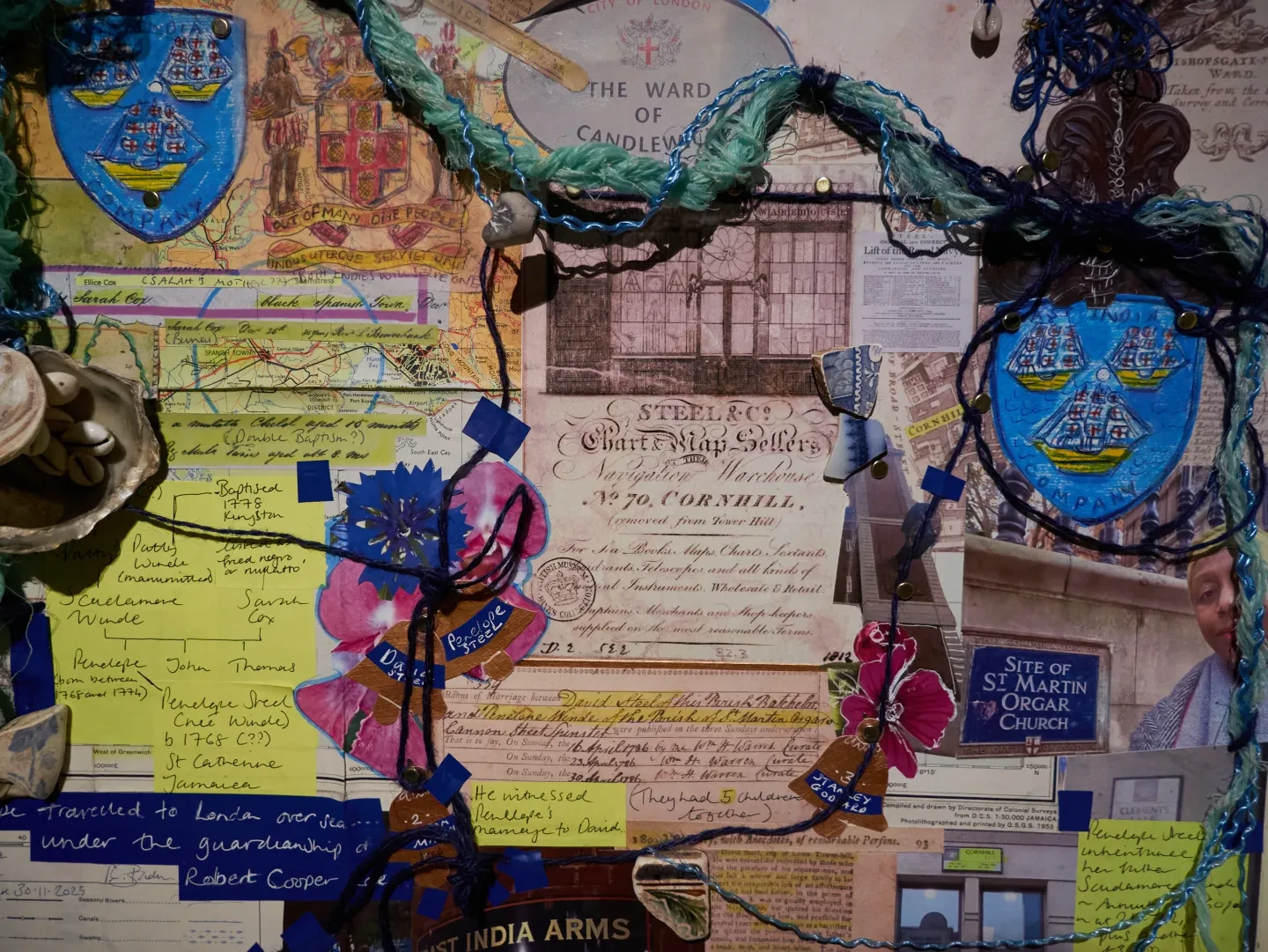
Wall plaques evoke the former sites of the churches in which Penelope Steel was married, and the places she did business. The shells and pieces of pottery gathered from the foreshore show that the river is both the archive and the lifeblood of London; the watery highway which carried people and goods in and out of the city, but also the repository of its history.
Through retracing and reconnecting, walking and researching, Badru was able to expand the disparate and incomplete archival fragments to create a ‘reimagined portrait map’ of Penelope Steel’s life: her Rhumblineage.
The significance of blue
The colour blue is a running theme in the artwork, connecting to themes embodied in the Queen’s House. It is seen on the blue backing, which Badru has applied to a partially rolled map of Jamaica, cyanotypes, the East India Company shield, blue and white ceramics, and archival notes and quotes.
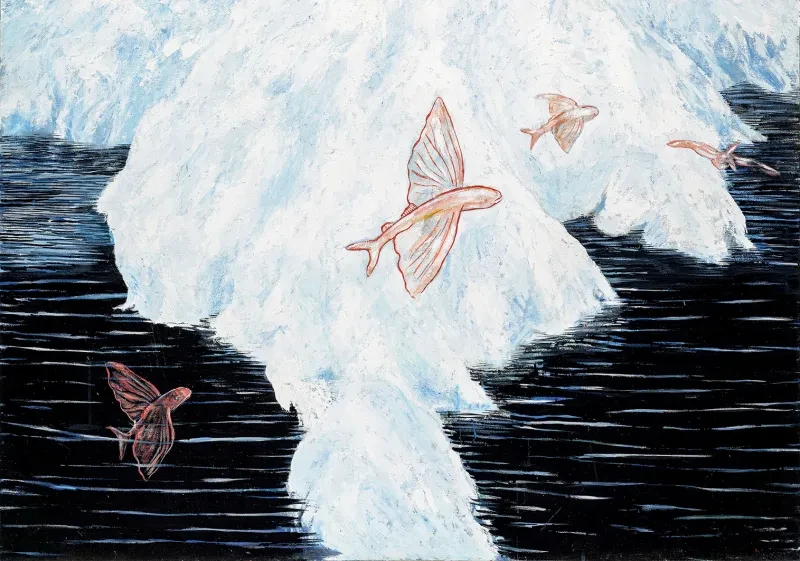
The animals which Badru has included are also blue, and instruct the viewer in thinking about migration, wealth and the history. The flying fish was a common and arresting sight during long sea voyages.
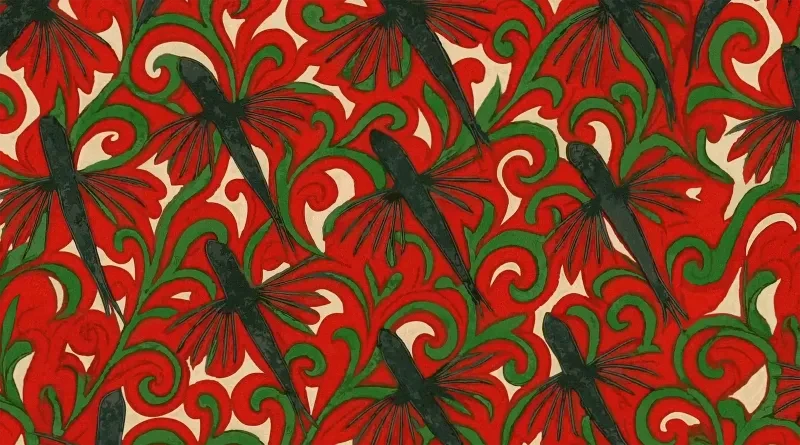
The Speed Bird has long been a popular design in West African wax-printed cloth. In Ghana, the design is sometimes called ‘Sika wo ntaban’, which translates to ‘Money has wings’, a reflection on the mobility and insecurity of riches, which both come and go – and are liable to be taken or moved around the world.
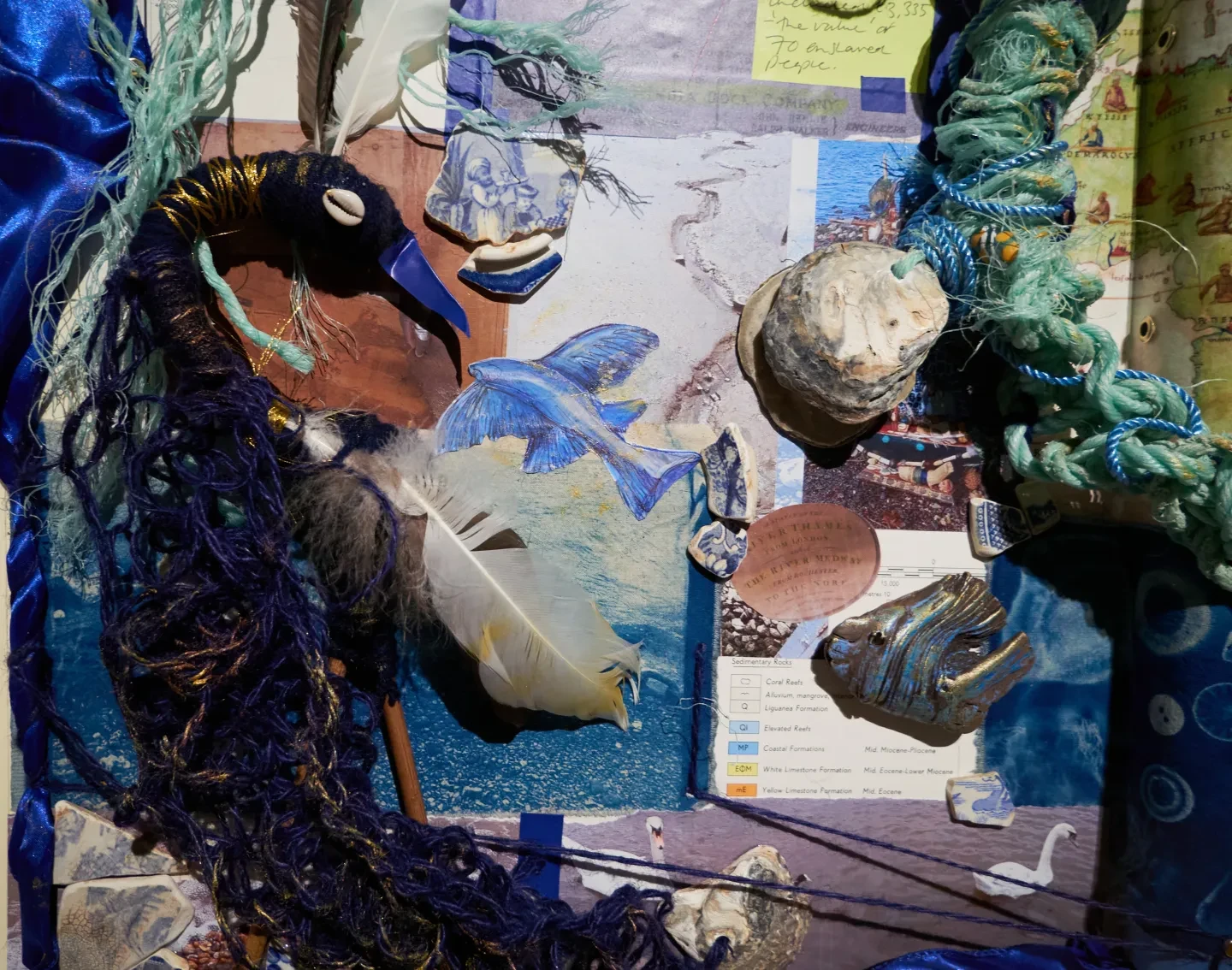
The Sankofa bird sits in the bottom left corner, an Akan symbol which looks back but faces forward, articulating the deep connection between the past and the future. The Sankofa’s blue wool body unravels into the thread, which criss-crosses the work and the visual archive that Badru has assembled.
Through The Rhumblineage of Penelope Steel, Badru illustrates how the past is embedded in the present – and that the legacies of colonial trade and enslavement carry through into the future.
Discover more
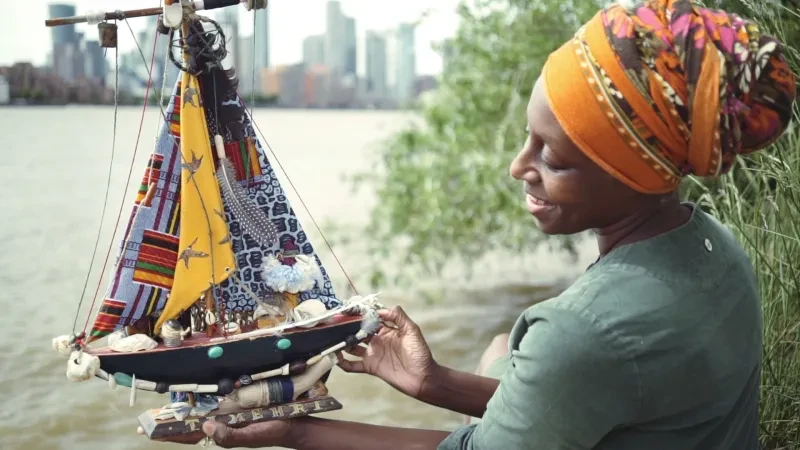
Timehri’s travels: how a ship model sent Remiiya Badru on a journey of discovery
Remiiya Badru describes how the chance discovery of a dilapidated ship model led to a rich creative partnership
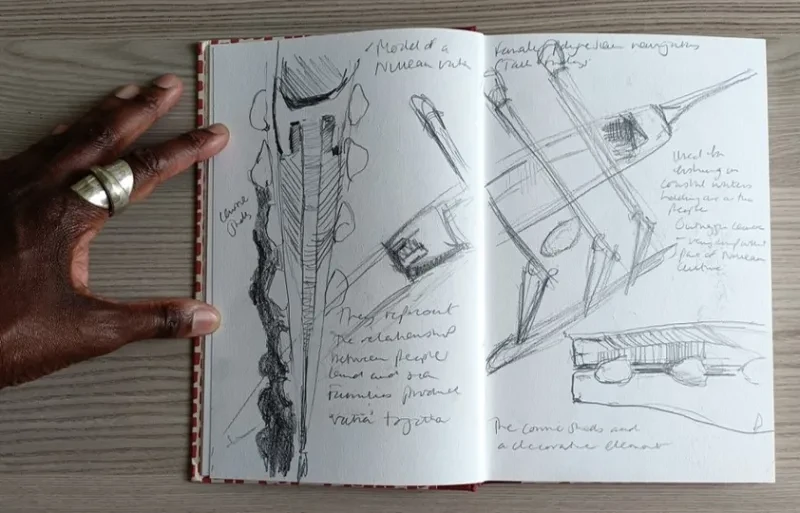
'The whole world is here, but not all our stories are visible': exploring the collections with Remiiya Badru
Remiiya Badru reflects on her early experiences exploring the Museum's sites and collections during her Creative Research Fellowship
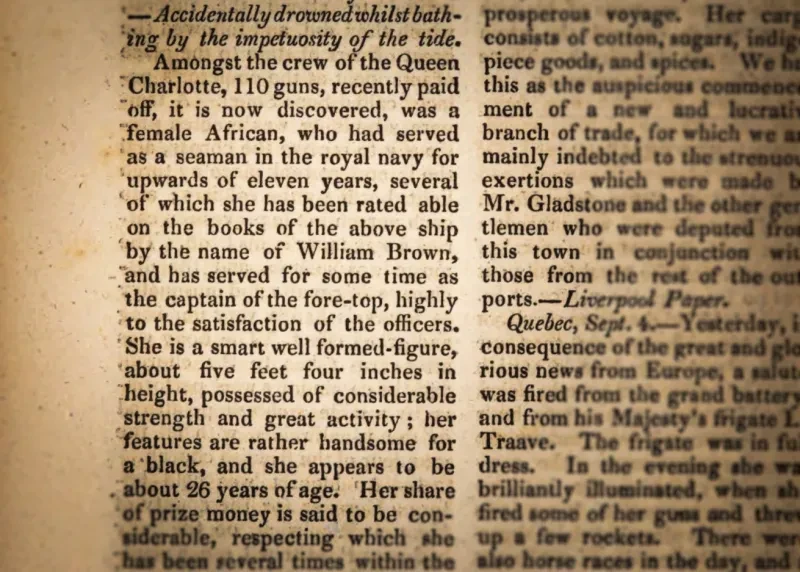
From mapmakers to mariners: searching for women's histories at the National Maritime Museum
Remiiya Badru explores the stories of three pioneering women found in the collections of Royal Museums Greenwich
Mapping untold stories: women in the London chart trade
Discover the nineteenth-century women involved in the London chart trade
Read more about the Queen's House rehang