
Essential information
| Type |
Courses
|
|---|---|
| Location | |
| Date and times | 10-week modules held on Tuesday evenings beginning 8 September and 1 December 2026 and 9 March 2027 |
| Prices | £225 per module |
This comprehensive course provides an opportunity for those who are keen to acquire a rigorous scientific understanding of the Universe.
Intermediate Astronomy, led by an expert tutor from the Royal Observatory Greenwich, offers a firm grounding in the study of the Sun-Earth-Moon system, the Solar System, the Milky Way Galaxy and the wider Universe.
The course consists of three 10-week modules on Tuesday evenings. It follows the GCSE Astronomy syllabus, but it is not an accredited course and cannot be used as the basis for a GCSE Astronomy exam. Students are assessed through coursework and receive a certificate of achievement from the Royal Observatory on the completion of all modules.
This course is an excellent follow-on from Introduction to Astronomy and Introduction to Astrophysics.
Ages: 18+
With the exciting renovation project occurring at the Royal Observatory, our on-site courses have relocated down the hill to the National Maritime Museum. Our expert tutors will run their sessions in a unique environment with access to a range of resources provided by the galleries and exhibitions of the Museum.
Image
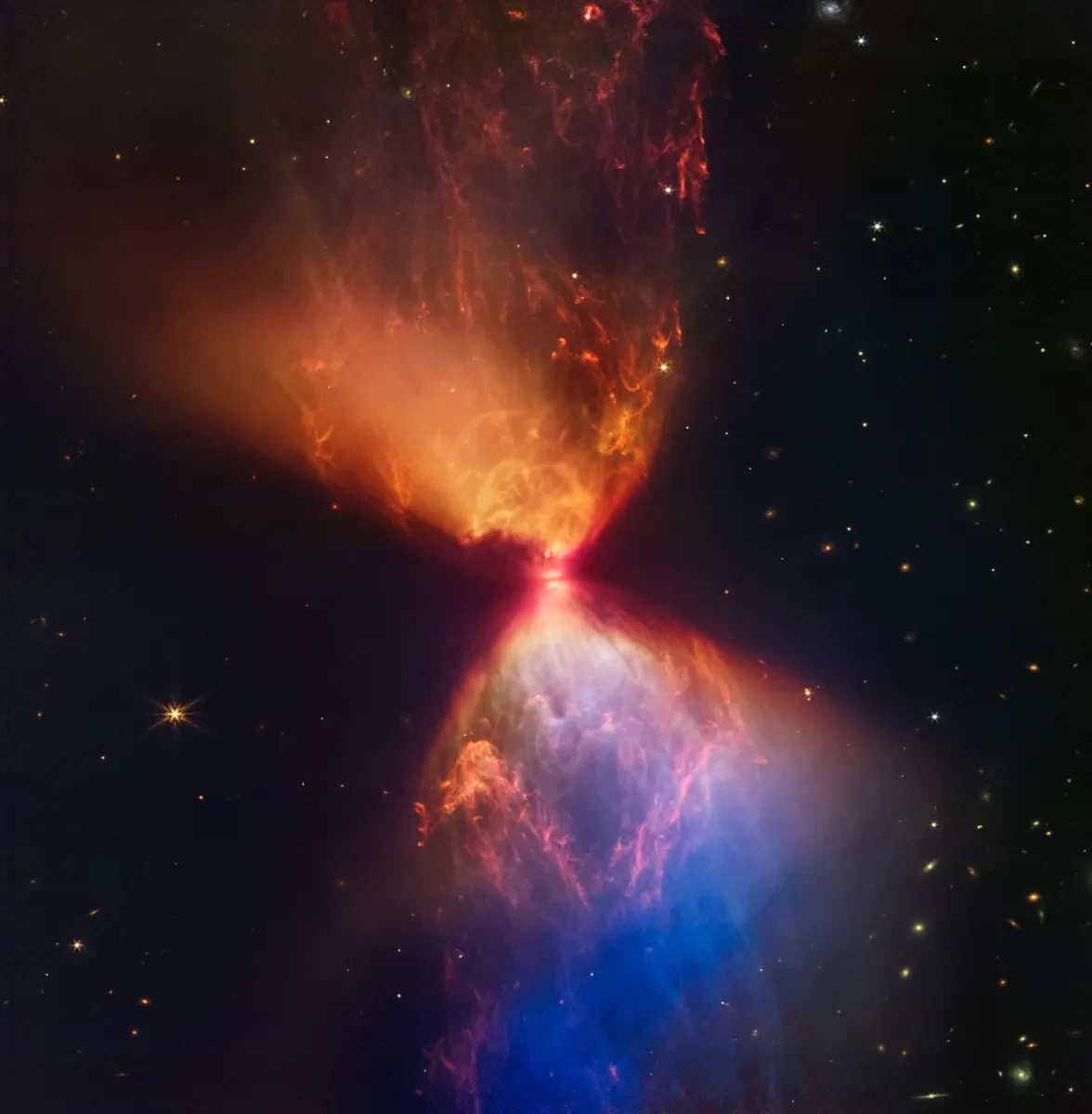
When do courses run?
The full course dates for the 2026/27 academic year are below. Lessons take place on Tuesday evenings from 6.30pm-9pm, with gaps for the holidays. When making your booking, simply select the start date of the module you'd like to join.
Module 1: From our Planet to the Night Sky
8 September - 24 November 2026 | 6.30-9pm | Holiday on 27 October and no session on 22 September
This module provides a foundation on the Earth and the night sky, beginning with an introduction to our planet and the coordinate systems we use. We then move onto the night sky and constellations and how astronomers keep track of objects in space. The course also covers more practical topics around observing, including using optical telescopes and observing tasks. Lastly, we will explore the Moon and how the night sky was used to help with navigation on Earth.
Module 2: Solar System Dynamics
1 December 2026 - 2 March 2027 | 6.30-9pm | Holidays from 15-29 December and on 16 February 2027
This module provides an introduction to solar systems as well as the objects in our own solar system.
The course starts with a focus on the Sun-Earth-Moon system, before moving on to planets in our solar system and how they and the Sun seem to move in the sky from Earth.
There is an introduction to historical models of the Solar System as well as an understanding of solar system dynamics using Kepler’s three laws. Lastly, the module touches on the formation of solar systems as well as exoplanets.
Module 3: Our Galaxy and Beyond
9 March - 25 May 2027 | 6.30-9pm | Holidays from 6-13 April. Please note the 27 April class will be online
This module provides an introduction to our Milky Way galaxy as well as other galaxies throughout the Universe. It starts by focusing on stars and their properties, including magnitudes, distances and variability. We'll explore radio telescopes and how telescopes can be used to observe wavelengths of light outside the visible spectrum.
We will cover nebulae and star formation as well as the evolution of stars. Next, we will move on to galaxies, including the Milky Way and the distribution of galaxies in the Universe. The course finishes by discussing the Big Bang and the mysterious nature of dark matter and dark energy.
What else do I need to know?
Each module is intended to be run on-site at the National Maritime Museum, although occasional online sessions may become necessary in rare circumstances. Please only book if you are certain you will be able to attend an on-site course.
Intermediate Astronomy follows the textbook GCSE (9-1) Astronomy: A Guide for Pupils and Teachers. This is included in the price of the course and need not be purchased separately.
Studying this course requires good scientific and mathematical knowledge and computer literacy. We encourage all our prospective students to try the maths quiz below before deciding to do the course.
This is not an exhaustive list of the types of mathematical concepts you will encounter, but is indicative of the level of understanding required.
After completing this course, students may wish to consider joining our two-year Foundation Astrophysics course, which is our most advanced course in astronomy focusing on topics at a university foundation degree level.
Everyone taking a course is also entitled to a 10% discount on books purchased from Royal Museums Greenwich - please check with your course tutor for more details!
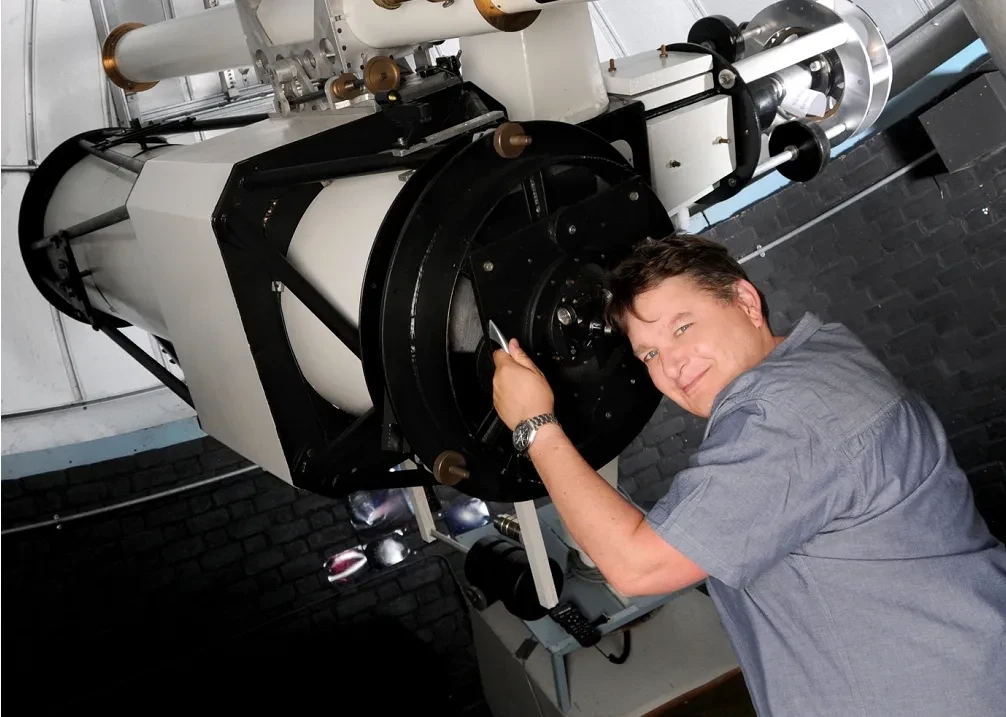
Find other courses you may be interested in
We offer a wide range of adult courses related to astronomy, from short six-week introductory sessions through one-year intermediate courses, to modular two-year advanced courses.
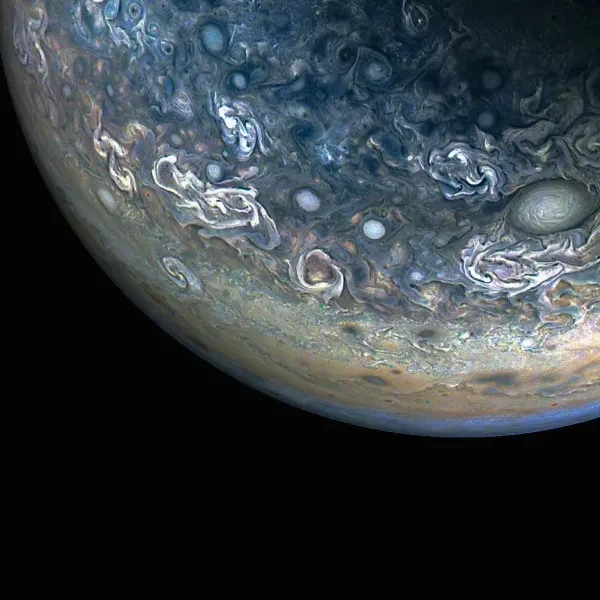
Introduction to Astrophysics
Explore topics at the cutting edge of scientific research and the limits of human knowledge

Foundation Astrophysics
A series of ten-week courses on more advanced topics in astrophysics
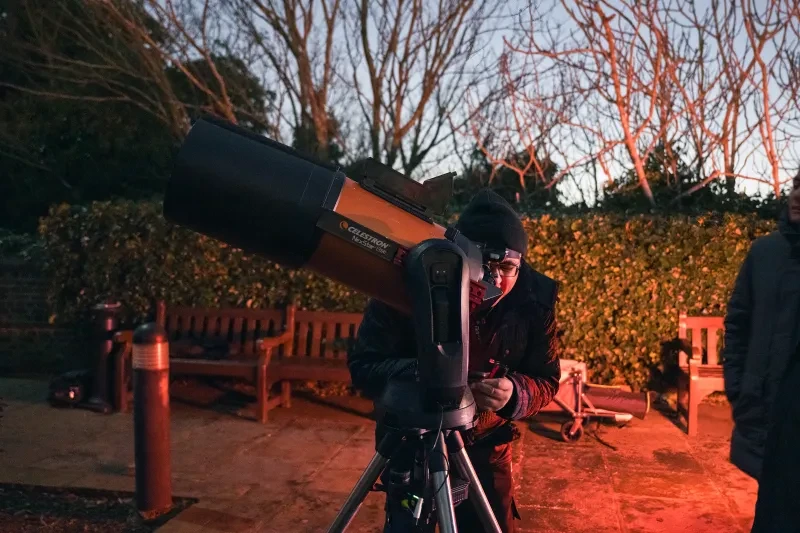
Amateur astronomy for beginners
A course for those looking to make astronomy into a hobby
An Introduction to Life in the Universe
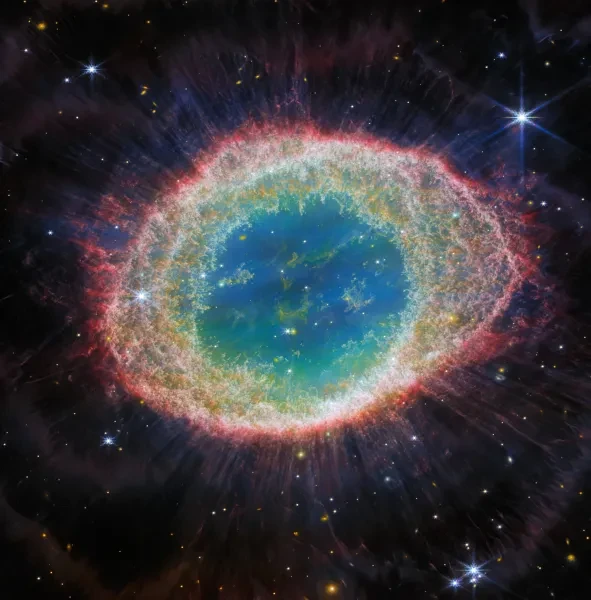
Are we alone in the Universe? Join this online adult course for an introduction to astrobiology and an exploration of how astronomers search for alien life
See all available courses
Discover our range of astronomy courses suitable for a range of individuals and experience
Main image courtesy of NASA/SDO/AIA/LMSAL