‘The first time I saw the sea, it was not for a holiday,’ says Shorsh Saleh. ‘It was in the night time, very dark, with a lot of fear.’
Saleh is a Kurdish artist. In 2001 he fled his homeland in Iraq and made his way across the Middle East and Europe. After waiting for eight years, he was finally granted asylum in the UK.
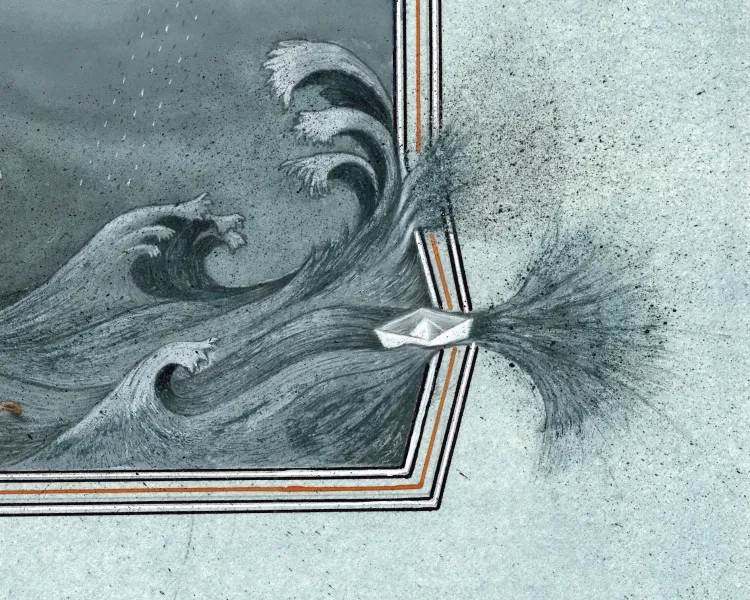
The work Crossing Border recalls his experience of crossing the Mediterranean Sea by boat. The work is inspired by Indo-Persian miniature painting, and depicts a small paper boat literally ‘crossing’ out of a scene of turbulent seas into a calm space beyond the painting’s border.
Image
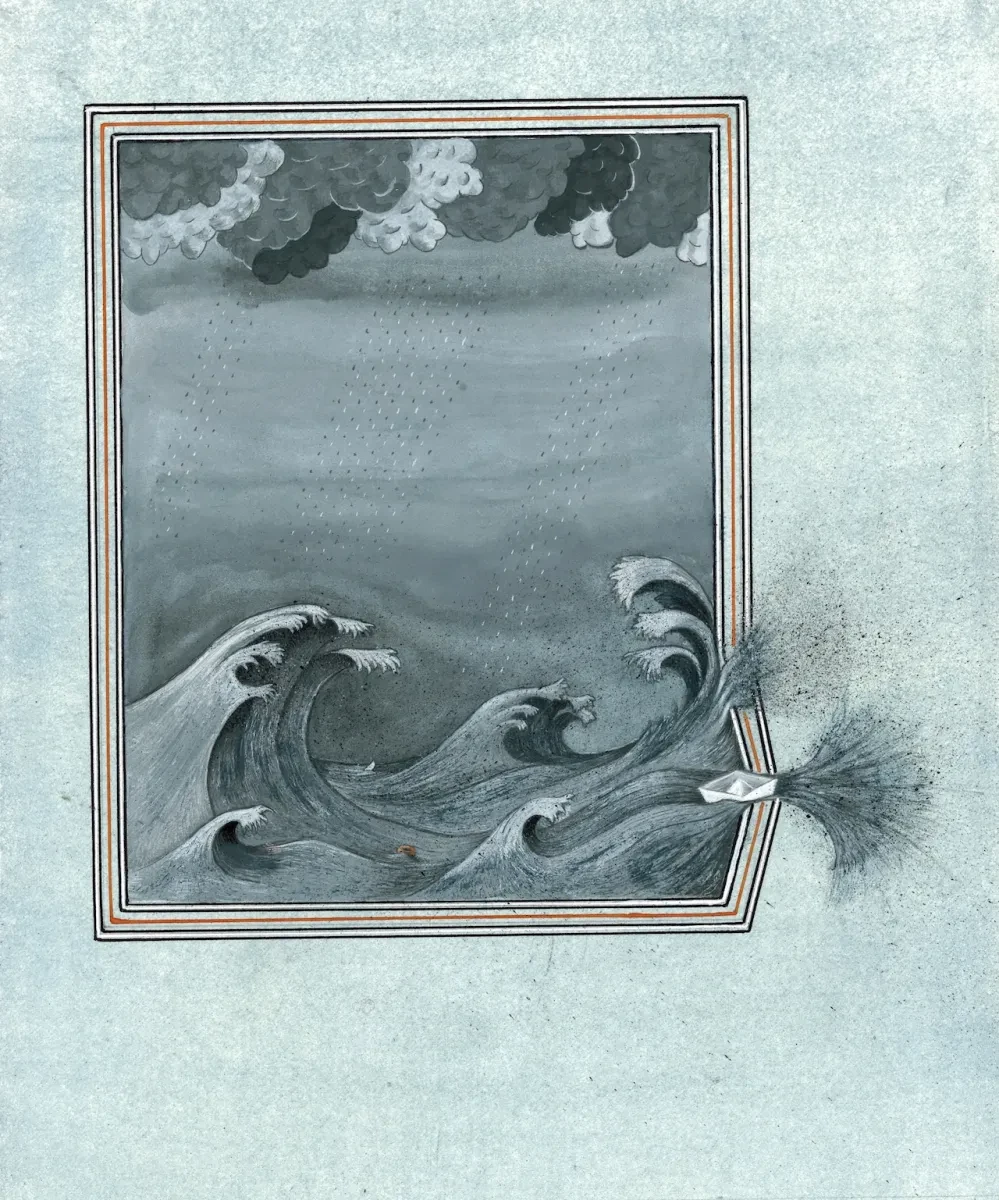
‘When I look at the artwork I just don’t see a painting: I see a story,’ Saleh says. ‘Traditionally when you look at miniature painting, [they were] made to illustrate books to tell the story of the kings and all this. With my art, I try to use miniature painting to tell the story of myself and of those people who experience the same journeys.’
Watch the interview below to learn more about Saleh’s journey as an artist.
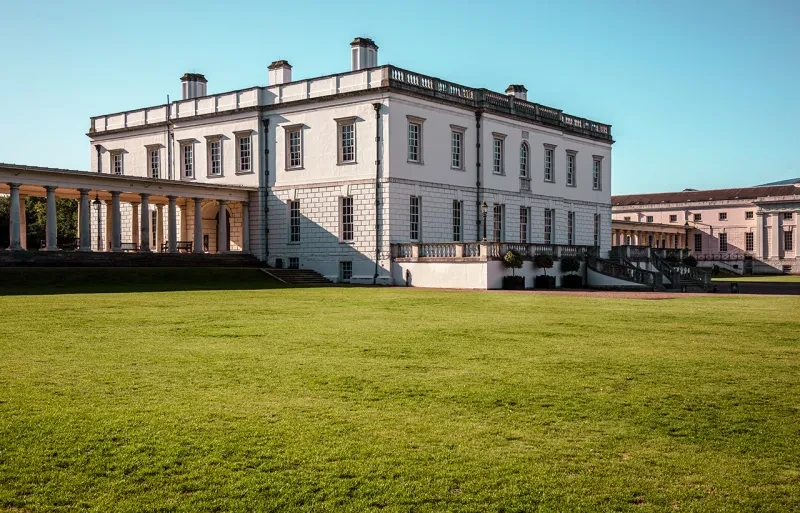
Crossing Border was acquired by Royal Museums Greenwich in 2025, and is now on display in the Queen’s House as part of a new display of artworks that reflect on the experience of migration by sea.
‘People are still crossing borders, people are still running from atrocity,’ Saleh says. ‘Art is a very “soft” tool to change society, but at least in a level of emotion it has a lot of effect.’
Crossing Border will be on display at the Queen’s House throughout 2026: plan your free visit here.
Read more about the Queen's House rehang
Migration and art: introducing the new Queen's House display 'Crossings'
As a new collection of artworks reflecting on migrant experiences opens at the Queen's House, curator Tim May explores the role of physical and invisible borders in the story of migration
Highlights of the Queen's House refresh
What to look out for in the inspiring new take on the Queen’s House’s displays in 2026
Introducing new contemporary art at the Queen's House for 2026
Victoria Lane, Senior Curator of Art and Identity, explores highlights from some of the contemporary artworks that have gone on show

Reframing the Pacific in the Queen’s House
Curators Katherine Gazzard and Hannah Cusworth highlight the steps involved in redeveloping a room in the Queen's House
Mapping uncharted histories: the 19th century woman who developed London’s map trade
Artist Remiiya Badru’s new display in the Queen’s House tells the story of maritime publisher, Penelope Steel
Artemisia Gentileschi at the Queen's House
A painting by Artemisia Gentileschi recently rediscovered in the Royal Collection is now on loan at the Queen's House. Allison Goudie reveals Artemisia's Greenwich connections – and why the Queen's House is a fitting place to see the painting
More about the Queen's House