Here, Victoria Lane, Senior Curator of Art and Identity, explores three displays that feature contemporary artworks using the powerful motif of the flying fish.
She explores the varied symbolism of the marine creature – and how this provides a gateway to explore the new works and narratives within the Queen's House.
Flying fish and the art of freedom
During our passage I first saw flying fishes, which surprised me very much: they used to frequently fly across the ship, and many of them fell on the deck.
Olaudah Equiano, 'The Interesting Narrative of the Life of Olaudah Equiano, or Gustavus Vassa, the African' (1789 )
Olaudah Equiano was struck by the visual spectacle of flying fish while enduring the Middle Passage aboard a slave ship trafficking him from West Africa to be sold into enslavement in Barbados. Amid the profound trauma of this experience, the sudden appearance of these seemingly magical creatures may be read as a fleeting moment of transcendence.
Flying fish do not flap their fins like birds; instead, they jump from the water and use their wing-like pectoral fins to glide through the air. With their remarkable ability to move between ocean and sky, flying fish have come to symbolise freedom, transformation, courage and new journeys – embodying aspiration and the achievement of the seemingly impossible.
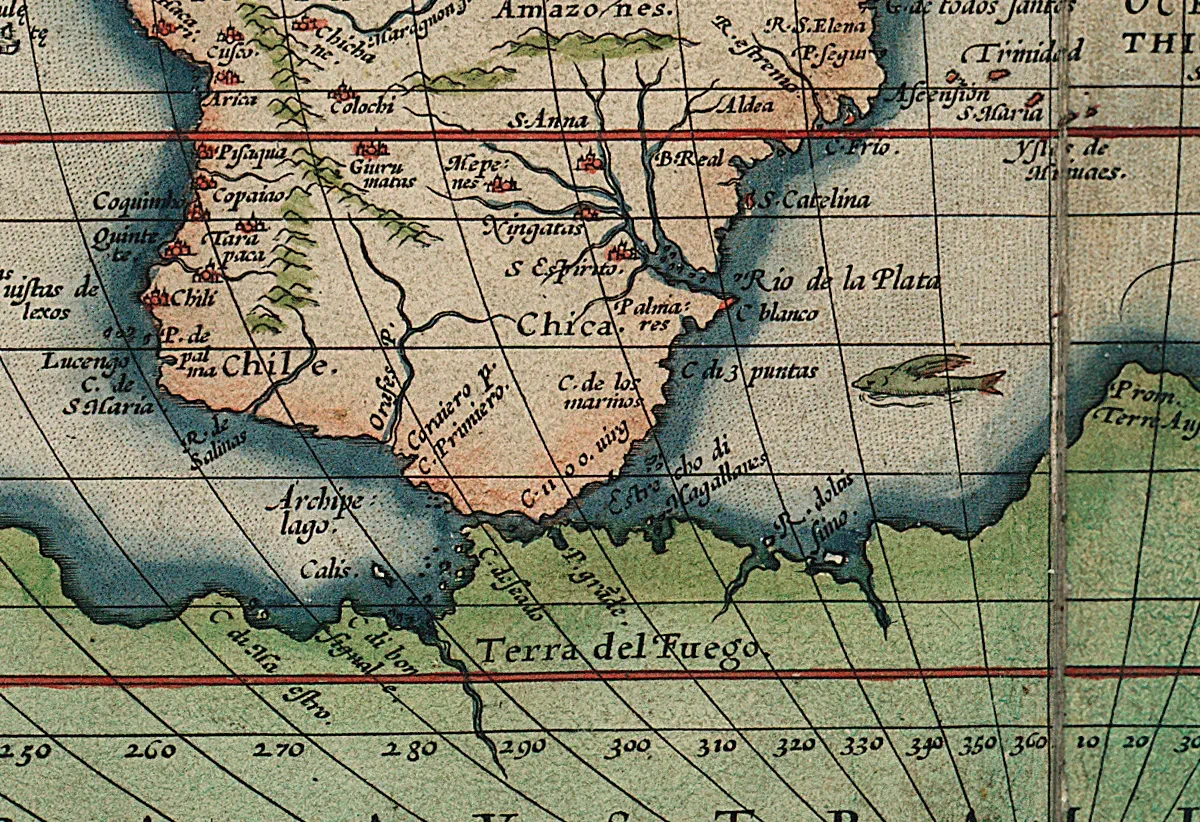
Flying fish are primarily found in warm-water or tropical seas. In the Caribbean, they embody the spirit of the islands and are embedded in folklore and mythology, where they fly not to escape but to bridge the gap between worlds. They are particularly associated with Barbados, known as 'The Land of the Flying Fish', and appear on the Bajan dollar coin and passport.
Three new Queen’s House displays present works by contemporary artists that engage with the flying fish as a motif, using it as a symbol of Caribbean identity, hope and global migration, within complex postcolonial narratives.
A defining journey: 'Migrants' by Tam Joseph
Flying fish are a focal point in Migrants, a significant loan from the artist Tam Joseph. This compelling painting was inspired by the artist’s childhood sea journey from Dominica to England at the age of eight.
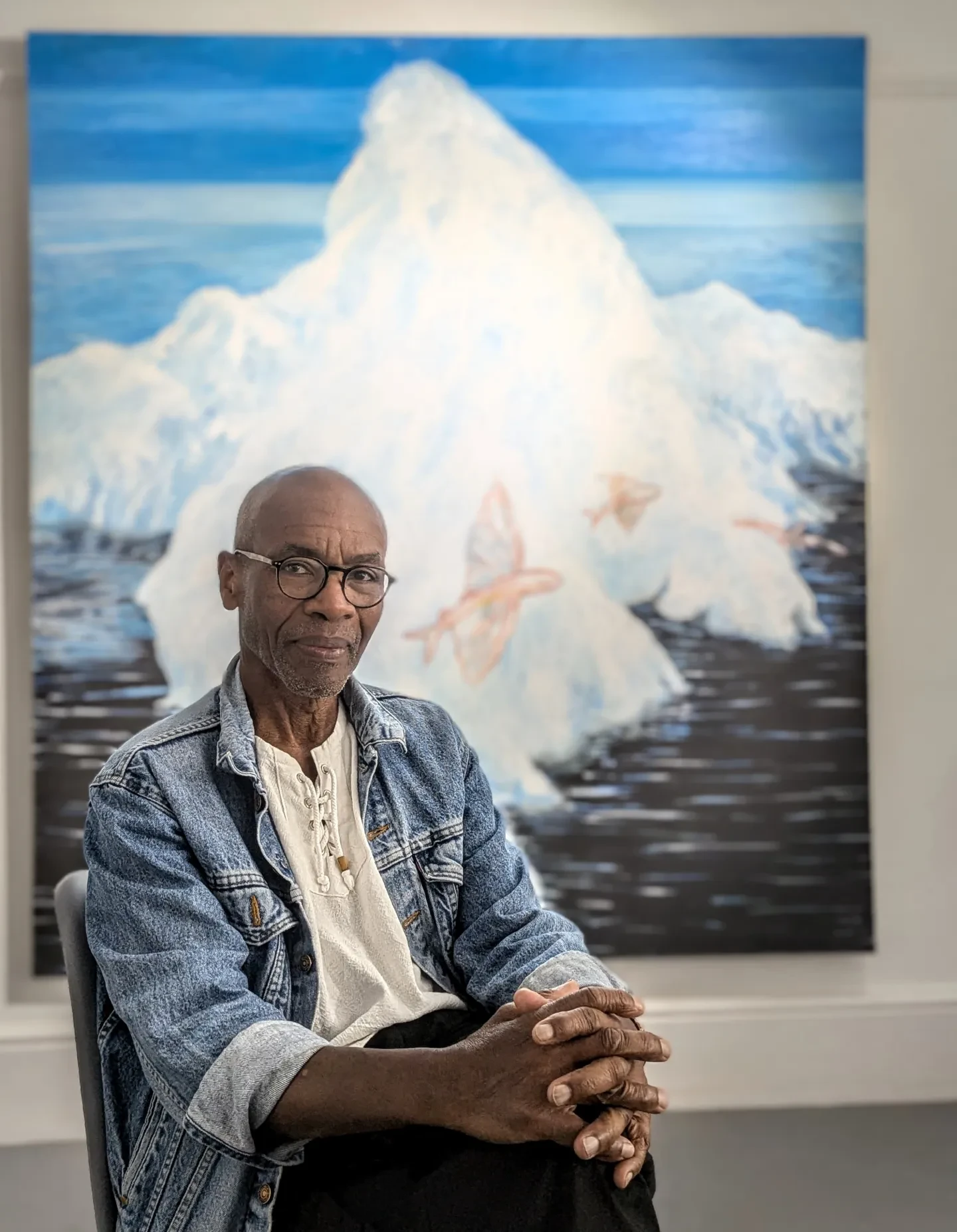
In the work, flying fish serve as metaphors for migration, representing the shared hopes of those – like Joseph – who travelled to begin new lives aboard the Italian steamer Lucania. Their elegant flight evokes the aspiration and resilience of the passengers. Yet Joseph complicates this optimism as the flying fish leap against the stark backdrop of an iceberg, plunging back into dark, icy waters.
Reflecting on the process of creating the painting from memory, Joseph recalls: “We were fish out of water, travelling to colder waters, and a colder land, where the people were colder still.”
Stories of migration: 'Crossings' display
Migrants forms the centrepiece of a new display called ‘Crossings’, which examines how contemporary artists have addressed migration – both the act of oceanic passage and its lasting impact on lived experience in the UK.
Alongside new acquisitions and rarely seen works, the display begins with a small drawing from around 1700 by Willem van de Velde the Younger depicting people landing on the English coast.
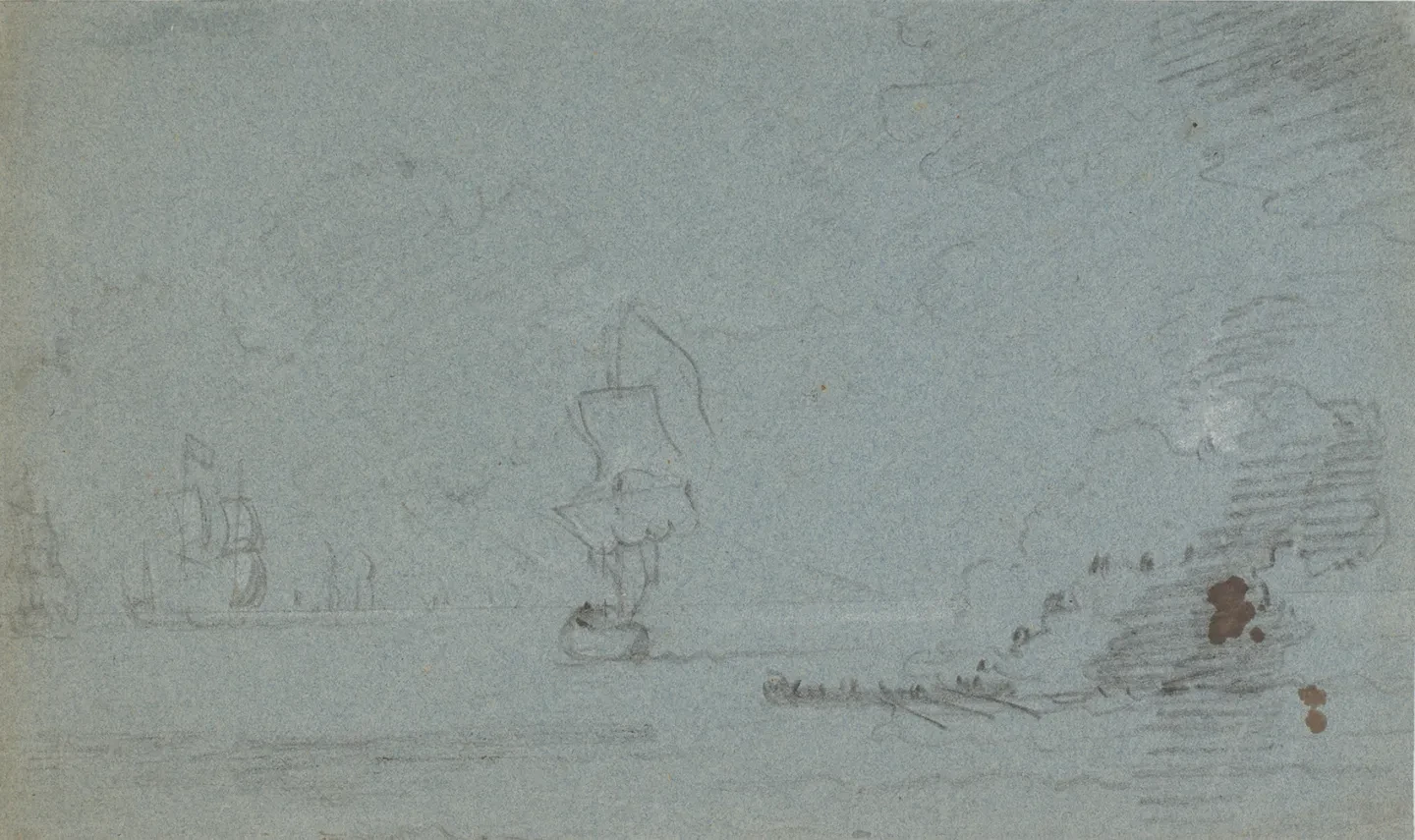
The Van de Velde family themselves migrated from the Dutch Republic to England in the winter of 1672–73, following an open royal invitation to Dutch citizens. They went on to reshape British maritime art and their story highlights how migration is a longstanding and generative force in British cultural history.
Care and connection: 'The Many Invincible Ones' by Sharon Walters
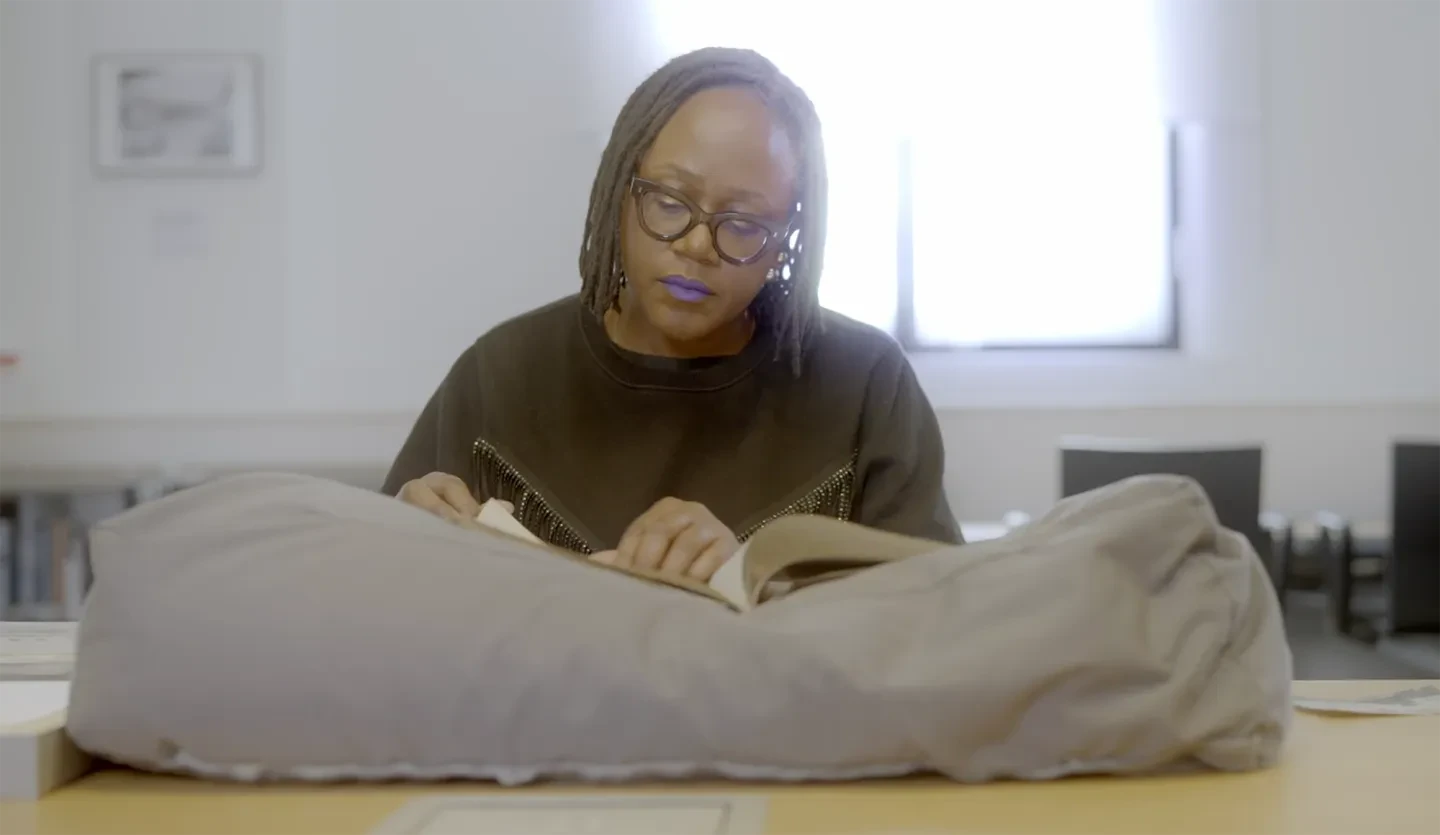
Following several years of collaboration with the Museum on the podcast series Seeing Ourselves, which addresses the representation and misrepresentation of Black bodies in the Museum’s collections, Sharon Walters undertook a practice-based Caird Research Fellowship at Royal Museums Greenwich from 2024.
This fellowship enabled her to develop her artistic practice in dialogue with her research into the collection, resulting in a series of multimedia works titled The Many Invincible Ones. These works are displayed in the Queen’s Closet at the Queen’s House and the symbolism of flying fish has been pivotal.
One of the first objects that had a profound impact on her was an album containing a deeply troubling photograph taken aboard HMS Flying Fish in 1875. The image depicts enslaved children who had been ‘liberated’ by the Royal Navy off the coast of Madagascar.
Such photographs have often been framed as part of a narrative of British humanitarianism, but this overlooks what Walters registered: an image of children visibly traumatised by enslavement, separated from their families, and fearful at their uncertain ‘freedom’. As she observes, “The ship is traditionally gendered as a woman, but this ship is motherless.”
Determined to restore identity and dignity to the children and other Black people depicted in the archive, Walters created a series of six new works that recentre the humanity of those whose lives and stories have been erased.
The photograph of HMS Flying Fish also presented a stark personal dissonance for Walters who positively associates flying fish with her Bajan heritage. In Barbados, flying fish and cou-cou is the celebrated national dish, one which her grandmother lovingly made on Saturdays.
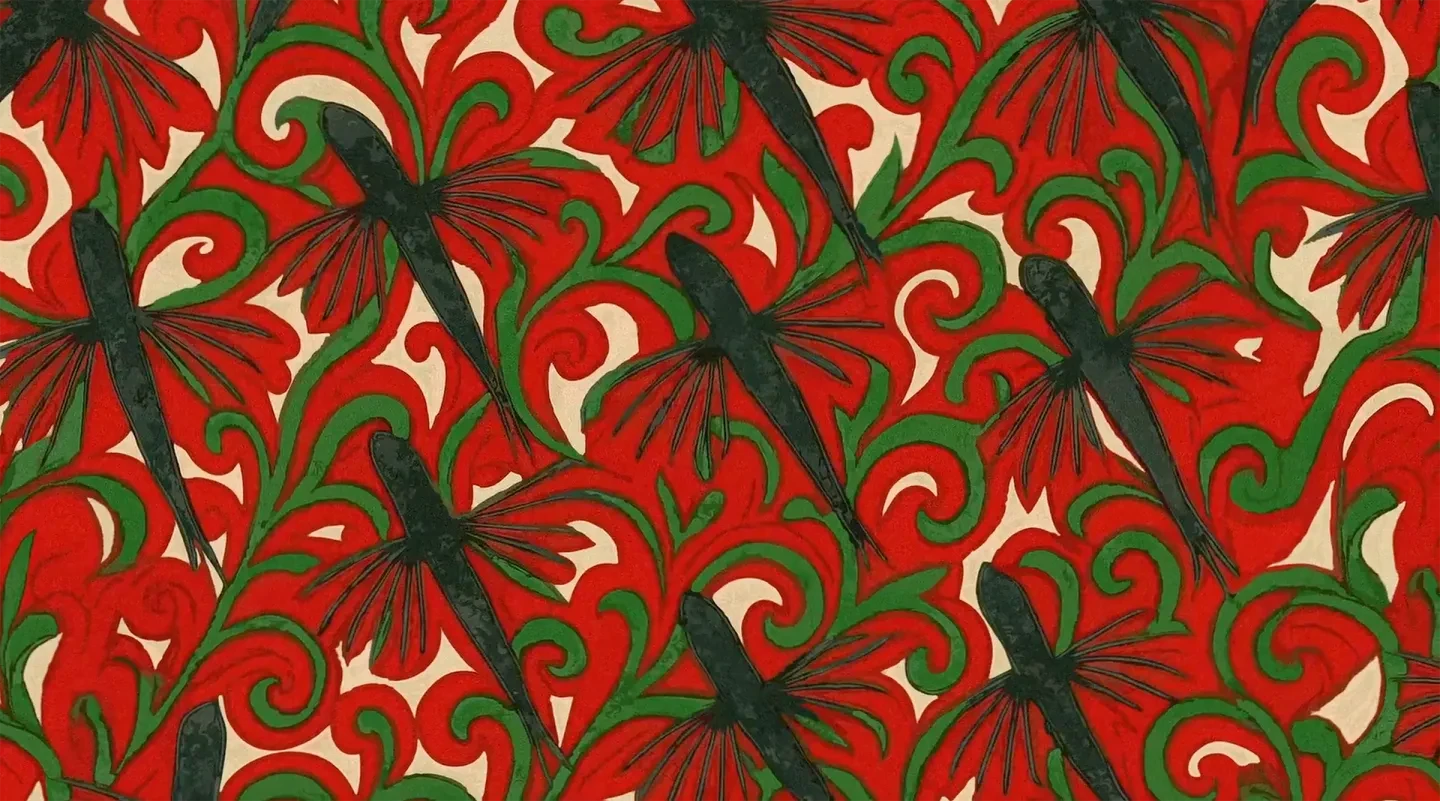
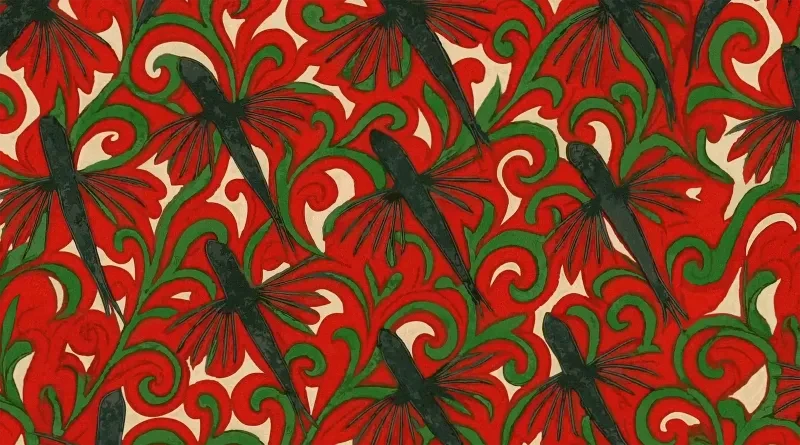
For Walters, flying fish evoke the tenderness of maternal love. As part of her display she designed a bespoke fabric for a chair, inviting visitors to rest as an act of care. The textile incorporates flying fish on a golden background – the colour of cou-cou – signifying cultural reconnection for diasporic communities.
Mapping narratives: 'The Rhumblineage of Penelope Steel' by Remiiya Badru
During her Lloyd’s Register Foundation Creative Research Fellowship (2024-25), Remiiya Badru encountered the little-known mapmaker Penelope Steel (c.1768 - 1840). Born in Jamaica to a free Black woman and a white slave owner and merchant, Steel later migrated to the City of London, where she ran a chart and nautical book-publishing business on Union Row, Little Tower Hill, with her husband, David Steel. Following his death in 1803, she took over the business, known for Steel's Navy List.
Commissioned to create an artwork on Steel’s life for a display in the Queen’s House, Badru worked to reconstruct the gaps in the fragmentary and incomplete archive, by reimagining Steel's life, relationships and spiritual ancestry.
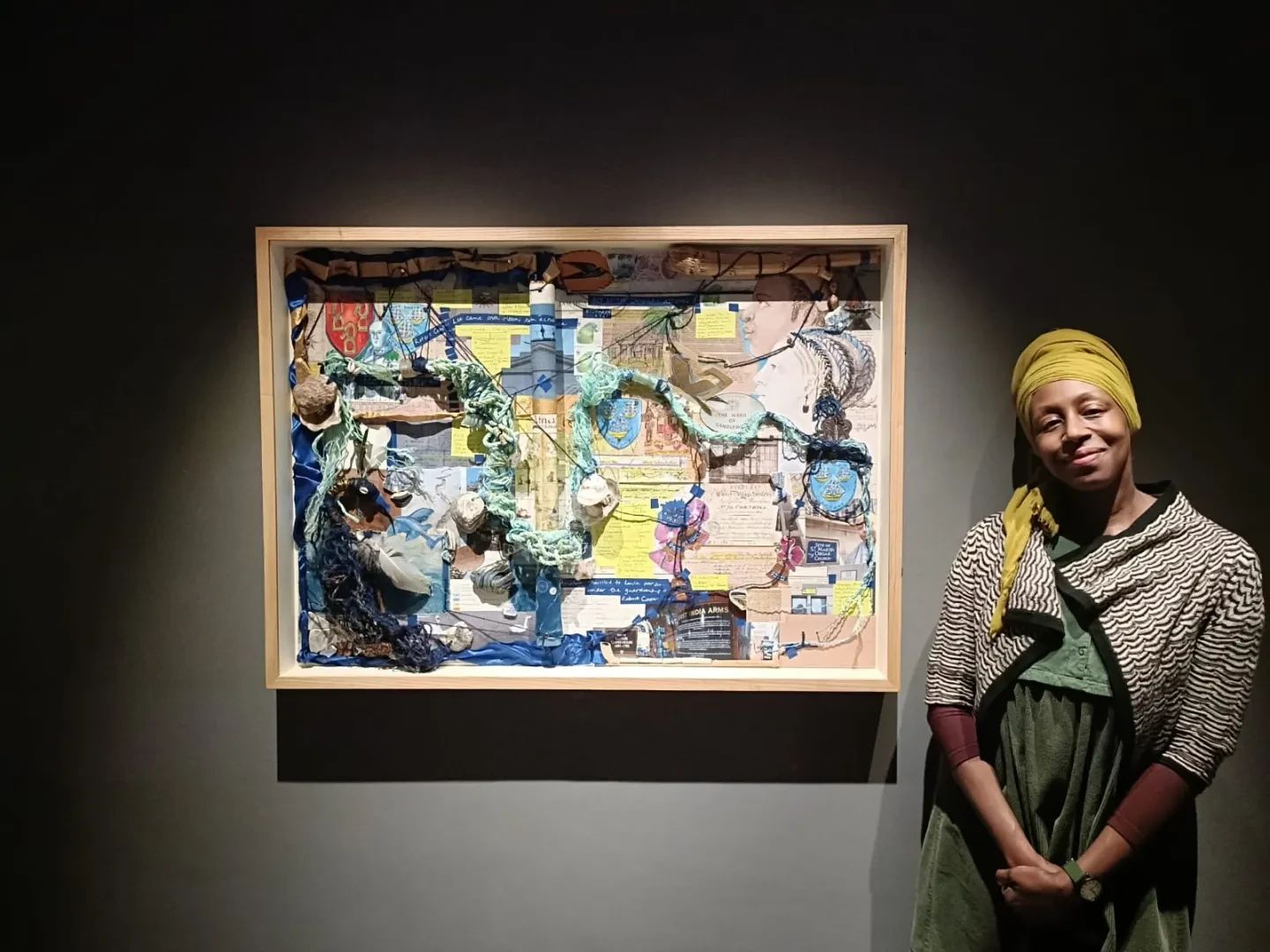
She retraced the sites in London that Steel would have inhabited, to explore what it might have meant for Steel to navigate race, gender and commerce in the City at the turn of the nineteenth century. This included questioning whether Steel’s mixed heritage meant she was “passable” as white, and how this impacted her inheritance, status, agency and wealth.
In The Rhumblineage of Penelope Steel, Badru weaves together Steel’s personal archival traces against broader geopolitical contexts of trade and empire through the concept of ‘rhumblineage’. Drawing on rhumblines – navigational tools used to plot a ship’s course on a chart – Badru uses materials including wool, fragments of found rope, and other textiles to craft a map of both tangible and intangible connections across Steel’s life.
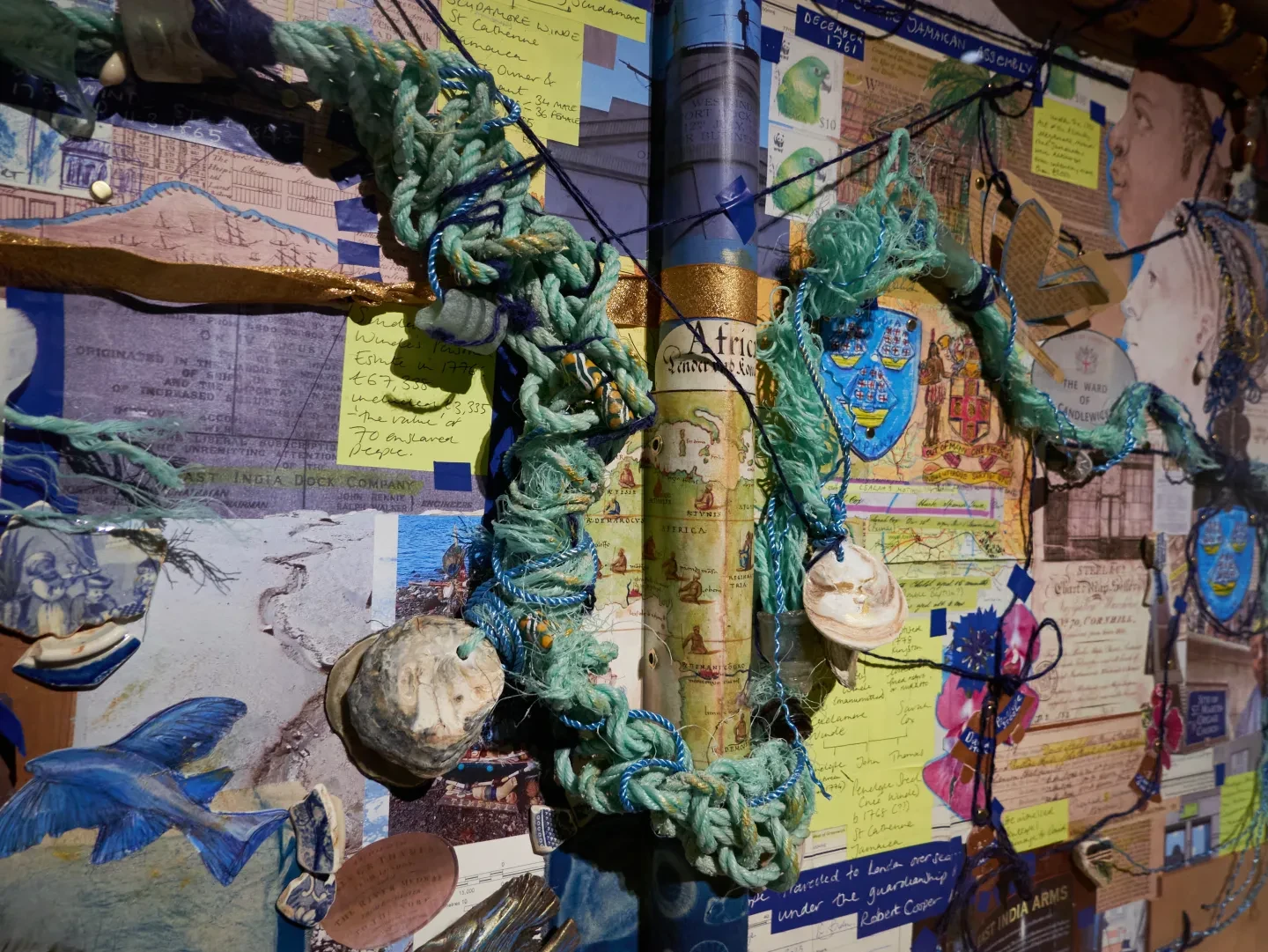
Her practice recalls the image of flying fish as seamstresses in Grace Nichols’ 2006 poetry collection Startling the Flying Fish. Nichols creates a mythical figure of the Cariwoma – a hybrid of Caribbean and woman – who “watched history happen” and whose all-seeing gaze ebbs and flows, like the rhythms of the sea. She moves between the violence of enslavement and the diasporic present, where her children, "sucked abroad", have "stamped themselves / with the ink of exile".
Like the Cariwoma, Badru imbues her work with mythic and spiritual dimensions of African diaspora womanhood, incorporating the flying fish and other symbols in The Rhumblineage of Penelope Steel.
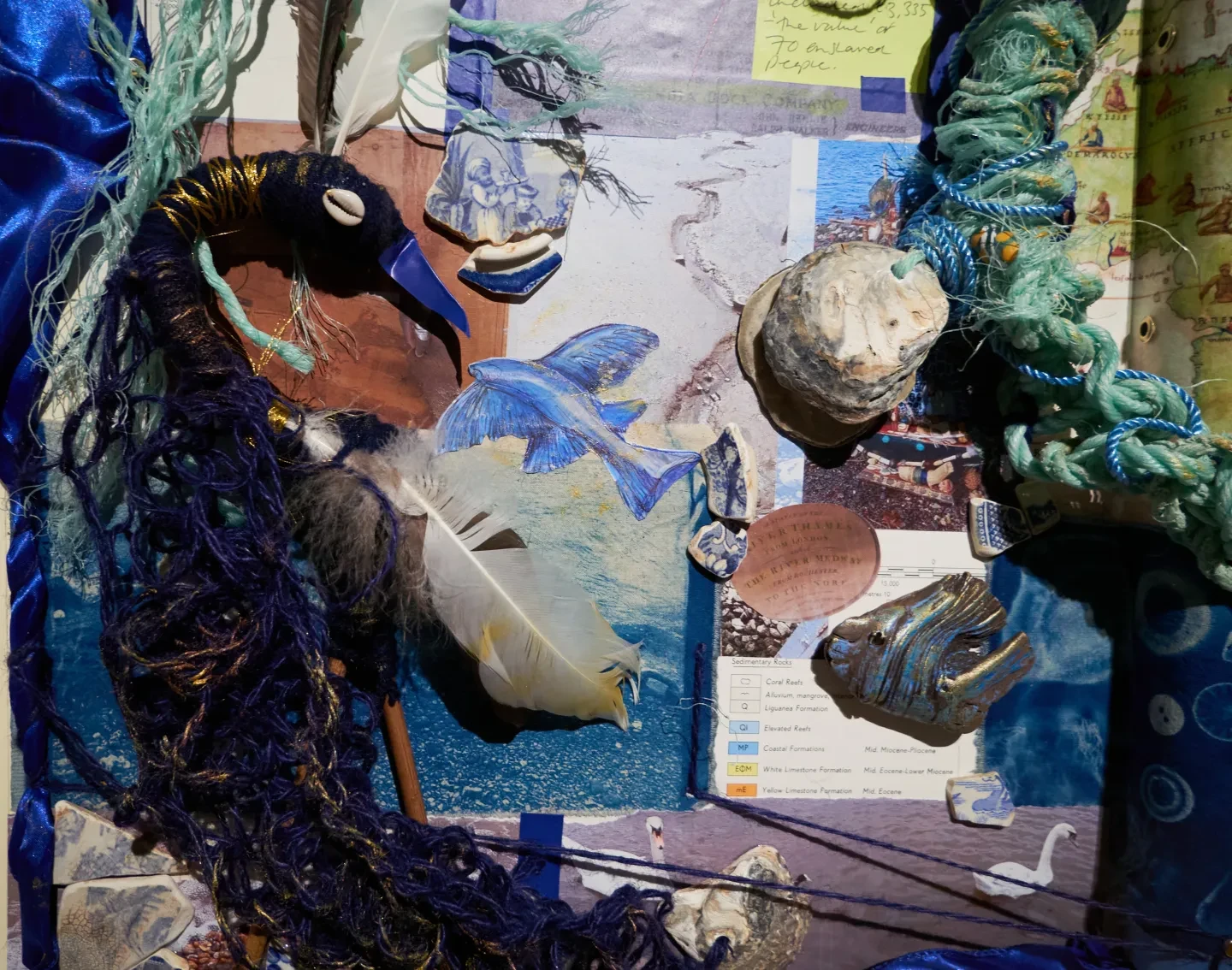
Badru recalls “the pure joy of witnessing the magic of flying fish whilst sailing from Carriacou to Grenada. They were like ‘taliswomen’ leaping out of the water – momentarily journeying in between worlds... pure magic. Freedom. To me, the oceans embody multilayered and multisensory mythic narratives connecting many realms of rhumblines, which are timeless and boundless.”
Badru’s work, like Nichols’ Cariwoma, declares:
I sing of Sea self
a glittering breathing
in a turquoise dress
Constantly stitched and restitched
by the bright seamstresses of flying-fish.
Transformations across realms
Together, these three displays show how the flying fish continues to surface as a potent symbol – of freedom and fracture, migration and memory – bridging sky and sea, the known and the unknown and connecting past and present through art.
With many thanks to Remiiya Badru for sharing her research on flying fish.
Banner image: Detail of Migrants by Tam Joseph courtesy of Felix & Spear Gallery (photographer Nikita Gill)
Read more about the Queen's House rehang
Highlights of the Queen's House refresh
What to look out for in the inspiring new take on the Queen’s House’s displays in 2026
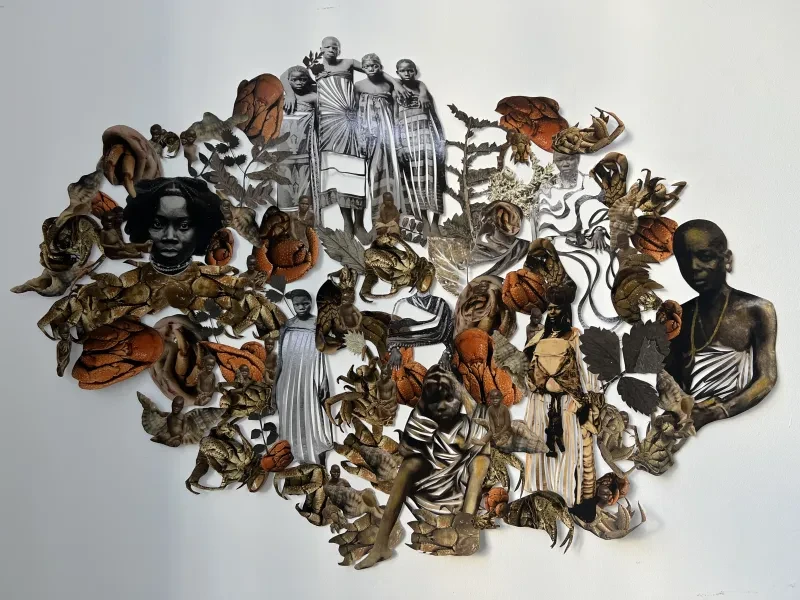
Look inside: The Many Invincible Ones by Sharon Walters
Find out about the artworks in Sharon Walters’ display, now on show in the Queen’s House
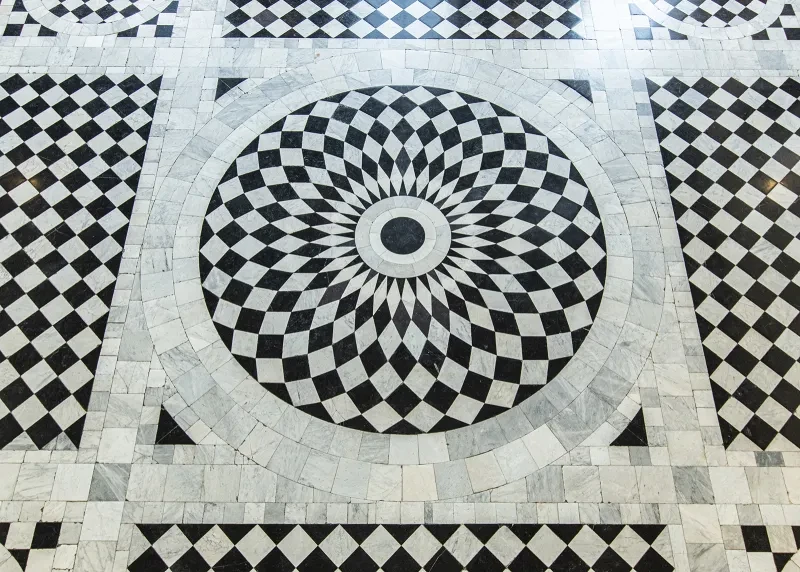
Artemisia Gentileschi at the Queen's House
A painting by Artemisia Gentileschi recently rediscovered in the Royal Collection is now on loan at the Queen's House. Allison Goudie reveals Artemisia's Greenwich connections – and why the Queen's House is a fitting place to see the painting
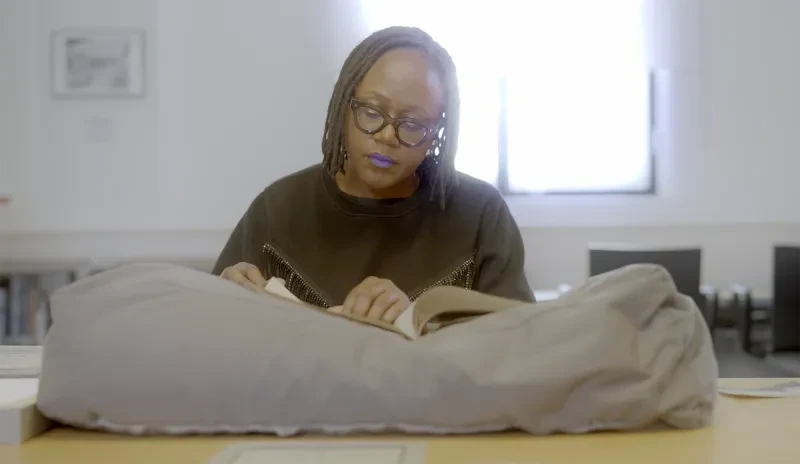
‘I want people of the African diaspora to see ourselves in a positive light’
Artist Sharon Walters reveals the journey behind the making of her new display, 'The Many Invincible Ones'
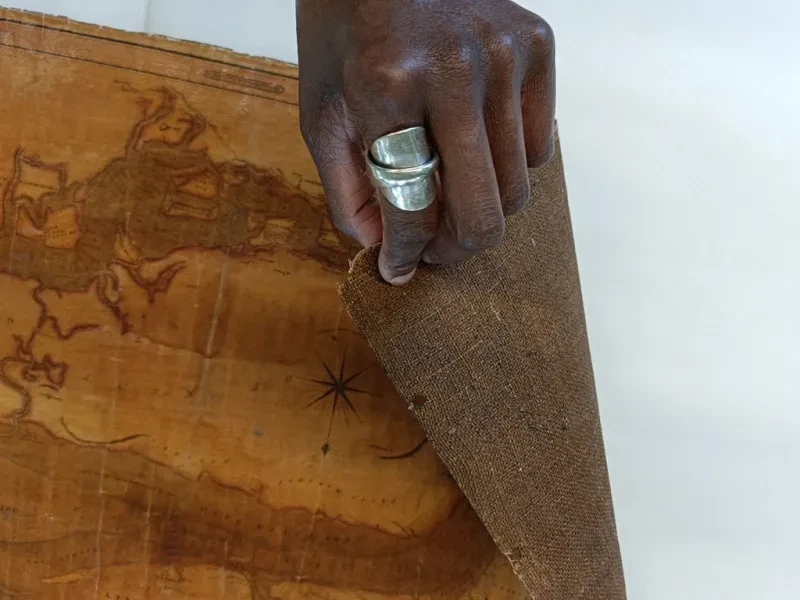
Mapping uncharted histories: the 19th century woman who developed London’s map trade
Artist Remiiya Badru’s new display in the Queen’s House tells the story of maritime publisher, Penelope Steel
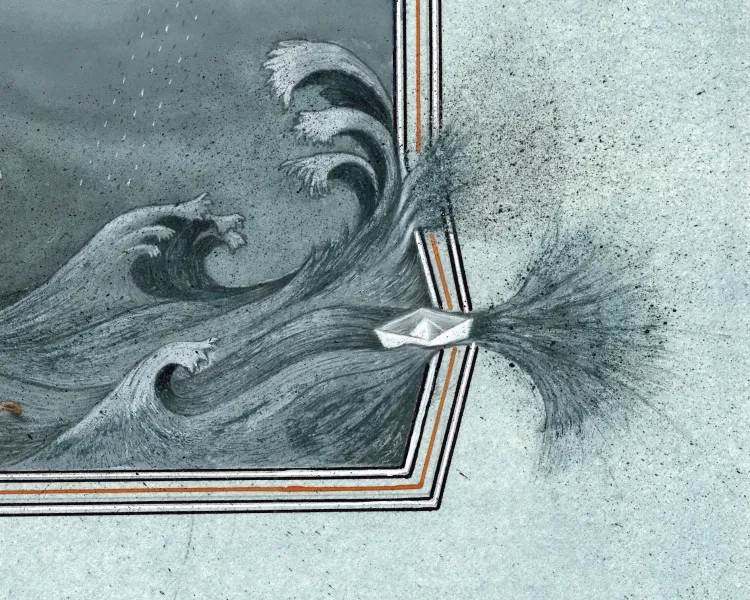
Migration and art: introducing the new Queen's House display 'Crossings'
As a new collection of artworks reflecting on migrant experiences opens at the Queen's House, curator Tim May explores the role of physical and invisible borders in the story of migration
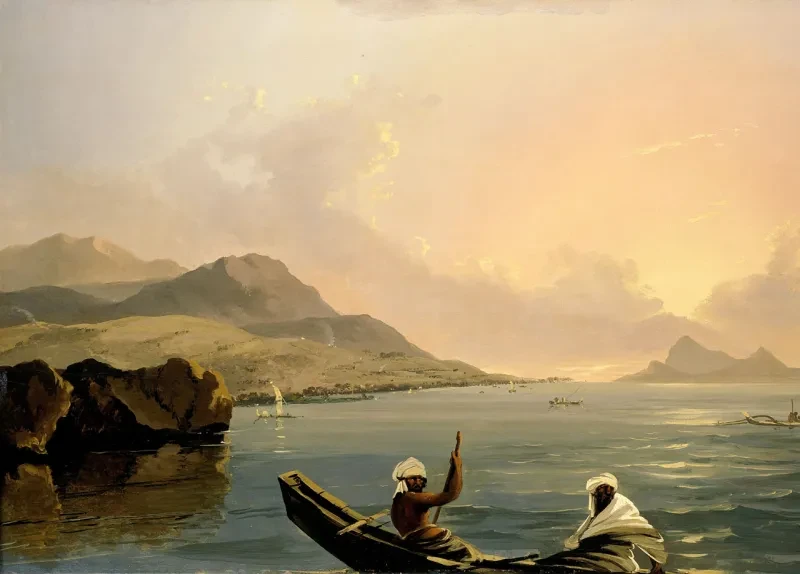
Reframing the Pacific in the Queen’s House
Curators Katherine Gazzard and Hannah Cusworth highlight the steps involved in redeveloping a room in the Queen's House
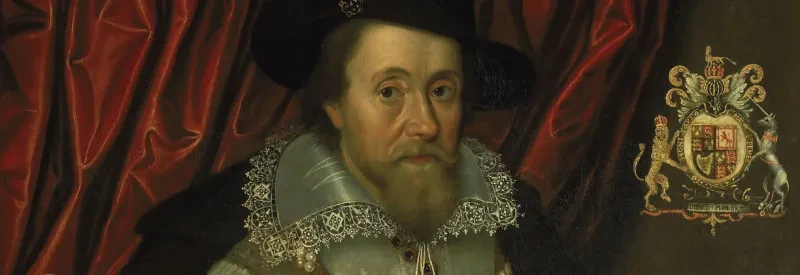
Writing a museum label with 'Gendering the Museum'
Dr Kit Heyam explains the process behind writing the first co-curated label in the Queen's House for a painting of James I
More about the Queen's House