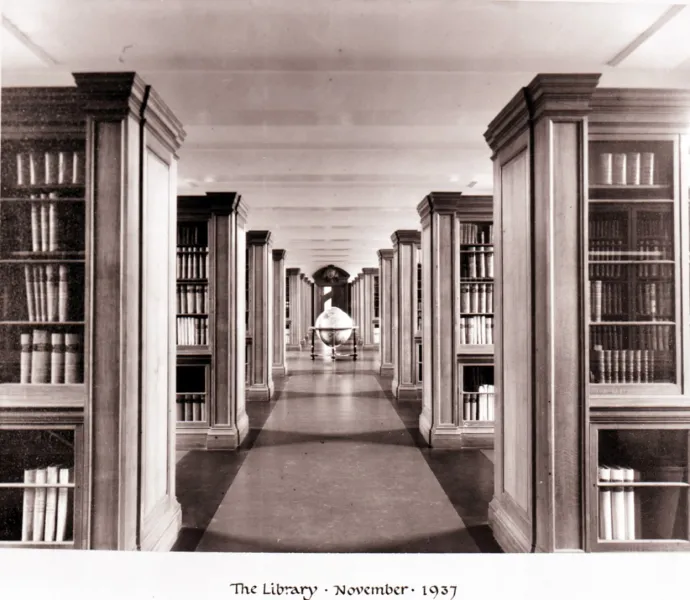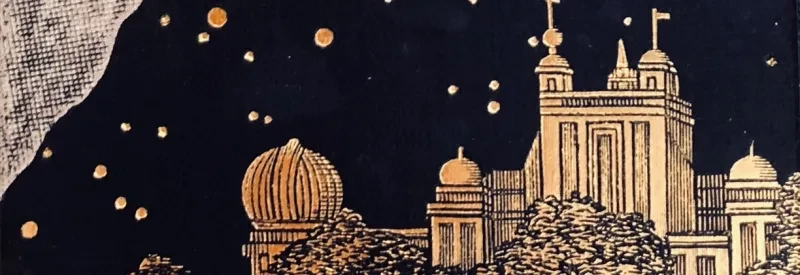
This month we investigate the history of the old library at the Royal Observatory and discover some of its astronomical treasures which are today in the Airy Collection of the Caird Library and Archive.
The ‘Observatory within our Park at Greenwich’
Humanity has always been fascinated by the stars. Today, we can send crewed missions like Artemis II around the Moon. We can see further into the cosmos than ever before using the James Webb Space Telescope. But 350 years ago, we could only gaze upon ‘heavenly spheres’ in observatories, such as Greenwich, and wonder.
In 1675 Charles II appointed John Flamsteed as his Astronomical Observator and ordered the building of 'a small Observatory within our Park at Greenwich upon the highest ground'. Flamsteed House, designed by Sir Christopher Wren, was finished in 1676 and observations began shortly afterwards when Flamsteed took up residence.
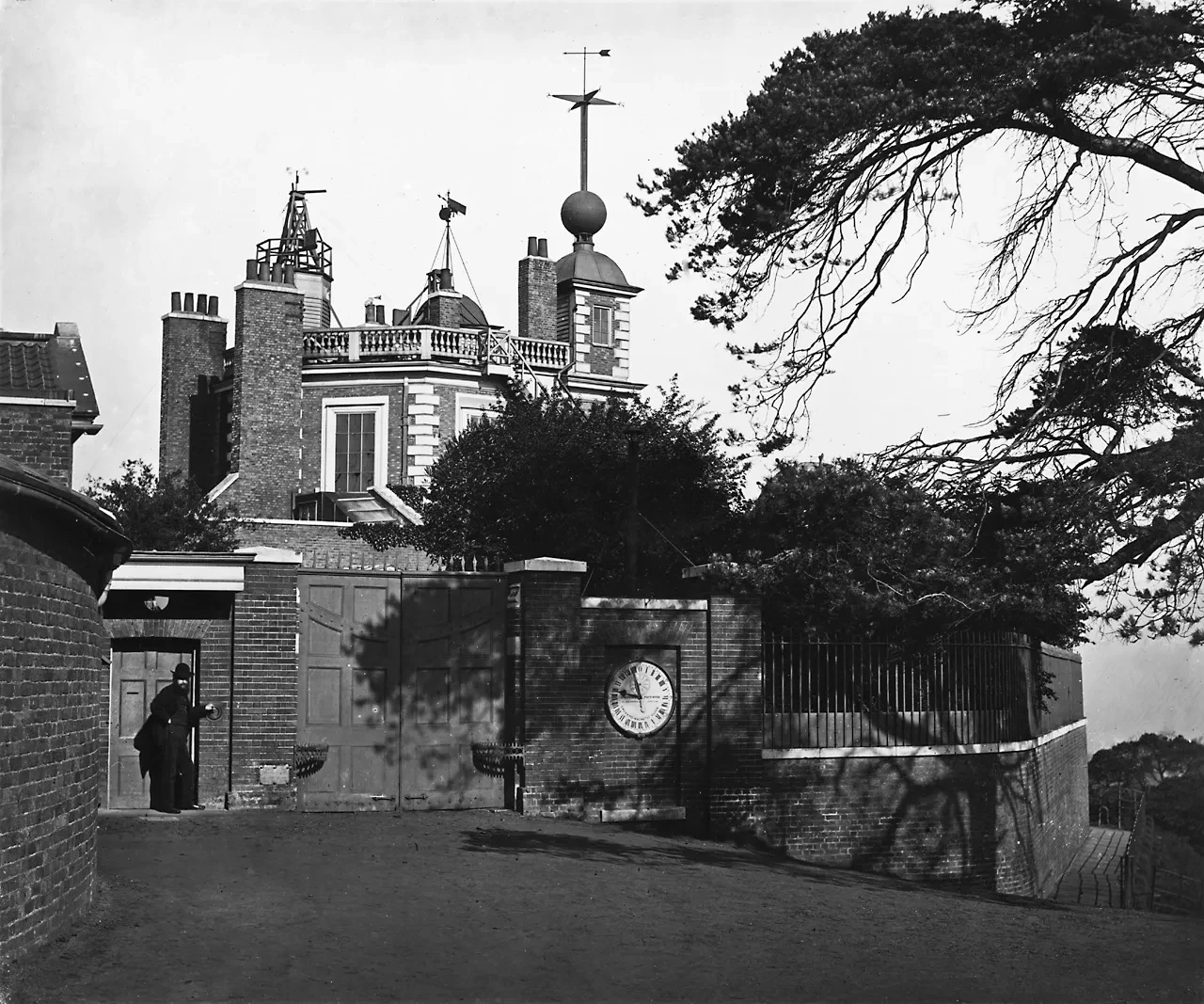
In 2025 the Royal Observatory celebrated 350 years since its founding. For much of its history it served as a vital centre for astronomy, navigation and timekeeping. During the 18th century the Observatory was at the forefront of efforts to accurately measure longitude at sea. In the 19th century it took on greater significance, finding itself at the centre of world time and navigation.
The 20th century was a time of transformation as its scientific work migrated elsewhere, and the site became a museum. Astronomical observation retuned in the 21st century, with the installation of the Annie Maunder Astrographic Telescope (AMAT). An extensive transformation of the site is now underway as part of First Light.
'There is a Library'
An astronomical library was essential to support the work of the Observatory. Yet for the first century and a half there was no permanent library on the site. Instead, Astronomers Royal had to rely on their own – often substantial – private collections.
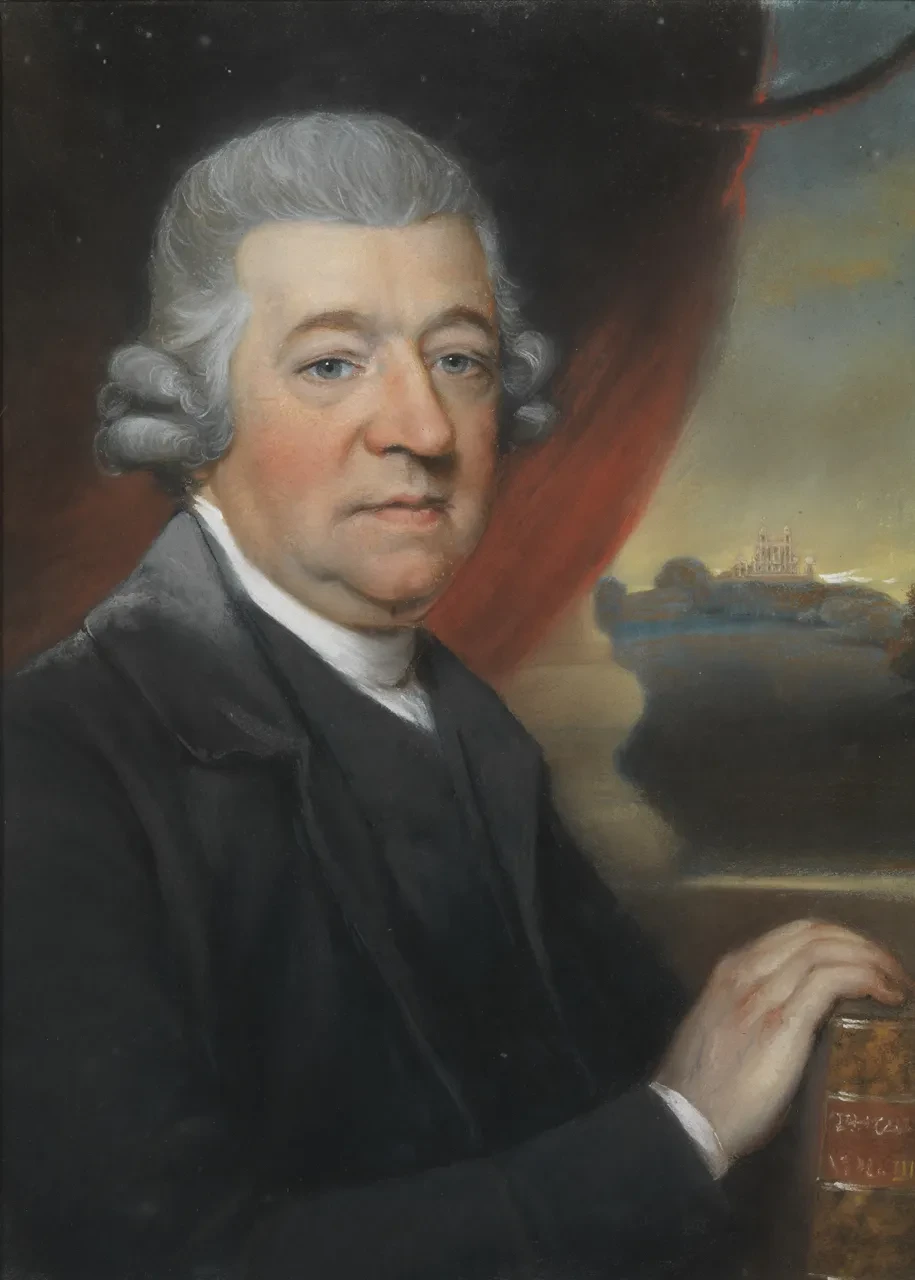
The astronomical and mathematical library of Nevil Maskelyne, the fifth Astronomer Royal, was particularly notable. Following his death, it was sold at auction by Leigh and Sotheby on 27-29 May 1811. An annotated copy of the sale catalogue notes that the three-day sale of 757 lots raised £451 18s. 6d. Adjusted for inflation, that amounts to £31,853.94 today.
Records from the RGO Archives in Cambridge show that Maskelyne’s successor, John Pond, was able to acquire some of the books in the sale. This began the process of establishing a permanent library at the Observatory. Over the next few years some £700 (more than £57,000 today) was spent acquiring books from various sources.
By 1827 the collection had grown large enough that a printed catalogue was produced. As well as copies of Greenwich publications such as the Nautical Almanac and Astronomical Observations, it included works by several notables including Claudius Ptolemy, Sir Isaac Newton, Johannes Kepler, Galileo Galilei, and Giovanni Domenico Cassini. Intriguingly, there also appears to have been a 1683 catalogue of books belonging to the library of Flamsteed.
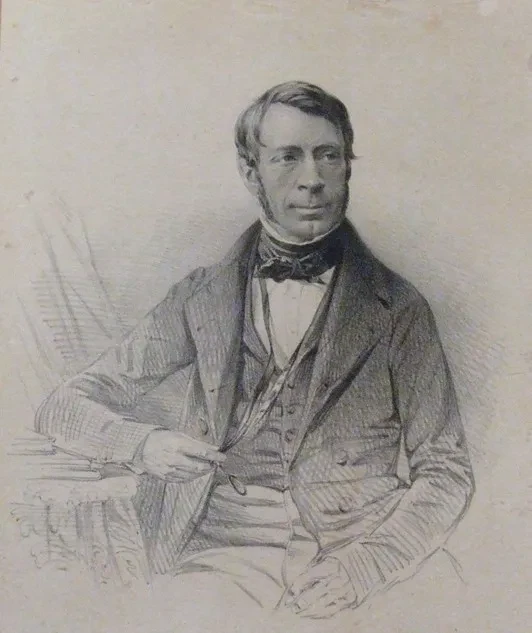
A decade later the library’s reputation had acquired an international dimension. In 1839 John Quincy Adams, former president of the United States and early patron of American astronomy, wrote to Pond’s successor Sir George Biddell Airy.
Adams was a supporter of the newly established Harvard Observatory and wrote to Airy enquiring about the condition of the Royal Observatory. Airy responded, providing some insight into the early library:
There is a Library, covering the walls of a room twenty feet square. It consists principally of the Transactions of Societies, and of mathematical and astronomical works, works on the literature of astronomy, Voyages, &c. In these respects it is a very good library; it has been collected partly at the expense of government, and partly from the presents of private persons and official bodies.
How 'representing the present state of science' became a 'serious inconvenience'
In the following decades materials remained broadly similar in scope, comprising principally of meteorological observations and academic transactions – regarded by Airy as essential for preservation as the 'ultimate reference'. However, Airy was keen that the library reflected the latest scientific developments as well. In the 1877 report to the Observatory’s Board of Visitors he declared that
I regard it as desirable for various reasons, (among which is, the instruction of all persons scientifically connected with the Observatory,) that for all subjects bearing upon the operations of the Observatory, the Library should be kept up to a condition well representing the present state of science.
To keep pace with the expanding work of the Observatory the 'very good library' had grown at a rapid rate. Towards the end of Airy's tenure the library seemed to have taken on a life of its own. The 1878 report makes the mounting problems around storage space clear:
The books are at present too much scattered in four different rooms, and the pressure on the shelves is becoming too great.
Although the library had grown to a size of 7,400 volumes (not including pamphlets) it was, nonetheless, maintained to a high standard of organisation. Airy reported an arrangement according to various subjects including Transactions (2,200 volumes), Astronomy (1,120), Ephemerides (700), Meteorology (650), Observations (630), Mathematics (520), Physics (430), Geodesy (330), and Magnetism (100).
Some areas of study grew much faster than others, perhaps reflecting the speed of developments in their fields. Airy observed in the 1880 report that ‘Photography and Spectroscopy increase very fast; and Meteorology the most rapidly of all’. All of this proved to be rather overwhelming and the following year Airy had grown increasingly exasperated with the lack of sufficient space:
The increase in the number of books has caused serious inconvenience, through the pressure on our present limited space; and a more commodious library is urgently needed.
Such limitations had an adverse effect on the organisation of the books:
It has […] not been possible to find room for all the books in due sequence on the shelves and they have been temporarily arranged as well as the space at our disposal permits.
Action was taken to reduce the pressure:
We have many duplicates […] which it will be necessary to banish from the library.
Location, location, location
Fortunately, by the time of the 1881 report, Airy was able to convince the Admiralty of the inadequacy of the library facilities and construction of a new building was authorised. The New Library Building was completed in June 1882.
By this time Airy’s successor William Christie was firmly in place. He reported that volumes under the subjects of Magnetism, Meteorology, Electricity, Statistics, Voyages, and General Literature were transferred to the New Library. Those relating to Astronomy, Observations, Ephemerides and Transactions remained in the old library rooms of the Meridian building. Space was freed up by presenting some duplicates to the Hong Kong Observatory.
Unfortunately, despite the expanded accommodations, the Observatory was soon struggling to meet the needs of the ever-growing library. Within twenty years the shelves were again reported to be 'very crowded, the available space being quite inadequate to meet the constant increase in the number of books.'
A new home was needed.
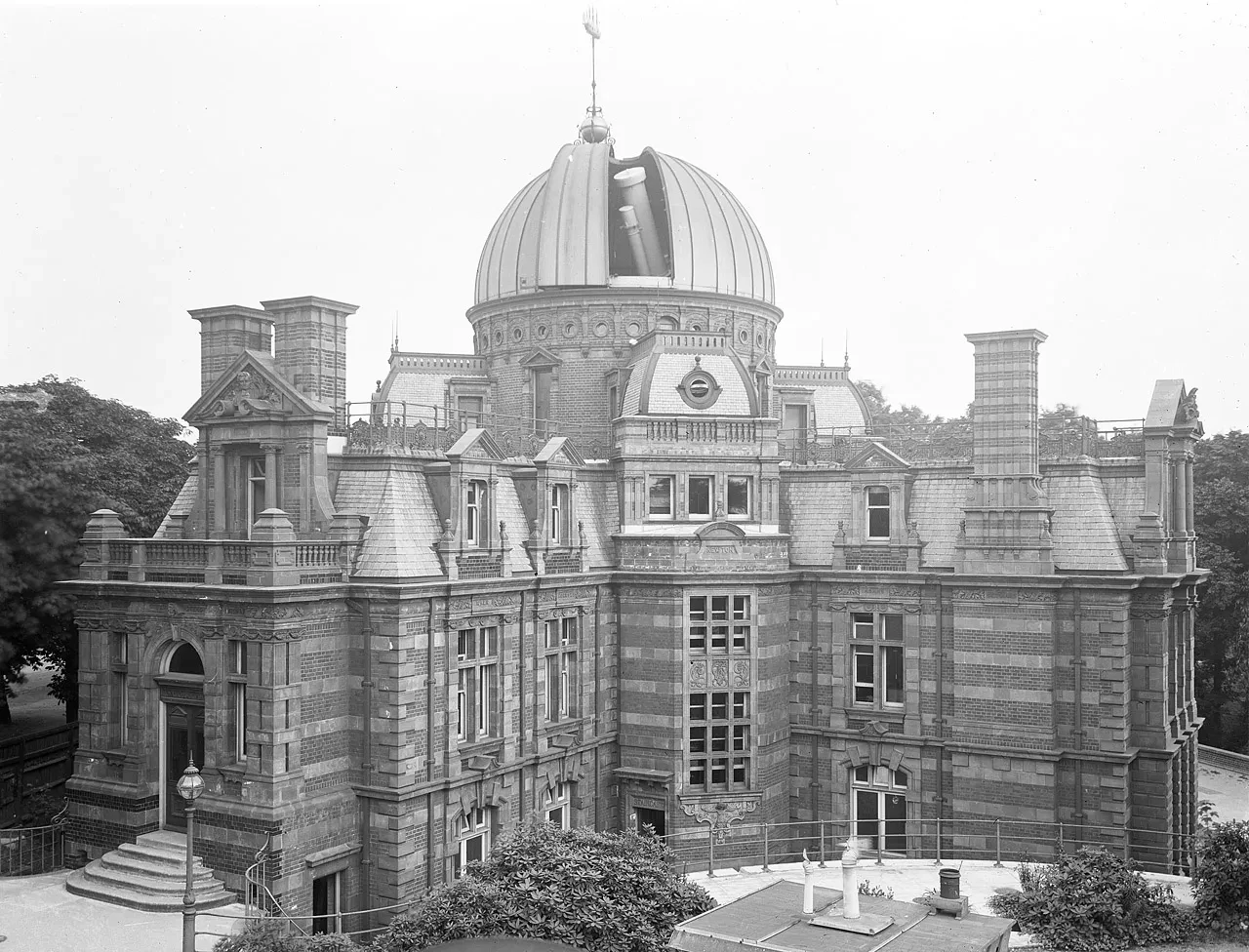
In 1899 the New Physical Building (today’s South Building) was completed. This created the opportunity to unite the Observatory’s entire library and manuscript collections in one location for the first time in half a century.
The library occupied the ground floor of the north, east and west wings. The west wing was home to the astronomical works. Transactions and periodicals were contained in the north wing and the east was dedicated to Electricity, Magnetism, and Meteorology.
All the books were transferred to the site by March 1900 and remained there for the next 50 years. Some effort was made to provide some state-of-the-art library facilities, as the library was furnished with Lucy & Co’s patent adjustable book-stacks to provide sufficient shelf space.
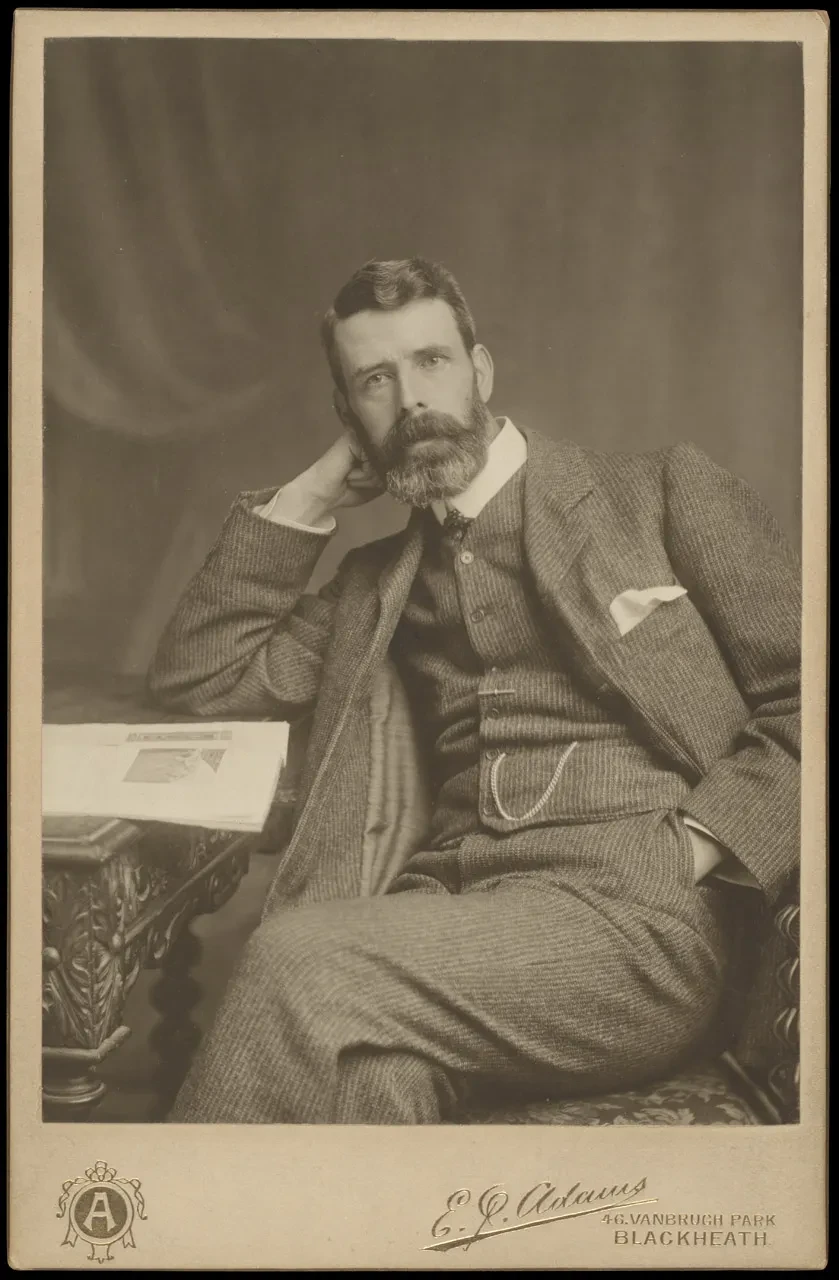
During this time Henry Outhwaite acted as the librarian. Improvements to the organisation of the library were accorded a measure of priority between 1901 and 1903 when Edward Walter Maunder, an Assistant to the Astronomer Royal, was given the additional responsibility for devising a new 'much needed' catalogue:
The new catalogue is in card form, and will be in duplicate, one card catalogue arranged according to the order of the books on the shelves, and the other in alphabetical order of authors’ names
Since the mid-19th century the Observatory's annual reports named the person responsible for the maintenance of the library and manuscripts. The responsibility was often combined with other duties, so there doesn't appear to have been a formalised librarian role.
Observatory staff that were tasked with managing the library before Outhwaite's time include James Carpenter, whose 'office-time is wholly engrossed with attention to the Library, and the Manuscripts'; Edwin Dunkin; George Criswick, who had drawn up some new rules for library users; A.M.W. Downing, who had the use of an mathematical assistant known as a 'supernumerary computer' to help maintain the library; and William Grassett Thackeray.
From Observatory to museum library
When the scientific work of the Royal Observatory began to be relocated to Herstmonceux Castle, Sussex after the Second World War, the library collections naturally followed. By 1957 the move was complete and the National Maritime Museum assumed responsibility for the management of the vacated Greenwich site.
In 1990 the Observatory moved again, this time to Cambridge. Its time there was short-lived, however, and the Observatory was wound down in 1998. The RGO Archive was transferred to the University of Cambridge. What remained of the library found its way back to Greenwich, after being acquired by the National Maritime Museum.
The core of this collection comprises volumes published before 1882 and constitutes approximately 2,200 items. Known as the Airy Collection, these are believed to be the surviving items from what was in the Observatory's library during Airy's tenure as Astronomer Royal.
It contains some important works, which demonstrate the development of science through the centuries, as well as our understanding of the universe and our place in it. Below are some selected highlights.
Image
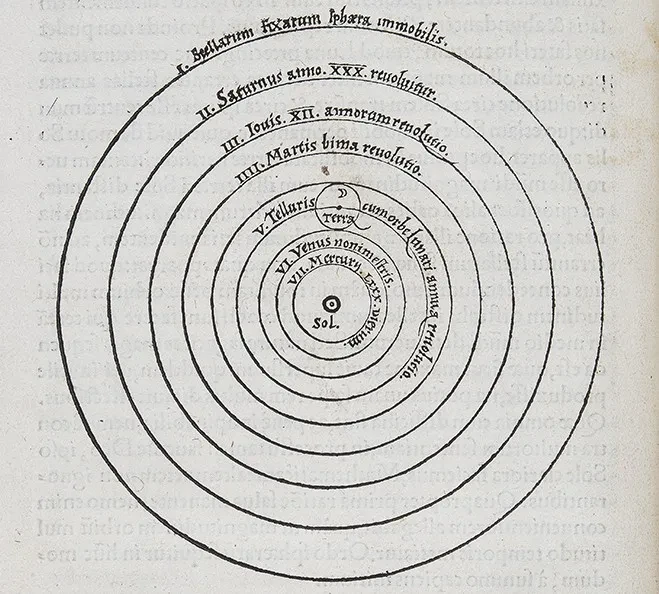
Copernicus, Nicolas. De revolutionibus orbium coelestium. Nuremberg: Johannes Petreius, 1543. RMG ID: PBG0220.
Published in Latin, On the revolutions of the heavenly spheres offered an alternative heliocentric model to Ptolemy's geocentric solar system. Copernicus put forward the theory that the Sun sits at the centre of the Solar System instead of the Earth. Although not a new idea, it did create some controversy.
Image
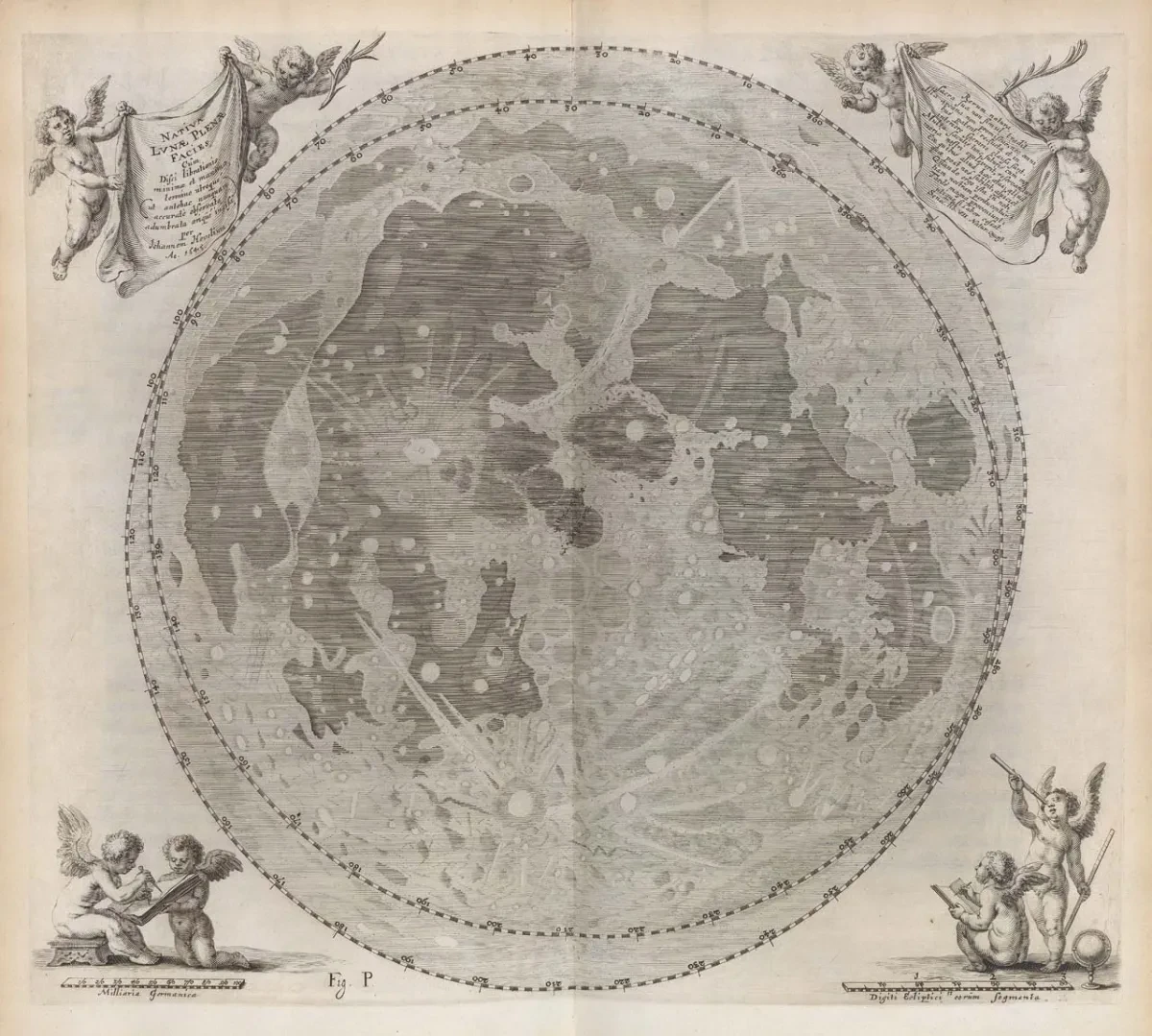
Hevelius, Johannes. Selenographia. Danzig: Johannes Hevelius, 1647. RMG ID: PBG2055.
Selenographia is a landmark work featuring the first detailed map of the Moon from observations made by the mayor of Danzig (modern-day Gdansk), Johannes Hevelius. Hevelius had set out to improve Galileo's renderings of the Moon that were made some 40 years previously. Dedicated to Ladislaus IV of Poland, this copy is listed in the 1827 Observatory catalogue.
Image
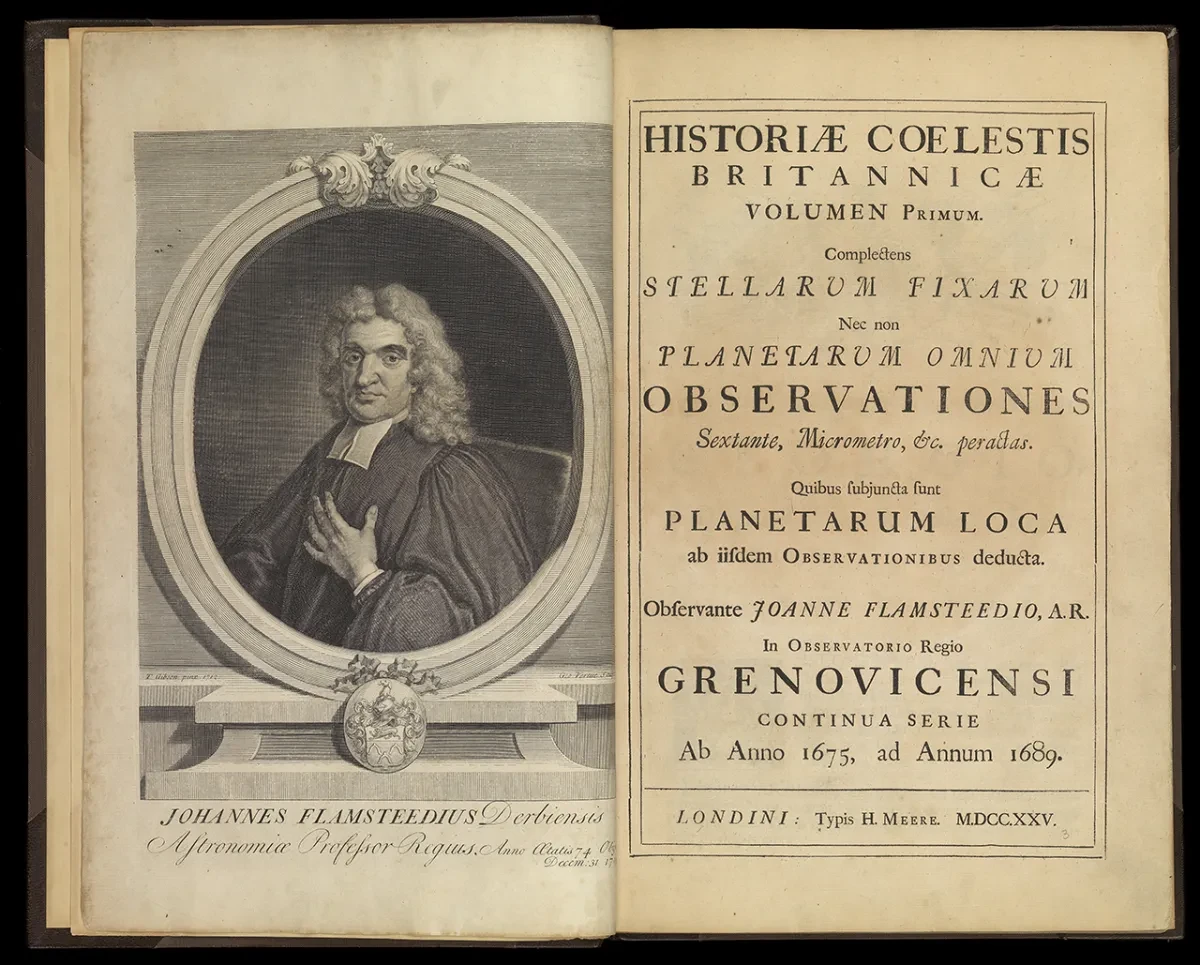
Flamsteed, John. Historiae coelestis. London, 1725. RMG ID: PBG0710/1-3.
Published posthumously, this three-volume work documents with unprecedented accuracy the positions of 3,000 stars. John Flamsteed was a perfectionist and declined to publish his work until it was finished. This caused tensions with the Royal Society, and in 1712 Halley published an unauthorised edition of Flamsteed’s findings totalling 400 copies. Flamsteed was able to recover 300 of these and, in 1715, burned them as a sacrifice to ‘Heavenly Truth’. The complete star catalogue was eventually published by his wife Margaret in two parts, the Historiae being the first.
Image
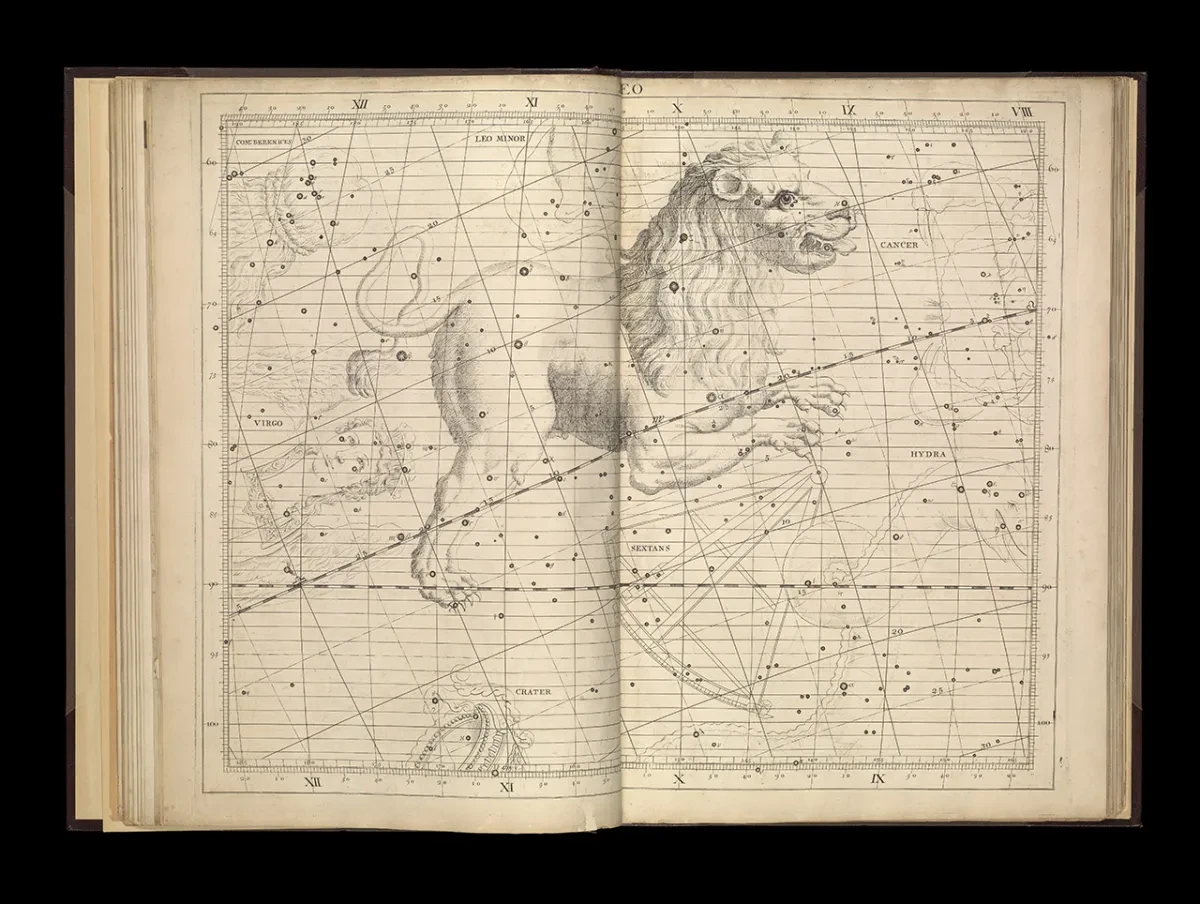
Flamsteed, John. Atlas coelestis. London, 1729. RMG ID: PBG1429.
The second half of Flamsteed's great work. While the Historiae includes the numerical tables and explanatory text, the visually striking Atlas is composed of 28 star charts mapping the major constellations. It is the first and most comprehensive of its kind. The charts feature drawings made by Sir James Thornhill, the artist responsible for the execution of the Painted Hall at the Royal Hospital for Seamen.
Image
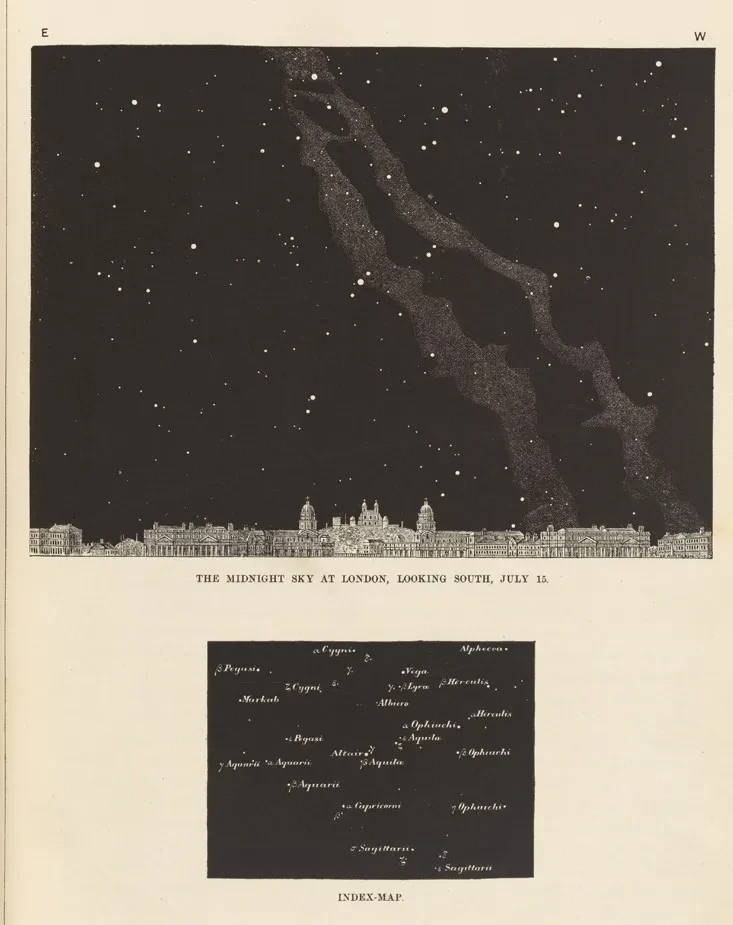
Dunkin, Edwin. The midnight sky. London: Religious Tract Society, 1869. RMG ID: PBG3833.
Notes on the night sky seen from London. It includes 32 star maps and other illustrations by Edwin Dunkin, who worked at the Royal Observatory under Airy and was at one time responsible for its library. He was President of the Royal Astronomical Society 1884-1886. The frontispiece bears his signature.
Beyond Airy
While the Airy Collection forms the core of the Caird Library’s holdings on astronomy, there is much more to be found on the subject in the library’s collections, both rare and modern. This ensures that scientific developments in the field over the century and a half since Airy’s time are well represented.
Notable periodicals include Greenwich publications Nautical Almanac, begun under Nevil Maskelyne, and Astronomical Observations established under John Pond. The Caird Library holds copies for the years 1767-1994 and 1814-1955 respectively.
While the RGO Archives are with the University of Cambridge, we do have some manuscripts relating to Nevil Maskelyne and his family. In addition, we hold a substantial number of volumes on horology – as befits Greenwich as the home of time.
Like the old Observatory library, the Caird Library collections support the work of the institution in which it is based. An important distinction today, however, is that our collections and the staff who maintain them are available to curious minds – wherever they come from.
Further reading
Airy, George Biddell and W.H.M. Christie, Report of the Astronomer Royal to the Board of Visitors: read at the annual visitation of the Royal Observatory 1877-1886, Royal Observatory, Greenwich. PBG3492.
Bond, W.C., History and description of the Astronomical Observatory of Harvard College, Arno, New York, 1980. PBN5089.
Christie, W.H.M., Report of the Astronomer Royal to the board of visitors of the Royal Observatory, Greenwich: Read at the annual visitation of the Royal Observatory 1897-1906, Greenwich: Royal Observatory. PBG3493.
Maskelyne, Nevil, A catalogue of the entire and very valuable astronomical and mathematical library of the late Rev Nevil Maskelyne, Leigh & Sotheby, London, 1811. PBA5994.
Royal Observatory, Greenwich, A catalogue of books belonging to the library of the Royal Observatory, Greenwich, Royal Observatory, London,1827. PBG0889.
A deeper dive of the history of the Observatory, including the old library, is available on Graham Dolan’s website, The Royal Observatory Greenwich.

Blast off to the Caird Library and Archive
Explore the world's largest maritime library and archive
Discover more