The Queen’s House is the jewel in the crown of Greenwich's UNESCO World Heritage Site.
The House is England’s first classical building, designed by Inigo Jones in the 17th century. With its graceful exterior, geometric Great Hall and the intricate Tulip Stairs, it is an architectural wonder in its own right.
Artistic ingenuity has been part of the fabric of the Queen's House since its foundation. Anne of Denmark – the Stuart monarch who commissioned the building in 1616 – was a renowned patron of the arts. Then under Queen Henrietta Maria, the wife of King Charles I, the building was transformed into a 'House of Delights', complete with a painted ceiling by Italian artist Orazio Gentileschi and his daughter Artemisia. It later became a working artists' studio during the reign of King Charles II.
Today the Queen's House is an acclaimed art gallery, containing over 450 artworks and featuring pieces by J.M.W. Turner, Canaletto, Alberta Whittle and Jacqueline Bishop.
But where to begin? Discover just some of the highlights on display.
Image
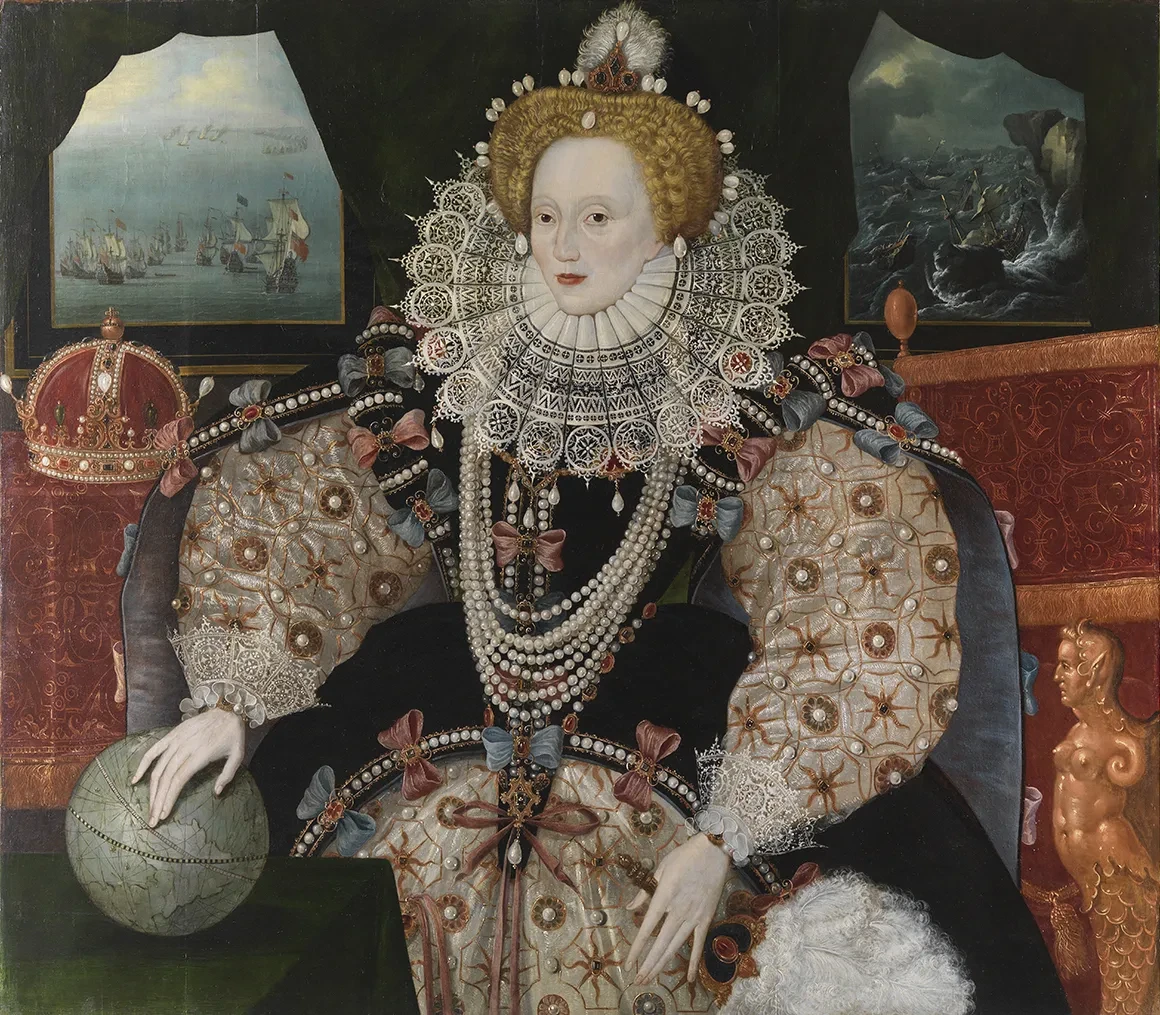
The ‘Armada Portrait’ of Elizabeth I
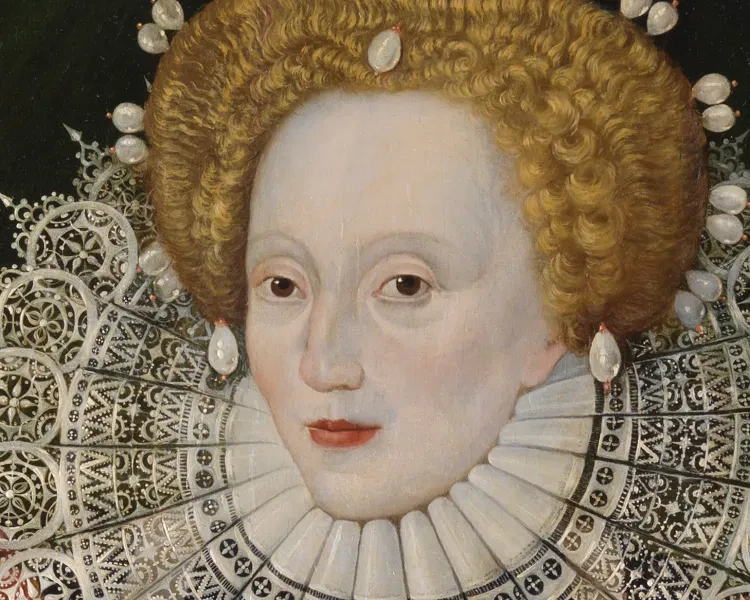
Wearing a pearl-encrusted dress and with her hand resting on a terrestrial globe, Queen Elizabeth I is portrayed as a spectacle of female power and majesty.
While the identity of the artist is unknown, the painting was made to commemorate the defeat of the Spanish Armada in 1588 – the most famous conflict of Elizabeth’s reign.
To the left of Elizabeth, the English fleet and the approaching Spanish Armada can be seen. To her right, the Armada is being wrecked in a storm.
The portrait was acquired by Royal Museums Greenwich in 2016 following a nationwide funding appeal. It is one of several royal portraits on display in the Queen's House.
Image
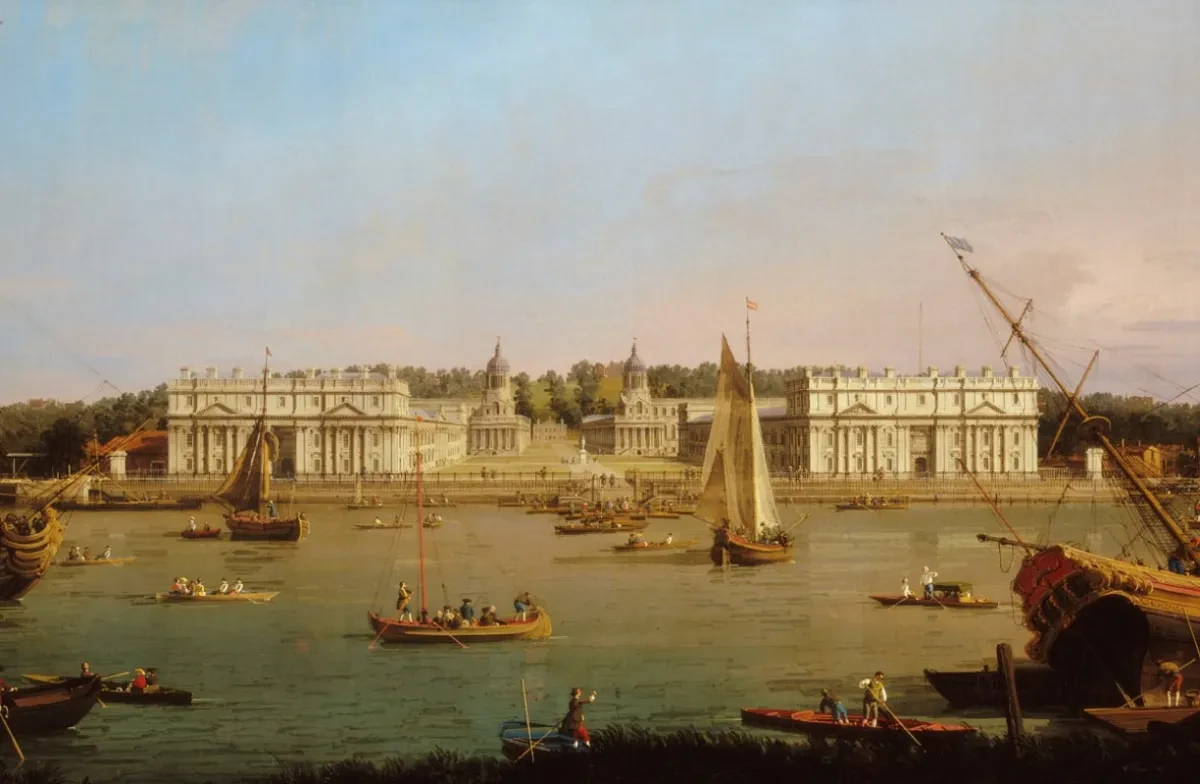
Greenwich Hospital from the north bank of the Thames by Canaletto
Best known for his Venetian cityscapes, Canaletto spent several years in England. In 1746, he moved to London and produced views of the capital’s landmarks and estates of the English aristocracy.
This view of Greenwich was thought to have been made in around 1750-52. Beyond the bustle of boats on the Thames stands the white double frontage of the recently completed Greenwich Hospital (today the Old Royal Naval College). In the distance, the Queen’s House and the Royal Observatory can be seen.
Image
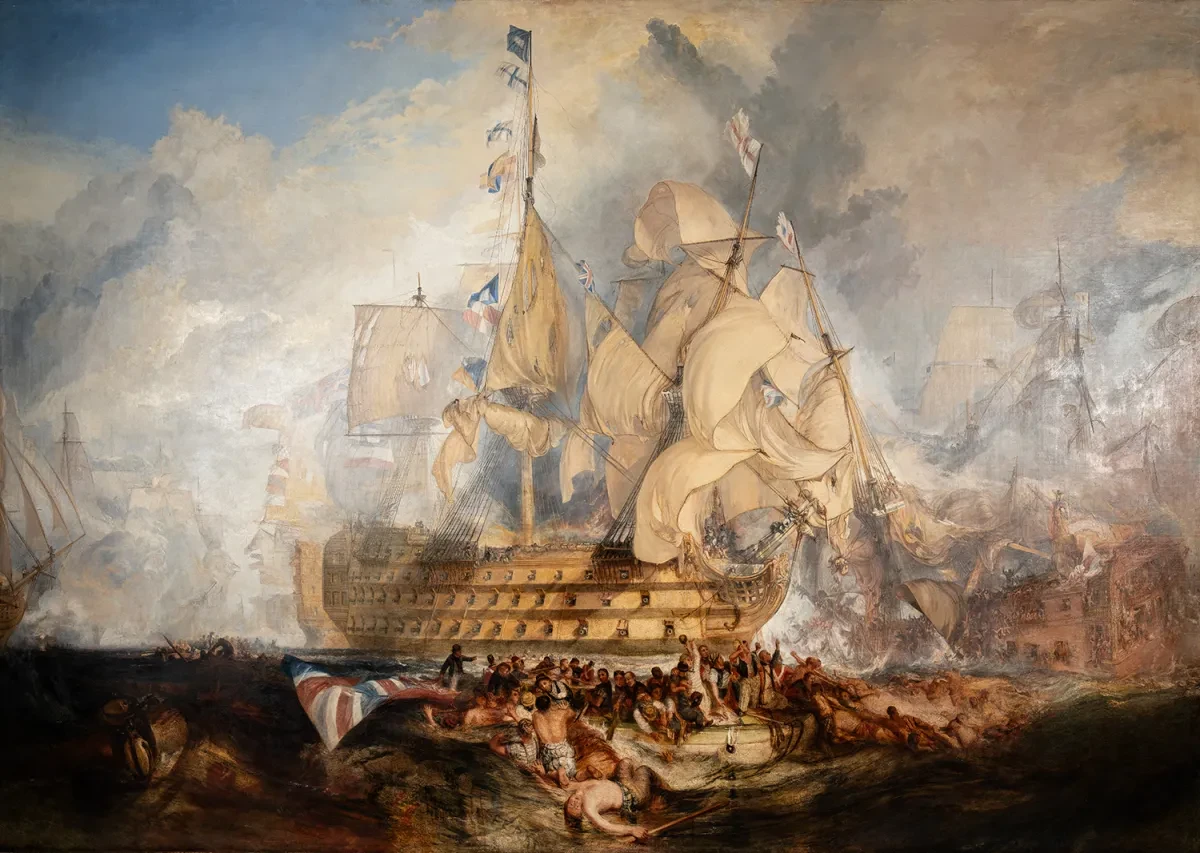
The Battle of Trafalgar, 21 October 1805 by J.M.W. Turner
Complex, colossal and controversial – J.M.W. Turner’s The Battle of Trafalgar captures the turmoil and suffering of war. The painting depicts the British naval victory over a combined French and Spanish fleet off Cape Trafalgar on 21 October 1805.
It’s a work that commands attention. At the centre, the foremast of the Victory – Vice-Admiral Lord Horatio Nelson’s flagship – crashes towards the sea. In the foreground, injured and dying men are battered by the waves.
Despite being Turner’s only royal commission, the artwork proved to be one of his greatest artistic challenges. When the painting was unveiled at St James’s Palace in 1824, it received a mixed reception.
In 2025, The Battle of Trafalgar went on display in the Queen’s House – watch the moment Turner’s largest painting was carefully craned and manoeuvred through a window.
Image
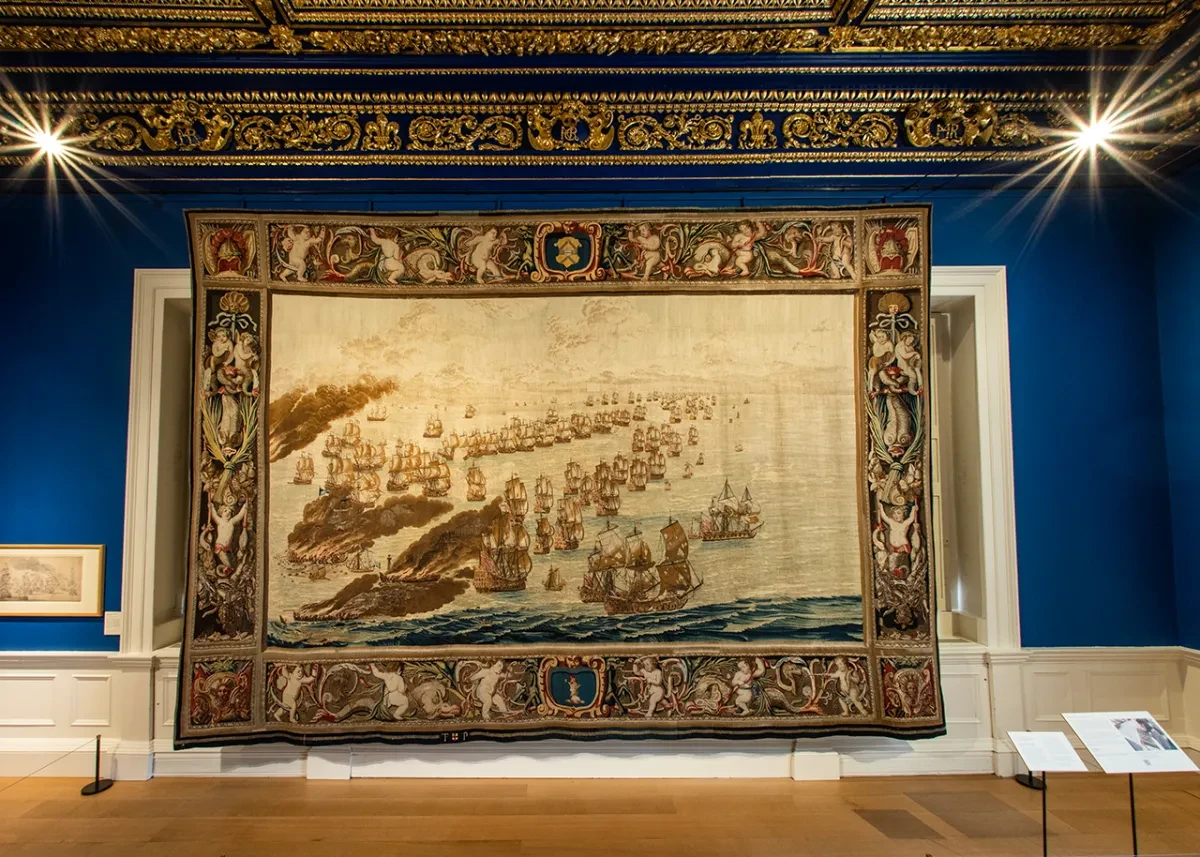
The Burning of the Royal James at the Battle of Solebay, 28 May 1672
This monumental tapestry depicts the climax of the Battle of Solebay in May 1672, an inconclusive naval conflict between a Dutch fleet and a combined force of English and French ships.
Framed by elaborate borders, the Solebay tapestry was originally part of a series of giant tapestries commissioned by King Charles II to record the battle.
To bring the series together, Charles enlisted the talents of marine artist, Willem van de Velde the Elder, who had been present at the conflict.
Working in the Queen’s House, Van de Velde used his drawings to create ‘cartoons’ – large-scale paper designs – to act as a guide for the weavers creating the tapestries.
The conservation of this 300-year-old tapestry was secured following a crowdfunding campaign in 2022.
Image
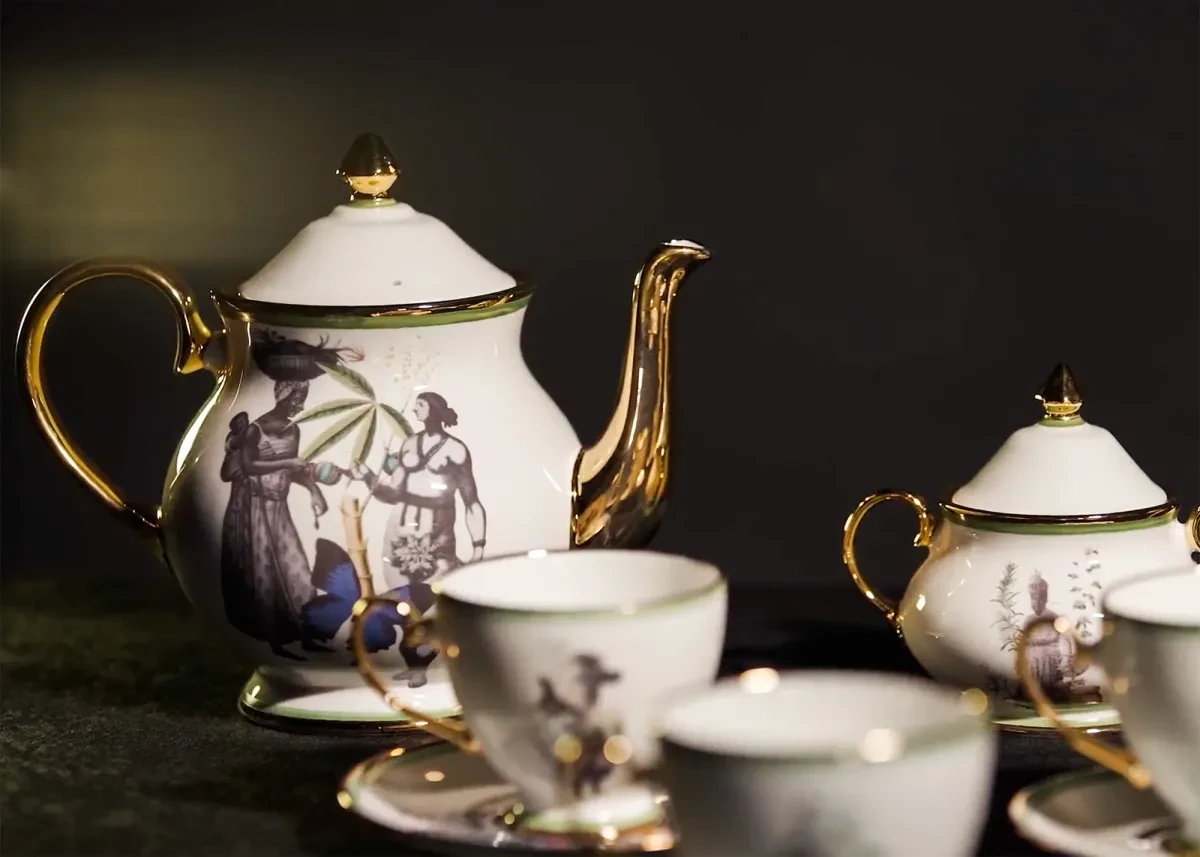
The Keeper of All The Secrets by Jacqueline Bishop
This ceramic artwork has many stories to tell. Made by artist Jacqueline Bishop, The Keeper of All The Secrets reworks a traditional British tea service, using collages of Caribbean market women and botanicals to explore women's agency and the legacies of empire and enslavement.
The market woman was central to Caribbean society, working as a healer, trader, preserver and transmitter of cultural knowledge, but Bishop wanted to explore why her importance has been overlooked.
Bishop’s finished work is a 13-piece 'tea service' in ceramic with digital print transfers and adorned with gold lustre. By using this form, Bishop highlights how enslavement, colonisation and empire were bound up with the trades in sugar and tea, which gave rise to luxury commodities enjoyed in Europe.
Supported by Cockayne Grants for the Arts, a Donor Advised Fund, held at The Prism Charitable Trust. The Keeper of All The Secrets display in the Queen’s House has been developed in partnership with Culture&, as part of their Time, Space and Empire programme.
Image
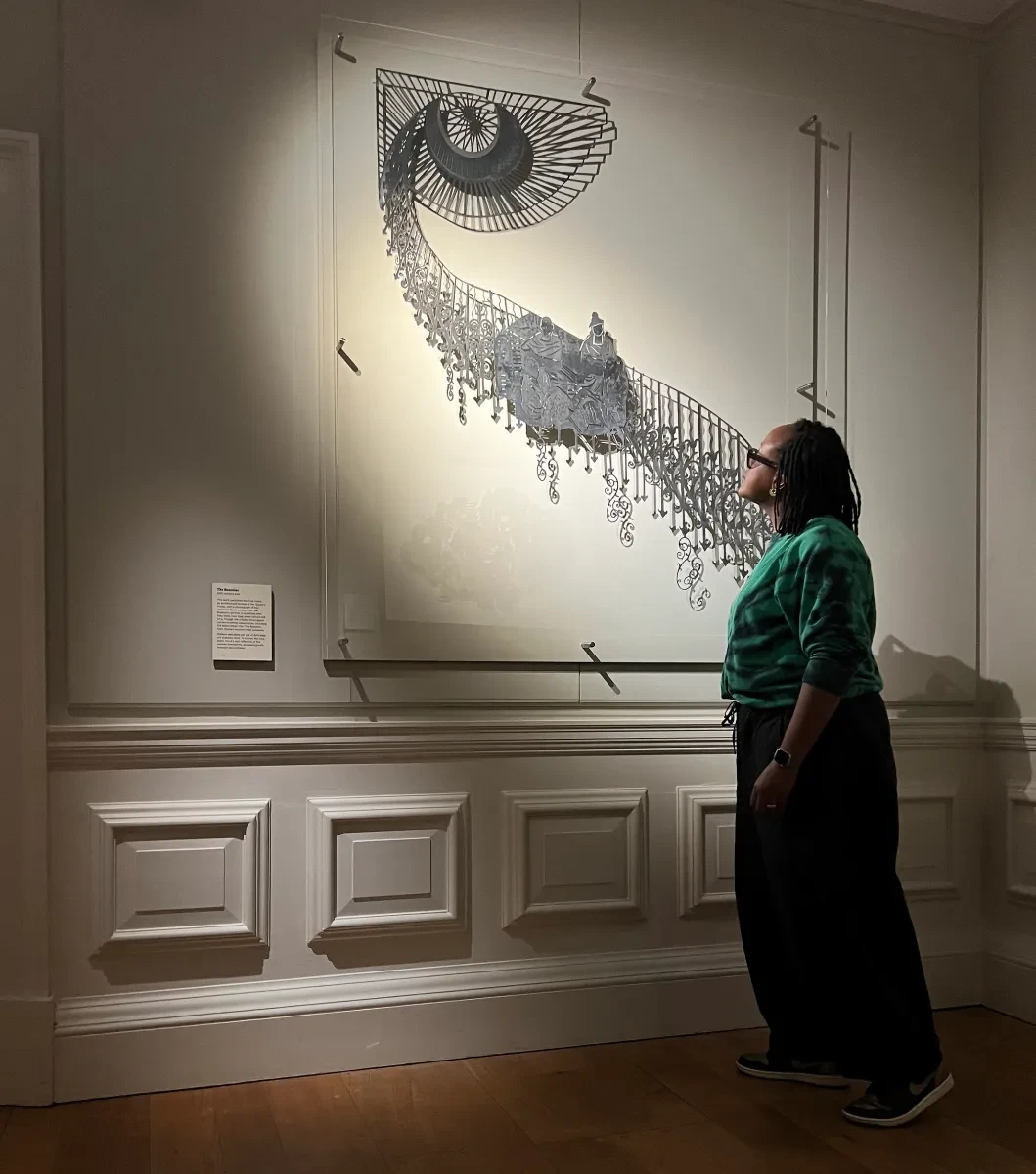
The Many Invincible Ones by Sharon Walters
Care and connection are just some of the themes explored in The Many Invincible Ones, a body of work created by multidisciplinary artist, Sharon Walters.
Bringing together paper-cut collages, textiles and engraved stainless steel and bronze, the six pieces respond to a historic photograph in Royal Museums Greenwich’s collection, which depicts formerly enslaved children on board HMS Flying Fish in Madagascar.
The display was created during Walters’ Caird Research Fellowship at the Museum in 2024-2025 and can be seen in the Queen’s Closet.
Image
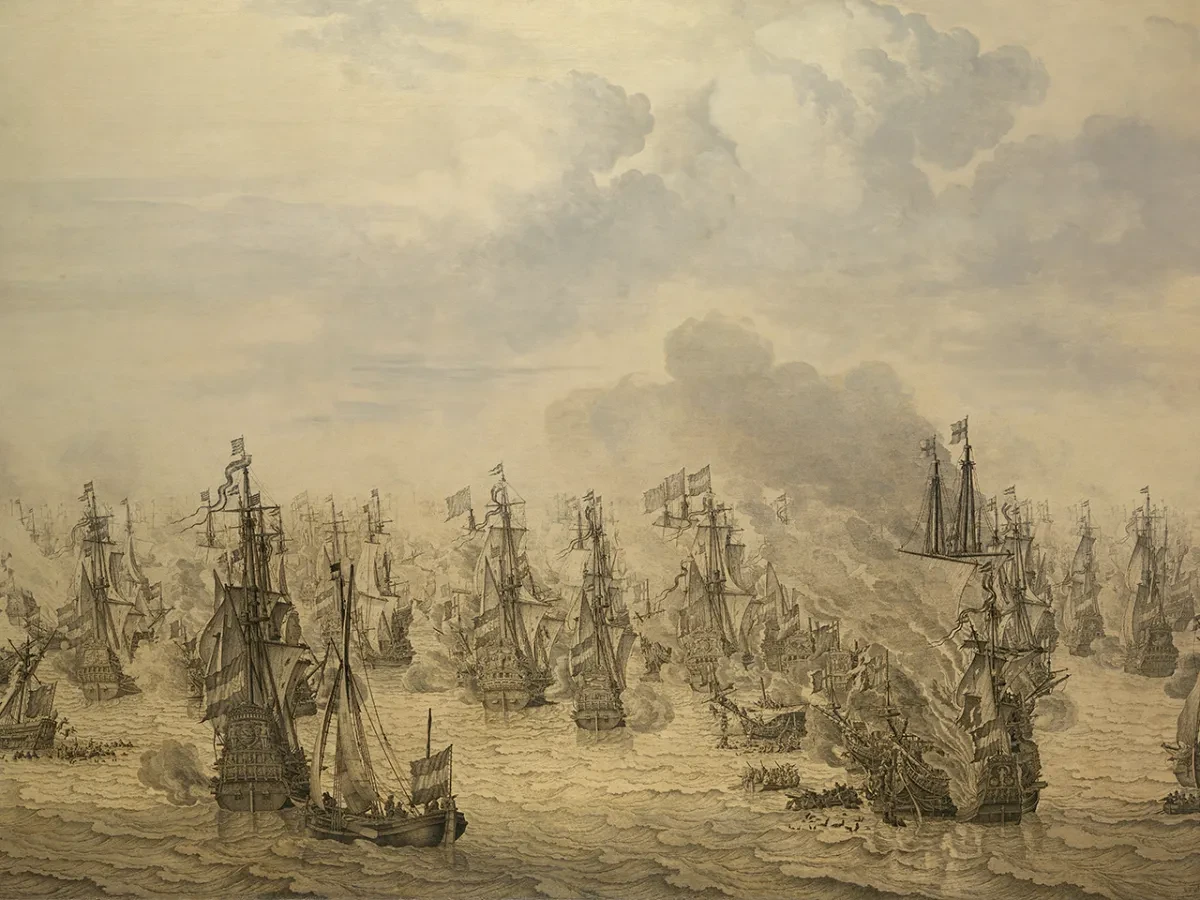
The Battle of Scheveningen, 10 August 1653 by Willem van de Velde the Elder
The clamour and chaos of battle is vividly rendered in this detailed work by marine artist Willem van de Velde the Elder. It is an example of a ‘pen painting’, van de Velde’s trademark drawing style made using pen and ink washes.
Here, van de Velde depicts an altercation between the English and Dutch fleet at the Battle of Scheveningen in 1653 – the last battle of the First Anglo-Dutch War.
Van de Velde accompanied Dutch fleets into battle on multiple occasions, sketching the action from a small boat.
In the bottom left of the work, van de Velde has drawn himself into the painting, depicted as a seated figure wearing a wide-brimmed hat and holding a drawing block and a pencil.
Image
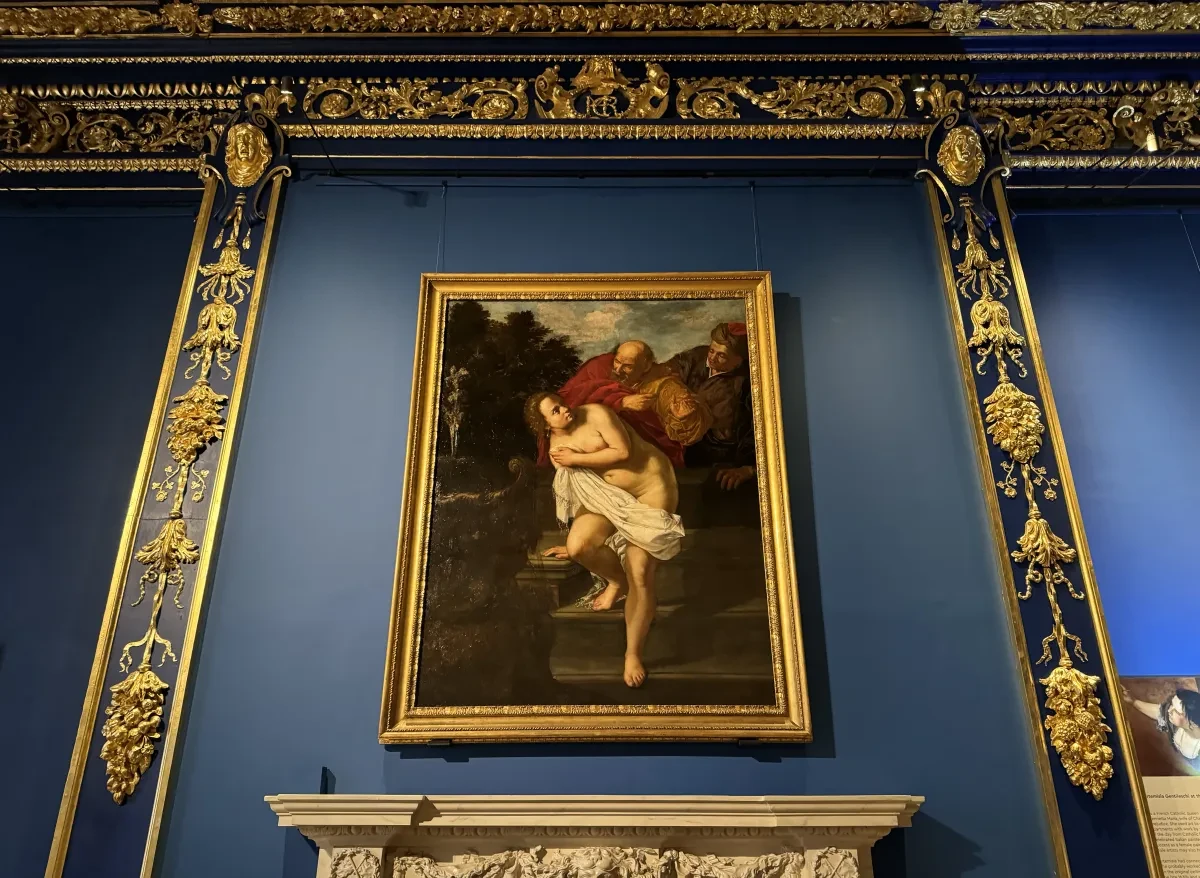
Susanna and the Elders by Artemisia Gentileschi
On loan from the Royal Collection, this oil painting depicts a scene from the Old Testament, where the young Susanna is harassed by two older male judges.
This work was made by Artemisia Gentileschi in c.1638-40 when Artemisia was working in London. It was probably a commission from Queen Henrietta Maria, who had already commissioned multiple works from Artemisia’s father, Orazio Gentileschi. Artemisia likely came to England to help Orazio finish the original ceiling canvases in the Great Hall of the Queen’s House.
Susanna and the Elders was almost certainly painted for a prime position above the fireplace in Henrietta Maria's Withdrawing Chamber at Whitehall Palace, which was destroyed in a fire in 1698. Now on display in the equivalent location in what was her Withdrawing Chamber at the Queen's House, the artwork is in a setting as close as possible to the one for which it was painted.
Image
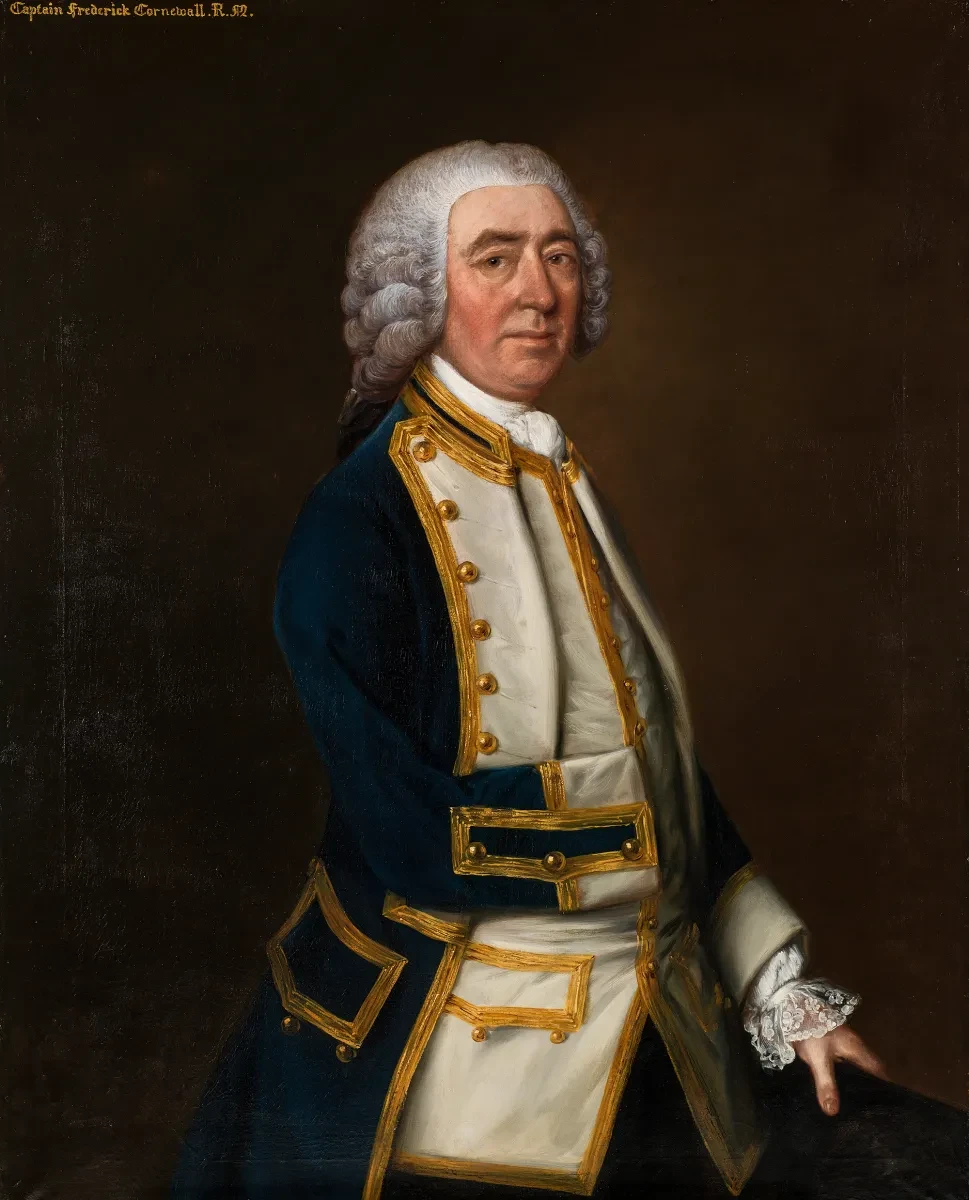
Captain Frederick Cornewall, 1706-88 by Thomas Gainsborough
In 2022, a missing masterpiece by Thomas Gainsborough was discovered in Royal Museums Greenwich’s collections.
A founding member of the Royal Academy of Arts, Gainsborough was one of the most important British artists of the 18th century.
The long-lost work depicts naval officer, Captain Frederick Cornewall, who had recently retired from active service when he sat for this portrait.
This work showcases Gainsborough’s skill and dexterity. Look closely to see how he has used rapid, flickering brushstrokes to capture the details of Cornewall’s careworn face and delicate lace cuff.
Following a successful public appeal in 2023, this historic painting underwent conservation prior to display.
Image
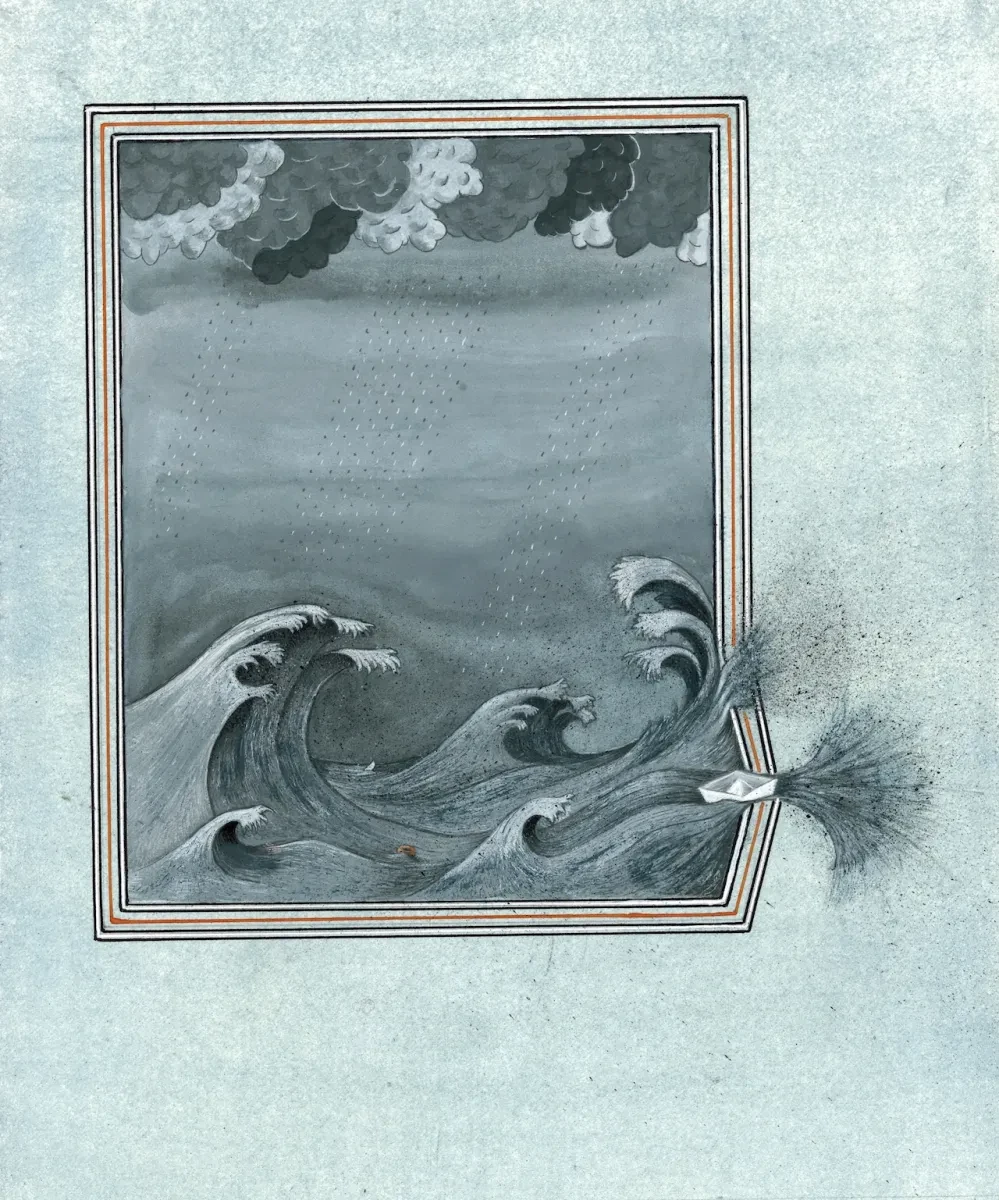
Crossing Border by Shorsh Saleh
Crossing Border is a miniature artwork that highlights the danger of sea crossings. It was made by Shorsh Saleh, a Kurdish mixed-media artist, carpet designer and weaver, whose work focuses on migration and identity.
The work draws on Saleh's own experience fleeing persecution and conflict, and takes inspiration from the tradition of Indo-Persian miniature painting. Crossing Border is filled with delicate details, from the boat breaking through the border of the artwork to the life ring hidden among the surging waves.
This new acquisition forms part of ‘Crossings’, a series of works that reflect on migrant experiences.
Discover more great art
Sign up to the art newsletter for more information about Royal Museums Greenwich's art collection, and learn about upcoming exhibitions and events.
More artworks on display
More artworks on display
1 / 21
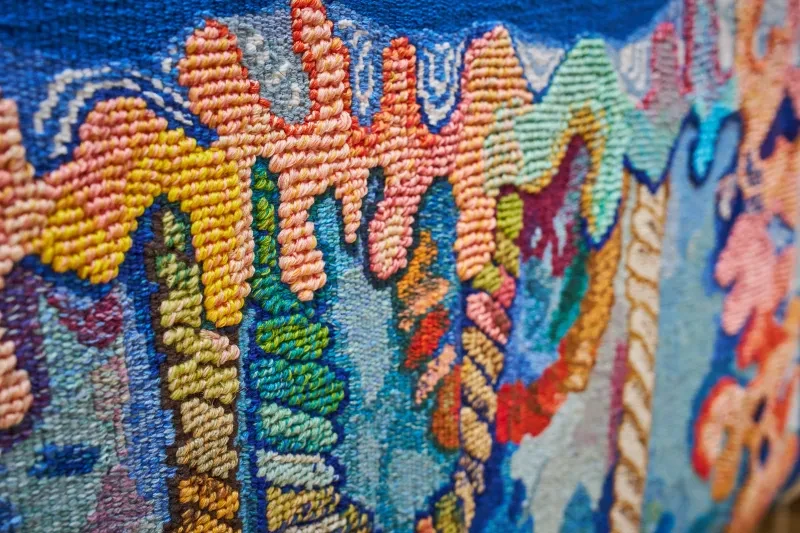
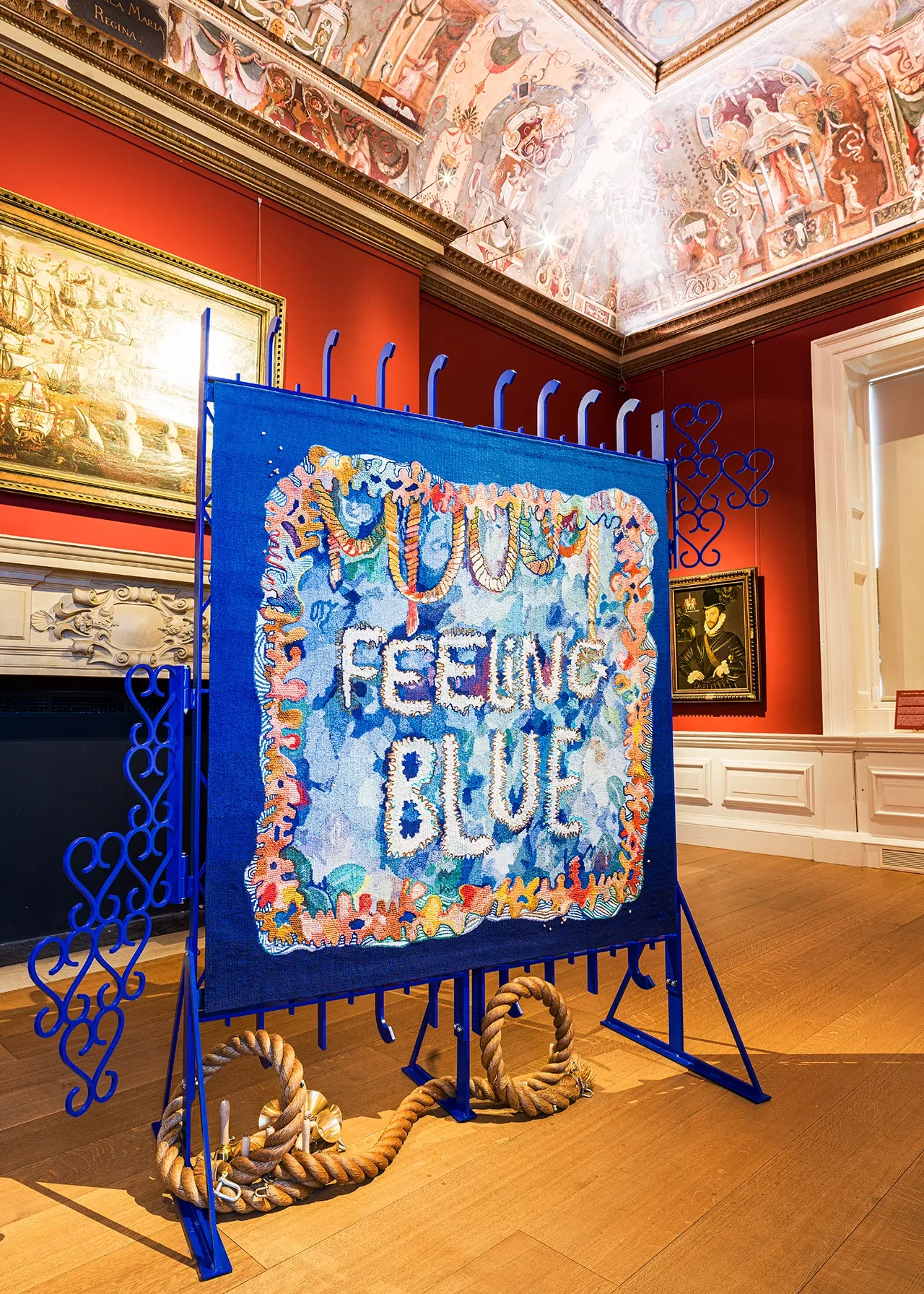
Feeling Blue
Feeling Blue is a new contemporary art commission for the Queen's House, currently hanging in the Queen's Presence Chamber opposite the Armada Portrait. It was created by multidisciplinary artist Alberta Whittle and Dovecot Studios in Edinburgh.
Weaving together themes including migration, melancholy and mythology, Feeling Blue responds directly to Royal Museums Greenwich’s sites and collections. The tapestry features more than 150 different colour combinations, incorporating materials such as rope and pearls as well as cottons and linens.
“I wanted to think about how collections speak to us as audience members, and how artworks talk to each other,” Whittle says.
2 / 21
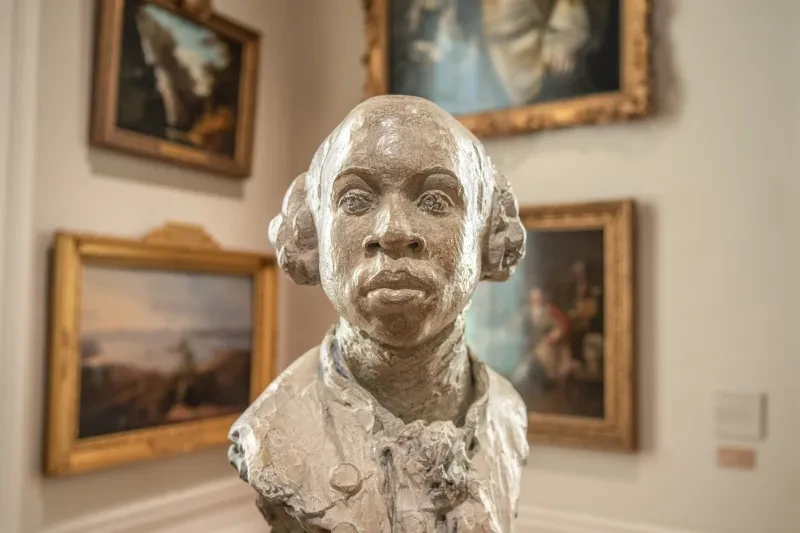
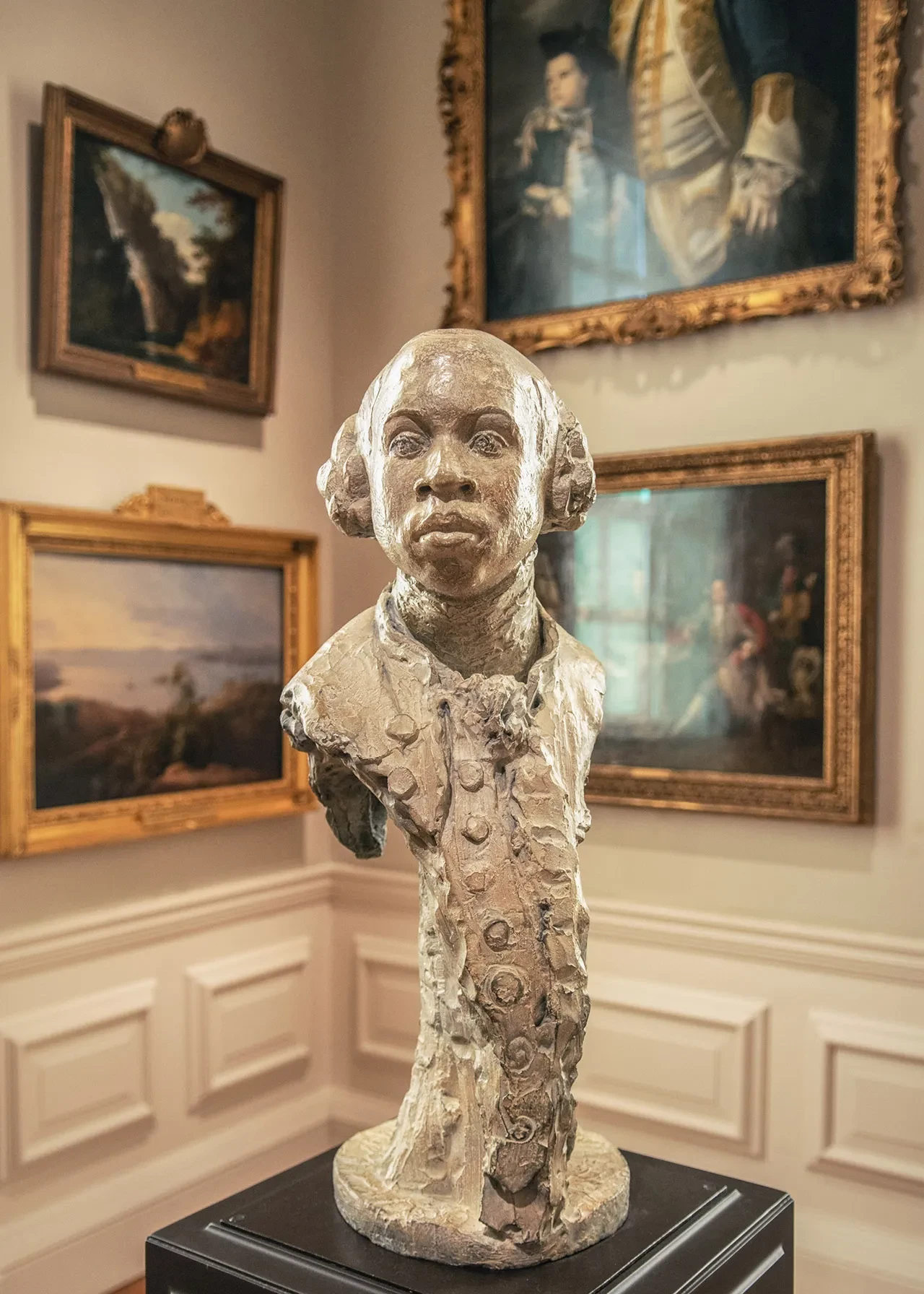
Olaudah Equiano – African, slave, author, abolitionist
Made by artist Christy Symington, this sculpture depicts Olaudah Equiano, a key figure in the abolitionist campaign.
Born into what is now south-east Nigeria, Equiano was sold into slavery around the age of 11. He eventually bought his freedom and documented his experiences in his autobiography The Interesting Narrative of the Life of Olaudah Equiano, one of the first books in Europe by a Black African writer.
Equiano’s role as an abolitionist is referenced through the broken chains and shackles that wind around the sculpture. The shape that forms the back of his shoulders implies the continent of Africa.
3 / 21
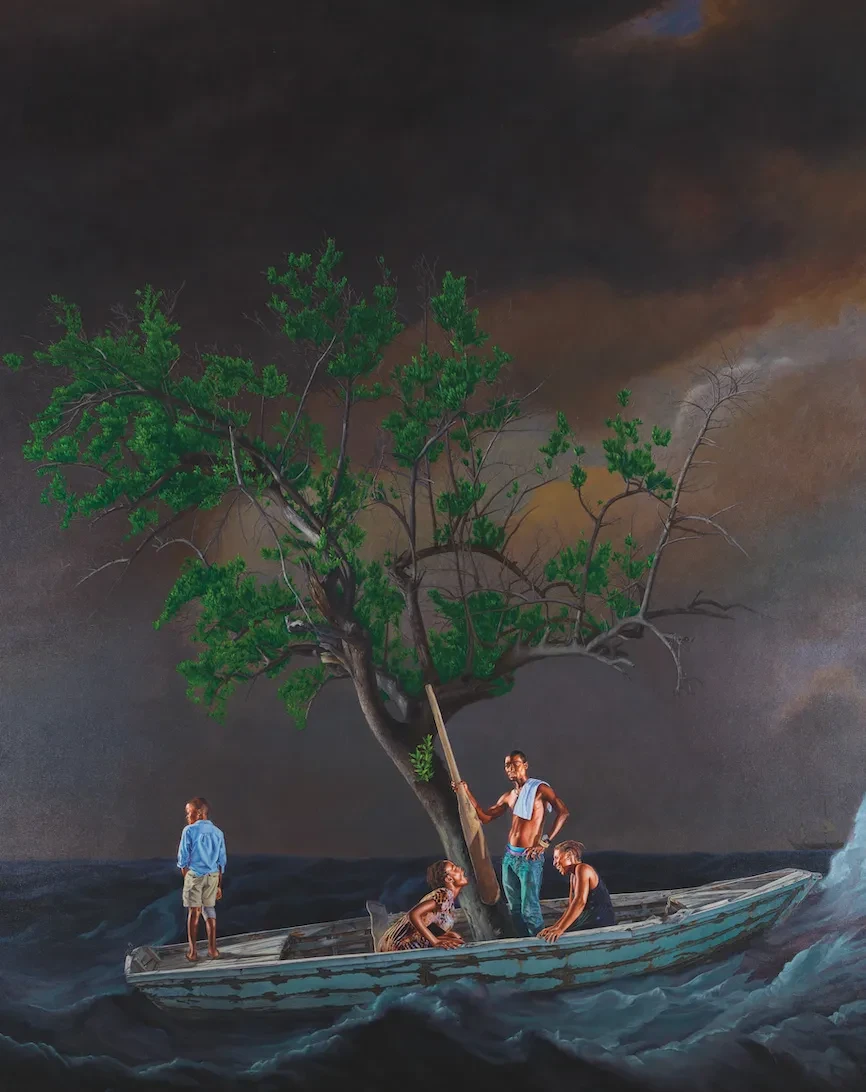
Ship of Fools
Migration, refugee crossings and identity are just some of the themes explored in this work by contemporary artist Kehinde Wiley.
A powerful reimagining of the traditions of marine art, it depicts a group of four migrants in a rickety boat, desperately searching for a better life.
Instead of a mast, a tree – perhaps suggestive of the tree of life – springs from the centre of the boat. The spectre of an 18th-century warship can be seen towards the right of the painting – a reference to the shadowy histories of colonialism and slavery.
4 / 21
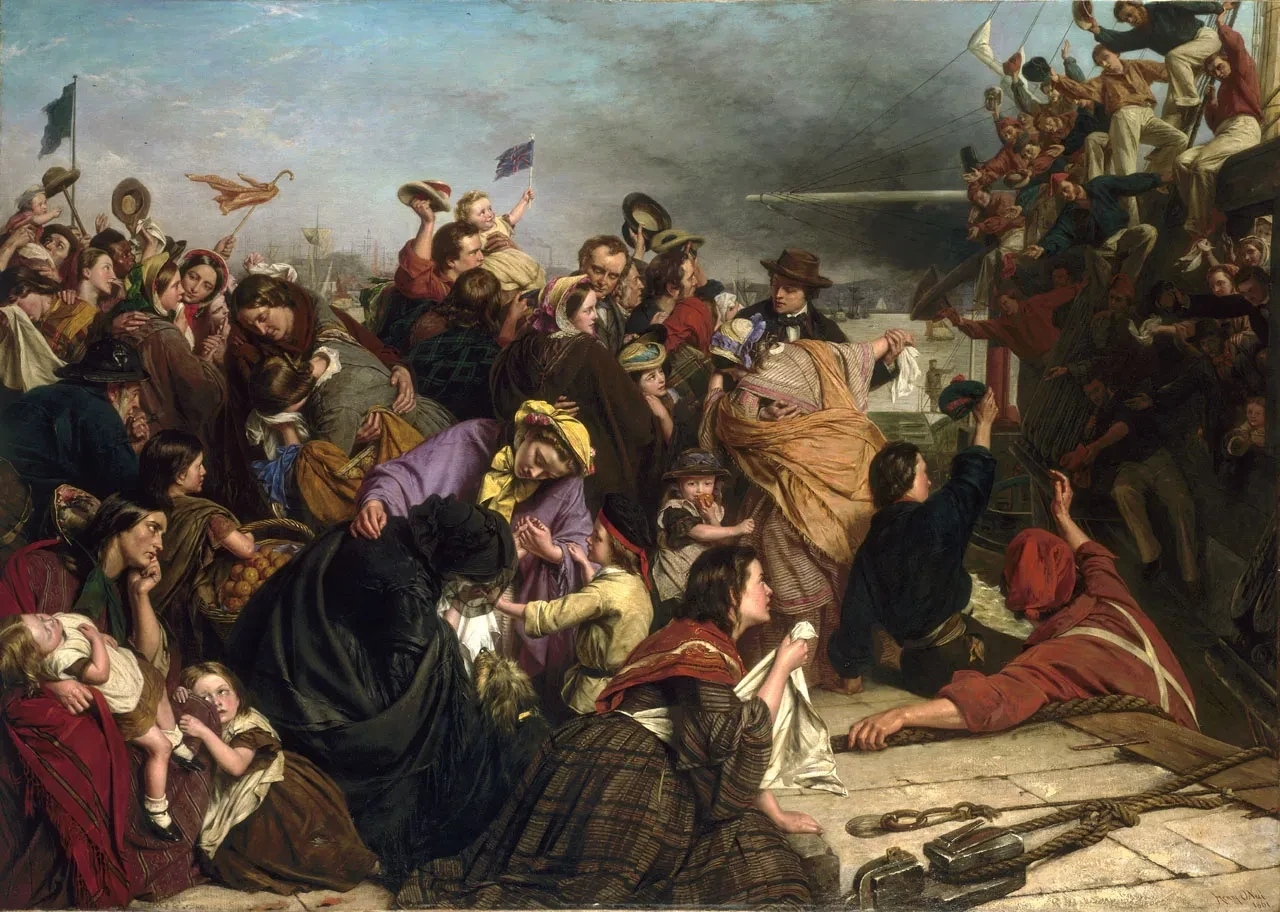
The Parting Cheer
Sorrow and jubilation are juxtaposed in this 19th-century painting by artist Henry Nelson O’Neil.
Set along the Thames, the scene portrays the departure of a ship (most likely bound for North America) and the grieving families and friends left behind. Throughout the Victorian era, millions of British people emigrated to start new lives in countries such as the United States, Canada, Australia and New Zealand.
On the quayside, groups of figures from all social classes congregate. A young street fruit seller clutches a basket of oranges and gazes wistfully at the ship, while a woman in a purple shawl comforts a widow in black mourning dress.
5 / 21
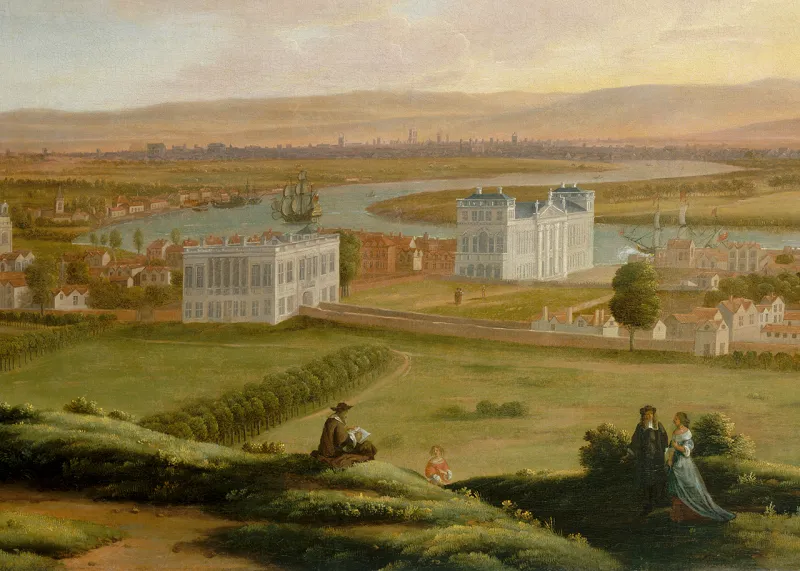
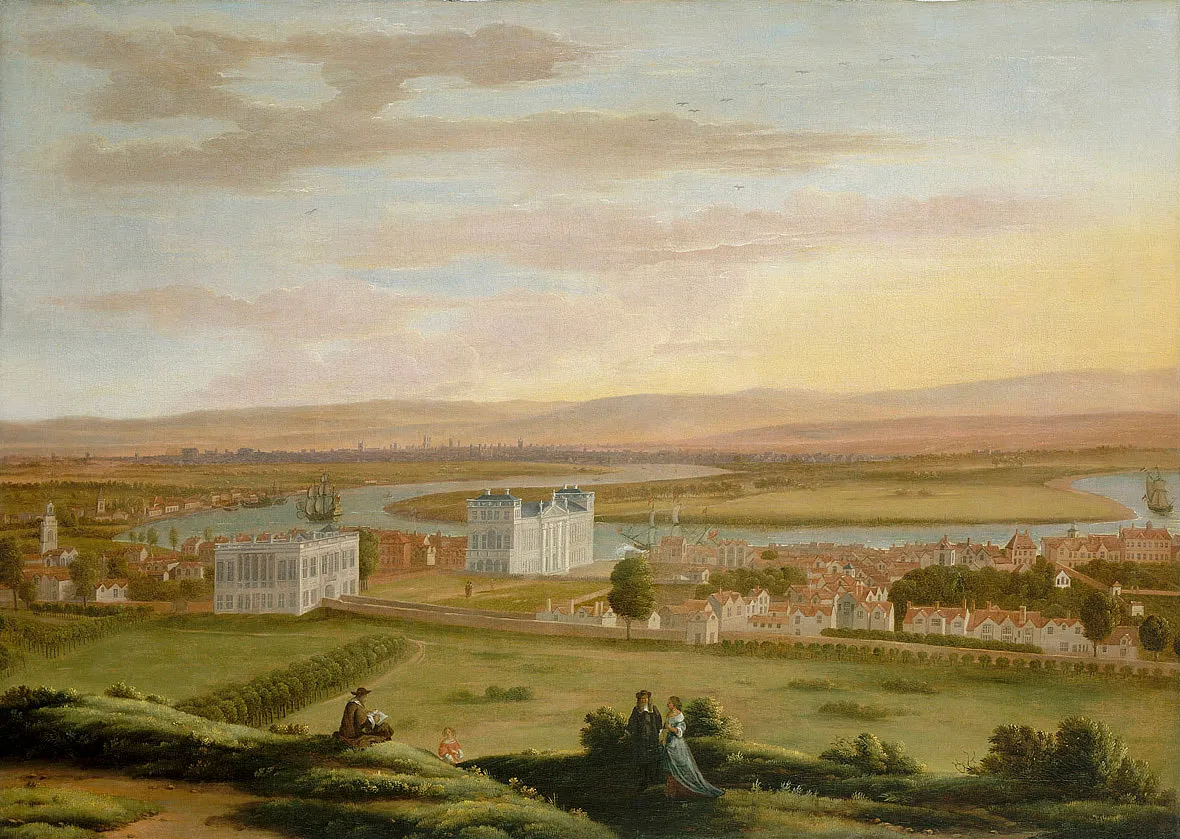
View of Greenwich and the Queen’s House from the south-east
Complete with rolling parkland, pastel skies and the meandering River Thames, this painting of Greenwich is one of tranquillity.
Created in around 1670 by Dutch artist Hendrick Danckerts – the court painter to King Charles II – the work is filled with intriguing details. Towards the left of the painting sits the Queen’s House, with the old Woolwich Road passing through it. This thoroughfare once connected the royal dockyards at Woolwich and Deptford.
At the top of the hill, a figure can be seen sketching, thought to be Danckerts himself.
6 / 21
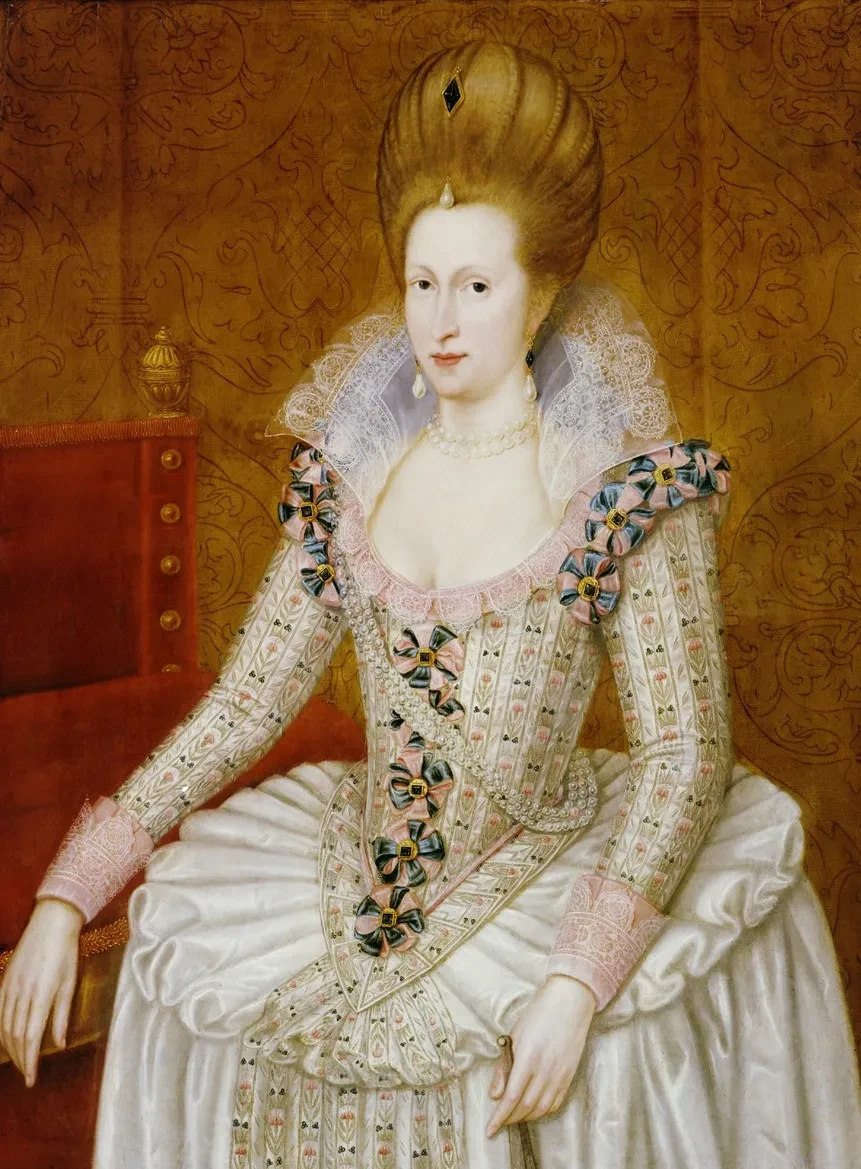
Anne of Denmark, 1574–1619
A keen patron of the arts, Queen Anne of Denmark transformed the social and cultural life of the Stuart court, from staging masques (elaborate performances of music and dance) to collecting works of art. In 1616, she commissioned leading architect, Inigo Jones, to design the Queen’s House.
This painting was made in around 1605 by the artist John de Critz. It would have been part of a pair, accompanying a portrait of her husband, King James I of England.
7 / 21
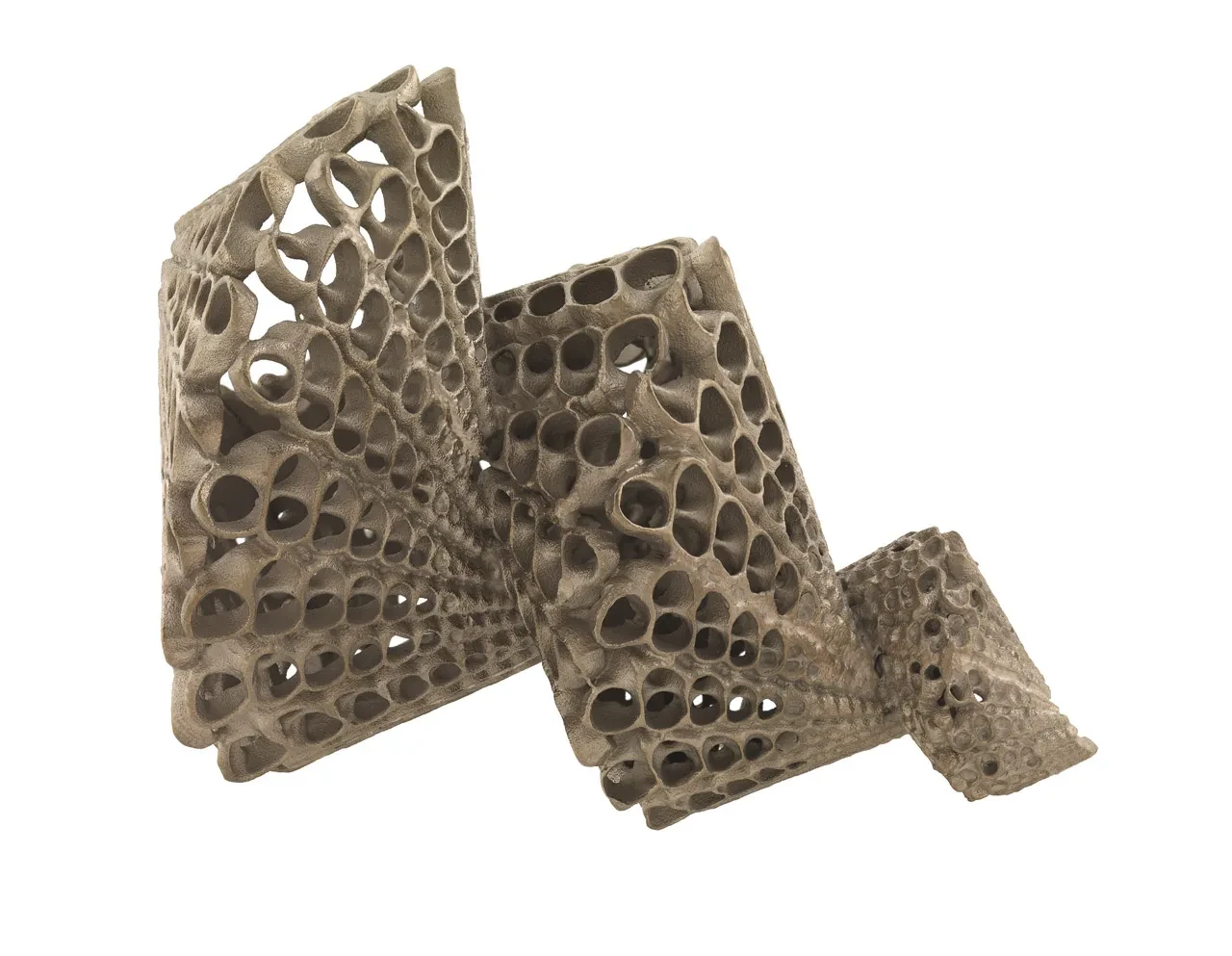
Asabikeshiinh Aeris (Bronze dreamcatcher)
This arresting bronze sculpture of a turritella seashell was acquired by Royal Museums Greenwich in 2021. It was made by Rowan Mersh, a multi-media artist known for his freestanding sculptures and large-scale wall pieces.
A fusion of traditional craft and new technologies, the piece provides a nod to the artistic legacy of shell craft work, many examples of which are in Royal Museums Greenwich’s collections.
8 / 21
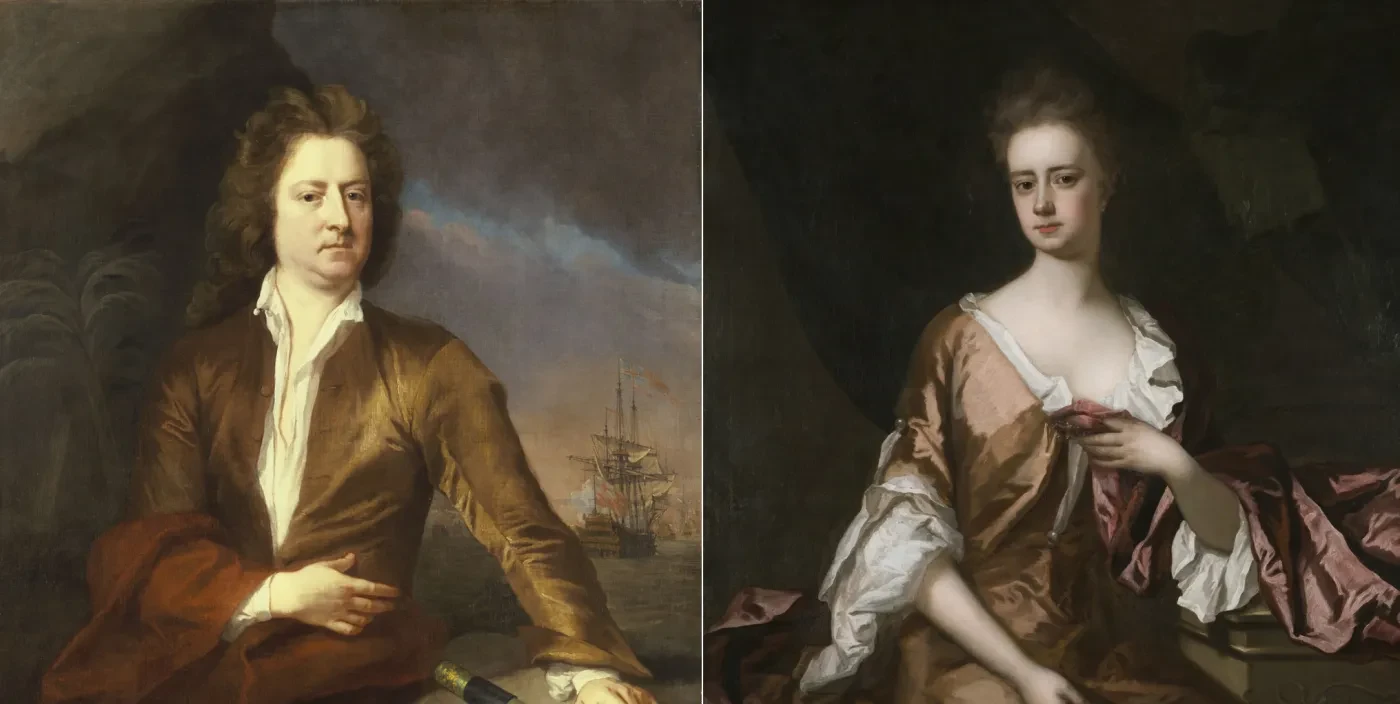
William and Catherine Kerr
A story of love, loss and reunion: these portraits of married couple, Commodore the Honourable William Kerr and Catherine Kerr, have been united once more, after nearly 40 years apart.
Painted by artist Michael Dahl, the artworks are examples of pendant portraits – pictures that were made to hang as a pair.
While the sitters are in different settings – William is posed in front of a rocky seashore, and Catherine is depicted against a backdrop of classical architecture – there is a continuity of colours between the paintings.
In 1982, the portraits were sold as separate lots at an auction. William’s portrait was acquired for Royal Museums Greenwich. Following a four-decade separation, the Museum was able to acquire Catherine’s portrait in 2019.
9 / 21
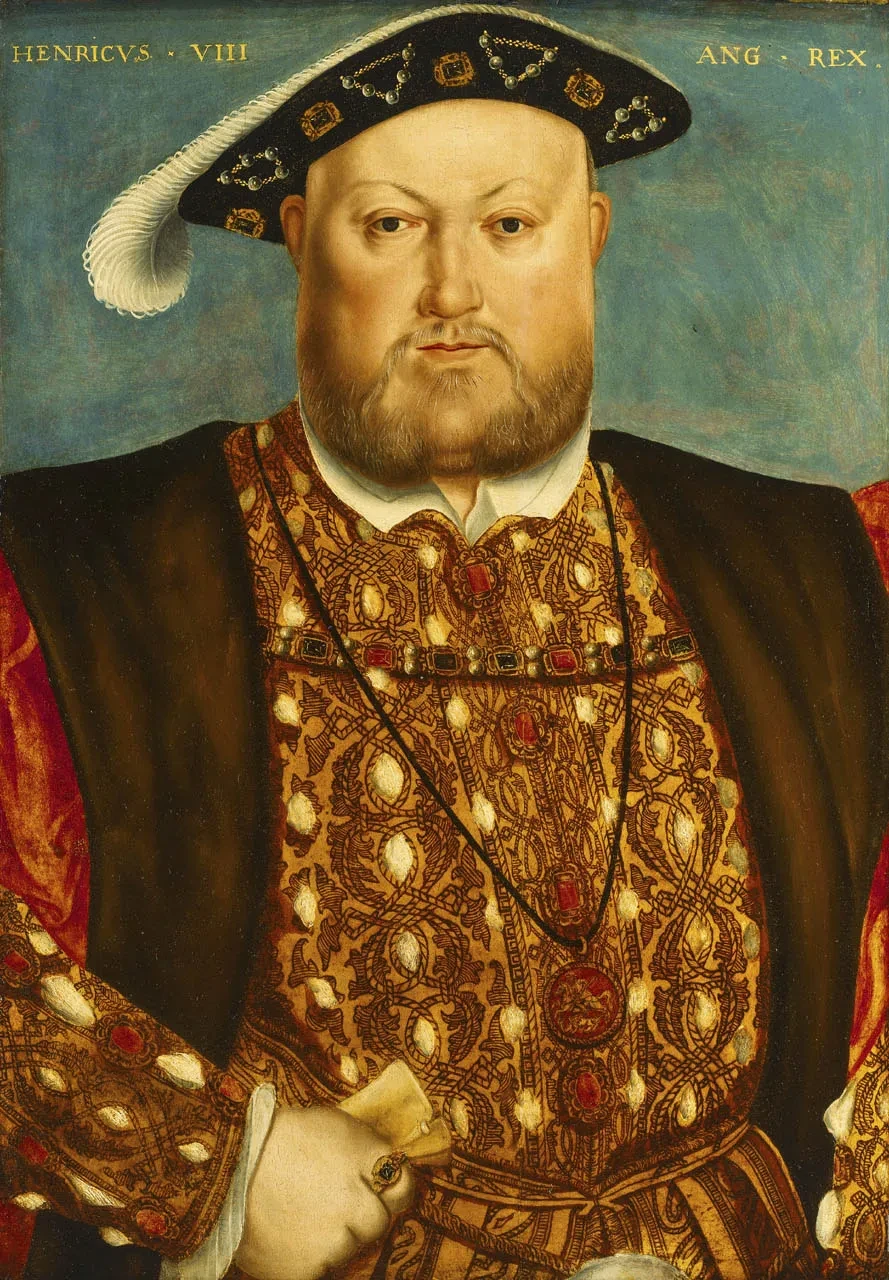
Henry VIII, 1491-1547
Exuding authority and majesty, this commanding portrait of Henry VIII has become the definitive likeness of the famous Tudor monarch.
Created by the studio of Hans Holbein the Younger, Henry is shown wearing an embroidered gold doublet, a red coat with fur trimming and a black bejewelled hat. Around his neck he wears a pendant depicting St George and the Dragon – a symbol of national identity.
This work shows Henry in his late 40s – around the time he married his fourth wife, Anne of Cleves, at Greenwich. Henry was born at Greenwich Palace and enlarged it considerably during his lifetime.
10 / 21
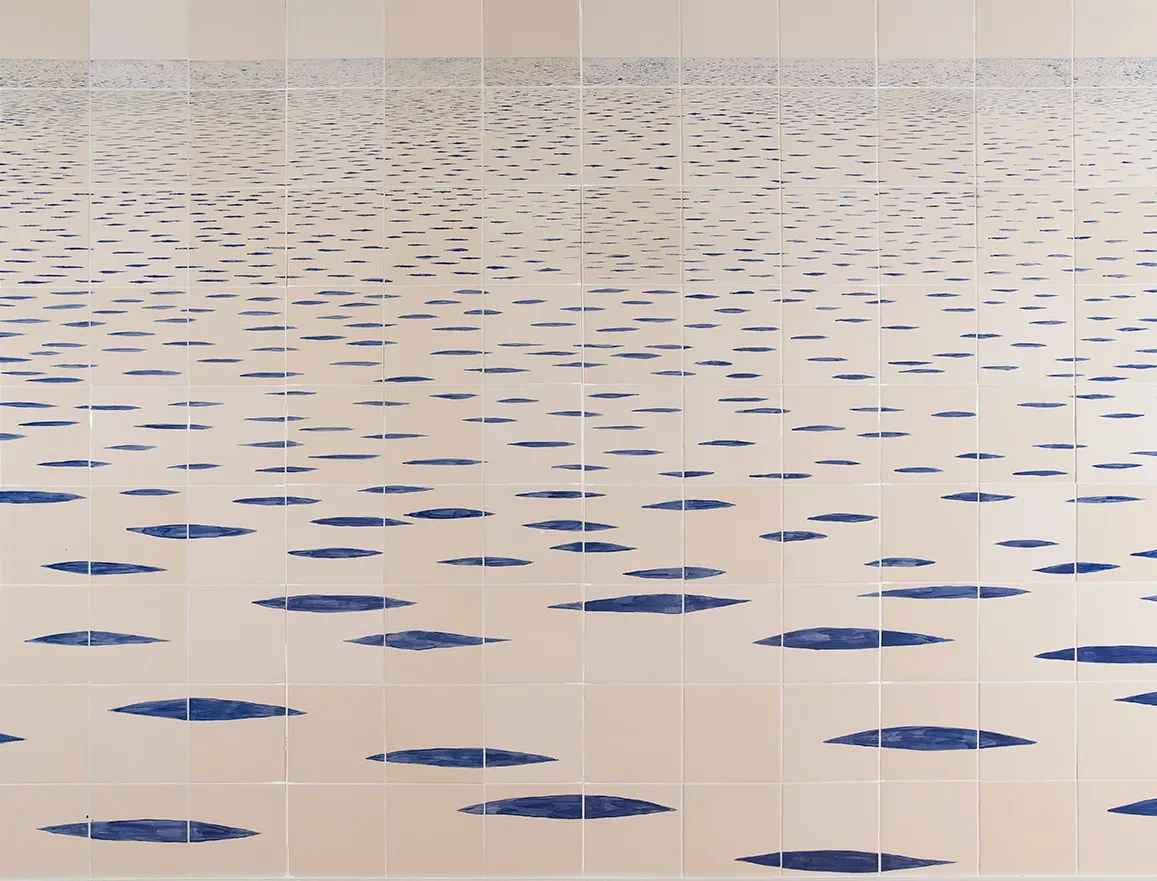
Sea Mark
Made from hand-painted ceramic tiles, this hypnotic work captures the rippling surface of the sea. Measuring nearly two metres in height and around two metres in length, it was created by visual artist Tania Kovats, who uses forms including sculpture, installation and drawing to explore our relationship with the landscape.
To emphasise the fluidity of the waves, Kovats painted the tiles with glossy, liquid brushstrokes, which were then carefully fired and glazed.
11 / 21
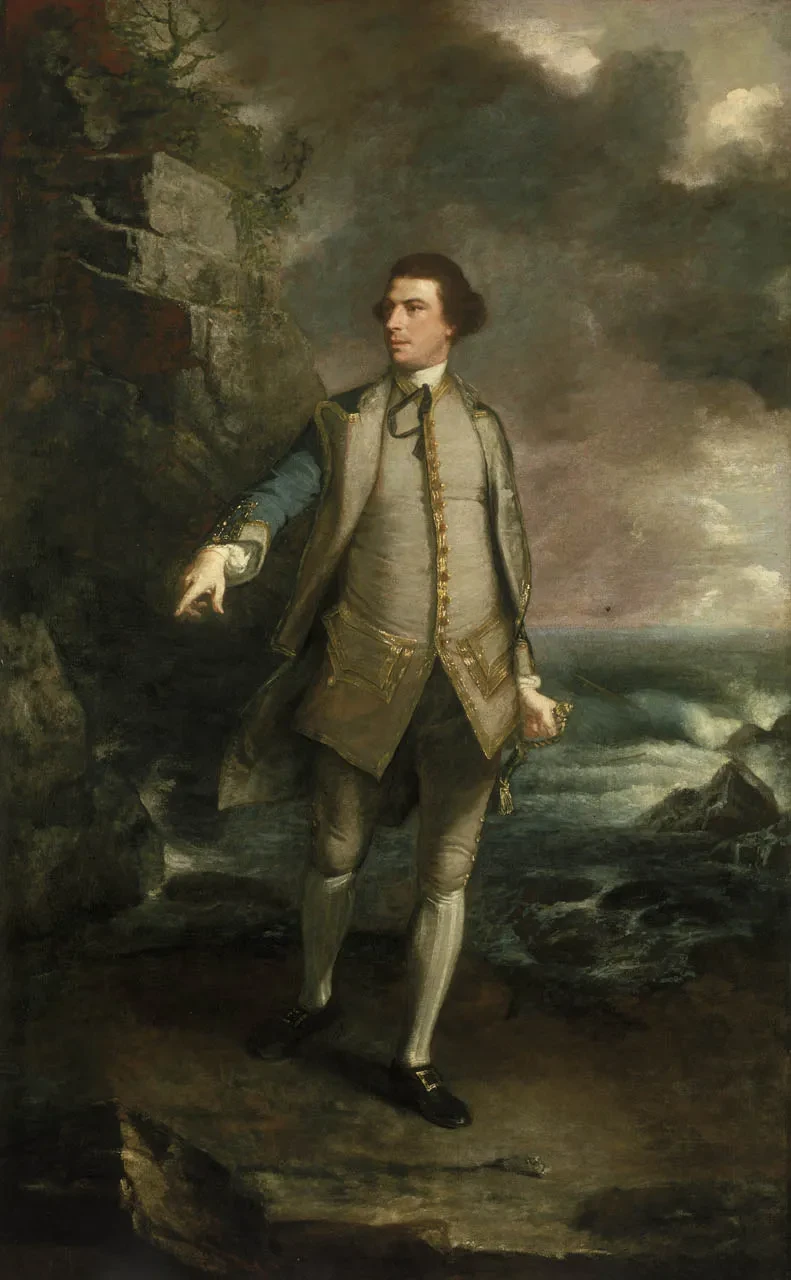
Captain the Honourable Augustus Keppel, 1725-86
Turning away from the viewer, the figure of Captain the Honourable Augustus Keppel strides across a beach strewn with the wreckage of the ship the Maidstone.
The painting is by Sir Joshua Reynolds, and helped to transform his career. He would later become the leading English portraitist of the 18th century.
Unlike other aristocratic portraits of the period, which typically depicted the subject standing in front of a classical column, Reynolds’ animated portrayal of Keppel blurred the boundaries between portraiture and history painting – a genre that drew on mythology and biblical stories as well as historical events.
Painted in 1752-53, this portrait may have been a thank you gift for Keppel, who was Reynolds’ friend and artistic patron.
12 / 21
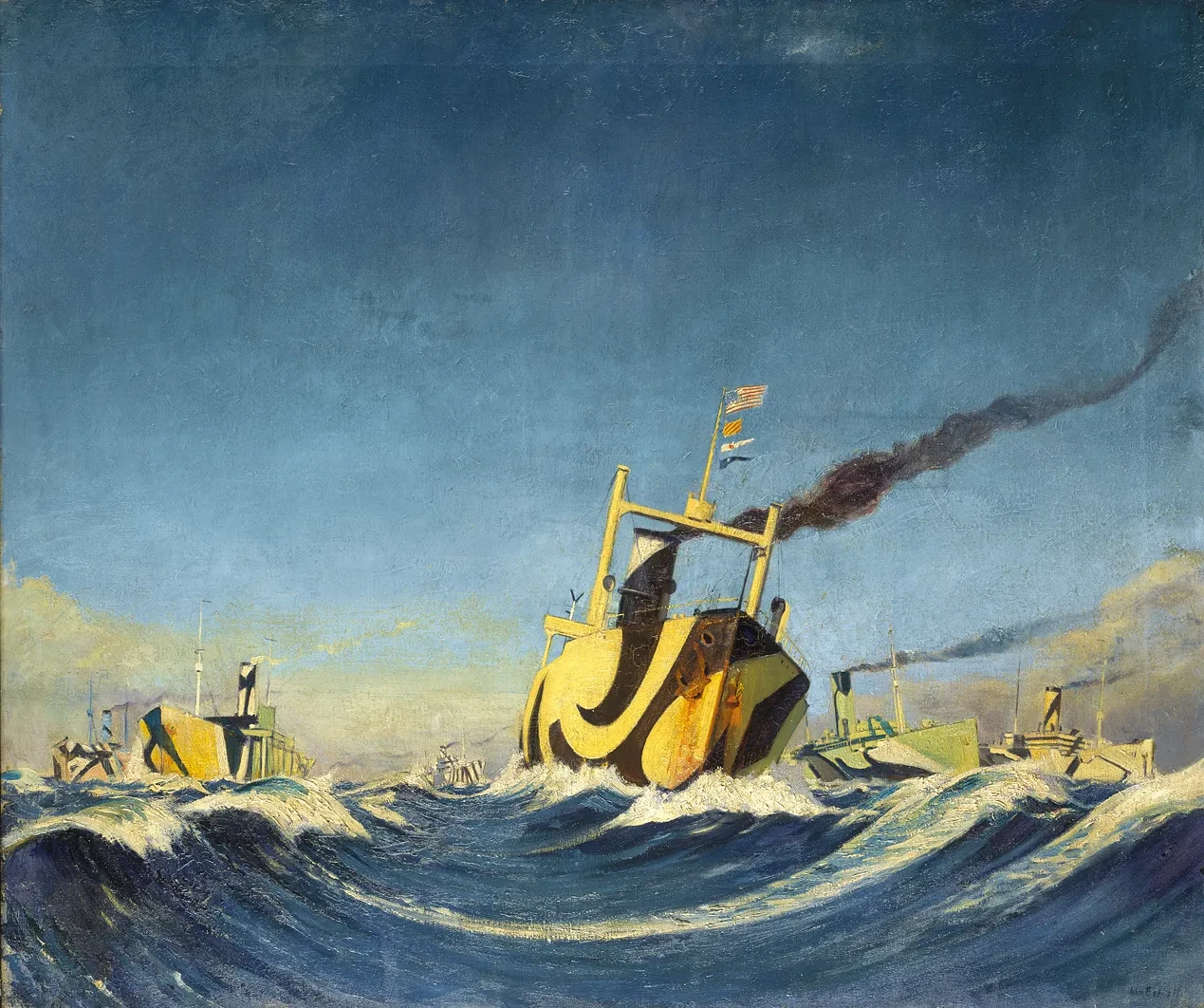
A convoy, 1918
Complete with foaming waves and a deep blue sky, this painting by artist John Everett depicts a convoy of merchant ships during World War One.
The ships are covered in ‘dazzle painting’ – a type of camouflage developed by the marine artist Norman Wilkinson. This involved painting the ships in contrasting colours and geometric shapes – arranged in zebra-like patterns – to create a distorted effect. This would confuse enemy vessels about the size, outline, course and speed of a ship.
Following his death in 1949, Everett bequeathed more than 2,000 of his marine paintings to the National Maritime Museum, from seascapes to deck scenes.
13 / 21
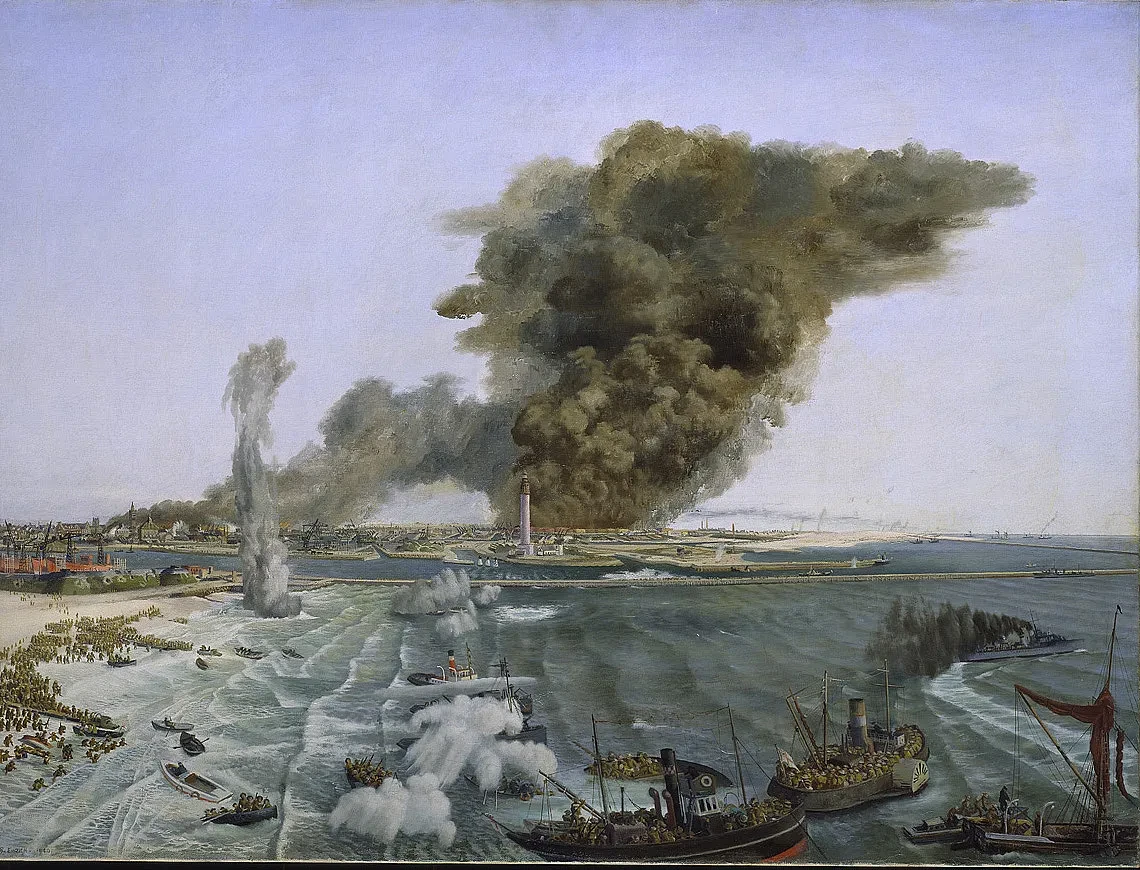
Withdrawal from Dunkirk, June 1940
Painted from the perspective of a low-flying aircraft, this panoramic artwork depicts the Dunkirk evacuation of the Second World War.
Between May and June 1940, more than 338,000 British and Allied troops were evacuated from Dunkirk in northern France to England to escape invading German forces.
Artist Richard Ernst Eurich used sketches and photographs of the rescue, as well as eyewitness accounts, to create this painting.
It powerfully depicts the destruction and terrors of war: billowing columns of smoke dominate the skyline, while queues of soldiers in the foreground scramble into boats.
14 / 21
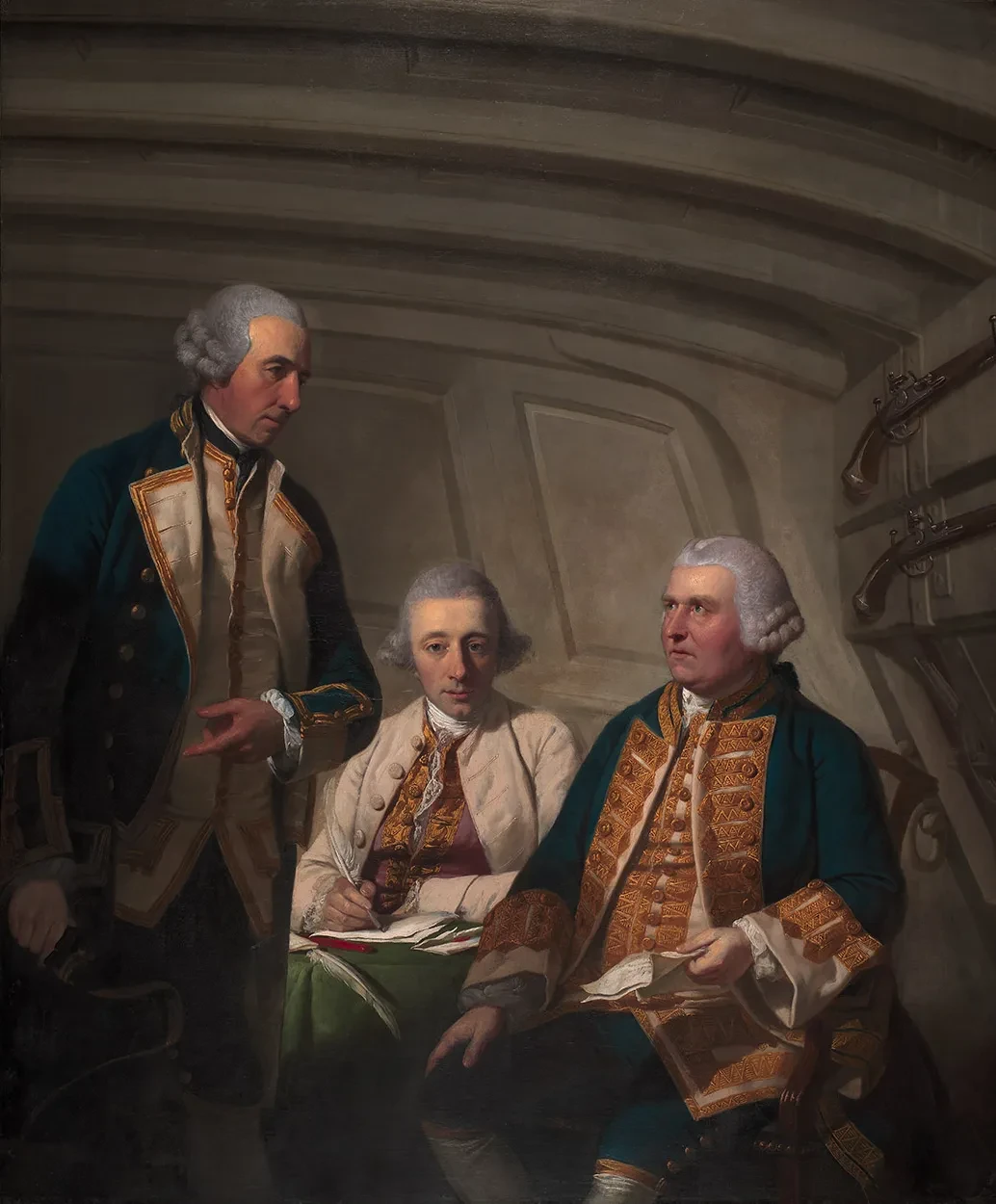
Vice-Admiral Sir Samuel Cornish, Captain Richard Kempenfelt and Thomas Parry
This work by artist Tilly Kettle captures a meeting between two naval officers and a clerk on an 18th-century British warship.
Seated to the right of the work, Vice-Admiral Sir Samuel Cornish issues orders to flag captain Richard Kempenfelt, who stands at the left-hand side. Between them sits Cornish’s secretary and the commissioner of this painting, Thomas Parry, who holds a quill.
Produced in 1768, this work was regarded as Kettle’s masterpiece. After struggling to break into London’s art scene, Kettle relocated his business to India, where he became the first British artist to run a profitable practice.
This painting was acquired for Royal Museums Greenwich in 2021 with support from Art Fund and the Society for Nautical Research Macpherson Collection Endowment Fund.
15 / 21
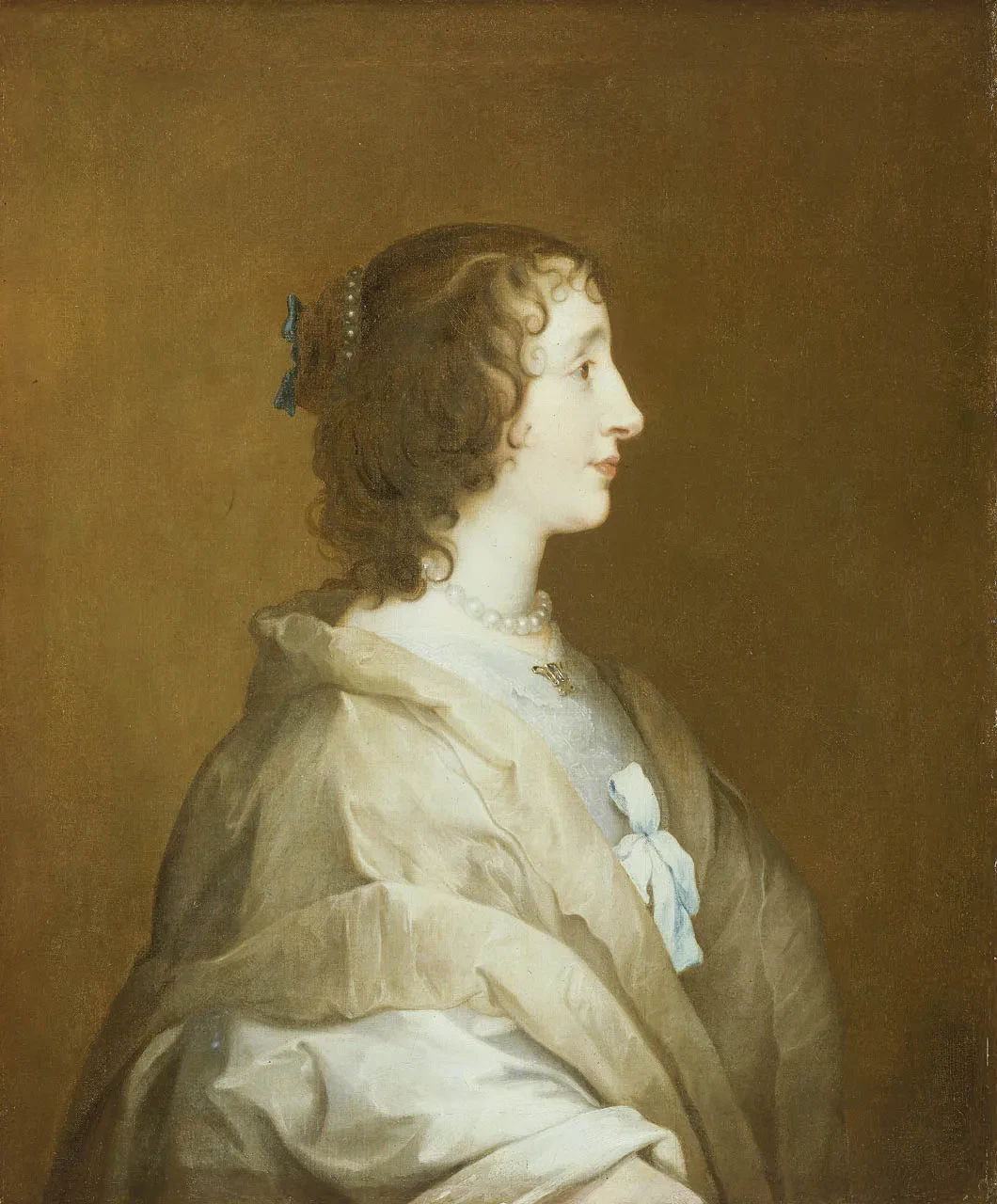
Queen Henrietta Maria, 1609-69
Dressed in a grey silk overdress complete with a fleur-de-lys brooch and pearl necklace, Queen Henrietta Maria turns away from the viewer in this work by leading court artist, Anthony van Dyck.
In 1636-37, Van Dyck created a triple portrait of Henrietta Maria’s husband, King Charles I. The artwork was used to create a marble bust, made by sculptor Gian Lorenzo Bernini.
An avid collector and patron of the arts, Henrietta Maria wished to commission a companion bust of herself. This work was one of three profiles made by Van Dyck in preparation for the bust.
Henrietta Maria played a crucial role in the development of the Queen’s House and oversaw Inigo Jones’s completion of the building in the 1630s, following the death of Anne of Denmark. Make sure to take in the spectacular ceilings created for her in the King's and Queen's Presence Chambers, and look out for her name and initials in the decoration throughout the House.
16 / 21
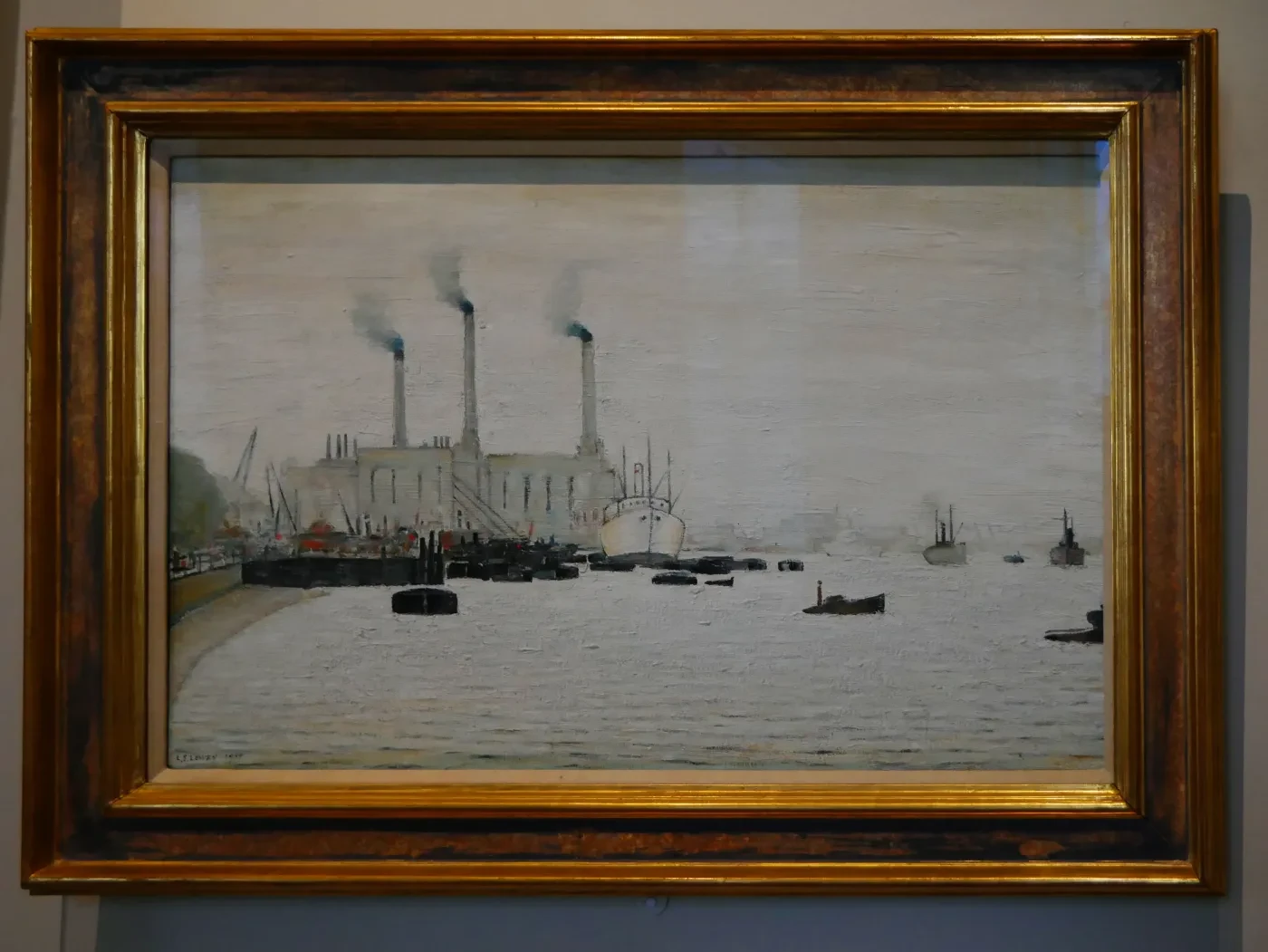
View of Deptford Power Station from Greenwich
Known for his industrial artworks, L.S. Lowry painted very few pictures of London. Here, he has used colour sparingly to great effect.
The Thames and sky are rendered using thickly applied white paint – a technique known as impasto – which is contrasted with the depth of blacks for the vessels and the chimney smoke.
Deptford Power Station was built in the 1890s but was demolished less than 100 years later.
17 / 21
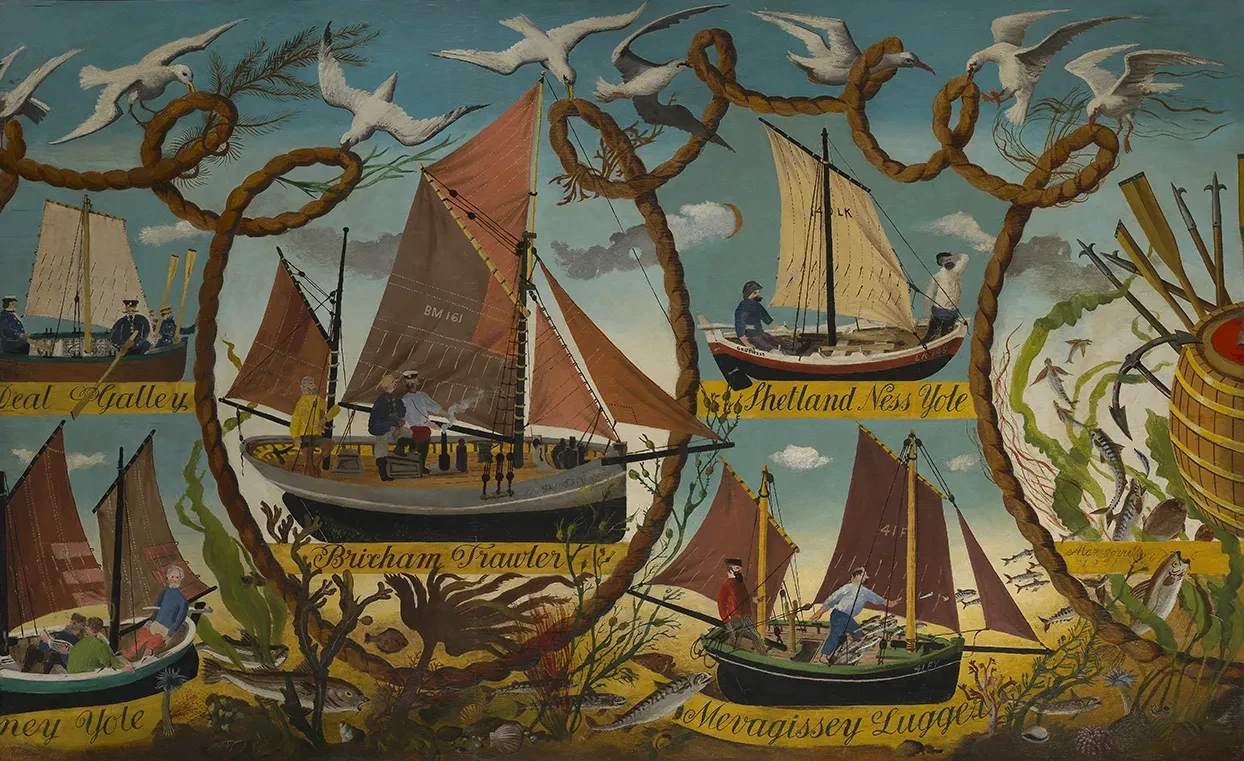
Working Boats from Around the British Coast
Bursting with colour, this mural by artist Alan Ernest Sorrell was made for the bar of the aircraft carrier, HMS Campania. In 1951, the ship toured British ports as part of the Festival of Britain exhibition.
Made of five panels, this mural is a celebration of Britain’s fishing communities. A flock of seagulls link the scenes together, holding a decorative rope.
18 / 21
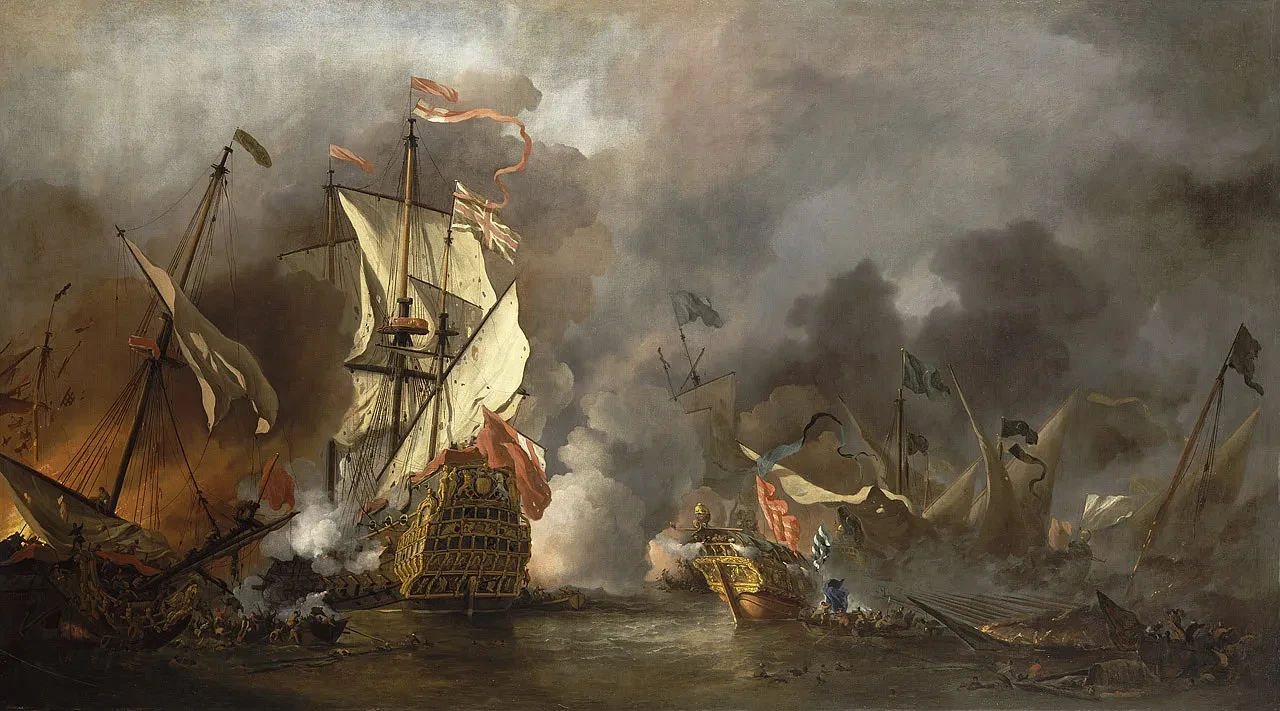
An English Ship in Action with Barbary Vessels
From flaming vessels to drowning figures, this painting by Willem van de Velde the Younger is one of his most dramatic.
Along with his father, Willem van de Velde the Elder, Van de Velde the Younger was a celebrated marine artist, who had a studio at the Queen’s House. During his lifetime, Van de Velde the Younger was known for his paintings of shipwrecks and stormscapes.
In this painting, an English ship on the left battles with a ‘Barbary’ ship and two galleys. In the 17th century, North African raiders (often called ‘Barbary pirates’) attacked European shipping and coastal points.
As with many of van de Velde the Younger’s paintings, he is not showing a specific battle here: it is a dramatic interpretation to emphasise his artistic prowess.
19 / 21
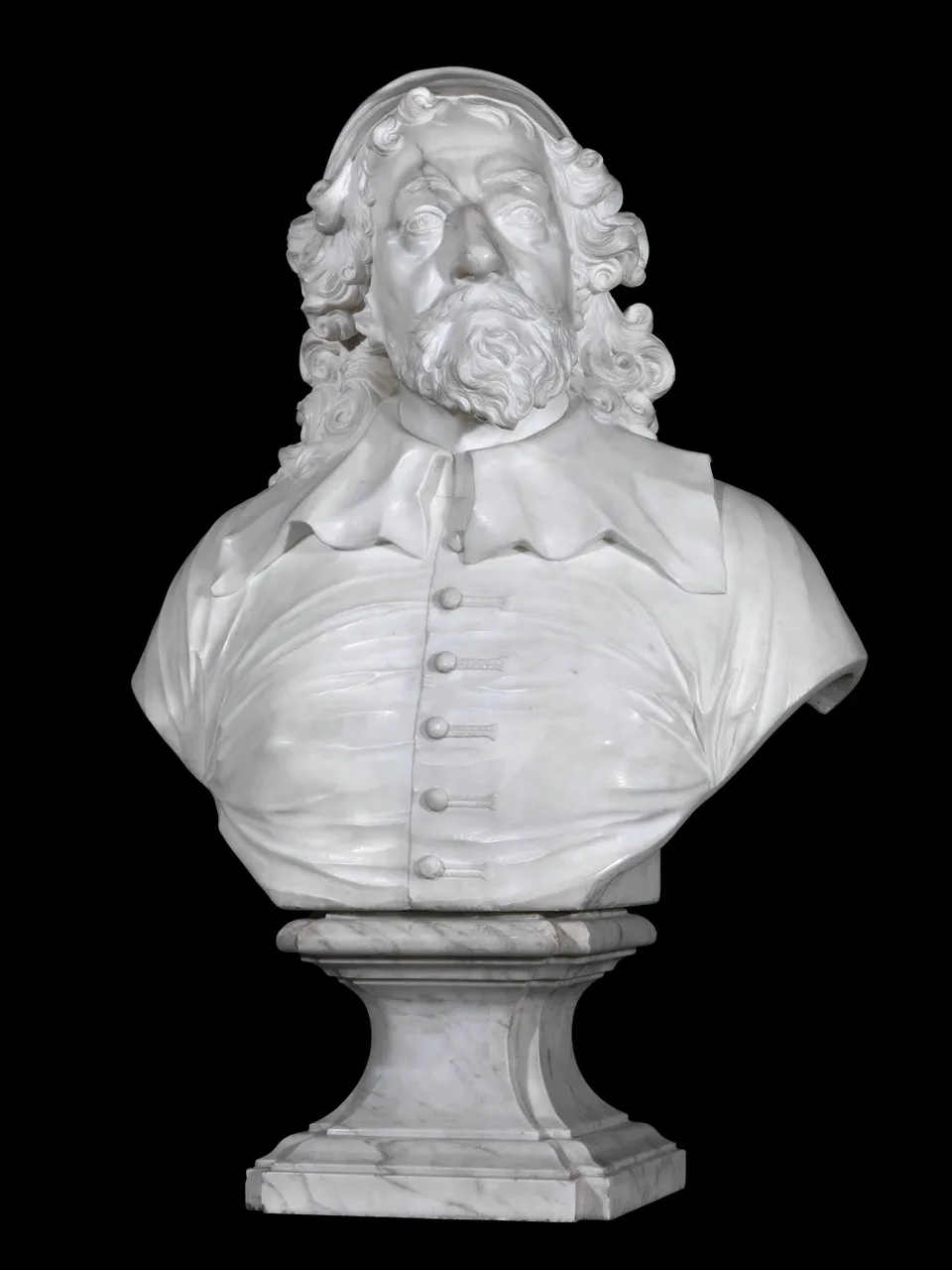
Inigo Jones, 1573–1652
Carved in white marble and based on an original design by the Flemish sculptor John Michael Rysbrack, this bust depicts the architect of the Queen's House, Inigo Jones.
A pioneering creative, Jones introduced the classical language of Italian building design to England, inspired by Renaissance architecture and the works of Andrea Palladio.
In 1616, Jones was commissioned by Queen Anne of Denmark to design the Queen’s House. With its symmetrical shape and white exterior, the royal residence was in stark contrast to the red-brick palaces of the time.
Jones’s other designs include the Banqueting House at Whitehall and St Paul’s Church in Covent Garden.
20 / 21
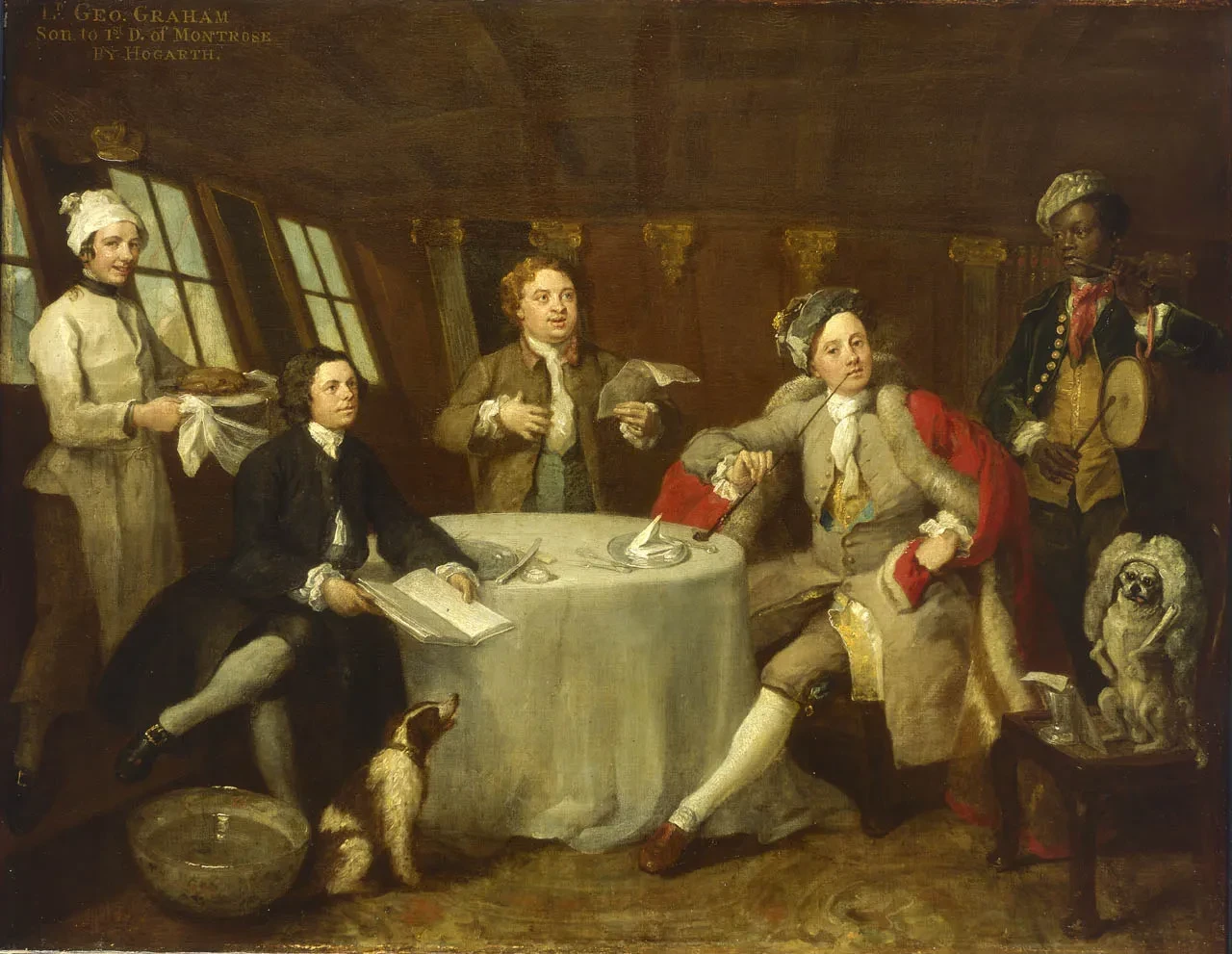
Captain Lord George Graham, 1715-47, in his Cabin
Wrapped in a fur-lined robe and smoking a long pipe, Captain Lord George Graham sits down to dinner with his friend, David Mallet. Set on board a naval ship, this painting is the work of the great satirist, artist, social critic and engraver William Hogarth.
It is thought that Graham’s friends commissioned this painting to lift the Captain’s spirits following a breakdown.
The piece is filled with amusing details, from the cook spilling gravy down Mallet’s back to a bewigged pug – a reference to the brotherly connection between Graham and Hogarth, who were both Freemasons.
21 / 21
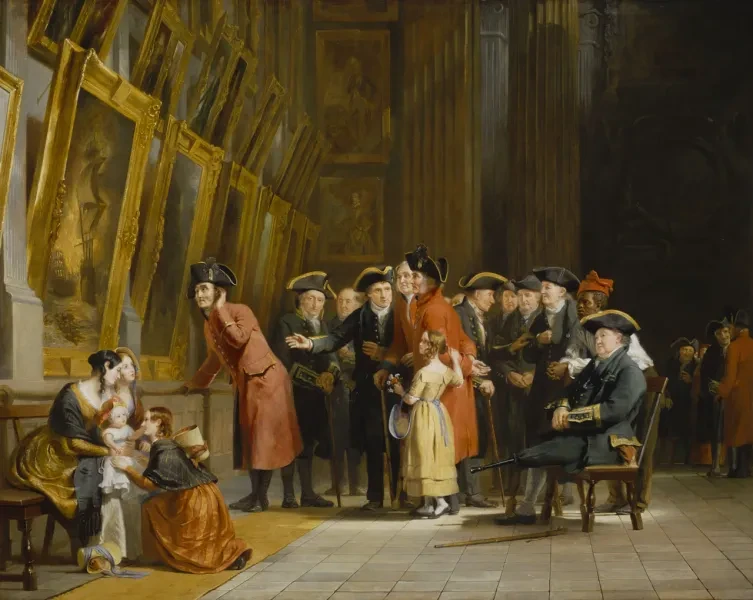
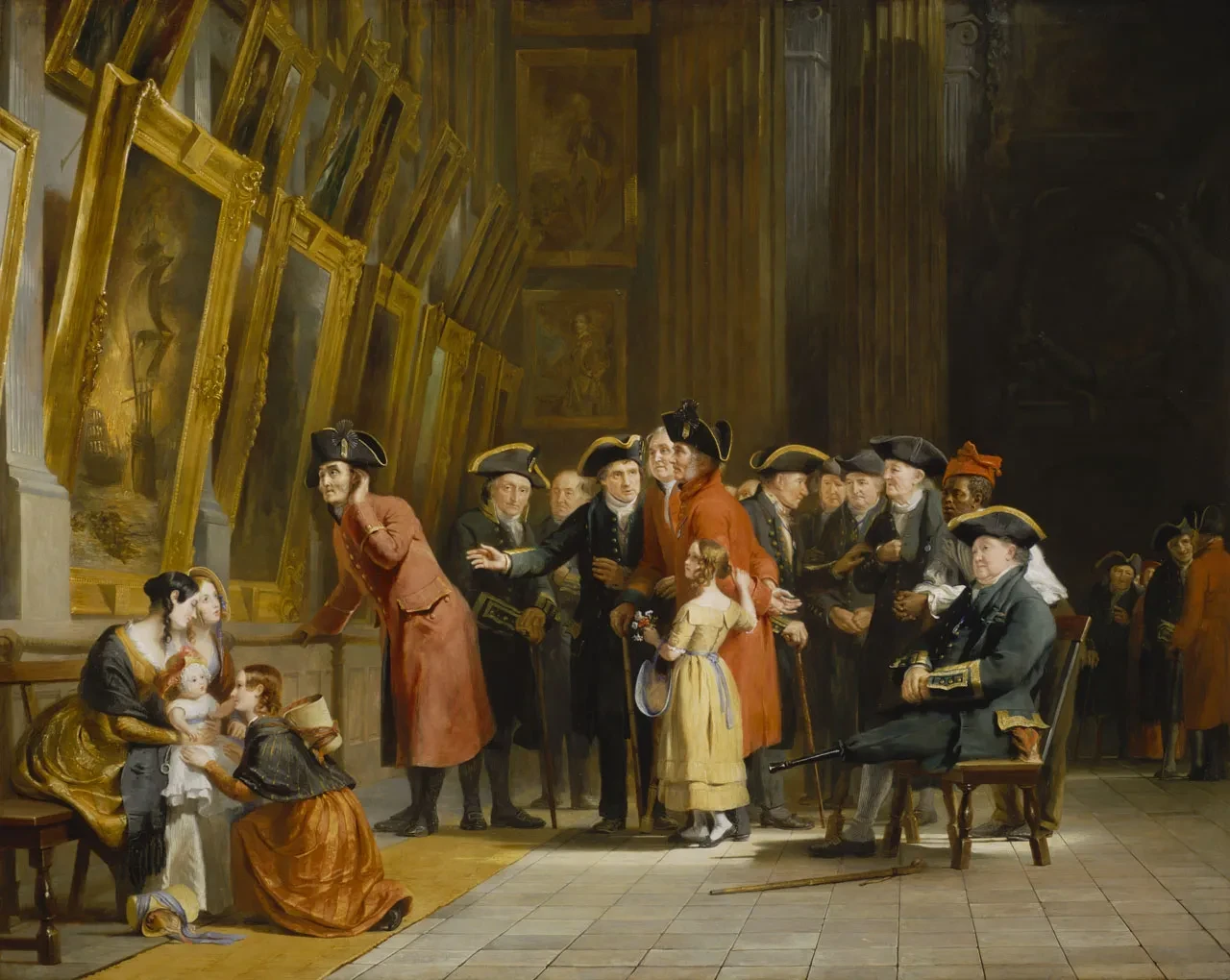
The United Service
Filled with exquisite detail, this painting by artist Andrew Morton depicts the meeting of army and naval veterans (the Chelsea Pensioners, identified by their scarlet coats and the Greenwich Pensioners, dressed in blue) – in the Painted Hall at Greenwich Hospital.
The paintings shown in ornate frames formed the National Gallery of Naval Art, which was located in the Painted Hall from 1824. This gallery was home to artworks including J.M.W. Turner’s The Battle of Trafalgar, 21 October 1805 and Philippe-Jacques de Loutherbourg’s The Battle of the First of June, 1794.
In 1936, the collection was transferred to the National Maritime Museum.

Visit the Queen's House
Art, architecture and sublime views: discover Greenwich's hidden gem today