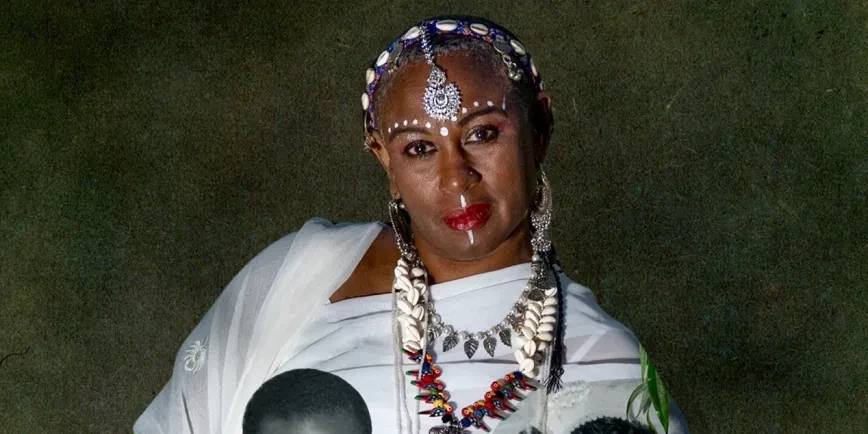
Performer and storyteller Olivia Armstrong is standing in the Pacific Ocean.
Her feet aren’t wet, sharks aren’t nibbling her toes, but she’s still fully immersed in our watery world.
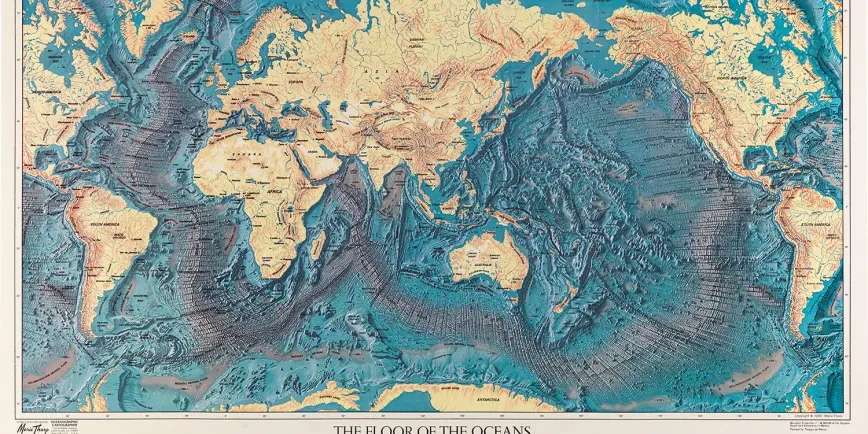
(At this point I should probably say that Olivia is standing on a map of the ocean – specifically the Ocean Map at the National Maritime Museum.)
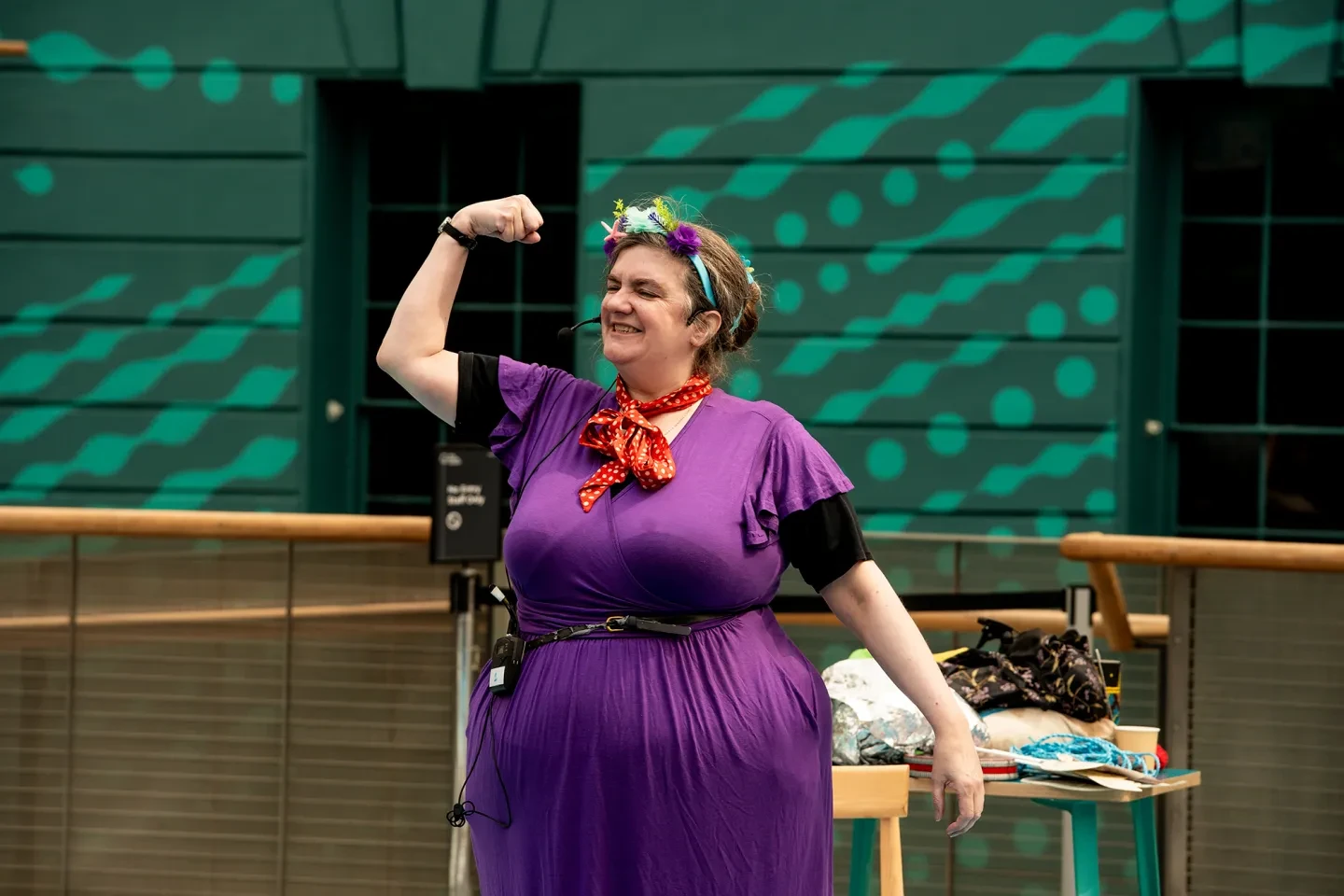
‘Usually with maps we cut the sea to see the land,’ Olivia tells the crowd of young children gathered around her. ‘But here we cut the land to see the sea! Can you see? You might be in the Pacific Ocean, or the Southern Ocean, or the Atlantic Ocean. But can you see, see, see, that all the seas are really one BIG sea, bringing life to everyone and everything?’
Since re-opening in June 2025 the giant floor map has been at the heart of the Museum’s events and engagement. There have been dance shows, live music, performance art, science busking and even baby yoga.
Now Olivia is bringing the Ocean Map to life through movement and storytelling – but where do you start with a story as big as the ocean?
‘If you can embody it, you can understand it’
Image
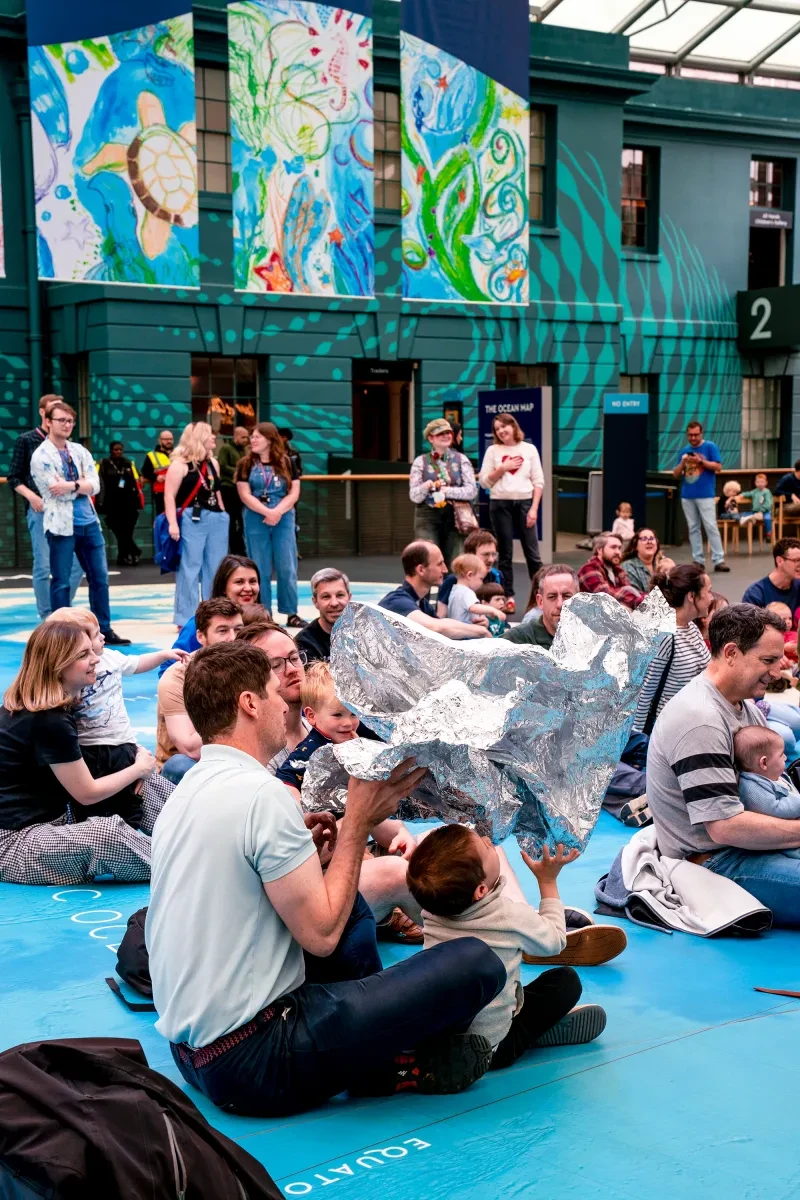
Olivia Armstrong describes herself as a storyteller, and storytelling in this context has a very particular meaning. Through movement, sound and participation, her performances encourage both children and adults to feel part of the story.
‘I suppose what defines storytelling is that you're not watching something: you’re joining in something,’ she says. ‘I know roughly what I think is going to happen, but it will be slightly different each time because the audience and I are creating it together.’
This particular story, 'Deep Sea Detectives', was first performed during World Ocean Day 2026, and is set to return to the Museum in the future. By blending folklore and science the piece encourages people to recognise the importance of the ocean to all life on Earth.
(If that sounds a bit highbrow, it also involves parachutes and tinfoil, water spray and rain sticks. This is a story for the ages and for all ages.)
‘I love to use folklore and myth as a way to bring people in, and there's so many great stories related to the ocean,’ Olivia explains. ‘For example, in northern Germany they thought the tides were caused by the man in the Moon coming down, lifting up the water and then throwing it back down to Earth.
‘There's another story I love about why the sea is salty. It’s said that a little boy made this bet with a giant that he could drink the sea. But the whole ocean was too much, he couldn't hold it in – so he peed it out! So that’s why the sea is salty.
‘So there’s all this folklore that captures the imagination, but then you can also lead into the no-less-amazing science. We try to make it physical too, because if you can embody it you can understand it.’
When talking about ocean depth for example, Olivia claps and asks audiences to time their responses based on how deep the water is. The longer the echo, the deeper the water: sonar through the senses.
The show is also site-specific, using the Ocean Map’s unfamiliar perspective to help people see how life in the ocean connects with life on land.
‘The Map is the most amazing creative impetus because everybody responds to it a different way,’ she says. ‘Some people want to go swimming on it, others are hopping across the land.
‘And I try and get the adults to join in too,’ she adds. ‘Stories are for everybody; this is all for you. You’re going to go away feeling fully immersed in the world of the ocean, and hopefully, want to find out more about the things that interest you.’

Support projects like this
Royal Museums Greenwich is a charity, and relies upon donations from generous supporters who share our passion for the sea, art, history and science. Donate now to keep like events like World Ocean Day free and support our learning and engagement programmes
Read more
Our relationship with the sea is changing. Discover how the ocean impacts us – and we impact the ocean – with the National Maritime Museum.