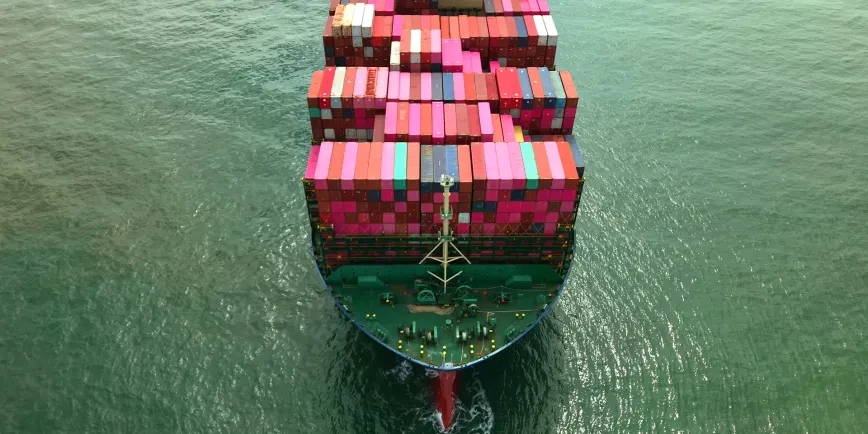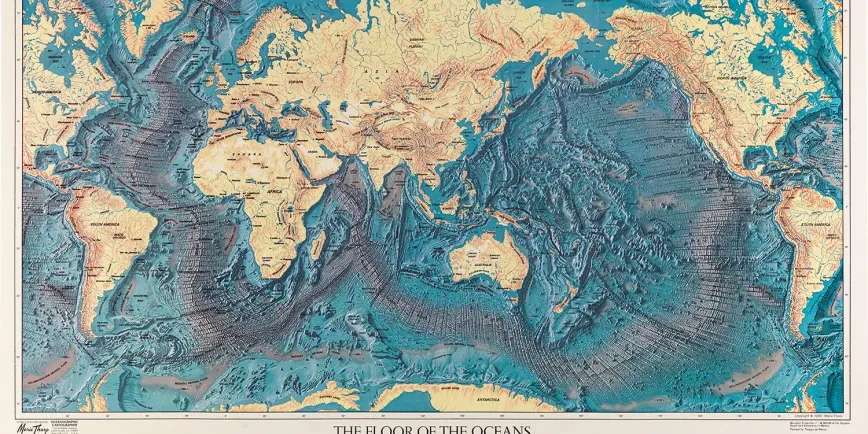
The 19th century was one of almost unprecedented change. The Industrial Revolution, a population explosion, mass migration and colonial expansion altered the world forever.
A huge shipping boom was part and parcel of this. Without ships, goods and people could not be transported and territories could not be explored and exploited.
In 1814, British shipyards had built more than three million net tons of vessels. Less than a century later this had jumped to almost 19 million net tons.
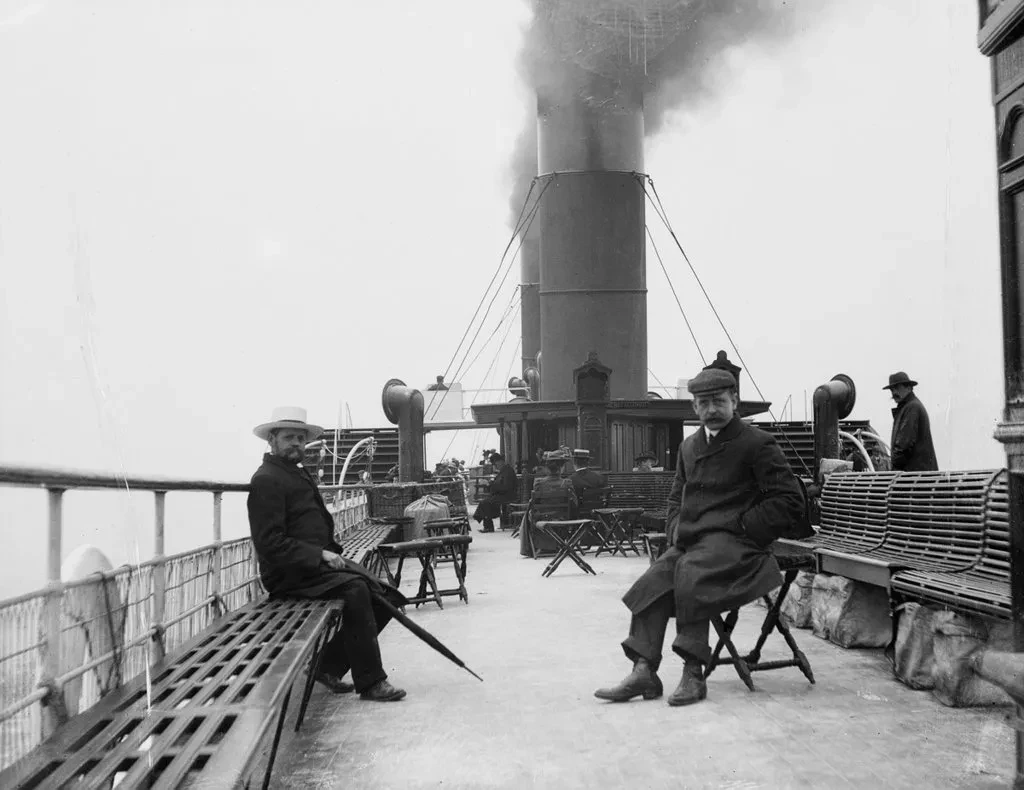
Sailing ships were gradually replaced by newer vessels and ever more sophisticated ways of moving across water. But the transition from wind power to fossil fuels was far from smooth.
Today shipping is on the cusp of another transformation, with competing fuels and technologies promising to reduce greenhouse gas emissions and clean up global trade. But how did the maritime world become reliant on fossil fuels in the first place?
Early experiments in steam power
The Charlotte Dundas is generally thought to be the world’s first operational steamboat. It was designed by William Symington, who used James Watt’s steam engine of the previous century for inspiration. The Charlotte Dundas was powered by a one-cylinder engine which drove a paddle wheel in the stern.
In 1803, it successfully towed barges on the Forth–Clyde canal in Scotland at a quicker pace than ever previously managed. However, new technologies are rarely overnight success stories, and the adoption of steam power on water was no different.

The Charlotte Dundas
PAD6630 • Prints & Drawings
Lithograph drawing of the Charlotte Dundas and its crew at work, published in 1848.
Local owners of horses and stables – possibly driven by the threat to their businesses – emphasised the risk of damage to the canal banks and steam’s high running costs. The Charlotte Dundas failed to gain a commission and was eventually broken up in 1861.
Tentative experiments with marine steam power continued. In 1812, improvements in boiler and cylinder design enabled Clyde-based paddle steamer the Comet to provide the first passenger steamer service in Europe. Travelling between Glasgow, Helensburgh and Greenock, the Comet did its job so well that, within a year, a number of local road coach firms were out of business.
Over the next few years steamboats appeared on most of Britain's major rivers. The novelty of these new inventions was an attractive prospect, but the more fundamental advantage for both passengers and owners was steam’s independence of wind – and thus the capacity to set a regular and reliable schedule.
The disadvantages of steam-powered ships in the early years were numerous. The engines were expensive to construct and hugely inefficient to run. Large amounts of space that would otherwise be given over to passengers or goods had to be sacrificed to store the coal and water which powered them. Consequently, steam power was initially most effective in coastal and river services where coal was readily available. By 1825, for instance, there were already 45 steamship companies registered in London alone.
The first ocean liners
In the first half of the 19th century, much of the initiative in ship design lay in the United States of America. With vast supplies of homegrown timber available, American ships were relatively cheap to make. It was in America that the ocean liner was invented.
Jeremiah Thompson, an English-born merchant based in New York, imagined a ‘line’ of transatlantic ships which would always sail on specified dates between established ports. Prior to this a shipowner might advertise a possible departure date, but the captain of the vessel would be obliged to wait for enough cargo, passengers and favourable weather conditions before setting sail.
In January 1818, the first two of Thompson’s liners departed New York for Liverpool. Before long the ‘Black Ball Line’ (for identification, a large black ball was painted on their fore topsail) was operating two sailings a month, on advertised dates in each direction. By the late 1830s, 20 of these ships were running from New York to Liverpool, 12 to London and 16 to Le Havre in France.
These ships were not driven by steam power; they were sailing ships known as ‘packets’. However, the liner system introduced new standards in comfort levels and, crucially, time management, which only steamships could propel forward.
While the new liners had developed a reliable schedule for departure, they remained utterly dependent upon wind conditions for their arrival. Steam power offered the possibility of a scheduled departure and arrival.
In 1815, paddle steamer the Duke of Argyle (later renamed the Thames) travelled from Glasgow to London, demonstrating in the UK that an ocean voyage powered by steam was possible – even if somewhat hair-raising. After difficult weather in the Irish Sea forced an unscheduled stop in Dublin, the Thames left again for London with just two hardy passengers. Thousands of spectators watched from the coast as it made its progress. The following year, the Elise became the first steam packet to cross the English Channel.

Arrivee de Londres a Paris le 29 Mars 1816 du Bateau a Vapeur l' Elise
PAH0155 • Prints & Drawings
Print of a lithograph drawing of the Elise with its crew.
For many, the natural next step seemed to be a steam-driven transatlantic voyage. Here, again, the United States led the way.
In 1819 SS Savannah became the first sailing vessel to use auxiliary steam power to cross the Atlantic. For some the record is disputed as it was only under steam for 85 hours out of a total journey time of 29 days. It would be almost another two decades before a large enough vessel with adequate engine efficiency could make the crossing powered entirely by steam.
In 1833 the Royal William became the first steam-powered vessel to cross the Atlantic from Canada to England, almost entirely by steam. The ship had originally been built to run on Canada’s east coast from Halifax to Quebec. However, excessive charges, a cholera epidemic and arguments between investors led to it being sold off at a loss. Its new owners, in financial desperation, decided to send it to England to be sold once more.
Just seven brave passengers were on board for the voyage. A gale disabled one of the engine’s cylinders and knocked off the top of the foremast. Seawater deposits from the leaky boilers had to be laboriously blasted or chipped away, meaning that for a short time the engine was stopped and the ship continued under sail. Once in London, it was eventually sold to the Portuguese government.

Brunel and the 'Great Western'
The Great Western Steam Ship Company was formed in 1836. It is said that Isambard Kingdom Brunel (pictured above), Chief Engineer of the Great Western Railway, had joked about extending the railway line from London to Bristol and then by steamboat across the Atlantic to New York on the same ticket. Joke or not the Company was formed, and work began on a vessel bigger than anything built before.
Launched on 19 July 1837, the SS Great Western was – for a short period – the largest and most modern steamship in the world. It was 236 feet long, weighed 1,320 tons, carried four masts for auxiliary sail and was adorned with opulent decoration. Its first trial in the Atlantic took place the following year in 1838.

Paddle steamer Great Western in a gale
ZBA0735 • Oil Paintings
A painting showing the paddle steamer ‘Great Western’ in a gale. Waves are shown breaking over the paddles and on to the deck. The ship's sails are down as it rides out the storm. Figures are shown on deck struggling against the weather to keep control of the ropes and masts, as lowering black clouds hover overhead.
The voyage did not get off to the best of starts: a serious fire broke out before the ship had even reached Bristol from London. Brunel was on board, and suffered a dislocated shoulder and broken leg in the ensuing chaos. The ship was temporarily beached before proceeding to Bristol, but by the time it was ready to depart for New York many of the passengers had lost their nerve: just seven embarked.
Nevertheless, the Great Western succeeded in making the Atlantic crossing, at steam, in just 15 and a half days. It would go on to complete 64 transatlantic crossings.
The rise of the steamship
In 1833 the East India Company’s monopoly finally came to an end. The Company had been established in 1600 to challenge the dominance of trade in the east held by the Dutch, Portuguese and Spanish. It was awarded a monopoly on all trade east of the Cape of Good Hope, and was the means by which ‘exotic’ goods such as silks, spices and tea reached Britain.
For almost 250 years the East India Company thrived – but, for many, the monopoly stymied innovation. The company’s ‘East Indiamen’ ships were large and slow, and their ‘bluff-bowed’ design remained largely unchanged for two centuries.
The demise of the East India Company marked a turning point in British shipbuilding. Lobbyists had convinced the government to abandon its sailing mail packet service – which had largely been outperformed by American companies anyway – and replace it with contracts with private steamship companies.
The policy remained unique to Britain for ten years. It stimulated British investment in ocean steam shipping and cemented the country’s position as the world’s greatest maritime power. Cunard (who were awarded the mail contract between Britain and the US in 1840), Royal Mail Line and the Pacific Steam Navigation Company (P&O) all owed their establishment and survival to mail contracts.

The steamship 'Persia' in a breeze
BHC3547 • Oil Paintings
Portrait of paddle-steamer Persia, a Cunard Royal Mail Ship which made regular sailings between Liverpool and New York.
Britain’s supplies of iron ore and coal were two other key elements that helped place it ahead of the rest of the world. In 1790 Britain produced 7.6 million tons of coal; by 1854 this had jumped to 54.7 million tons. Iron weighed less and was not as bulky as wood, so more space could be given over to cargo, passengers or fuel. It also enabled the building of ever larger ships.
In 1843 Brunel and the Great Western Company launched their next ship: SS Great Britain. Dubbed ‘the greatest experiment since creation’, it was the largest passenger ship in the world, carried six masts and was fitted with screw propellers, which had first been seen on the steamship SS Archimedes five years before. Apart from the upper decks and passenger furniture, the Great Britain was made entirely of iron.

Waterline model of SS Great Britain, made in 1979
SLR0147 • Ship Models
Scale: 1:38.4. Waterline model of the 'Great Britain' (1843), a single-screw passenger liner. The model is decked, fully equipped, rigged with sails furled, and complete with scale figures.
The Great Britain's first two seasons on the Atlantic were underwhelming, and ended with it running aground on the coast of Ireland. Before long it had entered the Australian passenger service, sailing mostly under sail. Nonetheless, the Great Britain presaged the use of iron and screw propellers, technologies which eventually became universally adopted.

Sail power makes a comeback
Progress, if that is what it can be called, is rarely linear. The discovery of gold in California in 1849 and in Australia in 1851 led to a sailing ship boom.
Ninety thousand people sailed from Atlantic ports to San Francisco in search of their fortune in 1849. The distance around the American continent and Cape Horn was, as yet, too far for steamers, and there were not enough coaling stations to enable refuelling. Instead, the gold rush initiated a golden age for clipper ships.
The first of these, the ‘Baltimore clippers’, were small, agile and fast sailing ships similar to those that had successfully eluded the Royal Navy during the 1812 war with Britain. The name ‘clipper’ is thought to come from the phrase ‘to go at a clip’, and they were best suited to trades which were reliant upon speed rather than cargo space.
Spurred on by the need for even a slight advantage, American designers began to apply bold innovations to larger ships. John Willis Griffiths for example turned the traditional sailing ship shape – the ‘cod’s head and mackerel tail’ – on its head. His ship the Rainbow was designed with a long, gracefully tapered hull and narrow bow which, he claimed, ‘exceedingly diminishes the resistance’ of its movement.
Donald Mackay was another pioneer: his Flying Cloud was an outstanding vessel which twice made the voyage from New York to San Francisco in just 89 days, a record which endured for more than 130 years.

Medal commemorating the centenary of the voyage of the 'Flying Cloud', 1951
MEC2302 • Coins & Commemorative Medals
Legend: '1851 - CENTENARY OF RECORD VOYAGE NEW YORK TO SAN FRANCISCO- 1951'. Below, on a ribbon: 'CLIPPER SHIP "FLYING CLOUD"'.
Unfortunately for those who arrived in San Francisco seeking their fortune, there was little more than gold dust left. As for the ships that took them, it became the custom for these clippers to continue sailing across the Pacific to pick up tea from China for Boston, New York or London.
The number of sailing ships produced in Britain continued to outstrip steamships: by 1870, steamships represented just over 40 per cent of the total tonnage. In the eyes of many shipowners, steamships were still no match for the fabled clippers on long distance bulk cargo runs. The fuel bills remained high, and they required more crew and often expensive machinery repairs.
There were also not enough refuelling stations around the world. It was partly this point which inspired Brunel’s next ship, the Great Eastern, which was a mammoth.
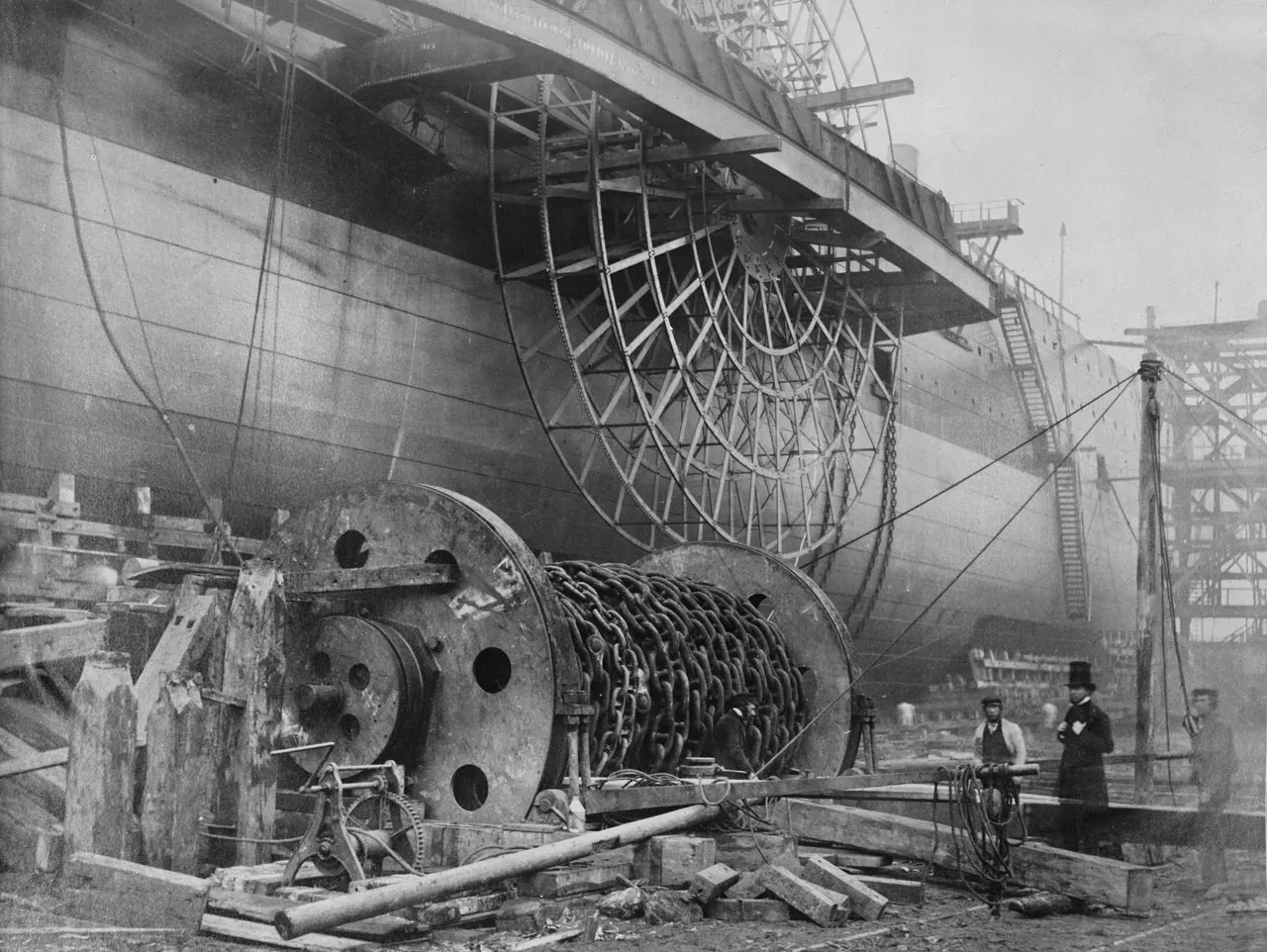
Launched in 1858 with a gross tonnage of 18,914 tons and capable of carrying 4,000 passengers, the Great Eastern could travel to Australia and back without needing to stop to take on more coal.
However, the ship proved to be well ahead of its time, requiring far too many crew to enable it to compete in a growing transatlantic market. Eventually the Great Eastern found employ in laying telegraphic cables across the Atlantic and Arabian seas, but it was not the success Brunel hoped it would be.
Cutty Sark and the end of the Age of Sail
Ship owner and engineer Alfred Holt ushered in a new era for steamers with his new ‘compound engine’ design. The engine, which had been used in Lancashire textile mills for the previous ten years, allowed steam to be expanded in two or more stages. Steam was driven by two pistons, producing more power at less cost, claiming a fuel saving of up to 40 per cent compared to single-expansion engines.
Holt’s first three ships, Agamemnon, Ajax and Achilles, were ordered in 1865, destined for the busy China tea trade. While a clipper ship could manage the voyage from China in around 90 days, Holt’s ships could do the same in just 65 days – and could also carry three quarters more cargo.
But what really sealed the demise of clippers was the Suez Canal, which opened in 1869.
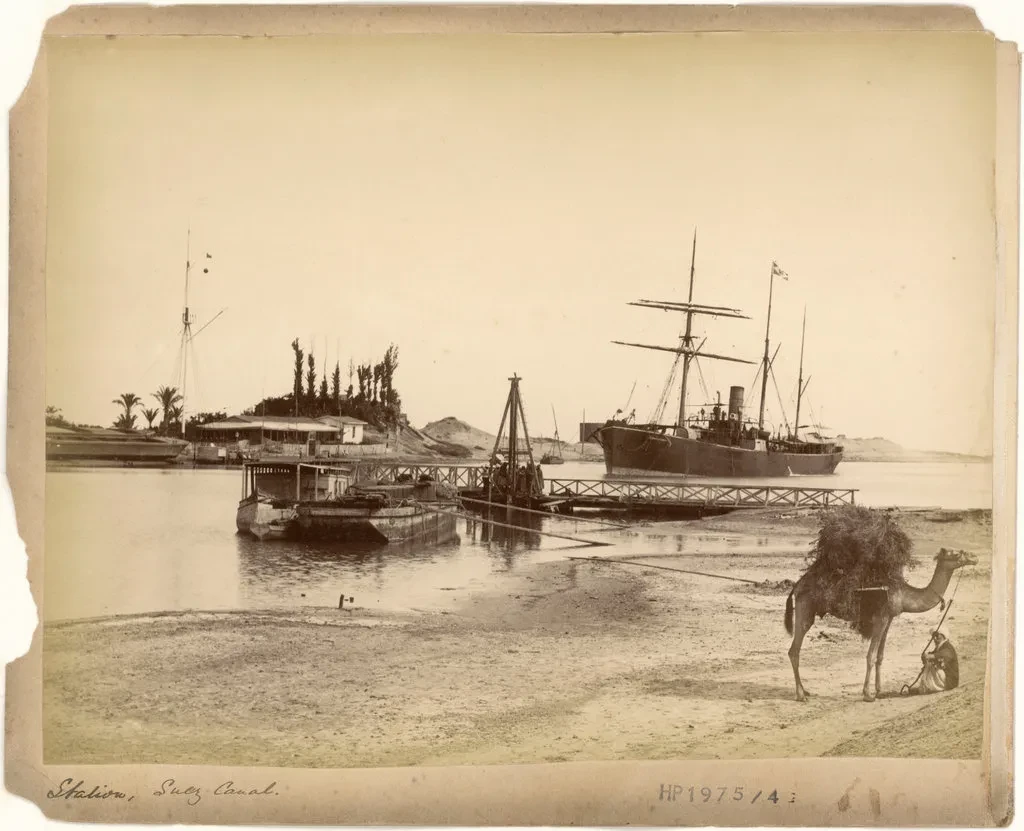
The canal cut the voyage to China and back by more than 3,000 miles. Vessels no longer had to navigate around the continent of Africa but could take advantage of the ‘short-cut’ through the Mediterranean into the Indian Ocean.
Conditions in the Mediterranean and on the canal itself meant the route was not a viable option for sailing ships. Instead, steamers came to dominate the China run, and sailing ships were forced into trades which were as yet out of reach or not profitable for steamships.
The transition did not happen overnight, but the direction of travel was clear.
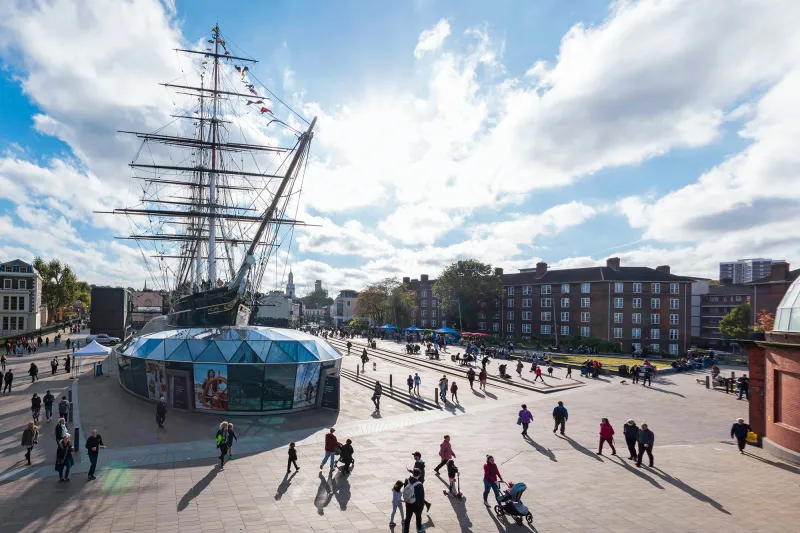
Cutty Sark, considered to be the pinnacle of clipper ship design and one of the fastest sailing ships of all time, was launched in the same year as the opening of the Suez Canal. In 1870, the year of Cutty Sark’s maiden voyage, there were nearly 60 other sailing ships on the China run; by 1877 there were just nine. In an historical twist of fate, Cutty Sark would deliver more coal, often for steamships, than tea in its lengthy career.

The 'Cutty Sark' and a Tug
BHC4131 • Oil Paintings
A painting showing the 'Cutty Sark', from fine off the starboard bow on the right, and a tug in stern view on the left in the foreground. The 'Cutty Sark' is shown in full sail riding on the crest of a wave, silhouetted against a bright orange sky. A figure is shown on the tug's deck deck attending to a rope over the starboard quarter. The artist has exaggerated the effect of the smoke trailing out of the tug's funnel to the right and into the wave on which the 'Cutty Sark' rests.
New technologies, new fuels
1876 was the first year in which the number of steamships exceeded the number of ships built under sail in Britain. Coal however was not destined to remain the only source of fuel for these new vessels.
The exploitation of natural resources of oil in the Caspian Sea had started in the 1870s. Its higher calorific value enabled vessels to go further compared with the same weight of coal. It also required fewer stokers and less time for bunkering. Work began on replacing coaling stations with oil bunkering facilities, although there would not be sufficient numbers of these until 1911.
In 1886 the English-built German ship Glückauf became the first tank steamer – or ‘tanker’ – specially constructed to transport oil. Prior to the Glückauf oil was carried in large barrels, which meant discharging at depots could take days. With the Glückauf the hull itself was the oil container; discharge could take as little as six hours. Tests conducted by Canadian Pacific in 1913 indicated that oil had become more economical than coal.
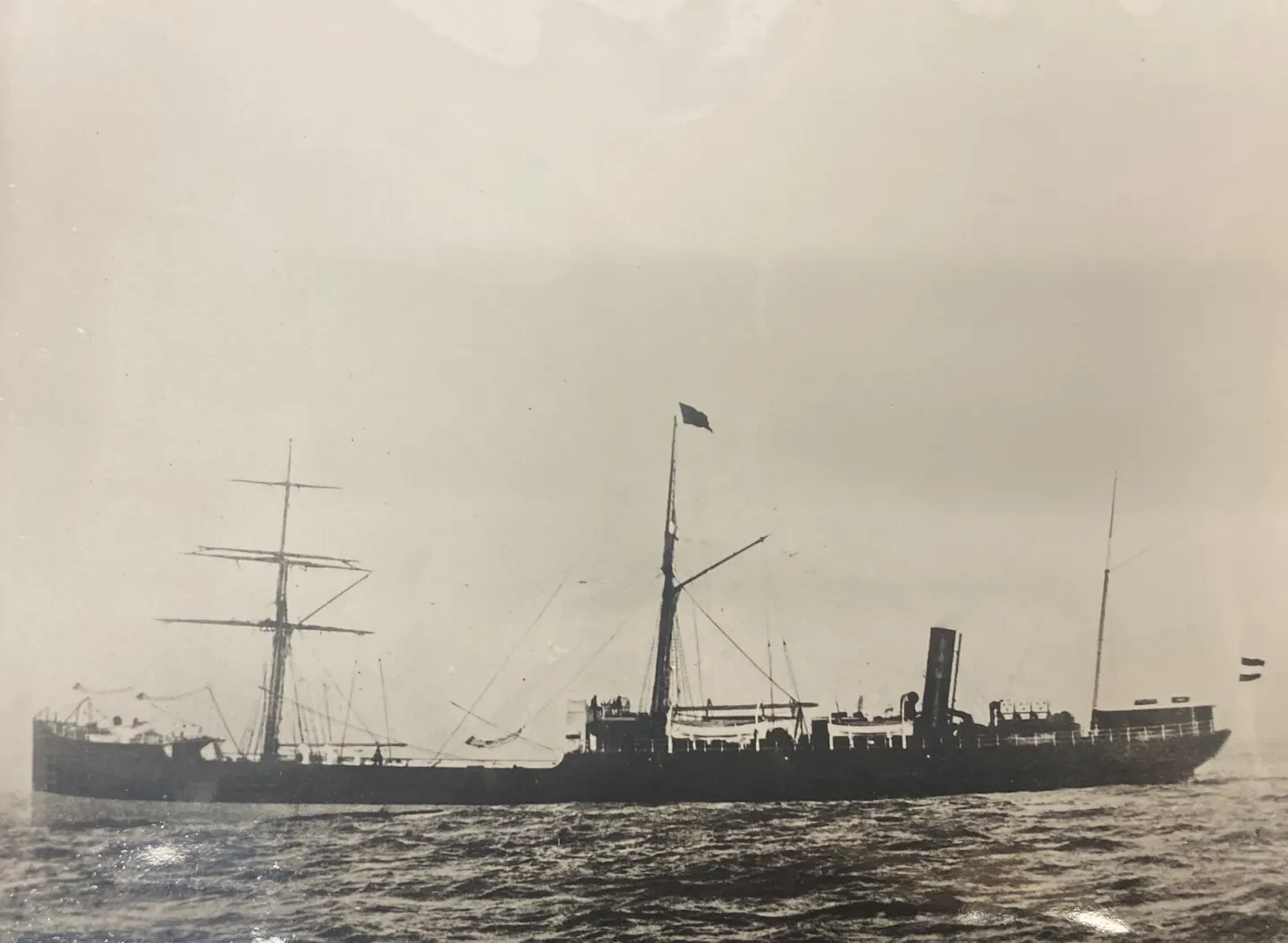
Demand for greater efficiency drove experimentation. In 1882, George Thompson & Company of Aberdeen (the same company which had built Thermopylae, the famous clipper and rival to Cutty Sark) commissioned the SS Aberdeen. Destined for the Australian emigrant trade, it was the first vessel to be fitted with a triple expansion engine, using steam at high, intermediate and low pressures. It was a great success and served as a prototype for thousands of steamers for the following 50 years.
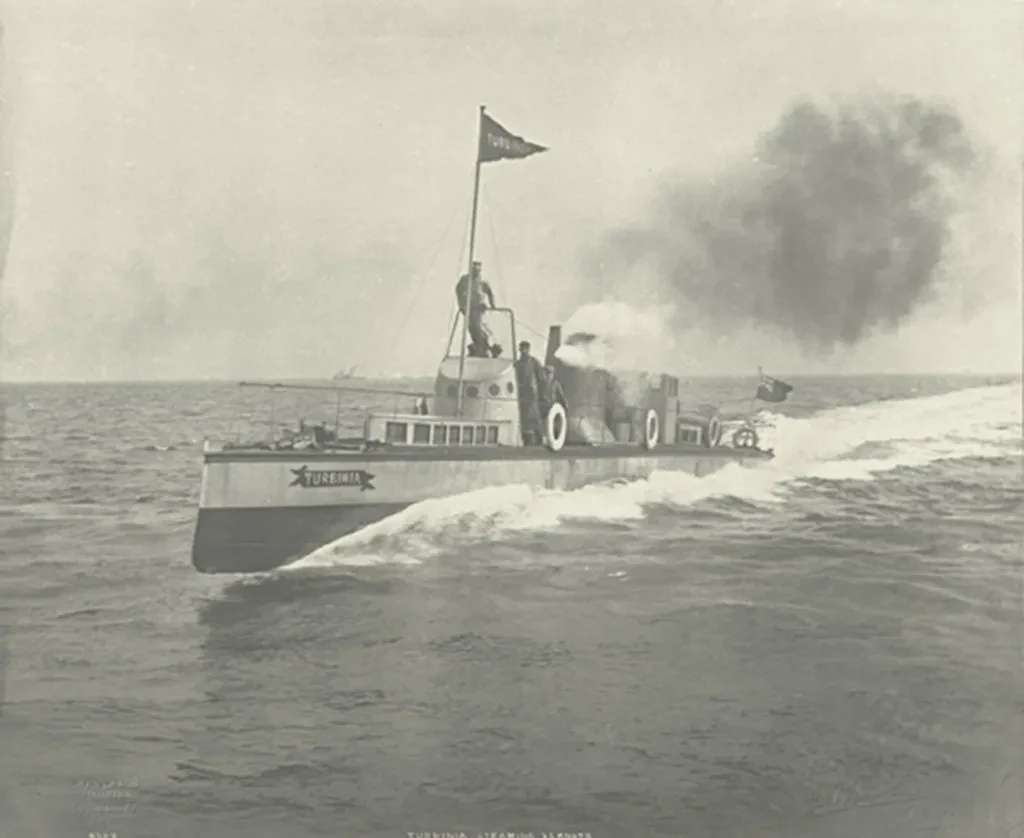
In 1894, Turbinia, designed by inventor Charles Parsons, became the world’s first steam turbine-driven vessel. A steam turbine is a motor in which rotary motion is produced by steam power, which moves a series of blades fitted to a revolving drum. During sea trials in 1897, Turbinia achieved astonishing speeds of 34.5 knots per hour – almost double Cutty Sark’s fastest records.
In 1903 Russian river tanker the Vandal became both the first diesel engine ship and the first ship to be driven by a diesel-electric propulsion system. Dr Rudolf Diesel had invented an internal combustion engine in which air is compressed to a high enough temperature to ignite diesel fuel. Three engines were midship-mounted and each was connected to a generator wired to a motor and connected to a propeller. The motor ship, with its revolutionary ability to reverse, had arrived.
However, it would take some time for motor ships to become standard. Lloyd's Register estimated that in 1930 just 10 per cent of merchant ships were motor ships. By 1974, this had jumped to 88.5 per cent.

Triumph and tragedy – ocean liners in the twentieth century
Competition between transatlantic ocean liners took on a fresh intensity around the turn of the century, and the success or failure of a vessel became a question of national pride. There were also still plenty of Europeans who were keen to make America their new home: in 1907 alone, more than one million emigrants were counted entering the US.
Germany had quickly become an industrial nation following unification in 1871, capable of competing on the international stage. The aggregate tonnage of the German merchant fleet overtook that of the United States in 1884 and France in 1889. Only Britain was left.
When the German built and designed ship Kaiser Wilhelm der Grosse was launched in 1897 and set on the transatlantic run, it ended 52 years of British speed supremacy. The Deutschland, with its six-cylinder quadruple-expansion engine, was even bigger and faster.
A panicked Admiralty awarded a huge subsidy to the Cunard Line to build two liners capable of beating the new German vessels. RMS Lusitania and RMS Mauretania, both powered by steam turbine engines, were launched in 1906 and 1907 respectively. The Lusitania broke all speed records on the Atlantic run and the Mauretania would go on to hold the Blue Riband, the award for the fastest run on the Atlantic, for 22 years.
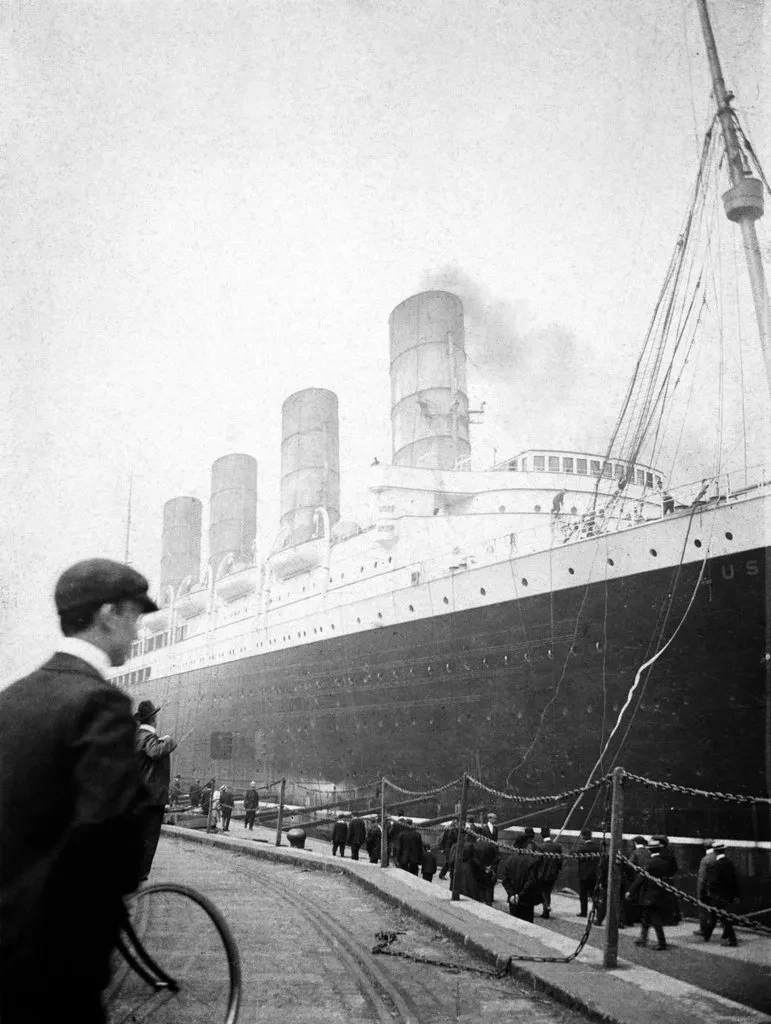
The White Star Line responded with the construction of RMS Olympic and RMS Titanic. Despite the tragic loss of life when the Titanic sunk in April 1912, competition showed no signs of slowing down. The German ship Imperator was launched just six weeks after the loss of the Titanic and became the largest ship in the world.
The outbreak of the First World War changed everything. The Lusitania, once feted as the largest and fastest ship afloat, was sunk by a German U-boat on 7 May 1915 with the loss of 1,198 lives. The Imperator meanwhile was eventually claimed by Britain as part of war reparations. It was renamed the Berengaria, joined the Cunard Line and was converted to oil-fired boilers. It continued to serve on the transatlantic run until 1938.
Fifteen million tons of world shipping was lost during the First World War. Then in the 1920s, the United States introduced a series of immigration quotas to stem the flow of those entering the country, and the transatlantic passenger trade slumped.
During the 19th century, shipping helped to make horizons seem boundless. One hundred years later, the world needed a chance to rebuild.
Learn more

Read more
Our relationship with the sea is changing. Discover how the ocean impacts us – and we impact the ocean – with the National Maritime Museum.